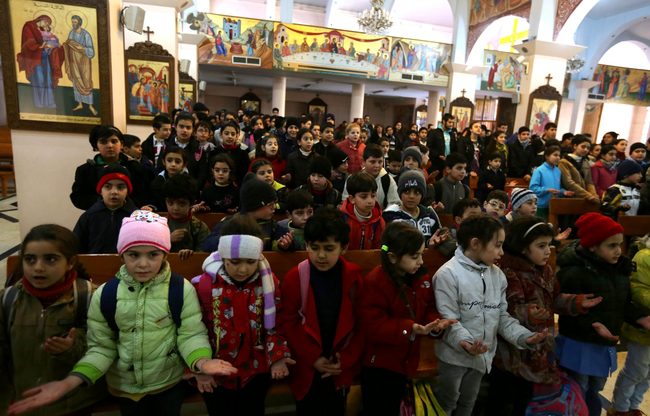
‘Can you explain the church?’
An unbeliever or a follower of another faith notices your joy for Christmas. Maybe you just wished them a ‘Merry Christmas’ and they sensed your sincere joy in the Lord. A flesh and blood friend, a friend with a soul, wants to know from you something about Christ’s corporate community, the church. What do you tell them?
Note: This is the third post of my Advent 2014 series, which began with ‘The Scandal of a Virgin’ and is a continuation of last week’s Advent post, ‘Christ’s Corporate Community – A Christmas Question.’
Who is this Jesus of Nazareth, this baby in a manger?
Well… He’s not actually from Nazareth or even Bethlehem, the place where God had Mary give birth. Jesus is historical. Jesus was born as a man just like you and me. Jesus died just like you will die and I will die.
Yet Jesus, Son of Man, born in a manger, crucified on a cross, buried in a grave – Jesus, Son of God, was raised from the dead! Jesus lives in the flesh and blood and Spirit! Jesus Is!
This is the Good News of Christmas, Gospel to the darkness of the world: Jesus Is. Through faith in Christ Jesus you may receive eternal life and light, rather than darkness, death and punishment for your sins.
Jesus Is and was not just a baby in a manger or a poor suffering man on a cross.
The story of Jesus’ nativity (as it is called) in Bethlehem is witness to God with us, Immanuel. It is the story of Jesus being rescued from death as a child as part of a family of life and light for all mankind. Hear this prophesy of Isaiah:
But there will be no gloom for her who was in anguish. In the former time he brought into contempt the land of Zebulun and the land of Naphtali, but in the latter time he has made glorious the way of the sea, the land beyond the Jordan, Galilee of the nations.
The people who walked in darkness
have seen a great light;
those who dwelt in a land of deep darkness,
on them has light shone.
John 8:12 Again Jesus spoke to them, saying, “I am the light of the world. Whoever follows me will not walk in darkness, but will have the light of life.”
Who is this Son of Man, born in a manger in Bethlehem?
It is the same question of the unbelieving crowd Jesus answered before His crucifixion and resurrection.
John 12:35-36a So Jesus said to them, “The light is among you for a little while longer. Walk while you have the light, lest darkness overtake you. The one who walks in the darkness does not know where he is going. While you have the light, believe in the light, that you may become sons of light.”
The church: men and women who claim God and claim Christ as Lord – Christian families: worshipers of God the Father, Jesus Christ (born in a manger, etc.) and the living Holy Spirit are intended by God to be a light in the darkness of these days to all mankind. Are you?
Are you a light in the world of unbelievers? Joseph and Mary were.
Joseph and Mary came to Bethlehem as loyal citizens of the community of God and forced to flee as refugees. It had to do with government, taxes and Joseph having to go to his family home in Bethlehem along with everybody else, because he was a descendant of David, King of Israel.
Luke 2 English Standard Version (ESV)
Jesus was born in Bethlehem of Judea (for there was no Israel in those days), but immediately Joseph took Mary and Jesus to Egypt. Eventually their family (Joseph, Mary, Jesus and his brothers) settled in Nazareth of Galilee.
Jesus had a father and a mother on earth to raise him as part of an earthly family – a husband and wife with kids to raise – God’s plan for family and community.
God’s living example of this family that included Jesus was not without its troubles (just like your family and mine). God the Father provided both an earthly father and mother for Jesus, a home in which to be raised and a community in which to live (once the danger of the destruction of babies was past). [See: Matthew 1]
The nation of Israel were God’s chosen people. Joseph and Mary were faithful to God, more faithful than than leaders who had taken power, rebuilt the Temple and compromised God’s laws to rule alongside pagan Romans over Jerusalem and surrounding towns.
Into the Temple, Joseph and Mary brought Jesus to be dedicated to God, as was the tradition of faithful Jews.
Luke 2
21 And at the end of eight days, when he was circumcised, he was called Jesus, the name given by the angel before he was conceived in the womb.
Jesus Presented at the Temple
22 And when the time came for their purification according to the Law of Moses, they brought him up to Jerusalem to present him to the Lord 23 (as it is written in the Law of the Lord, “Every male who first opens the womb shall be called holy to the Lord”) 24 and to offer a sacrifice according to what is said in the Law of the Lord, “a pair of turtledoves, or two young pigeons.”
25 Now there was a man in Jerusalem, whose name was Simeon, and this man was righteous and devout, waiting for the consolation of Israel, and the Holy Spirit was upon him. 26 And it had been revealed to him by the Holy Spirit that he would not see death before he had seen the Lord’s Christ. 27 And he came in the Spirit into the temple, and when the parents brought in the child Jesus, to do for him according to the custom of the Law, 28 he took him up in his arms and blessed God and said,
29 “Lord, now you are letting your servant depart in peace,
according to your word;
30 for my eyes have seen your salvation
31 that you have prepared in the presence of all peoples,
32 a light for revelation to the Gentiles,
and for glory to your people Israel.”
33 And his father and his mother marveled at what was said about him. 34 And Simeon blessed them and said to Mary his mother, “Behold, this child is appointed for the fall and rising of many in Israel, and for a sign that is opposed 35 (and a sword will pierce through your own soul also), so that thoughts from many hearts may be revealed.”
Jesus of Nazareth, as this child in a manger would come to be called at age thirty in Jerusalem, would be known to the community of Nazareth and neighboring towns on the Sea of Galilee. Jesus would be known and rejected by the leaders of God’s worshiping community as well, the Temple of Herod in Jerusalem.
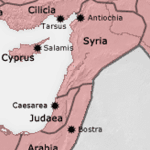 Judea was a mess, again. Judea was no longer Judah. Jerusalem was not a political capital, because it was ruled by Rome. Israel was centuries before defeated (even before the fall of Judah and the rise of Rome). Israel became part of Syria on the current Roman map. Galilee was less than a state, under the rule of different Romans than Judea. Nazareth was nothing more than a little fishing village, a nice place for Joseph to have a little carpenter shop and raise his family.
Certainly Joseph and Mary were poor as they eventually returned to Nazareth after being persecuted and living as refugees in Egypt. Certainly this refugee family which had quickly fled Bethlehem and Jerusalem struggled like so many of us as they settled in Nazareth with next to nothing.
The young boys, Jesus and his brothers, needed Joseph. They needed Mary. They needed the help of their community, Nazareth. They needed the help of those fellow worshipers of God who had the compassion to help this truly royal family without means to survive and live alongside them in Nazareth. Jesus and his mother and Father lived as a family and a part of the community of God.
In fact, the babe in the manger became a refugee.
Jesus needed both his father and his mother. Jesus needed help from faithful believers (like the wise men and others). Jesus needed a home to which He would return after the persecution. Jesus needed a family of friends and faithful followers.
Jesus needed community. Jesus needed help! Jesus needed the love of many between the events of the manger and the ministry of His three years of well-documented ministry as the Son of Man, Jesus of Nazareth.
If you could help Christ Jesus along His journey as a refugee fleeing the violence of the middle east, what would you do?
My dear brother [sister] in our Lord and Savior Jesus Christ: would you save Him?
Matthew 18 NASB
10 “See that you do not despise one of these little ones, for I say to you that their angels in heaven continually see the face of My Father who is in heaven. 11 [For the Son of Man has come to save that which was lost.]
14 So it is not the will of your Father who is in heaven that one of these little ones perish.
To be continued…