Category: Acts for a 21st c. Church

Acts Apostolos - Acts of the Apostles - the chronicles of Christ's Apostles - a history of Christ's Church including early leaders like Stephen, Philip the Evangelist, Paul, Barnabas and many others
Acts of the Apostles + a History of Christ’s Church

Acts of the Apostles 1-28


Acts of the Apostles:
+ The first century Church SHARED Christ while suffering severe persecution.
+ Luke records a historic account of the Church which gives 21c Christians a context to SHARE the Gospel of Jesus Christ with others.

Read more about the Early Church & add your COMMENT on Scripture.

ACT now.

+ SHARE the Gospel history witnessed in the CURRENT chronological SERIES from ACTS of the APOSTLES.

  • A Python of Prophesy Stalking Paul in Philippi

    A Python of Prophesy Stalking Paul in Philippi

    Who is this soothsaying python of Philippi?

    Luke mentions this woman in Acts 16 who follows Paul, Silas and Timothy around as they frequent a place of prayer down by the river.

    She may not have had such a nickname but her presence foretells the inevitable upcoming skirmishes between good and evil in Europe.

    Acts of the apostles 16:16

    As we were going to the place of prayer, we were met by a slave girl who had a spirit of divination and brought her owners much gain by fortune-telling. 17 She followed Paul and us, crying out,

    “These men are servants of the Most High God, who proclaim to you the way of salvation.”

    She’s right!


    Who is this girl?

    Why is a slave girl following these apostles sent out by the Holy Spirit of the Most High God?

    Luke continues by telling the reader:

    18 And this she kept doing for many days. 

    This Philippian slave girl continually followed them back and forth between the wall of Philippi and their place of prayer down by the Krenides River near town.


    Mythical and 1st c. Greece

    Many first century cultural subtleties escape our 21st century eyes. This is especially true of 1st century Greece.

    Paul understands the people of Macedonia much more than we will.

    Luke reveals more about Paul’s challenge ahead in this first European missionary battle about to take place in Philippi between good and evil.


    Philippi is an important Roman city unlike the small mountainous towns we just left. This incident is central to events about to take place.

    This girl is a slave. In the Roman empire her role is ordinary where more than one in ten people (perhaps more than 10% in Philippi) are slaves owned by and performing their labors for someone in town.

    Roman men, their families and slaves settled here in Macedonia live their everyday lives steeped in the myths and idolatries of a Hellenist lifestyle foreign to our 21st century cultural-inclusiveness and geometrically opposed to the Lord God and Christ Jesus.

    Mysteries of a higher and spiritual plane impact men and women in unknown and partially evident ways.

    Certain messengers of darkness, seers of the divine such as this young girl, become actors of revelation in the unseen battles between good and evil. These diviners of the oracles of darkness typically shun exposure to the Very Light of The Most High God.

    pneuma python – the spirit of divination

    Luke’s account of Acts begins with the power of the HOLY SPIRIT, of course — and therein lies the battle in the heavenly places between that which is HOLY [hagios] and that which is unholy.

    πύθων – pythōn

    From Putho (the name of the region where Delphi, the seat of the famous oracle, was located) – source: BlueLetterBible.org

    Parnassos, son of the nymph Kleodora – source Wikipedia.org

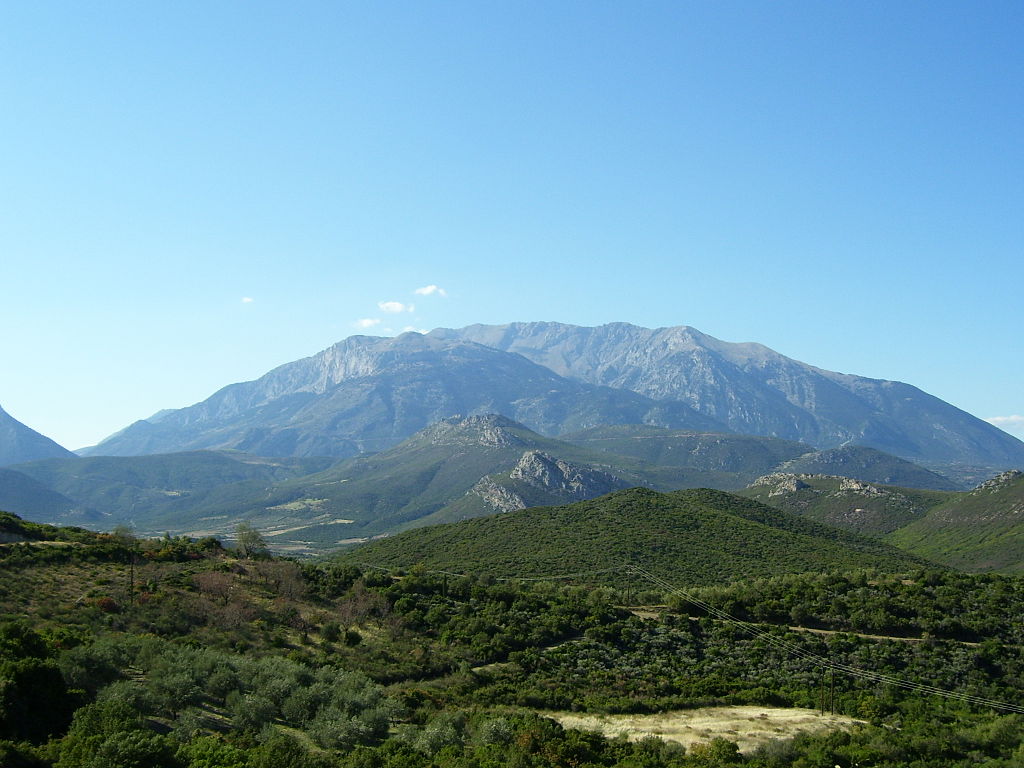
    Mount Parnassus [Python] near Corinth Greece
    oracle of the snake charmer

    Python – myth & mystery of the oracle

    DIVINATION .. a spirit by which she predicted the future

    .. by supernatural means. ..a fortune teller,

    μαντεύομαι –manteuomai from a derivative of G3105 (meaning a prophet, as supposed to rave through inspiration); to divine, i.e. utter spells (under pretense of foretelling:—by soothsaying.

    The young slave girl in Philippi is a soothsayer for her owner.

    “These men are slaves of the Most High God, who are proclaiming to you the way of salvation.”

    Acts of the apostles 16:17b Legacy Standard Bible

    Since as sons and daughters of Adam and Eve we have partaken of the tree of the knowledge of good and evil, what conclusion must we draw from the source of her magical insight?

    Paul understood her evil and super-natural source of knowledge. He may have been familiar with Greek mythology of the Oracle of Delphi (as are some of us).

    The Apostle certainly knew Scriptural instances of such knowledge, even one by his Hebrew namesake.

    The Witch at Endor

    1 Samuel 28:

    Now Samuel had died, and all Israel had mourned for him and buried him in Ramah, his own city. And Saul had put the mediums and the necromancers out of the land…

    And when Saul inquired of the Lord, the Lord did not answer him, either by dreams, or by Urim, or by prophets. Then Saul said to his servants, “Seek out for me a woman who is a medium, that I may go to her and inquire of her.” And his servants said to him, “Behold, there is a medium at En-dor.”


    Previously, on Cypress

    And Paul was more recently familiar with encountering such spiritual battles as the Apostle engaged a Jewish magician on Cypress.

    Elymas the magician, AKA Bar-Jesus

    But Saul, who was also called Paul, filled with the Holy Spirit, looked intently at him and said,

    “You son of the devil, you enemy of all righteousness, full of all deceit and villainy, will you not stop making crooked the straight paths of the Lord? And now, behold, the hand of the Lord is upon you, and you will be blind and unable to see the sun for a time.”

    Immediately mist and darkness fell upon him, and he went about seeking people to lead him by the hand..

    Acts of the Apostles 13:9-11a
    READ more about this earlier incident above.

    THESE Biblical encounters challenge the 21st century view of all mystery being explainable by science and logic. Even Christians struggle to image the higher reality of powers and principalities of the heavenly places.


    More of Greek Myths & false gods

    We will return to 1st c. Philippi shortly, but first some more background into the culture of these Roman cities in Greece.

    Oracle of Delphi

    source: ehistory.OSU.edu

    Source: Britannica.com

    a python at a river's edge

    The world famous Oracle of Delphi played an influential role in ancient history. For fourteen centuries it helped determine the course of empires. The prophesying was abolished in the 4th century as it conflicted with Christian beliefs that were at that time being embraced by Rome.

    Preston Chesser, Professor Dept of History, The Ohio State University

    A booming industry grew up around the Oracle. Temples were built and rebuilt, priests were trained, rituals evolved and sacrifices were performed. Priests interpreted the incoherent utterances of the Pythia. Presents were brought to both placate the deity and in the hope of influencing a positive prophesy. The Delphic temple itself became one of the largest “banks” in the world. Delphi became a center for banking and commerce.


    oracle, (Latin oraculum from orare, “to pray,” or “to speak”) – source Britannica.com

    DO NOT MISS THIS! Paul, Silas, Timothy and others have gone down to the river to pray. 
    So has the young slave girl who speaks revelation of the identity of these apostles of God. 

    The most famous ancient oracle was that of Apollo at Delphi, located on the slopes of Mt. Parnassus above the Corinthian Gulf. Traditionally, the oracle first belonged to Mother Earth (Gaea) but later was either given to or stolen by Apollo.

    Oracles delivered through incubation were believed to come from chthonian (underworld) powers..


    A cultural ACT against idolatry.

    18 And this she kept doing for many days.

    Paul, having become greatly annoyed, turned and said to the spirit, 

    “I command you in the name of Jesus Christ to come out of her.”
    And it came out that very hour.

    Acts of the Apostle Paul [16:18b ESV]

    SO WHAT HAPPENS when a soul is freed from an evil spirit who has given mysterious knowledge by the powers hidden in the recesses of life’s light?

    The slave girl no longer posses the power that has possessed her and therefore can no longer give oracles of value to her owner.

    You don't believe in such power beyond your 21st century scientifically enlightened knowledge, do you? 
    
    I have encountered such evil attached to a place or person. 
    Perhaps you have as well, yet were deceived by angels (messengers) of darkness in the unseen places or even the pulpit of false teaching.
    
    Jesus and the Apostles warned the Church against such evil. Paul acted against it by the Power of the Holy Spirit.

    19 But when her owners saw that their hope of gain was gone, they seized Paul and Silas and dragged them into the marketplace before the rulers. 


    ACTS of the apostles Paul and Silas — To Be Continued — in the town square of Philippi…

  • Lydia a Worshipper Down By The River

    Lydia a Worshipper Down By The River

    |:”WE’RE GOING DOWN TO THE RIVER 😐 TO PRAY”

    Lydia, a worshiper of God

    A brief outline of the opening of Europe to the Gospel of Jesus Christ beginning with the baptism of Lydia, a Jewish woman near a city with with few Jews.

    I’ll take you back to Philippi, Macedonia (geographically part of Greece) in the 1st c. superpower Empire of Rome and then continue with details of this apostolic account.

    Acts of the apostles 16:12

    ~ A.D. 50
    Paulos, Silas & Timotheos

    Philippi, which is a leading city of the district of Macedonia and a Roman colony.

    We remained in this city some days. – v.12b

    Don’t miss it:

    These three apostles sent out by the Holy Spirit, worshipers of the risen Lord Jesus Christ whom Paul had encountered in Person, have just sailed across to Philippi after Paul had received a vision of a man of Macedonia asking for HELP.

    And when Paul had seen the vision, immediately we sought to go on into Macedonia, concluding that God had called us to preach the gospel to them. – Acts 16:10

    13 And on the Sabbath day we went outside the gate to the riverside, where we supposed there was a place of prayer, and we sat down and spoke to the women who had come together.

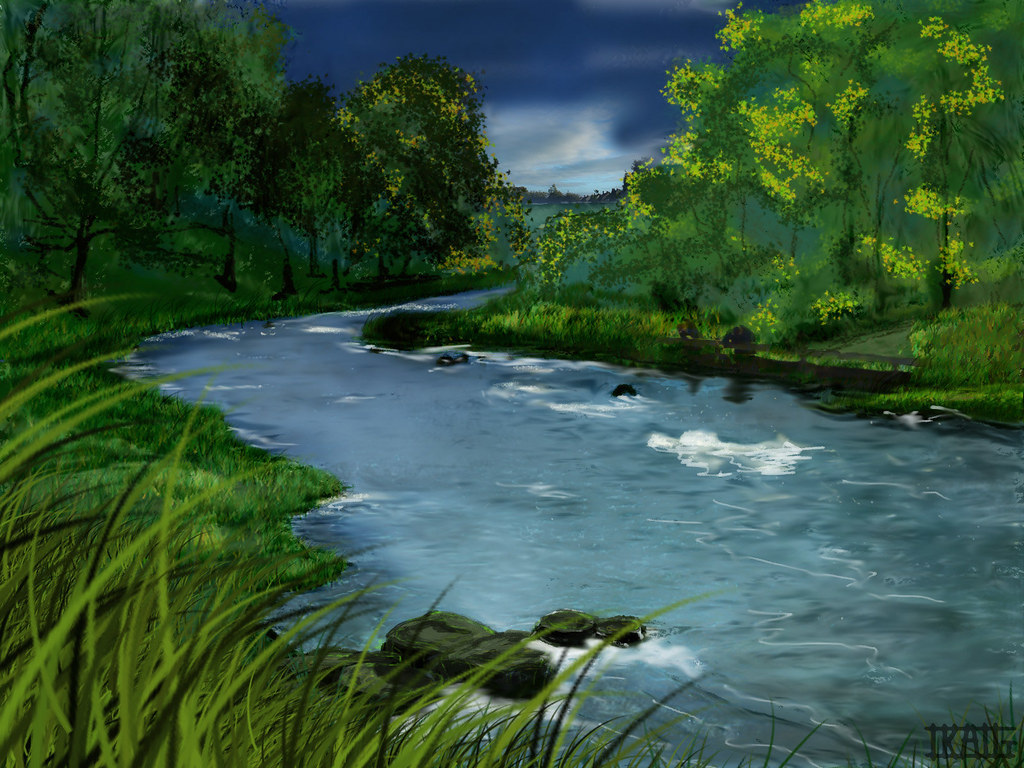
    Krenidas River near Philippi Macedonia where Paul baptized Lydia
    illustration of Krenides River near Philippi

    One who heard us was a woman named Lydia.. she was baptized, and her household as well..

    Acts of the Apostles 16:14-15 excerpt ESV

    Before we introduce you to Lydia, the woman who will become Europe’s first VIP of our second missionary journey — now arrived and residing in Macedonia — let’s glance again at the map and background of this 1st century Roman entry point to Europe across from Asia.

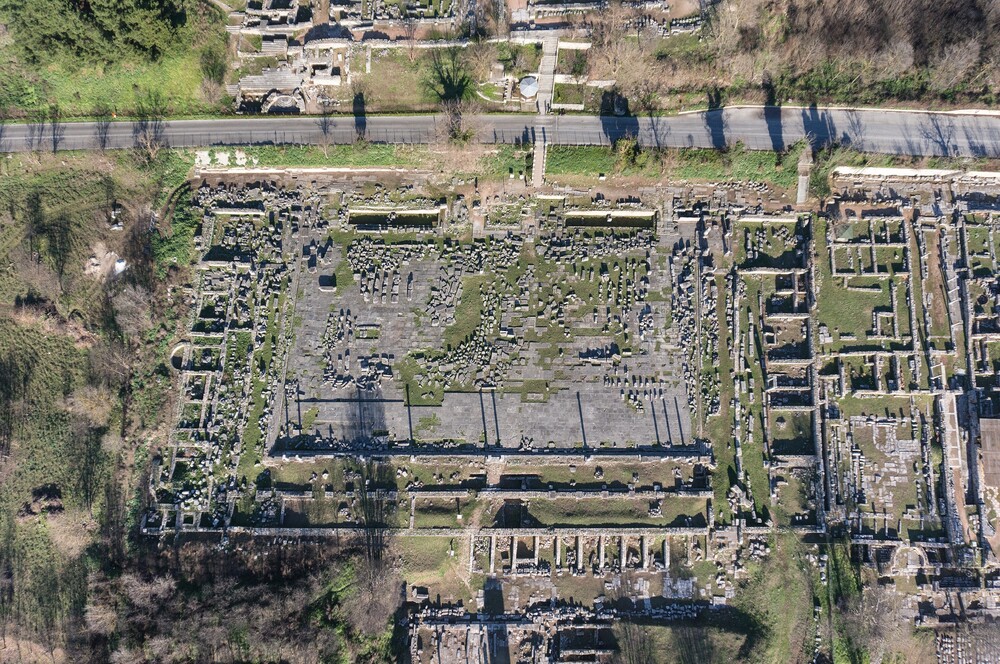
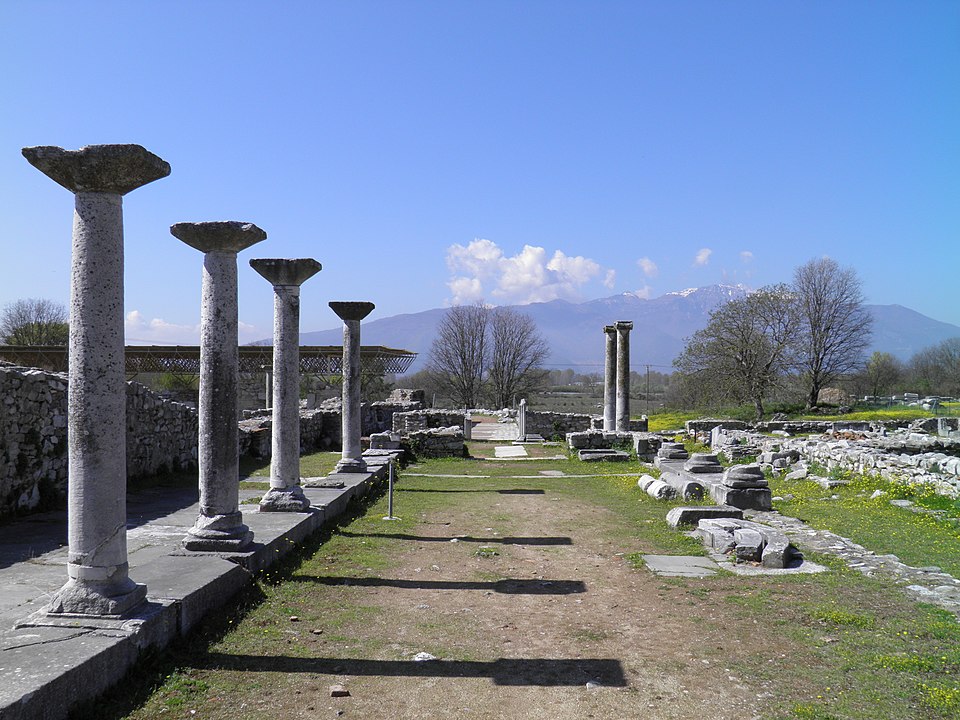
    Philippi

    Founded in 356 BC by the Macedonian King Philip II, the city developed as a “small Rome” with the establishment of the Roman Empire in the decades following the Battle of Philippi, in 42 BC.

    source: unesco
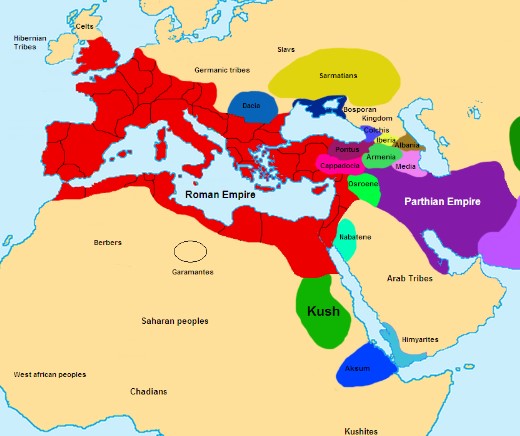
    Western Eurasia map AD50
    • A.D. 50 – The Roman Empire of Paul’s missionary journeys was vast and dominated the west or European part of Afro-Eurasia connected by the Mediterranean.
    • Much of it had once been part of a larger Alexandrian Empire founded by the MACEDONIAN King Philip for which Philippi was named.
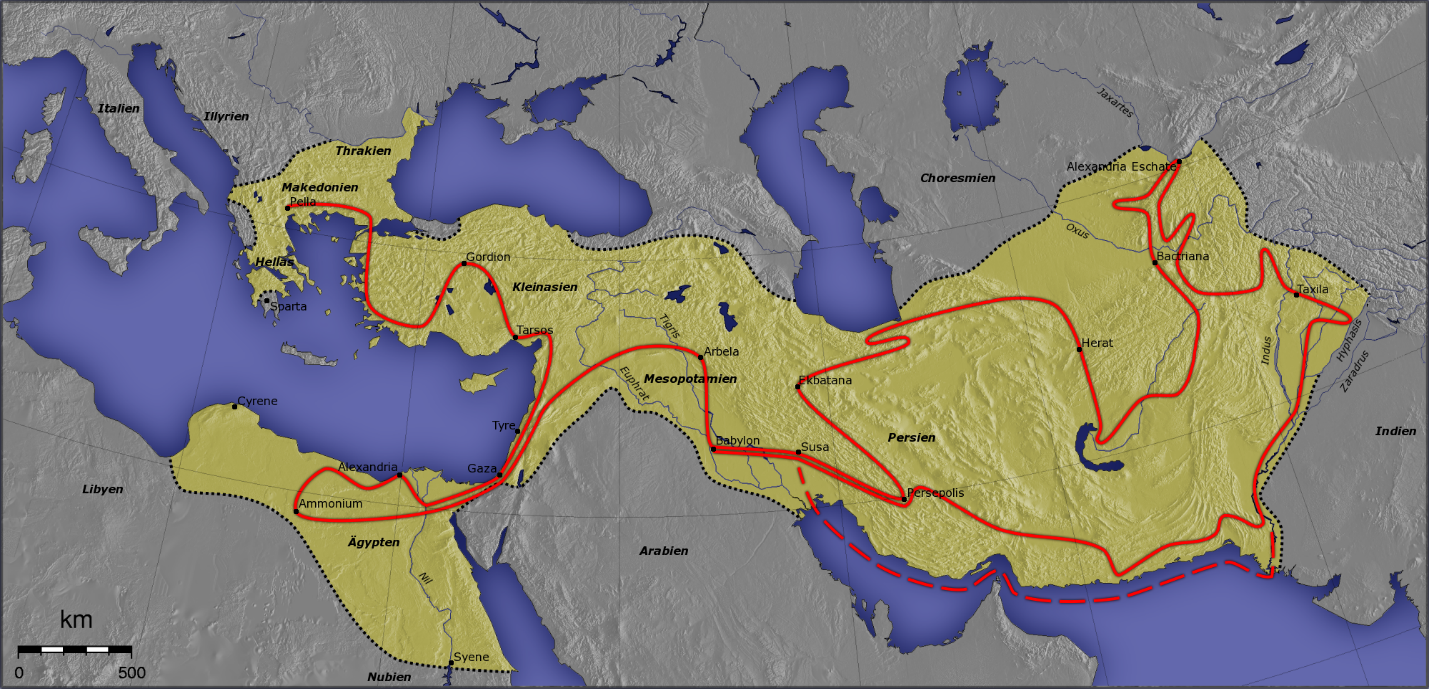
    Alexander III and a Macedonian army of his father Philip had conquered much of Afro-Eurasia in the 4th c. B.C.
    • 340 BC – At age 16 he is left in charge of Macedonia during Philip’s attack on Byzantium
    • 336 BC – Philip II assassinated; Alexander III becomes King, assassinates rivals, along with the League for Corinth he conquers Greek city-states and amasses an army to invade Persia.
    • 334 – 325 BC – Alexander defeats Darius III, king of Persia; Tyre (just S. of 1st Antioch, the church home of Paul’s missions); and Egypt, where he founds the city of Alexandria.
    • Alexander now occupied Babylon, city and province.. & invades India, defeating several local rulers.

    Philippi at a cultural crossroads between East and West

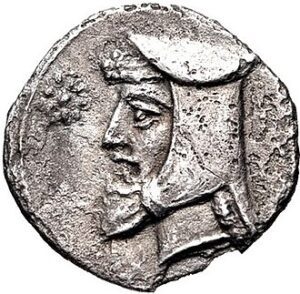
    Mazaios)[1] (died 328 BC) was an Achaemenid Persian noble and satrap of Cilicia and later satrap of Babylon for the Achaemenid Empire, a satrapy which he retained under Alexander the Great.[2]

    As a reward for his recognition of Alexander as the legitimate successor of Darius, Mazaeus was rewarded by being able to retain the satrapy of Babylon, as a Hellenistic satrap.

    source

    possible coin of Mazaios, Satrap of Cilicia (under the Achaemenids)Satrap of Babylon (under Alexander the Great) - source: Wikipedia Commons

    As Mazaeus’s appointment indicated, Alexander’s views on the empire were changing.

    He had come to envisage a joint ruling people consisting of Macedonians and Persians, and this served to augment the misunderstanding that now arose between him and his people.

    https://www.britannica.com/biography/Alexander-the-Great

    This same cultural cohesion of Alexander (from ancient Greek areas and philosophies admired by Rome) is a forerunner of the Pax Romana required of Greek, Roman, Persian, Jewish and all other peoples incorporated in the the Roman Empire.

    Continuing in Britannica’s description of Alexander’s final years:

    This policy of racial fusion brought increasing friction to Alexander’s relations with his Macedonians, who had no sympathy for his changed concept of the empire.

    His determination to incorporate Persians on equal terms in the army and the administration of the provinces was bitterly resented.

    https://www.britannica.com/biography/Alexander-the-Great

    Philippi – Battleground for the Roman Empire

    To what extent Paul and Silas, both Roman citizens, Timothy born of a Jewish mother and Greek father, and Lydia from Thyatira in Asia Minor across the Aegean from Philippi knew this Alexandrian background of their combined cultures we cannot be certain. However we can be confident that all would be familiar with a more recent and decisive incursion here known as the Battle of Philippi.

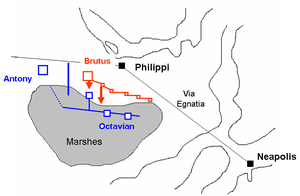
    3 and 23 October 42 B.C.

    • involving up to 200,000 men in one of the largest of the Roman civil wars
    • Brutus pushed back Octavian and entered his legions’ camp.
    • to the south, Cassius was defeated by Antony and committed suicide
    • the Republican fleet was able to intercept and destroy the triumvirs’ reinforcements of two legions ..The strategic position of Antony and Octavian became perilous
    • Octavian’s soldiers were able to capture the gates of Brutus’s camp.. Seeing that surrender and capture were inevitable, Brutus committed suicide
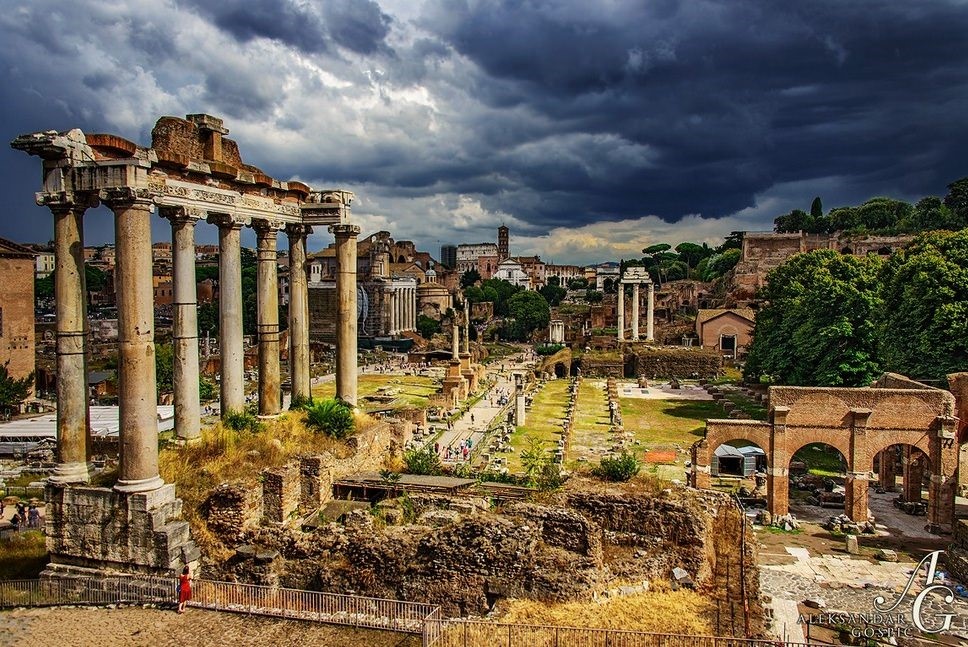
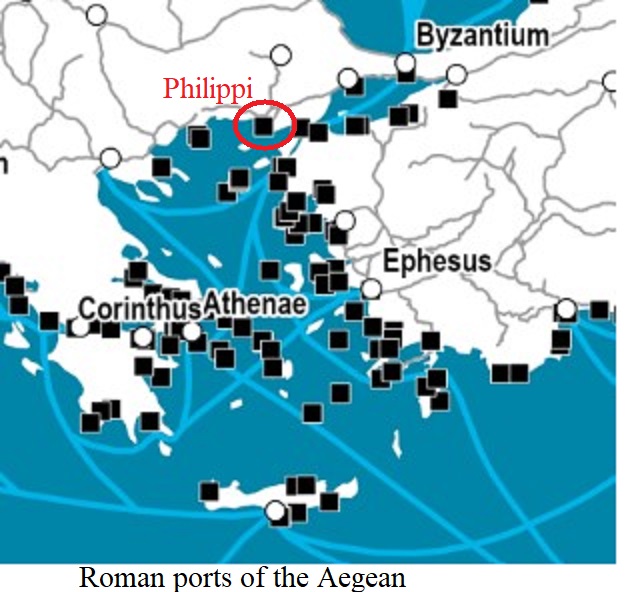
    Roman ports included Roman cities including Philippi modeled after ROME itself.

    Paul and Silas, Roman citizens, traveled on Roman-approved commercial ships and Roman roads to Roman cities like this leading city of Philippi where they met Lydia.

    It is neither Greek in one sense nor as Macedonian as its namesake. And one cultural certainty these travelers encountered after a few days in the city, PHILIPPI is NOT Jewish.


    Acts 16:13 – Morning Prayer Outside Philippi

    It’s now the Sabbath. Have Paul and Silas found some Jewish men in Roman Philippi?

    (IF there are at least 10, then these men would gather in a synagogue in their Macedonian/Roman city.)

    16:13 τῇ τε ἡμέρᾳ τῶν σαββάτων ἐξήλθομεν ἔξω τῆς πύλης παρὰ ποταμὸν οὗ ἐνομίζομεν προσευχὴν εἶναι καὶ καθίσαντες ἐλαλοῦμεν ταῖς συνελθούσαις γυναιξίν

    Apparently, NO. Not withing the acropolis of these Roman walls. So these faithful Jews seek a place of prayer.

    13 And on the Sabbath day we went outside the gate to the riverside, where we supposed there was a place of prayer, and we sat down and spoke to the women who had come together. 

    Lydia of Thyatira now lives in Philippi Macedonia

    Lydia

    14 One who heard us was a woman named Lydia, from the city of Thyatira [L on map across the Aegean in Asia Minor], a seller of purple goods, who was a worshiper of God.

    The Lord opened her heart to pay attention to what was said by Paul.

    Krenidas River near Philippi Macedonia where Paul baptized Lydia

    And after she was baptized..

    and her household as well, she urged us, saying,

    “If you have judged me to be faithful to the Lord, come to my house and stay.”

    And she prevailed upon us.


    ACTS of the apostles + To Be Continued — in Philippi


  • Come over to Macedonia and Help us

    Come over to Macedonia and Help us

    2 Routes from Mysia to Macedonia

    2nd missionary journey of Paul from the central plain near Derbe to departure point from Troas to Europe from Asia Minor (Turkiye)

    Where have Paul, Silas and Timothy been?

    Traveling with the Gospel through several towns in the central plain of Turkiye, an area unfamiliar to most Europeans (and distant from US).

    These apostles could have continued from Derbe as before as they had journeyed through SYRIA & CILICIA.

    Acts 16:

    5 So the churches were strengthened in the faith, and they increased in numbers daily.

    And they went through the region of Phrygia and Galatia, having been forbidden by the Holy Spirit to speak the word in Asia. 

    Acts of the Apostles 16:6 ESV – Journey of Paul, Silas & Timothy sent out with the Gospel to the central plain of Turkiye
    ORIGINAL ROUTE not taken: Land journey from towns of the central plain near Iconium to Macedonia would be ~500 miles.
    1st c. Roman region of Asia lies between PHRYGIA to the S & MYSIA to the N
    Last time we mentioned the beginning of their land journey, but these few verses provide no account of which towns or how long these men stayed in this part of the central plain beyond Lystra, Derbe and Iconium before sailing to Europe from Troas.

    And when they had come up to Mysia, they attempted to go into Bithynia, but the Spirit of Jesus did not allow them. 

    2nd missionary journey of Paul from the central plain near Derbe to departure point from Troas to Europe from Asia Minor (Turkiye)

    8 So, passing by Mysia, they went down to Troas.

    Cape Baba in Babakale, Turkey is the westernmost point in Asia.
    Troas, Asia Minor

    the leading of the Spirit

    You may have thought that Paul, Silas and Timothy had wandered from town to town in the mountains aimlessly proclaiming the Gospel wherever they happened on a town or small city. NOT SO.

    Here is how 21st century Christians (having to know every reason for every act of any 1st c. apostle of Jesus) will often trip over the mysterious leading of the Spirit.

    And just a reminder from the Greek that an apostle is a delegate, messenger, one sent forth with orders, especially orders from the triune God.


    WHY did Paul, Silas and Timothy end up in Troas (perhaps ready to sail back to Antioch or to Cypress once more where Paul could meet up with Barnabas and John Mark)?

    How is it that Paul did NOT choose a land route to Europe to begin proclaiming the Gospel to all the world?

    Luke tells us:

    • ACTS 16:6 ..having been forbidden by the Holy Spirit to speak the word in Asia.
      • ἁγίου πνεύματος – hagios pneuma – Holy Spirit
    • ACTS 16:7 ..but the Spirit of Jesus did not allow them.
      • τὸ πνεῦμα Ἰησοῦ – ho pneuma the Spirit – (SAME WORD)
        • definition in part G4151 i.e. a simple essence, devoid of all or at least all grosser matter, and possessed of the power of knowing, desiring, deciding, and acting
      • Ἰησοῦς – iēsous – of Jesus

    CHRISTIAN, do YOU obey the ALL-KNOWING and ETERNAL power of the risen JESUS?

    Do you allow the HOLY SPIRIT to direct YOU in directions GOD plans so different from the paths YOU would take?


    PAUL not only has encountered the risen JESUS some years back when Christ REDIRECTED this apostle to the gentiles in an entirely different direction,

    but Saul of Tarsus AND ALL of these apostles were “sent out” by the HOLY SPIRIT, as well as from their local Church back in Antioch.

    The Lord Jesus continues to order his 21st c. disciples of the church into unknown, even mysterious places — into a world unfamiliar to their former witness of God.

    Taking the Gospel into a Greco-Roman world

    Roman roads and ports in AD 125
    Roman roads & routes of the Aegean Sea later in AD 125

    The Lord Jesus continues to order his disciples of the church into unknown, even mysterious places — into a world unfamiliar to their former witness of God.

    The increasing presence of Rome in so many strategic ports of the Aegean in Paul’s day dominated all travel in and between the major cities of Eurasia.

    The Apostles might have sailed back to Antioch from the Roman-occupied towered town and port of Troas. Yet by the command of the Spirit they took the commercial ferry routes toward Philippi near the north-western shore of the Aegean – a leading Greek city in Europe.

    A vision in Troas

    ACTS 16:9

    And a vision appeared to Paul in the night: a man of Macedonia was standing there, urging him and saying,

    “Come over to Macedonia and help us.”

    What will Silas and Timothy think of this sudden change of tickets for an entirely different journey ahead?

    And when he had seen the vision, immediately we sought to go on into Macedonia, concluding that God had called us to preach the gospel to them.

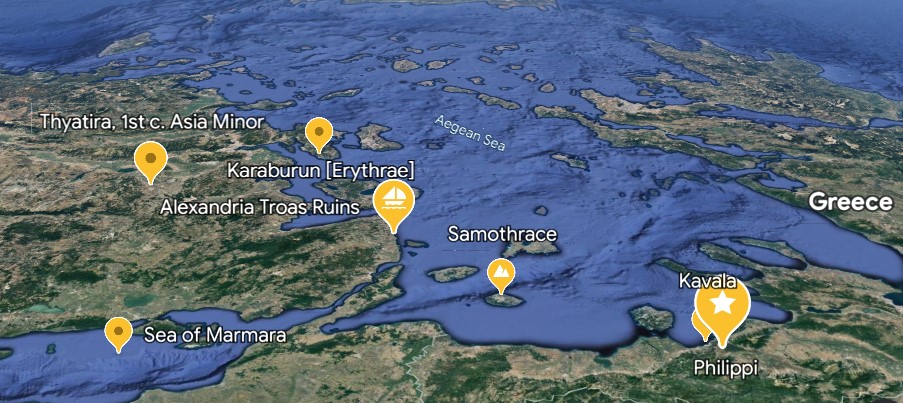
    google earth of Aegean Sea coast between Troas and Macedonia
    Troas to Neapolis, Philippi, Macedonia

    Sailing from Troas to Neapolis

    11 So, setting sail from Troas, we made a direct voyage to Samothrace,

    and the following day to Neapolis,

    You'll have difficulty finding 'Nea polis' on a map because it's Greek for "new city." Even on Cypress Paul had been to Nea Paphos, built after an earthquake had destroyed much of Paphos.
    
    Nowadays the city's nickname is "the cyan city" (Η γαλάζια πόλη) and the symbol of the municipality of Kavala is the head of goddess Parthenos, the patron goddess of ancient Neapolis, as depicted in the coinage of the ancient Greek city. - source: Wikipedia

    12 and from there to Philippi, which is a leading city of the district of Macedonia and a Roman colony. We remained in this city some days.


    Comment on Scripture – Share the Gospel

    The Second Missionary Journey of Christ’s apostles Paul, Silas and Timothy

    To be continued…

    in Europe.