Acts of the Apostles + a History of Christ’s Church
Acts of the Apostles 1-28
Acts of the Apostles:
+ The first century Church SHARED Christ while suffering severe persecution.
+ Luke records a historic account of the Church which gives 21c Christians a context to SHARE the Gospel of Jesus Christ with others.
Read more about the Early Church & add your COMMENT on Scripture.
ACT now.
+ SHARE the Gospel history witnessed in the CURRENT chronological SERIES from ACTS of the APOSTLES.
1st c. Roman region of Asia lies between PHRYGIA to the S & MYSIA to the N
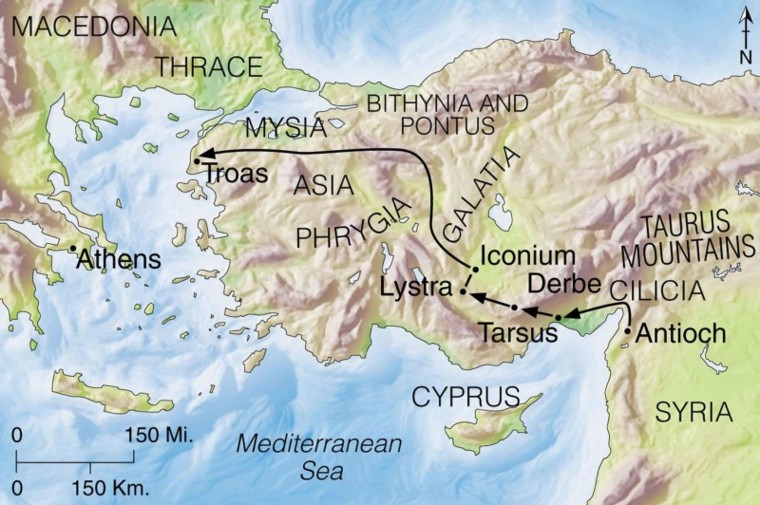
Last time we mentioned the beginning of their land journey, but these few verses provide no account of which towns or how long these men stayed in this part of the central plain beyond Lystra, Derbe and Iconium before sailing to Europe from Troas.
7 And when they had come up to Mysia, they attempted to go into Bithynia, but the Spirit of Jesus did not allow them.
8 So, passing by Mysia, they went down to Troas.
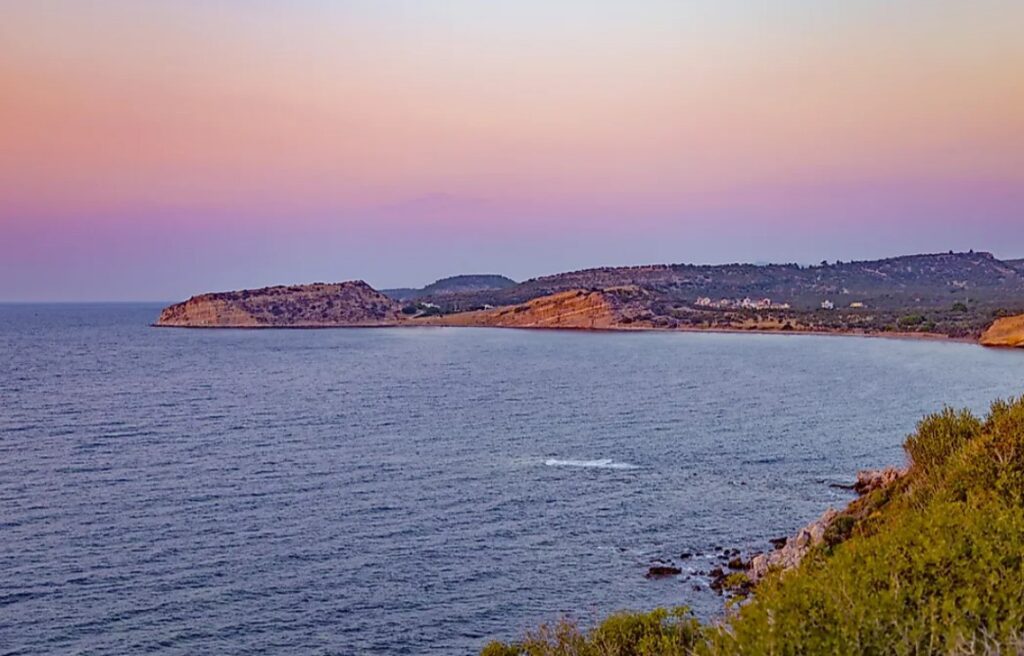
Troas, Asia Minor
the leading of the Spirit
You may have thought that Paul, Silas and Timothy had wandered from town to town in the mountains aimlessly proclaiming the Gospel wherever they happened on a town or small city. NOT SO.
Here is how 21st century Christians (having to know every reason for every act of any 1st c. apostle of Jesus) will often trip over the mysterious leading of the Spirit.
And just a reminder from the Greek that an apostle is a delegate, messenger, one sent forth with orders, especially orders from the triune God.
WHY did Paul, Silas and Timothy end up in Troas (perhaps ready to sail back to Antioch or to Cypress once more where Paul could meet up with Barnabas and John Mark)?
How is it that Paul did NOT choose a land route to Europe to begin proclaiming the Gospel to all the world?
Luke tells us:
ACTS 16:6 ..having been forbidden by the Holy Spirit to speak the word in Asia.
ACTS 16:7 ..but the Spirit of Jesus did not allow them.
τὸ πνεῦμα Ἰησοῦ – ho pneuma – the Spirit – (SAME WORD)
definition in part G4151 i.e. a simple essence, devoid of all or at least all grosser matter, and possessed of the power of knowing, desiring, deciding, and acting
CHRISTIAN, do YOU obey the ALL-KNOWING and ETERNAL power of the risen JESUS?
Do you allow the HOLY SPIRIT to direct YOU in directions GOD plans so different from the paths YOU would take?
PAUL not only has encountered the risen JESUS some years back when Christ REDIRECTED this apostle to the gentiles in an entirely different direction,
but Saul of Tarsus AND ALL of these apostles were “sent out” by the HOLY SPIRIT, as well as from their local Church back in Antioch.
The Lord Jesus continues to order his 21st c. disciples of the church into unknown, even mysterious places — into a world unfamiliar to their former witness of God.
Taking the Gospel into a Greco-Roman world
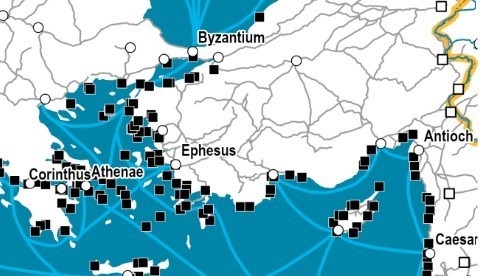
Roman roads & routes of the Aegean Sea later in AD 125
The Lord Jesus continues to order his disciples of the church into unknown, even mysterious places — into a world unfamiliar to their former witness of God.
The increasing presence of Rome in so many strategic ports of the Aegean in Paul’s day dominated all travel in and between the major cities of Eurasia.
The Apostles might have sailed back to Antioch from the Roman-occupied towered town and port of Troas. Yet by the command of the Spirit they took the commercial ferry routes toward Philippi near the north-western shore of the Aegean – a leading Greek city in Europe.
A vision in Troas
ACTS 16:9
And a vision appeared to Paul in the night: a man of Macedonia was standing there, urging him and saying,
“Come over to Macedonia and help us.”
What will Silas and Timothy think of this sudden change of tickets for an entirely different journey ahead?
And when he had seen the vision, immediately we sought to go on into Macedonia, concluding that God had called us to preach the gospel to them.
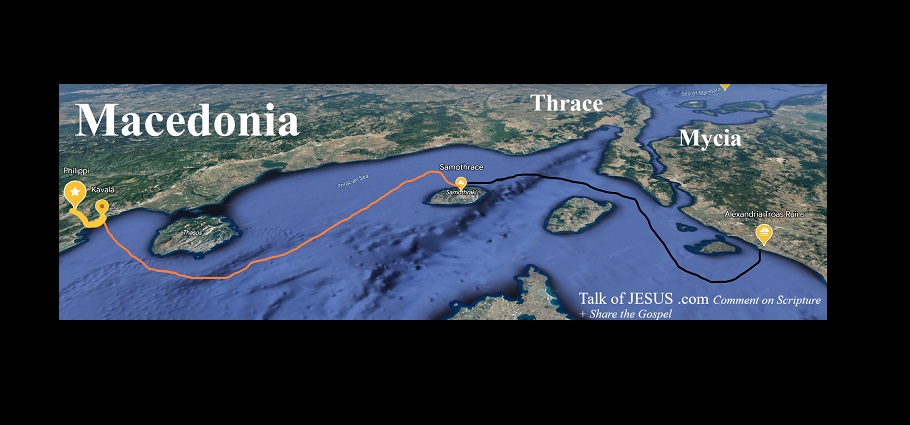
Troas to Neapolis, Philippi, Macedonia
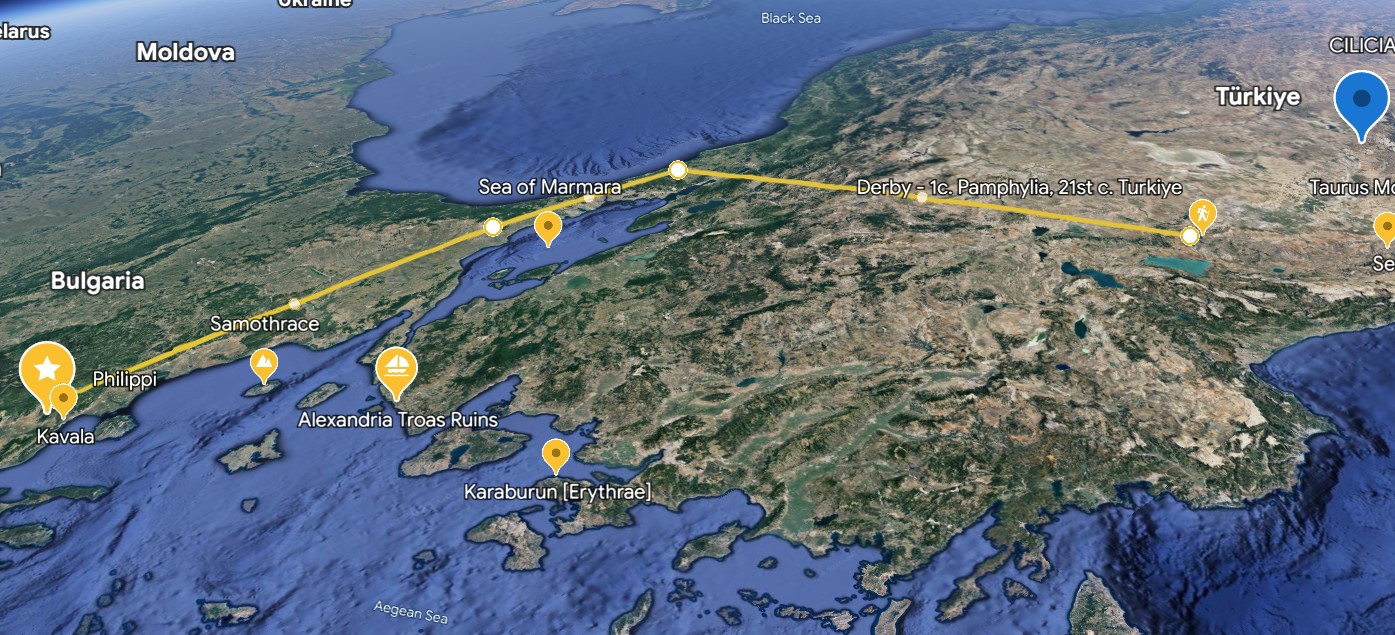
Sailing from Troas to Neapolis
11 So, setting sail from Troas, we made a direct voyage to Samothrace,
and the following day to Neapolis,
You'll have difficulty finding 'Nea polis' on a map because it's Greek for "new city." Even on Cypress Paul had been to Nea Paphos, built after an earthquake had destroyed much of Paphos.

Nowadays the city's nickname is "the cyan city" (Η γαλάζια πόλη) and the symbol of the municipality of Kavala is the head of goddess Parthenos, the patron goddess of ancient Neapolis, as depicted in the coinage of the ancient Greek city. - source: Wikipedia
12 and from there to Philippi, which is a leading city of the district of Macedonia and a Roman colony. We remained in this city some days.
The importance of this juncture in Paul’s journey, now with Silas and Timothy, cannot be overemphasized as these apostles are sent out beyond Asia into all the world of Euro-Asia.
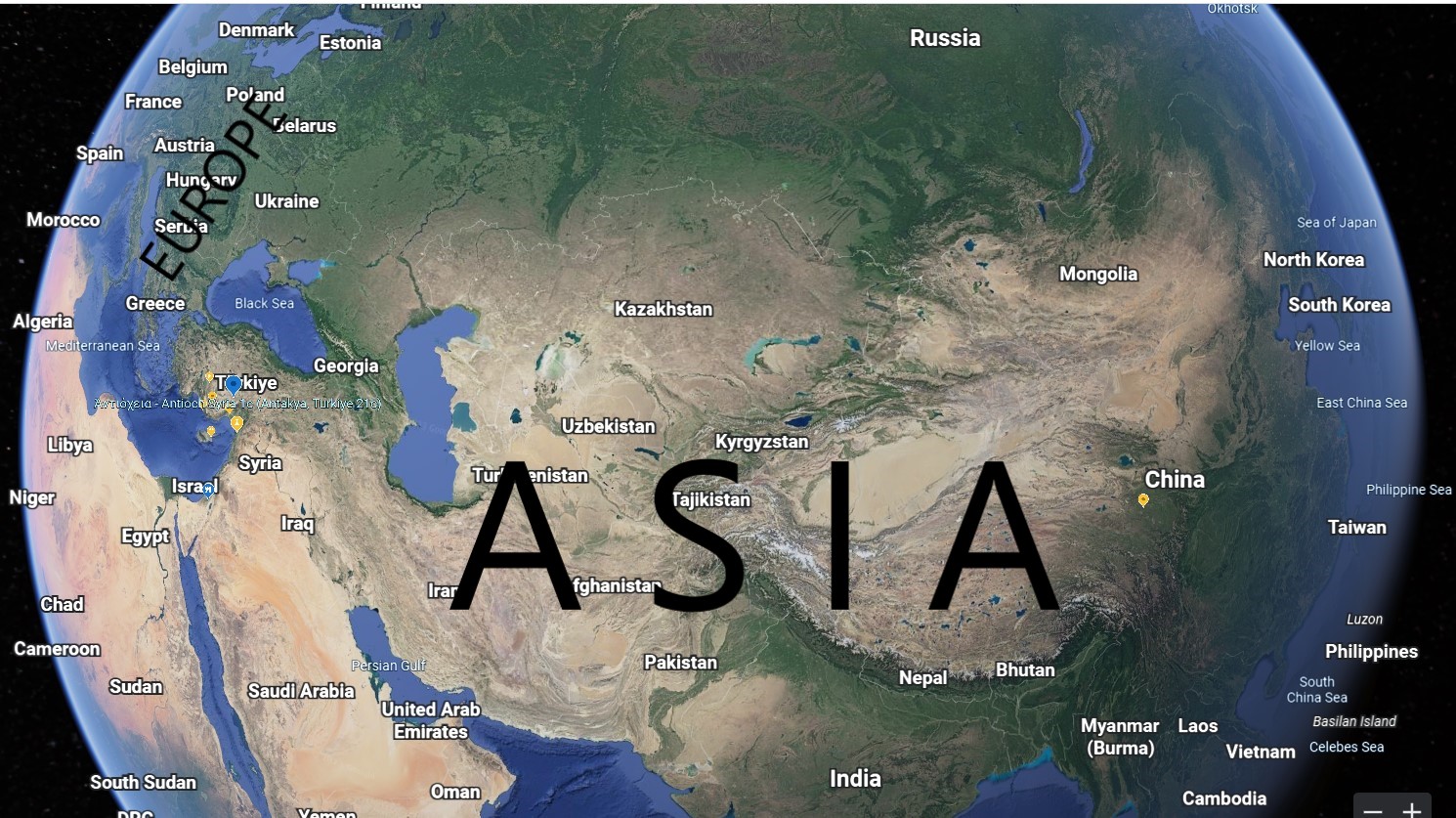
Asia – the BIG picture
Growing up geographically-challenged (as my 5th grade teacher surely would have confirmed) in a small village far distant from Paul’s missionary journeys I was CLUELESS when I read Luke’s lists of places in Acts.
Where were these cities? (Or were they states? Perhaps a province of some kind?)
And ASIA? (That’s confusing.)
Continents as I remembered(5? or 7?):
North America (That’s US.)
South America (Go toward Texas & keep going.)
Europe (Cross the Atlantic like Europeans did & founded 13 colonies in America)
Africa (everything south of the Mediterranean Sea, Egypt and all those jungle places south where Europeans brought slaves to America.)
Antarctica (it’s all ice and nobody lives there.. Is it the one on the South Pole or north?)
Asia (Russia, from where Europe ends west to the Pacific & India, China, Japan along the Pacific
Australia (How can an English island below Asia be called a continent?)
C -
Go into all the world GEOGRAPHY (remedial)
ASIA ~30% of land area of earth, part of Eurasia,
~17 million sq. miles
Join me as I refresh some of my quite limited knowledge of geography - especially of Asia.
It shares land borders with Europe, which is not defined and hence share a landmass called Eurasia.
Afro-Eurasia is the name given to the landmass between Asia, Europe, and Africa.
Asia shares a lot of its extreme points with Europe, especially Russia.
Cape Dezhnev, 66°4′45″N 169°39′7″W, located on the Chukchi Peninsular, between the Chukchi Sea and the Bering Strait [W. of Alaska] , is the easternmost point of mainland Asia.
Pamana Island, 11°00′36″S 122°52′37″E, is the southernmost point of Asia, located in the Lesser Sunda Islands, East Nusa Tenggara province of Indonesia.
The northernmost point on the Asian mainland is Cape Chelyuskin, 77°44′0″N 104°15′0″E. At 1370km from the North Pole, ..located at the Taymyr Peninsula,
Westernmost Point In Asia
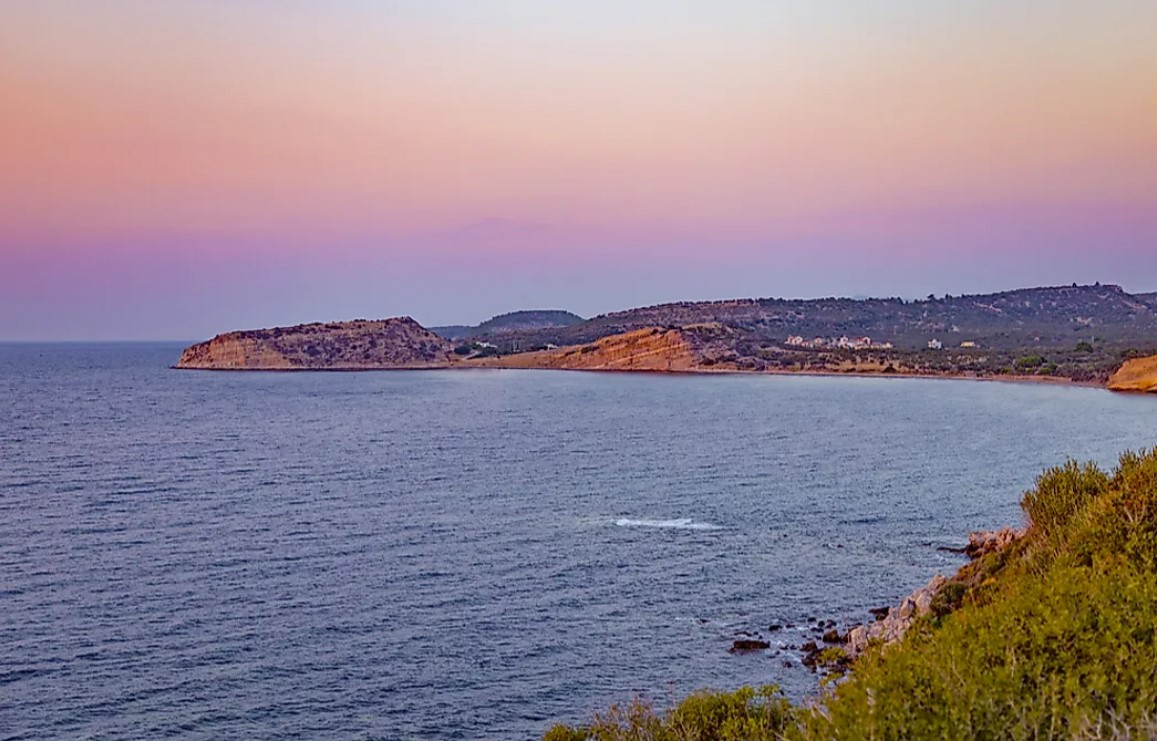
Cape Baba, 39°28′47″N 26°03′50″E, located on the Anatolian part of Turkey, is the westernmost part of Asia. Located in Babakale village also known as Father’s Castle in historical Troad. Apostles Luke’s journey around the cape, and Apostle Paul’s journey on land are recorded in the biblical book Acts of the Apostles.
Troas on Cape Baba in Babakale, Turkey [Turkiye] is the westernmost point in Asia.
Asia Minor, Roman Remnant of a former Empire
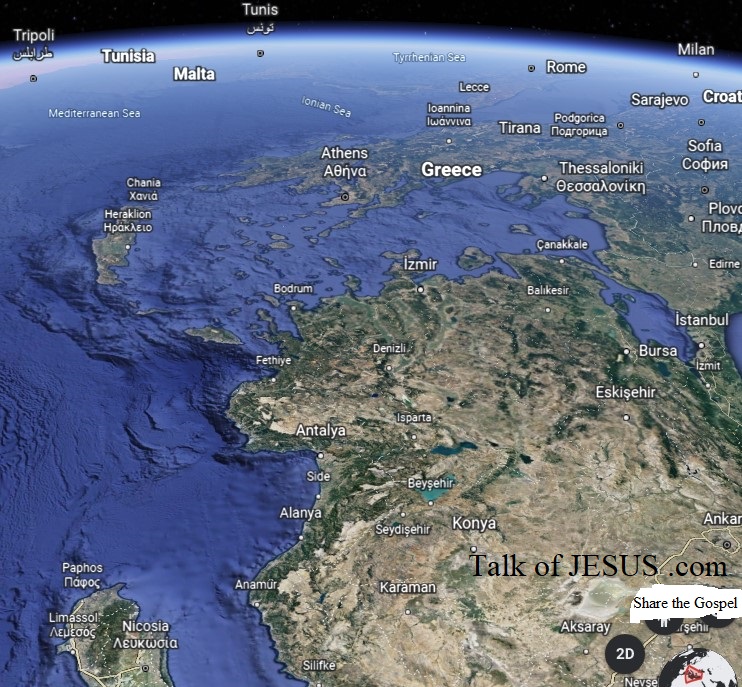
Zoom in with Roman military eyes toward a vast empire to the east situated on the westernmost shores of Asia, fixing your eyes on adjacent Aegean shores of 21st c. Turkiye.
This geographical-historical view of the Asia minor region is provided only for its context of culture as it intersects with Paul's missionary journeys 'into all the world' of Eurasia.
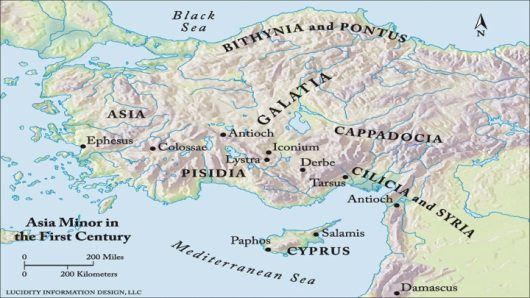
Asia Minor
Follow the southern coastline from nearest to Rome toward the east and riches of former empires.
Rome’s region of ASIA MINOR
conquered via the vast Mediterranean and inland to the Taurus mountains includes [W. to E.]:
Pisidia [N. of Perga],
Pamphylia [along a coast N. of Cypress],
Cilicia [with its port city of Tarsus] and finally
Syria (at times including Judea).
Further Roman conquests inland to the north included:
a large Roman province of GALATIA
N from Iconium and on its Western edge Antioch Pisidia, all of the central plain to the borders of
a more remote Cappadocia in the mountains to the north of Cilicia and Tarsus and Antioch Syria,
N to Bithynia and Pontus on the Black Sea and again toward
Phrygia along the mountainous borders with Asia Minor toward Mysia and the strategically situated Sea of Marmara between the narrow isthmus connecting the Black and Aegean Seas.
In Roman times, however, when Paul journeyed there, the country was divided into two parts, one of which was known as Galatian Phrygia, and
the other as Asian Phrygia, because it was a part of the Roman province of Asia, but the line between them was never sharply drawn.
And they went through the region of Phrygia and Galatia, having been forbidden by the Holy Spirit to speak the word in Asia. – ACTS 16:6
The Empires Before Christ
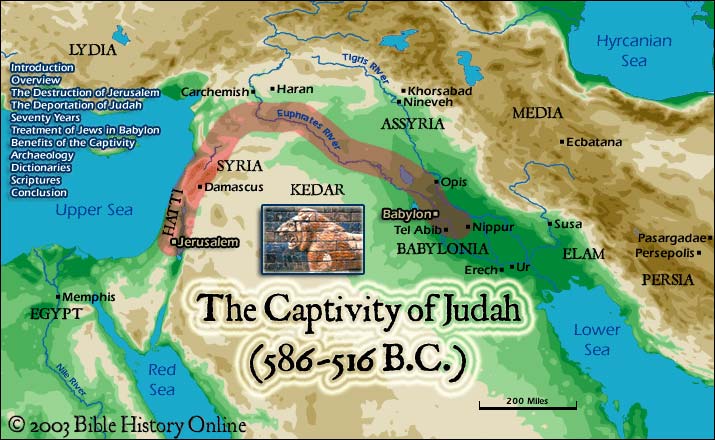
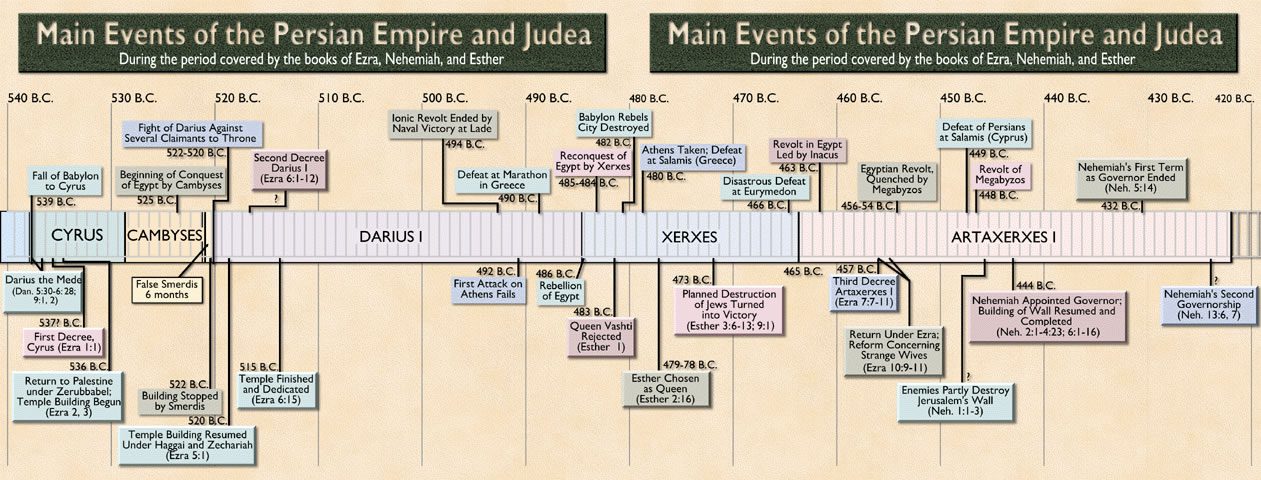
6th century Before Christ6th-5th centuries B,C. the Persian Empire (to the East) adds the Babylonian Empire to its captive provinces
Paul, Silas and Timothy will know these events well from Scripture, but those are no longer the Empires of concern to either the Jews or Rome. In a more recent history of Judea and Eurasia one vast Empire rivals all others.
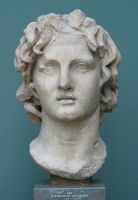
Roman bust, 2nd century AD / Creative Commons license
[Alexander’s] undermanned defeat of the Persian King Darius III at the Battle of Gaugamela is seen as one of the decisive turning points of human history, unseating the Persians as the greatest power in the ancient world and spreading Hellenistic culture across a vast new empire.
The reign of Alexander the Great was short-lived. After subduing all of the Persian Empire, his army marched east and got as far as India before turning back home to Macedon. But he never made it home.
At just 32 years old, Alexander died in Persia in the palace of Nebuchadnezzar II in Babylon.
323 BC – 30BC – a Greek-ish Eurasia
Click the link below to see a map of the Hellenized 'Greek-ish' world after Alexander the Great where the Apostle Paul now witnesses Christ. READ a detailed lecture on
There were no more city-states. Monarchies prevailed, modeling themselves after Alexander’s empire. He had achieved a divine status in his lifetime, and his successors wanted to as well. They established “ruler cults” in which they were obeyed as kings and worshipped as gods.
A sense of cosmopolis developed in the Hellenistic Age (“polis” plus “cosmos”). Worldly, experienced, and highly-cultured people used to live in small city-states and not worry about the world beyond, but now they had seen and even ruled this world and began to say they were no longer citizens of Athens, Corinth, and so on, but instead citizens of the cosmic polis (cosmopolis), the world.
Paul and the Apostles sent out into all the world live in the crossroads between a culture of Alexander established just a few centuries earlier AND ambitious Roman Caesars reconquering lands and cultures to be absorbed into a new Pax Romana — IF you will surrender your land and its people into one international Empire of their Roman peace.
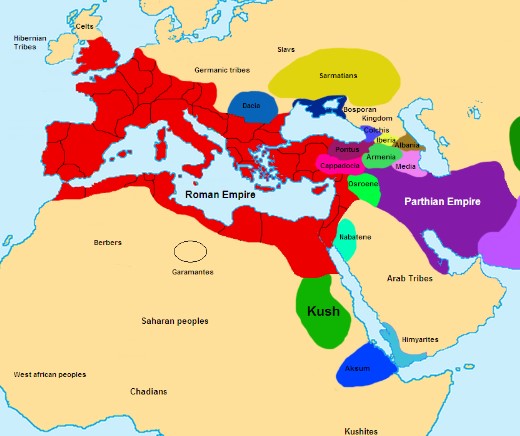
AD 50 – Eurasia
The year in the middle of Paul’s 2nd Missionary Journey.
Rome had conquered the Ptolemaic Kingdom of Egypt near Judea some time ago, but the Empire’s military defense of the Eastern front in Syria kept close eye on the Parthian Empire and frequently engaged in battle losing and retaking various land.
A Greek-ish in culture of the Eurasian world remained reticent of Roman Legions suppressing unwilling rulers in uncooperative localities.
Politically astute men like a Herod or Saul of Tarsus understood this ever-shifting landscape of living as part of the political leadership and military power of the Roman Empire.
Paul would have been attuned to recent changes in both Asia and Europe as the Apostle now travels toward a new destination with Silas and Timothy. They seem to be travelling intentionally and slowly (which we might easily miss in these few brief verses of Acts.
AD 43 – During those years after Paul had witnessed Jesus on the road to Damascus, just four years prior to his first missionary journey here and to Cypress, Rome had invaded Britannia in the West. Legions had also conquered Lycia on the SW coast near Asia Minor where previously they had sailed to and from Perga.
AD 46 – Just a year prior to Paul’s first missionary journey
After the death of the Thracian king Rhoemetalces III in 46 AD and an unsuccessful anti-Roman revolt, the kingdom was annexed as the Roman province of Thracia. The new province encompassed .. the north-eastern portion of the province of Macedonia as well as the islands of Thasos, Samothrace and Imbros in the Aegean Sea.
4 As they went on their way through the cities, they delivered to them for observance the decisions that had been reached by the apostles and elders who were in Jerusalem. 5 So the churches were strengthened in the faith, and they increased in numbers daily.
6 And they went through the region of Phrygia and Galatia, having been forbidden by the Holy Spirit to speak the word in Asia.
These apostles sent out from Antioch Syria have traveled about half-way on this 2800 mile [4500 km] journey into a Greek-ish Roman-ruled world. Their remaining journey in Euro-Asia will include many more important cities where they will preach the Gospel of Jesus Christ in the upcoming year.
7 And when they had come up to Mysia, they attempted to go into Bithynia, but the Spirit of Jesus did not allow them. 8 So, passing by Mysia, they went down to Troas.
Paul’s 2nd Missionary Journey – first half through Asia
Why does circumcision of Timothy now seem to be a necessity if he is to continue with Paul and Silas on this second missionary journey?
After parting ways with Barnabas, Paul has chosen Silas and departed, having been commended by the brothers to the grace of the Lord.
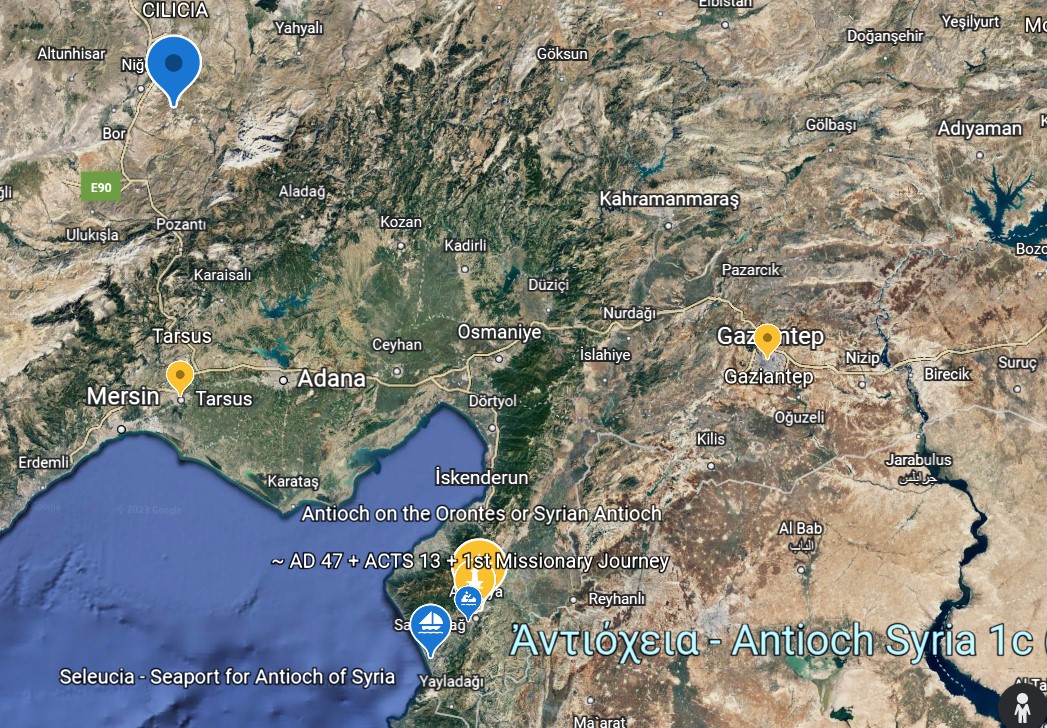
And he went through Syria and Cilicia, strengthening the churches.
Acts of the Apostles 15:41 ESV
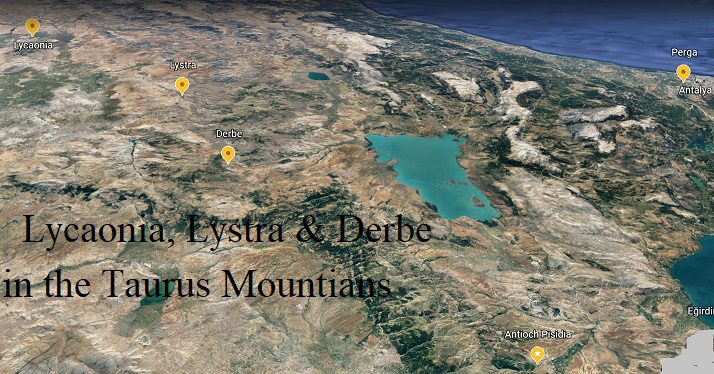
view of the Taurus mountains looking Southeast back toward roads from Syria
Paul, on this second missionary journey began via a land route from the church in Antioch, rather than by sea and then proceeding north from Perga as he and Barnabas had traveled before after walking across Cypress to its coastal towns.
A disciple was there, named Timothy, the son of a Jewish woman who was a believer, but his father was a Greek.
2 He was well spoken of by the brothers at Lystra and Iconium.
3 Paul wanted Timothy to accompany him, and he took him and circumcised him because of the Jews who were in those places, for they all knew that his father was a Greek.
But wait! I thought that we had settled those issues of circumcision at the Council in Jerusalem?
Since we have heard that some persons have gone out from us and troubled you with words, unsettling your minds, although we gave them no instructions, it has seemed good to us, having come to one accord, to choose men and send them to you with our beloved Barnabas and Paul, men who have risked their lives for the name of our Lord Jesus Christ. – Acts 15:24-25 ESV
Cultural clashes between Greeks and Jews
In fact, Saul of Tarsus continues to preach Christ to the Jews at great cost as the apostle returns once more to their local synagogues along with others.
Do you recall the issue which had led Paul and Barnabas to return to Jerusalem?
Circumcision.
Many gentiles had come to follow Christ and worshiped as brothers alongside converted Jews of The Way. Young Timothy is the son of one such believer.
Saul of Tarsus had been equally zealous for the Mosaic traditions before his encounter with Christ some years ago.
Joseph of Cypress (Barnabas) had sought out Saul in Tarsus where Paul had mostly stayed out of sight of zealous Judaizers for ten years. This is not dissimilar to Joseph bringing Mary and the child Jesus out of Egypt more than forty years before after the death of Herod’s grandfather.
Yet Zealots for the Law and traditions had recently caused trouble on Saul’s first missionary journey with Barnabas.
Apostles sent out into ever-changing political landscapes of Rome, Judea and a Hellenist world in between journeyed on frequently-shifting tectonic plates of clashing cultures.
Some men had come down to Antioch from Judea saying,
“Unless you are circumcised according to the custom of Moses, you cannot be saved.”
Acts 15:1b ESV
This incident in Iconium, one of many, had threatened the apostles sent out by the Church.
On his second missionary journey Paul seeks out these new believers once more, including a young man named Timothy who had been raised by his Jewish grandmother and mother.
16:2 He was well spoken of by the brothers at Lystra and Iconium.
Luke mentions [16:1] that Paul and Silas travel to Lystra and Derbe even before now mentioning ‘brothers‘ in Iconium. What had happened in Iconium last time?
Now at Iconium they entered together into the Jewish synagogue and spoke in such a way that a great number of both Jews and Greeks believed.- Acts of the Apostles 14:1 ESV
At Iconium as in Antioch Pisidia the apostles received a divided (and sometimes violent) reception to the Gospel.
The Jews of Cilicia held to their Jewishness in opposition to rampant cultural sin in the customs and ceremonies of an idolatrous Hellenistic majority of their own towns. Saul of Tarsus returns to these Christian brothers trying to convince other Jewish brothers that Jesus is the Christ.
How could these apostles of the risen Jesus reach even more Jews in theirs journeys?
In order to do this the Apostle Paul and his company of men must seem most Jewish in order to proclaim Christ in their synagogues.
BUT the issue of bringing Timothy to other towns is that his father is Greek and of course had not circumcised his son eight days after his birth — in the manner and custom of Hebrew fathers.
חֲתַן דָּמִים לַמּוּלֹֽת׃
Circumcision
At that time she said, “You are a bridegroom of blood” with reference to the circumcision.
Exodus 4:26b – Proclamation of Zipporah after she completed this sign of the covenant of the LORD on Moses’ son.
We read and the Hellenists read of the signs that the Lord God had confirmed His solemn promises to Abraham.
And he gave him the covenant of circumcision. And so Abraham became the father of Isaac, and circumcised him on the eighth day, and Isaac became the father of Jacob, and Jacob of the twelve patriarchs.
ACTS of the Apostles 7:8 – from the preaching of Stephen to the Sanhedrin (most likely with Saul of Tarsus nearby)
Let’s be clear that in the διαθήκη covenant of περιτομή circumcision that our solemn agreement cut with the LORD is paramount to any sign or evidence of the flesh.
And likewise the cup after they had eaten, saying,
“This cup that is poured out for you is the new covenant in my blood.
Gospel of Luke 22:20 – the words of the Lord Jesus to the Twelve at the meal of the last Passover
WE are not Jews or Christians — true followers of the LORD (as was Moses) — true disciples of Jesus the Christ of the New Covenant — by signs of baptism, communion, ceremony or any other claim of grace separate from God’s covenant in Scripture.
The Apostle Peter had also been confronted with this same issue after reporting back to the Church in Jerusalem of the signs of the Holy Spirit also given to the gentiles.
Peter, John, Phillip, Paul, Barnabas and all the evangelists of the Gospel must continue to convince Jews as well as gentiles concerning God’s mercy and new covenant of the heart.
Paul’s later letter begins by addressing circumcision.
For I am not ashamed of the gospel, for it is the power of God for salvation to everyone who believes, to the Jew first and also to the Greek.
Romans 1:16 ESV
To the Jew FIRST — Apostolic approach of taking the Gospel into all of the 1st century world.
Paul mentions the culture of so many idolaters among whom the Jews and Christians live. This idolatry is a legitimate concern, more so than a sign of circumcision.
Romans 1:22 Claiming to be wise, they became fools, and exchanged the glory of the immortal God for images resembling mortal man and birds and animals and creeping things.
24 Therefore God gave them up in the lusts of their hearts to impurity, to the dishonoring of their bodies among themselves, because they exchanged the truth about God for a lie and worshiped and served the creature rather than the Creator, who is blessed forever!
Amen.
These Hellenists to whom the LORD made the Jews a light living among them are citizens of many towns to which Paul now will bring this Greek disciple named Timothy.
BUT the Jews have been rightly cautious about now allowing the leaven of their idol worship come near the worship of the Living God — most especially at their own Passover feasts.
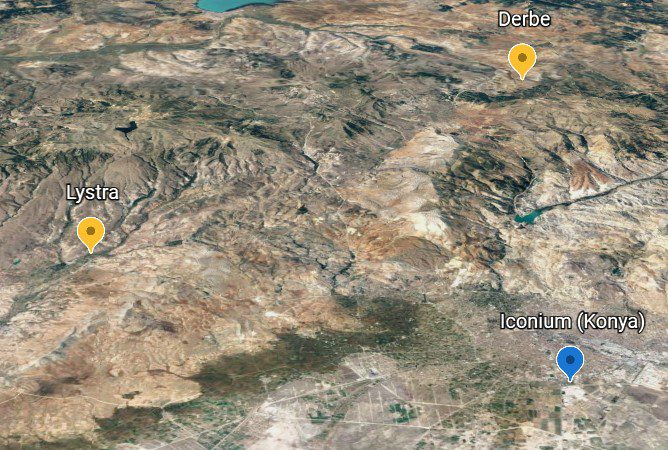
Note: Konya (Iconium near Derbe & Lystra) in foreground – source: Google Earth AD2023
For circumcision indeed is of value if you obey the law, but if you break the law, your circumcision becomes uncircumcision. So, if a man who is uncircumcised keeps the precepts of the law, will not his uncircumcision be regarded as circumcision?
I have only to mention recent, current and highly anticipated pagan festivals of the 21st century to paint a glace of the idolatry of first century — idol worship including parades, drinking, ritual sex, raucous celebrations and porneia in the public places — which Jews and Christians recognize as abhorrent to Almighty God.
The Hellenes to which Paul, Silas and Timothy would soon travel lived NOT in a unified Greece under Roman occupation similar to the religiously-united Judea of the Jews throughout the Empire, but in numerous culturally divergent city-states conquered separately by Roman centurions advancing from ports of the Mediterranean and Aegean seas.
Idolatries of the Hellenes worshipping gods of each city, similar to god idols of Roman myths allowed for a tolerant Roman peace. Romans simply viewed idol worship as harmless and practical public parties of a cultural nature, even a religious duty.
These frequent festivals sometimes celebrated each year may have been out of obligation, but culturally they generally were celebrations influential men of the city used to maintain their hold on the women, boys, slaves and money they controlled.
Remember, in most of the Roman Empire and most Hellenist cities MOST men served other men of means in charge of various aspects of their everyday lives. Many captive slaves worked for local land owners and the Roman army as well, including young boys who served their masters in ways NOT acceptable to any faithful Jew.
On the further mission beyond Derbe, Lystra and Iconium (modern-day Kona, Turkiye) Silas and Saul of Tarsus would certainly NOT want any fellow Jew to mistake this faithful young man and disciple, Timothy, as a Greek (because of his uncircumcision by his non-Jewish Greek father) as some Jews who traveled like Saul already knew.
4 As they went on their way through the cities, they delivered to them for observance the decisions that had been reached by the apostles and elders who were in Jerusalem.
Acts 15 Decisions of the Council in Jerusalem (last year)
.. For it has seemed good to the Holy Spirit and to us to lay on you no greater burden than these requirements:
 that you abstain from what has been sacrificed to idols, and from blood, and from what has been strangled, and from sexual immorality.
If you keep yourselves from these, you will do well.

Farewell.”
So the churches were strengthened in the faith, and they increased in numbers daily.
Acts of the Apostles 16:5 ESV
ACTS of the apostles Silas, Paul and Timothy .. To Be Continued…
Cookie Consent
We use cookies to improve your experience on our site. By using our site, you consent to cookies.
Used to monitor number of Google Analytics server requests
10 minutes
__utmb
Used to distinguish new sessions and visits. This cookie is set when the GA.js javascript library is loaded and there is no existing __utmb cookie. The cookie is updated every time data is sent to the Google Analytics server.
30 minutes after last activity
__utmc
Used only with old Urchin versions of Google Analytics and not with GA.js. Was used to distinguish between new sessions and visits at the end of a session.
End of session (browser)
__utmz
Contains information about the traffic source or campaign that directed user to the website. The cookie is set when the GA.js javascript is loaded and updated when data is sent to the Google Anaytics server
6 months after last activity
__utmv
Contains custom information set by the web developer via the _setCustomVar method in Google Analytics. This cookie is updated every time new data is sent to the Google Analytics server.
2 years after last activity
__utmx
Used to determine whether a user is included in an A / B or Multivariate test.
18 months
_ga
ID used to identify users
2 years
_gali
Used by Google Analytics to determine which links on a page are being clicked
30 seconds
_ga_
ID used to identify users
2 years
_gid
ID used to identify users for 24 hours after last activity
24 hours
_gat
Used to monitor number of Google Analytics server requests when using Google Tag Manager
1 minute
_gac_
Contains information related to marketing campaigns of the user. These are shared with Google AdWords / Google Ads when the Google Ads and Google Analytics accounts are linked together.