Category: Acts for a 21st c. Church

Acts Apostolos - Acts of the Apostles - the chronicles of Christ's Apostles - a history of Christ's Church including early leaders like Stephen, Philip the Evangelist, Paul, Barnabas and many others
Acts of the Apostles + a History of Christ’s Church

Acts of the Apostles 1-28


Acts of the Apostles:
+ The first century Church SHARED Christ while suffering severe persecution.
+ Luke records a historic account of the Church which gives 21c Christians a context to SHARE the Gospel of Jesus Christ with others.

Read more about the Early Church & add your COMMENT on Scripture.

ACT now.

+ SHARE the Gospel history witnessed in the CURRENT chronological SERIES from ACTS of the APOSTLES.

  • Ordinary Men – 1

    Ordinary Men – 1

    … he was healed by the powerful name of Jesus Christ the Nazarene, the man you crucified but whom God raised from the dead.

    – Acts 4:10b

    Suppose you were arrested and brought before a court of leaders asking how you had healed a lame man. Would you witness Christ?

    The Apostle Peter in effect told the very court which convicted Christ, ‘you are the guilty ones.’ The resurrected Lord healed him.

    We have heard of this blindness before

    The man answered, “Why, this is an amazing thing! You do not know where he comes from, and yet he opened my eyes. We know that God does not listen to sinners, but if anyone is a worshiper of God and does his will, God listens to him. Never since the world began has it been heard that anyone opened the eyes of a man born blind. If this man were not from God, he could do nothing.”

    John 9:30-33

    Jesus said, “For judgment I came into this world, that those who do not see may see, and those who see may become blind.” – John 9:39

    Some of the Pharisees near him heard these things, and said to him, “Are we also blind?”

    Jesus said to them, “If you were blind, you would have no guilt [from sin]; but now that you say, ‘We see,’ your guilt remains.

    Blind Leadership

    Peter and John had just healed a crippled beggar known to the same authorities who once witnessed a similar powerful miracle, then expelled from the Temple a man blind from birth healed by Jesus. My previous post, the three o’clock prayer service, details this healing recorded in Acts 3. The Apostles face similar retribution as Jesus after healing a lame man in front of many witnesses.

    Acts 3:12 And when Peter saw it he addressed the people: “Men of Israel, why do you wonder at this, or why do you stare at us, as though by our own power or piety we have made him walk?

    … 17 “And now, brothers, I know that you acted in ignorance, as did also your rulers.

    Acts 4:

    And as they were speaking to the people, the priests and the captain of the temple and the Sadducees came upon them, 2 greatly annoyed because they were teaching the people and proclaiming in Jesus the resurrection from the dead. 3 And they arrested them and put them in custody until the next day, for it was already evening. 4 But many of those who had heard the word believed, and the number of the men came to about five thousand.

    Jewish Stratification

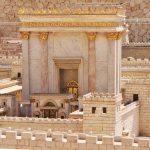
    During the times of Herod’s Temple, social center of religious life in Jerusalem at that time of Jesus and the Apostles, Temple leaders were esteemed above ordinary men. The political appointment of priests claimed status from traditional Jewish Biblical offices and responsibilities.

    • The social world of the priests during the Iron Age and Persian Period was one fraught with concerns about power and status. To be a priest was, at least in terms of public rhetoric, an ascribed, not an achieved status.

    Priests

    • Throughout the Hebrew Bible, the term priest (kōhēn) is commonly used to refer to an official who was set apart from the rest of the community in order to carry out certain duties associated with worship and sacrifice. As “ministers of the LORD” (Joel 1:9; 2:17), priests functioned as mediators of God’s presence and were responsible for the day-to-day operation of cultic sites, whether the tabernacle, local shrines, or the Temple in Jerusalem.
    • Deuteronomy employs the term “Levitical priests” (hakkōhănîm halwiyyim) most likely to underscore the fact that all Levites were qualified to be priests (Deut 17:9, 18; 18:1; 24:8; 27:9).
    • The most prominent and persistent controversy regarding the priesthood had to do with whether all Levities could serve as priests or, alternatively, if only certain branches of the Levitical line (the Aaronides or the Zadokites) were qualified for the priestly office.

    Scribes

    • Outside of their sacrificial duties, priests also oversaw many other aspects of ancient Israelite life… In this role, priests were responsible for communicating the law and adjudicating legal matters (Lev 10:10–11; Deut 17:8–13; 21:5; Ezek 44:24), though in the Second Temple period, such activity was eventually taken over by scribes.
    • Scribes of various degrees of competence were attached to all government and temple offices. Apparently there were also independent scribes who either served the public or were in the employ of men of means.
    • Later the scribe was a professional expert in the writing of Torah scrolls, *tefillin , *mezuzot , and bills of *divorce .

    Sadducees

    • (followers of Zadok), (Matthew 3:7; 16:1,6,11,12; 22:23,31; Mark 12:18; Luke 20:27; Acts 4:1; 5:17; 23:6,7,8) a religious party or school among the Jews at the time of Christ, who denied that the oral law was a revelation of God to the Israelites. and who deemed the written law alone to be obligatory on the nation, as of divine authority.
    • To these sons of Zadok were afterward attached all who for any reason reckoned themselves as belonging to the aristocrats; such, for example, as the families of the high priest, who had obtained consideration under the dynasty of Herod. These were for the most part judges, and individuals of the official and governing class.

    Sadducees held the majority of the seats in the ruling Jewish court of the Sanhedrin. They held political power and influence in Judah, even under Rome.

    As you can see from description of these several classes of ‘blind guides,’ these Jewish rulers are not in any way ordinary men.

    Though five thousand men came to believe Peter and John, these arresting authorities are in no way intimidated.  The Apostles face a trial, the first of many, for proclaiming Christ Jesus.

    Allow me to ask you, what is your response to opposition to Jesus Christ?

    To be continued…


  • The Three o’clock Prayer Service

    The Three o’clock Prayer Service

    CHRISTIAN NEWS HEADLINES

    You will not see these HEADLINES in the Jerusalem News twenty-one centuries ago or even now.

    MIRACLE!

    ישוע המשיח עלה!

    Changes in Worship

    Peter and John went to the Temple one afternoon to take part in the three o’clock prayer service.

    Acts:3:1 NLT

    Post-resurrection Christians frequently miss some subtlety of detail in the Bible due to the amazing witness of the miracles which surround the circumstance. “Peter and John were:

    • a. going to the Temple just a few months after Jesus had been found guilty of violating church rules, was tortured, murdered and made an example to others by powerful leaders.
    • b. It was ‘three o’clock [3 p.m.] on a weekday afternoon and
    • c. the church (Temple) had a prayer service where faithful Jews actually prayed.

    Like many believers I have multiple versions of the Bible and wanted to check the facts in the English Standard Version which I generally quote. the hour of prayer, the ninth hour. Footnotes: a. Acts 3:1 That is, 3 p.m.

    Who would be praying at 3 p.m. on a weekday?

    Yet, they did. It was customary – usual. [ctt title=”21st century worshipers take a much more casual attitude toward God than most generations before us.” tweet=”#Prayer Peter and John went to the Temple one afternoon to take part in the three o’clock prayer service. Acts 3:1″ coverup=”XSu36″]

    Nothing wrong with a 3 p.m. prayer service. Temple officials would soon show up with objections when disciples of Jesus worshiped the Lord on their way to the service by healing a man who witnessed Christ by following these leaders of the new Way.

    The NLT version heading states:

    Peter Heals a Crippled Beggar

    The text shows detail which gives glory to God.

    But Peter said, “I don’t have any silver or gold for you. But I’ll give you what I have. In the name of Jesus Christ the Nazarene,[a] get up and[b] walk!”

    All the people saw him walking and heard him praising God.

    The more politically correct heading of the ESV for Acts 3:1 states:

    The Lame Beggar Healed

    The witness of Peter continues: [ctt title=”Christianity is never about what we have done for Jesus.” tweet=”Our witness is what Jesus will also do for you. #Jesus” coverup=”3JM77″]

    ESV: Acts 3:9

    And all the people saw him walking and praising God, 10 and recognized him as the one who sat at the Beautiful Gate of the temple, asking for alms. And they were filled with wonder and amazement at what had happened to him.

    The King James Version (translation) has no labels

    Recalling that scripture was hand-transcribed until the printing press, note that modern editors add headings. Headline Titles help us to see the topic of a section, while we prejudicially dismiss some important detail. If fact, consider that the Bible, as a traditional Holy Writing did not even divide into chapters and verses. Like scripture before, Acts and the letters are one connected writing and the witness all connects to Christ Jesus.

    Take a look at the link below and note the headings of three renderings of the Acts text.

    Acts 3:

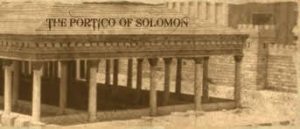
    • Preaching in Solomon’s Portico [NKJV]
      11 Now as the lame man who was healed held on to Peter and John…
    • Peter Preaches in the Temple [NLT]
      12 Peter saw his opportunity and addressed the crowd.
    • Peter Speaks in Solomon’s Portico [ESV]
      11 While he clung to Peter and John, all the people, utterly astounded, ran together to them in the portico called Solomon’s.

    And if you would like to translate for yourself from the original Greek, try this:

    Κρατοῦντος δὲ τοῦ ἰαθἐντος χωλοῦ τὸν Πέτρον καὶ Ἰωάννην συνέδραμεν πρὸς αὐτοὺς πᾶς ὁ λαὸς ἐπὶ τῇ στοᾷ τῇ καλουμένῃ Σολομῶντος ἔκθαμβοι – Acts 3:11 TR

    We don’t want to get caught up in this too much and miss the importance of witness of these verified miracles and the credit all witnesses give to the risen Christ Jesus. Note, however some of our natural prejudices in thinking about a setting over 2000 years ago. It is little different than not being able to wrap our heads around the concept of praying to the Lord our God and Creator at three in the afternoon.

    Visual Prejudice of HEADLINE NEWS

    Mohammed – Crippled Beggar – Africa
    Temple


    Jerusalem

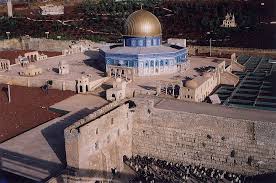
    Visual prejudice will not produce truth in your thoughts. The setting is not the Temple built by Solomon, but one built centuries later by a half-jew, Herod, a powerful puppet king beholden to the Caesars of Rome. The Herods, Jesus, Temple officials and Peter all appeal to traditions of Hebrew heritage.

    Peter speaks to the crowds gathered after God’s miracle healing of the man:

    “Men of Israel, why do you wonder at this, or why do you stare at us, as though by our own power or piety we have made him walk? 13 The God of Abraham, the God of Isaac, and the God of Jacob, the God of our fathers, glorified his servant Jesus…

    22 Moses said, ‘The Lord God will raise up for you a prophet like me from your brothers…

    26 God, having raised up his servant, sent him to you first, to bless you by turning every one of you from your wickedness.”

    [ctt title=”But many of those who had heard the word believed, and the number of the men came to about five thousand.” tweet=”Acts 4:4 – after a singular witness on their way to an obligatory prayer service.” coverup=”kaY9r”]


    As our series highlighting passages from many centuries prior to the Cross concluded with the resurrection. This post from the early history of the church reminds us that even the journeys of Acts will cover much more territory and the spread of Christianity continues for centuries.

    TalkofJesus.com takes you to scripture to discover the details of truth and God’s love. Links included go to trusted sources you may search for further study. My commentary is minimal, but your comments by reply are more than welcome as witness of Jesus Christ to others.

    In my continuing journey of Christian Social Witness via http://talkofJesus.com you will see several updates to our HEADLINE look over the next few weeks. Don’t let it throw you.

    Please continue to SHARE our posts focused on Jesus Christ from our searchable website.

    @RogerHarned
    http://talkofJesus.com – Pinterest – Twitter @RogerHarned


  • Fully Trained – 5

    Fully Trained – 5

    [ctt title=”“A disciple is not above his teacher, but everyone when he is fully trained will be like his teacher.” tweet=”“A disciple is not above his teacher, but everyone when he is fully trained will be like his teacher. – Luke 6:40 from ‘Fully Trained’ serial http://ctt.ec/86L38+” coverup=”86L38″]

    The gospel of Luke carefully records truth from eyewitness accounts of numerous historical citizens of the first century.

    The following is a fictional representation continued from our previous episodes of eyewitness by one of Jesus’ first disciples.

    I have told you of how I became an early disciple of the Messiah Jesus and followed our Lord in the early days. It has been many years ago now; before the good news of our Lord’s crucifixion by the Jews and resurrection and appearance to many witnesses, including me and my family.

    We continued in the Way. We worshiped our risen Lord with the Apostles and many others. John Mark, who had been with Saul, and Luke the doctor have shared the increase in the good news with us. In fact, Mark has just returned to us from a time he has spent with Paul, who we knew as Saul.

    Acts 13: 13 Now Paul and his companions set sail from Paphos and came to Perga in Pamphylia. And John left them and returned to Jerusalem

    John Mark brings us good news that the Roman proconsul of Cypress has witnesses the power of Christ in Paul and has come to believe in the Way.

    Now that we have become fully trained just as Jesus had mentioned in those early days I wanted to share some of our Lord’s teaching with you; not as we heard it then as uncertain believers, but as we now consider how our Lord’s teaching has changed us over time – now, years later and after Jesus’ resurrection, many appearances and glorious ascension into heaven.

    Horns of HattinThinking back to our Lord’s teaching to the crowds, which we heard consistently many times in those early days… He was teaching on a mountainside one day, as Jesus often did. Jesus would stand with His back toward the highest hillside above the gentle slopes populated with disciples from every locale. Jesus could look around into their faces and most of us could see His probing gentle eyes.

    Luke 6:

    20 And he lifted up his eyes on his disciples, and said:

    “Blessed are you who are poor, for yours is the kingdom of God.

    We didn’t understand this then; for we were all poor and all the kingdoms of Judah, Samaria, Rome and all the others were powered by the rich – those who could buy influence or high office, whether Herod or Octavian or other rich men and women who bought their way into leadership.

    Other times Jesus had said:

    “Blessed are the poor in spirit, for theirs is the kingdom of heaven. – Matthew 5:7

    It is this poorness of spirit we now understand – a poorness desired we had never sought, before our Lord and Master had lived out its meaning before our very eyes.

    Jesus had never had anything by which men might consider him anything but poor. In Nazareth he made a more meager living as a sort of handyman carpenter than most of us town’s people. He never wore fancy clothes. His well-worn shoes were just like mine.

    Jesus’ humility showed more than just his lowly station in life, his beleaguered place in our small community isolated from the seats of power. He was in every way as the scriptures say, a bruised reed”  himself. His gentle sincere smile always encouraged us. His happiness from deep within overflowed into the depths of our own souls. After a time I too sought to show others this same poorness of my spirit, that they might see the richness of the blessings of the Lord.

    Yes, during all of the years of Jesus’ teachings and the many years since His resurrection we were poor. We were all poor. We were oppressed by Rome. We were miserable and afflicted by our own rulers in our day to day lives and often our insignificant deaths. Followers of the Way were soon and often persecuted. We suffered financially and physically.

    We were poor. Yet in our Messiah Jesus we have inherited the Kingdom of Heaven.

    Psalm 40:

    I waited patiently for the Lord;
    he inclined to me and heard my cry…

    3 He put a new song in my mouth,
    a song of praise to our God.
    Many will see and fear,
    and put their trust in the Lord…

    ..my iniquities have overtaken me,
    and I cannot see;
    they are more than the hairs of my head;
    my heart fails me.
    13 Be pleased, O Lord, to deliver me!
    O Lord, make haste to help me!

    17 As for me, I am poor and needy,
    but the Lord takes thought for me.
    You are my help and my deliverer;
    do not delay, O my God!

    To be continued…