Category: Epistles – Is his letter to our church?

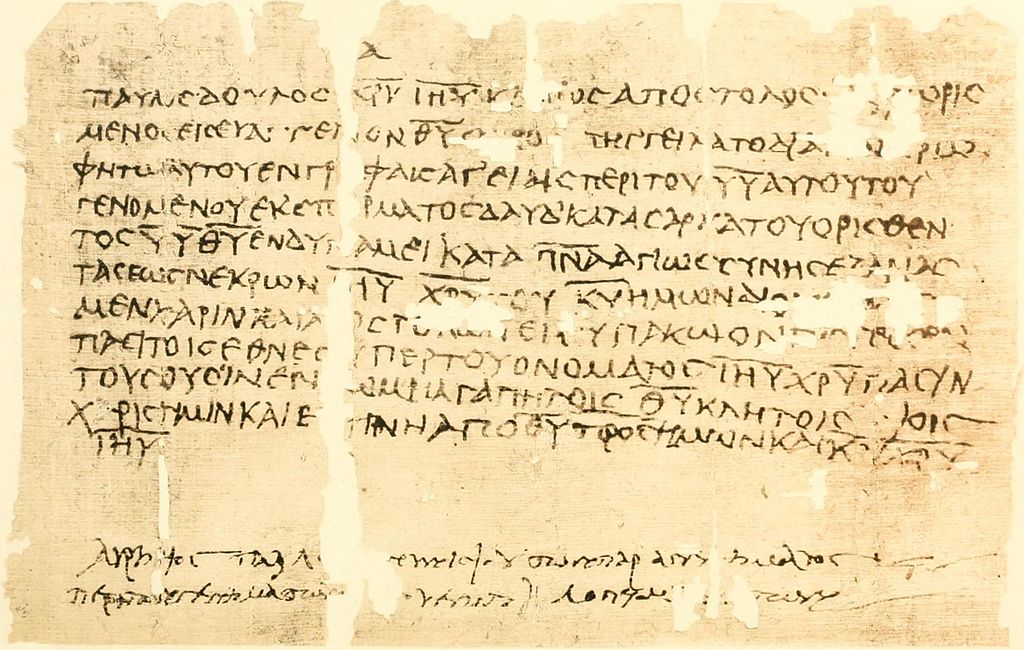
Epistle of Paul to the Romans 1 - the Apostles sends a church letter to Rome and the local saints of area churches
Epistle of Paul to the Romans

Epistles ἐπιστολή or Letters

I charge you by the Lord that this epistle be read to all the holy brethren.

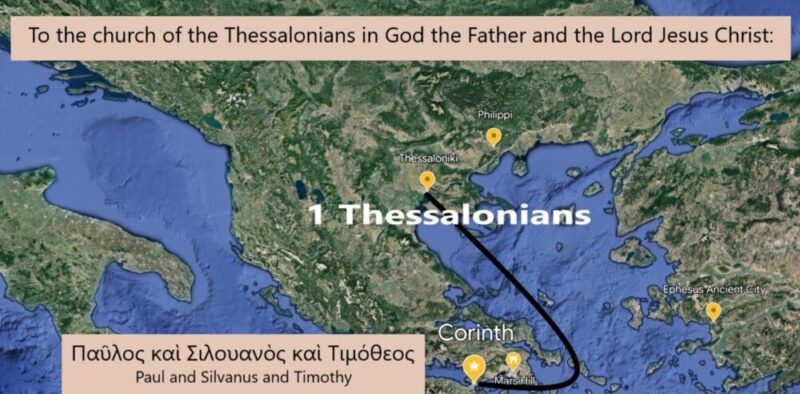
Paul’s First Letter to the Thessalonians 

Don’t  miss our recent FEATURED SERIES

JUNE 2024 – 2025 —

1 CORINTHIANS 

———————————————————-

Letters – Is he writing to me?
The short answer: YES.

In their epistles or 1st century church letters the Apostles and other men sent out by Jesus build up the saints [small – ‘s’] or members of local first century churches.

A Disciple or other witness of JESUS would write it. Messengers then delivered these church letters to many isolated worshipers.

Followers of Jesus Christ receive these letters as a major encouragement to their personal faith. Then leaders read them to worshipers of their church.

Although the Epistles 0r Letters to the Church were originally written to churches of the first century,

Romans through Jude will seem like letters to your 21st century church.

  • What do Peter, Paul, John and others tell us we must do?
  • Is he talking about an issue in your 21st c. church as well?
  • How does the writer’s advice, warning, or encouragement to the 1st c. believers apply to you as well
  • Is the writer of this letter talking about something you need to address in your 21st century ‘christian’ life?

Contemporary Application of the Letters (Epistles)

Most New Testament writers take on specific issues confronting faithful followers of Jesus Christ. These same issues continue to confront believers until the Lord’s coming again in these last days.

Certainly Christ our Lord will come again to those God has chosen for eternal life.

Believers currently suffer more than most of you who know Christ in your local church can imagine.

In other lands Christians continue to suffer by the hand of the ungodly.
Go into all the world

A 21st century Common Era church can see and hear nearly any atrocity of man or artificial imagination of sinful man’s mind, yet ‘christians‘ dare not speak of any absolute truth of the Lord God or talk of JESUS CHRIST.

Will YOU comment on Scripture and share the Gospel?

I invite you to read the inspired word of Scripture written in these LETTERS TO THE CHURCH.

YES, He IS writing to YOU.

Beloved brother or sister in Christ Jesus,

Will you read this ‘CHURCH LETTER’ and talk of JESUS through your comment, sharing and email to me about this ‘Letter to you?”

Roger@talkofJesus.com

  • II Timothy i beloved son of Paul

    II Timothy i beloved son of Paul

    a second epistle of the Apostle Paul from Rome: to Timothy

    Τιμοθέῳ ἀγαπητῷ τέκνῳ

    χάρις ἔλεος εἰρήνη ἀπὸ θεοῦ πατρὸς καὶ Χριστοῦ Ἰησοῦ τοῦ κυρίου ἡμῶν

    To Timothy, my dearly beloved son:

    Grace, mercy, and peace, from God the Father and Christ Jesus our Lord.

    2 Timothy 1:2 KJV


    Timothy, beloved son of an Apostle

    Paul is about to send Timothy out as his continued Apostolic voice to a next generation of faithful believers.

    Last Will and Testament of Simon Peter - Talk of Jesus

    “Dearly BELOVED..”

    Do any recognize the greeting of such intimately connected believers so joined in Christ Jesus? 

    This is how Paulos, a Jew of Cilicia, addresses his Galatian gentile protege Timotheus


    Greek by heritage of his father (apparently deceased or absent) and raised Jewish by the faith of his Grandmother Lois and convert mother, Eunice (as we detailed in our Introduction)


    as his SON, a beloved and chosen adoptive son — not just an exceptional student and faithful follower.

    τέκνον – teknon – child or son

    • Strong’s G5043 – teknon – “a child” (akin to tikto, “to beget, bear”), is used in both the natural and the figurative senses. In contrast to huios, “son” (see below), it gives prominence to the fact of birth, whereas huios stresses the dignity and character of the relationship. Figuratively, teknon is used of “children” of
    • (a) God, Jhn 1:12;
    • (b) light, Eph 5:8;
    • (c) obedience, 1Pe 1:14;
    • (d) a promise, Rom 9:8; Gal 4:28;
    • (e) the Devil, 1Jo 3:10;
    • (f) wrath, Eph 2:3;
    • (g) cursing, 2Pe 2:14;
    • (h) spiritual relationship, 2Ti 2:1; Phm 1:10.
      • (2X from the Pastoral Epistles of Paul)
    • See DAUGHTER, SON.

    Vine’s Expository Dictionary of New Testament Words

    As mentioned in our introduction to Timothy, the Apostle Paul has adopted this young man of Galatia and mentored him along with others as trusted servants, sons and companions in his apostolic mission to the Gentiles.


    Historical Context:

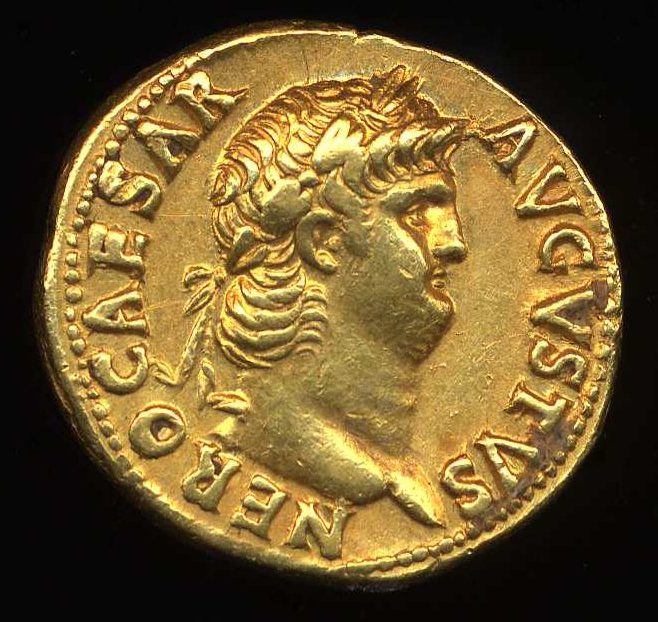
    2 Timothy was likely written around AD 67, during Paul’s second imprisonment in Rome, shortly before his martyrdom. This period was marked by intense persecution of Christians under Emperor Nero. Paul, aware of his impending death, writes with a sense of urgency and finality.

    Audience and Purpose:

    Paul’s second letter to Timothy, left in Ephesus to oversee the church, guides both him and the broader Christian community. It encourages church leaders and believers in the face of persecution. Paul urges Timothy to protect the gospel, endure hardships, and teach sound doctrine.

    source: BibleHub.org

    As to the role of Timothy to the Church, we might in a later era address this esteemed son of the Apostle to the Gentiles as Bishop Timothy of Ephesus,

    The Apostle Paul most likely sent his first letter to the Corinthians from Ephesus

    or possibly Arch-Bishop Timotheus of Asia.

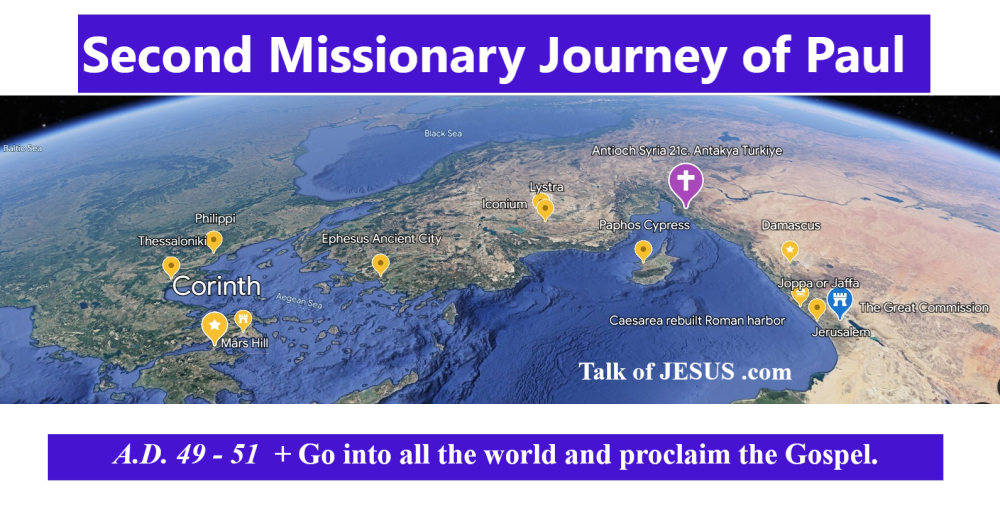
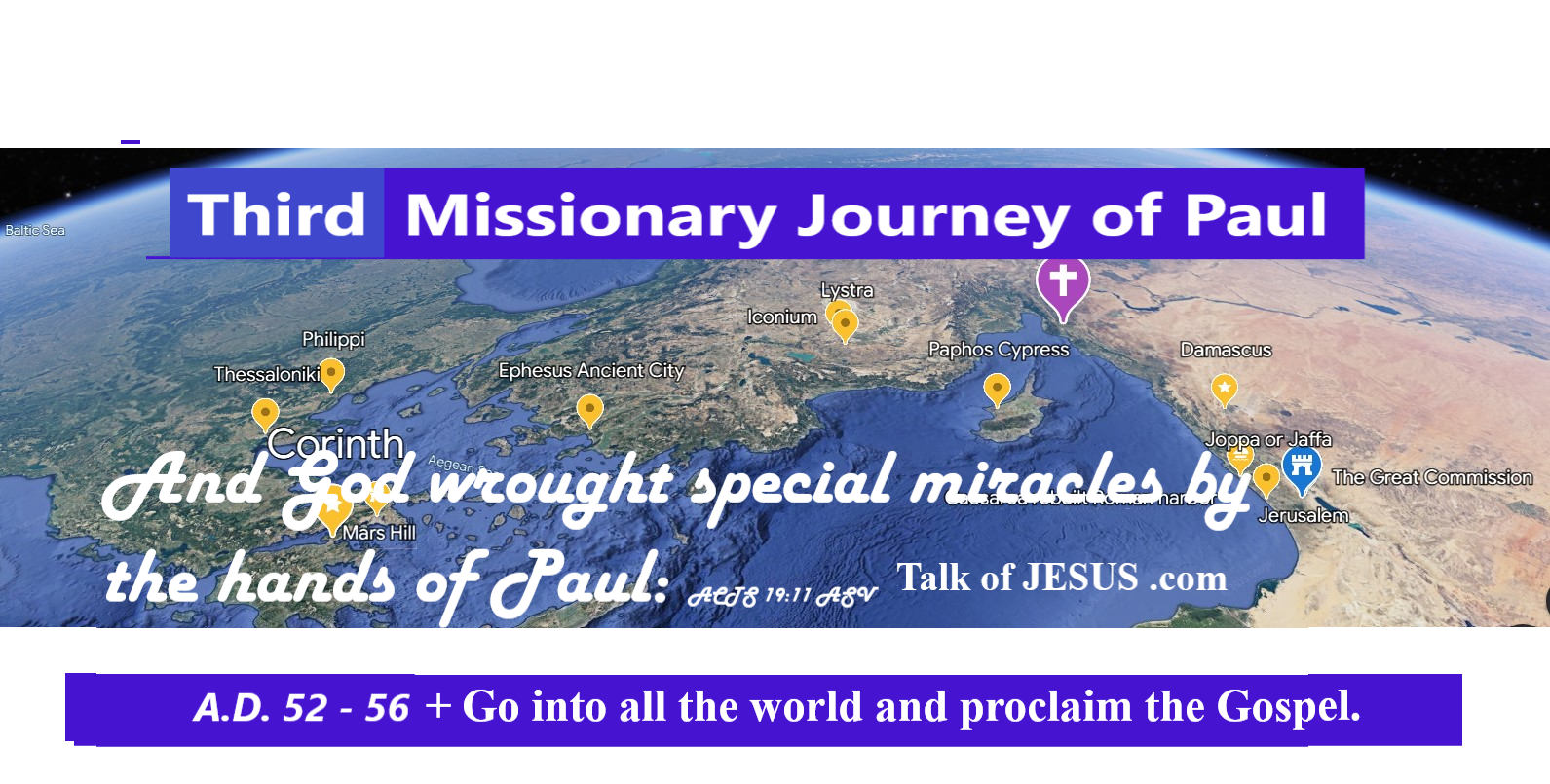
    the Apostle Paul begins his 3rd missionary journey by land traveling from Antioch Syria to Ephesus in Asia Minor

    But regardless of Timothy’s personal importance to Paul as a fellow servant of Christ and the Gospel, you can see from the definition of son above that his spiritual relationship to the Apostle and Christ’s Church stand foremost to any role of administrative authority (which he had, as did the Apostle Paul) or imaginative royal-like religious title.

    But on taking leave of them he said, “I will return to you if God wills,” and he set sail from Ephesus. Conclusion of the second missionary journey of Paul from Acts 18
    and he set sail from Ephesus.

    From Personal Sonship to Apostolic Responsibility for the Gospel

    In the fifteen or so years since Timothy as a young man had first followed and served Paul, he has proven himself faithful, and a capable pastor (or shepherd trusted with local flocks of followers of The Way, loyal to Paul and true to the Gospel of Jesus Christ.

    Hence I remind you to rekindle the gift of God that is within you through the laying on of my hands;

    2 Timothy 1:6 RSV

    “.. rekindle the gift of God that is within you..” – the word Paul uses here in this introduction of his pastoral epistle is: anazōpyreō

    – stir up that by which the fire is kindled anew or lighted up, a pair of bellows);

    Don’t you love Paul’s imagery of a fire of holiness, perhaps neglected and cooling to Christ as its last embers of your faith — REKINDLING through the Holy Spirit (received by the Apostle’s laying on of hands)?

    Of course you know Paul’s word for ‘the gift of God’ – the charisma of Theos.

    Paul reminds by building up in the power of the faith already well-known in and to Timothy: 

    for God did not give us a spirit of timidity

    that is, fearfulness of cowardice 

    but a spirit of power and love and self-control.

    THREE gifts of the Spirit required of pastors and the faithful of the flock of every church.

    • dynamis – strength power and ability
    • agapē – (not just any love, but agapē love) – affection, benevolence, good will, charity, love for the brothers and sisters of the church
    • sōphronismos – The KJV translates as sound mind (1x).
      • (this you may not know and in this the saints so often find ourselves lacking)
      • an admonishing or calling to soundness of mind, to moderation and self-control

    Power in the Spirit, Agape Love and a yielding of the mind to God

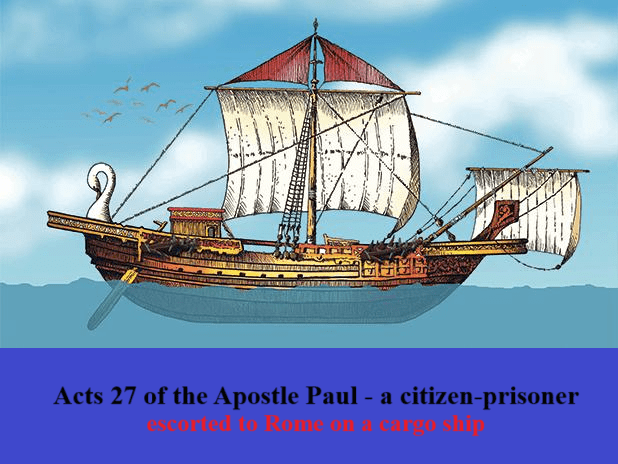
    Several missionary stops of the apostle Paul before going to Rome - Acts of the Apostles

    Paul could have easily been forgotten in his prison cell in Rome, even more distant in Europe across the Aegean — than Derbe and Antioch from Ephesus, all in Asia where Timothy remains pastoring the church.

    Therefore, be not ashamed

    So the Apostle writes:

    Do not be ashamed then of testifying to our Lord, nor of me his prisoner, but share in suffering for the gospel in the power of God, who saved us and called us with a holy calling,

    not in virtue of our works but in virtue of his own purpose and the grace which he gave us in Christ Jesus ages ago, and now has manifested through the appearing of our Savior Christ Jesus, who abolished death and brought life and immortality to light through the gospel.

    2 Timothy 1:8-10 RSV


    The faithful and unfaithful to Paul and Apostolic faith

    Paul is about to begin an important point and reason for this second epistle (which we will study more next time), but here he lists some remembered for their works. 
    Coasts of Asia Minor along the Aegean Sea

    This you know, that all those in Asia have turned away from me,

    among whom are Phygellus and Hermogenes.


    The Lord grant mercy to the household of Onesiphorus, for he often refreshed me, and was not ashamed of my chain;

    Circus Maximus - Rome and model of surrounding city of Rome

    but when he arrived in Rome, he sought me out very zealously and found me.

    The Lord grant to him that he may find mercy from the Lord in that Day—and you know very well how many ways he ministered to me at Ephesus.

    2 Timothy 1:15-18 NKJV


    NEXT: For this Gospel I was appointed


    Comment on Scripture – Share the Gospel


  • 2 Timothy – Apostolic Faith and Pastoral Oversight by Paul

    2 Timothy – Apostolic Faith and Pastoral Oversight by Paul

    Introduction

    God and Christ became incarnate in order to restore Their personal relationship with sinful man.

    Roger@TallkofJesus.com


    God and Apostles, Disciples of men

    Our purpose in introducing Paul’s final epistle to a pastor is:

    1. to reintroduce you to the Apostle Paul and

    2. to reacquaint you with Timothy, a disciple of Paul who served him in varying roles,

    BOTH whom we’ve met in Acts of the Apostles and other epistles.


    Let us begin with God

    (says the teacher to his class). 

    God — YHWH the LORD — Is One.

    One in Being. One in Essence. One in Substance.

    There IS no other god.

    God IS the Creator of all things and of all mankind.

    He had a relationship in the beginning of time — before which He Exists and after which He Exists — the LORD’s relationships are perfectly personal.

    God IS: Father, Son — Jesus Christ, and the Holy Spirit.


    Christ, Apostles and Disciples

    The Apostle Paul writes to Timothy in his first epistle:

    This is a faithful saying and worthy of all acceptance, that Christ Jesus came into the world to save sinners, of whom I am chief.

    First letter of the Apostle Paul to Timothy

    Jesus, the incarnate Son of God the Father, taught the Gospel with all perfection to men for three years.

    The Twelve Disciples (which included neither Paul nor Timothy) followed the Lord, ate and slept with Jesus — they all knew the incarnate Son of God personally.


    Consider the interpersonal relationships connecting each of these roles as defined by Scripture and what the Lord Jesus, our Teacher, instructs:

    Disciple (follower), Master (teacher), Servant (slave) and Lord

    The Disciples Matthew, John and Peter were all present with the incarnate Christ Jesus personally when the Lord said this:

    The disciple is not above his master, nor the servant above his lord.

    Gospel of Matthew 24:14 – Jesus’ to The Twelve Disciples; Instructions for Service & meaning of discipleship – KJV

    μαθητής – mathētēs – disciple (268x) – a learner, pupil, one who follows one’s teaching:

    The Twelve followed JESUS for three years, discipleship at its most personal.

    Furthermore, many others would follow JESUS’s teachings as ‘Christians’ chosen by God for the Way of eternal life.


    Apostles to the Jews and Gentiles

    Of course from the beginning Jesus knew that Judas would betray Him and that a disciple Mathias would be chosen to replace the betrayer of Christ as a twelfth Apostle to the Jews.

    Christ had taught and trained the Twelve how they would become Apostles — primarily, but not exclusively, to their fellow Jews —after His death, resurrection and ascension.


    Simon Peter, a servant and an apostle of Jesus Christ, to them that have obtained like precious faith with us through the righteousness of God and our Saviour Jesus Christ:

    2 Peter 1:1 KJV


    Paul also refers to himself as an Apostle, greeting his disciples (followers) in his first epistle and this final letter.

    Paul, an apostle of Jesus Christ by the will of God, according to the promise of life which is in Christ Jesus,

    To Timothy, my dearly beloved son:

    2 Timothy 1:1-2a KJV

    So who are apostles?

    Acts Apostolos - Acts 1 of the Apostles begins a 28 chapter account of the chronicles of Christ's Apostles - a history of Christ's Church

    Apostolos – a delegate, messenger, one sent forth with orders

    • specifically applied to the twelve apostles of Christ
    • in a broader sense applied to other eminent Christian teachers
    • – of Barnabas of Timothy and Silvanus

    Apostles are ‘sent out’ by Christ.

    As in the case of the Twelve and the Apostle Paul, the Lord himself instructed them Personally — that is, the Person of Jesus sent these Apostles out into the world personally.

    Other apostles continued to be ‘sent out into all the world’ by the Holy Spirit after Jesus’ ascension, as Luke records for us of the day of Pentecost in ACTS 1.


    As we learned from Acts of the Apostles that after the AD 49 Council in Jerusalem, Peter, Paul, John and all others were sent out ‘first to the Jews,’ but also into gentile areas of the Roman Empire (mostly Hellenist or Greek provinces) to include ALL as follows of Christ as part of each local church.

    Jesus is Lord

    Note that Jesus Christ refers to the Father as Lord (Kyrios in their common Greek language of the Roman Empire) with an authority and meaning no different than the original Hebrew scripture (Yahweh).

    “Teacher, which is the great commandment in the Law?”

    And He said to him,

    “‘YOU SHALL LOVE THE LORD YOUR GOD WITH ALL YOUR HEART, AND WITH ALL YOUR SOUL, AND WITH ALL YOUR MIND.’

    Matthew 22:36-37 LSB


    Saul, a Jew of Jews, sent out by a Master crucified and risen!

    About five years after the Jews of Jerusalem had crucified Jesus, a young disciple of Gamaliel witnessed the stoning of a follower of The Way.

    They went on stoning Stephen as he was calling out and saying, “Lord Jesus, receive my spirit!” Then falling on his knees, he cried out with a loud voice, “Lord, do not hold this sin against them!” And having said this, he fell asleep.

    Acts of the Apostles 7:59-60 LSB

    Stephen, even in his dying breath, called JESUS, “Lord” – twice.

    And this young disciple of the rabbi Gamaliel had witnessed it personally.

    Saul of Tarsus would become an apostle of the Sanhedrin specifically sent out to continue persecuting Christians.

    But then, as we know, Christ appeared to Saul and instructed this new and unwilling (at first) Apostle to go to the Gentiles.

    Paul frequently writes that He is a slave (doulos) of JESUS or God(or of the gospel). The Lord Jesus himself points to the service required of this most personal relationship.

    Many translations prefer servant to slave, but it is the same Greek word: doulos. 

    The disciple is not above his master, nor the servant above his lord.

    Gospel of Matthew 10:24 KJV

    The Apostle Paul describes himself in another pastoral epistle written about the same time as his two letters to Timothy:

    Paul, a servant G1401 of God, and an apostle of Jesus Christ, according to the faith of God’s elect, and the acknowledging of the truth which is after godliness;

    Epistle of Paul to Titus 1:1

    Timothy – Paul enlists a disciple of The Way

    Lystra, Derbe and Iconium in the Taurus mountains and general Roman region of Galatia to where Paul sends the first of his epistles.

    Now Paul also arrived at Derbe and at Lystra.

    And behold, a disciple was there, named Timothy,

    the son of a Jewish woman who was a believer,

    but his father was a Greek,

    Acts of the Apostles 16:1

    During Paul’s second missionary journey, which had begun inland through the mountains northwest of Tarsus in rural Galatia. While visiting churches established by Barnabas and him on a first missionary journey, the Apostle meets a young Timothy — a Greek, because of his father, but brought up as a Christ-follower by his mother(a Jew, as Paul had been) and Timothy’s grandmother.

    A brief introduction of Timothy (Τιμόθεος – Timotheos)

    Timothy's early journeys are found in Acts of the Apostles. 

    ~AD 49

    Timothy joined Paul and Silas on mission, staying behind at Berea for a time with Silas. Paul, later commands the two by the Spirit to join him in Athens from where the trio proceed to Macedonia.

    Paul then ‘sent into Macedonia two of them that ministered unto him, Timotheus and Erastus; but he himself stayed in Asia for a season.

    Acts 19:22 KJV

    We observe how personal all of the mentoring relations of the Apostle remain to Paul as Luke records those with the Apostle when once again the Jews laid wait to capture and kill him.

    Paul was accompanied by Sopater son of Pyrrhus from Berea,

    Aristarchus and Secundus from Thessalonica,

    Gaius from Derbe, Timothy, and Tychicus

    and Trophimus from the province of Asia.

    Acts of the Apostles 20:4 Berean Standard Bible

    We will mention more of Timothy's crucial later pastoral roles later in this epistle.  

    Timothy wrote other epistles with Paul :

    It is important for us to note that these Pastoral Epistles make known the Spirit-directed teaching of the Apostle Paul we must study, rather than focus on any pastors or saints to whom Paul writes, such as Timothy.

    • ~AD 50-51
    • ~AD 55-56 the Apostle Paul writes:
      • 1 Corinthians with Sosthenes and
      • 2 Corinthians with Timothy
    preaching to them that perish - Paul writes to the Corinthians to consider his different way of preaching
    The Apostle Paul writes to the Corinthians with Sosthenes and a second time with Timothy
    *graphic from a 2024 TalkofJESUS SERIES Post: Rebuke of ministers that perish without the Cross
    • ~AD 60-62 The Apostle Paul writes to:
      • the Ephesians
      • the Philippians
    Archaeological Site of Philippi: General view of the forum with adjacent agora marketplace

    Paul and Timothy, servants of Christ Jesus,

    To all God’s holy people in Christ Jesus at Philippi, together with the overseers and deacons:

    Philippians 1:1 NIV

    • the Colossians, with Timothy
    • and a personal plea along with Timothy to Philemon, concerning Onesimus.

    NEXT: 2 Timothy 1:

    timotheos agapētos teknon

    To Timothy, my beloved son


    Comment on Scripture – Share the Gospel


  • Peter’s Steadfast Purpose and the coming Day of the Lord

    Peter’s Steadfast Purpose and the coming Day of the Lord

    Steady as a Rock – Steadfastness in writing again

    WHY is the Apostle so steadfast in his calling to insist that the Church obey commands already given to them?

    Could it have to do with how the Lord Jesus restored Peter’s faith and recall of what Christ had taught the Apostles all along?


    He said to them, “But who do you say that I am?”

    Simon Peter replied, “You are the Christ, the Son of the living God.”

    And Jesus answered him, “Blessed are you, Simon Bar-Jonah! For flesh and blood has not revealed this to you, but my Father who is in heaven.

    And I tell you, you are Peter, and on this rock I will build my church, and the gates of hell shall not prevail against it.

    Gospel of Matthew 16:15-18 NKJV


    Why does the Apostle Peter write a second epistle to the church?

    Beloved, I now write to you this second epistle (in both of which I stir up your pure minds by way of reminder)..

    2 Peter 3:1 NKJV


    Here in the conclusion of his letter Simon Peter is about to tell us, as the Apostle refers to BOTH epistles included in this reminder.

    But his motivation certainly recalls his own solid steadfastness in the risen Christ Jesus in several encounters.

    Jesus asked a third time, “Simon son of John, do you love Me?”

    Peter was deeply hurt that Jesus had asked him a third time, “Do you love Me?” “Lord, You know all things,” he replied. “You know I love You.”

    Jesus said to him, “Feed My sheep.”

    Gospel of John 21:17 BSB

    Simon Peter needed encouraged.

    And so must believers be reminded of our faith in the midst of teachings from many false teachers.


    στηρίζω – stērizō

    • to make stable, place firmly, set fast, fix
    • to strengthen, make firm
    • to render constant, confirm, one’s mind

    Are you a stable Christ-follower?

    Is your faith steadfast?

    Peter’s second epistle to the church mirrors what the Lord had prayed prior to His crucifixion:

    “But I have prayed earnestly for you, that your faith may not fail; and you, once you have returned, strengthen G4741 your brothers.”

    Gospel of Luke 22:32

    The Apostle had recently written to these same believers:

    For the time has come for judgment to begin at the house of God;
    and if it begins with us first, what will be the end of those who do not obey the gospel of God?

    1 Peter 4: 17 NKJV [in context: vs. 12-19]

    Resist him [the devil], steadfast in the faith, knowing that the same sufferings are experienced by your brotherhood in the world.

    1 Peter 5:9 NKJV [in context: vs 8-10 ]


    2 Peter 3:

    God’s Promise Is Not Slack

    Reads the Heading from the New King James Version:

    .. I stir up your pure minds by way of reminder,

    The Apostle of Jesus Christ makes TWO points to the Church. This is the first:

    3:2  μνησθῆναι τῶν προειρημένων ῥημάτων ὑπὸ τῶν ἁγίων προφητῶν 
    • that you may be mindful of the words which were spoken before by the holy prophets

    A single greek word for ‘that you may be mindful’ is the same word of remembering used frequently in the gospels.

    And Peter remembered the word of Jesus who had said to him, “Before the rooster crows, you will deny Me three times.” So he went out and wept bitterly.

    Matthew 16:75 NKJV

    Peter emphasizes the subject matter spoken before by the ‘holy prophets,’ referring to the major and minor prophets of Old Testament Scripture from Isaiah to Malachi—pointing to them as Holy [ἅγιος – hagios – (an awful thing)] and certainly in contrast to the misleading false prophets and teachers against whom the Apostle has already warned.

    Secondly, Peter equates Apostolic authority in this reminder mentioning the Holy Prophets speaking God’s word even before Jesus instructed them in Person.

    • and of the commandment of us,the apostles of the Lord and Savior..
      • commandment of the apostles of your Lord and Savior
      • or commandment of your apostles of the Lord and Savior.

    ἐντολή – entolē

    – an order, command, charge, precept, injunction;

    – a commandment

    The commandment of the LORD in Old Testament Scripture IS the same as the commandment of the Lord Jesus Christ to the Apostles!

    “I and the Father are one.”

    Gospel of John 10:30


    The Last Days – ἔσχατοςeschatos

    knowing this first:

    that scoffers will come in the last days,

    walking according to their own lusts,


    You’ve heard of it (even if you hesitate to think about THE END) — eschatology – study of the last things or the end times.

    Are we in them? 

    And [the scoffers] saying, Where is the promise of his coming?

    “What happened to the promise that Jesus is coming again?

    “Where is his promised return?

    2 Peter 3:4a – various translatrions


    The end was neither 
    — the incarnation of JESUS the Son of God nor
    — resurrection of JESUS the Son of David hoped for by some of the Jews.

    And don't Common Era scoffers also want a conquering King
    — bringing victory without cost and proclaimation without persecution,
    also saying:

    … all things continue as they were from the beginning of creation.”

    2 Peter 3:4c NKJV

    And so they do, Peter suggests, but these [scoffers and doubters of Christ] are without excuse.

    For this they willfully forget: that

    by the word of God the heavens were of old,

    and the earth standing out of water and in the water,

    by which the world that then existed perished, being flooded with water.

    2 Peter 3:5-6 NKJV


    But the heavens and the earth which are now preserved by the same word,

    are reserved for fire until the day of judgment and perdition [apōleia – the destruction which consists of eternal misery in hell]

    of ungodly [ἀσεβήςasebēs destitute of reverential awe towards God]

    men [anthrōpos – men or women].

    2 Peter 3:7 NKJV


    Has your Common Era Pastor preached this Apostolic caution? 
    Ark Encounter full-size replica of Noah's ark built to Biblical specs

    And all flesh died that moved upon the earth, both of fowl, and of cattle, and of beast, and of every creeping thing that creepeth upon the earth, and every man: …

    And I will establish my covenant with you; neither shall all flesh be cut off any more by the waters of a flood; neither shall there any more be a flood to destroy the earth.

    Genesis 7:21, 9;11 KJV


    The Apostle’s Timeless Response

    agapētos HEAR THIS: 

    But, beloved, do not forget this one thing,

    that with the Lord one day is as a thousand years, and a thousand years as one day.

    The Lord is not slack concerning His promise, as some count slackness, but is longsuffering toward us [or you]

    not willing that any should perish but that all should come to repentance.

    2 Peter 3:8-9 NKJV

    “Therefore bear fruits worthy of repentance..

    Gospel of Matthew 3:8 – a caution of JESUS to the religious

    The DAY of the LORD

    In the year of the Lord 2025 — dismissed by scoffers as: 2025 of the Common Era [2025 CE] — Do you fear the wrath to come when Christ returns?

    But the day of the Lord will come as a thief in the night,

    in which the heavens will pass away with a great noise,

    and the elements will melt with fervent heat;

    both the earth and the works that are in it will be burned up.

    [literally, utterly burned up and consumed by fire!]

    2 Peter 3: 10 NJKV


    Last Will and Testament of Simon Peter - Talk of Jesus

    The Apostle’s command to look ahead may not appeal to you anymore than considering your inevitable death of the flesh.

    Ah, but what of your spirit, the resurrection of our familiar flesh and the judgment to come?

    Peter assures Christ’s true followers — the saints of the Chruch which may include you:

    And so, dear friends, while you are waiting for these things to happen,

    make every effort to be found living peaceful lives that are pure and blameless in his sight.

    And remember, our Lord’s patience gives people time to be saved.

    2 Peter 3:14-15a NLT

    Might the Apostle actually be calling YOU, beloved member of Christ — in need of repentance for your impure fruit, to reject those easy false teachings which oppose the Lord Jesus Christ?

    APOSTOLIC FAITH 2 Peter 2 Timothy from Paul 2 John & 3 John

    The APOSTLES, including Paul

    NEXT, we will briefly study just one Epistle or Letter of the Apostle to the Gentiles [or Hellenists or Greeks], Paul.

    Here Peter now mentions the Apostle Paul, due to an already developing false teaching in the early church broadly known as gnosticism [a Greek word meaning “knowledge.”]

    Gnosticism

    Such ‘knowledge‘ often accelerates into a down-hill slope into the pit of error. Therefore a brief summary here from BibleHub.com

    • Dualism: Gnosticism is marked by a strong dualistic worldview,
      • The material world is often seen as the creation of a lesser deity,
        • sometimes identified with the God of the Old Testament,
        • who is distinct from the true, transcendent God.
    This, of course, is NOT SCRIPTURAL from either Jewish Scripture 
    OR the Gospel of the New Testament.
    • Gnostics believe that.. salvation involves awakening this divine spark through gnosis.
    • Some Gnostic texts depict Christ as a purely spiritual being .who did not truly suffer or die.
    • Gnosticism generally views the physical world as corrupt or illusory.
      • This belief often leads to ascetic practices or,
      • conversely, to libertine behavior, as the material is deemed irrelevant to spiritual salvation.

    Peter confirming Paul

    So also our beloved brother Paul wrote to you according to the wisdom given him, speaking of this as he does in all his letters.

    There are some things in them hard to understand, which the ignorant and unstable twist to their own destruction, as they do the other scriptures.

    You therefore, beloved, knowing this beforehand, beware lest you be carried away with the error of lawless men and lose your own stability. But grow in the grace and knowledge of our Lord and Savior Jesus Christ.

    Second Epistle of the Apostle Peter 3:16b-18a RSV

    Doxology

    αὐξάνετε δὲ ἐν χάριτι καὶ γνώσει τοῦ κυρίου ἡμῶν καὶ σωτῆρος Ἰησοῦ Χριστοῦ αὐτῷ ἡ δόξα καὶ νῦν καὶ εἰς ἡμέραν αἰῶνος ἀμήν

    Grow, urges the Apostle — connecting our growth in faith to ‘our kyrios [lord] and sōtēr [savior]

    iēsous christos

    — and referring to Him, a traditional doxology as the Apostle’s final words in his final letter and will for the church:

    autos ho doxa

    To him be the glory

    kay nyn

    both now

    kai eis hēmera aiōn

    and to the day of eternity.

    ἀμήν amēn

    • so it is, so be it, may it be fulfilled.
    • firm: a metaphor for faithful

    2 Peter 3:18

    Thus ends the epistles of the Apostle Simon Peter, the Rock upon whom Jesus began the building of His Church.


    Talk of JESUS . com

    Comment on Scripture – Share the Gospel