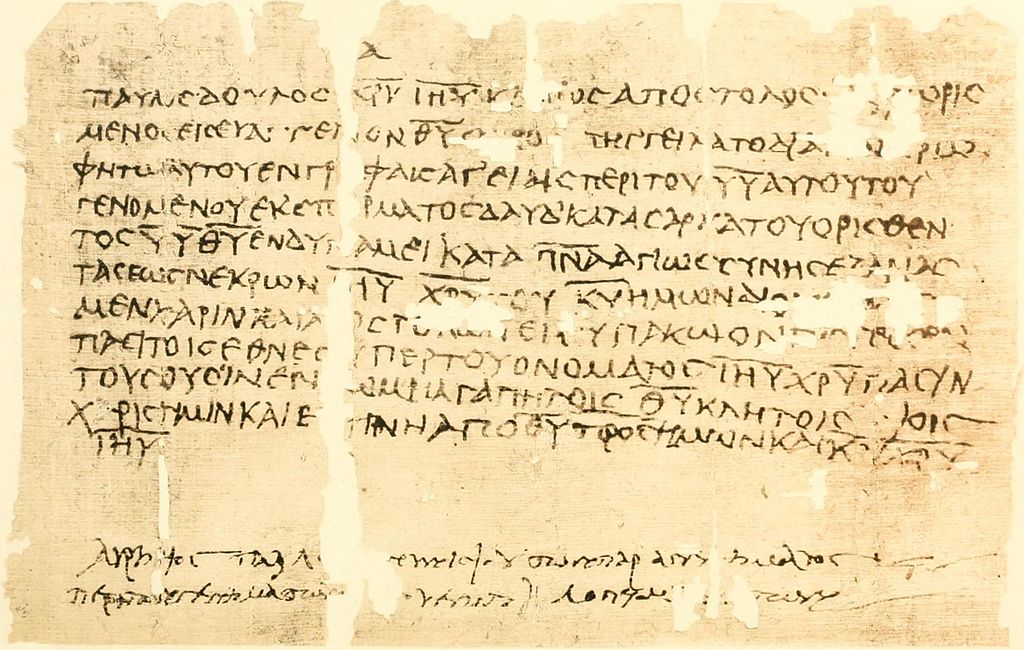

Category: Epistles – Is his letter to our church?

Epistle of Paul to the Romans 1 - the Apostles sends a church letter to Rome and the local saints of area churches
Epistle of Paul to the Romans

Epistles ἐπιστολή or Letters

I charge you by the Lord that this epistle be read to all the holy brethren.

Paul’s First Letter to the Thessalonians 

Don’t  miss our recent FEATURED SERIES

JUNE 2024 – 2025 —

1 CORINTHIANS 

———————————————————-

Letters – Is he writing to me?
The short answer: YES.

In their epistles or 1st century church letters the Apostles and other men sent out by Jesus build up the saints [small – ‘s’] or members of local first century churches.

A Disciple or other witness of JESUS would write it. Messengers then delivered these church letters to many isolated worshipers.

Followers of Jesus Christ receive these letters as a major encouragement to their personal faith. Then leaders read them to worshipers of their church.

Although the Epistles 0r Letters to the Church were originally written to churches of the first century,

Romans through Jude will seem like letters to your 21st century church.

  • What do Peter, Paul, John and others tell us we must do?
  • Is he talking about an issue in your 21st c. church as well?
  • How does the writer’s advice, warning, or encouragement to the 1st c. believers apply to you as well
  • Is the writer of this letter talking about something you need to address in your 21st century ‘christian’ life?

Contemporary Application of the Letters (Epistles)

Most New Testament writers take on specific issues confronting faithful followers of Jesus Christ. These same issues continue to confront believers until the Lord’s coming again in these last days.

Certainly Christ our Lord will come again to those God has chosen for eternal life.

Believers currently suffer more than most of you who know Christ in your local church can imagine.

In other lands Christians continue to suffer by the hand of the ungodly.
Go into all the world

A 21st century Common Era church can see and hear nearly any atrocity of man or artificial imagination of sinful man’s mind, yet ‘christians‘ dare not speak of any absolute truth of the Lord God or talk of JESUS CHRIST.

Will YOU comment on Scripture and share the Gospel?

I invite you to read the inspired word of Scripture written in these LETTERS TO THE CHURCH.

YES, He IS writing to YOU.

Beloved brother or sister in Christ Jesus,

Will you read this ‘CHURCH LETTER’ and talk of JESUS through your comment, sharing and email to me about this ‘Letter to you?”

Roger@talkofJesus.com

  • Elders – a letter from Peter – 9

    Elders – a letter from Peter – 9

    Peter has just cautioned the church that judgment begins with God’s household. He encourages all the believers suffering for Christ to keep fervent in your love. And in an appropriate exhortation for leadership of the family Peter urges wives to be submissive to your own husbands. Now the Apostle specifically exhorts the elders of the church.

    Church Leadership

    Before we address this divisive denominationalized topic written to a first century church in terms of today’s church, let’s begin with a contemporized paraphrase of these verses from the first letter of Peter by J.B. Phillips.

    1 Peter 5:

    A word to your leaders

    5 1-4 Now may I who am myself an elder say a word to you my fellow-elders? I speak as one who actually saw Christ suffer, and as one who will share with you the glories that are to be unfolded to us. I urge you then to see that your “flock of God” is properly fed and cared for. Accept the responsibility of looking after them willingly and not because you feel you can’t get out of it, doing your work not for what you can make, but because you are really concerned for their well-being. You should aim not at being “little tin gods” but as examples of Christian living in the eyes of the flock committed to your charge. And then, when the chief shepherd reveals himself, you will receive that crown of glory which cannot fade.

    Who is an Elder?

    I am not an elder of my church. Is he writing to me?

    Certainly Peter will follow this public exhortation with expected application to those humble members of their churches. And in a larger sense, he writes not to an individual group of Christ worshipers, but to the church as the whole body of Christ.

    Peter is not their Pastor, Priest, teacher or even a member of most churches to whom he writes, yet he clearly claims his authority “as your fellow elder.”

    Before we address this position which Peter claims from the greek word which he uses, συμπρεσβύτερος [sympresbyteros], let’s look back a bit to God’s presence before elders.

    Elders of the Hebrews

    We first hear of the elders in Genesis 50, transition in the Books of Moses to the exodus of a captive Hebrew people enslaved in Egypt.

    So Joseph went up to bury his father, and with him went up all the servants of Pharaoh, the elders of his household and all the elders of the land of Egypt, and all the household of Joseph and his brothers and his father’s household; they left only their little ones and their flocks and their herds in the land of Goshen. – Genesis 50:7-8 NASB

    Scripture refers to both ‘the elders of his [Joseph’s] household and all the elders of the land.

    Elders – zaqen זָקֵן

    It is a description of older men, or men with familial and community authority. The LORD gives authority over families (households) and those with authority will be called before the LORD to account for those over whom they have authority. (We 21st century ‘christians,’ even Jews often struggle with such authority delegated from Almighty God.)

    God, furthermore, said to Moses, “Thus you shall say to the sons of Israel, ‘The LORD, the God of your fathers, the God of Abraham, the God of Isaac, and the God of Jacob, has sent me to you.’ This is My name forever, and this is My memorial-name to all generations.

    “Go and gather the elders of Israel together and say to them, ‘The LORD, the God of your fathers, the God of Abraham, Isaac and Jacob, has appeared to me, saying,
    “I am indeed concerned about you and what has been done to you in Egypt.
    Exodus 3:15-16

    How like a loving Father does the LORD show concern for those who worship Him.

    Yet Moses asked the LORD for help in governing these difficult people. (Aren’t we, the church, just as rebellious when it comes to Authority?) The LORD gave us elders to judge our own family, the followers of God.

    Exodus 24:

    וְאֶל־מֹשֶׁ֨ה אָמַ֜ר עֲלֵ֣ה אֶל־יְהוָ֗ה אַתָּה֙ וְאַהֲרֹן֙ נָדָ֣ב וַאֲבִיה֔וּא וְשִׁבְעִ֖ים מִזִּקְנֵ֣י יִשְׂרָאֵ֑ל וְהִשְׁתַּחֲוִיתֶ֖ם מֵרָחֹֽק׃

    Then He said to Moses, “Come up to the Lord, you and Aaron, Nadab and Abihu and seventy of the elders of Israel, and you shall worship at a distance.

    Exodus 24:1 WLC [Hebrew]; NASB [English]

    4 Moses wrote down all the words of the Lord…

    7 Then he took the book of the covenant and read it in the hearing of the people; and they said, “All that the Lord has spoken we will do, and we will be obedient!” …

    9 Then Moses went up with Aaron, Nadab and Abihu, and seventy of the elders of Israel and they saw the God of Israel; and under His feet there appeared to be a pavement of sapphire, as clear as the sky itself. Yet He did not stretch out His hand against the nobles of the sons of Israel; and they saw God, and they ate and drank.

    Moses prepares the followers with him, interceding as their Priest returning them to holiness (or pureness), making sacrifices and covenants before God. The LORD shows mercy to the sinful leaders of the Hebrews. Moses intercedes for them, then they see the Lord God!

    12 Now the Lord said to Moses,

    “Come up to Me on the mountain and remain there, and I will give you the stone tablets with the law and the commandment which I have written for their instruction.”

    13 So Moses arose with Joshua his servant, and Moses went up to the mountain of God. But to the elders he said,

    “Wait here for us until we return to you…

    Elders of the cities and other lands

    The leadership of elders is accepted practice and culture at every level from family to city, from state or province to nation. Eldership is not exclusive to the Hebrews, Israel or later Judah. Neither is our tendency toward personal freedom and resistance to any authority by man or God.

    • Then the elders of the congregation shall lay their hands on the head of the bull before the LORD, and the bull shall be slain before the LORD. – Leviticus 4:15
    • The LORD therefore said to Moses, “Gather for Me seventy men from the elders of Israel, whom you know to be the elders of the people and their officers and bring them to the tent of meeting, and let them take their stand there with you. Numbers 11:16
    • So the elders of Moab and the elders of Midian departed with the fees for divination in their hand; and they came to Balaam and repeated Balak’s words to him. Numbers 22:7
    • then the elders of his city shall send and take him from there and deliver him into the hand of the avenger of blood, that he may die. Deuteronomy 19:12

    The LAW of the Hebrews is a higher Law from the Lord God. Furthermore, the Hebrews agreed to the Commandments of the LORD. Yet all sin and fall short of the Law.

    Moses had saved the Hebrews from Egypt, but he could not save them from their sin.

    Deuteronomy 31:

    Elders did not lead a people who just wandered in and out of the land or the Hebrew tent of meeting.

    Joshua, David, judges, prophets, elders of every generation — all are called by the Authority of God. The Hebrews they led had agreed to be led by the LORD.

    9 So Moses wrote this law and gave it to the priests, the sons of Levi who carried the ark of the covenant of the Lord, and to all the elders of Israel…

    12 Assemble the people, the men and the women and children and the alien who is in your town, so that they may hear and learn and fear the Lord your God, and be careful to observe all the words of this law.

    26 “Take this book of the law and place it beside the ark of the covenant of the Lord your God, that it may remain there as a witness against you… Assemble to me all the elders of your tribes and your officers, that I may speak these words in their hearing and call the heavens and the earth to witness against them.

    Deuteronomy 31:26,28 NASB

    The presence of the LORD has scattered them,
    He will not continue to regard them;
    They did not honor the priests,
    They did not favor the elders.

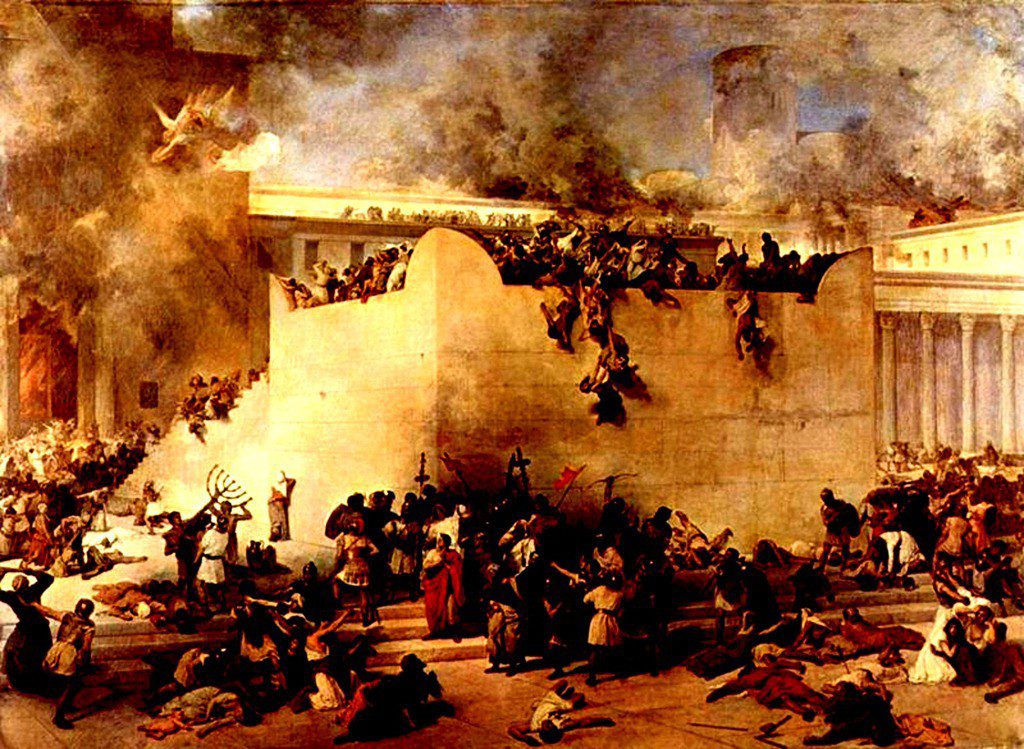
    Lamentations 4:16 of Jeremiah when Jerusalem fell & the Temple was burned ~567 BC

    Church Elders of the New Testament

    Elders – presbyteros – πρεσβύτερος

    Strong’s Definitions
    πρεσβύτερος presbýteros, pres-boo’-ter-os; comparative of πρέσβυς présbys (elderly); older; as noun, a senior; specially, an Israelite Sanhedrist (also figuratively, member of the celestial council) or Christian “presbyter”:—elder(-est), old.

    A general description of elders in the Church would be: among the Christians, those who presided over the assemblies (or churches) The NT uses the term bishop, elders, and presbyters interchangeably.

    Although Bishops and Archbishops, Pastors and Popes may be called elders of the church, authority from the Lord is not exclusive to any. With no regard to title or station, Christ, the Head of the body of the church will judge all.

    Peter, then, addresses the elders of the church in terms of their own behavior as examples of Christ Jesus and responsibility to their own small flocks as Peter well-knew Jesus had shown to the Twelve Disciples.

    1 Peter 5:

    I exhort the elders among you as a fellow elder and witness to the sufferings of Christ, as well as one who shares in the glory about to be revealed:

    Peter addresses these men as a fellow elder. He is not of their church or lording it over their church, but addressing them as a humble brother encouraging their leaders.

    Christians tend to look askance at the Jewish context of elders because of the Gospel record of the elders challenging Jesus. However Peter does not challenge any of the elders as if he is one who knows better or as even as an Apostle of higher authority.

    2 Shepherd God’s flock among you, not overseeing out of compulsion but willingly, as God would have you; not out of greed for money but eagerly; 3 not lording it over those entrusted to you, but being examples to the flock.

    Peter then addresses our example of Jesus.

    4 And when the chief Shepherd appears, you will receive the unfading crown of glory.

    Yes, Jesus IS resurrected, as witnessed by Peter, who knows directly from the Lord that Christ will give glory to those who serve Him faithfully.

    5 In the same way, you who are younger, be subject to the elders.

    Are you younger than the elders of your church? Of course. Therefore listen to their wise leadership.

    Humbly subject yourselves to them as Christ subjected Himself to the Father, even suffering death on a cross for our sins.

    All of you clothe yourselves with humility toward one another, because
    God resists the proud
    but gives grace to the humble.

    Peter asks every saint of the church to clothe yourselves with humility toward all members of the body of Christ. He then quotes a familiar Proverb, memorized between father and son.

    Proverbs 3:

    My son, don’t forget my teaching,
    but let your heart keep my commands;
    2 for they will bring you
    many days, a full life, and well-being.
    3 Never let loyalty and faithfulness leave you.
    Tie them around your neck;
    write them on the tablet of your heart.
    4 Then you will find favor and high regard
    with God and people.
    5 Trust in the Lord with all your heart,
    and do not rely on your own understanding;
    6 in all your ways know him,
    and he will make your paths straight.
    7 Don’t be wise in your own eyes;
    fear the Lord and turn away from evil…

    33 The Lord’s curse is on the household of the wicked,
    but he blesses the home of the righteous;
    34 He mocks those who mock,
    but gives grace to the humble.

    35 The wise will inherit honor,
    but he holds up fools to dishonor.

    Conclusion

    Peter concludes his letter advising this same humility which so often eluded him as a Disciple of Jesus. The Lord led with such humble gentleness and exemplary grace.

    Peter advises the saints of Christ’s body not to become fools in your actions toward your brothers in Christ. And do not mock the fools of this passing world so filled with sin. The saints must become Christ-like in all ways.

    Hebrew Scripture would have easily come to mind for these members of first century churches. Yet Peter’s exhortation applies aptly to you and to me.

    Humble yourselves, therefore, under the mighty hand of God, so that he may exalt you at the proper time, casting all your cares on him, because he cares about you.

    1 Peter 5:6-7

    ‘You shall remember that you were a slave in the land of Egypt, and the LORD your God brought you out of there by a mighty hand and by an outstretched arm; therefore the LORD your God commanded you to observe the sabbath day. – Deuteronomy 5:15 NASB

    Now the LORD said to Joshua, “This day I will begin to exalt you in the sight of all Israel, that they may know that just as I have been with Moses, I will be with you. – Joshua 3:7

    Psalm 69

    Perhaps from this excerpt below we might look into the hearts of Peter’s persecuted first century readers of his letter, lifted up by a song of their familiar worship.

    A Psalm of David.
    Save me, O God,
    For the waters have threatened my life…
    I am weary with my crying; my throat is parched;
    My eyes fail while I wait for my God…
    Because for Your sake I have borne reproach;
    Dishonor has covered my face…

    But as for me, my prayer is to You, O LORD, at an acceptable time;
    O God, in the greatness of Your lovingkindness,
    Answer me with Your saving truth…

    Oh draw near to my soul and redeem it;
    Ransom me because of my enemies!

    But I am afflicted and in pain;
    May Your salvation, O God, set me securely on high.
    I will praise the name of God with song
    And magnify Him with thanksgiving…

    The humble have seen it and are glad;
    You who seek God, let your heart revive.

    Resist temptation

    8 Be sober-minded, be alert.

    Your adversary the devil is prowling around like a roaring lion, looking for anyone he can devour. 9 Resist him, firm in the faith, knowing that the same kind of sufferings are being experienced by your fellow believers throughout the world.

    Did you know that you are not the only one who suffers for Christ?

    Do you acknowledge the same powers and principalities who opposed Jesus also tempt you?

    Not all angels and spirits bring good news from God. Some heavenly messengers to mortals follow the fallen and deceitful angels of darkness and rebellion against the Lord God. If they oppose Jesus and you suffer for His Name, certainly you will join other saints faithful to the Lord.

    an Encouragement and Praise

    10 The God of all grace, who called you to his eternal glory in Christ, will himself restore, establish, strengthen, and support you after you have suffered a little while.

    11 To him be dominion forever. Amen.

    a Postscript

    Once Peter concludes his letter to the church exhorting its members and elders and closes with a general praise, we learn more about others who support the delivery of Peter’s good news to the churches.

    12 Through Silvanus, a faithful brother (as I consider him), I have written to you briefly in order to encourage you and to testify that this is the true grace of God.

    Peter likely dictated his letter to Silvanus, also known as Silas. Christian leaders like Silvanus and Timothy often worked with Peter or Paul. Letters to the church often express an understood Spirit-led leadership of like-minded elders of the church. We see this also in Peter’s next greeting.

    13 She who is in Babylon, chosen together with you, sends you greetings, as does Mark, my son.

    That is, John Mark, writer of the Gospel, much dictated by Peter and other Apostles.

    Who is ‘she who is in Babylon?’ Some suggest that it may be a veiled reference to Peter’s wife, who accompanied him in his journeys to spread the Gospel. As to the true location of ‘Babylon,’ commentators differ. At least three viable locations seem possible, including Rome, a Roman outpost in Egypt and a city in the area of ancient Babylon (Mesopotamia).

    Final greetings

    14 Greet one another with a kiss of love.

    φίλημα ἀγάπη – philēma agapē. It is the kiss with which, as a sign of fraternal affection, Christians were accustomed to welcome or dismiss their companions in the faith. And agapē love, demonstrable affection, good will, love, benevolence, brotherly love in Christ finds its root in phileō and philos – to treat affectionately or kindly, to welcome, befriend; one who associates familiarly with one, a companion.

    This personal love of God becomes evident in every relationship between brothers of the body of Christ; that is, the Church of which He is the head.

    Peace to all of you who are in Christ Jesus, Amen.

    1 Peter 5:14b

  • Judgment begins with God’s household – a letter from Peter 8

    Judgment begins with God’s household – a letter from Peter 8

    Our Attitude in these Last Days

    For the time is come that judgment must begin at the house of God: and if it first begin at us, what shall the end be of them that obey not the gospel of God?

    1 Peter 4:17 KJV

    I begin with Peter’s pointed call to account of the church and Christians from the King James Version of the Bible, judgment of our own actions first.

    Previously, Peter referred to the end of the living and the dead. He urges us:

    So, since Christ suffered in the flesh, you also arm yourselves with the same attitude… 1 Peter 4:1a NET Bible

    Now Peter will point every believer toward service and suffering in these last days when our attitudes must match that of Christ Jesus, as well as judgment of all for our words and actions after this brief mortal life.

    Living Stones

    Do you recall that Peter has called us; “faithful followers of Christ,” that is; living stones of the Temple of God with Christ as the cornerstone?

    If you follow Peter’s imagery of our saved souls building upon the foundation of Christ’s love, then every Christian believer in the living Church of His Body and Blood must adopt an attitude like Jesus.

    Peter has already urged us (the church):

    As you come to him, a living stone—rejected by people but chosen and honored by God— you yourselves, as living stones, a spiritual house, are being built to be a holy priesthood to offer spiritual sacrifices acceptable to God through Jesus Christ.

    1 Peter 2:4-5 CSB

    Therefore, Peter now tells us how we must live as holy priests representing the Lord God before an unsaved and evil world.

    End Time Ethics

    1 Peter 4:7-19

    The end of all things is near; therefore, be alert and sober-minded for prayer.

    Be alert (pay attention). Be sober, reads the KJV; defined in this context: to be of sound mind and exercise self-control.

    What do you think of your church leaders… our local leaders… even national leaders? Do you ever wonder if they pay attention and are of sound mind? For some certainly exercise little self-control.

    Paul instructs the church not to be like those who are not sober and to ‘watch unto prayer’KJV

    The same Apostle to the Gentiles who often asks, “pray also for me,” urges the church to be on watch (while others sleep in this present darkness). And pray to God concerning the things yet to come, even death — even judgment of all souls.

    The Love of Christians

    Peter next begins, “Above all things; that is, what I am about to say is of superior importance to you in these last days, beloved brother in Christ.

    ἔχω ἐκτενής ἀγάπη εἰς ἑαυτοῦ
    echō ektenēs agapē eis heautou

    … fervent in your love for one another …

    … have fervent charity among yourselves…

    1 Peter 4:8b NASB, KJV

    Above all things… Maintain constant love; Christ’s fervent brotherly love between each other, my fellow ‘Christians,’ We MUST love one another as Jesus has loved us.

    Do WE do that – this agape love for each other in the church?

    Charity is a true definition of this much maligned love – kindness and tenderness, a true caring among all the family of Christ’s body, the church.

    We all sin just like unbelievers do, so Peter tells us (the saints of the church) to do this as witness of Christ’s love for His body the church.

    8 [NASB] Above all, maintain constant love for one another, since love covers a multitude of sins.

    I certainly have a multitude of sins Christ covers. Do you?

    Jesus also told us why this agape love between Christians is so important.

    And because iniquity shall abound, the love G26 of many shall wax cold.

    By this shall all men know that ye are my disciples, if ye have love G26 one to another.

    The words of Jesus: Matthew 24:12, John 13:35 KJV

    Serving each other

    Peter instructs us:

    9 Be hospitable to one another without complaining. 10 Just as each one has received a gift, use it to serve others, as good stewards of the varied grace of God.

    And just as Peter has instructed us to watch what we say and be careful in what we do, he applies this to God’s will.

    • 11 If anyone speaks, let it be as one who speaks God’s words;
    • if anyone serves, let it be from the strength God provides…

    Peter provides motivation for our specific service to God within the body of Christ, the church:

    … so that God may be glorified through Jesus Christ in everything.

    To which the Apostle adds a praise:

    To him be the glory and the power forever and ever. Amen.

    Suffering & Persecution

    Beloved – ἀγαπητός agapētos

    We see genuine examples of Christ’s agape love in all the Apostles. Although we tend to think of the tender heart of young John and of Peter as a brash follower of Jesus, here Peter addresses those he loves of the church in the same way that an older John does in his letters.

    We feel the compassion of Peter’s approach to these brothers (and sisters) who like him are persecuted for the sake of Christ.

    Beloved, think it not strange concerning the fiery trial which is to try you, as though some strange thing happened unto you:

    1 Peter 4:12 KJV

    Some versions of the Bible begin this: “Dear friends,” which we tend to dismiss so casually, as if in the salutation of an impersonal letter. This appeal of Peter’s is far from impersonal. Beloved, a true Christian attitude and appropriate translation of ‘agapetos‘ fits perfectly into the context of our relationships in the body of Christ Jesus. He IS the head, beloved, and sore wounded for our sins.

    Christ’s sufferings and ours

    13 Instead, rejoice as you share in the sufferings of Christ, so that you may also rejoice with great joy when his glory is revealed. 14 If you are ridiculed for the name of Christ, you are blessed, because the Spirit of glory and of God rests on you.

    Christ’s glory will be revealed to all the world when the judgement of the end has come. Will you be with Jesus then because you are for Jesus now even in your suffering?

    Once again the translation of the King James Version is more pointed in comparing our motivations now to those who suffer for doing evil.

    15 But let none of you suffer as a murderer, or as a thief, or as an evildoer, or as a busybody in other men’s matters.

    16 Yet if any man suffer as a Christian, let him not be ashamed; but let him glorify God on this behalf.

    Judgment must begin in the house of God

    For the time has come for judgment to begin with God’s household, and if it begins with us, what will the outcome be for those who disobey the gospel of God?

    1 Peter 4:17 CSB

    It’s time for judgment!

    Judgment, you ask? Why does Peter tell persecuted Christians that the time for judgment has come? And more pointedly, what does Peter mean by saying that judgment begins with ‘God’s household,’ specifically us?

    We tend to think of judgment only as a sentence by a judge or worse, the punishment of a law-breaker; but this narrow view is not entirely correct and does not encompass Peter’s meaning.

    κρίμα {from κρίνω}

    From a greek root meaning to separate, approve, judge or resolve; Peter’s meaning here [krima] may also mean: condemnation of wrong, the decision (whether severe or mild) which one passes on the faults of others.

    Peter calls on the saints of the church to judge ourselves first. Jesus, in fact, used the same word calling for self-conviction before the accusation of others.

    “For in the way G2917 you judge, you will be judged; and by your standard of measure, it will be measured to you.

    Matthew 7:2 NASB

    Peter points back to the wisdom of Proverbs 11:31, calling on us to be righteous, for righteousness in Christ is our redeemed measure of God.

    Proverbs 11:

    30 The fruit of the righteous is a tree of life,
    and a wise person captivates people. 
    31 If the righteous will be repaid on earth,
    how much more the wicked and sinful.

    Peter’s application of Judgment

    18 And if the righteous scarcely be saved, where shall the ungodly and the sinner appear?

    19 Wherefore let them that suffer according to the will of God commit the keeping of their souls to him in well doing, as unto a faithful Creator.

    King James Version (KJV)
    Public Domain

    To be continued...

  • The End of the Living – a letter from Peter – 7

    The End of the Living – a letter from Peter – 7

    Living toward the End

    Peter challenges persecuted believers to Suffer for Good and trust God to punish those who do evil. He then proceeds to warn of the judgement and the end of those living souls as well as for those who are dead.

    Just as the end of all life will come, so must the end of your suffering. The Lord will judge your living soul accordingly after the time of all expires.

    Who shall give account?

    5 Who shall give account to him that is ready to judge the quick and the dead.

    1 Peter 4:5 KJV

    The King James Version translates the Greek of Peter’s letter into words somewhat quait to our 21st century hearing. “The quick and the dead,” refers to the condition of all being judged after our death. Yet don’t miss the encouragement here in Peter’s contrast between believers and disobedient sinners, those who both infiltrate the church and persecute believers.

    the living

    Most versions of the Bible translate ‘quick,’ ζάω [zaō] as “the living.” From this we hear expressions like, “as I live and breathe” or, “[be] among the living.”

    Consider our more familiar references to ‘quick’ as the pace of something, even our quickly passing life. We tend to rush through our living of life more so than persecuted believers of the first century church. Yet we would do well in our quickness of life to consider its brevity.

    to give an account

    Perhaps in our money-driven daily lives of this 21st century we quickly think of accounting as it relates to buying and selling. This approach to Peter’s meaning is not entirely wrong, but you cannot buy your own soul.

    No good you accomplish in your quick days of living this life can outweigh the many sins of your living flesh.

    3:19 בְּזֵעַת אַפֶּיךָ תֹּאכַל לֶחֶם עַד שֽׁוּבְךָ אֶל־הָאֲדָמָה כִּי מִמֶּנָּה לֻקָּחְתָּ כִּֽי־עָפָר אַתָּה וְאֶל־עָפָר תָּשֽׁוּב׃

    Genesis 3:19
    By the sweat of your face
    You will eat bread,
    Till you return to the ground,
    Because from it you were taken;
    For you are dust,
    And to dust you shall return.”
    - Genesis 3:19 NASB

    So how does God balance the good of your quickly dying flesh with the evil of our living soul?

    The writer of Hebrews cautions those who turn against the Lord, providing an accounting of the judgment of souls.

    And as it is appointed unto men once to die, but after this the judgment: So Christ was once offered to bear the sins of many; and unto them that look for him shall he appear the second time without sin unto salvation.

    Hebrews 9:27-28 KJV

    Peter assures us that whether we suffer for good, experience persecution for Christ or conversely if our daily living displeases God, know that all will give an account. Even the dead will give an account for actions against God during their lifetime.

    You must give an account even for inattentiveness to your living soul, for all will will give an account before the Lord.

    Your life will pass quickly, then you will die and be called to God’s Throne of Judgment of your eternal living soul.

    to him that is ready to judge

    1 Peter 4:

    Who will judge?

    To whom will your departed soul be required to give an account of your living soul?

    Peter’s encouragement to persecuted believers goes back to the reason for and objects of their persecution.

    Therefore, since Christ suffered in the flesh, arm yourselves also with the same understanding…

    3 For there has already been enough time spent in doing what the Gentiles choose to do…

    … and they malign you; 5 but they will give account to Him who is ready to judge the living and the dead.

    They will give an account refers to the gentiles who remain sinful. The Lord will judge every soul of those who decay in the flesh, yet some living in sin may be saved by your preaching of the Gospel.

    Just as Christ preached to those in the grave, so also will your redeemed life doing good preach the Gospel to those who remain sinners. Perhaps the Spirit will use you to bring some back to life.

    6 For this reason the gospel was also preached to those who are now dead, so that, although they might be judged in the flesh according to human standards, they might live in the spirit according to God’s standards.

    Who will judge our living souls?

    A Hebrew understanding of living relates more to the soul than to our flesh.

    Then the LORD God formed man of dust from the ground, and breathed into his nostrils the breath of life; and man became a living being.

    So also it is written, “The first MAN, Adam, BECAME A LIVING SOUL.” The last Adam became a life-giving spirit.

    Genesis 2:7; 1 Corinthians 15:45 NASB

    When will it all end?

    Certainly the end appeared to be at hand as the Roman Empire fell into further decline during the first century A.D. Peter writes to those living as Christians persecuted for their faith in Jesus. He too would suffer further and then be crucified in Rome.

    The church to whom Peter wrote suffered in their home towns in Asia minor (modern Turkey) as if the end of their lives could be at any time. The church in Jerusalem suffered greatly and Jerusalem itself would fall into ashes and dust at the hands of its Roman oppressors.

    Perhaps the end of all things is near. [1 Peter 4:7]

    Even in recent centuries some have thought judgement near.

    In October of the year of our Lord 1962, some will recall that the world stood at the brink of destruction by nuclear missiles from Russia and the U.S.

    In September of the year of our Lord 2001, some believed that an attack of followers of the false prophet would lead us into the last days. Perhaps it has. The Lord knows.

    But in any case, our end will come to the measured days of our mortal life. All will end, and then the judgement. God only knows when.

    And like the followers of Jesus to whom Peter wrote, we also know:

    We will die in the flesh and then be judged. AND our soul is saved from our sin by the grace and mercy of Jesus Christ! Thanks be to God!

    Who shall give an account?

    Everyone – the living and the dead – will give an account for their living actions during the brief years of our flesh.

    οἳ ἀποδώσουσιν λόγον τῷ ἑτοίμως ἔχοντι κρῖναι ζῶντας καὶ νεκρούς

    1 Peter 4:5 Morphological Greek New Testament

    So since all souls must give an account, let’s look deeper into Peter’s text of his first letter to the church (whose believers understand Greek).

    but they will give account to Him who is ready to judge the living and the dead.

    1 Peter 4:5 NASB

    λόγος

    Trench’s Synonyms: lxxvi. λαλέω, λέγω (λαλιά, λόγος).
    lxxxix. φωνή, λόγος.
    xc. λόγος, μῦθος.

    Do you see it – the account you must give?

    It’s Greek root is from a verb legō, meaning to say, speak or affirm. It is the same word Jesus uses when He says,

    “But I say G3004 to you that everyone who is angry with his brother shall be guilty before the court;
    and whoever says G3004 to his brother, ‘You good-for-nothing,’ shall be guilty before the supreme court;
    and whoever says, G3004 ‘You fool,’ shall be guilty enough to go into the fiery hell.
    Matthew 5:22 – Strong’s G3004 – BlueLetterBible.org

    From ‘legos,’ the root of the word Peter and Jesus use, we see that all will give an account for what we say, in addition to what we do. Yet returning to Peter’s use of account, look closer. Do you see the noun Peter uses?

    λόγος

    Logos

    The KJV translates Strong's G3056 in the following manner: 
    word (218x), saying (50x), account (8x), speech (8x), Word (Christ) (7x), thing (5x), not translated (2x), miscellaneous (32x).

    You will give an account [logos]. That is, of speech they will give an account for slander and words of hatred. They will give an account for false teaching which goes against the precepts of God.

    We all know that keeping score means to give an account at the end of the game. This is no game, but a brief life for which we will give account to Almighty God.

    Jesus often used this word with the same meaning as Peter uses here to encourage persecuted believers.

    “For this reason the kingdom of heaven may be compared to a king who wished to settle accounts G3056 with his slaves.

    Matthew 18:23 NASB

    Greek-speaking Romans and Jews of the first century also referred to a word spoken from the Prophets in this way. Many of the Jews believed John the Baptist to be a Prophet with such power of the word of God spoken directly to man through him.

    Logos – Accounting in Peter’s words

    Peter has already encouraged readers of his letter with this same (logos) accounting:

    1Pe 1:23
    for you have been born again not of seed which is perishable but imperishable, that is, through the living and enduring word G3056 of God.

    1Pe 2:8b
    for they stumble because they are disobedient to the word, G3056 and to this doom they were also appointed.

    1Pe 3:1
    In the same way, you wives, be submissive to your own husbands so that even if any of them are disobedient to the word, G3056 they may be won without a word G3056 by the behavior of their wives,

    1Pe 3:15
    but sanctify Christ as Lord in your hearts, always being ready to make a defense to everyone who asks you to give an account G3056 for the hope that is in you, yet with gentleness and reverence;

    Therefore, Peter will continue by urging us how to speak and act, now that we are in Christ. (I will continue Peter’s first letter to the church from his advise continuing in 1 Peter 4:7, God-willing.)

    Christ – the living logos

    No men understood better the accounting and true word of God than Jesus’ inner circle of Apostles. In addition to Peter, these included James and John.

    Consider the accounting of the living and the dead to be made before Almighty God from the words of the Apostle John, only surviving one of the Twelve who was not martyred for Christ Jesus. You may read of it in his letters, Gospel, or in The Revelation of Jesus Christ to the church:

    The Revelation of Jesus Christ, which God gave Him to show to His bond-servants, the things which must soon take place; and He sent and communicated it by His angel to His bond-servant John,
    who testified to the word G3056 of God and to the testimony of Jesus Christ, even to all that he saw.
    Blessed is he who reads and those who hear the words G3056 of the prophecy, and heed the things which are written in it; for the time is near.

    John, like those to whom Peter wrote, suffered for Christ. And as a living soul for Jesus writes to seven of the same churches in Asia with exhortation as to how we much live as Christ.

    John’s Gospel to the church best solidifies the identity of God and Christ. In fact, John includes this same word as Peter has just used in his letter.

    In the beginning was the Word, G3056 and the Word G3056 was with God, and the Word G3056 was God.

    And the Word G3056 became flesh, and dwelt among us, and we saw His glory, glory as of the only begotten from the Father, full of grace and truth.

    John 1:1,8 NASB Strong’s G3056 – λόγος
    logos
    To be continued...