Category: 4 Gospels + Good News of the NEW Testament

What are the Gospels?

FOUR Gospels:

GOOD NEWS! (That’s what Gospel means.)

Matthew, Mark, Luke & John begin the New Testament proclaiming the Good News of Israel’s long-awaited Messiah and talk of JESUS Christ.

The four Gospels are first hand witness + proclaiming GOOD NEWS

  • by two Jewish Apostles of the Messiah JESUS, Matthew & John
  • Two gentile (non-Jewish) followers of THE WAY of Jesus Christ, Mark & Luke, who proclaim the GOSPEL recorded from witness of Peter, Paul and other Apostles and disciples of JESUS in the first century.

READ the Good News of the Messiah and Savior Jesus from accounts of His twelve Apostles & others witnessing the resurrection of the Lord Jesus from the four Gospels of the New Testament: Matthew, Mark, Luke and John.

SHARE the Gospel

  • with your Christian friends and those who do not yet believe in JESUS CHRIST.
  • Comment on a Talk of JESUS post and SHARE in your social media world.
  • The Tongue is a Fire! – Politics

    The Tongue is a Fire! – Politics

    In politics bitter tongues spew hatred from each side over the airwaves and into our devices. Broadcasters claim a ‘balanced,’ supposedly unbiased approach, while we ask: ‘What now? Will this never end?’

    Oh, the hateful words of a tongue on fire! Media broadcasts them every day, sometimes even minute by minute.

    Breaking News over BBC background logo

    BREAKING NEWS! (Politics, again)

    Media and now #socialmedia broadcast fiery furious tongue-lashings available on demand from any public figure. Winning politicians hope to burn their opponent with their own words and rally opposition. Who might join their cause of shouted hatred?

    Our present political battlefield seems hopeless to those beaten by the constant plummeting of hellacious accusation and diffident denial. The politics of the day of course is nothing new under the sun, as a once-great leader long ago lamented.

    Never discuss religion or politics

    In fact history of the ages will confirm assassinations to ascension, misleading public proclamations and attempts of cleansing lands of religious and political opponents.

    I don't make jokes, just watch government - Will Rogers quote

    We can make light of it all (and sometimes should), but government always gets out of control.

    Presidents, senators, representatives, prime ministers, premiers, governors, kings, queens, princes, dictators and despots – ALL will always have critics (and often they should). But careful what your tongue speaks against those in power and watch each touch of your inciting visual indictment pointing a finger directly into the eyes of the victimized masses.

    Many have given up hope for any sane solution to this country’s current problems. Our current lack of civility in the media marketplace stems not from disagreement, but from frustration.

    Yet I ask, which country do I speak of and which troublesome time now or in our past?

    great thieves in public office quote of Aesop
    Aesop – 5th c. B.C. Classic quote about politics

    One of the penalties for refusing to participate in politics is that you end up being governed by your inferiors.

    Plato – Greece 4th c. B.C.
    1984 MINISTRY OF TRUTH

    In our age there is no such thing as ‘keeping out of politics.’ All issues are political issues, and politics itself is a mass of lies, evasions, folly, hatred and schizophrenia.

    George Orwell – U.S.A. A.D. 1946
    Washington DC mall

    Preparation for HATE WEEK

    The Ministry of Truth — Minitrue, in Newspeak — was startlingly different from any other object in sight. It was an enormous pyramidal structure of glittering white concrete, soaring up, terrace after terrace, 300 metres into the air. – 1984 ch. 1 – George Orwell

    & let’s not ignore the politics of religion

    Has the tongue been condemned for truth or held mute for silence?

    Yes, of course; again and again. Controversy is no stranger to politics of power or conflicts of religious belief.

    Occasionally a man or woman of principle will prevail; but more often than not, the sharp tongues of adamant belief will ignite shouts of suspicion from crowds bent on justice.

    Ignorance ignores mercy and truth in deference to hell-bent justice shouted from the masses.

    Greece: 4th c. B.C.

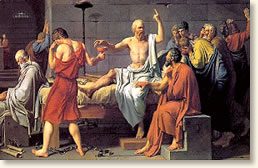
    Socrates – Philosopher opposed to our gods

    Scene of Socrates taking the cup of Hemlock after being sentenced to death by the court in Athens
    399 B.C. Socrates sentenced to death

    399 B.C.

    Socrates’ accusers cited two ‘impious’ acts: ‘failing to acknowledge the gods that the city acknowledges’ and ‘introducing new deities.’

    A majority of the 501 dikasts (Athenian citizens chosen by lot to serve as jurors) voted to convict him. Consistent with common practice, the dikasts determined Socrates’ punishment with another vote. Socrates was ultimately sentenced to death by drinking a hemlock-based liquid.

    It’s the very kind of accusation which takes place to this day.

    Authoritative secular leaders or tyrannical religious leaders decide justice for those who oppose their iron-fisted rule. So one man or a few in power determine justice and death of men of popular opposition.

    Classic Greek Democracy & Culture of Religion

    Life in Athens’ 4th c. B.C “Golden Age.”

    • Greek influence northern rim of the Mediterranean Asia Minor to the Italian peninsula
    • only men could be citizens
    • only upper-class males (aristocracy) enjoyed a formal education
    • 25% population made up of slaves, usually prisoners captured during the many clashes that extended Greek influence overseas.
    • Slaves provided much of the manpower of a burgeoning economy
    • 12 Olympian gods & goddesses + a whole society of lesser gods, demigods, mythic creatures, immortals, plus godly entities that existed before the Olympians such as the Titans.

    Politics behind the scenes of Socrates’ trial.

    Another commentator investigating the motives behind Socrates’ “suicide” (which was far from voluntary) states:

    • Socrates was 70 years old and familiar to most Athenians.
    • His anti-democratic views had turned many in the city against him. [politics]
    • accused of “refusing to recognize the gods recognized by the state” [religion] and of “corrupting the youth.” [politics]
    • Two of his students had twice briefly overthrown the democratic government of the city,
      • instituting a reign of terror in which thousands of citizens [aristocracy] were deprived of their property
      • and either banished from the city or executed.
    • Socrates was found guilty by a vote of 280 to 220.

    It’s a house divided or a city-state, if you prefer, divided by politics with religion and corruption of culture as an excuse.

    Socrates: GUILTY by a poll of the leading citizens

    56% voting Guilty & 44% (4 of every 10 men) voting Not Guilty.

    Justice by majority meant death to the philosopher so the accusers could blame Socrates for their problems. Who shall we blame for our?

    Jerusalem, A.D. 1st. century Politics

    If we took time to dig into the archeology of the time between Socrates in ancient Athens and Jesus in first century Jerusalem we would discover politics, not justice. Many similarities between the complex politics of their times four centuries apart point to true injustice of the ambitions of man.

    You would discover more than just rebellion, but war between east and west. Babylon and Persia to the east, Egypt to the south and Rome to the west all had roles in the philosophies, culture and religions imported into the place still known for controversy. The city and state strategically buffering these powers in the centuries before Jesus: Jerusalem in Judea of Palestine (named variously by capturing powers.

    How often we overlook context of the past while judging the present. Think back four centuries from this present trouble to the 1600’s and world power and politics would look very different, having undergone many violent political upheavals.

    Is 1st c. Jerusalem so different?

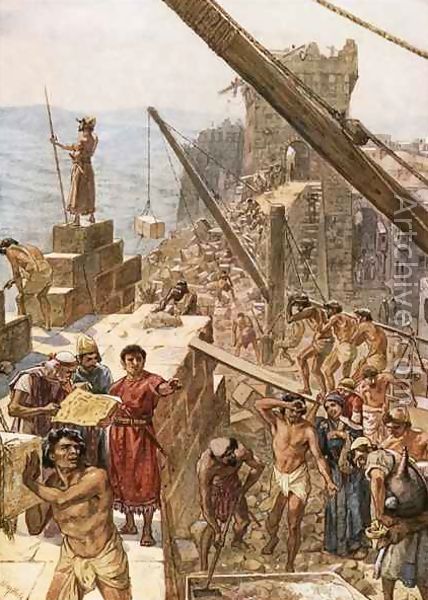
    Hate Week in Jerusalem is about to become a week of hypocritical religion meeting with the brokers of political power to preserve a captive land. Israel is no more; but captive spoil, vassal states under the rule of their Roman rulers. Their local political king must negotiate with political religious parties to maintain a delicate peace of Rome in a city ripe for rebellion of crowds in the name of God.

    The holiest time of pilgrimage brings thousands into a Jerusalem guarded by Roman troops. The only political card Jews held what that of helping Rome keep the peace for the sake of their considerable trade and commerce. Money flowed into the city each year at Passover and on into Roman coffers which paid their oppressing legions and built the ports and roads of Roman ambition.

    Into this very visible public square of the Temple courtyard and markets, enters Jesus.

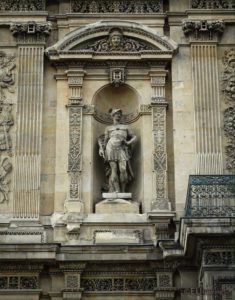
    statue of Roman god mars at Louvre in Paris
    Mars – Roman god of war

    Greece had idols and gods for everything. A Roman peace offered to its captives promoted the ancient greek culture. And like the greeks, Rome worshiped many gods, idols of culture.

    • 67 different gods and goddesses in the Roman pantheon, and plenty more demigods, each ruling over a particular dominion and watching over particular professions and classes of people.

    Like Plato four centuries earlier, Jesus’ reputation precedes Him.

    Unlike Plato, Jesus is only thirty years old. Yet He acts more like a king than a boisterous rebel. This Jesus, with both reputation and crowds following Him to the gate of Jerusalem is a man to be watched.

    a Lamb of Sacrifice for Justice

    The Gospel (Good News) of John, chapter 11:

    47 Then the chief priests and the Pharisees gathered a council and said, “What shall we do? For this Man works many signs. If we let Him alone like this, everyone will believe in Him, and the Romans will come and take away both our place and nation.”

    And one of them, Caiaphas, being high priest that year, said to them,

    “You know nothing at all, nor do you consider that it is expedient for us that one man should die for the people, and not that the whole nation should perish.”

    John 11:49b-50 NKJV

    53 Then, from that day on, they plotted to put Him to death.

    To be continued...
    
  • Because the days are evil – 4 – The Devil made me do it.

    Because the days are evil – 4 – The Devil made me do it.

    and do not give the devil an opportunity.

    Ephesians 4:27

    The Lie of the Devil

    There’s an iconic TV character who we know for a common excuse for sin, “the devil made me do it.” We laughed because we have heard it (or something like it) from our friends and loved ones so many times. Inside some of us cringed because we have said it ourselves knowing the truth of our own desires.

    Two lies of the devil are that God doesn’t exist and neither does Satan.

    This, of course, is why he is called the great deceiver of mankind and most who deny God believe the devil to be a myth.

    What deceit?

    διάβολοςdiabolos

    Diabolos, in fact, actually refers to any man or spirit of deceit prone to slander or accusing falsely. Metaphorically, applied to a man who, by opposing the cause of God, may be said to act the part of the devil or to side with him.

    “The devil made me do it,” your conscience rationalizes, full-well knowing good and evil yourself and willingly justifying this sin falsely.

    Yet in our hearts you and I always know our deceivability toward this easy lie. We wanted to do this sin, to commit this trespass, even convincing our selfish rebellious will that God has forgiven every one of our sins already (for some reason).

    Not so; just another lie. For the Lord calls believers to permanent change.

    Who will side with sin?

    The devil will tempt you before this small opportunity for revelry against God claiming ‘all sins are not equal.’

    Did God really say this, the devil will ask, slandering the Lord God?

    You can get away with this because you have accepted Christ, slanders the very enemy of Christ.

    We don’t have to read the Bible, the deceiver whispers to your heart. Did God really say that, anyway?

    THE PARABLE OF THE SOWER EXPLAINED

    Jesus tells this parable to a large crowd then explains it to the Apostles and also to those who study scripture.

    “A sower went out to sow his seed. As he sowed, some seed fell along the path; it was trampled on, and the birds of the sky devoured it…

    Luke 8:5 CSB

    The Tempter clouds justice and the dark reality of God’s punishment of sin.

    “The seed along the path are those who have heard and then the devil comes and takes away the word from their hearts, so that they may not believe and be saved. – Luke 8:12

    You do not believe scripture and you fail to take God’s word to heart.

    Although Jesus points to the devil here in the parable, further examination of our tendency toward loving sin prompts other evil actions of ours. Here is a SAVED ‘christian’ (‘once saved, always saved’).

    “And the seed on the rock are those who, when they hear, receive the word with joy. Having no root, these believe for a while and fall away in a time of testing. Luke 8:13

    You showed great enthusiasm for Jesus. Though you claim to worship at a house built on a rock, your faith is that of seed on a rock. You cannot take root as the heat of the world withers your faith. And little have you realized it was the devil who tempted you to believe, ‘now I am safe to sin.’

    Other subtle slandering by the devil

    “As for the seed that fell among thorns, these are the ones who, when they have heard, go on their way and are choked with worries, riches, and pleasures of life, and produce no mature fruit. – Luke 8:14

    I went to church, check. Listened to the uplifting praise band, check. Texted a friend about something important (or maybe it wasn’t). Okay, probably shouldn’t have done that. Got in my listening to scripture in church this week, check. Gotta go! Rushed out to do some Sunday shopping and see the game. Busy week at work ahead, must work on a few things to get ready.

    Pleasures of life: have you seen their ads? Sexxy, enticing, everybody wants to be part of this. (No worries there.) Lies of the devil, the one who you can claim later ‘made you do it?’

    No wonder pastors struggle to shepherd church-goers lacking in mature fruit of the Gospel. They don’t read scripture and easily deceived. Yet Jesus encourages those who resist the devil and our own urges, those truly saved who yield the mature fruit of faith in the Cross, resurrection and eternal life with God. (Yes, it’s another lie of the devil that ALL get to heaven.)

    “But the seed in the good ground ​— ​these are the ones who, having heard the word with an honest and good heart, hold on to it and by enduring, produce fruit.

    Luke 8:15 CSB

    The days are evil, but the devil didn’t MAKE you do it.

    October — Halloween — New Year’s, Mardi Gras, summer solstice, Oktoberfest — when does it all end?

    At judgement, where will you stand? What is your fruit in witness against the great deceiver and slanderer who continually fights against Almighty God, our Lord Christ Jesus and the Holy Spirit?

    The First Letter of John

    The Apostle John writes a letter to believers encouraging them:

    Beloved, now we are children of God…

    Little children, make sure no one deceives you; the one who practices righteousness is righteous, just as He is righteous; the one who practices sin is of the devil; for the devil has sinned from the beginning.

    The Son of God appeared for this purpose, to destroy the works of the devil. No one who is born of God practices sin, because His seed abides in him; and he cannot sin, because he is born of God. – excerpt from 1 John 3, NASB

    By this the children of God and the children of the devil are obvious: anyone who does not practice righteousness is not of God, nor the one who does not love his brother.

    1 John 3:10

    He didn’t ‘make‘ you do it, but is the devil deceiving you, dear friend?

    What is your fruit of righteousness?

    Because the Days are Evil
    To be continued...

  • James and Jerusalem’s Controversy – 7

    James and Jerusalem’s Controversy – 7

    Jerusalem’s controversy at the time of Jesus and James continues to this day, yet goes back to the centuries before Christ.

    “ירושלים, ירושלים, ההורגת את הנביאים ורוגמת באבנים את שליחי אלוהים, פעמים רבות חפצתי לקבץ את בניך כתרנגולת המקבצת את אפרוחיה תחת כנפיה, אולם לא הנחתם לי.

    הבשורה על-פי לוקס 13:34 Habrit Hakhadasha/Haderekh (HHH)

    I briefly outlined a few controversies from the history of Jerusalem in an earlier post, which also includes a helpful timeline. More recently we have examined the setting of the first century church in Jerusalem during its leadership by James.

    And in the preceding post we discussed the probable relationship between the two brothers James and Jesus, before the Lord’s resurrection.

    Jerusalem’s Controversy

    Most of us know very little of the ancient history which preceded Rome’s dominance of Judea.

    Jesus, the Apostles, James and first century residents of Jerusalem would have looked at Jerusalem’s controversy through contemporary eyes. Their perspective is very distant to our own understanding.

    The glory of Israel under King David and Solomon from their Bible teachings were distant memories ten centuries past. Even the Second Temple dated five hundred years before the Judea of Jesus and James.

    Alexander captured Jerusalem in 332 BC

    Although Jerusalem was finally spared by powerful empires from the east, those same empires would fall to Alexander the Great of Macedon about three centuries before Christ.

    Alexander captured the captors of Jerusalem, Egypt, Babylon and Assyria. Consequently, Hellenism and the Greek language assimilated easily into the surrounding cultures of the whole world known to Jerusalem.

    This universal acceptance continued to impact all of the Mediterranean even after Rome’s dominance. Alexandria, which he founded in Egypt, would later become a strategic political center tied to the fates of Rome.

    Just a few generations Before Christ

    coin head of Antiochus IV Epiphanes

    (a few generations after Alexander)

    175-163 B.C. The reign of Antiochus IV Epiphanes

    The Seleucid king of the Hellenistic Syrian kingdom who called himself, “god manifest,” caused a revolt in Jerusalem. This overt blasphemy by a ruling emperor forced deep divisions between religious rulers and political thought among local leaders.

    Jews would have taken a stance during the sieges of Tyre and Gaza, ports crucial to trade and the well-being of Jerusalem. The complexity of the political intrigue also involves Rome, Egypt and others, but for Jerusalem the rise of Antiochus IV caused the revolt of the Maccabees.

    Pharisees, Sadducees, Essenes & others

    What do we remember of our history?

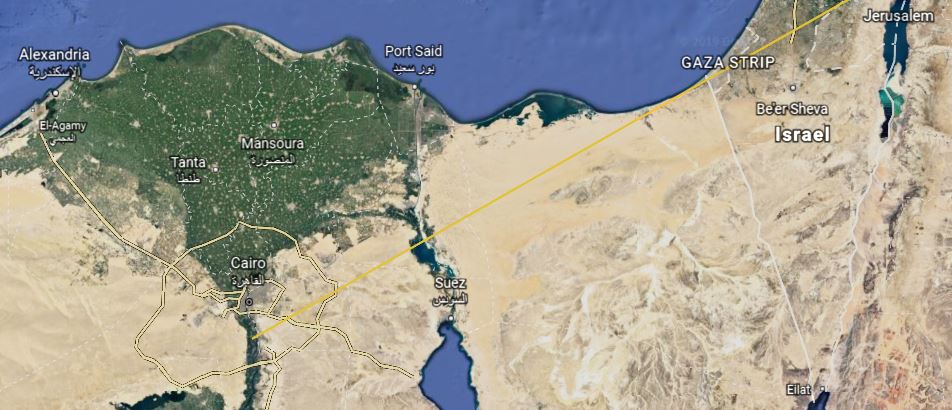
    • Moses, first. The Lord led Israel from captivity in Egypt, the the LORD give the Law (Torah) to us through Moses. c. 1525 BC
    • David unites the twelve tribes into one, capturing the promised land.
    • Solomon built the richest and most powerful kingdom and also the Temple. c. 966 BC
    • Israel and Judah separate and both eventually fall to others.
    • Judaism continues in Babylon and prophets predict many things.
    • The Torah was lost and forgotten, but then found during the rebuilding of the second Temple c. 570 BC
    • Several ruling empires tolerated Judaism while ruling over Jerusalem.
    • Antiochus does not, declaring himself ‘God in the flesh’ in the Temple.

    Does this controversy resonate in the conversations of first century Jews? Of course it does.

    “Is Jesus the Messiah,” many would ask?

    Is this man Jesus of Nazareth, brother of James and Joses, actually God Incarnate?”

    Therefore, from this more recent background of Jerusalem’s controversy, James, now leader of the church in Jerusalem, must address the Good News that Jesus IS the promised Messiah.

    Although not unlike today’s controversies, first century believers knew that the expected answer of a questioner could depend upon the party of their religious affiliation. Their questions came from diverse political and religious views.

    167 BC – What to do?

    So what must you do, believer in the Lord God?

    At the time of Antiochus several opposing religious and political movements took root.

    During the formation of the Jewish religious parties and political movements prior to the days of Jesus Christ and Herod, all debated what followers of the Lord must do in each circumstance at various times.

    The question to Jesus or to James in the first century AD remains nearly the same as now in the 21st c. A.D.

    Scribes & Zealots

    One group with both political and religious influence chose to separate religion from politics, claiming the higher ground of religion. The Scribes reached back to the authority of the re-established Law under Ezra the founding priest of the second Temple.

    Zealots took a radically different approach to the invaders taking from them the promised land of God. At various times bands of Zealots hid in the mountains, formed powerful armed communities and used terrorism to attack the invaders from their mountain strongholds. (Does this radical religious military tactic sound at all familiar?)

    כִּֽי־קִנְאַ֣ת בֵּיתְךָ֣ אֲכָלָ֑תְנִי וְחֶרְפֹּ֥ות חֹ֝ורְפֶ֗יךָ נָפְל֥וּ עָלָֽי׃
    because zeal for your house has consumed me,
    and the insults of those who insult you have fallen on me.

    Psalm 69:9 WLC;CSB

    Additional research on Jerusalem’s controversy at this time appears below, along with a brief outline of other Jewish political/religious parties of the first century AD.

    Judah Maccabee – Savior of Judaism

    Excerpts Source: ENCYCLOPEDIA BRITANNICA

    On Antiochus’ death in 164 BCE, the Seleucids offered the Jews freedom of worship, but Judas continued the war, hoping to free his nation politically as well as religiously.

    The son of Mattathias, an aged priest who took to the mountains in rebellion when Antiochus attempted to impose the Greek religion on the Jews, Judas took over the rebel leadership on his father’s death and proved to be a military genius, overthrowing four Seleucid armies in quick succession and restoring the Temple of Jerusalem.

    This deed is celebrated in the Jewish festival of lights, Ḥanukka.

    The Hasmonean Kings of Judah

    The Maccabees founded the Hasmonean dynasty, which began their rule in 167 BC. They eventually managed independence for their kingdom of Judah from 110 BC until 63 BC.

    The decline of the Hasmoneans coincided with the rise of Rome, but it wasn’t coincidence, for the once great Jewish family had become a shell of its holy roots.

    End of the Hasmoneans

    In the year 67 BCE, Queen Salome Alexendra (also known as Queen Shelomtzion) died. With her death, the dynasty of the Hasmoneans began a steady decline. Over the next 20-25 years it would fall apart completely. – source

    Jerusalem’s Controversy after the Hasmoneans

    Although divisions in rabbinic thought existed from earlier times, the onslaught of Roman power into the eastern Mediterranean brought about deeper divides in political and religious alliances.

    A timeline of Jerusalem’s conflict after the end of the Hasmoneans details additional events.

    Ideally, he [Pompey the Great, of Rome] did not want to do it through war, because the Jews – the Hasmoneans/Maccabees – had a fearsome reputation. The Romans referred to the Jews as “porcupines.” Just as a porcupine is an animal that even great predators avoid, so too the Jews. Even if you ate it you would be sorry. Therefore, Pompey wanted to control the Jews without somehow going to war. Source.

    Herods – Kings of Compromise

    NOTE: When you see the name Herod in the Bible, always ask yourself, which one?
    image of Herod the Great
    Herod the Great

    An article in Christianity Today sheds light on a view likely held by the rich and powerful Jewish leaders in the first century AD.

    In terms of wealth, power, and influence, Herod the Great rivaled King Solomon as the greatest king in the history of the Jews.

    Christianity Today – Dec 22, 2015 – Alexander Stewart

    Herod was born in the Roman region of Idumea (formerly Edom) around 74 BC, built the Roman port of Caesarea and expanded the second Temple in Jerusalem. Christians know Herod for his attempt to prevent an innocent baby born in Bethlehem from becoming King.

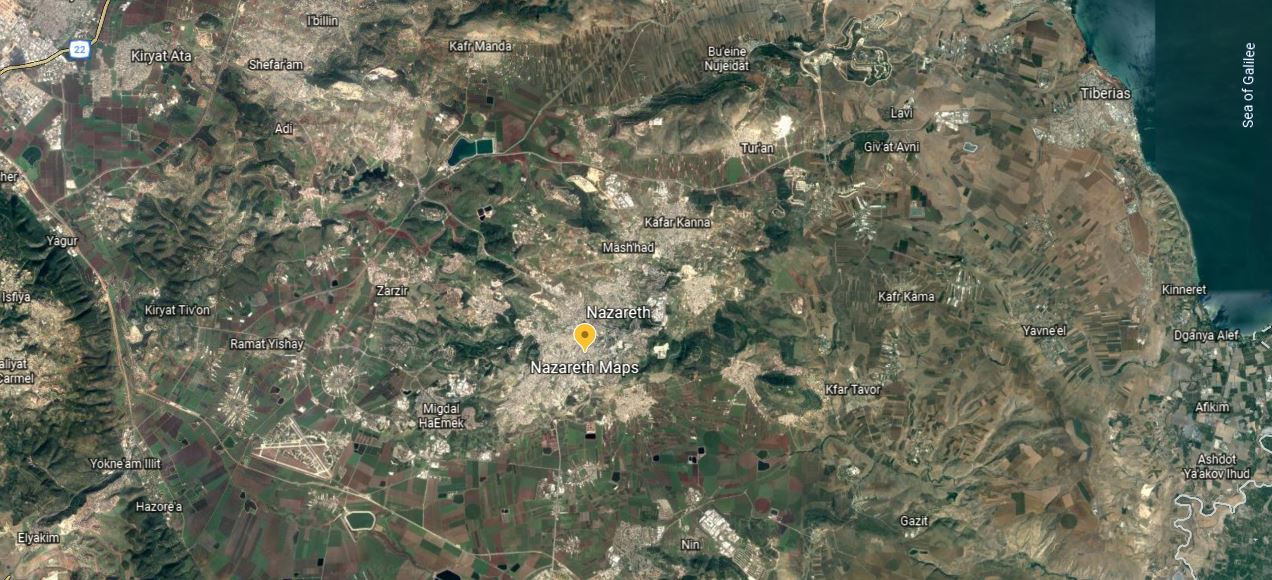
    When Pompey’s ally Herod died, not only did Joseph and Mary return with Jesus to Nazareth in Israel, but politically Rome divided his kingdom between Herod’s three sons and daughter. Again, the politics and various names of the Herod’s is complex, but first century Jews became caught up in it all.

    Competing Religious Parties – Jerusalem’s controversy of the Temple

    Party of the Sadducees – 167 BC

    The Sadducees are a Jewish group mentioned in three different contexts in the Synoptic Gospels ( Mark 12:18 ; [= Matt 22:23-34 ; Luke 20:27] ; Matt 3:7 ; 16:1-12 ) and six in Acts ( 4:1 ; 5:17 ; 23:6-8 ). They always appear as inquisitors or opponents of John the Baptist, Jesus, or the early Christians. – Baker’s Evangelical Dictionary

    Rabbinic writings sometimes interchange the term “Sadducee” with “Samaritans” (here meaning “opponents”) and “Boethuians.” The latter is probably from their connection with the house of Boethus, from which came several high priests during the New Testament period.

    Party of the Essenes – 167 BC

    John the Baptist most likely was of one of the Essenes.

    When Jerusalem’s controversy erupted in the second century BC, the Essenes withdrew into the Judean desert and formed an isolated monistic community dedicated to the word of God and obedience to the Lord.

    Unlike the Zealots, the Essenes had no agenda to retake the land of the promised land ‘for God.’

    History recalled little about the Essenes until shepherds recovered the buried Dead Sea scrolls in Qumran Lebanon in A.D. 1948. The slow and meticulous study of these scroll fragments has revealed more in this past century.

    Qumran, between the Judean hills and the Dead Sea. Qumran,

    Party of the Pharisees – 167 BC

    Jerusalem’s controversy most familiar to Christians is that of the resurrection. Not all Jews believed in the resurrection of the body and soul, but the Pharisees did.

    However the party of the Pharisees had already divided into many opinionated sects over the written Law, the oral law, additional regulations and many other controversies. Discussion of these among rabbis reached far beyond Jerusalem into Galilee and other regions.

    Φαρισαῖος – Pharisaios

    In addition to OT books the Pharisees recognised in oral tradition a standard of belief and life. They sought for distinction and praise by outward observance of external rites and by outward forms of piety, and such as ceremonial washings, fastings, prayers, and alms giving; and, comparatively negligent of genuine piety, they prided themselves on their fancied good works. They held strenuously to a belief in the existence of good and evil angels, and to the expectation of a Messiah; and they cherished the hope that the dead, after a preliminary experience either of reward or of penalty in Hades, would be recalled to life by him, and be requited each according to his individual deeds.

    Strong’s G5330 – blueletterbible.org

    Pharisees were not of the class of the rich, but lived a modest life closer to that of many other Jews. These rabbis were likely affectionate, popular teachers similar to most rabbis today.

    They believed that God would act justly based on their works and attitudes toward others. The Law of Moses and oral law designating how we should obey the Lord provided the basis of their teaching and unity of purpose for a life lived separately from evil.

    First Century Pharisees – in Jerusalem’s controversy of leadership

    John the Baptist called them a brood of vipers (poisonous snakes).

    Matthew tells us that ‘the Pharisees went out and plotted against him [Jesus], how they might kill him.’

    Jesus accepted invitations from Pharisees to publicly join them in their homes. However the Lord also rebuked them, frequently including them with their rival party the scribes.

    “Woe to you Pharisees! You love the front seat in the synagogues and greetings in the marketplaces.

    So the chief priests and the Pharisees convened the Sanhedrin and were saying, “What are we going to do since this man is doing many signs?

    John 11:47

    The Apostle John speaks to the delicacy of their political dilemma within the religious leadership of Jerusalem.

    Nevertheless, many did believe in him even among the rulers, but because of the Pharisees they did not confess him, so that they would not be banned from the synagogue.

    John 12:42

    James, Secretive believer in Jesus?

    I have never heard anyone ask if James believed in Jesus before our Lord’s personal appearance to his half-brother after the resurrection.

    As Peter had denied knowing Jesus at His trial, as the Apostles had gone into hiding and even as many Pharisees and others felt obligated to keep their faith in Jesus secret out of fear for their own lives, James may have come to believe in Jesus.

    James, leader of the church in Jerusalem was about to take on a new role, an important sacrificial leadership of a post-Pentecost church. He would lead and write letters to other fearful new Christians from Jerusalem.

    As Jesus had become Jerusalem’s controversy for the Jews, the Herods and the Romans, so too James was about to become just one more controversial leader in Jerusalem in the first century.

    God-willing, we will return to James’ Letter to the Church next.

    To be continued...