Category: 4 Gospels + Good News of the NEW Testament

What are the Gospels?

FOUR Gospels:

GOOD NEWS! (That’s what Gospel means.)

Matthew, Mark, Luke & John begin the New Testament proclaiming the Good News of Israel’s long-awaited Messiah and talk of JESUS Christ.

The four Gospels are first hand witness + proclaiming GOOD NEWS

  • by two Jewish Apostles of the Messiah JESUS, Matthew & John
  • Two gentile (non-Jewish) followers of THE WAY of Jesus Christ, Mark & Luke, who proclaim the GOSPEL recorded from witness of Peter, Paul and other Apostles and disciples of JESUS in the first century.

READ the Good News of the Messiah and Savior Jesus from accounts of His twelve Apostles & others witnessing the resurrection of the Lord Jesus from the four Gospels of the New Testament: Matthew, Mark, Luke and John.

SHARE the Gospel

  • with your Christian friends and those who do not yet believe in JESUS CHRIST.
  • Comment on a Talk of JESUS post and SHARE in your social media world.
  • Festival of the Passover

    Festival of the Passover

    No holy holiday surpasses peçach, the festival of the Passover, in the calendar year of the jews. In a previous post, Josiah – a Good King also Dies, we discovered that Passover had been completely forgotten by the Judah. The Law had not been read and Kings before Josiah had done evil in the sight of the Lord.

    פֶּסַח

    We also reviewed the meaning of Passover:

    “a sparing, immunity from penalty and calamity.

    The root word suggests from application of scripture in Exodus 12 that the Lord will pass over or spring over you when executing judgment. He will halt the punitive action in your case.

    A Three-part Festival

    Instructions for the Passover

    Exodus 12:3 Tell the whole community of Israel that on the tenth day of this month they must each select an animal of the flock according to their fathers’ families, one animal per family. 4 If the household is too small for a whole animal, that person and the neighbor nearest his house are to select one based on the combined number of people; you should apportion the animal according to what each will eat. 5 You must have an unblemished animal, a year-old male; you may take it from either the sheep or the goats. 6 You are to keep it until the fourteenth day of this month…

    Preparation

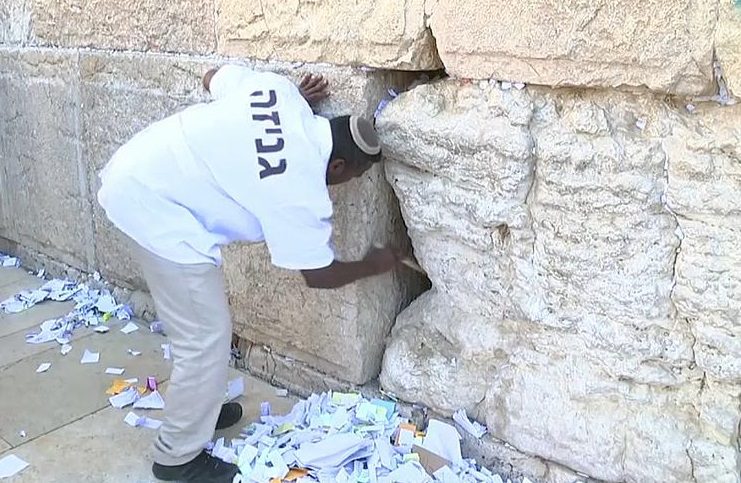
    The contemporary photo of an Israeli employee removing prayer notes from the western wall is just one example of a cleansing of sorts, associated with the sacrifice of Passover.

    You must be spotless before the Lord. Not better than everyone else, one who does more good works than (perhaps) the one who does not achieve eternal life. Spotless. Cleansed of sin.

    His place of worship in Jerusalem must be clean to begin the great sacrifice. Everything washed. Pure. This preparation to come before the Lord is symbolic of repentance.

    Are you mostly good?

    Not good enough (for no man or woman is good, no not one).

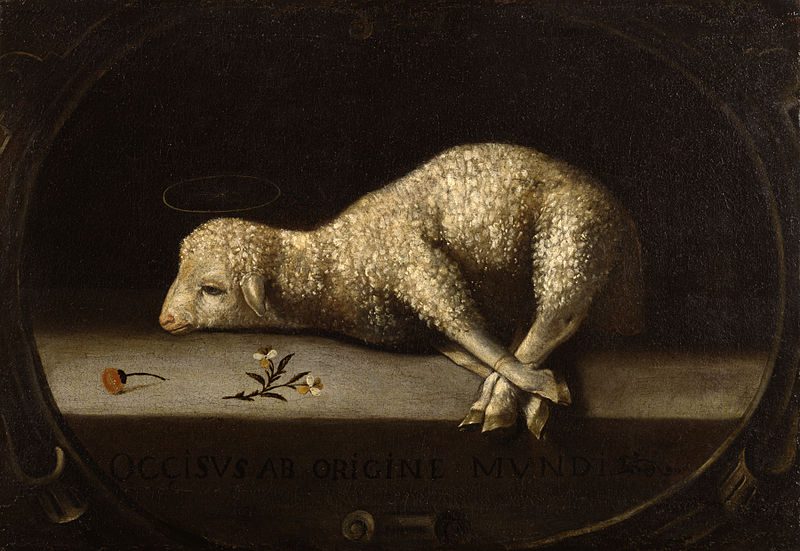
    lamb bound on the altar of sacrifice

    Yet we no longer sacrifice the blood of a lamb, for the Holy of Holies and the altar has been destroyed.

    Passover Meal

    Exodus 12: CSB/WLC שמות

    … then the whole assembly of the community of Israel will slaughter the animals at twilight.

    Exodus 12:6B

    7 They must take some of the blood and put it on the two doorposts and the lintel of the houses where they eat them. 8 They are to eat the meat that night; they should eat it, roasted over the fire along with unleavened bread and bitter herbs.

    Strict regulations also include: (9 Do not eat any of it raw or cooked in boiling water, but only roasted over fire—its head as well as its legs and inner organs. 10 You must not leave any of it until morning; any part of it left until morning you must burn.)

    What about now?

    Beloved follower of the Lord in this 21st century after the Messiah Jesus, I ask you:

    Even IF you strictly observance the Passover today, is your worship any more than symbolism?

    Can the blood of a lamb (no longer sacrificed) atone for your sin? כָּפַר

    11 וְכָכָה֮ תֹּאכְל֣וּ אֹתוֹ֒ מָתְנֵיכֶ֣ם חֲגֻרִ֔ים נַֽעֲלֵיכֶם֙ בְּרַגְלֵיכֶ֔ם וּמַקֶּלְכֶ֖ם בְּיֶדְכֶ֑ם וַאֲכַלְתֶּ֤ם אֹתוֹ֙ בְּחִפָּז֔וֹן פֶּ֥סַח ה֖וּא לַיהוָֽה׃

    Here is how you must eat it: You must be dressed for travel, your sandals on your feet, and your staff in your hand. You are to eat it in a hurry; it is the Lord’s Passover.

    Exodus 12:11

    Christian and Jew alike understand the significance of the events to follow the quickly eaten Passover meal and the account of Moses as redeemer from slavery in Egypt.

    Christians ought to understand this same symbolism of the body and blood of the Lamb, the risen Messiah King, as in an upper room in Jerusalem, Jesus shared a last Passover meal with His beloved Disciple family nearly two millennia ago.

    And as they were eating, Jesus took bread, and blessed it, and brake it, and gave it to the disciples, and said, Take, eat; this is my body.

    And he took the cup, and when he had given thanks, he gave it to them: and they all drank of it.

    And he said unto them, This is my blood of the new testament, which is shed for many.

    Mark 14:22-24 KJV

    Passover Celebration

    14 וְהָיָה֩ הַיּ֨וֹם הַזֶּ֤ה לָכֶם֙ לְזִכָּר֔וֹן וְחַגֹּתֶ֥ם אֹת֖וֹ חַ֣ג לַֽיהוָ֑ה לְדֹרֹ֣תֵיכֶ֔ם חֻקַּ֥ת עוֹלָ֖ם תְּחָגֻּֽהוּ׃

    “This day is to be a memorial for you, and you must celebrate it as a festival to the Lord. You are to celebrate it throughout your generations as a permanent statute.

    • 15 You must eat unleavened bread for seven days.
    • On the first day you must remove yeast from your houses.
    • Whoever eats what is leavened from the first day through the seventh day must be cut off from Israel.
    • 16 You are to hold a sacred assembly on the first day…
    • … and another sacred assembly on the seventh day.
    • No work may be done on those days except for preparing what people need to eat—you may do only that.

    Festival of Unleavened Bread

    … You must observe this day throughout your generations as a permanent statute.

    Thus, we remember how the Lord used Moses to bring Israel out of Egypt, where the Lord led and purified a people chosen to His for entry into a land promised to Abraham as his inheritance. Yet the Lord has used saviors besides Moses to redeem his faithful from the chains of this life.

    Other Saviors Redeeming God’s Faithful

    We know well the saving of the Jews from Pharaoh. Some would look to Moses or Joshua as their redeemer or savior. Certainly Joseph saved Israel in Egypt until in the generations he was forgotten.

    Others see David as Israel’s king triumphant. A few recognize Ezra for bringing back worship in Jerusalem. All of these would give the same glory instead to the Lord God.

    One more mention of the unleavened bread in the generation of Abraham may have missed your notice. You may not believe it, though Moses tells it. Once again, it was served quickly and judgment by the Lord followed.

    The Doom of Sodom

    If any family should have been celebrating a festival of unleavened bread it would be the families of Abraham, who faithful followed the Lord from place to place as the Lord commanded. The Lord’s covenant with Abraham preceded the Law of Moses.

    As you may know, Lot, son of Abram’s brother Haran, also followed the Lord to both Canaan and Egypt before settling in the city of Sodom. It was a walled city with a gate like other cities of its time.

    Genesis 19:

    The two angels entered Sodom in the evening as Lot was sitting in Sodom’s gateway. When Lot saw them, he got up to meet them. He bowed with his face to the ground…

    … He prepared a feast and baked unleavened bread for them, and they ate.

    Have you ever considered it? Lot prepared a feast of unleavened bread for the two angels who saved him from Sodom.

    Lot was unaware of their mission and events which had already taken place between the angels and Abraham.

    The Lord appeared to Abraham

    18 וַיֵּרָ֤א אֵלָיו֙ יְהוָ֔ה בְּאֵלֹנֵ֖י מַמְרֵ֑א וְה֛וּא יֹשֵׁ֥ב פֶּֽתַח־הָאֹ֖הֶל כְּחֹ֥ם הַיּֽוֹם׃

    Three angels had appeared to Abraham. Lot would only know that his uncle and aunt in their nineties were childless. He had been like a son to them.

    16 The men got up from there and looked out over Sodom, and Abraham was walking with them to see them off.

    17 Then the Lord said, “Should I hide what I am about to do from Abraham?

    Lot, of course knows nothing of the conversation to follow which has already taken place when two angels come to him at the gate of Sodom.

    The Lord had judged Sodom for the sin of all of its residents. Then Abraham intercedes, pleaing for the Lord to spare Lot and his family. Abraham saves them from the sentence of death, all except Lot’s wife who sinned even after the warning of angels.

    22 The men turned from there and went toward Sodom while Abraham remained standing before the Lord. 23 Abraham stepped forward and said, “Will you really sweep away the righteous with the wicked?

    Genesis 19:15 “Get up! … or you will be swept away in the punishment of the city.”

    29 וַיְהִ֗י בְּשַׁחֵ֤ת אֱלֹהִים֙ אֶת־עָרֵ֣י הַכִּכָּ֔ר וַיִּזְכֹּ֥ר אֱלֹהִ֖ים אֶת־אַבְרָהָ֑ם וַיְשַׁלַּ֤ח אֶת־לוֹט֙ מִתּ֣וֹךְ הַהֲפֵכָ֔ה בַּהֲפֹךְ֙ אֶת־הֶ֣עָרִ֔ים אֲשֶׁר־יָשַׁ֥ב בָּהֵ֖ן לֽוֹט׃

    So it was, when God destroyed the cities of the plain, he remembered Abraham and brought Lot out of the middle of the upheaval when he demolished the cities where Lot had lived.

    Genesis 19:29 WLC,CSB

    A Savior at the gate of Jerusalem

    As the LORD in Person

    Came to Abraham by the oaks of Mamre,

    As the LORD in Person

    Came to Moses at Sinai,

    The LORD in the Person of the Son With Us

    Came to Jerusalem’s gate.

    The Lord in Person sacrificed

    On a Cross beyond its walls,

    Jesus, Messiah and King

    Risen! in Person,

    Jesus, in flesh and blood shed

    Our King comes on the clouds again!

    Roger Harned

    The Lord will return

    Will you bow down to your Lord and King?

    Or will you yet crucify Him?

    The choice of judgment is yours, yet your redemption or just punishment will be His.

    Is Jesus your Lord? Or will you justify your sin without Him?

    To be continued... [eternally]
  • Emmanuel -3

    Emmanuel -3

    Introduction to God in a Manger

    We glanced at the introduction of Jesus in the Gospels of Mark and John in part 1 of this series. Yesterday in part 2 we examined issues of the virgin birth from the Gospel of Matthew. Today, Christmas, we conclude with scripture from Luke, our most familiar source of the Christmas story.

    Immanuel (Hebrew: עִמָּנוּאֵל‬ meaning, “God with us”; also romanized Emmanuel) – Wikipedia

    Every biography requires an introduction and the all-important announcement of “God With Us,” the Son of Man born in a manger requires not only an introduction, but a cultural context we can only mention today.

    Introduction to the Nativity

    The Nativity of Matthew, beginning with the genealogy of Jesus through Joseph and David, examines the Messiah of Israel from a Jewish perspective. Of course, Matthew, John and all of the Disciples were Jewish, as was Jesus.

    Mark and Luke were first century gentiles, Greeks, men who recorded the impact of Christ born to save not only Jews from sin, but all who believe.

    Luke 1:

    1 … a narrative about the events that have been fulfilled among us, just as the original eyewitnesses and servants of the word handed them down to us.

    Luke begins his two-part writing, Luke-Acts, with an introduction and overview in Chapter one. Many believe John the Baptist to be the Messiah; therefore Luke introduces John and Jesus as teachers prior to the well-know nativity of chapter 2. Note the same angelic witness.

    Gabriel

    5 In the days of King Herod of Judea, there was a priest of Abijah’s division named Zechariah… 11 An angel of the Lord appeared to him…

    13 But the angel said to him: “Do not be afraid, Zechariah, because your prayer has been heard. Your wife Elizabeth will bear you a son, and you will name him John.

    … He will be filled with the Holy Spirit while still in his mother’s womb. … to make ready for the Lord a prepared people.”

    19 The angel answered him, “I am Gabriel, who stands in the presence of God, and I was sent to speak to you and tell you this good news.

    26 In the sixth month, the angel Gabriel was sent by God to a town in Galilee called Nazareth, 27 to a virgin engaged to a man named Joseph, of the house of David. The virgin’s name was Mary. 28 And the angel came to her and said, “Greetings, favored woman! The Lord is with you.”

    1:28 καὶ εἰσελθὼν ὁ ἄγγελος πρὸς αὐτὴν εἶπεν Χαῖρε κεχαριτωμένη ὁ κύριος μετὰ σοῦ εὐλογημένη σὺ ἐν γυναιξίν

    Luke 1:28

    Name Him Jesus

    31 Now listen: You will conceive and give birth to a son, and you will name him Jesus. 32 He will be great and will be called the Son of the Most High, and the Lord God will give him the throne of his father David. 33 He will reign over the house of Jacob forever, and his kingdom will have no end.”

    Please do not miss here that Gabriel, an angel of the Lord, comes to a woman, Mary. In most instances of angelic encounters, as was the case with Zechariah, father of John the Baptist, the angel brings the Lord’s message to a man with authority over his wife, family and others.

    Translations

    Much to consider here, even before the all-too-familiar narrative of the nativity which follows. Much disagreement among Christians based on translations which reinforce various cultural (denominational) beliefs. Consider just one brief passage.

    • KJV (English) And the angel came in unto her, and said, Hail, thou that art highly favoured, the Lord is with thee: blessed art thou among women.
    • HNV (from Hebrew) Having come in, the angel said to her, “Rejoice, you highly favored one! The Lord is with you. Blessed are you among women!”
    • VUL (Latin) et ingressus angelus ad eam dixit have gratia plena Dominus tecum benedicta tu in mulieribus
    • Greek listed above for Luke 1:28. Some translations in Latin and the Hebrew Bible come from the Septuagint, with origins in Alexandria, Egypt.

    Some versions of the Bible use less-controversial synonyms in some passages and prejudicial word imagery in certain key passages.

    Mary – favored woman

    And the angel came to her and said, “Greetings, favored woman! The Lord is with you.” [Other mss add Blessed are you among women.]

    Luke 1:28 CSB

    The angel Gabriel does not say, “Hail Mary,” such as one might say, “Hail Caesar.” The Greek word χαίρω chairō could also be translated: rejoice, be glad, joy, greetings, even God speed or farewell when appropriate. Much like שָׁלוֹם shalom in Hebrew, chairō is simply a greeting of encounter.

    Mary’s enduring witness

    Luke records Mary’s reaction in verse twenty-nine. How would he know this or details of the rest of this portion of her encounter with angels?

    Recall that unlike Joseph, Mary lived into Jesus’ complete life as the Son of Man and along with His brothers became part of the early church after Jesus’ death and resurrection. Therefore Luke would have interviewed Mary and/or those who had known her consistent witness for many years.

    30 Then the angel told her: “Do not be afraid, Mary, for you have found favor with God.

    • φοβοῦ Μαριάμ – Fear not Mary.
      • Do most all who personally encounter God’s angelic messenger not need this comforting assurance?
      • Yet what does it mean to have found favor with God?
    • εὑρίσκω heuriskō – 
      • ‘You have found,’ clearly indicates that Mary has been seeking the LORD.
        • To come upon after searching:
          • to find by enquiry, thought, examination;
          • to find out for one’s self. 

    Mary, a young Hebrew virgin betrothed to Joseph, is a worshiper of the LORD and she is a young woman with great faith.

    Mary asked the angel, “How can this be, since I have not had sexual relations with a man?” [Lit. since I do not know a man]

    Luke 1:34 CSB

    Gabriel then told Mary of Jesus’ conception and birth, the birth to be detailed more by Luke in the most familiar nativity of chapter 2 and reveals the distant miracle of her relative Elizabeth, to whom Mary will go as she is with child.

    35 The angel replied to her: “The Holy Spirit will come upon you, and the power of the Most High will overshadow you. Therefore, the holy one to be born will be called the Son of God.

    The Magnificat – a Hymn of Praise

    Mary magnifies or lifts up the Lord for His faithfulness to His faithful ones, much in the same way as Hannah, mother of Samuel, who anointed David.

    46 And Mary said:

    My soul praises the greatness of the Lord,
    and my spirit rejoices in God my Savior,
    because he has looked with favor
    on the humble condition of his servant.
    Surely, from now on all generations
    will call me blessed,
    because the Mighty One
    has done great things for me,
    and his name is holy.


    “For the Mighty One has done great things for me;
    And holy is His name.

    Luke 1:49 NASB

    The Nativity

    by Roger HarnedWhat is the Nativity?

    Nativity, Latin nātīvitāt, refers to birth, the place and circumstances of birth, the place of the stars at a time of birth, and most specifically, but not exclusively, refers to the birth of Christ, the Messiah, Jesus.

    Luke 2:

    And Joseph also went up from Galilee, from the town of Nazareth, to Judea, to the city of David, which is called Bethlehem, because he was of the house and lineage of David, to be registered with Mary, his betrothed, who was with child.

    Luke 2:4-5 ESV

    A census by order of Rome. Joseph travels to his hometown to register.

    While they were there, the time came for her to give birth. Then she gave birth to her firstborn son, and she wrapped him tightly in cloth and laid him in a manger, because there was no guest room available for them.

    Luke 2:6-7 CSB

    Birth happens (ready or not, irregardless of place) and this lowly humble couple had no place for the Son of God to be born into this world. No reservation and no place fit for a Son of Man, only an animal-filled barn with mangers of hay to feed the donkeys and camels.

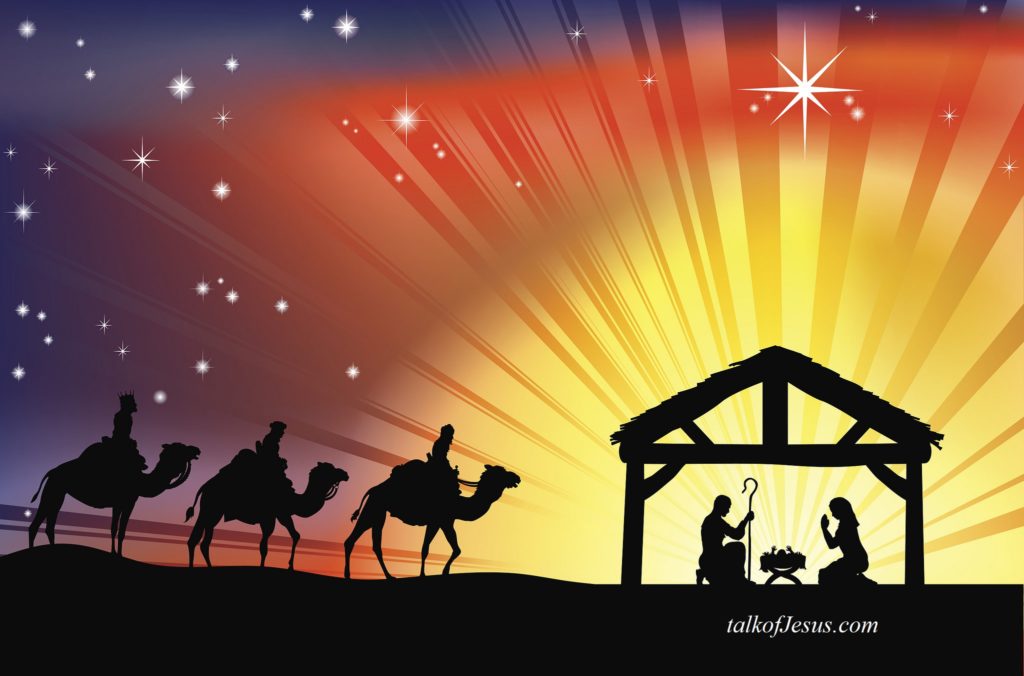
    We have already heard of other singular events of the Nativity unique to Jesus’ birth. Kings had followed a star to Bethlehem and then brought gifts just for this time and this King of Kings, so humbly born in a manger.

    Luke then documents a similar event from the hills just beyond Bethlehem.

    Angels and Shepherds

    Of course, these very hills had been the place where Samuel had sought out David, the shepherd and youngest of his clan, when the Lord had anointed him King.

    And the angel said unto them, Fear not: for, behold, I bring you good tidings of great joy, which shall be to all people.
    For unto you is born this day in the city of David a Saviour, which is Christ the Lord.

    Luke 2:10-11 KJV

    And the angels told these lowly shepherds where and how to find and recognize Jesus in Bethlehem, the baby Son of God in a manger made for lowly animals. Surely some among these Jewish shepherds would have known the prophesy of Micah.

    But as for you, Bethlehem Ephrathah,
    Too little to be among the clans of Judah,
    From you One will go forth for Me to be ruler in Israel.
    His goings forth are from long ago,
    From the days of eternity.”

    Therefore He will give them up until the time
    When she who is in labor has borne a child.
    Then the remainder of His brethren
    Will return to the sons of Israel.

    And He will arise and shepherd His flock
    In the strength of the LORD,
    In the majesty of the name of the LORD His God.
    And they will remain,
    Because at that time He will be great
    To the ends of the earth.

    Then these faithful keepers of the flocks received yet more confirmation.

    A multitude of angels sang

    Imagine angels from the sky joining voices with you as their audience!

    δόξα ἐν ὑψίστοις θεῷ καὶ ἐπὶ γῆς εἰρήνη ἐν ἀνθρώποις εὐδοκίας

    Glory to God in the highest, and on earth peace, good will toward men.

    Luke 2:14 KJV

    Amen! Glory to God in the highest, who has sent His Own Son to a manger as a Son of Man, one like a lowly shepherd.

    And the shepherds departed their fields to witness and worship the Christ child, their Messiah in a manger. Then they will tell others, perhaps later one will even confirm their witness to Luke.

    Recalling the Nativity to others

    We do not have here or anywhere in scripture angels worshiping Mary, shepherds worshiping Mary or Kings worshiping Mary. And we do not have Joseph, Mary, shepherds or kings worshiping angels, even Gabriel. These are later idolatries suggested by false shepherds of the church and false prophets.

    The LORD IS and the Nativity of Jesus is not His beginning.

    Let us witness the redeeming love of God, who came to us in His Own Image in the Person and humility of Christ Jesus. He IS the One we worship, for Jesus IS the Messiah who will save all who believe.

    But Mary kept all these things in her mind, pondering them in her heart.

    And the shepherds returned, glorifying and praising God for all things which they had heard and seen, as it had been said to them.

    Luke 2:19-20 DBY

    Keep these things in mind, pondering them in your heart, glorifying God for all things.

    Christ is born. The Messiah died for your sins. Christ Jesus will come again.

    Incarnate in a manger in Bethlehem; crucified on a Cross at Calvary, risen from a tomb in Judea; witnessed by thousands, risen into the clouds to return again…

    Jesus IS, with God the Father and the Holy Spirit, the beginning and end.

    Amen,

  • Emmanuel -2

    Emmanuel -2

    Christmas according to the Gospel

    Yesterday, in part one of this 3-part Christmas series, I mentioned that ‘Emmanuel’ is a Latin or romanized spelling of “Immanuel” from the Hebrew. I also remind us that Christmas was a minor celebration, actually banned at times by the church.

    We began discussion of the Nativity (the birth of Jesus) with an introduction of the Gospels of Mark and John, discovering that the prophets had already predicted the coming of a Messiah, God With Us, Immanuel.

    Today we continue with the Gospel of Matthew, Disciple to Jesus and a Jew familiar with the Bible (Old Testament).

    The Genealogy of Jesus Christ

    Matthew 1: KJV

    The book of the generation of Jesus Christ, the son of David, the son of Abraham.

    Abraham begat Isaac; and Isaac begat Jacob; and Jacob begat…

    Wait! Why start the story of Jesus with a history of ancestry? It reads a little bit like Genesis 5 to me. Adam begat Seth, who begat Enoch, who begat... (you get the idea). We tend to skip over those little details anyway.

    We see Abraham in there and David on the list. 

    And Josias begat Jechonias and his brethren, about the time they were carried away to Babylon: a clear connection of this Jewish genealogy from Adam through David, then Kings of a divided, defeated and deported Israel.

    If we look at Mathew’s list of the genealogy of Jesus more closely, another question may even come to mind.

    and Jacob fathered Joseph the husband of Mary,
    who gave birth to Jesus who is called the Christ.

    Matthew 1:16 CSB

    Immediately following, Matthew mentions the controversy of the time:

    Now the birth of Jesus Christ was on this wise [in this way]:

    When as his mother Mary was espoused [betrothed] to Joseph, before they came together [physically {or sexually, if we may be so bold}], she was found with child of the Holy Ghost [pregnant, by the Holy Spirit of  God the Father!].

    Matthew 1:18 KJV [with comment]

    Before we address the controversies of verse 18, let’s address the obvious question about Joseph first.

    If Joseph was not the father of Jesus, why include Joseph’s family in the genealogy of Jesus?  

    Here we must first remove the blinders of our twenty-first century biases against practices of other cultures in distant places and former times we do not understand.

    Glance at a First Century Woman

    Our misunderstanding of the place and role of Mary may be helped by this brief glance at life at the time of Jesus’ birth.

    Make no mistake about it, first century life from Rome to Jerusalem and the hills of Syria was hierarchical. Caesar Augustus sought to build a civilized ‘Roman’ culture throughout the captive states of his reign.

    In Rome some women were freeborn citizens, but did not vote. Slaves had no inheritance rights and under Roman law a slave had no father. I mention this because Rome was highly dependent on slaves, including physicians, accountants, along with common laborers. Nearly four of every ten Romans were slaves of a citizen. Romans could actually sell their own children as slaves, property of the buyer with no family association. A woman belonged to her father or husband.

    Captive Israel and Judah were client states of Rome. Kings and others held some authority over the men of these captive states. Romans and Jews held similar views about the value of marriage, stability of families and value of the relationship of a virgin daughter joining herself to a husband and new family (betrothal).

    The light regulation of marriage by the law with regards to minimum age (12) and consent to marriage was designed to leave families, primarily fathers, with much freedom to propel girls into marriage whenever and with whomever they saw fit. [source]

    Mary is no queen, just a common girl, most likely age 13-16, promised to an older man of somewhat better standing.

    Two controversies

    Joseph, a carpenter born to a family from very rural Bethlehem near Jerusalem, by order of Rome, must register (in person) for a census in the city of his family. This, the reason for the genealogies of men in historical documents. Matthew 1:1-17 details Joseph’s ancestry. We will examine more of the details of the event in tomorrow’s concluding story of the Nativity from the Gospel of Luke.

    Mary, a virgin pledged to him as a wife, returns from an extended visit to her relatives – pregnant!

    Matthew clearly states that this is the Child of the Holy Spirit [ἐκ ἅγιος hagios πνεῦμα pneuma].

    Clearly, Joseph knows that the child in the womb of his betrothed is not his – he is not the father, suggesting divorce (rather than stoning her to death), which brings us to our second, even larger controversy.

    An angel of the Lord appeared to Joseph in a dream revealing both the identity and Holy conception of the Child.

    She will give birth to a son, and you are to name him Jesus, because he will save his people from their sins.”

    Matthew 1:21 CSB

    Ἰησοῦς Iēsous יְהוֹשׁוּעַ JESUS – THE LORD SAVES

    bLUElETTERbIBLE.ORG http://blb.sc/000q28

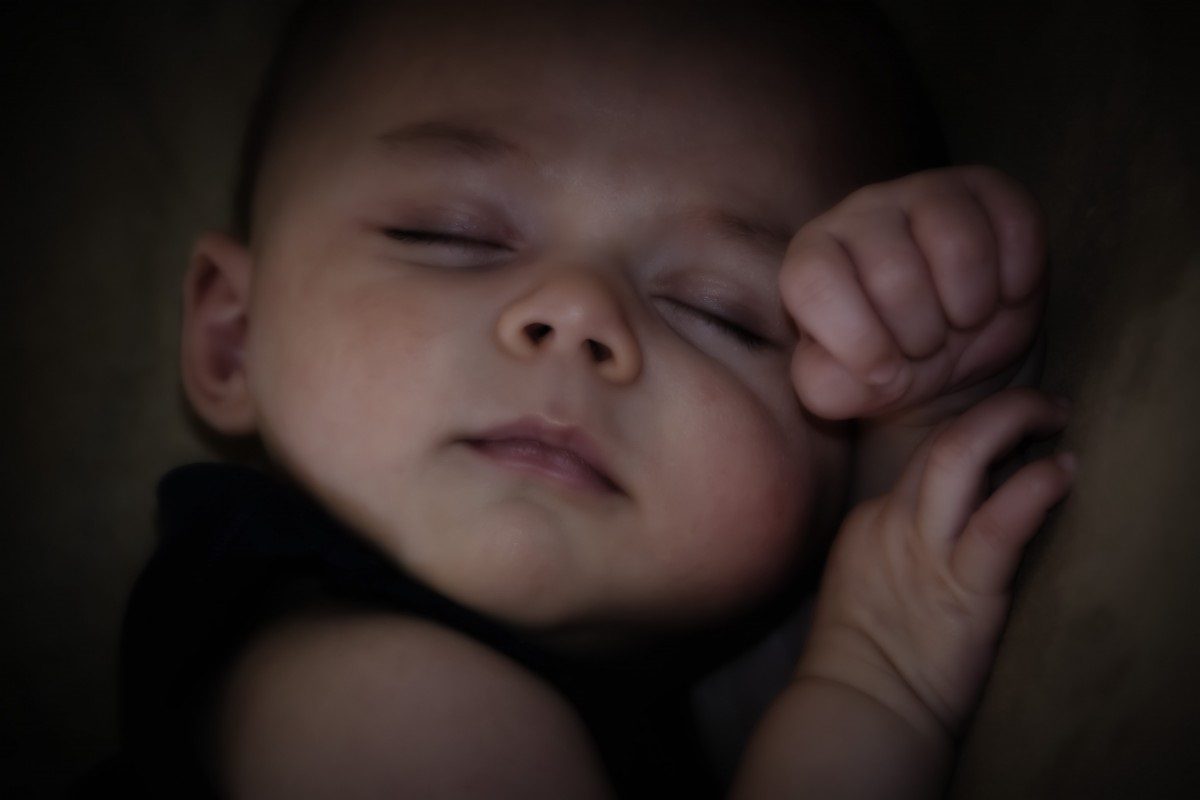
    Behold a virgin shall conceive and bear a son, and shall call his name Immanuel - Isaiah 7-14 = picture of sleeping baby
    Immanuel

    Prophesy

    Joseph and faithful Jews of first Century Judea and other captive Roman provinces would know predictions of a Messiah. Herod, vassal tenant king or tetrarch (one of four local Jewish governors) would have also known or learned the prophesy.

    Isaiah said, “Listen, house of David! Is it not enough for you to try the patience of men? Will you also try the patience of my God? Therefore, the Lord himself will give you a sign: 
    See, the virgin will conceive, have a son, and name him Immanuel.

    24 When Joseph woke up, he did as the Lord’s angel had commanded him. He married her 25 but did not have sexual relations with her until she gave birth to a son. And he named him Jesus.

    One other prophesy

    5:2 וְאַתָּה בֵּֽית־לֶחֶם אֶפְרָתָה צָעִיר לִֽהְיֹות בְּאַלְפֵי יְהוּדָה מִמְּךָ לִי יֵצֵא לִֽהְיֹות מֹושֵׁל בְּיִשְׂרָאֵל וּמֹוצָאֹתָיו מִקֶּדֶם מִימֵי עֹולָֽם׃

    But you, O Bethlehem Ephrathah,
    are only a small village among all the people of Judah.
    Yet a ruler of Israel will come from you,
    one whose origins are from the distant past.

    Micah 5:2 – Hebrew Bible & NLT

    Matthew 2:

    This familiar scene (of Kings following a star to worship Jesus takes place some time after His birth).

    After Jesus was born in Bethlehem of Judea in the days of King Herod, wise men from the east arrived in Jerusalem, 2 saying,

    “Where is he who has been born king of the Jews?

    For we saw his star at its rising and have come to worship him.”

    image of Herod the Great
    Herod the Great

    Traveling kings ask about one born ‘king of the Jews.’ And by protocol they ask the so-called king ruling in Jerusalem under Rome.

    The Herod’s have have held the captive thrones of Judea and surrounding Roman states for just a few decades.

    Where is this new King of the Jews?

    3 When King Herod heard this, he was deeply disturbed, and all Jerusalem with him. 4 So he assembled all the chief priests and scribes of the people and asked them where the Christ would be born.

    5 “In Bethlehem of Judea,” they told him, “because this is what was written by the prophet:

    6 And you, Bethlehem, in the land of Judah,
    are by no means least among the rulers of Judah:
    Because out of you will come a ruler
    who will shepherd my people Israel.”

    9 After hearing the king, they went on their way. And there it was—the star they had seen at its rising. It led them until it came and stopped above the place where the child was. 10 When they saw the star, they were overwhelmed with joy.

    11 Entering the house, they saw the child with Mary his mother, and falling to their knees, they worshiped him. Then they opened their treasures and presented him with gifts: gold, frankincense, and myrrh.

    12 And being warned in a dream not to go back to Herod, they returned to their own country by another route.

    Joseph and Mary take Jesus to Jerusalem, then escape Herod to live in Egypt during the early childhood of Jesus.

    To be continued... (tomorrow, Christmas Day)