Category: 4 Gospels + Good News of the NEW Testament

What are the Gospels?

FOUR Gospels:

GOOD NEWS! (That’s what Gospel means.)

Matthew, Mark, Luke & John begin the New Testament proclaiming the Good News of Israel’s long-awaited Messiah and talk of JESUS Christ.

The four Gospels are first hand witness + proclaiming GOOD NEWS

  • by two Jewish Apostles of the Messiah JESUS, Matthew & John
  • Two gentile (non-Jewish) followers of THE WAY of Jesus Christ, Mark & Luke, who proclaim the GOSPEL recorded from witness of Peter, Paul and other Apostles and disciples of JESUS in the first century.

READ the Good News of the Messiah and Savior Jesus from accounts of His twelve Apostles & others witnessing the resurrection of the Lord Jesus from the four Gospels of the New Testament: Matthew, Mark, Luke and John.

SHARE the Gospel

  • with your Christian friends and those who do not yet believe in JESUS CHRIST.
  • Comment on a Talk of JESUS post and SHARE in your social media world.
  • God’s Love Through John: A God-sent Baptist

    God’s Love Through John: A God-sent Baptist

    John the Baptist is a brash Nazarite, an older cousin of Jesus who confronts all with our need for repentance.

    There was a man sent from God whose name was John. He came as a witness to testify about the light, so that all might believe through him.

    John 1:6-7 CSB

    The Gospel prologue of the Apostle John describes John the Baptist as an apostellō ἀποστέλλω, one commissioned or sent.

    See: John 1:6

    The Baptist has gained a notable following, therefore officials of the Temple send men to keep tabs on this brash Prophet.

    John the Baptist is not the kind of parishioner you particularly want to visit your synagogue.  He even challenges the validity of Herod, King of Judea. And even more threatening than that, John now has a growing following among common Jews, even as some advocate violence against their Roman captors.

    Who are you?

    19 This was John’s testimony when the Jews from Jerusalem sent priests and Levites to ask him, “Who are you?”

    John the Baptist’s Testimony

    And he confessed and did not deny; and this is what he confessed:

    “I am not the Christ.”

    21 “What then?” they asked him. “Are you Elijah?”

    “I am not,” he said.

    They asked this because of a prophesy of Malachi. 

    “Look, I am going to send you the prophet Elijah before the great and terrible day of the LORD comes.

    click for Malachi reference

    John is not the Messiah, but a messenger of the incarnation of the Messiah. Yet the Messiah would no more bring a terrible immediate judgment on Israel than John, but a lasting fulfillment of all prophesy.

    “Are you the Prophet?”

    “No,” he answered.

    John humbly answers that he is not a Prophet, but Jesus will later state clearly that John is the greatest Prophet who has ever lived. The purpose for which John is sent is not prophesy, but announcement of the Messiah.

    22 “Who are you, then?” they asked. “We need to give an answer to those who sent us. What can you tell us about yourself?”

    23 He said,

    “I am a voice of one crying out in the wilderness:

    Make straight the way of the Lord—just as Isaiah the prophet said.”

    click for reference to Yeshaiya (Isaiah) 40:3

    What did they expect?

    Let’s take a brief look at this prophesy of Isaiah for a contemporary Jewish understanding of what John the Baptist had told them as an answer to who he was.

    Isaiah 40:

    “Comfort, comfort my people,”
    says your God.
    2 “Speak tenderly to Jerusalem,
    and announce to her
    that her time of forced labor is over,
    her iniquity has been pardoned,
    and she has received from the Lord’s hand
    double for all her sins.”

    Understand that Jerusalem is not only a political capital of Judea, but a religious capital — a place of worship of the LORD for all Israel. 

    A once united Kingdom of Israel under David and Solomon is now ruled as several different Roman-governed captive states called principates. [click to see more] Octavian has seized power from the republic of Rome and proclaimed himself as the Emperor Augustus Caesar, a ruler to be worshiped as one of many Roman gods in the world he conquers.

    3 A voice of one crying out:

    Prepare the way of the Lord in the wilderness;
    make a straight highway for our God in the desert.
    4 Every valley will be lifted up,
    and every mountain and hill will be leveled;
    the uneven ground will become smooth
    and the rough places, a plain.
    5 And the glory of the Lord will appear,
    and all humanity together will see it,
    for the mouth of the Lord has spoken.

    Isaiah’s prophecy for the freedom of Jerusalem does not say that all will take place at once; however the Jews, captives of Rome and led by a corrupt, evil and powerless King Herod, certainly must have hoped for the Lord to intervene as in the days of Moses.

    In the time of John the Baptist, the wildness near the Jordan would have been a welcome escape from the delicate politics of the Pharisees, Priests, Scribes, Temple guards and Roman legions, who all maintained strict loyalties and delicate alliances.

    Why do you baptize?

    In fact, John, the messenger of the coming Messiah preached repentance. It is the same message proclaimed by all prophets whose message is from the Lord. ‘Return to Me and I will again be your Lord.’

    John’s call to baptism of repentance is far more than a temporary religious cleansing, but personal commitment to a personal transformed return to the Lord.

    Baptism is a symbolic and public witness of this permanent change.

    click to learn more βάπτισμα

    New traditions of worship established during Israel’s several recent captivities had cultivated a politically-charged conversation about religious observances and traditions. Not least among these religious disputes is the need for cleansing and the role of various religious authorities. Of course, Jerusalem’s religious authorities had been limited not only by Rome, but also by the Herod’s.

    John 1:

    24 Now they had been sent from the Pharisees. 25 So they asked him, “Why then do you baptize if you aren’t the Messiah, or Elijah, or the Prophet?”

    26 “I baptize with water,” John answered them.

    Here is John’s message for the religious officials of captive Jerusalem:

    “Someone stands among you, but you don’t know him.

    27 He is the one coming after me, whose sandal strap I’m not worthy to untie.”

    MORE: He will baptize you with the Holy Spirit and fire.

    What next for John the Baptist?

    What do you suppose the reaction of the Pharisees in Jerusalem, Herod and others might be? 

    Fear, perhaps?

    For if the one coming after John stands among them and they don’t even know Him, the Messiah of God will have great power.

    Would the Messiah oppose the religious leaders of the chosen?

    Further, John the Baptist has a great following of the common people, faithful Jews willing to repent of their sins. A righteous crowd following powerful leaders threaten a religious and political establishment subservient to Rome and disobedient to the LORD.

    The Pharisees must be concerned about both the preaching of John and his announcement of the Messiah.

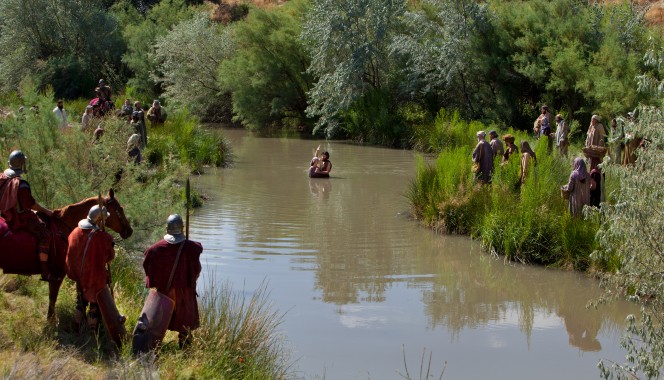
    depiction of John baptizing a man at the Jordan river

    28 All this happened in Bethany across the Jordan, where John was baptizing.


    To be continued...
  • God’s Love Through John: Of water and the Spirit

    “Truly I tell you, unless someone is born of water and the Spirit, he cannot enter the kingdom of God.

    Christ Jesus – Gospel of John 3:5


    The Apostle John begins his Good News with creation then proceeds to verify the identity of Christ as prophesied and witnessed in Jesus’ earthly ministry.

    Previously I addressed the very question of God, for not everyone believes in Almighty God, creator of the heavens and earth. We will for the moment skip over the powerful testimony of John the Baptist and continue with creation.

    Do you believe in God?

    If so, it must follow that you want to know more about God. John refers to Jesus as logos or ‘the Word.’ He tells us: “… the Word was God.”

    Therefore, Jesus IS at the beginning – He created with God and He IS God.

    Note that the Hebrew word for God, אֱלֹהִים ‘elohiym is plural. Jesus speaks of Himself in this same plural sense.

    John 3:11, “Truly I tell you, we speak what we know and we testify to what we have seen, but you do not accept our testimony.

    Perhaps you believe in God, but do you believe what God says?

    Jesus speaks the very words of God!

    John acknowledges the Messiah Jesus the Son as part of the One True God; but John witnesses even more. So let’s continue with the nature of God, also considering Spirit and the intangible attributes of that which is unseen.

    John introduces the Holy Spirit in a dialogue between Nicodemus and Jesus.

    Nicodemus, a faithful Jew

    Visit of Nicodemus to Christ painting by John La Farge

    Nicodemus was a Pharisee and therefore believed in the resurrection. His learned position as a leader of the Jews brought him to question Jesus, who had performed many miracles.

    John 3:

    “Rabbi, we know that you are a teacher who has come from God, for no one could perform these signs you do unless God were with him.”

    3 Jesus replied, “Truly I tell you, unless someone is born again, he cannot see the kingdom of God.”

    4 “How can anyone be born when he is old?” Nicodemus asked him. “Can he enter his mother’s womb a second time and be born?”

    We make the same mistake, thinking of birth as creation. It is not.

    Just as the resurrection marks an event uniting a created soul with God, birth is an event marking a new existence of that which was already created. The birth of the flesh marks an event connected to the breath of a baby whose spirit is formed by the Lord.

    Just as you don’t know the path of the wind,
    or how bones develop in the womb of a pregnant woman,
    so also you don’t know the work of God who makes everything.

    Ecclesiastes 11:5 CSB

    Does the work of God in the spirit of man end with the end of our flesh? The Pharisees and Jesus believed the spirit to exist beyond the life of man. (We will not here discuss the nature and timing of the resurrected body here.)

    Note that the Hebrew word for wind, רוּחַ ruwach, is equivalent to ‘spirit,’ which we note in the creation narrative of Genesis.

    Genesis 1:

    In the beginning God created the heavens and the earth.

    2 Now the earth was formless and empty, darkness covered the surface of the watery depths, and the Spirit of God was hovering over the surface of the waters.

    A description of a chaotic void of darkness, an emptiness, watery depths describes a formless space without purpose or life itself. Yet God, specifically the Spirit of God (רוּחַ ruwach אֱלֹהִים ‘elohiym) was moving over this formless void.

    God IS the only Life in the instant of creation.

    Jesus tells Nicodemus, ‘you should know that God is Spirit.’

    5 Jesus answered, “Truly I tell you, unless someone is born of water and the Spirit, he cannot enter the kingdom of God. 6 Whatever is born of the flesh is flesh, and whatever is born of the Spirit is spirit.

    Born of water

    Genesis 1:6-7 Then God said,

    “Let there be an expanse between the waters, separating water from water.” 

    So God made the expanse and separated the water under the expanse from the water above the expanse. And it was so.

    Consider for a moment that if Jesus is the logos, the very spoken Word of God, then these Mosaic quotes may be attributed to the Messiah.

    Jesus implies, ‘I AM He who separated the waters and I tell you that you must be born of water and the Spirit.’ 

    Be born again from your chaotic sinful life into the resurrection, reborn pure and forgiven that you might have eternal life.

    John also witnesses a connective symbolism between the pure water and the blood at the beginning of Jesus’ ministry in Galilee.

    John 2:

    6 Now six stone water jars had been set there for Jewish purification… 

    7 “Fill the jars with water,” Jesus told them. So they filled them to the brim… the headwaiter tasted the water (after it had become wine)…

    11 Jesus did this, the first of his signs, in Cana of Galilee. He revealed his glory, and his disciples believed in him.

    John then tells us how after this Jesus goes to Jerusalem and cleanses the Temple marketplace. As a result of these events Nicodemus will come to Jesus privately one night.

    23 While he was in Jerusalem during the Passover Festival, many believed in his name when they saw the signs he was doing.

    John points out additional connections between the purification water and the purification of the wine of the Passover sacrifice. In his first letter John speaks again of this rebirth as he writes to the church:

    1 John 5:

    Everyone who believes that Jesus is the Christ has been born of God.

    6 Jesus Christ—he is the one who came by water and blood, not by water only, but by water and by blood. And the Spirit is the one who testifies, because the Spirit is the truth.

    7 For there are three that testify: 8 the Spirit, the water, and the blood—and these three are in agreement.

    Born of flesh

    Imagine a personal conversation with God! The Lord, a flesh and blood ‘Son of Man’ as Jesus referred to himself, answers a learned teacher of scripture. He essentially suggests to Nicodemus that what is created of water and Spirit is different from our flesh created from dust.

    Water becomes essential to bones and flesh, as blood  flowing with life. Spirit separates the chaos of created man from the lifeless nature of a formless and godless earth.

    Perhaps Jesus referred to the scripture from Ecclesiastes in His dialogue with Nicodemus asking about being born of water and the Spirit.

    10 “Are you a teacher of Israel and don’t know these things?” Jesus replied.

    Jesus, the Messiah in the flesh, tells Nicodemus that we must be born again – born again in the Spirit.

    John the Baptist and many other Prophets urged true believers in the Lord to repent. Jesus also preached repentance and emphasizes a return to a new and pure relationship between the Spirit of God and the spirit of a man.

    To be ‘born again’ is much more than mere repentance, which may be temporal and lacking in guilt, contrition and an earnest desire for the cleansing of sin.

    Our born again spirit is rebirth of a relationship between the new spirit of changed flesh and the Spirit of the Living God.

    John also witnesses much more of the difference between spirit and flesh, mostly in the spoken words of Christ Jesus.

    “The Spirit is the one who gives life. The flesh doesn’t help at all. The words that I have spoken to you are spirit and are life.

    John 6:63

    Born of Spirit

    The concepts of spirit, as in the Holy Spirit and the spirit of man, is more complex than what we can address in discussion of John’s Gospel, letters and the Revelation of Jesus Christ to John. Jesus’ simple reply to Nicodemus that we must be born again does point to the Holy Spirit.

    For a more detailed study worthy of academic study of Scripture as Nicodemus would have been familiar see the entry below:

    “Holy Spirit.” Examples where the Person is meant when the article is absent… Sometimes the absence is to be accounted for by the fact that Pneuma (like Theos) is substantially a proper name, e.g., in Jhn 7:39. As a general rule the article is present where the subject of the teaching is the Personality of the Holy Spirit, e.g., Jhn 14:26, where He is spoken of in distinction from the Father and the Son. See also Jhn 15:26 and cp. Luk 3:22… 

    The subject of the “Holy Spirit” in the NT may be considered as to His Divine attributes; His distinct Personality in the Godhead; His operation in connection with the Lord Jesus in His birth, His life, His baptism, His death; His operations in the world; in the church; His having been sent at Pentecost by the Father and by Christ; His operations in the individual believer; in local churches; His operations in the production of Holy Scripture; His work in the world, etc.

    Vine’s Expository Dictionary:

    What does it mean to be ‘born again?’

    We could, as many do, become entangled in more theological argument of what Jesus told Nicodemus in John 3:3 and consequently neglect John’s witness of what Jesus reveals about the Person of the Holy Spirit. 

    Jesus states that we must be born again in Spirit. Where else does John mention this?

    Because the Holy Spirit commonly the Person of God most misrepresented and least mentioned, let’s look first to the examples cited in Vine’s Dictionary (above) to the scriptures from John.

    “The one who believes in me, as the Scripture has said, will have streams of living water flow from deep within him.” He [Jesus] said this about the Spirit. Those who believed in Jesus were going to receive the Spirit, for the Spirit had not yet been given because Jesus had not yet been glorified.

    John 7:38-39 CSB

    In our next post we will take a look at the witness of John the Baptist, who also bears witness to Jesus receiving the Holy Spirit, to which the Apostle John refers here.

    Jesus, prior to His crucifixion and resurrection in the flesh and in the spirit, instructs the Apostles further about the Holy Spirit.

    John 14:

    25 “I have spoken these things to you while I remain with you. 26 But the Counselor, the Holy Spirit, whom the Father will send in my name, will teach you all things and remind you of everything I have told you.

    Jesus’s Gift of Peace
    27 “Peace I leave with you. My peace I give to you. I do not give to you as the world gives. Don’t let your heart be troubled or fearful.

    Who would not love a personal counselor like this? Jesus promises a Person with His same love in the Person of the Holy Spirit. Later John affirms this testimony of Jesus:

    “When the Counselor comes, the one I will send to you from the Father ​— ​the Spirit of truth who proceeds from the Father ​— ​he will testify about me. 

    “You also will testify, because you have been with me from the beginning.

    John 15:26-27

    John is witness and testifies to this for many years, more years than all other Apostles. Jesus also refers to the Holy Spirit as ‘the Spirit of truth.’

    Does one desiring God seek truth?

    John provides both witness and explanation of the Truth. Therefore, even in this present day we would not want to miss what he shares with the church in the Revelation of Jesus Christ to John.

    “Let anyone who has ears to hear listen to what the Spirit says to the churches. The one who conquers will never be harmed by the second death.

    Revelation 2:11
    God’s Love Through John: To be continued...
  • God’s Love Through John: In the Beginning

    God’s Love Through John: In the Beginning

    The Gospel of John

    John 1:1 ESV In the beginning was the Word, and the Word was with God, and the Word was God.

    1:1  ἐν ἀρχῇ ἦν ὁ λόγος καὶ ὁ λόγος ἦν πρὸς τὸν θεόν καὶ θεὸς ἦν ὁ λόγος

    The Apostle John begins his Gospel prologue with inspired, nearly unparalleled words pointing back to Genesis 1. Every Jew who knew God knew the beginning of the the Pentateuch.

    In the beginning God created the heavens and the earth.


    Genesis 1:1  בְּרֵאשִׁית בָּרָא אֱלֹהִים אֵת הַשָּׁמַיִם וְאֵת הָאָֽרֶץ׃

    Bereshit bara Elohim et hashamayim ve’et ha’aretz.

    John connects creation with logos, literally the word for word in the GreekJesus is the Person of the spoken Word of Elohimאֱלֹהִים

    2 He was in the beginning with God.

    In essence John proclaimed:

    Jesus IS in the beginning, Jesus is with Elohim, Jesus IS Elohim!

    Basic Belief: Do you believe in God?

    John begins by categorically stating that Jesus IS the One True God.

    This is Good News to those who believe. Yet even if you do not believe in the One God, John proclaims this Gospel as challenge to our misconceptions of the Creator.

    Every Greek knew the importance of logos. A secondary use of the word logos, familiar to unbelieving Greeks who claimed many gods, is its use as respect to the MIND alone. 

    Think about this, John tells those who do not know God.

    Reason through it and try calculating the logic of this relationship between a Power you cannot measure and a Person whom we have regarded. And again, John points to creation:

    3 All things were made through him, and without him was not any thing made that was made.

    John 1:3 CSB

    The First Letter of John

    In his first letter to the church John begins in a similar fashion when addressing those who already follow Christ Jesus in the first century.

    What was from the beginning, what we have heard, what we have seen with our eyes, what we have observed and have touched with our hands, concerning the word of life …

    1 John 1:1 CSB

    The Disciple Jesus loved gives followers of The Way a testimony of his own witness of ‘God in the flesh’ in the Person of the Messiah of God.

    Orazio Fidani, Saint John the Apostle, c. 1640-56

    John, now a fully mature Elder, tells his churches, gatherings of believers in Christ:

    We know that Jesus IS who He says He IS. We are witnesses to the facts and preach our testimony to you you. 

    Jesus IS God and we have personally seen, heard, observed and touched the Living God!

    Good news for believers.

    4 ‘We are writing these things so that our joy may be complete,’ John writes to believers.

    Jesus, the Christ, a personal Lord who loves and ministers to sinners.

    The Beginning and the End

    John’s Gospel and three letters reveal Jesus as the Christ, Almighty God as One with the eternal Person of the Son of Man.

    The Revelation of Jesus Christ to John speaks to the beginning of Creation, in addition to providing troubling imagery of the apocalypse of the heavens and earth.

     “I am the Alpha and the Omega,” says the Lord God, “the one who is, who was, and who is to come, the Almighty.”

    Revelation 1:8 CSB

    John’s Vision of the Risen Lord

    I, John, your brother and partner in the affliction, kingdom, and endurance that are in Jesus, was on the island called Patmos because of the word of God and the testimony of Jesus.

    The Apostle John, whom we picture as a young man mentored by Jesus, reveals much more about the Lord.

    Almighty God, Creator of the heavens and earth, in whose image man is made, IS; in the Person of Jesus, a Savior to eternal life to those He loves.

    Jesus will also judge rebellious sinners and cleanse creation of all unrighteousness. The LORD will make all things right.

    John, through Christ, reveals the ending:

    Revelation 21:3b Look, God’s dwelling is with humanity, and he will live with them. They will be his peoples, and God himself will be with them and will be their God. 4 He will wipe away every tear from their eyes. Death will be no more; grief, crying, and pain will be no more, because the previous things have passed away.

    John’s Good News

    Jesus loves you. This is John’s message. God is immeasurably more than an understood Power. Jesus shows God as a loving Father who also gives freedom to mankind to choose eternal life or deserved punishment for sin. 

    Do you believe in One God? Can you relate to Almighty God as a loving Father of a chosen family? In Christ Jesus we have seen the Lord!

    John gives us both brief glimpses and detailed accounts of the Logos, the Very Word of God.

    No mere mortal can fully fathom the ever-existent Creator of all things and of all men, even in the personal witness of John. Yet John reveals even more of the completeness of the One True God through consideration of the Spirit of God, the subject of our next look at understanding the Lord through the eyes of the Disciple Jesus loved.

    To be continued...