The Solid Promise of a Covenant
And I, behold, I establish my covenant with you. Genesis 9:9a
And Moses took the blood, and sprinkled it on the people, and said, Behold the blood of the covenant, which the LORD hath made with you concerning all these words. Exodus 24:8
The LORD works miracles for those He loves and God works miracles impossible for man or hidden from those without eyes to see.
Scripture records many miracles as the light of new hope for the faithful. Even when all hope seems lost, the Lord responds to prayers of the faithful. Even before the greatest miracle ever, the Lord confirms new covenants with the return of sinners to righteousness.
Israel and Judah Defeated, Yet a King in the line of David Appears
Christians may think that the miracle mentioned here is the incarnation of Jesus Christ, the Messiah. Yet even the greatest miracle of Jesus’ resurrection is not the only instance of an unexpected son of David.
Perhaps a Jew diligent in scripture will recall a new covenant following a prior appearance of a son of David.
(Go ahead, take a shot. Do you recall such a miracle?)
וַיִּכְרֹת כָּל־הַקָּהָל בְּרִית בְּבֵית הָאֱלֹהִים עִם־הַמֶּלֶךְ וַיֹּאמֶר לָהֶם הִנֵּה בֶן־הַמֶּלֶךְ יִמְלֹךְ כַּאֲשֶׁר דִּבֶּר יְהוָה עַל־בְּנֵי דָוִֽיד׃
Sadly, most Christians discount the importance of the Old Covenant which enriches the New Covenant of Christ.
In a commentary of David Guzik we learn:
From the place where the oath was made and the context of the oath, we learn that the worship of the true God was not dead in Judah. These captains could respond to their responsibility before the LORD.
Behold, the king’s son shall reign:
This was a dramatic moment. For six years everyone believed there were no more surviving heirs of David’s royal line and there was no legitimate ruler to displace the wicked Athaliah. The secret had to be secure, because the king’s son would be immediately killed if his existence were revealed. The captains must have been shocked by the sight of this six-year old heir to the throne.
And all the congregation made a covenant with the king in the house of God. And he said unto them, Behold, the king’s son shall reign, as the LORD hath said of the sons of David.
Author’s note:
Although I generally quote the English Standard Version, the King James suggests a forgotten formality appropriate to covenant with the LORD.
The King James Version English translation of the Bible was completed in 1611. It was brought to the original colonies of a rebellious new world, fleeing kingship served by religious authorities.
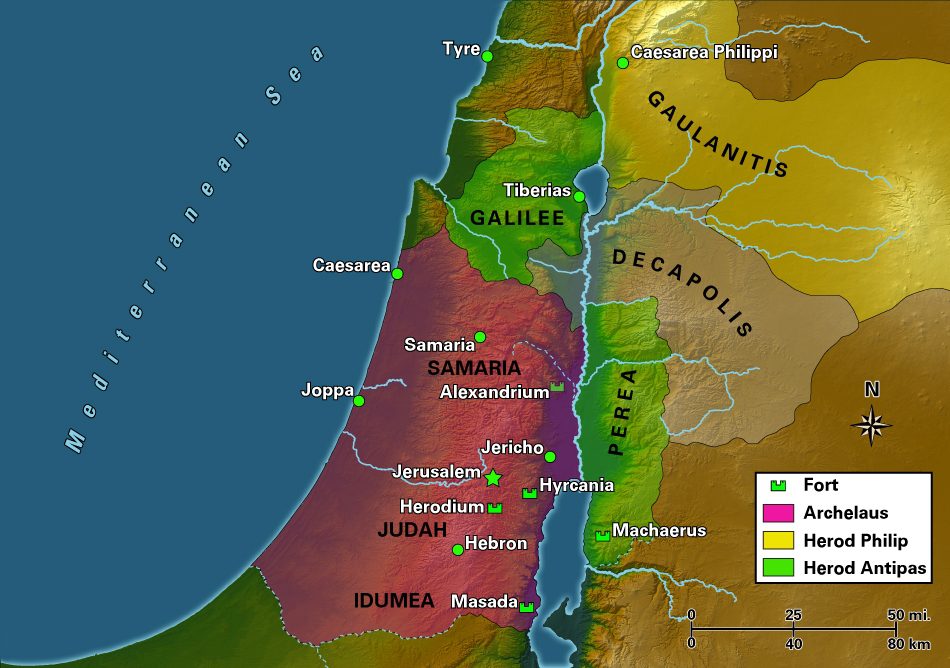
Jesus entered a Jerusalem ruled by a king and religious authorities politically beholden to a godless foreign Emperor. The aging fallen empire of Israel and Judah was ruled by a growing Roman empire. But before Rome ruled Judea, Samaria, Galilee and more, several different empires had ruled a captive remnant of the Lord’s ‘chosen people.
Israel and Judah defeated, yet another promise of a New King
For further study of the original Hebrew, see the Jeremiah 31 link below, which includes the Orthodox Jewish Bible, ESV & KJV,
Six centuries before Christ, Jeremiah partially reveals the character of the coming sinless Messiah
31 Behold, the days come, saith the LORD, that I will make a new covenant with the house of Israel, and with the house of Judah:
32-34 Not according to the covenant that I made with their fathers in the day that I took them by the hand to bring them out of the land of Egypt; which my covenant they brake, although I was an husband unto them, saith the LORD:
But this shall be the covenant that I will make with the house of Israel; After those days, saith the LORD, I will put my law in their inward parts, and write it in their hearts; and will be their God, and they shall be my people.
And they shall teach no more every man his neighbour, and every man his brother, saying, Know the LORD: for they shall all know me, from the least of them unto the greatest of them, saith the LORD: for I will forgive their iniquity, and I will remember their sin no more.
Do you also recognize his mention of the Holy Spirit, the gift of a risen Christ?
From the Second Temple to the Herod’s Temple
Now we move on from survival of the line of David and renewal of covenant with the Lord to about four centuries before Christ.
Malachi, the messenger and Prophet just before a great silence foretells the arrival of another great prophet.
Malachi 3:
Behold, I will send my messenger, and he shall prepare the way before me: and the Lord, whom ye seek, shall suddenly come to his temple, even the messenger of the covenant, whom ye delight in: behold, he shall come, saith the LORD of hosts.
Again, Malachi speaks of not only a messenger, but also that he will be the messenger of the covenant.
Before this most controversial teacher, prophet and King of the Jews will come another great prophet.
Behold the Light
“As long as I am in the world, I am the light of the world.”
– John 9:5
Genesis 1:
In the beginning God created the heavens and the earth. 2 The earth was without form, and void; and darkness was[a] on the face of the deep. And the Spirit of God was hovering over the face of the waters.
3 Then God said, “Let there be light”; and there was light. 4 And God saw the light, that it was good; and God divided the light from the darkness.
John 1:
In the beginning was the Word, and the Word was with God, and the Word was God.
2 The same was in the beginning with God.
3 All things were made by him; and without him was not any thing made that was made.
4 In him was life; and the life was the light of men.
5 And the light shineth in darkness; and the darkness comprehended it not.
6 There was a man sent from God, whose name was John.
7 The same came for a witness, to bear witness of the Light, that all men through him might believe.
8 He was not that Light, but was sent to bear witness of that Light.
9 That was the true Light, which lighteth every man that cometh into the world.
10 He was in the world, and the world was made by him, and the world knew him not.
11 He came unto his own, and his own received him not.
The Expected Messiah
Luke 3:15-22
15 And as the people were in expectation, and all men mused in their hearts of John, whether he were the Christ, or not…
And those in Judah remembered that Herod had beheaded John.
Yet some recalled hearing thunder as Jesus had been baptized by John. Others recalled how Jesus had healed many, saying their sins were forgiven. Some even told of a boy in Nain who Jesus raised to life from a coffin! Even more witnesses knew the truth of Lazareth from nearby Bethany.
But the authorities had arrested Jesus secretly at night during the Passover. How could they capture the seemingly all-powerful Son of Man and sentence Jesus to a death more horrendous than John? Why would God allow this to happen?
The LORD began to reveal a few answers just at the time of the Sacrifice of Righteous Blood on a Cross. For only the Twelve had first witnessed the reason for Jesus’ Sacrifice as they shared a last Passover Seder in a private upper room.
Matthew 26: NKJV
‘The Teacher says, “My time is at hand; I will keep the Passover at your house with My disciples.”’”
19 So the disciples did as Jesus had directed them; and they prepared the Passover.
20 When evening had come, He sat down with the twelve…
A New Covenant
26 And as they were eating, Jesus took bread, blessed and broke it, and gave it to the disciples and said, “Take, eat; this is My body.”
27 Then He took the cup, and gave thanks, and gave it to them, saying, “Drink from it, all of you.
28 For this is My blood of the new covenant, which is shed for many for the remission of sins.
Between the Cross and the empty tomb
We could have begun with the road to Emmaus or other liturgically familiar retelling of the Resurrection of Christ Jesus. I have chosen instead to share less familiar scriptures, also testimony to the Truth of the resurrection of Christ.
Imagine the immanent fear of those who had cried out, “crucify him! crucify him!” when this happened?
Matthew 27:52-53 KJV
And the graves were opened; and many bodies of the saints which slept arose, And came out of the graves after his resurrection, and went into the holy city, and appeared unto many.
Who would not fear it, after realizing that our own words and actions had convicted the Messiah – God With Us in the flesh?
Yet His Disciples, who witnessed His New Covenant, would teach the reason for His Sacrifice.
“For this is my blood of the new testament, which is shed for many for the remission of sins.” – Matthew 26:23
Those who had just celebrated Passover knew well the need for the shedding of blood for the remission of sins. But because of our contemporary worldly forgetfulness, allow me ask your consideration of the meaning of remission.
ἄφεσις ἁμαρτία – in the common Greek of the day: aphesis hamartia
The remission of sins:
I. release from bondage or imprisonment
II. forgiveness or pardon, of sins (letting them go as if they had never been committed), remission of the penalty
[Sin] I. to be without a share in, pr to miss the mark, to err, be mistaken; to miss or wander from the path of uprightness and honour, to do or go wrong; to wander from the law of God, violate God’s law, sin
II. that which is done wrong, sin, an offence, a violation of the divine law in thought or in act
III. collectively, the complex or aggregate of sins committed either by a single person or by many
The blood of Christ, given for you and for many for the remission of sins.
His purpose is clear.
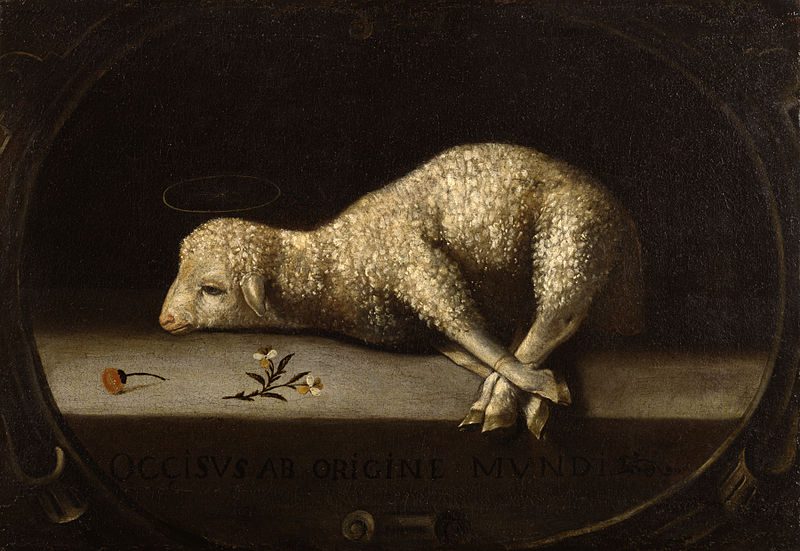
Jesus becomes our Perfect Passover Sacrifice for the remission of sins. The Messiah suffered death, that final enemy captive to sin.
Christ returned from the darkness of death; He IS the Light of eternal life!
Now after the Sabbath, toward the dawn of the first day of the week Mary Magdalene and the other Mary saw Jesus. Jesus met the Apostles and they came up to Him, held the Lord by His feet and worshiped Him. [Matthew 28]
The Lord walked with two disciples leaving Jerusalem, explaining the Messiah of Scripture, breaking bread with them and after being recognized, He vanished! Jesus appeared to the Disciples, allowing them to touch His resurrected body, and He ate fish with them. He taught them, as before; but now their eyes were opened. [Luke 24]
Jesus appears to the Disciples again by the Sea of Tiberius (Sea of Galilee). John reveals an intimate conversation of Jesus with Peter, restoring him from denial and telling Peter of the kind of death he would suffer. The Acts of the Apostles reveal that the risen Christ prepared the Apostles for their mission to go into all the world for forty days until His ascension into the clouds. (Imagine witnessing that!) And Paul later reveals that ‘Then he appeared to more than five hundred brothers at one time, most of whom [were alive at the time he wrote his letter to the church at Corinth].
Clearly, Jesus IS! He is the Light of life and the hope of mankind.
No covenant or promise between the LORD and His created is more important to the redeemed in Christ than this New covenant, a New Testament to the love of Almighty God for those made in his Image.
May the joy of the resurrection of Christ Jesus fill your heart, satisfy your soul and embrace your failing flesh in the Light of His love.
Grace and peace, beloved saint.