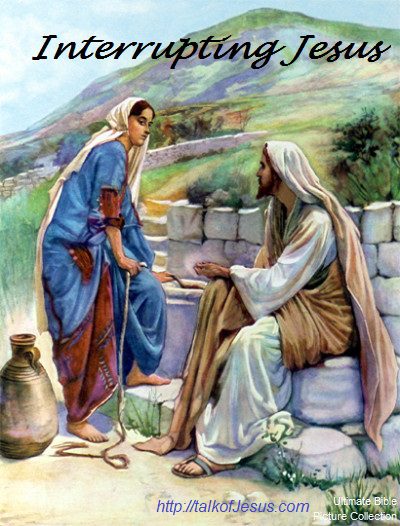
Are the moments of Jesus’ earthly mission so different than yours?
- What unexpected event interrupts your week?
- Who interrupts your daily journey though life?
- How will you touch their lives?
- How will you fit everything and everyone in?
Jesus, the promised Christ of GOD the Father, had an earthly mission to accomplish in just 3 years. You and I, mortal souls bound by flesh, have missions to accomplish, goals and plans for our everyday mortal lives. Just like in the life of Christ, what happens? Interruptions.
One event on our planner leads to another and gets interrupted by a life event or person we must ‘pencil in.’ How does God want us to face the unexpected?
Matthew 9: ESV
14 Then the disciples of John came to him, saying, “Why do we and the Pharisees fast, but your disciples do not fast?” … 18 While he was saying these things to them, behold, a ruler came in and knelt before him, saying, “My daughter has just died, but come and lay your hand on her, and she will live.” 19 And Jesus rose and followed him, with his disciples.
O.K. You are in an important meeting with VIP’s of the community (even someone from your church or synagogue). Someone informs you that ‘so and so’ has died. Of course, you want to go comfort their loved ones, who may even be acquaintances, friends or family of yours.
In fact, the man who came to Jesus with the news was actually the father of the one who had died. Furthermore, the man is an official, a ruler of some kind who not only has come to Jesus, but worships Jesus as Lord.
Yet there is an urgency here more important even than attending a funeral. The man is important and has bowed down to Jesus as Lord. Above all, this ruler has shown faith in what he asks of Jesus:
“… come and lay your hand on her, and she will live.”
Is this ruler of the Jews saying that He not only believes that Jesus is the Messiah of Jehovah, but that Jesus can give live eternal (after death) to his beloved daughter who has just died?
Yes! But perhaps more.
Is it possible that this ruler, father of the girl who had just died, may have heard of the miracle Jesus performed on the boy in the casket at Nain? Perhaps.
If you or I were a father or mother in the presence of God Incarnate, would we ask the Lord Jesus to raise our child from the dead (if it is His will)?
So Jesus Christ leaves His meeting with the Pharisees and accompanies the official to his home. AND like so often happens with Jesus, once more He is interrupted along His journey by someone else with faith – a woman who also believed.
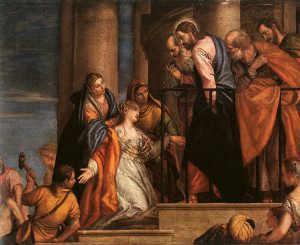 20 And behold, a woman who had suffered from a discharge of blood for twelve years came up behind him and touched the fringe of his garment, 21 for she said to herself, “If I only touch his garment, I will be made well.”
Perhaps Jesus is now hemmed in by the crowds like when the men came to Him and had to cut through the roof to bring their paralyzed friend to the Messiah. Maybe Jesus was on the way to the home of the official and still had the usual crowds all around Him.
The unclean woman wants to touch Jesus! How would this Rabbi react – how will this renowned teacher act when an unclean woman stands in the path He must take to go to the funeral of Jairus’ daughter?
22 Jesus turned, and seeing her he said, “Take heart, daughter; your faith has made you well.” And instantly the woman was made well.
Again, Jesus does not ignore her for the important official; nor does our Lord fail to show her compassion.
The Apostle Matthew reports the interruption in the mission of Jesus and summarized the impact of the miracle Jesus would perform for Jairus’ daughter. Matthew tells how after these two interruptions Jesus became even more well known for the His miracles.
… 26 And the report of this went through all that district.
The patient history of the Gospel writer Dr. Luke, however, provides additional detail of both interruptions. See how we sometimes overlook the obvious, that Jesus did not accomplish either of these miracles without an ordinary passing of mortal time with travel on foot through crowds of followers. (First, a context of some passing time, growing crowds and place:)
Soon afterward he went on through cities and villages, proclaiming and bringing the good news of the kingdom of God. And the twelve were with him,2 and also some women who had been healed of evil spirits and infirmities…
4 And when a great crowd was gathering and people from town after town came to him, he said in a parable, 5 “A sower went out to sow his seed…
26 Then they sailed to the country of the Gerasenes, which is opposite Galilee…
Jesus Heals a Woman and Jairus’s Daughter
40 Now when Jesus returned, the crowd welcomed him, for they were all waiting for him. 41 And there came a man named Jairus, who was a ruler of the synagogue. And falling at Jesus’ feet, he implored him to come to his house,42 for he had an only daughter, about twelve years of age, and she was dying.
- a man named Jairus
- ruler of the synagogue
- falling at Jesus’ feet
- he had an only daughter, age 12
- she was dying
As Jesus went, the people pressed around him.
43 And there was a woman who had had a discharge of blood for twelve years, and though she had spent all her living on physicians, she could not be healed by anyone.
- woman had discharge of blood 12 years
- spent all her living on physicians
- not healed by anyone
- healed the moment she touched the fringe of Jesus’ garment
44 She came up behind him and touched the fringe of his garment, and immediately her discharge of blood ceased.
45 And Jesus said, “Who was it that touched me?”
When all denied it, Peter said, “Master, the crowds surround you and are pressing in on you!”
- Again, crowds pressing in on Jesus
- Peter and the Apostles are with Jesus
46 But Jesus said, “Someone touched me, for I perceive that power has gone out from me.”
47 And when the woman saw that she was not hidden, she came trembling, and falling down before him declared in the presence of all the people why she had touched him, and how she had been immediately healed.
- Like the ruler of the synagogue asking for Jesus to heal his daughter; the woman had the faith to press through the crowds to touch Jesus so that she might be healed.
48 And he said to her, “Daughter, your faith has made you well; go in peace.”
49 While he was still speaking, someone from the ruler’s house came and said, “Your daughter is dead; do not trouble the Teacher any more.”
- Jairus undoubtedly knew that his 12 year old daughter was near death when he finally came to Jesus.
- Now Jairus’ daughter has died. (Too late to heal her…)
Will you also be near death in your sin before you will come to Jesus Christ in faith?
50 But Jesus on hearing this answered him, “Do not fear; only believe, and she will be well.”
51 And when he came to the house, he allowed no one to enter with him, except Peter and John and James, and the father and mother of the child. 52 And all were weeping and mourning for her, but he said, “Do not weep, for she is not dead but sleeping.” 53 And they laughed at him, knowing that she was dead.
Do some of us laugh at Jesus when He says we are dead, but He can heal us?
Are we sleeping in our sin?
54 But taking her by the hand he called, saying, “Child, arise.” 55 And her spirit returned, and she got up at once.
Your spirit will not return to you while you sleep. Is your flesh yet alive, while your spirit is dead?
Make no mistake about it. Jairus’ daughter was dead physically, neither breathing nor alive any more than the boy in the casket at Nain. It is the spirit that gives the body life!
God created us body and soul. Jesus Christ commanded her spirit to live once more and her spirit and life returned to her body.
And he directed that something should be given her to eat. 56 And her parents were amazed, but he charged them to tell no one what had happened.
Jesus commanded her parents to give her something to eat. Feed your body. Drink water for your flesh and blood. Be nourished in the flesh and live well.
Yet God alone commands your soul, gives being in your creation and conception. God alone measures the days of your body and soul, appointed to a time to die… for your soul to sleep until the day we are revived for the Judgment.
- A woman in continual pain comes to Jesus in faith for just the touch of His healing.
- A father of a dying girl comes to Jesus in faith for the laying on of His hands of healing.
Will you, dear fellow sinner, come to Jesus in faith, which bids your soul to awake to eternity?
“Awake, O sleeper,
and arise from the dead,
and Christ will shine on you.”
 You go to a nice house of one of the leading citizens in town and chit-chat while the food is being prepared. You begin enjoying your dinner and conversation; but like so many times during Jesus’ mission, some of the common people in town hear about the Messiah’s dinner plans and just show up uninvited.
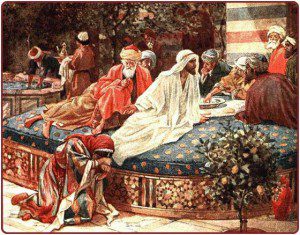 44 Then turning toward the woman he said to Simon,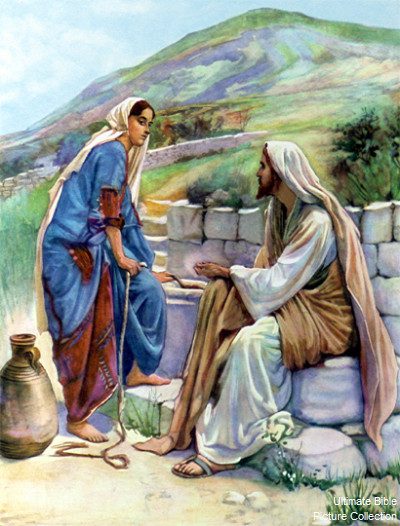
 The Synagogue in Capernaum was important to Jews, but the town and area are ruled by Rome (as was Jerusalem).
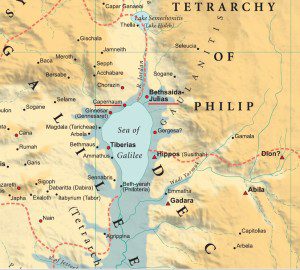 Jesus of Capernaum, the Son of Man, taught in the towns nearby like Chorazin and Bethsaida-Julius where Scribes and Pharisees studied the Law and the Prophets. Jesus of Nazareth, as He was known, also taught on the hillsides near Capernaum. Most of these places where the teachings of Jesus were heard and miracles witnessed were near Capernaum. We can be certain that Roman officials tracked every move of this popular leader of the crowds. Certainly Centurions would listen to every word for the first sign of another insurrection against Rome.