Category: Acts for a 21st c. Church

Acts Apostolos - Acts of the Apostles - the chronicles of Christ's Apostles - a history of Christ's Church including early leaders like Stephen, Philip the Evangelist, Paul, Barnabas and many others
Acts of the Apostles + a History of Christ’s Church

Acts of the Apostles 1-28


Acts of the Apostles:
+ The first century Church SHARED Christ while suffering severe persecution.
+ Luke records a historic account of the Church which gives 21c Christians a context to SHARE the Gospel of Jesus Christ with others.

Read more about the Early Church & add your COMMENT on Scripture.

ACT now.

+ SHARE the Gospel history witnessed in the CURRENT chronological SERIES from ACTS of the APOSTLES.

  • The Keeper of the Philippian Prison

    The Keeper of the Philippian Prison

    What is your experience as the keeper of something important?

    Have you ever been the one of importance kept safe in some place?

    (Were YOU ever the prisoner OR a jailer guard charged as the keeper a prisoner for justice?)

    Prison and Prisoners

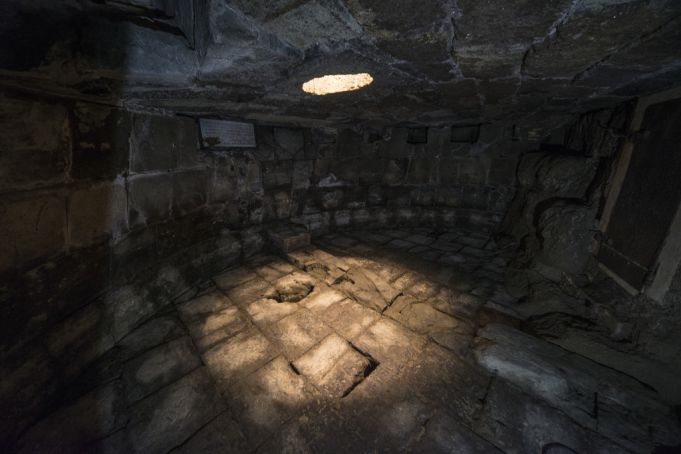
    IF the only light you ever see seeped filtered though a hole in the ceiling of your cell WOULD YOU SING?

    (Likely, neither would I.)

    Roman prisons were nothing to sing about, but that didn’t stop Paul and Silas.

    S.O.P. – Prisons of Roman Cities & Colonies

    Imprisonment was not a sentence under Roman statutory law.. Incarceration (publica custodia) .. was intended to be a temporary measure prior to trial or execution; abuses of this principle occurred but were officially censured. Located near the law courts, the [prison (carcer) with a dungeon (oubliette)] was used as a jail or holding cell for short periods before executions and as a site for executions.

    Source: Wikipedia Commons

    Of course this Philippian carcer of the Roman colony is bound by the same same rules for jailer and prisoner alike according to Roman Law and the SOP manual of its occupying Legions of this Greek-speaking European colony of Macedonia.

    φυλακή – Strong’s translates G5438 in the following manner: prison (36x), watch (6x), imprisonment (2x), hold (1x), cage (1x), ward (1x).

    Paul and Silas end up in the ‘temporary’ place near the agora and forum where they have already been punished severely by flogging under the jurisdiction of a Roman Magistrate for unspecified crimes against culture and misdemeanors for which they will most likely be run out of town rather than executed.

    Therefore, this evening they have been placed into the care of a prison keeper (jailer) in Philippi for final disposition of their case in the morning.


    Previously:

    ACTS 16: 22 The crowd joined in attacking them, and the magistrates tore the garments off them and gave orders to beat them with rods.

    .. they threw them into prison, ordering the jailer to keep them safely. Having received this order, he put them into the inner prison and fastened their feet in the stocks.

    Who is this Philippian keeper of prisoners for Magistrates of the Court?

    φυλάσσω –

    Strong’s G5442 – phylassō, Probably from φυλή (G5443) through the idea of isolation

    NOTE, however the same responsibility of the Roman 'keeper' of prisoners AND the jailer's two Roman prisoners, apostles sent out with the message of the Jerusalem Council to communicate interpretation of the LAW for these Gentiles as well as the few Jews of Philippi. 

    to guard

    • to watch, keep watch
    • to guard or watch, have an eye upon: lest he escape
    • to guard a person (or thing) that he may remain safe
    • to guard i.e. care for, take care not to violate
      • to observe
    • to observe for one’s self something to escape
      • to avoid, shun flee from
      • to guard for one’s self (i.e. for one’s safety’s sake) so as not to violate, i.e. to keep, observe (the precepts of the Mosaic law

    Source: BlueLetterBible.org

    And as they went through the cities, they delivered them the decrees for to keep, that were ordained of the apostles and elders which were at Jerusalem.

    ACTS of the Apostles 16:4 KJV – Mission of Paul, Silas and Timothy

    Scenario of a night in the Jail of Philippi

    A guard of the second watch [9 pm] comes on duty and shouts down to you in the hole and other prisoners in cells near you, “Lights out!” He then extinguishes the candle above expecting all to go to sleep.

    Unlike the other prisoners YOU and your brother have been locked in here with wooden stocks bound to your ankles and chained to the floor of your cell.

    What now?

    We prayed for a while. Out loud. In fact, we recited much scripture as we prayed. Other prisoners complained to us, but after no intervention from the keeper assigned to this second watch they had no choice but to sleep (or just ignore us).

    A little later we hear sounds through the darkness of the third watch [midnight-3 am] keeper coming on duty.

    Silas starts singing and Paul joins his voice to the familiar Psalm:

    Acts of Awesome Faith

    As we continue with the Acts of Paul, Silas and Timothy in Philippi put yourself in their place — an uncertain and unpleasant prison of the moment. Hear the cries of each soul cast into the trembling darkness — the fear of God resounding in each heart.

    What Psalm? (For they knew so many from faithful worship.) 
    
    YOU may find other PSALMS on TalkofJESUS.com which will encourage you in such dark circumstances: https://talkofjesus.com/shaken/ 
    
    Perhaps this: The LORD is My Salvation from Psalm 27:13 OR

    Psalm 142 – You Are My Refuge

    A Maskil of David, when he was in the cave. A Prayer.

    With my voice I cry out to the LORD;
    with my voice I plead for mercy to the LORD.
    I pour out my complaint before him;
    I tell my trouble before him.
    
    When my spirit faints within me,
    you know my way!
    In the path where I walk
    they have hidden a trap for me.
    Look to the right and see:
    there is none who takes notice of me;
    no refuge remains to me;
    no one cares for my soul.
    
    I cry to you, O LORD;
    I say, “You are my refuge,
    my portion in the land of the living.”
    Attend to my cry,
    for I am brought very low!
    Deliver me from my persecutors,
    for they are too strong for me!
    Bring me out of prison,
    that I may give thanks to your name!
    The righteous will surround me,
    for you will deal bountifully with me.
    

    Suppose that you are another prisoner listening to the apostles sing..
    And then, something happens!

    Acts of Paulos and Silas

    δικαίωμα Παῦλος δέ Σιλᾶς

    Acts of the Apostles Missions trips of Paul, Barnabas, Silas and several others

    About midnight Paul and Silas were praying and singing hymns to God, and the prisoners were listening to them, and suddenly there was a great earthquake, so that the foundations of the prison were shaken.

    And immediately all the doors were opened, and everyone’s bonds were unfastened.

    When the jailer woke and saw that the prison doors were open, he drew his sword and was about to kill himself, supposing that the prisoners had escaped. But Paul cried with a loud voice,

    “Do not harm yourself, for we are all here.”

    29 And [he] called for lights and rushed in, and trembling with fear he fell down before Paul and Silas.


    “Even if I am to be poured out as a drink offering upon the sacrificial offering of your faith, I am glad and rejoice with you all,” Paul will write a decade later to the church in Philippi from a prison in Rome.

    Then he brought them out and said, “Sirs, what must I do to be saved?
    And they said, “Believe in the Lord Jesus, and you will be saved, you and your household.”

    ACTS of the apostles 16:30-31 ESV – Keeper of the Philippian jail to Paul & Silas, followed by the apostles’ answer.

    Acts of the Apostles 16 – To Be Continued in the light of a new day in Philippi

  • A cultural clash at the Agora in Roman Philippi

    A cultural clash at the Agora in Roman Philippi

    a Roman Government of Greek Culture

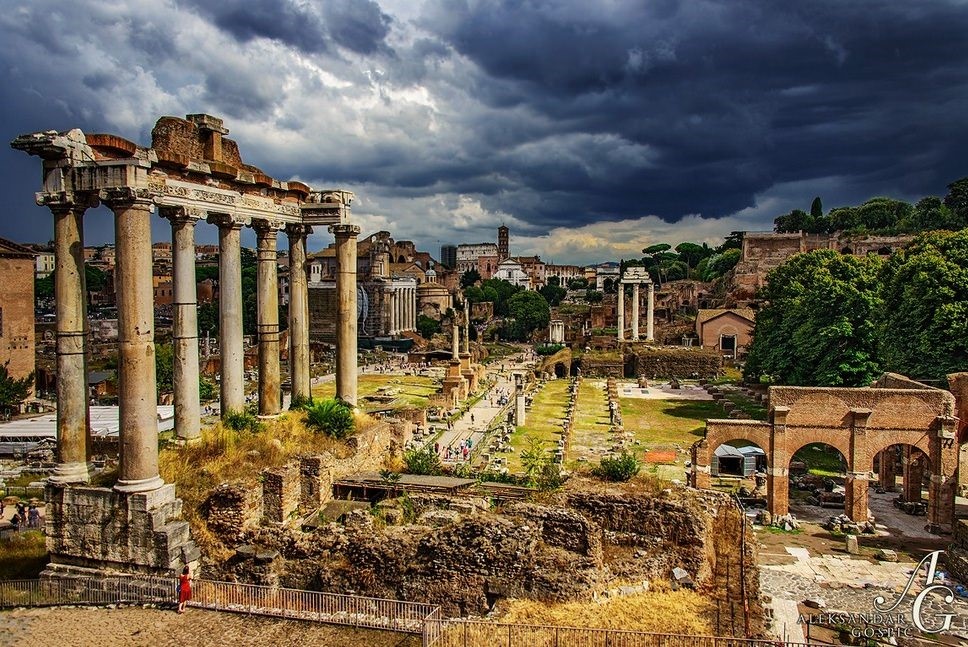
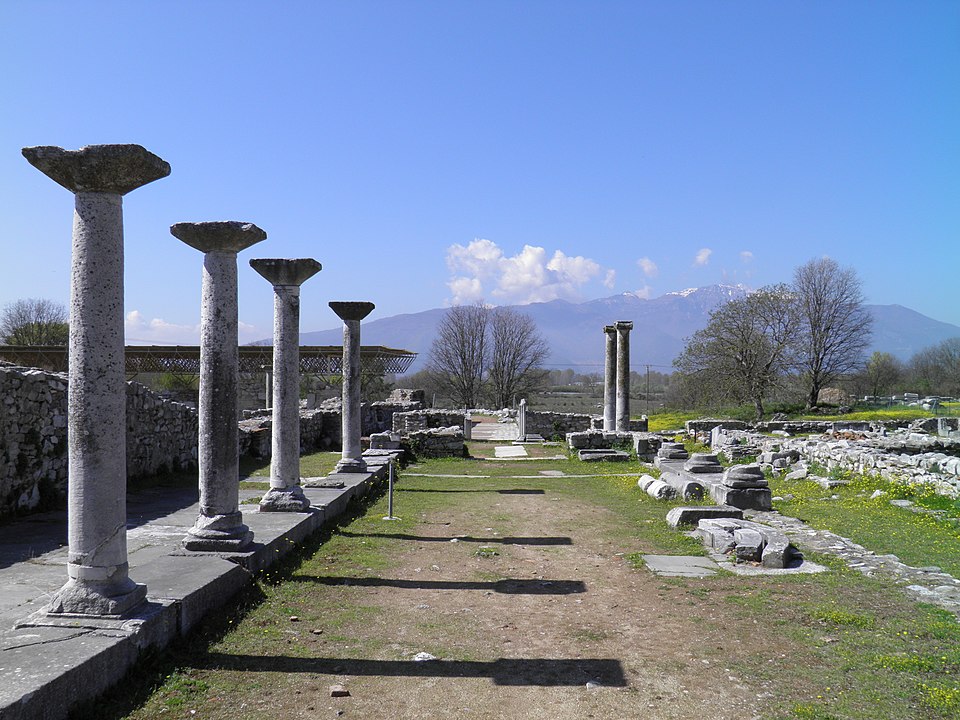
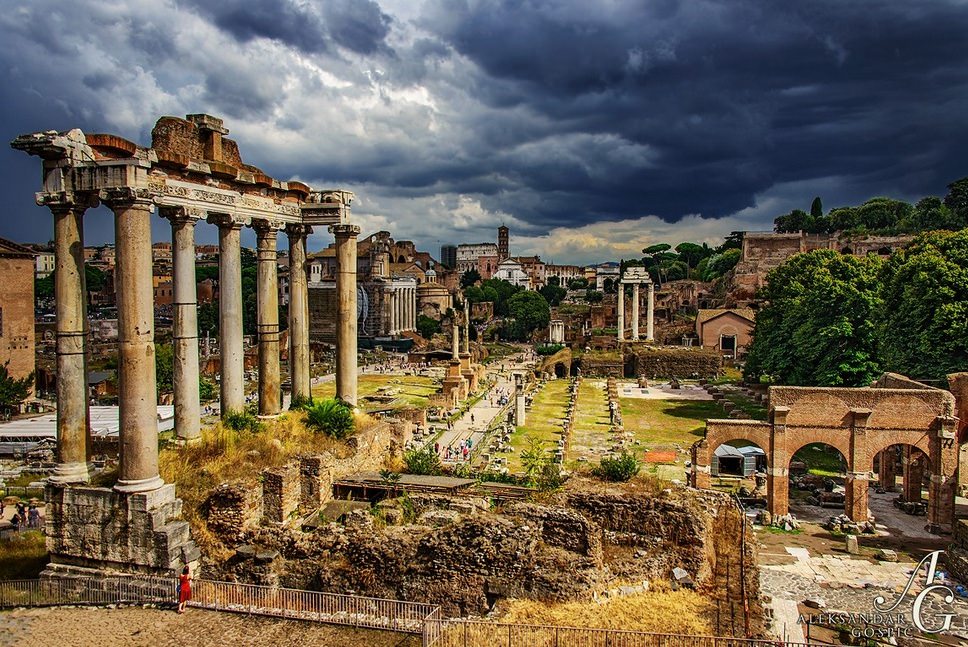
    The Roman-built forum in Philippi with its bustling traditional Greek agora resembled the forum in Rome (cover-photo remains of the Roman forum pillars shows some of the grandeur of these most-public areas of the Empires greatest cities.

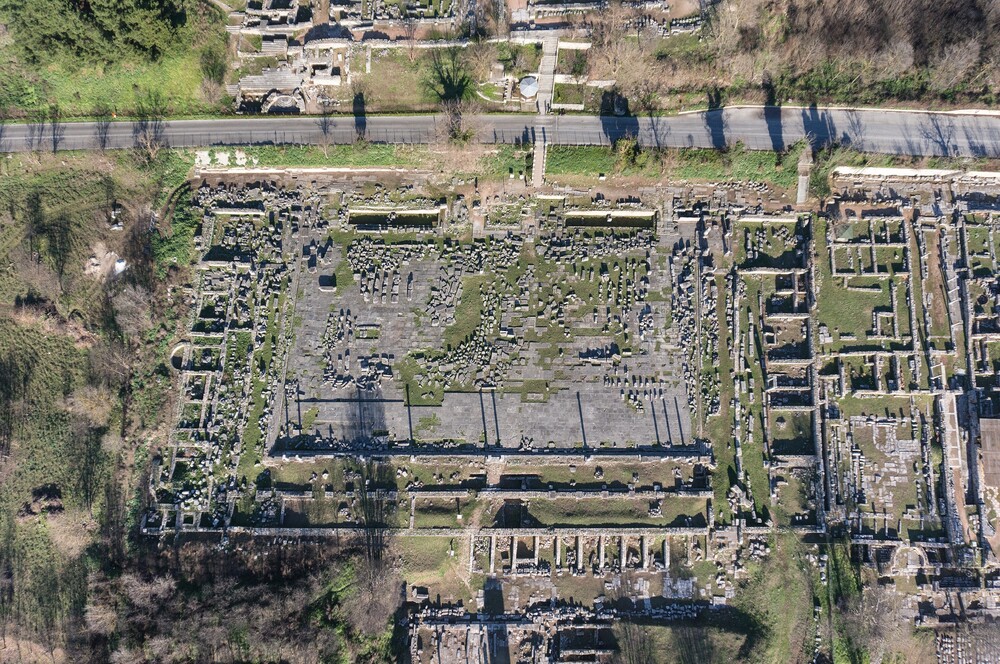
    Archaeological Site of Philippi: General view of the forum with adjacent agora marketplace
    Archaeological Site of Philippi: General view of the forum

    Similar-sized pillars in the foreground of the Philippi Forum and agora (to the R) in this aerial view of the archaeological ruins at Philippi gives us a glimpse at the size and importance of this Macedonian City-State namesake of the father of Alexander the Great – a second Rome at the head of the Aegean.


    roman forum
    Roman Forum

    Agora

    Romans call it the public square, others the marketplace — Greeks called it the agora.

    From their own ancient traditions people worshiped there, bought and sold goods, conducted most public aspects of government over the governed and frequently gathered at the agora for general celebrations of social life preceding both religious and private parties.

    Everybody’s there for business seven days a week. The agora was where the paths of the powerful crossed publically with every-day classes of the city-state and also slaves employed to the gain of all.

    The Hellenist agora suited Rome as a place where Roman citizens could mingle with their colonists in Macedonia or any other defeated foe. Roman government was conducted formally from an adjacent forum and pavement for and gathering of citizens, people or slaves before the Prefect.

    You may not agree with my overview of the agora condensing some 500 years back to ancient Greece up to the era of Rome’s first century dominance of all of Europe, but as always check my sources for more details. More later.


    Philippi was ROME in western Macedonia.

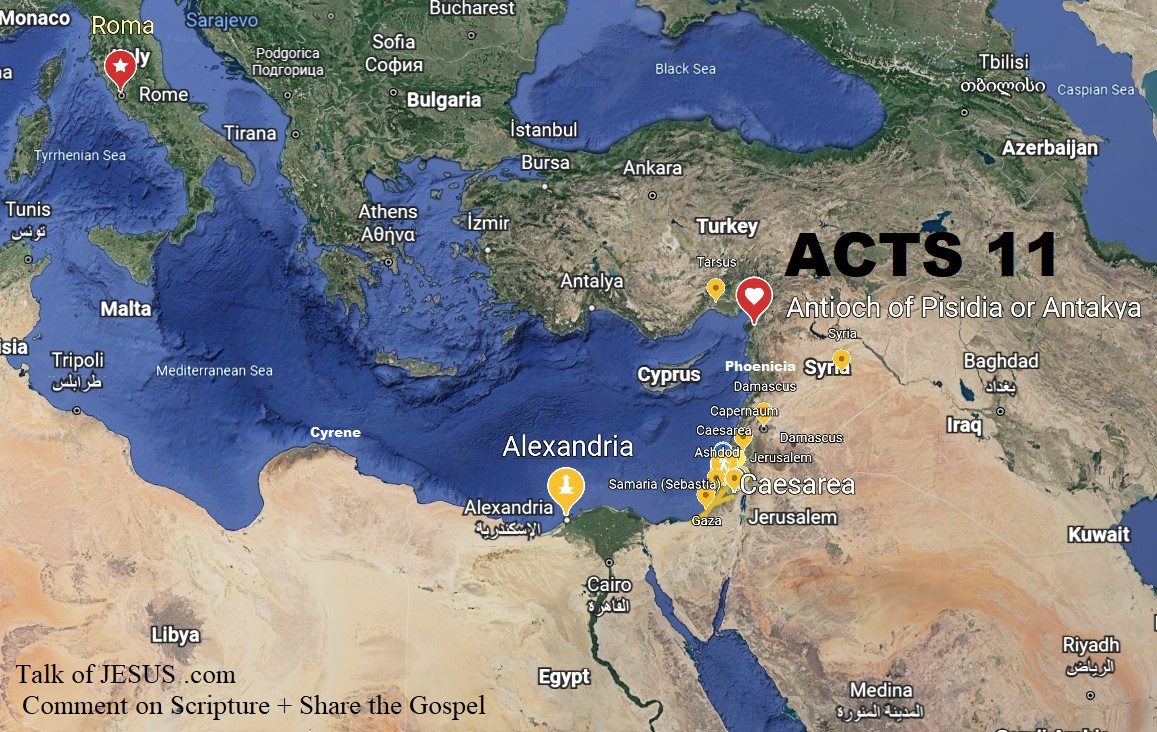
    Antioch - Crossroads of Christianity and map of 1sr c. AD Roman Empire
    .. and the disciples were first called Christians in Antioch. Acts of the Apostles 11:25b NASB

    We began an introduction to Philippi last time which partially answered what Alexander the Great has to do with a second missionary journey of the apostle Paulos and Luke’s account of the ACTS of this 1st c. A.D. Roman citizen in a city of Greece.

    a few additional thoughts that may change your mind about the significance of Philippi
    • Greece is NOT a country
    • City-States of ancient Macedon & Greece were separate from each other
    • Democracy gave way to Empire
    • Philippi was named for Emperor Alexander’s father
    • Alexander died in the same Susa of Persia and Babylon where the Jews had been taken previously
    • Augustus Caesar (mentioned in Luke’s Gospel) is the same Octavian who had defeated Brutus and Cassius in the Battle of Philippi
    • Roman roads connected the land all across Eurasia
    • Philippi as a port between Rome and Alexandria was strategically important SO..

    Rome had rebuilt Philippi as a ROMAN city.

    Think of Philippi as a 1st c. New YORK City to Roman colonies of a ‘new world’ similar to expansion seventeen centuries later when a current Roman conquest to the west Britannia would rule the seas.

    Enter Paul and Silas apostles sent into all the world from a gateway Roman city of Philippi.


    Acts of Paul and Silas

    “These men are servants of the Most High God, who proclaim to you the way of salvation.”

    v. 17b – a slave girl who had a spirit of divination

    “I command you in the name of Jesus Christ to come out of her.”

    v. 18b – Paul, to the spirit in her

    And it came out that very hour.


    We don’t know how many more days have passed in Philippi, but Luke records that the young slave girl no longer has any demonic power to profit her owners. And of course these influential men want justice against any men who have impeded their profit by evil means.

    19 But when her owners saw that their hope of gain was gone, they seized Paul and Silas and dragged them into the marketplace before the rulers.

    More about Philippi’s Forum & Agora

    We need to see the Philippi of A.D. 50 as Roman citizens and Hellenist merchants of this important city would have viewed this scene of commerce interrupted by these out-of-towners.

    forum adjacent to agora of Philippi ruins
    ruins of Forum in Philippi adjacent to agora

    agora, in ancient Greek cities, an open space that served as a meeting ground for various activities of the citizens.

    Agora – source Britannica, The Editors of Encyclopaedia. “agora”. Encyclopedia Britannica, 15 Dec. 2017, https://www.britannica.com/topic/agora. Accessed 13 March 2023.

    • surrounded by public buildings and by temples. Colonnades, sometimes containing shops, or stoae, often enclosed the space, and statues, altars, trees, and fountains adorned it.
    • the agora influenced the development of the Roman forum and was, in turn, influenced by it. The forum, however, was conceived in a more rigid manner than the agora and became a specific, regular, open area surrounded by planned architecture.
    • meetings devoted to ostracism were still held in the agora, where the main tribunal remained.
    • A distinction was maintained between commercial and ceremonial agoras
    • Men accused of murder and other crimes were forbidden to enter it before their trials. Free men went there not only to transact business and to act as jurors but also to talk and idle

    Democracy of the Marketplace

    20 And when they had brought them to the magistrates, they said,

    “These men are Jews, and they are disturbing our city. 21 They advocate customs that are not lawful for us as Romans to accept or practice.” 

    22 The crowd joined in attacking them,

    and the magistrates tore the garments off them and gave orders to beat them with rods.

    23 And when they had inflicted many blows upon them, they threw them into prison, ordering the jailer to keep them safely.

    24 Having received this order, he put them into the inner prison and fastened their feet in the stocks.


    ACTS of Paul and Silas — To Be Continued…

  • A Python of Prophesy Stalking Paul in Philippi

    A Python of Prophesy Stalking Paul in Philippi

    Who is this soothsaying python of Philippi?

    Luke mentions this woman in Acts 16 who follows Paul, Silas and Timothy around as they frequent a place of prayer down by the river.

    She may not have had such a nickname but her presence foretells the inevitable upcoming skirmishes between good and evil in Europe.

    Acts of the apostles 16:16

    As we were going to the place of prayer, we were met by a slave girl who had a spirit of divination and brought her owners much gain by fortune-telling. 17 She followed Paul and us, crying out,

    “These men are servants of the Most High God, who proclaim to you the way of salvation.”

    She’s right!


    Who is this girl?

    Why is a slave girl following these apostles sent out by the Holy Spirit of the Most High God?

    Luke continues by telling the reader:

    18 And this she kept doing for many days. 

    This Philippian slave girl continually followed them back and forth between the wall of Philippi and their place of prayer down by the Krenides River near town.


    Mythical and 1st c. Greece

    Many first century cultural subtleties escape our 21st century eyes. This is especially true of 1st century Greece.

    Paul understands the people of Macedonia much more than we will.

    Luke reveals more about Paul’s challenge ahead in this first European missionary battle about to take place in Philippi between good and evil.


    Philippi is an important Roman city unlike the small mountainous towns we just left. This incident is central to events about to take place.

    This girl is a slave. In the Roman empire her role is ordinary where more than one in ten people (perhaps more than 10% in Philippi) are slaves owned by and performing their labors for someone in town.

    Roman men, their families and slaves settled here in Macedonia live their everyday lives steeped in the myths and idolatries of a Hellenist lifestyle foreign to our 21st century cultural-inclusiveness and geometrically opposed to the Lord God and Christ Jesus.

    Mysteries of a higher and spiritual plane impact men and women in unknown and partially evident ways.

    Certain messengers of darkness, seers of the divine such as this young girl, become actors of revelation in the unseen battles between good and evil. These diviners of the oracles of darkness typically shun exposure to the Very Light of The Most High God.

    pneuma python – the spirit of divination

    Luke’s account of Acts begins with the power of the HOLY SPIRIT, of course — and therein lies the battle in the heavenly places between that which is HOLY [hagios] and that which is unholy.

    πύθων – pythōn

    From Putho (the name of the region where Delphi, the seat of the famous oracle, was located) – source: BlueLetterBible.org

    Parnassos, son of the nymph Kleodora – source Wikipedia.org

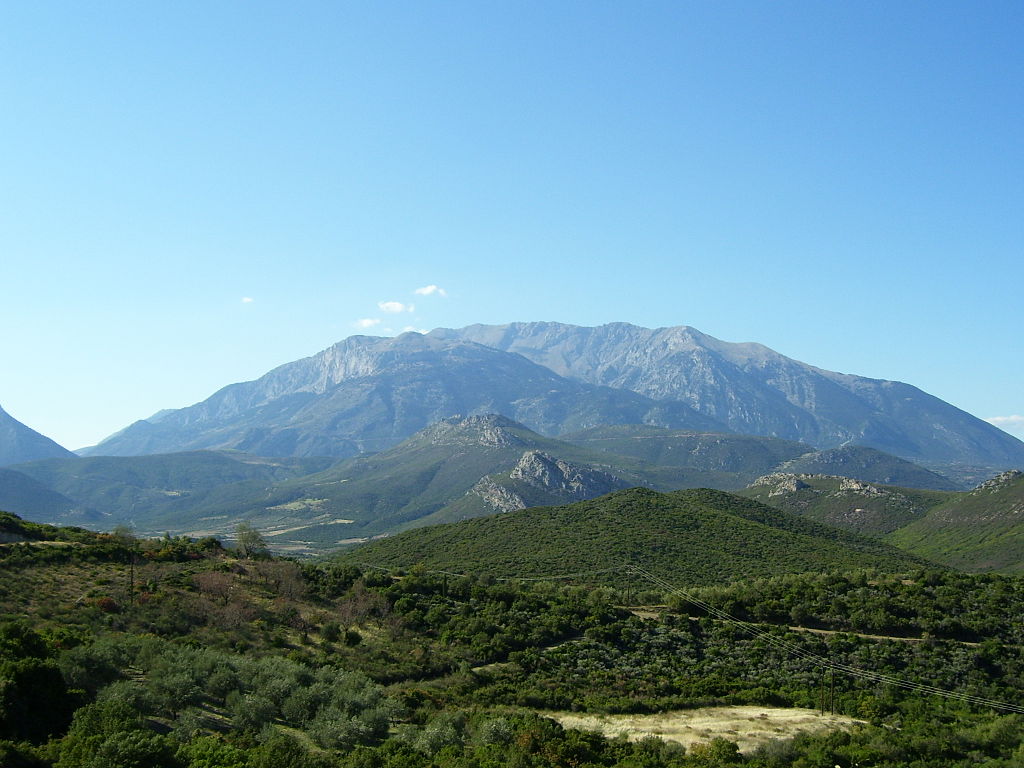
    Mount Parnassus [Python] near Corinth Greece
    oracle of the snake charmer

    Python – myth & mystery of the oracle

    DIVINATION .. a spirit by which she predicted the future

    .. by supernatural means. ..a fortune teller,

    μαντεύομαι –manteuomai from a derivative of G3105 (meaning a prophet, as supposed to rave through inspiration); to divine, i.e. utter spells (under pretense of foretelling:—by soothsaying.

    The young slave girl in Philippi is a soothsayer for her owner.

    “These men are slaves of the Most High God, who are proclaiming to you the way of salvation.”

    Acts of the apostles 16:17b Legacy Standard Bible

    Since as sons and daughters of Adam and Eve we have partaken of the tree of the knowledge of good and evil, what conclusion must we draw from the source of her magical insight?

    Paul understood her evil and super-natural source of knowledge. He may have been familiar with Greek mythology of the Oracle of Delphi (as are some of us).

    The Apostle certainly knew Scriptural instances of such knowledge, even one by his Hebrew namesake.

    The Witch at Endor

    1 Samuel 28:

    Now Samuel had died, and all Israel had mourned for him and buried him in Ramah, his own city. And Saul had put the mediums and the necromancers out of the land…

    And when Saul inquired of the Lord, the Lord did not answer him, either by dreams, or by Urim, or by prophets. Then Saul said to his servants, “Seek out for me a woman who is a medium, that I may go to her and inquire of her.” And his servants said to him, “Behold, there is a medium at En-dor.”


    Previously, on Cypress

    And Paul was more recently familiar with encountering such spiritual battles as the Apostle engaged a Jewish magician on Cypress.

    Elymas the magician, AKA Bar-Jesus

    But Saul, who was also called Paul, filled with the Holy Spirit, looked intently at him and said,

    “You son of the devil, you enemy of all righteousness, full of all deceit and villainy, will you not stop making crooked the straight paths of the Lord? And now, behold, the hand of the Lord is upon you, and you will be blind and unable to see the sun for a time.”

    Immediately mist and darkness fell upon him, and he went about seeking people to lead him by the hand..

    Acts of the Apostles 13:9-11a
    READ more about this earlier incident above.

    THESE Biblical encounters challenge the 21st century view of all mystery being explainable by science and logic. Even Christians struggle to image the higher reality of powers and principalities of the heavenly places.


    More of Greek Myths & false gods

    We will return to 1st c. Philippi shortly, but first some more background into the culture of these Roman cities in Greece.

    Oracle of Delphi

    source: ehistory.OSU.edu

    Source: Britannica.com

    a python at a river's edge

    The world famous Oracle of Delphi played an influential role in ancient history. For fourteen centuries it helped determine the course of empires. The prophesying was abolished in the 4th century as it conflicted with Christian beliefs that were at that time being embraced by Rome.

    Preston Chesser, Professor Dept of History, The Ohio State University

    A booming industry grew up around the Oracle. Temples were built and rebuilt, priests were trained, rituals evolved and sacrifices were performed. Priests interpreted the incoherent utterances of the Pythia. Presents were brought to both placate the deity and in the hope of influencing a positive prophesy. The Delphic temple itself became one of the largest “banks” in the world. Delphi became a center for banking and commerce.


    oracle, (Latin oraculum from orare, “to pray,” or “to speak”) – source Britannica.com

    DO NOT MISS THIS! Paul, Silas, Timothy and others have gone down to the river to pray. 
    So has the young slave girl who speaks revelation of the identity of these apostles of God. 

    The most famous ancient oracle was that of Apollo at Delphi, located on the slopes of Mt. Parnassus above the Corinthian Gulf. Traditionally, the oracle first belonged to Mother Earth (Gaea) but later was either given to or stolen by Apollo.

    Oracles delivered through incubation were believed to come from chthonian (underworld) powers..


    A cultural ACT against idolatry.

    18 And this she kept doing for many days.

    Paul, having become greatly annoyed, turned and said to the spirit, 

    “I command you in the name of Jesus Christ to come out of her.”
    And it came out that very hour.

    Acts of the Apostle Paul [16:18b ESV]

    SO WHAT HAPPENS when a soul is freed from an evil spirit who has given mysterious knowledge by the powers hidden in the recesses of life’s light?

    The slave girl no longer posses the power that has possessed her and therefore can no longer give oracles of value to her owner.

    You don't believe in such power beyond your 21st century scientifically enlightened knowledge, do you? 
    
    I have encountered such evil attached to a place or person. 
    Perhaps you have as well, yet were deceived by angels (messengers) of darkness in the unseen places or even the pulpit of false teaching.
    
    Jesus and the Apostles warned the Church against such evil. Paul acted against it by the Power of the Holy Spirit.

    19 But when her owners saw that their hope of gain was gone, they seized Paul and Silas and dragged them into the marketplace before the rulers. 


    ACTS of the apostles Paul and Silas — To Be Continued — in the town square of Philippi…