Category: Acts for a 21st c. Church

Acts Apostolos - Acts of the Apostles - the chronicles of Christ's Apostles - a history of Christ's Church including early leaders like Stephen, Philip the Evangelist, Paul, Barnabas and many others
Acts of the Apostles + a History of Christ’s Church

Acts of the Apostles 1-28


Acts of the Apostles:
+ The first century Church SHARED Christ while suffering severe persecution.
+ Luke records a historic account of the Church which gives 21c Christians a context to SHARE the Gospel of Jesus Christ with others.

Read more about the Early Church & add your COMMENT on Scripture.

ACT now.

+ SHARE the Gospel history witnessed in the CURRENT chronological SERIES from ACTS of the APOSTLES.

  • Julian and Paul: Passengers on a grain-laden slow-sailing ship

    Julian and Paul: Passengers on a grain-laden slow-sailing ship

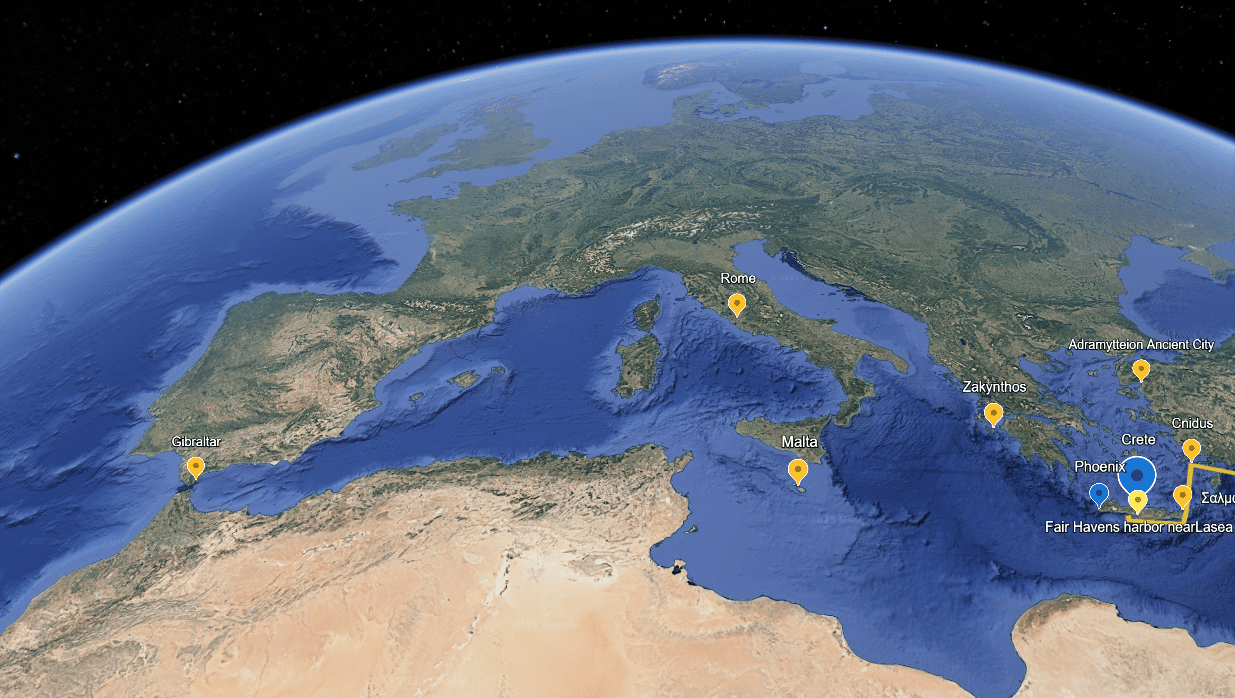
    When we last left Paul beginning his long journey to Rome, the Apostle had boarded a small ship of Adramyttian sailing from Caesarea along the coast north of Cypress to Myra in Lycia.

    There the centurion found an Alexandrian ship sailing for Italy, and he put us aboard it.

    Acts of the Apostles 27:6 LSB

    Now the Roman Centurion Julian boards a larger Alexandrian ship with Paul and other passengers in the Lycian port setting sail for Crete and the open Mediterranean beyond.

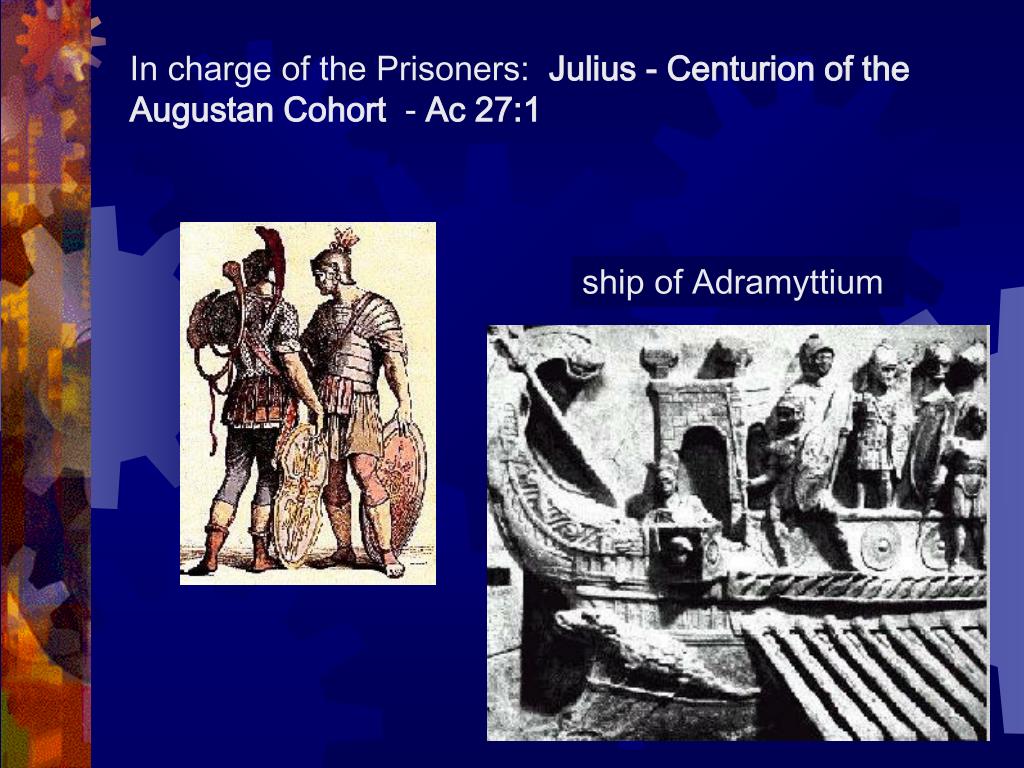
    Acts 27:1 prisoners of Roman Centurion Julius include the Apostle Paul

    Roman Sailing Ships

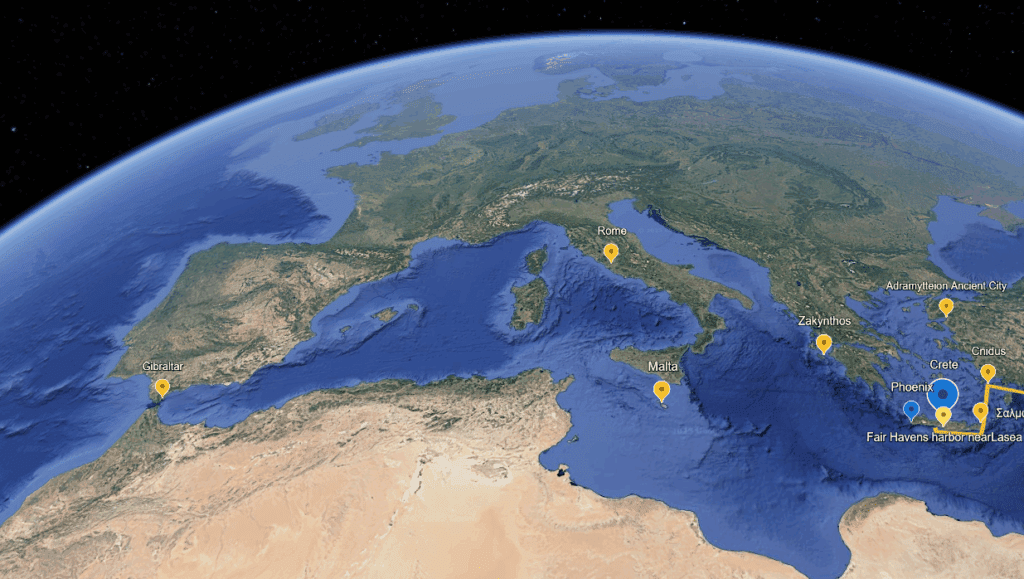
    Thus far, the Centurion Julian has sailed a little less than 500 nautical miles away from Judea with many more miles to sail across the Mediterranean. The next ship is a cargo ship designed to transport grain long distances to Rome.

    Rome, with a population of about a million, required about 800 shiploads of grain each year.

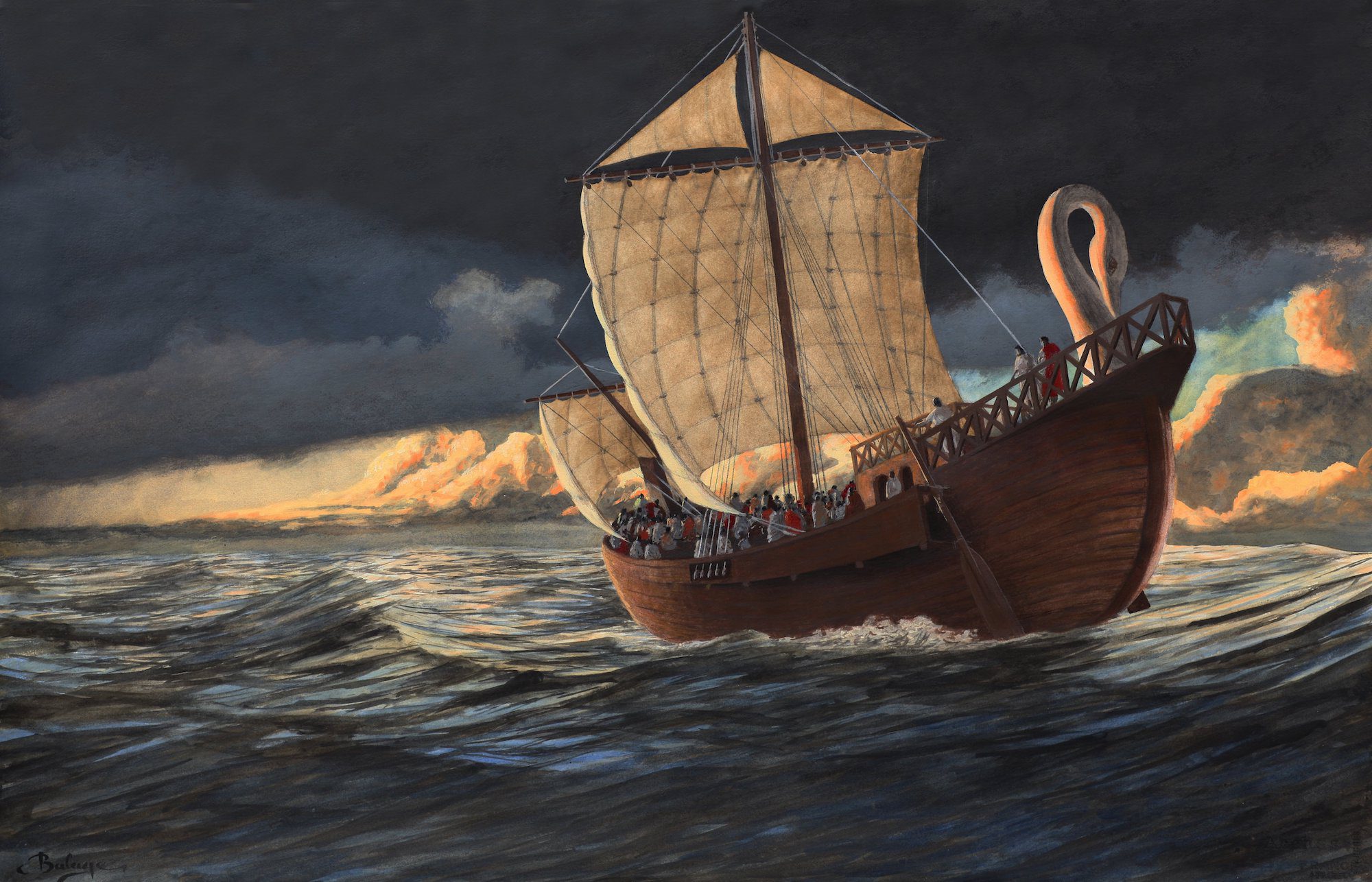
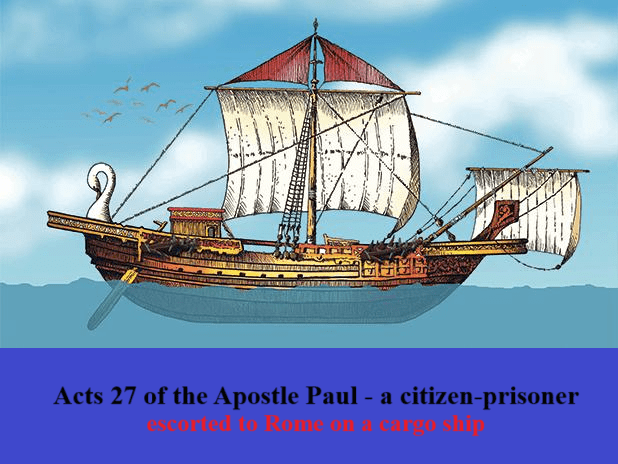
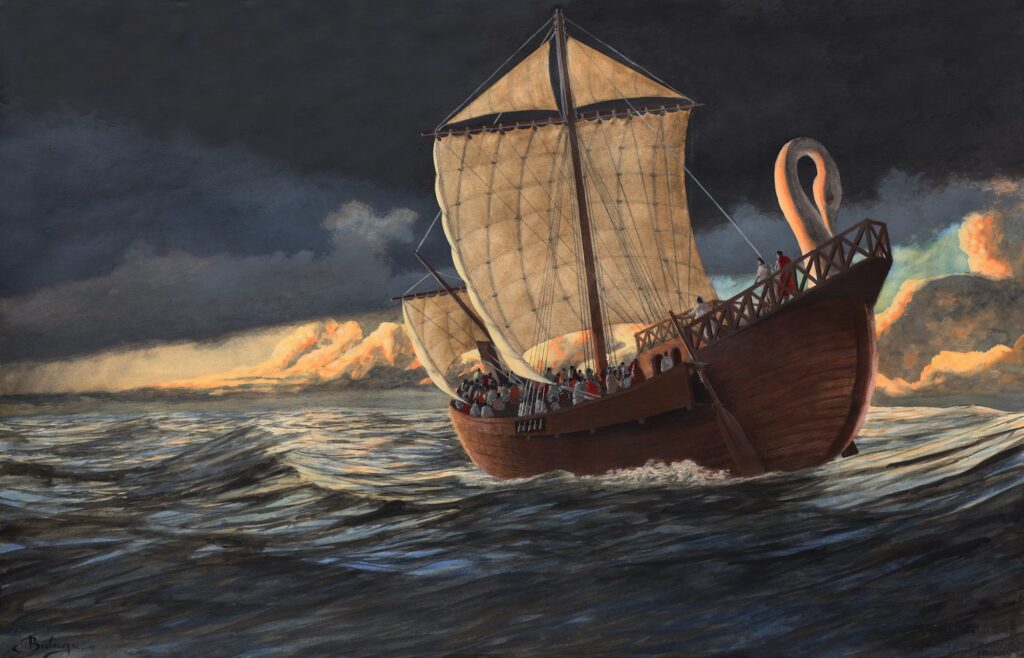
    The Romans built and operated a variety of cargo ships (naves onerariae, literally “ships of burden”). A typical Roman merchant vessel was a broad, sturdy sailing ship with one to three masts carrying large square sails. These ships relied almost entirely on wind power; unlike war galleys, they had no banks of oars (at most a few oars or sweeps for maneuvering in harbors).

    If the wind died, crews might resort to warping – rowing a small boat out with an anchor and then hauling the ship forward by capstan – or else wait for a tow.

    Ancient history sites .com Roman Cargo Ships

    Acts of the Apostles 27:

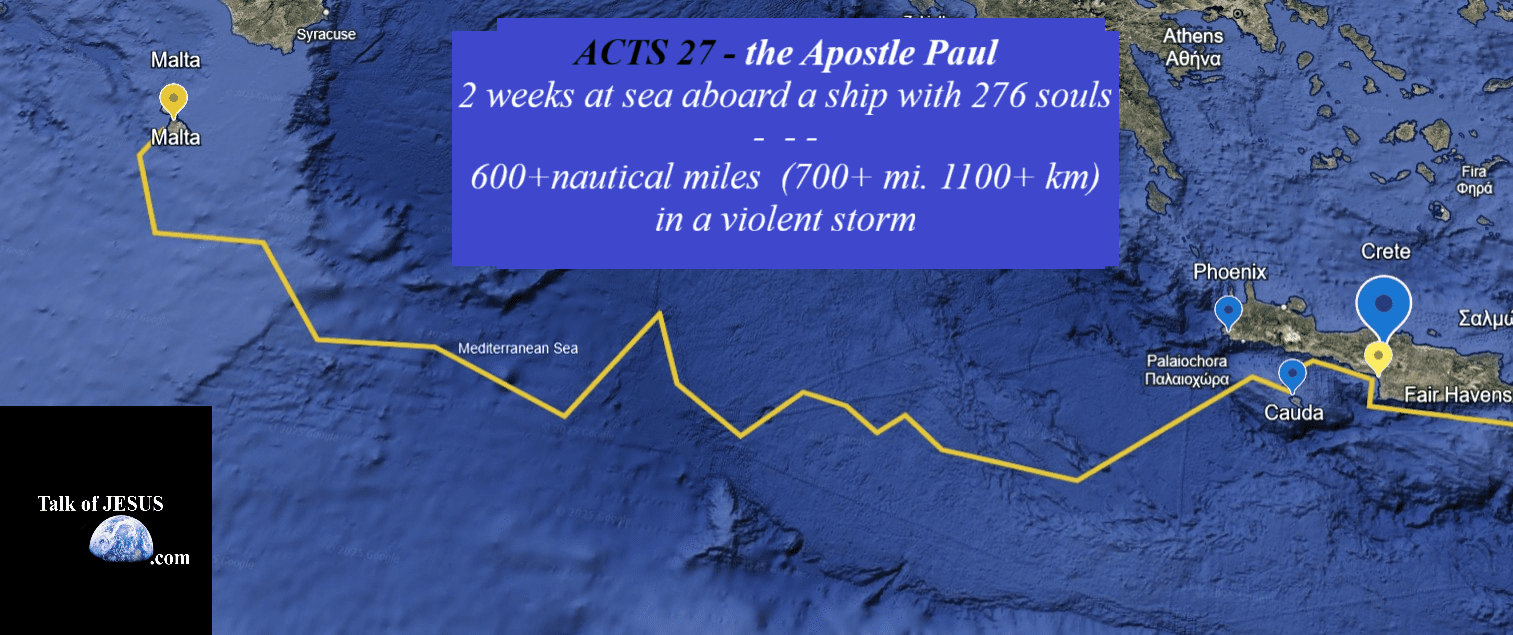
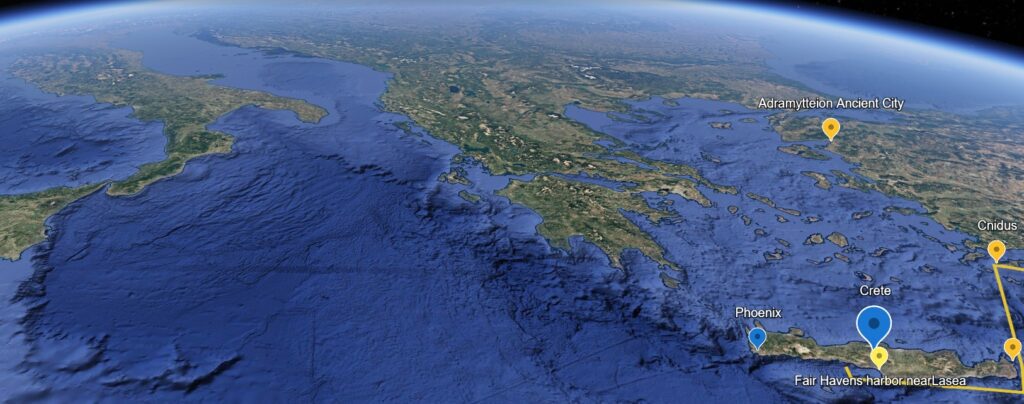
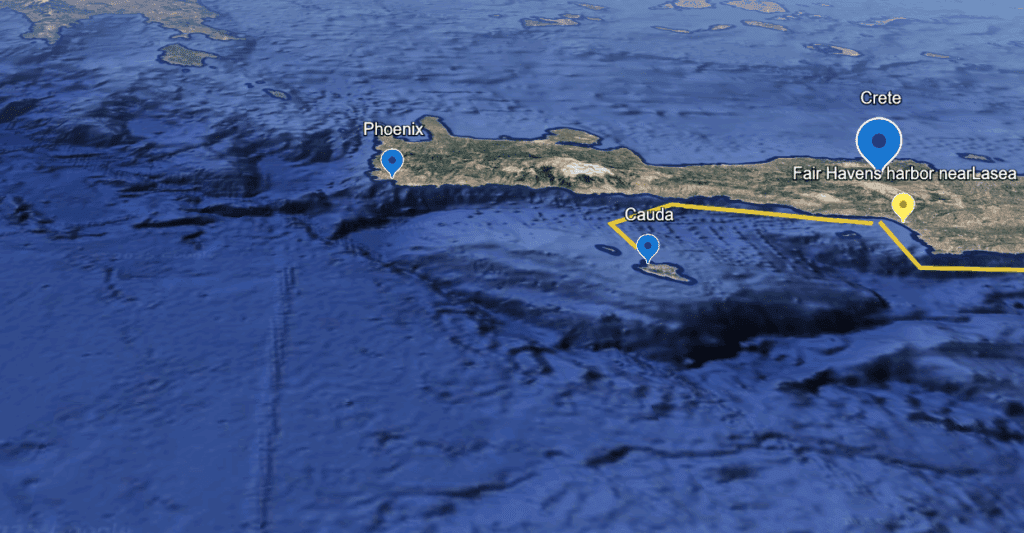
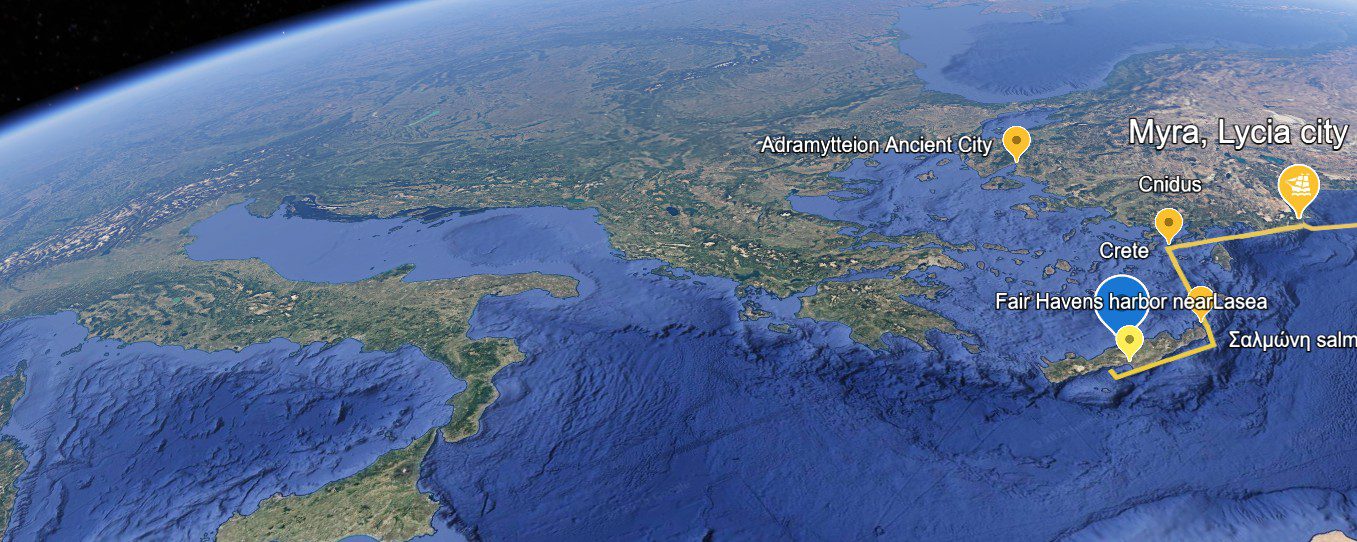
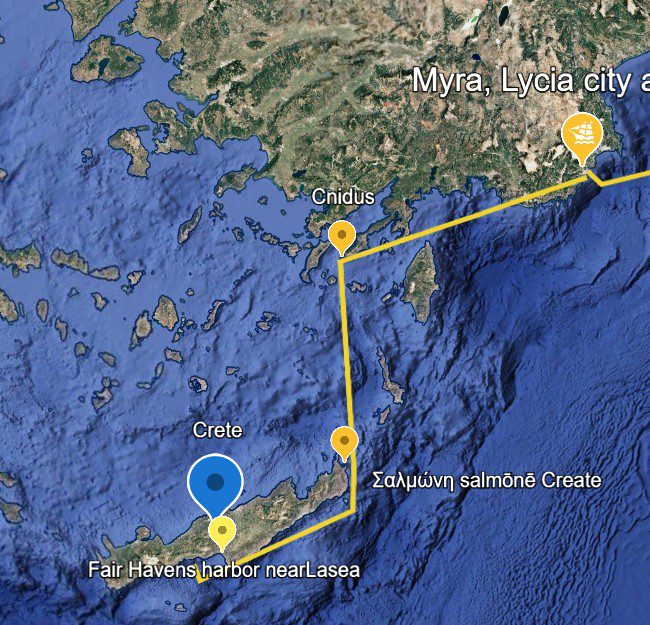
    And when we had sailed slowly for a good many days, and with difficulty had arrived off Cnidus, since the wind did not permit us to go farther, we sailed under the shelter of Crete, off Salmone; and with difficulty, we sailed past it and came to a place called Fair Havens, near which was the city of Lasea.

    Acts of the Apostles 27:7-8 LSB

    Paul notes the headings of this ship loaded with grain still quite distant from Rome. Thus far they had sailed a mere 350 nautical miles in windless waters .

    More about Roman ships

    In sum, the Roman Empire,, had no interest in vertical integration of the supply chain .. its principal interest was the incorporation of private shipping activities deemed useful to the public good into the mechanisms of control exercised by the state.

    By contracting out the transport of grain, the Roman Empire also ensured quality service by experienced seafaring professionals, and an avoidance of the costly maintenance, staffing costs and continual provision of suitable vessels – ancient ships, owing to their ‘shell-first’ construction were presumably more expensive to build than later ‘frame-first’ vessels.

    source: Ancient Ports Antiques .com THE ROMAN EMPIRE AND THE GRAIN FLEETS:


    Waiting for fair winds

    And when considerable time had passed and the voyage was now dangerous, since even the Day of Atonement Fast [late September or October] was already over, Paul began to advise them..

    Acts of the Apostles 27:9 LSB

    What’s going on here?

    Julian, a Roman centurion in charge of Paul and any additional prisoners, is an ARMY man.

    Roman grain ship

    The Roman Army contracts professional sailors to man and navigate their ships (which could be commandeered, if required, for transport of Roman troops). These professional sailors are NOT in any sense like a unified Roman Navy.

    The Centurian Julius has had plenty of time to get to know Paul – a Roman citizen.

    Aristarchus (a Macedonian likely of the ruling class of Thessalonica) also accompanies this imfamous Apostle as he had recently on Paul’s third missionary jouney.

    Julius had actually allowed them to briefly meet with other Christians at an earlier stop in Sidon.

    In a sense, Julius is in charge, but cannot take full responsibility for this grain-hauling merchant ship.

    His citizen prisoner Paul, like the grain, is manifested for Caesar in Rome. An entrepreneurial owner of this or any cargo ship would have much at stake, consequently commissioning himself (or a trusted family member) as captain of his ships.


    Paul addresses the leaders of his voyage

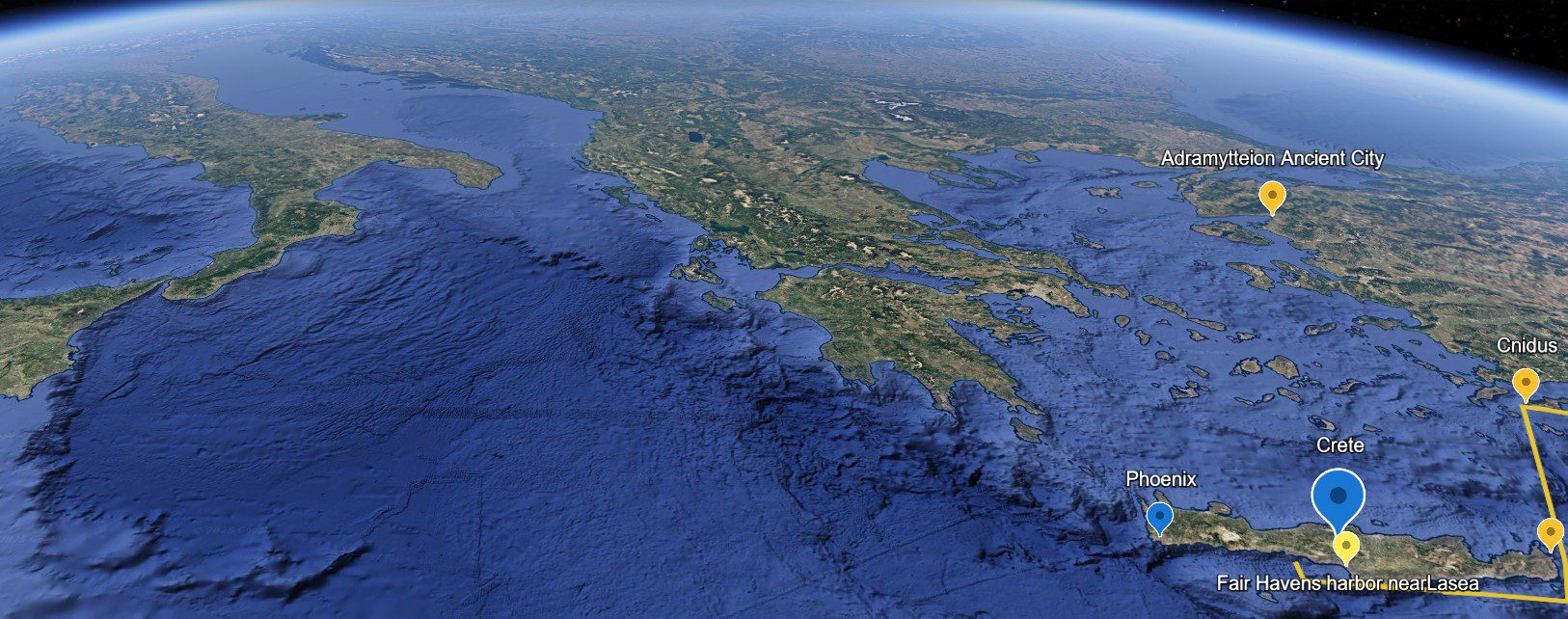
    But the centurion {Julius} was being more persuaded by the pilot and the captain of the ship than by what was being said by Paul. And because the harbor [Fair Havens] was not suitable for wintering, the majority reached a decision to set sail from there, if somehow they could arrive at Phoenix, a harbor of Crete facing southwest and northwest, to spend the winter there.

    Acts of the Apostles 27:11-12 LSB

    south shore of Crete between Fair Havens and Phoenix

    When a gentle south wind began to blow, they saw their opportunity; so they weighed anchor and sailed along the shore of Crete.

    Acts of the Apostles 27:13 NIV


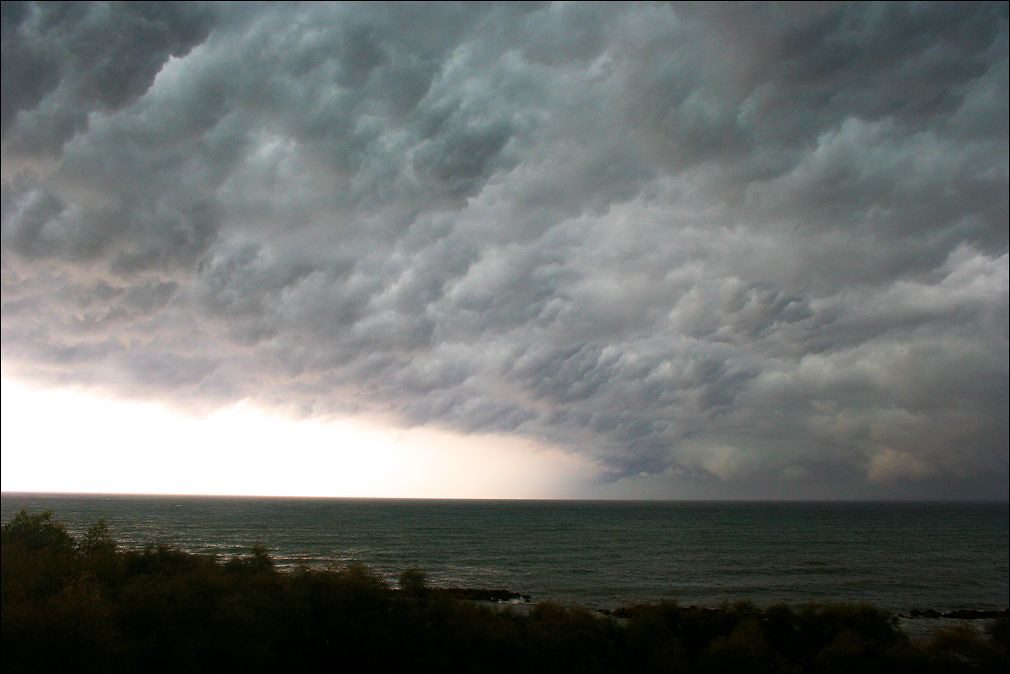
    Mediterranean Sea near Phoenix Cypress

    Voyage of the Apostle Paul to Rome — To be continued…

    Talk of JESUS . com

    Comment on Scripture – Share the Gospel

  • Transporting Paul – Citizen Prisoner of Caesar- Acts 27

    Transporting Paul – Citizen Prisoner of Caesar- Acts 27

    The Apostle Paul, a Jew among Jews commissioned by Christ to go into all the world of the gentiles — after taking the Gospel to the Greeks since A.D. 47 — is now a prisoner sent to Rome.

    In the year of our Lord 59:

    Roman Prisoners (Chattel of Caesar)

    Make no mistake about it: ROME rules the world! Their ships have captured it since the days of Julius Caesar and although Judea claims a King, Jerusalem is no exception to Rome’s rule.

    Paul – a citizen under Roman rule

    In Paul’s lifetime thus far Caesar Augustus had been Emperor when he was a boy in Cilicia;Tiberius during his years studying under Gamaliel in Jerusalem and when Jesus was crucified and up until the day Christ appeared to Saul near Damascus.

    Paul had begun preaching the Gospel to the gentiles near the end of the reign of Caligua, who had declared himself a god in A.D. 37.

    The Emperor Claudius had made Judea a province of Rome after the death of Herod Agrippa I in A.D. 44, ruling the empire during many martyrdoms of several saints and some Apostle’s during the time of Paul’s missionary journeys.

    But on taking leave of them he said, “I will return to you if God wills,” and he set sail from Ephesus. Conclusion of the second missionary journey of Paul from Acts 18
    and he set sail from Ephesus.

    In the civil administration, many measures demonstrate Claudius’s enlightened policy. He improved in detail the judicial system, and, in his dealings with the provinces, he favoured a moderate extension of Roman citizenship by individual and collective grants..

    .. during a period of troubles Claudius expelled the Jews from Rome for a short time; Christians may have been involved. Elsewhere he confirmed existing Jewish rights and privileges, and in Alexandria he tried to protect the Jews without provoking Egyptian nationalism.

    Source: Britannica

    Claudius had ruled Rome and the world up until just five years ago, but Paul’s appeal is to a new Caesar.

    Roman Coin with profile of Nero Caesar Augustus

    Nero Claudius Caesar Augustus Germanicus

    Up to the year 59, Nero’s biographers cite only acts of generosity and clemency on his account. His government forbade contests in the circus involving bloodshed, banned capital punishment, reduced taxes, and accorded permission to slaves to bring civil complaints against unjust masters.

    Source: Britannica

    The Apostle Paul is about 54 years old now. He is a Roman citizen of Tarsus, Cilicia who would have been set free by the Roman Governor (with approval of the Judean King) had the Apostle not earlier appealed to Caesar — the 22 year old Nero now ruling Rome under his mother’s tutelage.

    Acts 27:

    Now when it was decided that we would sail for Italy, they proceeded to deliver Paul and some other prisoners to a centurion of the Augustan cohort named Julius.

    And getting aboard an Adramyttian ship, which was about to sail to the regions along the coast of Asia, we set sail accompanied by Aristarchus, a Macedonian of Thessalonica.

    Acts 27:1 prisoners of Roman Centurion Julius include the Apostle Paul
    Doctor Luke, the historian recording the Acts of the Apostles, tells us a few details of Paul's journey to Rome as a prisoner. 

    We will proceed on this 2200 mile [3500 km] voyage taking into account the perspective of Iulius [Julius], Paul’s Roman Centurio Augustus’ responsible for all prisoners of Caesar Nero.


    The Writ of Porcius Festus

    Before sailing to Rome, the Centurion representative of Caesar —Julius would have been given an official writ of Paul’s court proceedings and judgment.

    Porteus Festus may have given written instructions and verbal administrative recommendations as the current Governor of Judea transferring this prisoner Paul into the direct jurisdiction of Nero.

    Julius probably would not have known that Paul had been rescued from the Jews two years ago by Judea’s former governor. Antonius Felix, you may remember, had left Paul in prison in Caesarea for two years after another Centurion had rescued the Apostle from an assassination plot of the Jews.

    Paul is a Jew (as one might expect of a resident of Judea). But the Governor would want this Centurion Julius to know that his prisoner being sent to Nero is a Roman citizen acquited of the Jewish charges.

    BUT, Paul had appealed to Caesar and could not be released until the Emperor agreed to hear or dismiss Paul’s case.


    Roman roads and shipping routes

    The Centurion Julius would have to plan a route to Rome to deliver his cargo — Paul, a prisoner and Roman citizen. Caesarea Maritime is a port and administrative center of Rome’s eastern army. Like any port ships arrive and depart with cargo and supplies for Rome’s army. Some smaller ships sailed from port to port on what you might call ‘the milk run’ delivering essentials for further transport inland along the extensive Roman roads.

    Julius gained passage on such a ship that sailed along the coast, first with a stop in nearby Sidon, with a terminus destination of Myra.

    Stop One of a long Voyage

    Voyage of Paul's first ship as a prisoner of Rome
    486 Nautical Miles [~ 900 KM or 660 Miles]

    .. aboard an Adramyttian ship, which was about to sail to the regions along the coast of Asia, we set sail..

    The next day we put in at Sidon,

    and Julius treated Paul with consideration and allowed him to go to his friends and receive care.

    Cypress cities Acts 13

    And from there we set sail [leeward] and sailed under the shelter of Cyprus [to the south of us] because the winds were against us.

    And when we had sailed through the sea along the coast of Cilicia and Pamphylia, we landed at Myra in Lycia.


    Finding a bigger ship in Myra

    The Centurion Julius, probably knowing not only the Mediterranean ports and Roman administrators but also which ships sail further to Rome, will book passage on a larger ship capable of sailing into deeper waters to continue their long voyage.

    To be continued... 

  • Christ – Light to the People and Ethnos

    Christ – Light to the People and Ethnos

    The people walking in darkness have seen a great light;
    on those living in the land of the shadow of death,
    a light has dawned.

    Isaiah 9:2 BSB

    Paul Convicted by the Light of Christ

    I had thought to skip past this story of Paul's too-familiar retelling of the Apostle's conversion by Christ (since Luke has already repeated it with frequency in Acts). 

    But just as Paul now witnesses with intensensity to a new audience, so shall I point to the Light of Christ JESUS that changed his life.

    Who are you, Lord?

    ănî yᵊhôšûaʿ

    egō eimi iēsous


    In Acts 25 Paul is brought before the Governor Festus with Herod Agrippa II and his Herodian sister Bernice with great pomp (even though the Apostle has already appealed to Caesar

    Acts of the Apostles 26:

    Wherefore, O King Agrippa, I was not disobedient to the heavenly vision, but declared first to those at Damascus, then at Jerusalem and throughout all the country of Judea, and also to the Gentiles, that they should repent and turn to God and perform deeds worthy of their repentance.

    Acts of the Apostles 26:19-20 RSV


    The Apostle witnesses the Gospel in his own defence before Agrippa the King and his Herodian sister, as well as the Roman Governor Porcius Festus for a second time.

    šā’ûl apangellō [kept declaring]

    the heavenly vision,

    • to those at Damascus,
    • then at Jerusalem
    • and throughout Judea,
    • and also to the Gentiles

    For this reason the Jews seized me in the temple and tried to kill me.

    To this day I have had the help that comes from God,

    and so I stand here testifying both to small and great,

    saying nothing but what the prophets and Moses said would come to pass:

    Acts 26:22 RSV

    Paul then quotes Scripture - the Old Testment Scriptures

    that the Christ must suffer

    And I will pour upon the house of David, and upon the inhabitants of Jerusalem, the spirit of grace and of supplications: and they shall look upon me whom they have pierced, and they shall mourn for him, as one mourneth for his only son, and shall be in bitterness for him, as one that is in bitterness for his firstborn.

    Zechariah 12:10 KJV

    Zechariah 1:7 Awake O sword against my shepherd

    the first to rise from the dead,

    Easter or Resurrection Sunday is the day the tomb of Jesus is found empty and when the risen Messiah appears risen after His crucifixion on a Corss

    my flesh also shall rest in hope.

    For thou wilt not leave my soul in hell;

    neither wilt thou suffer thine Holy One to see corruption.

    Psalm 16:9b-10 KJV

    Light to the People (of God – the Jews)

    The Greeks have no Messiah — nor the Romans — nor did the Persians, the Babylonians or the Egyptians.

    ONLY the JEWS. — Only the Jews are the PEOPLE of YHWH — the chosen PEOPLE of God.

    When Paul points to the ‘people,’ the Apostle means the Jewish people, like Agrippa, Bernice and many other Herodian guests and officials hearing his argument.

    The Christian Standard Version makes this point clearly:

    “that the Messiah [christos] would suffer, and that, as the first to rise from the dead,

    he would proclaim light to our people

    and to the Gentiles [ethnos].”

    Acts 26:23

    JESUS is the MESSIAH or Christ of the JEWS!

    Yet the Apostle to the ethnos, Saul (from the Hebrew) or Paul makes clear what the risen CHRIST has done ALSO for the gentiles.

    and to the Gentiles.”

    To THIS the Gentile Governor reacts!

    Now remember that in addition to what the Governor knows from his predecessor Felix, Festus had already heard Paul's witness at length. 

    Now as he thus made his defense, Festus said with a loud voice,

    “Paul, you are beside yourself! Much learning is driving you mad!”

    “I am not mad, most noble Festus, but speak the words of truth and reason.

    Now Paul's appeal is to Herod Agrippa, Bernice and the Jews in his hearing.

    For the king, before whom I also speak freely, knows these things;

    for I am convinced that none of these things escapes his attention, since this thing was not done in a corner.

    Acts 24:26

    The Jewish King responds

    The Apostle defending the appearance of the risen Messiah of the Jews most certainly turns his own focus to the Herodian king claiming leadership of God’s chosen people.

    “King Agrippa,

    do you believe the prophets?

    I know that you do believe.”

    Again, certainly Paul turns to Herod Agrippa II while the entire room also looks to the Jewish king for his answer. 
    The NIV perhaps catches the tone of Agrippa's meaning more clearly than the NKJV

    Then Agrippa said to Paul, “Do you think that in such a short time you can persuade me to be a Christian?”

    Acts 26:28 NIV

    Herod Agrippa is on the spot. Some of the Jews hearing Paul may be convinced that Jesus appeared to the Apostle. But most of Agrippa’s subjects will not have ears to hear even the Prophets.

    The Light of Christ

    Why has Luke recorded this third trial of Paul in Caesarea reiterating the Apostle’s same witness of the risen Christ Jesus?

    This is Paul’s last appeal to the Jews.

    The Apostle witnesses not only his own conversion and the evidence of the risen Messiah Jesus, but supports his new Gospel with the evidence of Scripture.

    the Prophesy of Isaiah [NKJV]

    Prophet to Judah 740-681 BC   

    Woe to those who call evil good, and good evil;
    Who put darkness for light, and light for darkness;

    Isaiah 5:20a

    The people who walked in darkness
    Have seen a great light;
    Those who dwelt in the land of the shadow of death,
    Upon them a light has shined.

    Isaiah 9:2

    “I, the LORD, have called You in righteousness,
    And will hold Your hand;
    I will keep You and give You as a covenant to the people,
    As a light to the Gentiles,

    Isaiah 42:6

    Indeed He says,
    ‘It is too small a thing that You should be My Servant

    To raise up the tribes of Jacob,
    And to restore the preserved ones of Israel;

    I will also give You as a light to the Gentiles,

    That You should be My salvation to the ends of the earth.’ ”

    Isaiah 49:6

    very bright light with color
    A light shines in the darkness

    And Paul said,
    “I would to God that not only you, but also all who hear me today, might become both almost and altogether such as I am, except for these chains.”

    Acts of the Apostles 26:29 NKJV

    Agrippa’s hearing of Paul adjourned.

    When he had said these things, the king stood up,

    as well as the governor and Bernice and those who sat with them;

    and when they had gone aside, they talked among themselves saying,

    “This man is doing nothing deserving of death or chains.”

    Then Agrippa said to Festus,

    “This man might have been set free if he had not appealed to Caesar.”

    judge gavel
    Luke records: 

    And when it was decided that we should sail to Italy, they delivered Paul and some other prisoners to one named Julius, a centurion of the Augustan Regiment.

    Acts of the Apostles 27:1


    talk of jesus dot com