Category: Acts for a 21st c. Church

Acts Apostolos - Acts of the Apostles - the chronicles of Christ's Apostles - a history of Christ's Church including early leaders like Stephen, Philip the Evangelist, Paul, Barnabas and many others
Acts of the Apostles + a History of Christ’s Church

Acts of the Apostles 1-28


Acts of the Apostles:
+ The first century Church SHARED Christ while suffering severe persecution.
+ Luke records a historic account of the Church which gives 21c Christians a context to SHARE the Gospel of Jesus Christ with others.

Read more about the Early Church & add your COMMENT on Scripture.

ACT now.

+ SHARE the Gospel history witnessed in the CURRENT chronological SERIES from ACTS of the APOSTLES.

  • Acts 8:1 Syria – Strategic Map into all of the world

    Acts 8:1 Syria – Strategic Map into all of the world

    Our cover photo may look like an intelligence map for a modern military operation in Syria. That’s right. War in Syria is hardly anything new under the sun.

    So you ask, what does this have to do with a first century Syria of the Roman Empire and Jesus’ great commission?
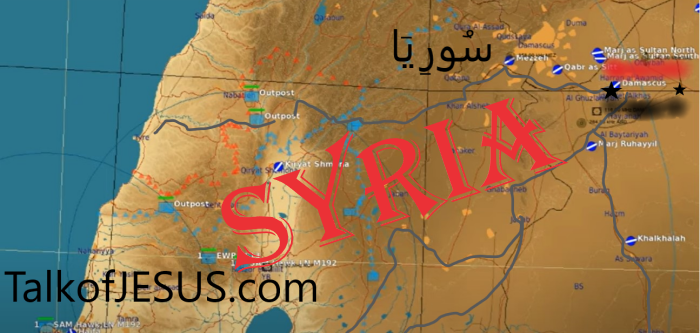
    Syria - strategic topographical map
    Some text on Talk of JESUS .com will appear in other languages for readers who translate our English language site for ease of reading.

    وَقَالَ لَهُمْ: «اذْهَبُوا إلَى العَالَمِ أجْمَعَ، وَبَشِّرُوا جَمِيعَ النَّاسِ.

    Click this for English and Hindi translations of Arabic above: Gospel of Mark 16:15

    Syria: A frequent field פַּדָּן of battle for all of the world

    Follow the link above and you will discover that we have journeyed to these fields of Syria many times in the Bible.

    • And Jacob came to Shalem, a city of Shechem, which is in the land of Canaan, when he came from Padanaram; H6307 and pitched his tent before the city. – Genesis 32:18 KJV
      • Padan or Padan-aram = “field”
        • a plain or tableland in northern Mesopotamia in Aram, a region of Syria

      Today’s lesson on Syria sets the scene of ACTS in maps and history.

      IF we are successful in this lesson in cartography from a former C-minus geography student, we may all learn something about how Syria became a most important ‘where’ to go on our mission journeys of the first century Church.

      From the shores to the mountaintops

      Credits & Disclaimer:
      I have taken due diligence to link sources of this publically available material; however, PLEASE NOTE: In spite of the reliable information included in these website sources, MANY write from an Anti-Christ and ANTI-GOD perspective, quoting theorized dates & other unsubstantiated editorial commentary as facts. Nevertheless you should gain an understanding of the lows and highs of these journeys on the roads of Acts through Syria. 

      War near Israel:

      DCS Syria Map:

      Historical and Geographical Introduction by 132nd.AssafB
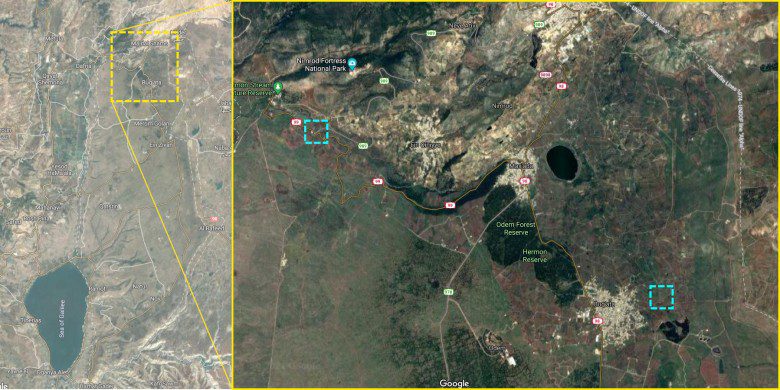
      Syria dcs map

      This is presentation about the new DCS map: Syria made by Ugra Media, and it is focused on the area between the north of Israel and the neighbouring countries of Syria and Lebanon..

      The goal is providing a solid background, both for building realistic DCS scenarios and for historical interests.

      What struck the most was seeing places such as Tyre on the map, and many others that recur through history since ancient civilizations, I did not think about that!

      Source: Digital Combat Simulator
      Watch a little to see the terrain of Syria near Israel if you would like

      Contemporary Squabbles, Wars, Conflits, etc & so on..
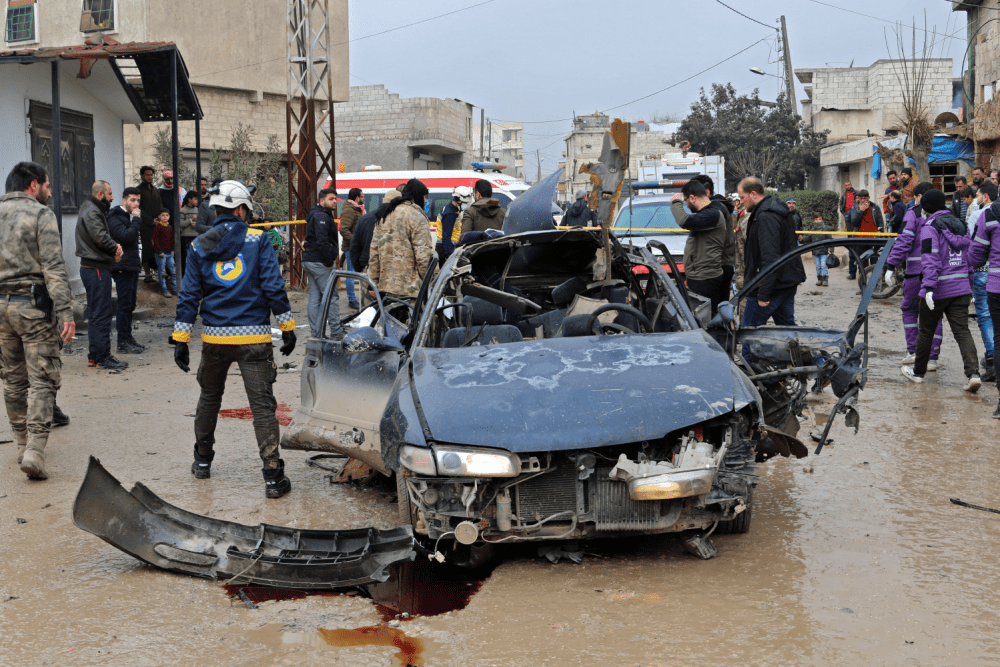
      A picture shows the scene after an explosive device exploded in a taxi in Syria's town of Azaz in the rebel-controlled northern countryside of Syria's Aleppo province near the border with Turkey, on January 13. -/AFP VIA GETTY IMAGES

      [Read more]

      ARGUMENT An expert’s point of view on a current event.
      Syria Is Neither Stable Nor Safe
      An unfinished war has been almost forgotten by the West.
      By James Snell, a British writer.

      JANUARY 29, 2022, 6:00 AM

      At least three Syrian children are dead this month from inadequate protection against the snowstorms and subzero temperatures that have made 2022 the coldest winter in 40 years in Syria, Lebanon, Jordan, Iraq and Turkey. Their mothers are among Syria’s 6.8 million internally displaced persons.


      THE JERUSALEM POST By HASAN ISMAIK
       Published: FEBRUARY 19, 2022 

      Perhaps you recall or have studied the Six-Day War, or Arab-Israeli War of 1967, War between Israel and the Arab countries of Egypt, Syria, and Jordan.

      Again, these same areas at issue surrounding the Promised Land had become areas where opposing military groups could lay siege of terror from the heights above the fields and towns of Israel just as has happened for thousands of years.


      Meanwhile, returning to the Roman Empire and Syria
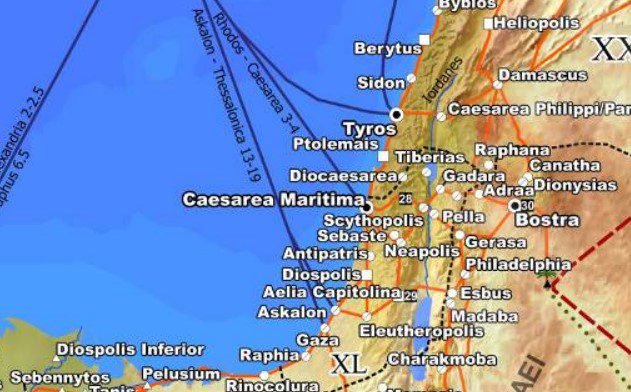
      roman routes into Syria

      WorldHistory.org

      Syria was an important province of the Roman Republic and, later the Roman Empire. Both Julius Caesar and Pompey the Great favored the region and, after the rise of the empire, it was considered one of the most essential regions owing to its trade routes and ports on the Mediterranean Sea.


      Fleeing another Empire

      Here in Acts 6 we discovered a Jerusalem divided by traditions of east & west.
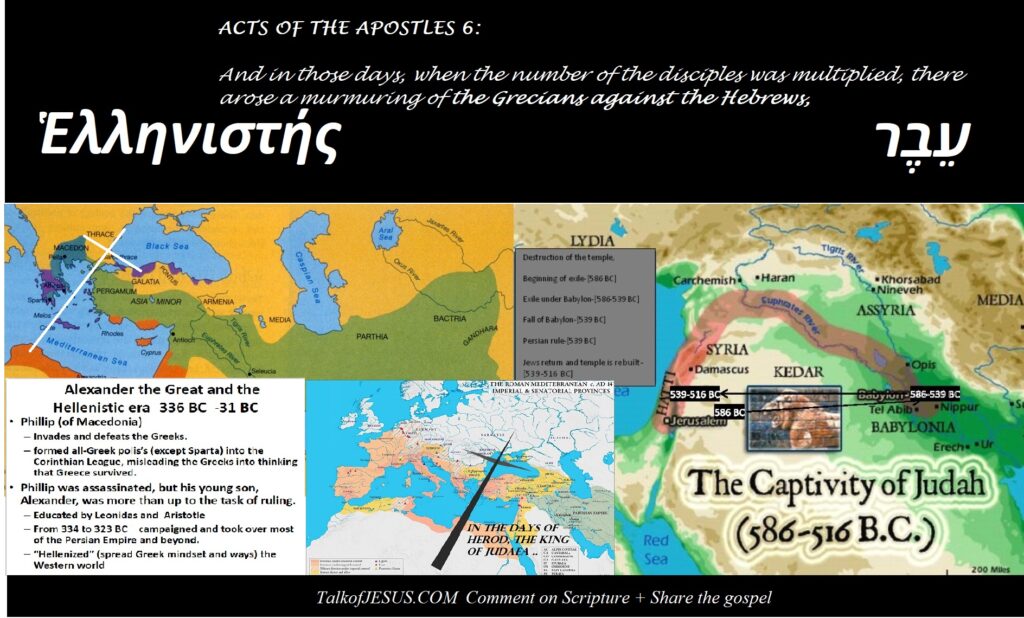
      Acts 6 And in those days, when the number of the disciples was multiplied, there arose a murmuring of the Grecians against the Hebrews, maps of empires impacting the Jews

      Truly, there was more than one Jewish diaspora;

      most notably the one where Israel and Judah fell and the Jews were sent to other lands, mostly to the east.

      These lands were later captured by Alexander of Macedonia to their west, riches of a world which Rome sought to control beyond Syria and the Jordan.
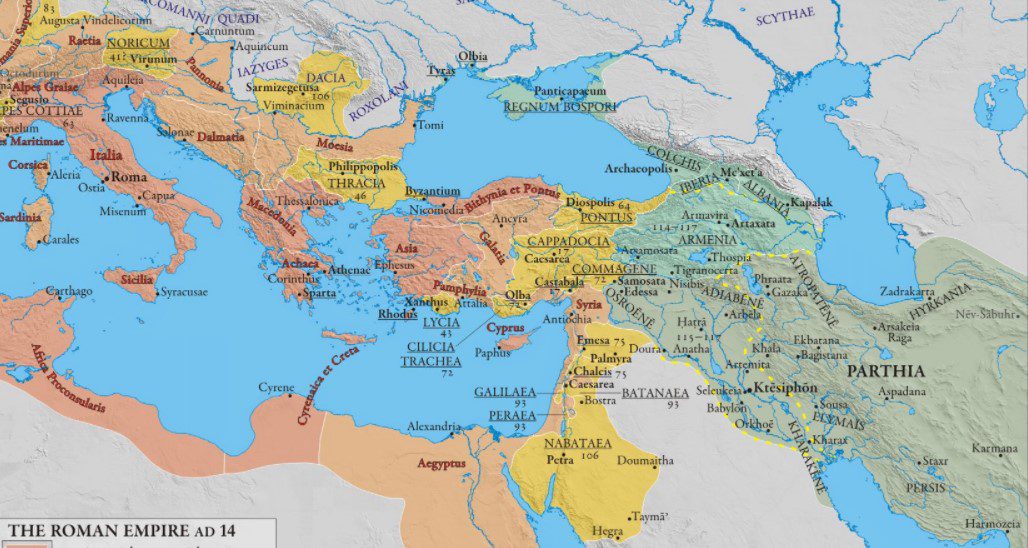
      Roman Empire AD14 with Parthia to the east beyond Roman Syria
      Syria – between two empires AD 14

      In the early days of Judea, Herod the Great negotiated with Rome to build a shaky autonomy. But a generation and several Caesars later, Judea’s political alliance would be decimated by Rome with its imposing brand of a military peace.

      So another diaspora (of sorts), one of Jews AND these new Messianic Jews or Christfollowers would take place.

      Roman, Greek and Syrian towns would eventually try to send them all away.

      Christ followers would read Luke’s account of ACTS 7 & 8 at a time of new persecutions to both Jews and Christians after A.D. 60.

      Jerusalem, too, would once again fall to Rome’s Legions in A.D. 70.


      In the Timeline of ACTS

      If you had been following events back in Jerusalem (during the time Philip strategically fled to Samaria, ended up in Gaza and then amazingly found himself in Azotus), you would have observed several political attempts by Jerusalem’s rulers to follow such disciples of Jesus into all of the world
      anywhere these men might threaten the rule of Judea-ism [sic].

      Roman soldiers, as in years prior, were never far from the political wrangling between the Sanhedrin and Christians like Peter and Stephen who stood against Judea’s adopted Jewish traditions.

      • 27 BCE – Tarsus is capital of Roman province of Syria-Cilicia Phoenice
      • 66 CE – 73 CE – Syrian troops participate in the First Jewish-Roman War.
        • source [additional detailed timeline below]

      This second diaspora occurs after Rome tramples Jerusalem, when Christians have already fled to gentile and Roman cities. Disciples of Jesus in these places hear encouragement or read the record of earlier events in ACTS, which have taken place a generation or so earlier [30+ years].
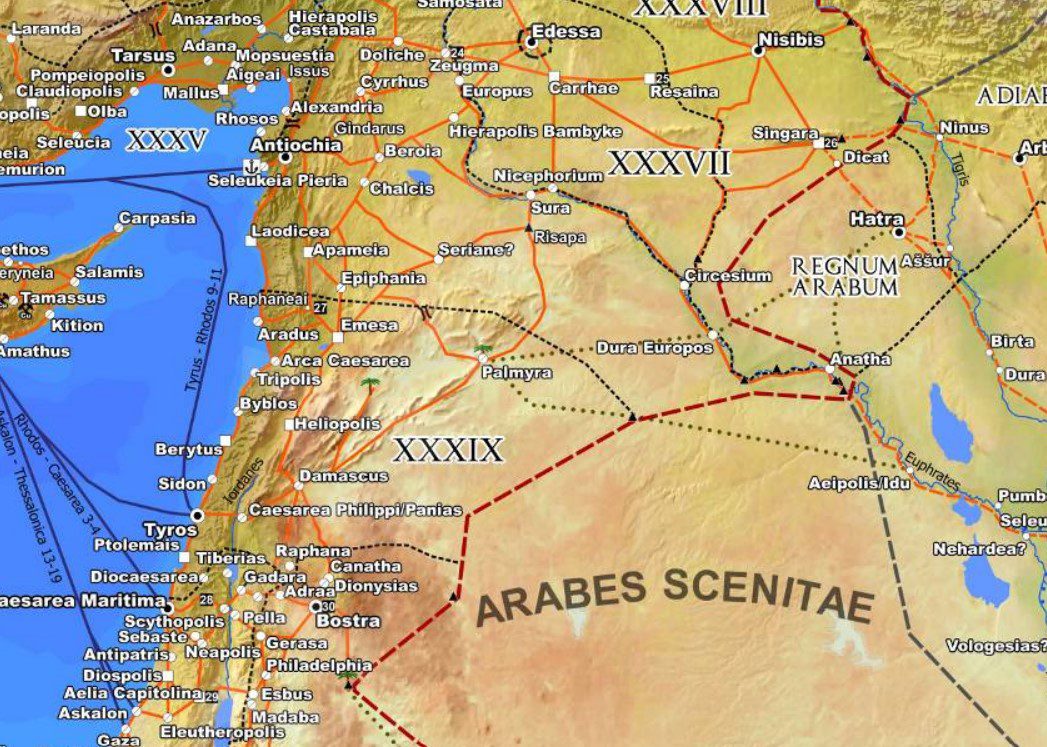
      map of Syria, ruled froj Tarsus
      Roman cities of Syria

      “anno Domini nostri Jesu Christi”

      Historical ACTS ‘in the year of our Lord Jesus Christ’

      A.D., as world calendars denoted for nearly two millennia when men dared not overtly call any era 'common.' i.e. the anti-Christ designations of: BCE or CE
      ++++++++++++++++++++++++++++++++++++++++++++++++++++++++++++++++
      
      Dates below approximate from multiple sources:
      - including Historical Atlas of the Bible
      • AD 6-AD14 – Judea is a ‘prefectorial’ province of Rome
      • AD26-AD36 – Pontius Pilate is Procurator of Syria-Cilicia Phoenice and its client states
      • AD27 – John the Baptist, a prophet-preacher popular in Judea is jailed then beheaded by Herod
      • AD30 – Pontius Pilate agrees to the crucifixion of Jesus Christ, who surrendered to the Temple police, was subjected to a mockery of a public trial and attracted multitudes of men and women wherever He taught in Syria’s towns and deserted places, not to mention this troublesome town of Jerusalem.
        • AD30 JESUS appears to more than five hundred men in various places for forty days RISEN from death!
        • The APOSTLES remain in Jerusalem, working miracles and challenged by the Sanhedrin.
      • AD34 – AD36 EVENTS RECORDED BY LUKE IN ACTS 7-8
      • AD37 – Caligula becomes Caesar of Rome
      • AD38 – Persecution of Jews in Alexandria in Aegyptus [Egypt}
      • AD39 – Mission of Peter in Samaria (More on that later from ACTS)
      • AD41 – Claudia becomes Caesar of Rome and Herod King of Chalcis [Lebanon]
        • AD44 – Judea returned to status as prefectorial province of Rome
      • AD45 – Paul begins his first of three mission trips (Much more later in ACTS)
      • AD48 – Famine in Judea [SEE above & current similar situation in Syria]
      • AD54 – Nero becomes Caesar of Rome
        • AD50’s – Gospel of Mark most likely written, shared and preached
          • More mission trips of Paul, finally ending in Rome
      • AD60 – Estimated date Luke’s Gospel first published;
        • also Paul’s hearing before Portius Festus, Procurator of Judea, who hearing his appeal to Caesar sent him to Nero in Rome, where he writes and sends many letters to the Church throughout the Empire until he is beheaded in Rome in AD67.

      ~AD 64 – ACTS of the Apostles published
      Acts Apostolos - Acts of the Apostles - the chronicles of Christ's Apostles - a history of Christ's Church including early leaders like Stephen, Philip the Evangelist, Paul, Barnabas and many others
      Acts of the Apostles + a History of Christ’s Church
      Most readers of Acts reading about Persecution beginning with Stephen have already experienced more persecution in the ensuing generations.
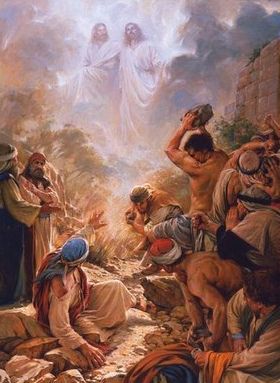
      the stoning of Stephen in Jerusalem

      “Lord Jesus, receive my spirit!”

      “Lord, do not hold this sin against them!”

      Acts of the Apostles 7:59b,60b – CSB


      ACTS 8:

      Starting with that day, there arose intense persecution against the Messianic Community in Yerushalayim; all but the emissaries were scattered throughout the regions of Y’hudah and Shomron.

      2 Some godly men buried Stephen and mourned him deeply. 3 But Sha’ul set out to destroy the Messianic Community — entering house after house, he dragged off both men and women and handed them over to be put in prison. 4 However, those who were scattered announced the Good News of the Word wherever they went…

      14 Now when the apostles in Jerusalem heard that Samaria had received the word of God, they sent them Peter and John, 15 who came down and prayed for them that they would receive the Holy Spirit…
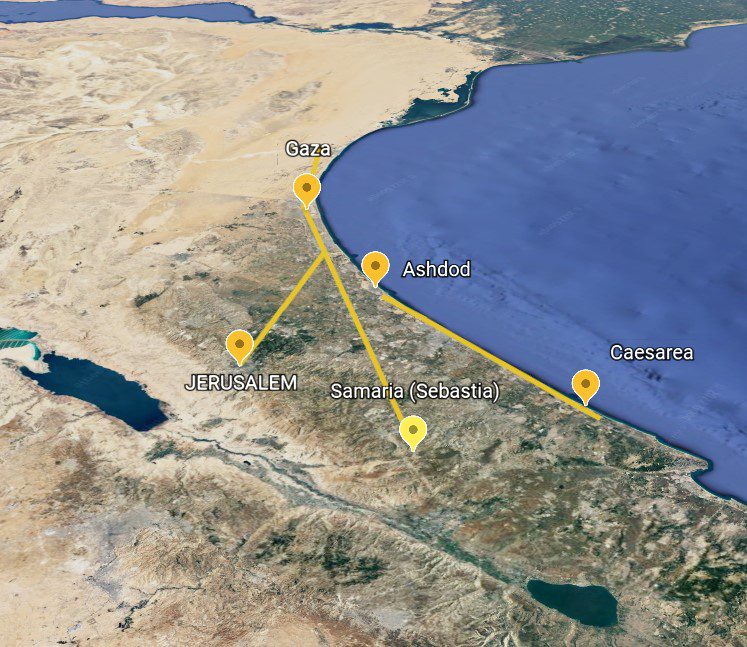
      Philip the evangelist flees Jerusalem to Samaria, but then receives a command to go to Gaza, where he baptized an Ethiopian, is taken up from there to Ashdod and preaches along the coast in towns leading to Ceasarea

      .. the Spirit of the Lord snatched Philip away.. 40 But Philip found himself at Azotus and as he passed through he kept preaching the gospel to all the cities, until he came to Caesarea.

      Meanwhile, Sha’ul, still breathing murderous threats against the Lord’s talmidim, went to the cohen hagadol..

      Acts of the Apostles 9:1 Complete Jewish Bible
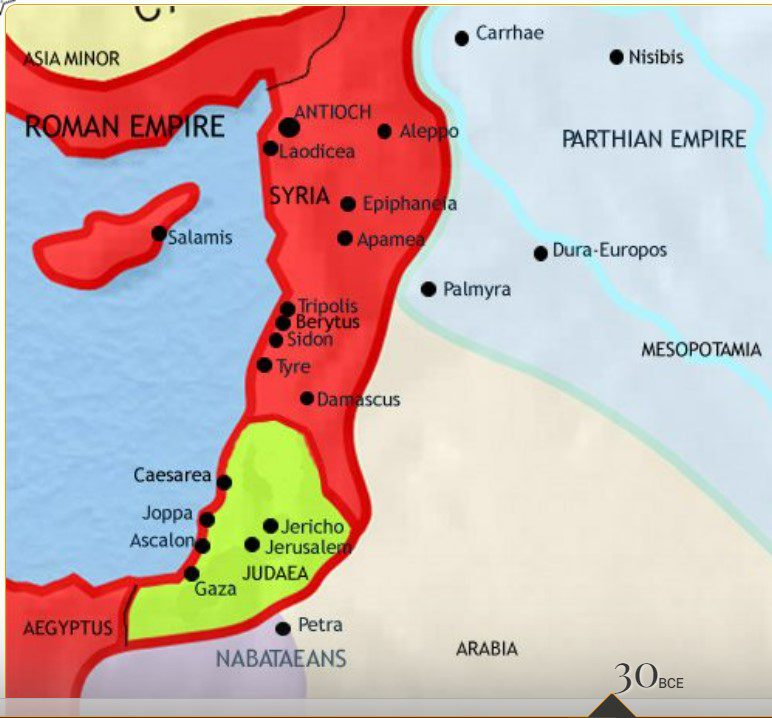
      syria in 30 BC

      ACTS:

      to be continued..

      (in Damascus)

      От Марка 16:15

      Великое поручение и вознесение Иисуса


    • What hinders me from being baptized?

      What hinders me from being baptized?

      “Look! Water! What prevents me from being baptized?”

      It’s a life-changing question the Kandake’s official asks Philip after reading about the Messiah Jesus from Isaiah.

      Perhaps you have asked yourself this same question about conversion to Christ.

      ACTS of a Queen’s servant on the road to Gaza

      If you have not read our previous scene from Acts 8, click here.

      35 Then Philip opened his mouth, and beginning from this Scripture he preached Jesus to him.

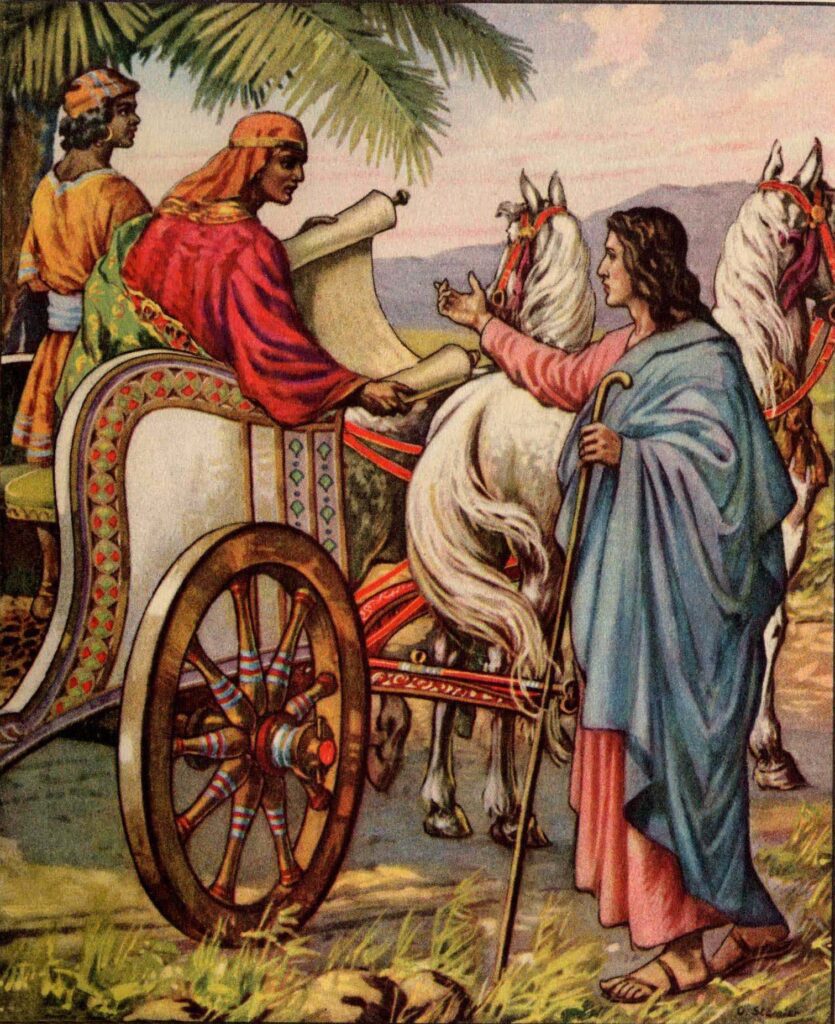
      Philip and the Ethiopian official in his chariot on the road from Jerusalem in Gaza, reading the scroll of Isaiah before he is baptized

      Kandoc’i – Servant of the Queen of Ethiopia

      Philip joins this official (not named in Acts) of the Candace or Kandake of Nubia on the Nile (referred to Ethiopia in Acts).

      Two Men Talk of JESUS

      NOTE: I choose to identify this representative of the Queen with an Ethiopian sounding name based on my personal experience and previous conversations with Ethiopian friends.
      
      Philip's encounter with this Ethiopian eunuch must have been life-changing for both.

      36 Now as they went down the road, they came to some water. And the eunuch said,

      “See, here is water. What hinders me from being baptized?”

      37 Then Philip said,

      “If you believe with all your heart, you may.”

      And he answered and said, “I believe that Jesus Christ is the Son of God.”

      Acts 8:37b NKJV – The Ethiopian responds to Philip from his heart to be baptized for Christ

      38 So he commanded the chariot to stand still.

      This scene of Baptism

      Let’s pause here for a moment to consider what our black brother has asked this Hellenist deacon of a Hebrew church back in Jerusalem.

      No matter your background, no matter your sin, it makes us the same: Listen:

      Let’s go down, down, down to the river (You will leave changed)
      Let’s go down, down, down to the river (Never the same)
      Gotta go, gotta go, gotta go down in amazing grace [x2]

      What does it mean to be BAPTIZED?

      Religious doctrine of your past could easily sidetrack our discussion of baptism here, but prior to continuing on our mission trip with Philip from Acts 8, allow me to point our talk of JESUS toward both definition and evangelism.

      Baptized defined:

      • Start here: baptized occurs 51 times in 44 verses in the NASB20.
        • βαπτίζω –
          • to dip repeatedly, to immerse, to submerge (of vessels sunk)
          • to cleanse by dipping or submerging, to wash, to make clean with water, to wash one’s self, bathe
          • to overwhelm
        • Learn more: From a derivative of βάπτω (G911)

      We have already addressed this in the early chapters of Acts in this series, but here is a brief example from an earlier post:

      May 19, 2014 Talk of JESUS.com post with several references from ACTS

      One other series from the Gospel of John and discussion of John the Baptist. [Click below]

      Sep 18, 2018 from TalkofJESUS.com from brief series about Gospel of John

      Returning to Talk of JESUS between Kandoc’i & Philip

      and they both went down into the water, Philip as well as the eunuch, and he baptized him.

      ACTS 8:38b – the moment Philip baptized the Ethiopian official of the Queen in the Name of Jesus Christ

      Now here’s something you will NOT experience at any baptism (but remember with God all things are possible and the Lord had a purpose here to evangelism beyond this event on Philip’s mission).

      39 Now when they came up out of the water, the Spirit of the Lord caught Philip away, so that the eunuch saw him no more; and he went on his way rejoicing.

      ACTS 8:39 – Yet another sign, this to the just baptized Ethiopian official who had proclaimed:
      “I believe that Jesus Christ is the Son of God.”

      The eunuch no doubt continues his long journey home up the Nile in Africa, where the Gospel will travel with our brother, Kandoc’i, who will in turn preach Jesus Christ in this first century mission field and court of the Kandake of Ethiopia.

      Philip the Evangelist

      But Philip found himself at Azotus, and as he passed through he kept preaching the gospel to all the cities, until he came to Caesarea.

      Acts 8:40 NASB
      Philip the evangelist flees Jerusalem to Samaria, but then receives a command to go to Gaza, where he baptized an Ethiopian, is taken up from there to Ashdod and preaches along the coast in towns leading to Ceasarea
      places along the mission journey of Philip the Evangelist

      We cannot be certain if Philip running to catch up to this official, Kandoc’i of Ethiopia in his royal chariot was akin in any way to a sign of Elijah running ahead. [Read more.] However after the Ethiopian in the chariot was baptized, the Spirit of the Lord snatches Philip away!

      One more sign for the evangelist to preach and one more miracle for our Ethiopian brother Kandoc’i to witness to his queen and all of the officials of his country far beyond Jerusalem.

      We find Philip next in Azotus Ἄζωτος (Ashdod), a distance by air of over 100 km (<60 miles)! From there we learn that the evangelist will settle in the important Roman port city of Caesarea, a place with which we will become more familiar on the mission journeys of ACTS of the Apostles.


      Comment on Scripture – Share the Gospel

    • Philip: Evangelizing Christ’s Sheep Beyond Gaza

      Philip: Evangelizing Christ’s Sheep Beyond Gaza

      How important is Gaza to Philip’s Evangelizing Mission?

      What does Gaza have to do with,

      “Go into all the world and preach the gospel to all creation.” and evangelizing Christ Jesus?

      Quote of Jesus from the Gospel of Mark 16:15

      We’ll talk of JESUS’ evangelism model begun in the Apostles and now a command to Philip, one of Jerusalem’s first seven deacons in a moment. But first let’s review the setting of this semi-familiar scene of Philip baptizing an Ethiopian eunuch in (of all places), Gaza.

      Philip and the Ethiopian official in his chariot on the road from Jerusalem in Gaza, reading the scroll of Isaiah

      Acts of Evangelism by Christ’s disciples from Jerusalem’s Church

      8: At that time a great persecution arose against the church which was at Jerusalem; and they were all scattered throughout the regions of Judea and Samaria, except the apostles.

      This is Philip who served with Stephen in Jerusalem
      • 4 Therefore those who were scattered went everywhere preaching the word.
      • 5 Then Philip went down to the city of Samaria and preached Christ to them. And the multitudes with one accord heeded the things spoken by Philip, hearing and seeing the miracles which he did.
        • (We will get back to the contrast between Samaria and Gaza in a moment.)
      • The Apostles in Jerusalem sent Peter and John to those evangelizing the towns of Samaria.
      • .. they [Peter & John] returned to Jerusalem, preaching the gospel in many villages of the Samaritans.

      An Angel of the Lord commands Philip: GO to Gaza

      We don’t want to dismiss too quickly who sends Philip on his way from the big city of Samaria (then called, Sebastia (when rebuilt by Herod the Great) with its six thousand souls, to an uninhabited Gaza along the road from Jerusalem.

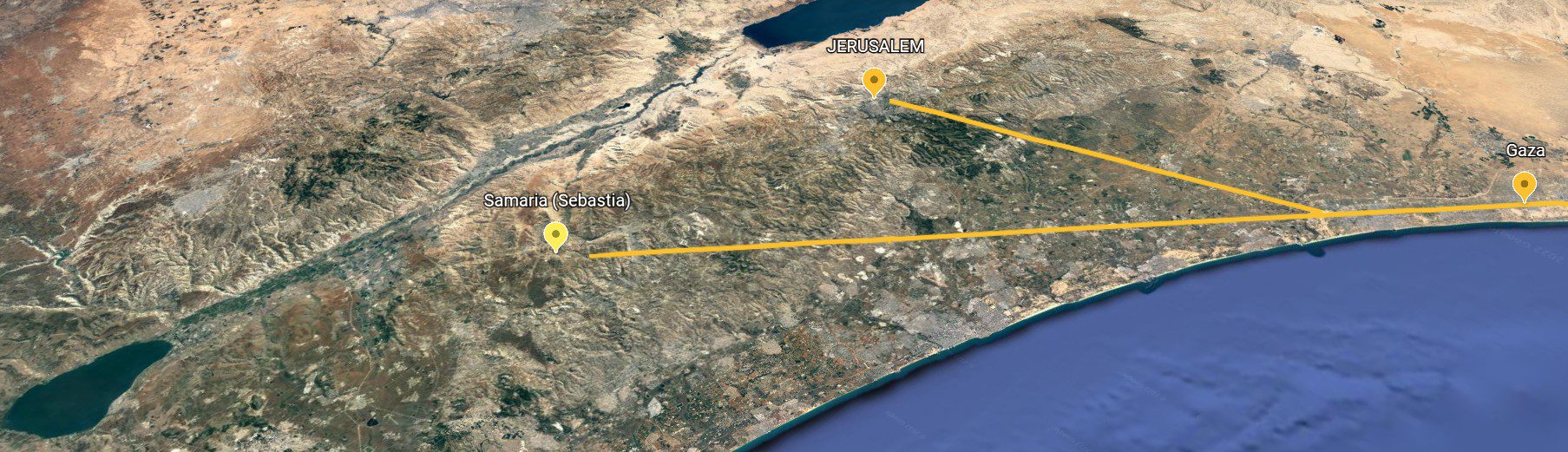
      Google Earth view of Gaza and terrain from the mountains of Judea and Jerusalem
      Two routes to the Gaza road along the Mediterranean shore

      Luke does not use this description of just anyone.

      • Now an angel of the Lord appeared to him, standing to the right of the altar of incense. Zechariah [Priest of the LORD and father of John the Baptist] was troubled when he saw the angel, and fear gripped him. – Gospel of Luke 1:11-12
      • And an angel of the Lord suddenly stood near them, and the glory of the Lord shone around them; and they were terribly frightened. – Gospel of Luke 2:9 – from the nativity of the shepherds near Bethlehem .. (also not too far from here)

      We know these instances well; however in Luke’s second account of the Acts of the Apostles the Angel of the Lord initiates some important ACTS of disciples of the Risen Christ Jesus.

      Previously, our history of the Apostles imprisoned in Jerusalem has already witnessed one of these appearances of the Angel of the Lord. A praying church is astounded to see Peter and John released from prison and then returning to the Temple to preach the Gospel.

      They laid hands on the apostles and put them in a public prison. But during the night an angel of the Lord opened the gates of the prison, and leading them out, he said, “Go, stand and speak to the people in the temple area the whole message of this Life.”

      Acts of the Apostles 5:18-20 NASB20

      Philip Goes to Gaza – ACTS 8

      But an angel of the Lord spoke to Philip, saying,

      “Get ready and go south to the road that descends from Jerusalem to Gaza.” (This is a desert road.)

      Acts of Philip, disciple of the Apostles, 8:26 NASB20

      27 So he started out, and he met the treasurer of Ethiopia, a eunuch of great authority under the Kandake, the queen of Ethiopia. The eunuch had gone to Jerusalem to worship, and he was now returning.

      Seated in his carriage, he was reading aloud from the book of the prophet Isaiah.

      The Kandake, Queen of Ethiopia

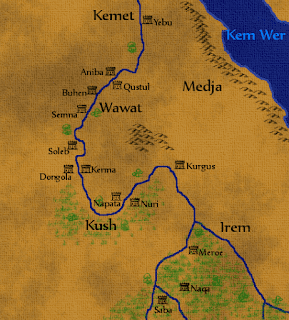
      Nubia is a region along the Nile river encompassing the area between Aswan in southern Egypt and Khartoum in central Sudan. It was the seat of one of the earliest civilizations of ancient Africa, with a history that can be traced from at least 2500 BC onward, Kerma culture, and was home to several empires, most prominently the kingdom of Kush, which for a while even ruled over Egypt.

      Amanitaraqide appears to be the subject of a brief reference in the New Testament (Acts 8:27)

      Amanitaraqide held the title of Kandake in the Kingdom of Kush during the years 21-41

      Source – Wikipedia

      Nubia is a region along the Nile river encompassing the area between Aswan in southern Egypt and Khartoum in central Sudan. It was the seat of one of the earliest civilizations of ancient Africa, with a history that can be traced from at least 2500 BC onward, Kerma culture, and was home to several empires, most prominently the kingdom of Kush, which for a while even ruled over Egypt. 
      
      Before the 4th century, and throughout classical antiquity, Nubia was known as Kush, or, in Classical Greek usage, included under the name Ethiopia (Aithiopia).
      
      [MAP above of this region along the Nile & descriptions: Source] 

      Αἰθίοψ – Ethiopian = “black”


      The eunuch, wearing expensive robes of a court official, rides in a royal chariot (reserved for only the highest officials of Rome and independent powerful kingdoms), would seem unapproachable by an ordinary man like Philip. For it seems this royal official would have been in Jerusalem on some important diplomatic mission as the queen’s personal representative.

      If you think back to the status of Daniel in Babylon or even further back to this region of the Nile and the earned status of Joseph serving Pharaoh, you will get a good picture of the importance of this man to the highest leaders of his country.

      Even in this A.D. 21st century most men like Philip (and you) would know very little about this distant country in Africa far from Jerusalem and further from Rome and the new world beyond the great ocean.

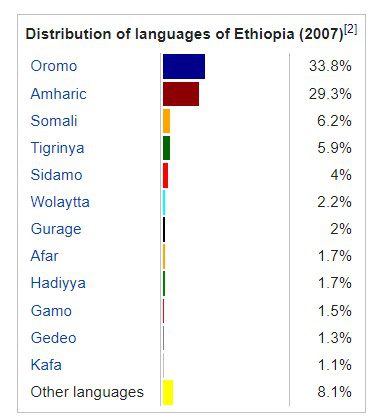
      Ethiopia, like many lands, must hear the Gospel in many languages.

      Graphic source: Oromo Bible Society
      O land, land, land, hear the word of the LORD!


      No, the Ethiopian court official is not like Philip.

      As a diplomat with power to travel the world on behalf of his queen, he will play an important role in the spreading of the Gospel. So after Philip obediently travels to Gaza, he discovers that this man is a brother, a Jew who studies Scripture! And here in Gaza he is returning home to Kush from worship of the LORD in Jerusalem.

      (That’s right, the same Jerusalem from which Philip has fled; initially north to the city of Samaria, but now southwest of Jerusalem into the desert lands of Gaza.)

      Studying Isaiah with a ‘missionary’ to Gaza

      ACTS 8:

      29 Then the Spirit said to Philip, “Go near and overtake this chariot.”

      (Philip is on foot and has walked this distance from Samaria, but this is now a second command of the Spirit as he reaches the Gaza road.)

      30 So Philip ran to him, and heard him reading the prophet Isaiah

      30 وَعِنْدَمَا رَكَضَ فِيلِبُّسُ إلَى العَرَبَةِ، سَمِعَ الرَّجُلَ يَقْرَأُ كِتَابَ النَّبِيِّ إشَعْيَاءَ. فَقَالَ لَهُ فِيلِبُّسُ:

      ﻋﻤﺎﻝ ﺍﻟﺮﺳﻞ 8:30
      Arabic Bible: Easy-to-Read Version

      “Do you understand what you are reading?”

      31 The man replied, “How can I, unless someone instructs me?” And he urged Philip to come up into the carriage and sit with him.

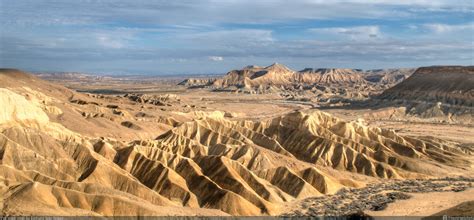
      Negev in southern Israel, Gaza and some areas near the Dead Sea are very barren places away from the towns and settlements

      Philip traveled in style for a while as they read.

      Now the passage of Scripture which he was reading was this:

      Isaiah

      נִגַּשׂ וְהוּא נַעֲנֶה וְלֹא יִפְתַּח־פִּיו כַּשֶּׂה לַטֶּבַח יוּבָל וּכְרָחֵל לִפְנֵי גֹזְזֶיהָ נֶאֱלָמָה וְלֹא יִפְתַּח פִּֽיו׃

      מֵעֹצֶר וּמִמִּשְׁפָּט לֻקָּח וְאֶת־דּוֹרוֹ מִי יְשׂוֹחֵחַ כִּי נִגְזַר מֵאֶרֶץ חַיִּים מִפֶּשַׁע עַמִּי נֶגַע לָֽמוֹ׃

      Masoretic Text Isaiah 53:7-8, quoted in ACTS 8:32-33
      Or perhaps the Ethiopian official traveling from Jerusalem through Gaza back to Egypt would have held a Septuagint translation of the Hebrew Bible into Greek. ..dated to the reign of Ptolemy II of Egypt (285-246 BC).. 
      (READ more about ancient Egypt and Ethiopia from Source link: biblearchaeology.org)

      πάντες ὡς πρόβατα ἐπλανήθημεν ἄνθρωπος τῇ ὁδῷ αὐτοῦ ἐπλανήθη καὶ κύριος παρέδωκεν αὐτὸν ταῗς ἁμαρτίαις ἡμῶν

      Yeshaiya (Isaiah) 53:6 :: Septuagint (LXX)

      In reading all of Isaiah 53 he would have just read in verse 6:

      All we like sheep have gone astray; 
      we have turned every one to his own way; 
      and the LORD hath laid on him the iniquity of us all. [KJV]

      34 So the eunuch answered Philip and said, “I ask you, of whom does the prophet say this, of himself or of some other man?”

      35 Then Philip opened his mouth, and beginning at this Scripture, preached Jesus to him.


      Our chariot journey with Philip and the Ethiopian eunuch, to be continued..