Category: Acts for a 21st c. Church

Acts Apostolos - Acts of the Apostles - the chronicles of Christ's Apostles - a history of Christ's Church including early leaders like Stephen, Philip the Evangelist, Paul, Barnabas and many others
Acts of the Apostles + a History of Christ’s Church

Acts of the Apostles 1-28


Acts of the Apostles:
+ The first century Church SHARED Christ while suffering severe persecution.
+ Luke records a historic account of the Church which gives 21c Christians a context to SHARE the Gospel of Jesus Christ with others.

Read more about the Early Church & add your COMMENT on Scripture.

ACT now.

+ SHARE the Gospel history witnessed in the CURRENT chronological SERIES from ACTS of the APOSTLES.

  • Stephen: Indictment of our Founding Fathers

    Stephen: Indictment of our Founding Fathers

    All who sat in the council, fastening their eyes on him, saw his face like it was the face of an angel.

    ACTS 6:15 :: Hebrew Names Version (HNV)

    Another Trial before Judah’s Ruling Fathers

    7 Now the high priest said, “Are these things so?”

    ἀρχιερεύς – archiereus 

    Let’s be clear who Jerusalem’s fathers, in charge of these trials, are:

    • A new trial now of Stephen
    • Two previous hearings or trials of Peter and John
    • And most controversial of all, their trial and crucifixion of Jesus, of whom these Jews now preach as risen from death!
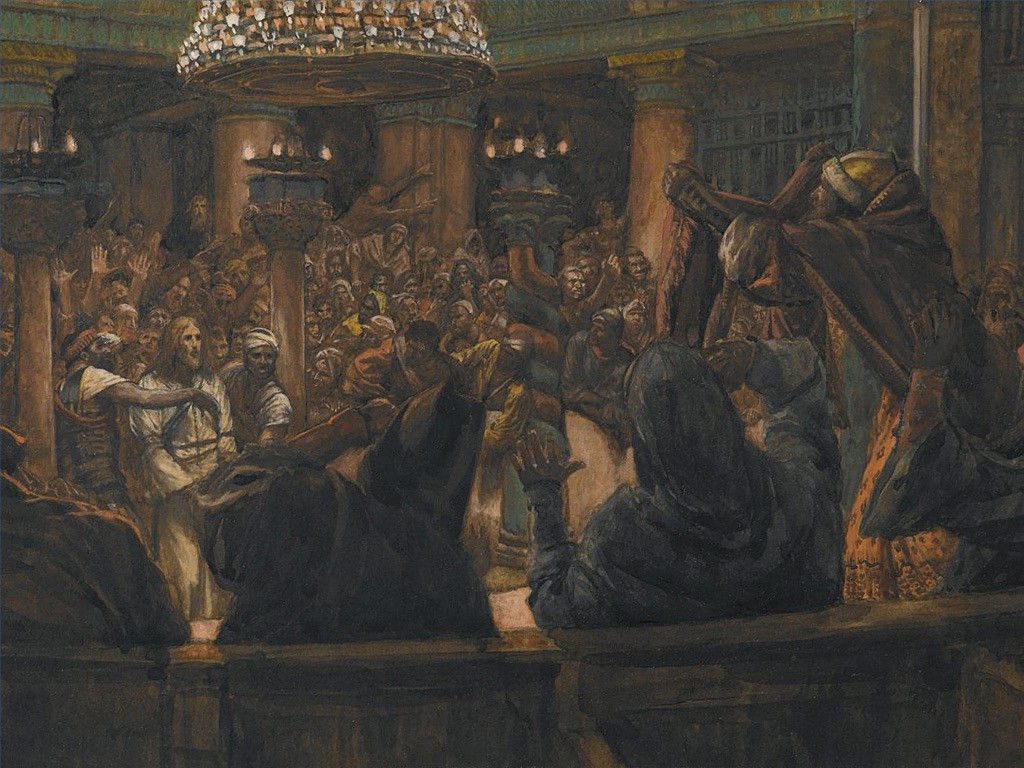
    depiction of Jesus in a crowded room on trial by Caiaphas

    And He was teaching daily in the temple; but the chief priests and the scribes and the leading men among the people were trying to put Him to death

    Gospel of Luke 19:40 NASB20 – Describing Jesus’ opposition by the chief priests.

    After Jesus, they next tried to discredit Peter and John

    Yet an angel had released Peter and John from the prison of the High Priest

    And now, Stephen

    Stephen, not one of the Twelve Disciples of Jesus, but a newly appointed disciple of the Disciples. A leading man among seven, overseeing multitudes of these ‘Christ’ followers in Jerusalem’s growing congregations – an overt challenge to the authority of its religious-political leaders responsible for their Roman ‘peace.’

    How will Stephen defend Christ before Jerusalem’s political fathers?

    Not betrayed, but like the Apostles falsely accused.

    Acts of the Apostles 7: (and here, ACTS of Stephen)

    Stephanos will reply to the Hebrew High Priest of the Sanhedrin in the common Hellenized Greek of Roman-occupied Jerusalem:

    7:2 ὁ δὲ ἔφη ἄνδρες ἀδελφοὶ καὶ πατέρες ἀκούσατε ὁ θεὸς τῆς δόξης ὤφθη τῷ πατρὶ ἡμῶν Ἀβραὰμ ὄντι ἐν τῇ Μεσοποταμίᾳ πρὶν ἢ κατοικῆσαι αὐτὸν ἐν Χαρράν

    “Hear me, brethren and fathers!

    Stephen now begins his defense with their common history, recorded in Scripture and supposedly taught by Jerusalem’s fathers, shepherds of Judah, in their synagogues. He includes himself as their Jewish brothers, born to a line of their own patriarchs.

    Abraham

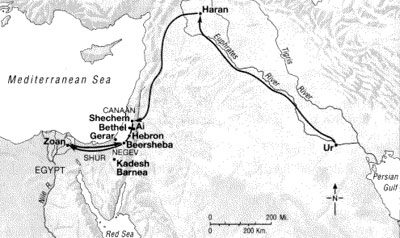
    The God of glory appeared to our father Abraham when he was in Mesopotamia, before he lived in Haran, and He said to him,

    Leave your country and relatives, and come to the land that I will show you.

    4 Then he left the land of the Chaldeans and settled in Haran. And from there, after his father died, God had him move to this country in which you are now living.

    Here's Stephen's first point about the Patriarchs (ruling fathers):

    “But God gave him no inheritance here, not even one square foot of land.

    ACTS 7:5a NLT – Stephen’s defense to the fathers of Jerusalem trying him for following the Messiah Jesus

    6 But God spoke to this effect, that his descendants would be strangers in a land that was not theirs, and they would enslave and mistreat them for four hundred years…

    We know that Stephen is leading up to Moses leading them from Egypt (in ancient times).

    .. and so Abraham fathered Isaac, and circumcised him on the eighth day; and Isaac fathered Jacob, and Jacob, the twelve patriarchs.

    ACTS 7:8b NASB
    Nothing too controversial in Steven's opening argument to these contemporary patriarchs of the Sanhedrin, right?

    Ἰωσήφ – Joseph – יוֹסֵף

    “The patriarchs became jealous of Joseph and sold him into Egypt. Yet God was with him..

    11 “Now a famine came over all Egypt and Canaan, and great affliction with it, and our fathers could find no food. But when Jacob heard that there was grain in Egypt, he sent our fathers there the first time. And on the second visit, Joseph made himself known to his brothers..

    Joseph's brothers, patriarchs of Israel DID NOT RECOGNIZR their rejected brother, whom these eleven fathers had  thought would be brought down by slavery.

    14 After this, Joseph sent for his father Jacob and his whole family, seventy-five in all.

    15 Then Jacob went down to Egypt, where he and our ancestors died. Their bodies were brought back to Shechem and placed in the tomb that Abraham had bought..

    Joseph saves Israel (Jacob) and its Patriarchs (his brothers, who finally had bowed down to Joseph)
    Jerusalem's fathers (who sit in judgment of Stephen) continue to listen intently to the disciple of Jesus' Disciples they indicted for speaking against the Law. 
    The innocence of an angel shines from his face as God-breathed words flow forth from his tongue.

    Stephen reveals God’s Promise through Abraham

    “But as the time of the promise which God had assured to Abraham was approaching, the people increased and multiplied in Egypt..

    Acts 7:17 NASB – Stephen’s history of the Patriarchs of Israel
    FOUR HUNDRED YEARS WILL ELAPSE (as we know) between this first part of Stephen's story about the blessings of the patriarchs and the second part of his history of slavery in Egypt.
    

    .. until another king arose over Egypt who did not know Joseph.


    To be continued...
  • Stephen, Dynamic Preacher of God’s Word

    Stephen, Dynamic Preacher of God’s Word

    We return now to Jerusalem in c.A.D.30, from where Luke left us with the Apostles' appointing seven men to help minister to the needs of a growing Church. Today we begin with a look at this first named deacon, Stephen.

    The word [from the Apostles] found approval with the whole congregation; and they chose Stephen, a man full of faith and of the Holy Spirit, and [six other men].

    Acts 6:5 NASB20

    Stephen, a man full of faith

    The multitudes of the growing church elect seven men to help the Twelve with administration of some daily duties of the church which have begun to cause complaint. Number one on their list: Stephen.

    ACTS of the Apostles 6:

    ACTS STEPHANOS of Stephen

    So the word of God spread, the disciples in Jerusalem increased greatly in number, and a large group of priests became obedient to the faith.

    Acts of the Apostles 6:7 CSB

    Now, Nineteen (not just the Twelve) Preach the Gospel in Jerusalem

    Luke has witnessed the power of the Holy Spirit moving in Christ’s saints in Jerusalem, along with accompanying signs from God. Multitudes now join the fellowship of believers led by Peter and John, all the Apostles and now seven more saints determined to preach Christ crucified and risen from the grave.

    Some perhaps, (in addition to the Twelve) may have witnessed the Lord Jesus as one of the more than five-hundred who saw Jesus with their own eyes after His resurrection.

    The new congregation of believers encounter opposition from the established rulers of Jerusalem already determined to snuff out the burning new zeal of those who have believed in Jesus by the witness of the Apostles. (Perhaps these will be less likely to oppose the authority of Jerusalem’s official judgment than their outspoken uneducated teachers Peter and John, who had escaped imprisonment prior to trial.)

    Stephen, full of grace and power

    But what happens within their walls of Jerusalem?

    Now Stephen, full of grace and power, was performing great wonders and signs among the people.

    Acts of the Apostles 6:8 CSB
    .. great wonders and miracles among the people.

    First, Simon Peter and John, preaching in the courtyards of our Temple with a man healed from life-long lameness.

    (We had to release them or the multitudes would have turned on us!)

    But now, MORE signs — NOT through twelve Apostles of Jesus, but a NEW disciple of His Disciples!

    And Stephen, full of grace and power, was performing great wonders and signs among the people.

    Acts of the Apostles 6:8 NASB20

    Who is this new disciple of the former rabbi Jesus?

    Then there arose certain of the synagogue, which is called the synagogue of the Libertines, and Cyrenians, and Alexandrians, and of them of Cilicia and of Asia, disputing with Stephen.

    These freedmen were also Jews caught up in the disputes of Hellenism, as had led to the call of their Greek brother Stephanos.

    The Synagogue of the Freedmen included men who had been made captives of the Romans under Pompey but were afterwards set free; and who although they had fixed their abode in Rome, had built at their own expense a synagogue at Jerusalem which they frequented when in that city - Source
    

    More than murmuring, False Witness against Stephen

    10 But they were unable to cope with his wisdom and the Spirit by whom he was speaking. Then they secretly induced men to say,

    “We have heard him speak blasphemous words against Moses and God.”

    Acts 6:11b – false witness against Stephanos by some men of the libertinus

    Why would liberated Jews (with their own synagogues) oppose these new rabbis?

    • the Synagogue of the Freedmen, including
      • both Cyrenians
        • a large and very flourishing city of Libya Cyrenaica or Pentapolitana, about 11 miles (17 km) from the sea. Among its inhabitants were a great number of Jews, whom Ptolemy I. had brought there, and invested with the right of [Roman] citizens
      • and Alexandrians,
        • Ἀλεξανδρεύς Alexandria in Egypt
      • and some from Cilicia
        • Κιλικία a maritime province in the southeast of Asia Minor, boarding on Pamphylia in the west, Lycaonia and Cappadocia in the north and Syria in the east. Its capital, Tarsus, was the birth place of Paul – source
      • and Asia,
        • Ἀσία i.e. Asia Minor, or (usually) only its western shore:—Asia – proconsular Asia embracing Mysia, Lydia, Phrygia, and Caria, corresponding closely to Turkey today

    These Hellenized Roman Jews competed with rabbis of other Jewish sects for influence in Jerusalem.

    Speaking of murmuring..

    12 They stirred up the people, the elders, and the scribes; so they came, seized him, and took him to the Sanhedrin.

    Πέτρος First Petrus and now this Στέφανος Stephanos

    13 They also presented false witnesses..

    This strategy of an alliance between the libertines and more orthodox Jews against Jesus had worked before Pilate just a few months ago.

    .. for we have heard him say that this Nazarene, Jesus, will destroy this place and change the customs which Moses handed down to us.”

    ACTS of false witness against Stephen by the Freedmen 6:14 NASB

    στέφανος Stephen

    στέφανος stéphanos, stef'-an-os; 
    from an apparently primary στέφω stéphō (to twine or wreathe);
     a chaplet (as a badge of royalty, a prize in the public games or a symbol of honor generally; 
    but more conspicuous and elaborate than the simple fillet, G1238), 
    literally or figuratively:—crown.
    

    Stephen is about to become the angelic crown of witness to the first century church.


    To be continued…

  • An Apostolic Model: Administration of a Growing Church

    An Apostolic Model: Administration of a Growing Church

    Now that we have defined some key terms of the church (including ‘church’ – ἐκκλησία), we can proceed to examine the administration of disciples following the Lord Jesus Christ (‘Christians).

    If you missed this defining first post about ACTS 6, you may want to visit some of the secure links included in Ministering to a Growing Church (BELOW).

    Who would lead change after hearing their murmurings?

    Last time we only got to one verse, Acts 6:1, then encountered a roadblock before I could address how the Twelve ran their administration of the multitudes.

    ..when the number of the disciples was multiplied, there arose a murmuring of the Grecians against the Hebrews,

    Acts 6:1 excerpt KJV

    Does that sound like YOUR Church?

    Let’s address my next question from our previous post about ministering to the personalities in this initial Church of the Apostles.

    How can WE help relieve so many PERSONAL problems for hundreds of families belonging to our growing church?

    Filling in a four-hundred year gap between the OLD and NEW TESTAMENTS:
    
    (The Apostles, of course, understood their church family history better than we do.)

    Mapping out traditions of our pasts

    I suppose you have wondered about my FIRST CENTURY CHURCH MOSAIC attached to this post. So let’s take a look at the diverse ethnic gathering of the lost sheep of Israel (along with some NON-JEWS as well).

    Acts 6 And in those days, when the number of the disciples was multiplied, there arose a murmuring of the Grecians against the Hebrews, maps of empires impacting the Jews
    First Jerusalem Church of the Apostles

    Here’s an unspoken issue of ethnos underpinning their recent ‘murmurings.’

    divided map of Roman empire

    Israel did not exist!

    In the time of the Apostles, a divided Greek-speaking Roman empire changed administrations frequently.

    Before the Herod’s

    • JEWS exiled to the EAST to Babylon, some returning to Jerusalem AFTER Persia defeats Babylon.
    • Many JEWS remained in cities WEST of Jewish influence in cities of the Greek and Roman world.

    map of kingdoms conquered by Alexander the Great
    BEFORE HEROD – Kingdom of Alexander the Great 336-323 B.C.
    • 323 BC, Alexander died in the palace of Nebuchadnezzar II, in Babylon
      • Alexander had conquered cities, kingdoms & empires from Greece to Asia and to Egypt, Babylon, Persia and beyond.
      • These ‘Hellenized‘ cultures then embraced or tolerated Greek customs and language as a universalist ethnos applied to trading and communication between cultures.
        • (Compare to a contemporary founding culture three centuries ago in North America.)
    • 200’s BC, The Ptolemy’s of Egypt (who had also been Hellenized by Alexander’s conquests) ruled Jerusalem and the eastern Mediterranean coast to Syria beyond Tyre and Sidon.
    • 100’s BC, Seleucia (modern-day Bagdad) was the Hellenized capital of the Seleucid Empire which survived until 63 BC
      • As you can see on the top-left of my map mosaic, much of this massive empire lies east of Rome’s later reach.
      • 167-134 BC, Maccabean revolt and resistance against Seleucid rule in Judah
    • 63 BC, Gnaeus Pompeius Magnus or Pompey the Great, captured Jerusalem for Rome
    • 37 BC, Herod the Great (of Edomite ancestry, born in Idumea) aligned himself with Rome.
    Herod's kingdom 4BC

    Rome divides its client kingdom into:

    • Bashan
    • Lower Galilee
    • Samaria
    • Mishor
    • Judea &
    • Idumea

    In the time of Jesus and the Apostles into:

    • Samaria, Judea & Idumea
    • Perea & Galilee
    • Batania (Caesarea Philippi) & Auranitis
    • Syria, including Phoenicia & Ituraea
      • (with Antioch, Roman city of 500,000+ residents, residence of its Governor)

    source

    Apostolic ACTS of Administration

    6:2 So the Twelve gathered all the disciples together and said,

    “It would not be right for us to neglect the ministry of the word of God in order to wait on tables.

    NIV

    WHEN will we ever have time to minister to our church family?

    NOT OUR PROBLEM? NO! That’s not what the Apostles leading the growing church are saying.

    In fact, the Apostles lead other servants of God to solve the church’s own ministry ‘challenge.’

    Waiting tables is just one of our many ministries

    “Instead, brothers and sisters, select from among you seven men of good reputation, full of the Spirit and of wisdom, whom we may put in charge of this task.

    Acts of the Apostles 6:3 NASB20
    • Together this first church in Jerusalem, saints ministering to each other (though having common petty differences),
      • must address the administration of their own servant duties to the community
      • without intervention of the their masters (and teachers) the Apostles.

    But we will give ourselves continually to prayer, and to the ministry G1248 of the word.

    ACTS 6:5 This proposal pleased the whole group.

    • Select seven (for administration of a church of 500+ saints now)
    • These seven men must be μαρτυρέω [of good reputation]
      • (NOT as we might think, but i.e. ‘to affirm that one has seen or heard or experienced something, or that he knows it because taught by divine revelation or inspiration.’
      • Seven men from the
    • .. full of the [Holy] Spirit
    • .. and of wisdom σοφία [sophia] who we should put in charge [administrators] of this task.
    These laymen disciples will choose those who will administer the daily tasks of the church.

    An Administration by More Servant Leaders

    And they chose:

    1. Stephen, a man full of faith and the Holy Spirit, and
    2. Philip,
    3. Prochorus, [Greek, probably a Hellenist]
    4. Nicanor, [a Greek name]
    5. Timon,
    6. Parmenas, [may have been from Asia minor] and
    7. Nicolas, a proselyte from Antioch [a pagan converted to Judaism from the city in Syria where he will soon to minister to the gentiles]

    What must we do for each and every saint of our Lord Christ Jesus?

    Administration of our designated authority

    And they brought these men before the apostles; and after praying, they laid their hands on them.

    ACTS of BLESSING the seven men in Jerusalem given authority by the Apostles 6:6

    Prayer (inquiring of the LORD) followed by Blessing

    We see such acts as this throughout Scripture.

    Moses chooses seventy to help. Israel blesses each of his grown sons before his death. (Isaac had blessed Jacob and not Esau.) Moses blesses Joshua. David blesses Solomon.

    Conversation with the LORD followed by the Lord’s blessing of continued authority of administration of His work through another.

    They laid their hands … - Among the Jews it was customary to lay hands on the head of a person who was set apart to any particular office, Numbers 27:18; Compare Acts 8:19. This was done, not to impart any power or ability, but to "designate" that they received their authority or commission from those who thus laid their hands on them, as the act of laying hands on the sick by the Saviour was an act signifying that the power of healing came from him, Matthew 9:18; compare Mark 16:18. In such cases the laying on of the hands conveyed of itself no healing power, but was a sign or token that the power came from the Lord Jesus. Ordination has been uniformly performed in this way. See 1 Timothy 5:22. 
    

    Though the seven deacons had been chosen by the church to this work, yet they derived their immediate commission and authority from the apostles.

    Barnes’ Notes on the BibleSource of this & extended quote above: https://biblehub.com/commentaries/acts/6-6.htm

    The Great Commission

    (Mat 28:16–20Luk 24:44–49Act 1:6–8 )

    Later he [Jesus] appeared to the Eleven themselves as they were reclining at the table. He rebuked their unbelief and hardness of heart, because they did not believe those who saw him after he had risen. Then he said to them,

    “Go into all the world and preach the gospel to all creation.

    Gospel of Mark 16:15 CSB

    .. but you will receive power when the Holy Spirit has come upon you; and you shall be My witnesses both in Jerusalem and in all Judea, and Samaria, and as far as the remotest part of the earth.”

    ACTS of the risen Christ 1:8
    And tongues that looked like fire appeared to them, distributing themselves, and a tongue rested on each one of them.
    Acts 2:3

    The Day of Pentecost had been a laying on of hands by the Holy Spirit such as man had never seen!

    Roger@TalkofJESUS.com
    1350 illustration of Gamaliel seated with students

    Recalling a caution of Gamaliel

    But if it is from God, you will not be able to overthrow them. You may even find yourselves fighting against God!”

    Acts of the Apostles 5:39 NLT

    So the word of God spread. The number of disciples in Jerusalem increased rapidly, and a large number of priests became obedient to the faith.

    Acts of the Apostles 6:7 NIV
    ACTS of the Apostles - To be continued...