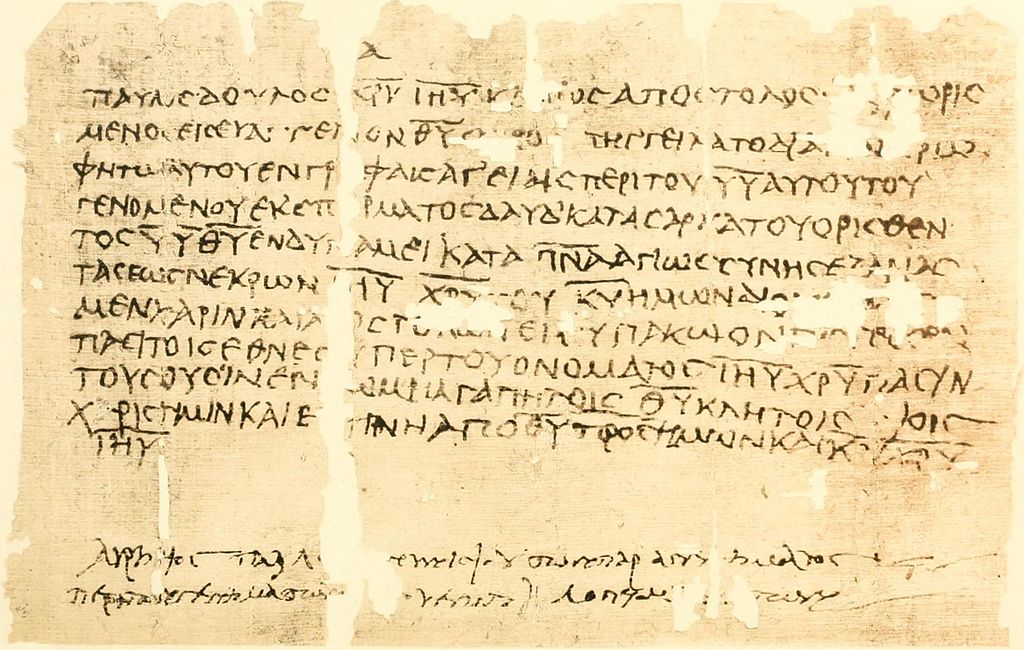
I charge you by the Lord that this epistle be read to all the holy brethren.
Paul’s First Letter to the Thessalonians
Don’t miss our recent FEATURED SERIES
JUNE 2024 – 2025 —
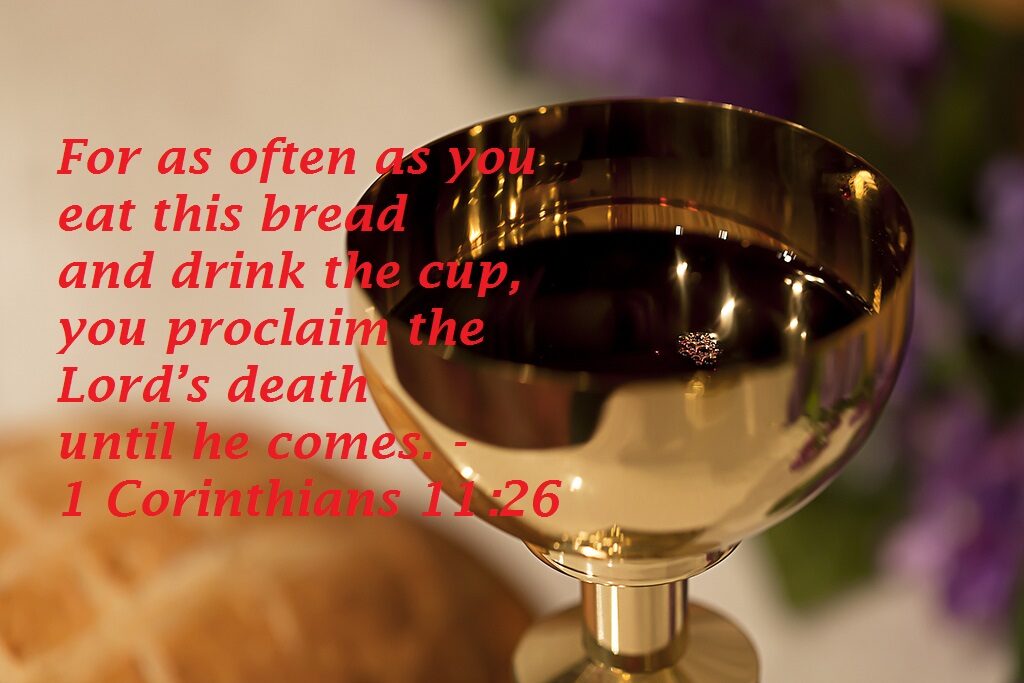
1 CORINTHIANS
———————————————————-
Letters – Is he writing to me?
The short answer: YES.
In their epistlesor 1st century church lettersthe Apostles and other men sent out by Jesus build up the saints [small – ‘s’] or members of local first century churches.
A Disciple or other witness of JESUS would write it. Messengers then delivered these church letters to many isolated worshipers.
Followers of Jesus Christ receive these letters as a major encouragement to their personal faith. Then leaders read them to worshipers of their church.
Although the Epistles 0r Letters to the Church were originally written to churches of the first century,
Romans through Jude will seem like letters to your 21st century church.
What do Peter, Paul, John and others tell us we must do?
Is he talking about an issue in your 21st c. church as well?
How does the writer’s advice, warning, or encouragement to the 1st c. believers apply to you as well
Is the writer of this letter talking about something you need to address in your 21st century ‘christian’ life?
Contemporary Application of the Letters (Epistles)
Most New Testament writers take on specific issues confronting faithful followers of Jesus Christ. These same issues continue to confront believers until the Lord’s coming again in these last days.
Certainly Christ our Lord will come again to those God has chosen for eternal life.
Believers currently suffer more than most of you who know Christ in your local church can imagine.
In other lands Christians continue to suffer by the hand of the ungodly.
Go into all the world
A 21st century Common Era church can see and hear nearly any atrocity of man or artificial imagination of sinful man’s mind, yet ‘christians‘ dare not speak of any absolute truth of the Lord God or talk of JESUS CHRIST.
Will YOU comment on Scripture and share the Gospel?
I invite you to read the inspired word of Scripture written in these LETTERS TO THE CHURCH.
YES, He IS writing to YOU.
Beloved brother or sister in Christ Jesus,
Will you read this ‘CHURCH LETTER’ andtalk of JESUS through your comment, sharing and email to me about this ‘Letter to you?”
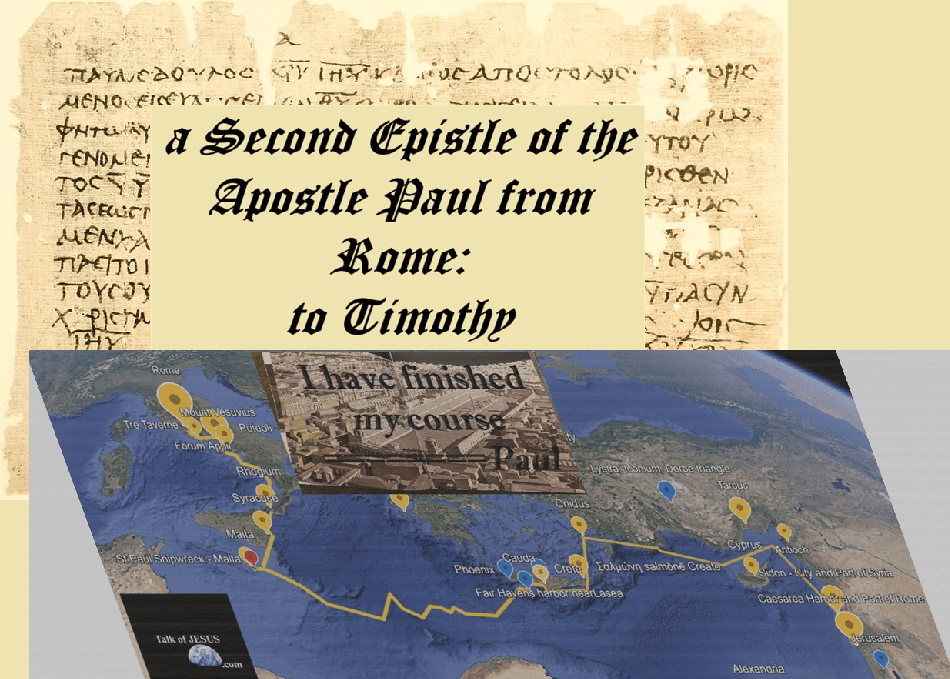
The Apostle now closes his final letter to Timothy noting that his course redirected by Christ on a road to Damascus so many years before — his marathon race of missions into all the world — indeed even the end of the Apostle’s mortal life is at hand.
in the N. T. σπένδεσθαι, to be offered as a libation, is figuratively used of one whose blood is poured out in a violent death for the cause of God
Paul, with Timothy about five years earlier, had written to the church in Philippi:
Do all things without grumbling or disputing, so that you will be blameless and innocent, children of God without blemish in the midst of a crooked and perverse generation, among whom you shine as lights in the world, holding fast the word of life, so that in the day of Christ I will have reason to boast because I did not run in vain nor labor in vain.
But even if I am being poured G4689 out G4689 as G4689 a G4689 drink G4689 offering G4689 upon the sacrifice and service of your faith, I rejoice and share my joy with you all.
And you also, rejoice in the same way and share your joy with me.
Epistle of Paul and Timothy, slaves of Christ Jesus,
To all the saints in Christ Jesus who are in Philippi 2:14-18 LSB
The Apostle had then sent Timothy and Epaphroditus to the church at Philippi.
For I am already being poured out as a drink offering, and the time of my departure has come.
2 Timothy 4:6 – Greek NT, LSB:
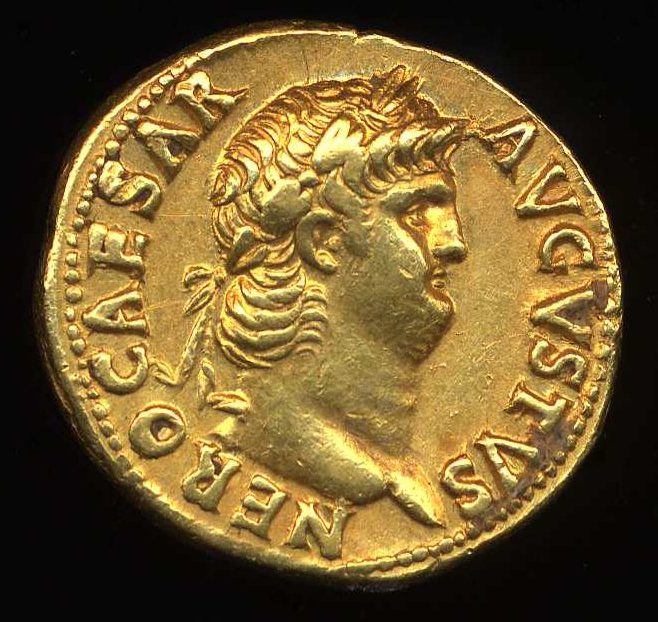
Although Paul was formerly housed in Rome for some time as a citizen having appealed to Caesar, the Apostle is now imprisoned with many others awaiting the whim of a merciless new Caesar Nero.
I have fought the good fight, I have finished the race, I have kept the faith.
Second Epistle of the Apostle Paul to Timothy 4:7 NKJV
to struggle, literally (to compete for a prize), figuratively (to contend with an adversary), or genitive case (to endeavor to accomplish something):—fight, labor fervently, strive.
That would be the Apostle Paul alright. Every saint of the church recognized his example which the Apostle expected them to follow, as they would Christ, who said:
“Strive G75 to enter through the narrow door, for many, I tell you, will seek to enter and will not be able.
Gospel of Luke (the physician who traveled with Paul who had written his Gospel while accompanying the Apostle) 13:24 LSB
Paul had written to the saints in Corinth [~A.D. 55] some ten years ago:
Now everyone who competes G75 in G75 the G75 games G75 exercises self-control in all things. They then do it to receive a corruptible crown, but we an incorruptible.
Therefore I run in such a way, as not without aim; I box in such a way, as not beating the air; but I discipline my body and make it my slave, so that, after I have preached to others, I myself will not be disqualified.
1 Corinthians 9:25-27 LSB
I have finished the course
However, I consider my life worth nothing to me; my only aim is to finish the race and complete the task the Lord Jesus has given me—the task of testifying to the good news of God’s grace.
Acts of the Apostles 20:24 NIV – Paul’s Farewell to the Ephesian Elders
Paul, since his conversion by Christ on the road to Damascus is, if nothing else, consistent in his persistence for the Gospel, even though the Apostle’s mortal life seems always in peril.
I have fought a good fight, I have finished my course..
to do just as commanded, and generally involving the notion of time, to perform the last act which completes a process, to accomplish, fulfill
Luke recounts what Jesus had told the Twelve prior to His crucifixion:
“I came to bring fire on the earth, and how I wish it were already set ablaze! But I have a baptism to undergo, and how it consumes me until it is finished [or accomplished – teleō]!
Do you think that I came here to bring peace on the earth?
No, I tell you, but rather division.
Gospel of Luke 12:49-51 CSB
And in his second account Paul’s physician reports of Christ’s crucifixion, where the Lord Himself spoke, “It is finished,”
When they had carried out [teleō] all that had been written about him, they took him down from the tree and put him in a tomb. But God raised him from the dead, and he appeared for many days to those who came up with him from Galilee to Jerusalem, who are now his witnesses to the people.
Acts of the Apostles 13:29-31 CSB – from Paul’s Sermon in Antioch of Pisidia
I have kept the faith
What does that mean to you?
Do you have the Apostolic faith of Paul.. or Timothy?
Who can say, “I have kept my heart pure,
I am clean from my sin”?
Proverbs 20:9 LSB
“If you keep My commandments, you will abide in My love;
just as I have kept My Father’s commandments and abide in His love [agapē].
These things I have spoken to you so that My joy may be in you,
and that your joy may be G4137 complete G4137.
John 15:10 -11 LSB – JESUS
And PAUL personally addressed Timothy earlier in this second letter:
… I unceasingly remember you in my prayers night and day, longing to see you, having remembered your tears, so that I may be filled [plēroō ] with joy, receiving remembrance of the unhypocritical faith within you.
Second Epistle of Paul to Timothy 1:3b-5a LSB
At last the champion’s wreath
Paul finishes his final epistle:
Finally, there is laid up for me the crown of righteousness, which the Lord, the righteous Judge, will give to me on that Day,
and not to me only but also to all who have loved His appearing.
I solemnly charge you before God and Christ Jesus, who is going to judge the living and the dead, and because of his appearing and his kingdom: preach the word..
Second Epistle of Paul to Timothy 4:1-2a CSB
Paul’s tone in the closing of his final letter to pastors — especially Timothy — strikes a most serious Apostolic climaxic chord. Paul’s edict recalls his own commanded authority as an Apostle under God and the Lord Jesus Christ.
An Edict to Preach
“I solemnly charge you,” captures this formal seriousness of Apostolic authority, although this English translation does not literally capture Paul’s charge word-for-word.
What is an edict?
Since 21st century Common Era English ears consider such authority archaic, trace its definition from earlier eras:
edict is a borrowing from Latin. edictum.
In the Roman law. An edict; a mandate, or ordinance. An ordinance, or law, enacted by the emperor without the senate.
source: thelawdictionary.org
The earliest known use of the noun edict is in the Middle English period (1150—1500).
Oxford English Dictionary
a decree issued by a sovereign or other authority.
Synonyms: pronouncement, dictum
any authoritative proclamation or command.
source: Dictionary.com
Some translations read,
“I charge you therefore,”
correctly connecting the Apostle’s edict to everything Paul as preached and written in this final letter.
By what Authority?
Common Era christians such as us might well ask, ‘who made you judge, jury and executioner?’
But it NOT the same question of Paul which the Apostle answered in writing two thousand years ago. The Apostle’s answer confirmed by other scriptures: it is not he who judges, but God by whose Authority he preaches and writes.
I charge thee therefore before God, and the Lord Jesus Christ, who shall judge the quick and the dead at his appearing and his kingdom; preach the word;
Second Epistle of Paul to Timothy 4:1-2a – Authorized (King James Version)
“I charge thee therefore before God, and the Lord Jesus Christ,” the Apostle writes to the faithful.
Allow me to say it again: Paul writes to the Church.
These are the Holy witnesses of Truth conveyed by Scripture.
Perhaps this charge rings familiar to any witnessing a ceremony of vows of Christian marriage.
“I charge you in the presence of God and of Christ Jesus,” reads the New American Bible.
God and..
ἐνώπιον θεοῦ καί
“before [enōpion ]GOD [theos] and [kai]
Paul clearly charges Timothy and the church to obey his teaching “with God as [my/his/our] witness.”
The Apostle adds a second and equal witness.
ἐνώπιον τοῦ θεοῦ καὶ τοῦ κυρίου Ἰησοῦ Χριστοῦ
You may recognize His Name (in Greek) from other Scripture.
‘the lord’ [ho kyrios] iēsouschristos
the Lord Jesus Christ
THEREFORE, with the witness of God and the witness of the Lord Jesus Christ — the Apostle to the gentiles (including most Christians) commands our faithfulness to God and Christ.
Would an unbeliever ask, ‘AND who are God and the Lord JESUS Christ, that I should do what Scripture says?”
The Apostle is NOT speaking to the unbeliever, but to the saint who claims Jesus as our Lord and Savior, propitiation for our sin and judge of all men [humankind, for you who choose], AND the pastor [like Timothy] discerning false followers among his fold.
I’m giving you this commission in the presence of God and of Christ Jesus, who is coming to judge the living and the dead, and by his appearance and his kingdom.
2 Timothy 4:1 – Common English Bible
coming again to judge the quick and the dead.
It is the Lord Jesus Christ who shall judge the quick [KJV from gk.zaō] and the dead [nekros]!
A 21st century christian little schooled in Scripture will find further study in these terms related to judgment which the Apostle Paul employs here in his last testament to pastors and the Church.
Much false teaching has evolved in these last days (centuries and millennia) in the Church — Scripture twisted by men and women commissioned with the highest responsibility of Truth who the Apostle would condemn before God and Christ.
The Preaching of a Man of God[a]
Christ Jesus, who is to judge the living and the dead,[b]
Two theological notes from the New Catholic Bible
Footnotes a. 2 Timothy 4:1 Apostles, missionaries, and pastors are first of all men of the Gospel and evangelization. The project that animates their existence is to awaken human beings to the true worship of the living God. This is a much more pressing task when a swarm of vain ideas sows confusion. Such a time has come, says Paul.
Although English punctuation in what Paul writes next varies, don’t disconnect the following edict from what the Apostle has just introduced as our solemn duty.
Now in those days John the Baptist came, preachingG2784 in the wilderness of Judea, saying, “Repent, for the kingdom of heaven is at hand.”
Gospel of Matthew 3:1-2 LSB
He preached to those who sought him.
Or think of the Lord Jesus as He went out with the Gospel.
And Jesus was going throughout all Galilee, teaching in their synagogues and preaching G2784 the gospel of the kingdom, and healing every kind of disease and every kind of sickness among the people.
Matthew 4:23 LSB
The Apostle Peter wrote of Christ preaching to both the quick and the dead:
For Christ also hath once suffered for sins, the just for the unjust, that he might bring us to God, being put to death in the flesh, but quickened by the Spirit:
By which also he went and preached G2784 unto the spirits in prison;
Which sometime were disobedient, when once the longsuffering of God waited in the days of Noah, while the ark was a preparing, wherein few, that is, eight souls were saved by water.
First Epistle of Peter 3:18-20 KJV
Preach the Gospel by Paul’s example
you, therefore, who teach [didaskō] another, do you not teach yourself? You who preach G2784 that one shall not steal, do you steal?
Romans 2:21 LSB
For you remember, brothers, our labor and hardship, how working night and day so as not to be a burden to any of you, we proclaimed G2784 to you the gospel of God.
1 Thessalonians 2:9 LSB
but we preach G2784 Christ crucified,
to Jews a stumbling block and to Gentiles foolishness,
but to those who are the called, both Jews and Greeks, Christ the power of God and the wisdom of God.
1 Corinthians 1:23-24 LSB
Be Prepared
Preach the word. Be ready to do it whether it is convenient or inconvenient. Correct, confront, and encourage with patience and instruction.
2 Timothy 4:22 NIV
Preach the word; be instant in season, out of season; reprove, rebuke, exhort with all longsuffering and doctrine.
2 Timothy 4:22 AKJV
STAND BY…
Paul’s verb, ephistēmi, instructs us to always be present, used esp. of persons coming upon one suddenly
And, lo, the angel of the Lord came upon G2186 them, – Luke 2:9 KJV
And the night following the Lord stood by G2186 him, and said, Be of good cheer, Paul: for as thou hast testified of me in Jerusalem, so must thou bear witness also at Rome. – Acts of the Apostles 23:11 KJV
Reprove, Rebuke Exhort
Harsh words to 21st c. Common Era ears.
And IF we hear these from the pulpit these tend towards those not of our same flock, rather than directed to the refining of the faithful.
Never-the-less, the Apostle’s edict commands Timothy and other pastors to do these.
Now I urge you, brothers, to keep your eye on those who cause dissensions and stumblings contrary to the teaching G1322 which you learned, and turn away from them.
Paul’s letter to the Romans 16:17 LSB
[The Bishop {overseer} must be].. holding fast the faithful word which is in accordance with the teaching G1322, so that he will be able both to exhort in sound doctrine and to reprove those who contradict.
Paul’s pastoral epistle to Titus 1:7-9 excerpt LSB
Be Patient
Who remembers the Boy Scout motto: BE PREPARED?
A Leader or Teacher's motto might well be:
BE PATIENT.
What Christ-follower has not experienced, ALL-LONGSUFFERING?
The Apostles suffered, indeed longsuffered for their faith. Timothy and others had lived long in the persecution of the saints in several cities.
Descriptions in other translations:
Patience, or all patience
complete patience,
great patience
unfailing in patience
If you have proclaimed Christ crucified and risen — JESUS as your ONLY Savior from damnation and just punishment in death by Almighty God — you, beloved believer, must be patient, long-suffering with others.
Paul’s Apostolic Edict to Pastors:
Preach the teachings of Jesus Christ and the Scriptures.
Be ready and persevere in ministry.
Reprove, Rebuke and Encourage – with all patience.
Understand this Apostolic importance of correcting false teachings and sinful behavior within the church, always with love and truth.
“Reprove” involves correcting false beliefs or behaviors, aligning with the corrective nature of Scripture as described in 2 Timothy 3:16.
“Rebuke” is a stronger form of correction, often necessary to address persistent sin, as seen in Jesus’ rebuke of the Pharisees in Matthew 23.
“Encourage” involves building up and supporting believers, similar to the exhortations found in Hebrews 10:24-25. Together, these actions reflect the balance of truth and love in ministry.
metaph. of Christians whose opinions are free from any mixture of error
of one who keeps the graces and is strong
source: blueletterbible.org
The Apostle to Jesus Christ warns once more against false teaching constantly invading in the church.
Previously from Paul:
..the law is made .. for lawbreakers and rebels, the ungodly and sinful, the unholy and irreligious, for those who kill their fathers or mothers, for murderers, or the sexually immoral, for those practicing homosexuality, for slave traders and liars and perjurers
—and for whatever else is contrary to the sound doctrine that conforms to the gospel concerning the glory of the blessed God, which he entrusted to me.
1 Timothy 1:9-12 excerpt NIV
Now the Spirit speaketh expressly, that in the latter times some shall depart from the faith, giving heed to seducing spirits, and doctrines of devils; Speaking lies in hypocrisy; having their conscience seared with a hot iron;
If thou put the brethren in remembrance of these things, thou shalt be a good minister of Jesus Christ, nourished up in the words of faith and of good doctrine, whereunto thou hast attained.
1 Timothy 4:1-2,6 KJV
If any man teach otherwise, and consent not to wholesome words, even the words of our Lord Jesus Christ, and to the doctrine which is according to godliness;
He is proud, knowing nothing, but doting about questions and strifes of words, whereof cometh envy, strife, railings, evil surmisings, Perverse disputings of men of corrupt minds, and destitute of the truth, supposing that gain is godliness:
from such withdraw thyself.
First Epistle of Paul to Timothy 6:5 KJV
2 Timothy 4:3 – a second reminder
For the time will come when people will not tolerate sound doctrine, but according to their own desires, will multiply teachers for themselves because they have an itch to hear what they want to hear.
2 Timothy 4:3 CSB
When the church will not tolerate sound doctrine
We read in the Common English Bible: ‘There will come a time when people will not tolerate sound teaching.’
Paul and the other Apostles all warned of it. Some heresies already seeping into the Church became rampant even before the fall of Rome. Another turning from doctrine by the Church itself resulted in a millenial dark age defying the Scriptural light of Apostolic faith in the early Church.
The Protestant Reformation returned this Light of Christ and the Gospel for a time. Then a great awakening reignighted a remnant faith once more.
Even into the 20th century an enlightened mankind would at least acknowlege God and Jesus Christ. But now in the Common Era, most will not.
An Insatiatiable Common Era church
WHY?
We find Paul’s reasoning here in this text 21st c. pulpits dare not say to our own Sunday gathering of sinners (forgiven ONLY in Christ)?
These are a longing (especially for what is forbidden); to lust after something we really want replacing what God desires.
Other translations suggest, ‘to suit their own desires,’ or ‘they will follow their own desires,’ or even accuse that it is, ‘because they are self-centered.’
What does the Apostle warn will happen?
Recognize here the life of our Common Era communities and churches:
.. Instead, to suit their own desires, they will gather around them a great number of teachers to say what their itching ears want to hear.
2 Timothy 4:3b NIV
Preaching to itching ears
“..to suit their own desires” (lusts) the church will ordain teachers to preach to multitudes of “itching ears”
They will turn away from hearing the truth and will turn aside to myths.
2 Timothy 4:4 NKJV
When did the desires of the multitudes become the gospel of false teaching?
The Apostle WARNS that this could happen and urges Timothy to beware of these false teachers.
but you watch
5 But you must keep control of yourself in all circumstances.
Common English Bible
5 But you, keep your head in all situations,
NIV
But as for you, exercise self-control in everything
2 Tim 4:5a CSB
in all things:
endure afflictions
The Apostle Paul emphasized this, by contrast to false teachers, in the early part of this epistle.
The Apostolic call of Paul to endure all thingswill ring familiar in ears to hear his gospel preached to many churches.
.. it does not rejoice in unrighteousness, but rejoices with the truth; it bears all things, believes all things, hopes all things, endures all things.
The KJV translates Strong’s G2097 in the following manner: preach (23x), preach the Gospel (22x), more
And every day, in the temple and from house to house, they did not cease teaching and proclaiming G2097 the good G2097 news G2097 that Jesus is the Christ.
Acts of the Apostles 5:42 LSB
Jesus instructs us in the works of the evangelist.
“Let your light so shine before men, that they may see your good works and glorify your Father in heaven.
Matthew 5:16 NKJV
Then they said to Him, “What shall we do, that we may work the works of God?” Jesus answered and said to them,
“This is the work of God, that you believe in Him whom He sent.”
Gospel of John 6:28-29 NKJV
Carry on
“Fulfill your ministry,” translate several versions of 2 Timothy 4:5.
Paul has fulfilled his Apostolic mission and in closing his final epistle the Apostle now encourages Timothy to carry on — ‘make full proof of thy ministry’ [KJV], discharge all the duties of your ministry [NIV].
NEXT: Paul will pass the torch to Timothy in closing his final epistle.
But you must continue in the things which you have learned and been assured of, knowing from whom you have learned them, and that from childhood you have known the Holy Scriptures,
which are able to make you wise for salvation through faith which is in Christ Jesus.
Second Letter of Paul to Timothy 3:14-15 NKJV
The Apostle Paul will now show his successors, including at the time of his impending execution Timothy in Ephesus, how they must refute false teaching by focusing on Scripture.
Today's look at 2 Timothy within our SERIES of Apostolic Faith is primarily TOPICAL with focus on SCRIPTURE and its related terms. - RH
Scripture is…
Many of us tend toward an easy answer of quoting scripture as a single and particular verse within a chapter, within a book, within a category of books, i.e. the Torah. Yet this epistle of Paul and books of the Prophets often point to additional books for origin, application and/or context.
the Scripturesare books
Paul reminds Timothy: “.. you have known the Holy Scriptures..”, translated from the Greek: τὰ [ho] ἱερὰ [hieros] γράμματα [gramma] οἶδας [you have known].
No doubt you recognize the Greek word for Scripture – gramma, as grammar.
γράμμα grámma, gram’-mah; from G1125; a writing, i.e. a letter, note, epistle, book, etc.; plural; learning:—bill, learning, letter, scripture, writing, written.
Writings
Yet let’s not miss that the Apostle Paul points Timothy to the ‘scriptures‘ [plural] and more importantly with specific reference that those writings that are “holy.”
Biblia
The earliest Christian use of ta biblia (the books) in this sense is said to be 2 Clement 2:14 (c. a.d. 150): “The books and the apostles declare that the church . . . has existed from the beginning.” (Compare Dan. 9:2, “I, Daniel, understood from the Scriptures,” where the reference is to the corpus of Old Testament prophetic writings.) Greek biblion (of which biblia is the plural) is a diminutive of biblos, which in practice denotes any kind of written document, but originally one written on papyrus.
A term synonymous with“the Bible” is“the writings” or “the Scriptures” (Greek hai graphai, ta grammata), frequently used in the New Testament to denote the Old Testament documents in whole or in part. For example, Matthew 21:42 says, “Have you never read in the Scriptures?” (en tais graphais). The parallel passage, Mark 12:10, has the singular, referring to the particular text quoted,“Haven’t you read this Scripture?” (ten graphen tauten).
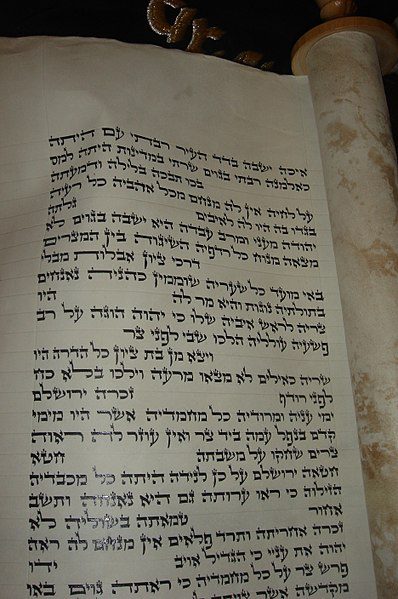
“Write this as a memorial in a book and recite it in the ears of Joshua..
Exodus 17:14a – Masoretic Text, Revised Standard Version
Strong’s H3789 – kāṯaḇ (for write) is the same Hebrew word used in the giving of the Commandments.
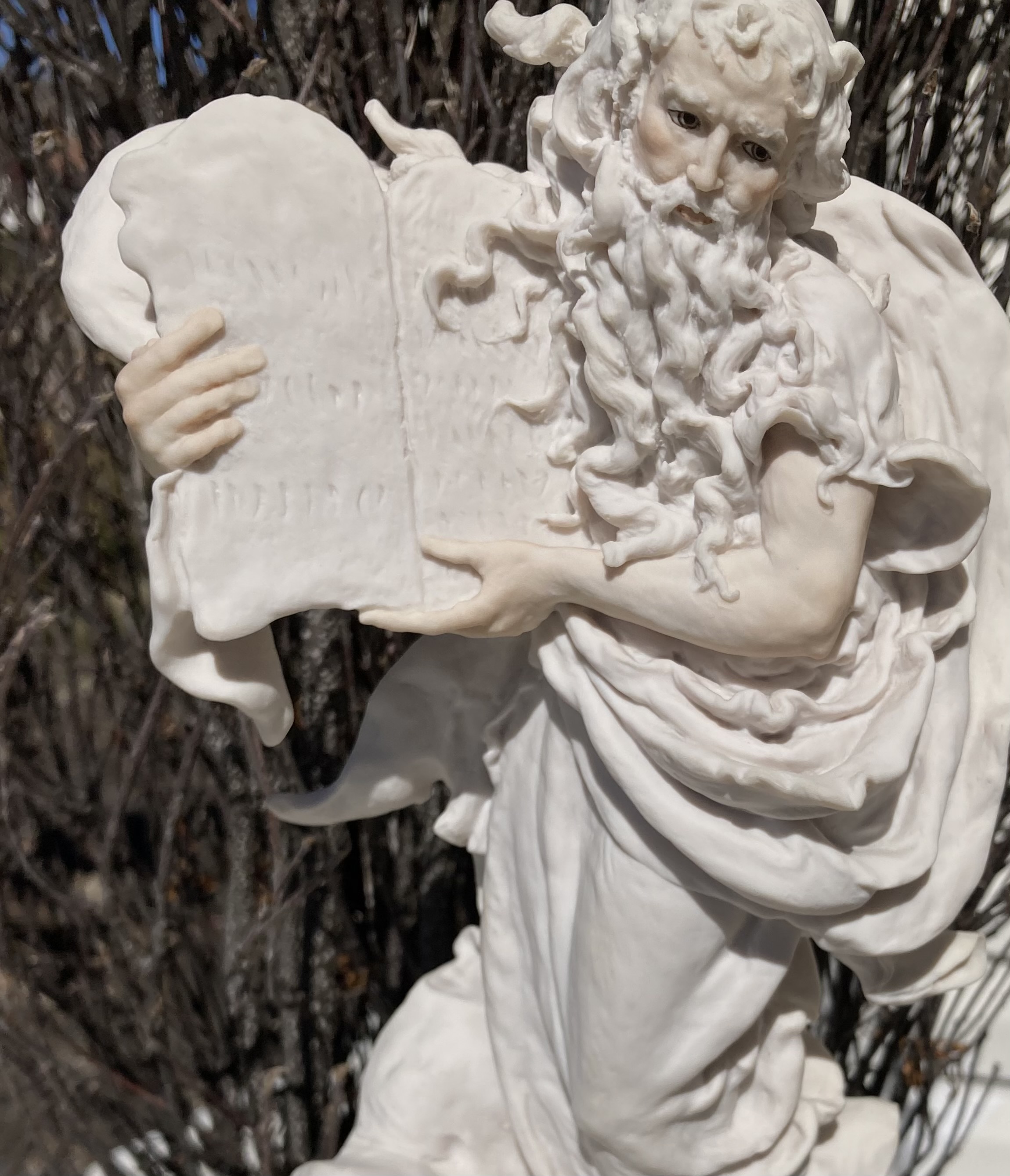
And he gave unto Moses, when he had made an end of communing with him upon mount Sinai, two tables of testimony, tables of stone, written H3789 with the finger of God.
Exodus 31:18 KJV
“Write this as a memorial in a book,” the LORD instructs Moses to give to his successor Joshua.
New testament
Some pastors and teachers wander from the Truth of Scripture by dismissing Old Testament Law and especially the Prophets from the hearing and remembrance of their church.
“I have come in My Father’s name, and you do not receive Me; if another comes in his own name, him you will receive.
.. there is one who accuses you—Moses, in whom you trust.
“For if you believed Moses, you would believe Me; for he wrote about Me.
“But if you do not believe his writings, how will you believe My words?”
New Testament Gospel of John 5:43, 45b-47 NKJV
The Lord Jesus Christ, however, connects His own testimony to that of the Hebrew Bible:
“.. he (Moses) wrote [γράφω – graphō] about Me, ” states the Lord Jesus. And the Christ or Messiah of Israel adds:
“But if you do not believe his (Moses’) writings [γράμμα – gramma], how will you believe My words [ῥῆμα – rhēma]?”
This, in addition to being a frequent warning of Christ, became an Apostolic word of warning written in several epistles to A.D. first century pastors.
a word from The Apostle Peter
Simon Peter answered him, “Lord, to whom shall we go? You have the words [rhēma] of eternal life
Gospel of John 6:68 – Jesus’ Apostles remain faithful as the Lord’s crucifixion approaches
And this is the wordG4487 which was proclaimed to you as good news.
1 Peter 1:25
I am stirring up your sincere mind by way of reminder, that you should remember the words spoken beforehand by the holy prophets and the commandment of the Lord and Savior spoken by your apostles..
Paul in his second pastoral epistle to Timothy also provides a remembrance of Scripture for generations to follow.
Second Timothy 3:15 (RSV)
speaks of “the sacred writings”
(ta hiera grammata), and the next verse says,
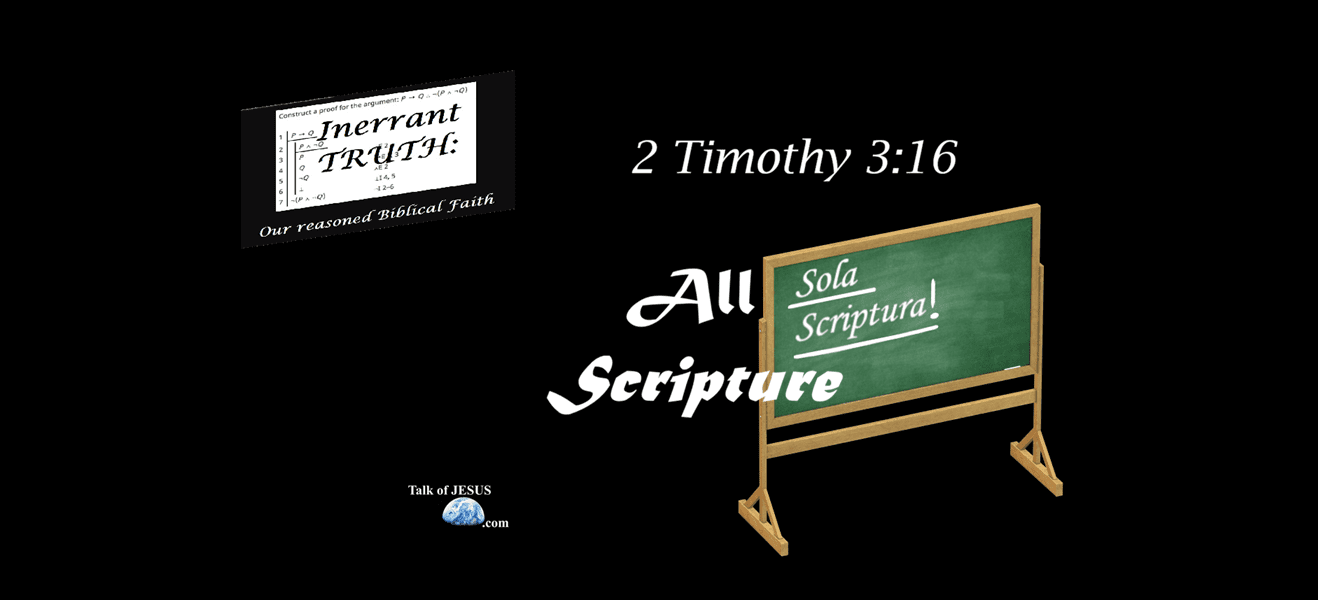
“All Scripture is God-breathed”
(pasa graphe theopneustos).
In 2 Peter 3:16 “all” the letters of Paul are included along with “the other Scriptures” (tas loipas graphas),
by which the Old Testament writings and probably also the Gospels are meant.
ibid.
It is written…
Is the phrase familiar?
as it is written in the book of the law of Moses – Joshua 8:31
Keep the passover unto the LORD your God, as it is written in the book of this covenant. – 2 Kings 23:21
Then said I, Lo, I come: in the volume of the book [sēp̄er] it is written [kāṯaḇ] of me.. – Psalm 40:7
Jesus therefore answered and said to them, “Do not murmur among yourselves. No one can come to Me unless the Father who sent Me draws him; and I will raise him up at the last day.
“It is written in the prophets, ‘And they shall all be taught by God.’[Jesus, quoting Isaiah 54:13]
Therefore everyone who has heard and learned from the Father comes to Me.
Gospel of John 6:43-45 NKJV
Then I said, “Behold, I come;
In the scroll of the book it is written H3789 of me.
“Every scripture inspired of God,” the ASV translates.
“Every scripture is inspired by God,” reads the New English Translation.
“Every scripture is divinely inspired,” in the Darby translation.
“every Writing is God-breathed,” states Young’s Literal Translation.
Pivotal Proof, IF you believe
How do false teachers oppose God and Christ?
First, in order to turn faithful saints of the church against God false teachers must attack Scripture. They do this with the subtlety of Satan with a simple turn of a word. For when all is said and done, false teachers insist that God is wrong and that they know why.
In a section headed, SCRIPTURE PROVIDES INSTRUCTION FOR SANCTIFICATION (which of course false teachers want no part of), John MacArthur writes:
Some scholars suggest that All Scripture is inspired should be translated,
“All Scripture inspired by God is..,”
which would leave open the possibility that someScripture is not inspired by Him. But that rendering would make the Bible worthless as a reliable guide to divine truth, because we would then have no way to determine which part of it is inspired by God and which is not.
Men would be left to their own finite and sinful devices and understanding ot discover what part of the Bible may be true and which may not, what part is God’s Word and what part is human conjecture.
THE MACARTHUR NEW TESTAMENT COMMENTARY – 2 TIMOTHY, P.142
MacArthur definitively adds:
Many men who wrote Scripture, such as Moses and Paul, were highly trained in human knowledge and wisdom, but that learning was not the source of divine truth they recorded. David was a highly gifted poet, .. but it was not the source of the divine truths in those psalms.
ibid. p.143
Does 2 Tim 3:16 prove the inspiration of all Scriptureor just some?
excerpt from: A POPULAR HANDBOOK ON BIBLE DIFFICULTIES
PROBLEM:
Some think that the word “all” should be replaced by “every.” Plus, one believe that.. “is” should be placed after.. not before.
SOLUTION:
[edited excerpt] .. those that translate this verse with “is” after “God” make it sound like there are some scriptures not inspired of God. “all” should be translated, “every” if the definite article is missing. However, whenever the word “Scripture” (graphē) is used in the NT, it always refers to authoritative and inspired writings— never the opposite…
Paul’s context here refers to “the Holy Scriptures” (1:15) Timothy’s Jewish mother and grandmother had taught him (2 Tim 1:5), and this could be none other than the whole Jewish OT.
WHEN CRITICS ASK, Norman Geisler & Thomas Howe, pp 505-506
πᾶσα γραφὴ θεόπνευστος καὶ — ALL SCRIPTURE given by inspiration of God, and…
4 Profitable Imperatives
The Apostle Paul then continues to instruct Timothy and readers of his pastoral epistle in HOW TO APPLY the TRUTH of GOD-BREATHEDSCRIPTURE.
By 'profitable,' Paul means helpful or advantageous
Once again, let’s just list Paul’s MUST DO list from various translations noting also the interralationship of these actions of applying Scripture.
et utilis ad docendum ad arguendum ad corrigendum ad erudiendum in iustitia’
from the Latin Vulgate
WE resist many of these Scriptural imperatives; but the Apostle Paul assures Christ-followers that GOD breathed-out the Commandments WRITTEN in the BIBLE.
Let's simplify Paul's four-point list in 2 Timothy 3:16
DOCTRINE – didaskalia
REPROOF – elegchos
CORRECTION – epanorthōsis
INSTRUCTION IN RIGHTEOUSNESS – paideia endikaiosynē
Doctrine, learning, teaching or Instruction
The Scriptures serve as a comprehensive guide for teaching and imparting knowledge about God, His will, and His ways. … The Bible provides moral and spiritual guidance, helping believers understand the nature of God and the principles of His kingdom.
a proof, that by which a thing is proved or tested
conviction
Now faith is the substance of things hoped for, the evidence G1650 of things not seen.
Hebrews 11:1
correction, improvement of life or character,
restoration to an upright or right state – a derivative of the base of G3717; to straighten up:—lift (set) up, make straight.
And behold, there was a woman who had a spirit of infirmity eighteen years, and was bent over and could in no way raise herself up…
And He [Jesus] laid His hands on her, and immediately she was made straight, and glorified God.
Gospel of Luke 13:11,13 NKJV
ἐπανόρθωσις – a straightening up again, i.e. (figuratively) rectification (reformation):—correction.
Paul assures Timothy that Scripture can rectify that false teaching which has made your spirit and life crooked with sin.
Instruction in righteousness –
the whole training and education of children
(which relates to the cultivation of mind and morals, and employs for this purpose now commands and admonitions, now reproof and punishment)
It also includes the training and care of the body
παιδεία paideía, pahee-di’-ah; from G3811; tutorage, i.e. education or training; by implication, disciplinary correction:—chastening, chastisement, instruction, nurture.
Paul, an apostle of Jesus Christ by the will of God,
to the saints which are at Ephesus, and to the faithful in Christ Jesus:
6:4 And you, fathers, do not provoke your children to wrath,
Paul’s protégé and young pastor to the saints at Ephesus, will not overlook his apostolic example as the type of righteousness required in the instruction of Scripture.
That the man of God may be perfect
thoroughly furnished unto all good works.
2 Timothy 3:17 KJV
One last word here about ALL SCRIPTURE, before the Apostle pushes on to PREACH THE WORD.
ἵνα ἄρτιος ᾖ – that perfect may be
Perfection (used in the King James Version) refers to perfection in Christ.
Be ye therefore perfect, even as your Father which is in heaven is perfect.
Gospel of Matthew 5:48 KJV – Jesus teaching the crowds in the Beautitudes
Other translations use ‘complete.’
Wake up, and strengthen what remains and is about to die, for I have not found your works complete in the sight of my God.
Revelation of Jesus Christ to John: 3:2 ESV – To the Church in Sardis
Still other translations point the preacher of God to Scripture as essential to be: fit, adequate, capable, or proficient.
ὁ τοῦ θεοῦ ἄνθρωπος – of God the man
The Apostle is addressing the man of God, a technical phrases used only of Timothy in the New Testament. In the Old Testament it is frequently used as a title for one who proclaimed the Word of God. In this context, man of God refers most directly to Timothy and, by extension, to all preachers.
John MacArthur New Testament Commentary – 2 Timothy, p.162
(and in the Greek, followed by ‘thoroughly furnished.’
And Paul’s practical preparation for the man of God gives good reason:
The Apostle prescribes SCRIPTURE as a preacher’s tools, useful for building good works among the saints of their church.
ἐξηρτισμένος – thoroughly furnished
throughly [KJV prior to 16th c. archaic]furnished
unto all good works.
ἐξαρτίζω exartízō, means: to furnish perfectly; to finish, accomplish, (as it were, to render the days complete).
One instance of this concept takes place when John the Baptist objected to Jesus that Christ should be baptizing him.
And Jesus answering said unto him, Suffer it to be sonow:G737 for thus it becometh us to fulfil all righteousness. Then he suffered him.
Matthew 3:15 KJV
Scripture Written – the Word Spoken
In the beginning God created the heaven and the earth. And the earth was without form, and void; and darkness was upon the face of the deep. And the Spirit of God moved upon the face of the waters.
And God said…
Moses and Aaron among his priests, and Samuel among them that call upon his name; they called upon the LORD, and he answered them.
Genesis 1:1-3a, Psalm 99:6 KJV
In the beginning was the Word, and the Word was with God, and the Word was God. The same was in the beginning with God.
Gospel of John 1:1-2 KJV
And the Word was made flesh, and dwelt among us, (and we beheld his glory, the glory as of the only begotten of the Father,) full of grace and truth.
My sheep hear my voice, and I know them, and they follow me: And I give unto them eternal life; and they shall never perish, neither shall any man pluck them out of my hand.
Gospel of John 1:8, 10:27 KJV – Spoken by JESUS Christ
Next: Preach the word! – 2 Timothy 4
Comment on Scripture – Share the Gospel
Cookie Consent
We use cookies to improve your experience on our site. By using our site, you consent to cookies.
Used to monitor number of Google Analytics server requests
10 minutes
__utmb
Used to distinguish new sessions and visits. This cookie is set when the GA.js javascript library is loaded and there is no existing __utmb cookie. The cookie is updated every time data is sent to the Google Analytics server.
30 minutes after last activity
__utmc
Used only with old Urchin versions of Google Analytics and not with GA.js. Was used to distinguish between new sessions and visits at the end of a session.
End of session (browser)
__utmz
Contains information about the traffic source or campaign that directed user to the website. The cookie is set when the GA.js javascript is loaded and updated when data is sent to the Google Anaytics server
6 months after last activity
__utmv
Contains custom information set by the web developer via the _setCustomVar method in Google Analytics. This cookie is updated every time new data is sent to the Google Analytics server.
2 years after last activity
__utmx
Used to determine whether a user is included in an A / B or Multivariate test.
18 months
_ga
ID used to identify users
2 years
_gali
Used by Google Analytics to determine which links on a page are being clicked
30 seconds
_ga_
ID used to identify users
2 years
_gid
ID used to identify users for 24 hours after last activity
24 hours
_gat
Used to monitor number of Google Analytics server requests when using Google Tag Manager
1 minute
_gac_
Contains information related to marketing campaigns of the user. These are shared with Google AdWords / Google Ads when the Google Ads and Google Analytics accounts are linked together.