I charge you by the Lord that this epistle be read to all the holy brethren.
Paul’s First Letter to the Thessalonians
Don’t miss our recent FEATURED SERIES
JUNE 2024 – 2025 —
1 CORINTHIANS
———————————————————-
Letters – Is he writing to me?
The short answer: YES.
In their epistlesor 1st century church lettersthe Apostles and other men sent out by Jesus build up the saints [small – ‘s’] or members of local first century churches.
A Disciple or other witness of JESUS would write it. Messengers then delivered these church letters to many isolated worshipers.
Followers of Jesus Christ receive these letters as a major encouragement to their personal faith. Then leaders read them to worshipers of their church.
Although the Epistles 0r Letters to the Church were originally written to churches of the first century,
Romans through Jude will seem like letters to your 21st century church.
What do Peter, Paul, John and others tell us we must do?
Is he talking about an issue in your 21st c. church as well?
How does the writer’s advice, warning, or encouragement to the 1st c. believers apply to you as well
Is the writer of this letter talking about something you need to address in your 21st century ‘christian’ life?
Contemporary Application of the Letters (Epistles)
Most New Testament writers take on specific issues confronting faithful followers of Jesus Christ. These same issues continue to confront believers until the Lord’s coming again in these last days.
Certainly Christ our Lord will come again to those God has chosen for eternal life.
Believers currently suffer more than most of you who know Christ in your local church can imagine.
In other lands Christians continue to suffer by the hand of the ungodly.
Go into all the world
A 21st century Common Era church can see and hear nearly any atrocity of man or artificial imagination of sinful man’s mind, yet ‘christians‘ dare not speak of any absolute truth of the Lord God or talk of JESUS CHRIST.
Will YOU comment on Scripture and share the Gospel?
I invite you to read the inspired word of Scripture written in these LETTERS TO THE CHURCH.
YES, He IS writing to YOU.
Beloved brother or sister in Christ Jesus,
Will you read this ‘CHURCH LETTER’ andtalk of JESUS through your comment, sharing and email to me about this ‘Letter to you?”
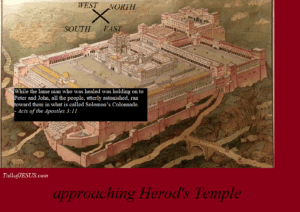
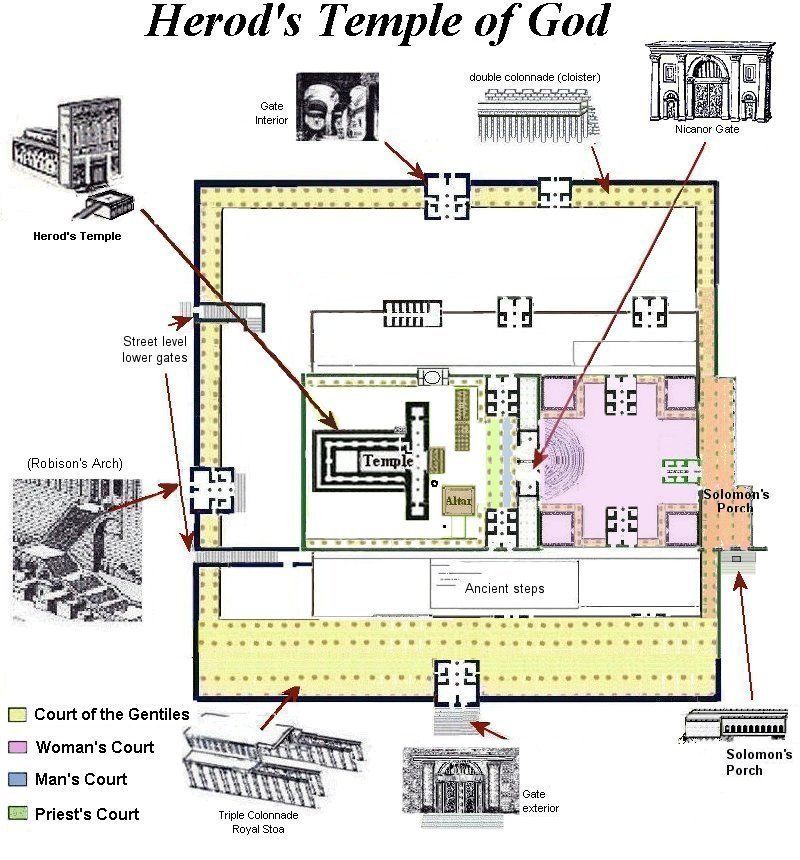
You’ve never heard it called ‘HEROD’S PORCH,’ but certainly that must have been the inferred imagery when Herod the Great named it, ‘Solomon’s Porch,’ (porticumSalomonis, in the Latin of Herod’s Roman friends).
Now while Kefa and Yochanan were being held by him, all the people ran together to them at the Portico which is called Ulam Sh’lomo, and the people were utterly astonished.
Gevurot 3:11 Orthodox Jewish Bible – Peter & John, with a healed beggar clinging to them, enter the temple’s Portico of Solomon.
A growing gathering of worshipers
We recognize signs of the Holy Spirit burning in the witness of a NEW growing gathering who are part of God’s plan of worship for the JEWS.
Luke, so far, has numbered followers of the Apostles growing from:
at least seventy-two (72) disciples of Jesus among the multitudes
thousands [4000 & 5000 & many more] who witnessed Jesus’ miracles
multitudes [10,000’s] who entered Jerusalem greeting their Messiah Jesus with palms,
many who remained faithful even after Christ’s crucifixion in Jerusalem just two months ago
Saul of Tarsus (who may possibly have been present along with so many important Jewish officials) later writes to the Church at Corinth: [1 Corinthians 15:6]
After that He appeared to more than five hundred [500] brothers and sisters at one time, most of whom remain until now, but some have fallen asleep..
No doubt MANY of these faithful have come here to Jerusalem for the festival of Pentecost and they gather to hear Peter preach at the Temple and to hear more witness by the Apostles of their risen Lord Jesus Christ.
Herod’s Week-long Festival in Jerusalem
one-hundred twenty (120) who received the Holy Spirit on the day of Pentecost
(Just one problem though — THIS is HEROD’S TEMPLE(and not the house of the LORD built by Solomon)
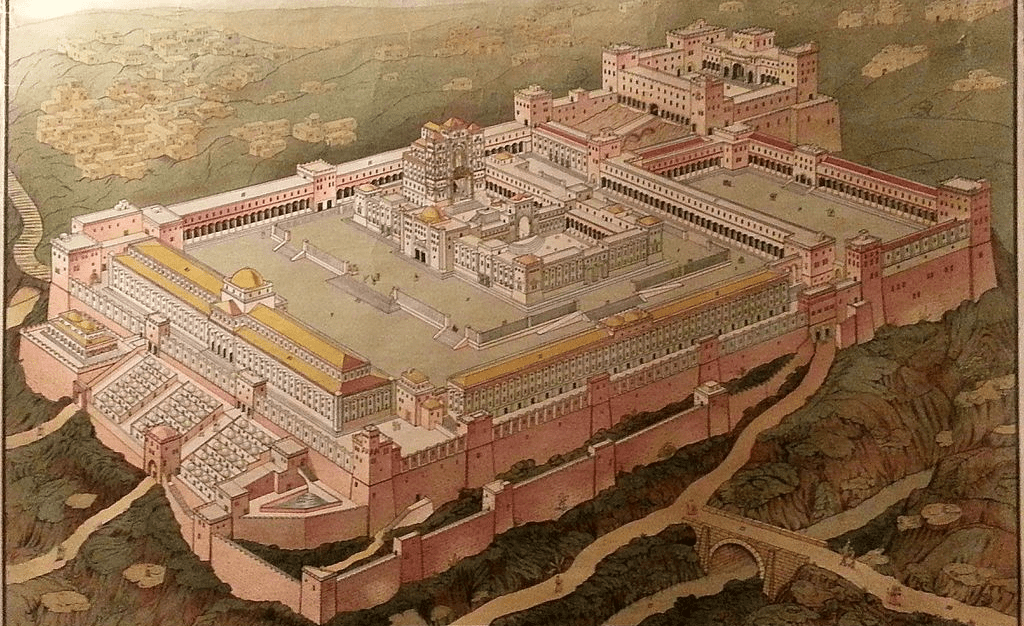
Herod’s Rebuilt Temple
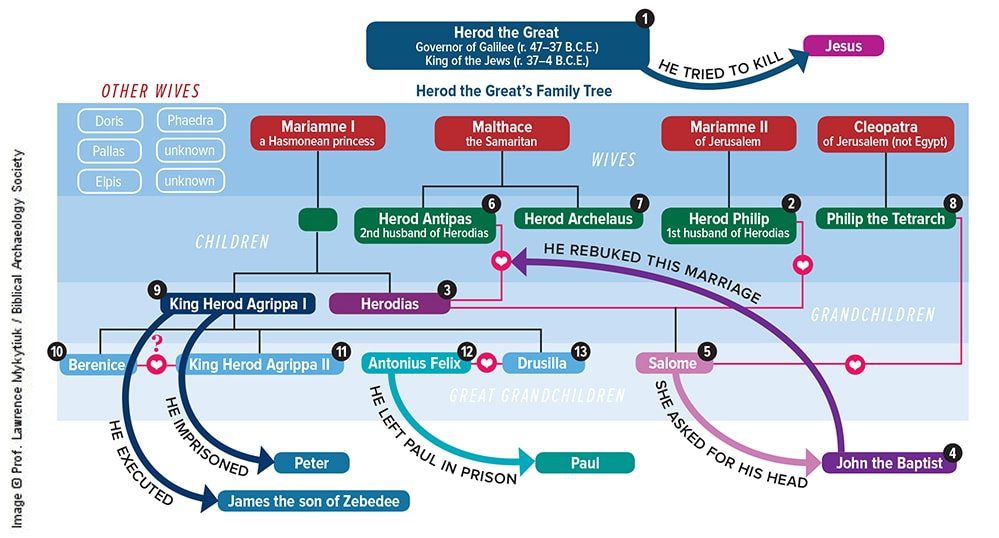
The Jews loved to recall the greatness of David and Solomon. Several successors to Herod the Great knew the drawing power of Herod’s great building projects, infrastructure successes under the political power of Rome. Political and religious leaders conspired with each other and Rome for their own piece of power in first century Jerusalem.
A Herod attempted to murder a baby Jesus & a Herod had Him crucified.
Peter and John certainly knew some of the dangers at the hands of religious and political leaders lurking about near this place where Peter would preach.
As you may recall, it has only been about two months since young John and a terrified Peter had witnessed the frenzied trials and crucifixion of the Lord Jesus here, as well as a manipulated mania of the multitudes incited by the politically powerful.
Renovation began ~20/19 BC. In 9 BC. the temple was dedicated. But even at the time of the Lord Jesus the renovation was not completely finished.
Source: (includes several drawings & detailed descriptions)
The Magnificence of Herod’s Temple
Source New Testament History Special Study 1 - Temple of Herod.pdf NOT secure
This building project begun by Herod the Great renovated the second temple of Zerubbabel, but it differed so greatly from it and the first Temple of Solomon that the Jews referred to it as Herod’s temple.
The Temple itself had the same dimensions as Solomon’s, but it stood 60 cubits high – about 90 feet [9-12 stories].
Each of four square public courtyards were about 233 feet square – about like 70 yards of a football field with 10 yards added on each sideline, room for very large crowds
Behind the 60 cubit towering Temple the long Western Wall of the Temple Mount was 1590 feet long (the length of about 4.5 football fields) – source
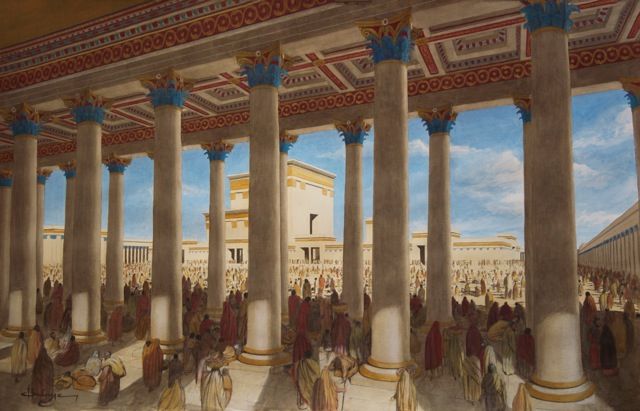
The Royal Porch [Solomon’s Portico] overhung the southern wall
It had a central open area (nave) of about 41 feet
and two side aisles 30 feet from the center
the center aisle was 100 feet long
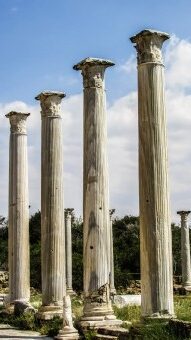
the whole structure was supported by 162 Greek Corinthian style columns
9 And all the people saw him walking and shouting, “Baruch Hashem!”
10 And they recognized him, that he was the one sitting at the Sha’ar Hatiferet (Beautiful Gate) of the Beis Hamikdash begging for tzedakah; and they were mishpoyel (standing in awe) and amazement at what had happened to him.
Gevurot 3:9-10 Orthodox Jewish Bible
While he clung to Peter and John, all the people, utterly astounded, ran together to them in the portico called Solomon’s.
And when Peter saw it he addressed the people:
“Men of Israel, why do you wonder at this,
or why do you stare at us, as though by our own power or piety we have made him walk?
Simon Peter, who had denied Christ three times during the Lord’s trial but was then restored by Jesus after the resurrection, introduces himself as a servant [bond-servant] and Apostle of Jesus Christ. He speaks of Jesus in the present tense, for Christ has shown Himself to many alive and risen from death!
Peter is a bond-servant of the Living God in the Person of Christ Jesus. And the Apostle writes not to all, but to those chosen by God to receive ‘the righteousness of our God and Savior Jesus Christ.’
2 May grace and peace be multiplied to you through the knowledge of God and of Jesus our Lord.
Peter builds up believers in their faith, assuring them:
18 We ourselves heard this voice when it came from heaven while we were with him on the holy mountain.
THE JUDGMENT OF FALSE TEACHERS
The Apostle then cautions the church of false teaching.
YES, even from the first days of Christ’s Church, built on a foundation of His Apostles, some sought to destroy the Good News of the Lord’s resurrection and restoration of sinners by distorting the way, the truth and the life of Christ Jesus our Lord.
Peter warns:
There were indeed false prophets among the people, just as there will be false teachers among you.
They will bring in destructive heresies, even denying the Master who bought them, and will bring swift destruction on themselves. Many will follow their depraved ways, and the way of truth will be maligned because of them.
The King James Version then pointedly follows Peter’s warning translated thusly:
And through covetousness shall they with feigned words make merchandise of you: whose judgment now of a long time lingereth not, and their damnation slumbereth not.
Because strait is the gate, and narrow is the way, which leadeth unto life, and few there be that find it.
Matthew 7:14 KJV
FEW find the strait gate and the narrow way leading to eternal life. FALSE teachers WILL NOT teach that, though our Lord Christ Jesus preached this challenging truth.
Beware of false prophets, which come to you in sheep’s clothing, but inwardly they are ravening wolves.
Matthew 7:15
Returning to Peter’s analogy of Sodom
The Apostle acknowledges the challenges of believers living in a world of sin and disbelief.
Peter preaches that God cast angels down to hell and did not spare ANY in a sinful world, except Noah and his family.
For if God did not spare angels when they sinned, but cast them into hell and committed them to pits of darkness, held for judgment; and did not spare the ancient world, but protected Noah, a preacher of righteousness, with seven others, when He brought a flood upon the world of the ungodly; and if He condemned the cities of Sodom and Gomorrah to destruction by reducing them to ashes, having made them an example of what is coming for the ungodly..
2 Peter 2:4-6 NASB Bolded emphasis mine. – RH
The Apostle of the Lord Jesus then encourages the church to be faithful, as were Noah and Lot.
So what is the Apostle’s encouragement to believers who persevere in their own difficult challenges of the first century? (Or, I might add, equally applied for the believer of this 21st century?)
.. and if He rescued righteous Lot, who was oppressed by the perverted conduct of unscrupulous people..
.. then the Lord knows how to rescue the godly from a trial, and to keep the unrighteous under punishment for the day of judgment, and especially those who indulge the flesh in its corrupt passion, and despise authority.
We are righteous in Christ Jesus, beloved believer, (though we were condemned as sinners).
Did you notice my omission of verse (8) above from Peter’s encouragement?
Here the Apostle shows our empathy for Lot as he lived in Sodom.
(for by what he saw and heard that righteous man, while living among them, felt his righteous soul tormented day after day by their lawless deeds)
2 Peter 2:8 NASB20 – speaking of Lot living in Sodom before its destruction by the LORD
Is the city of your church a Sodom of sorts?
(Of course it is.) Here we feel the same compassion for Lot which Peter points out.
Further Description of False Teachers
For your own instruction you may want to read some characteristics of false teachers who will not preach Christ Jesus crucified and risen. READ the rest of the Apostle Peter’s second letter {below}.
Then consider if YOUR church, your Bible study, your ‘church group,’ and the children’s ministry of YOUR church all preach Christ Jesus.
The Lord Jesus’ Apostle, Simon Peter closes his letter to the church with this:
17 Therefore, dear friends, since you know this in advance, be on your guard, so that you are not led away by the error of lawless people and fall from your own stable position.
But grow in the grace and knowledge of our Lord and Savior Jesus Christ.
To him be the glory both now and to the day of eternity.
Second Letter of the Apostle Peter to the Church 3:18 CSB
Paul – Peaching Christ to Believers in Sodom
Paul, Apostle to the gentiles, though a rabbinically trained Jew of high learning, Paulos of Tarseus{his Greek name}, after encountering Christ Jesus personally on a road to Damascus, also wrote to the Church with encouragement and cautions against false teachers.
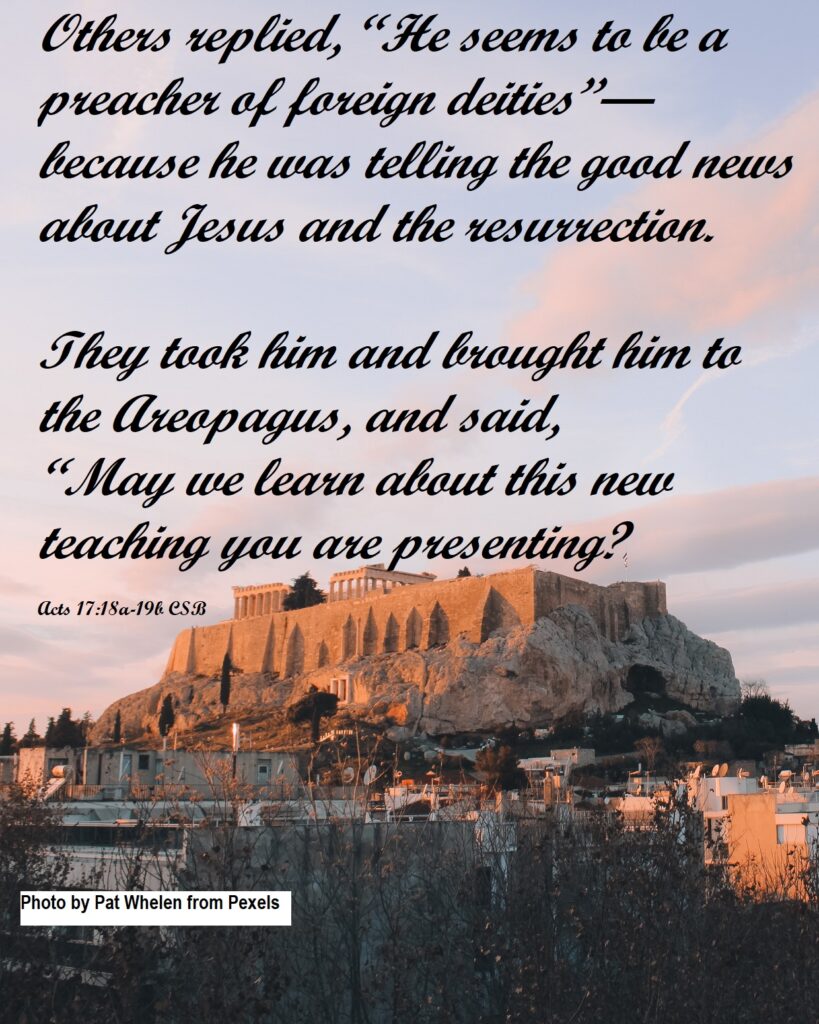
In an intellectual environment of Athens where Paul could well have debated hours on end with its idolatrous and worldly philosophers and political leaders, this Apostle to the gentiles chose to defend Jesus Christ our risen Lord as ‘the unknown god.’
IS CHRIST JESUS the unknown god in YOUR city?
Who do you preach in your church?
Do you preach Christ OR some unknown ‘Jesus‘?
We glance back at scenes of the Son of Man, Christ Jesus, walking with Peter and the Twelve throughout all of Galilee, Samaria, Judea and other places – bringing the Good News to all who would believe.
Many of us who grew up in the instruction of a faithful church heard stories of evangelists like John Wesley and others riding further distances into unknown towns on horseback, preaching Christ Jesus and planting churches. These faithful preachers of Christ followed a model of the Apostle Paul of the first century Church.
Some even sailed into new lands as did Paul.
So whether in Athens, Corinth, Rome, London, New York, Washington DC — even Cincinnati or the ‘sin city’ where you reside:
We see Sodom in the mirror of our neighborhood, don’t we?
Dubai is a city and emirate in the United Arab Emirates known for luxury shopping, ultramodern architecture and a lively nightlife scene. Burj Khalifa, an 830m-tall tower, dominates the skyscraper-filled skyline.
16 Now while Paul waited for them at Athens, his spirit was stirred in him, when he saw the city wholly given to idolatry.
.. The God who made the world and everything in it —he is Lord of heaven and earth—does not live in shrines made by hands. Neither is he served by human hands, as though he needed anything, since he himself gives everyone life and breath and all things..
So having overlooked the times of ignorance, God is now proclaiming to mankind that all people everywhere are to repent, because He has set a day on which He will judge the world in righteousness through a Man whom He has appointed, having furnished proof to all people by raising Him from the dead.”
Acts 17:30-31 NASB
The Apostle preaches to the idolaters of their ignorance of the Living God! Paul then preaches God’s mercy in overlooking their past sins. And the Apostle to the gentiles warns:
God is now proclaiming to mankind that all people everywhere are to repent, because He has set a day on which He will judge the world in righteousness through a Man whom He has appointed, having furnished proof to all people by raising Him from the dead.”
This ‘unknown god’ to those on Mars Hill who sought Paul’s teachings is the Lord Jesus Christ.
Does your church preach THAT?
So we hear Paul preach Christ crucified and risenfrom city to city.
Those young saints of the first century Church did repent and believe in the Lord. They often suffered and frequently died for their faith — a true faith — in the One God and risen Lord Jesus Christ— NOT an idolatrous faith in a god of war (Mars), a temple prostitute priestess, or a false prophet promising sinful bliss.
Paul – Writing to the saints in Sodom
Again, I direct our look back at Scripture to understand the heart of those preaching the Gospel of Jesus Christ.
(Oh, how our Lord was so grieved over an unrepentant Jerusalem and all the other cities which witnessed the many proofs (signs and miracles) of the Son of Man, the Messiah Jesus.)
As the Apostle to the gentiles sustains the saints of The Way, Paul writes to believers in cities such as Corinth.
(Of course Athens and Rome were NOT the only sin cities of Paul’s missionary journeys.) The manifest sin of these cities tormented Paul’s heart as such unrighteous men had troubled Noah and Lot and in the Apostles’ time, Christ Jesus.
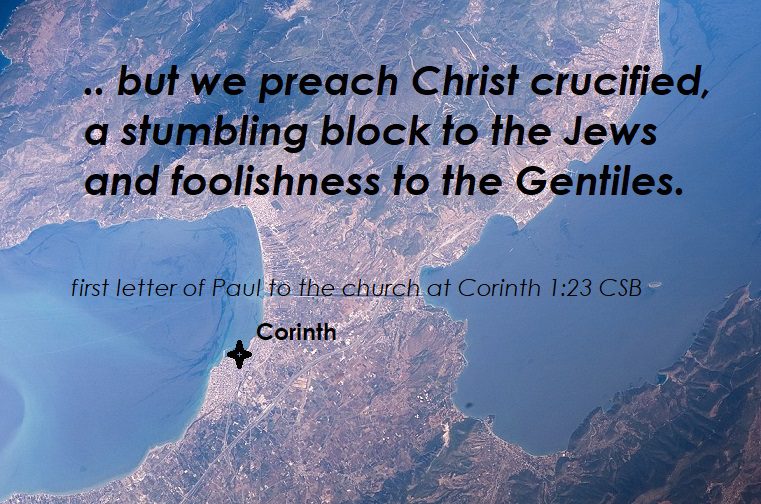
The city of Corinth was prominent in the first century. It is located in Greece on an isthmus between the Aegean and Ionian Seas, which guaranteed its importance both militarily and commercially. Corinth was the capital of the Roman province Achaia. It was a prosperous city but also known for its immorality. Because of Corinth’s sordid reputation, a new Greek word was coined, korinthiazomai, which meant “to live immorally like a Corinthian.”
Paulos, To the ekklēsiatheos(church of God) at Korinthos,
to those who have been sanctified in Christ Jesus,
saints by calling,
with all who in every place
call on the name of our Lord Jesus Christ, their Lord and ours:
Do you have ANY question to whom Paul writes?
TO the saints of the church of God, separated TO GOD in Christ Jesus — those brothers and sisters of the Church who Name (also as He IS for us) Jesus Christ Lord.
(It is not an earthly name; i.e. Caesar, King, Governor, Prefect, Premier, President, Emperor, Iman or Pope.)
The Apostle Paul speaks of Jesus by Name forty-three [43] times in his two letters to the Corinthians.
He calls our Savior Jesus Christ(meaning Yeshua the Messiah to Jews) seventeen [17] times AND
Christ Jesus an additional nine [9] times,
once adding ‘the Son of God, Christ Jesus, who was preached among you by us..’
Paul’s frequent reference to our Master (and his, as a ‘bond-servant’) is Lord Jesus Christ [49 times in 15 verses] & specifically eight times in 1 Corinthians, as well as four times in 2 Corinthians.
The Apostle further makes some of his most pointed arguments for our Lord Jesus using His Messianic title in Greek: Christ.
The Church will always hear Paul preach Christ Jesus. The Apostle always serves our Lord Jesus testifying to the truth of His Gospel.
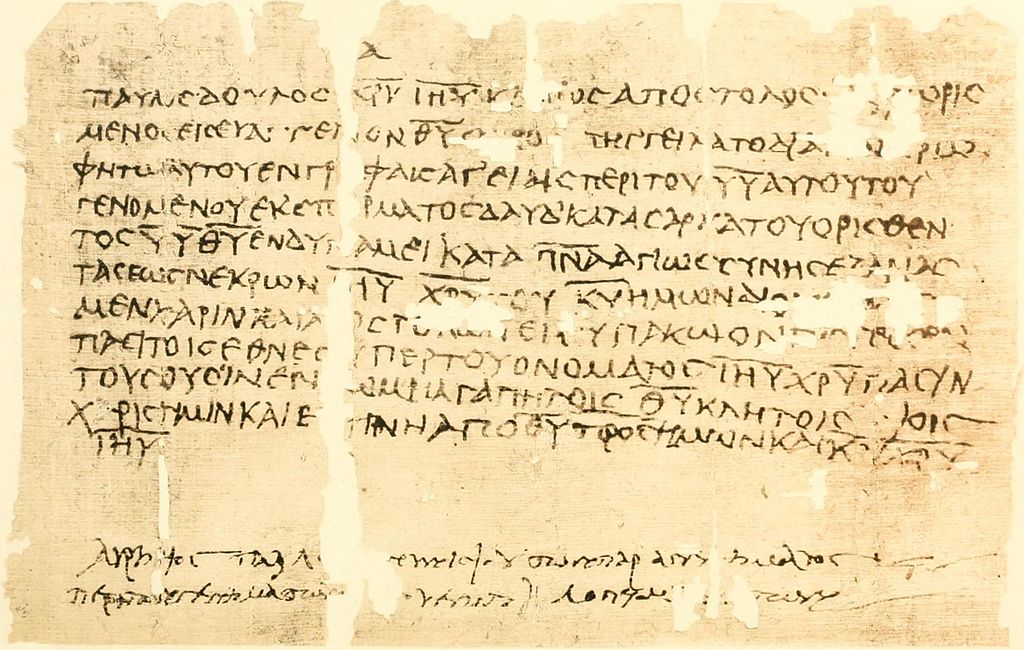
NASB; KJV; CSB; ΠΡΟΣ ΚΟΡΙΝΘΙΟΥΣ Α΄ 15
SBL Greek New Testament
12 Now if Christ is preached, that He has been raised from the dead, how do some among you say that there is no resurrection of the dead?
Paul frequently warns of the false teachers who preach this heresy boldly or in the guise of interpreting ‘God’s word.’
.. no resurrection of the dead? 13 But if there is no resurrection of the dead, then not even Christ has been raised; 14 and if Christ has not been raised, then our preaching is in vain, your faith also is in vain.
“IF,’ Paul preaches — IF these things are true, THEN the Gospel of Jesus Christ is false. YET some false ‘christian’ denominations preach and teach this heresy.
Paul says in effect, “You may as well go home and stop calling your self a ‘christian’ or a ‘believer.’
.. 16 For if the dead are not raised, then not even Christ has been raised; 17 and if Christ has not been raised, your faith is worthless; you are still in your sins.
You know what some preach? No resurrection to the judgment or condemnation to hell. Sounds nice, doesn’t it?
But IF God is good and just, how can He just save all to heaven (if indeed life beyond the grave is even possible)?
Many are the heresies which have crept into ‘christian’ thinking over the millennia of these last days.
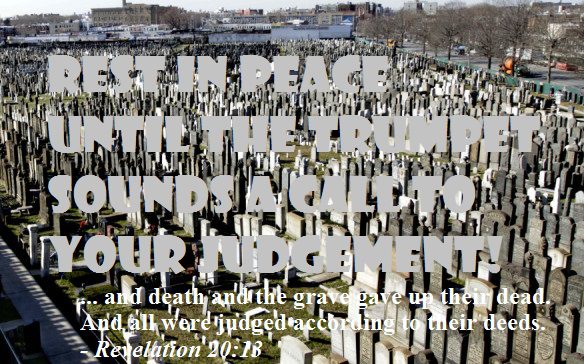
What about all those funerals?
18 Then also those who have fallen asleep in Christ have perished.
19 If we have hoped in Christ only in this life, we are of all people most to be pitied.
Are we celebrating (a last time) the lives of the dead? OR
Do our final days and death proclaim Christ?
But the fact is, Christ has been raised from the dead, the first fruits of those who are asleep..
1 Corinthians 15:20 NASB
Do YOU preach Christ?
& Does your church teach Christ Jesus?
Paul has much more to say about the Lord Jesus Christ, as do all the Apostles.
IF you are not fully convinced, dear brother or sister in Christ, READ more of the letters to the Corinthians.
And even if our gospel is veiled, it is veiled to those who are perishing,
in whose case the god of this world has blinded the minds of the unbelieving so that they will not see the light of the gospel of the glory of Christ, who is the image of God.
For God, who said, “Light shall shine out of darkness,” is the One who has shone in our hearts to give the Light of the knowledge of the glory of God in the face of Christ.
2 Corinthians 4:6 NASB20
.. for the things which are seen are temporal, but the things which are not seen are eternal. For we know that if our earthly tent which is our house is torn down,
we have a building from God, a house not made by hands, eternal in the heavens.
We have begun this series about God’s love for us and see a MOST PERSONAL love between Jesus the Son and the Father God! Here we will glance at the personal love of Jesus’ brother Jude, a personal love of brothers, of sisters — family connections we do not choose. Yet as saints chosen by God in Christ, Jesus’ brothers grow in the Father’s love and nurture the faith of His church family.
Remembering my Brother
A few years ago one of my brothers died. Pictured here is the lake he loved near our childhood home. My sister and youngest brother also shared in many moments of life, some with our departed brother near this beautiful place on earth.
I give thanks to God that my mother and father raised a family which included my younger sister and two younger brothers. And like yours and the siblings of every family, we did not choose this relationship; never-the-less God made me their brother.
Brothers of Jesus
Imagine what life must have been like for James and Jude, the brothers of Jesus. Their brother Jesus was crucified on a Roman cross far from the Sea of Galilee near home. And He died beyond the gates of Jerusalem as they celebrated a feast of the Passover with the blood of lambs.
The Lord’s own brothers had not been disciples of the Messiah Jesus. But then, Jesus rose from the tomb!
Now, for a few weeks after His resurrection they could expect something new and different. What must it have been like for James and Jude to again walk with their brother Jesus after His resurrection near Jerusalem.
Can you imagine your risen brother walking with you in the hills overlooking Lake Galilee?
Years later their memories of Jesus would return to His glorious ascension into heaven.
After Jesus’ other return to Heaven
Along with the Eleven, Jesus’ brothers James and Jude had discovered to their belated joy that Jesus IS the risen Messiah and had also personally witnessed in awe their brother ascending into the clouds!
The Lord’s brothers both encouraged the church from this time until their own deaths years later. I have written series from each of their letters previously.
James and Jesus would have been known as Galileans, Nazarenes and familial brothers, not Judeans or leaders of Jerusalem. But now he is one of more than five hundred witnesses to Jesus’ resurrection. James accepts the difficult call to lead the church in Jerusalem.
Come now, —the Lord is compassionate and merciful. Count it all joy when the world tries your patience.
Jesus’ brother James was later martyred, even as most Apostles had died for their faith in the Messiah Jesus. James had led the church in Jerusalem for some 30 years until he was killed around A.D. 62.
Letters to a First Century Church
The first century Church grew rapidly and the Good News of Jesus Christ is now shared by believers in much of Asia.
The Lord’s other brother Judas, who now preferred to be known as Jude, also wrote a brief letter to fellow Jewish believers in Jesus (Yeshua). Like any letter Jude sent it to the saints by messenger sometime around A.D. 65-80, decades after Jesus’ resurrection and ascension.
‘Christians,’ as the Jews and pagens denounced them at every opportunity, continued to see the world’s hatred for them increase. In fact, the world seems to decay into hatred’s destruction of fires and wars of the Roman Empire in Jerusalem, Asia, Egypt and even Rome itself.
Faithful followers of Christ Jesus refuse to conform to worldly standards and consequently suffer in an environment of sociatal sin.
Jesus’ biological brothers, the same ones who once urged the Lord to refrain from such radical teaching now write to the saints of many churches — Christians who now also suffer for His Name.
What Jesus said about his brothers
One time when Jude, James and Mary went to see Jesus among the crowds the Lord had claimed only those who followed Him as family.
Now in the many years after Jesus’ death, resurrection and ascension Jude humbly claims Jesus as His bond-servant. Jude does not take advantage of his biological connection to this first Son of Man, also a son of Mary.
The brother of James could have begun his letter to the church as a ‘brother of the King and Messiah,’ implying his authority of position via his family..
apostasia Definition from the Greek: defection from truth (properly, the state) (“apostasy”):—falling away, forsake. מְשׁוּבָה Definition from the Hebrew mĕshuwbah : turning away, turning back, apostasy, backsliding
Jude greets faithful saints:
Hear a tenderness of Jude’s greeting to the church, the very same personal love Jesus exemplified throughout His thirty mortal years:
Jude, a bondservant of Jesus Christ, and brother of James,
To those who are the called, beloved in God the Father, and kept for Jesus Christ:
May mercy, peace, and love be multiplied to you.
Oh mercy, how by grace we all need it.
Peace – εἰρήνη, that is: eirēnē, Christians know best from benedictions at closings of church gatherings and departure from each another.
“Peace I leave you, My peace I give you; not as the world gives, do I give to you. Do not let your hearts be troubled, nor fearful.
John 14:27 NASB20 – Jesus’ encouragement to the Disciples prior to His crucifixion
‘āhaḇ in Hebrew [i.e. thou shalt love H157 thy neighbour as thyself: I am the LORD.] – אָהַב
AND also phileō love defined for the church — That’s right, same as a city church to which the Apostle John will write — Φιλαδέλφεια.
Known for its “brotherly love,” philadelphos – philos or ‘friend’ and ἀδελφός adelphos – literally ‘a brother from the womb.’
Jude, a brother of Jesus who had not believed his brother IS the Messiah, now urges the Church through a letter to keep to their true faith.
Christians: Called, Beloved and Kept
Jude.. To those who are the called, beloved in God the Father, and kept for Jesus Christ:
Called, because the Lord chose you to receive His grace
Beloved, because God loves those who accept His immeasurable love &
Kept, for eternal life and the glory of Christ's holiness.
Christians to whom Jude now writes may hear his message as Good News. It is the same Gospel James and Jude had heard before straight from their very own brother, Jesus.
Yet like Jesus’ brothers before, not all will receive the Gospel written for the saints to whom Jude writes.
Then and now some so-called ‘christians’ gather in the guise of worship without mention of Jesus our Lord and only Savior. And some pulpits bring rise to power as well as false teachers (just like now), Jude’s central concern for the church.
How do we know who to believe?
Jude now humbly preaches Christ crucified and risen in the flesh as he has witnessed personally in the Person of his own brother Jesus. He addresses his letter and his preaching to those attentive to the Spirit with ears to hear.
Who are the true saints and followers of Jesus Christ? They are those whom Jude exhorts to faith.
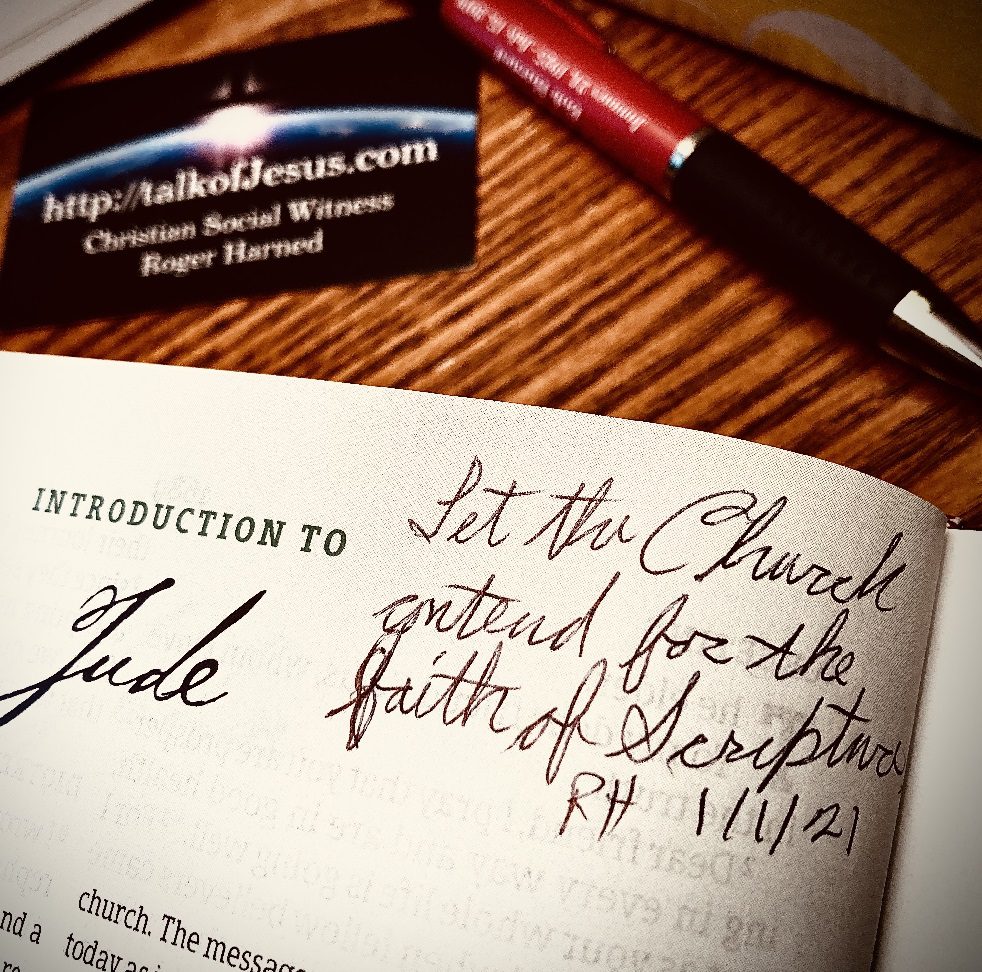
Beloved, while I was making every effort to write you about our common salvation, I felt the necessity to write to you appealing that you contend earnestly for the faith that was once for all time handed down to the saints.
Jude has just written to the Church greeting Christians who are ‘called,’
(‘I know that,’ you will witness and claim your calling.)
..beloved (Not only important to us as Christians, but what attracts others to Jesus)
and kept (A rather quaint concept. What does Jude mean in calling us kept?) .
Let’s define this refining of faith that keeps Christians in Christ as exhortation. It’s a sort of ‘religious word’ which points to the loving fatherly discipline of the ‘One who will come again.’
I urge you to consider our relationship of being ‘kept’ by Christ Jesus.
Can you answer this:
Who keeps Christians ‘in Christ?’
In our NEXT message of this series on GOD’S PERSONAL LOVE, we will look to the Lord’s exhortations for seven churches.
Jesus’ message sent by revelation to John is specific exhortation for the ‘saints’ of His ‘Church.’
And just as the Lord’s brother Jude exhorts the church in his letter, Jesus will warn followers of the Lord — servants who claim Christ — that we must respond to Him who is to come.
Used to monitor number of Google Analytics server requests
10 minutes
__utmb
Used to distinguish new sessions and visits. This cookie is set when the GA.js javascript library is loaded and there is no existing __utmb cookie. The cookie is updated every time data is sent to the Google Analytics server.
30 minutes after last activity
__utmc
Used only with old Urchin versions of Google Analytics and not with GA.js. Was used to distinguish between new sessions and visits at the end of a session.
End of session (browser)
__utmz
Contains information about the traffic source or campaign that directed user to the website. The cookie is set when the GA.js javascript is loaded and updated when data is sent to the Google Anaytics server
6 months after last activity
__utmv
Contains custom information set by the web developer via the _setCustomVar method in Google Analytics. This cookie is updated every time new data is sent to the Google Analytics server.
2 years after last activity
__utmx
Used to determine whether a user is included in an A / B or Multivariate test.
18 months
_ga
ID used to identify users
2 years
_gali
Used by Google Analytics to determine which links on a page are being clicked
30 seconds
_ga_
ID used to identify users
2 years
_gid
ID used to identify users for 24 hours after last activity
24 hours
_gat
Used to monitor number of Google Analytics server requests when using Google Tag Manager
1 minute
_gac_
Contains information related to marketing campaigns of the user. These are shared with Google AdWords / Google Ads when the Google Ads and Google Analytics accounts are linked together.