Sheikh – شيخ
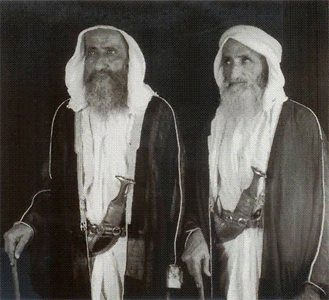
Shekh— is an honorific title in the Arabic language. It commonly designates the ruler of a tribe, who inherited the title from his father. “Sheikh” is given to a royal male at birth.
It is a question of leadership, is it not?
Who leads your journey? Who leads your family? Who leads your city, your nation – who leads the people who are part of your everyday mortal life?
You may associate Abraham with an unknown area of Haran or a city of Jerusalem. You may look to Abraham as a father of your religion: Judaism, Christianity or Islam, yet questions remain.
Is Abram the authority behind your claims to a land? Is Abram the authority behind your claim to a Holy city? Is Abram your claim to authoritarian rule over a people you would send to conquer shattered stones, broken bricks and blood-stained dust of city streets?
God intervenes in His story. God intervenes in real lives of individuals of His creation. God intervenes in places where evil would take hold. God preserves the faithful who choose the authority of the LORD over the leadership of sinful men.
The Call of Abram
Now the Lord said to Abram, “Go from your country and your kindred and your father’s house to the land that I will show you. – Genesis 12:1
Here is a story familiar to many, yet a circumstance unfamiliar to casual readers of scripture. Once again, by contrast let us look back to Abram’s father. In fact, first let’s look back as far as Noah, father of all civilization after the great flood.
These are the generations of the sons of Noah, Shem, Ham, and Japheth. Sons were born to them after the flood…
2 The sons of Japheth: … 6 The sons of Ham: Cush, Egypt, Put, and Canaan… 8 Cush fathered Nimrod; he was the first on earth to be a mighty man. 9 He was a mighty hunter before the Lord. Therefore it is said, “Like Nimrod a mighty hunter before the Lord.” 10 The beginning of his kingdom was Babel… 22 The sons of Shem: …
 Sheiks all – rulers of their respective tribes in areas far from the settling of the Ark on a mountain after a year of the flood. Shem, Ham and Japheth, all sons of Noah, all of their sons princes or sheiks of a tribe or state or nation (depending how you would define their area of influence) – Sheiks, honorable rulers of each family.
Noah had worshiped the LORD first opportunity on dry land after more than a year aboard the Ark. The blessing of the LORD had been:
“And you, be fruitful and multiply, increase greatly on the earth and multiply in it.” – Genesis 9:7
You will recognize the names of some of Noah’s descendants as the names of lands, areas where these Sheiks of later generations ruled lands settled by their forefathers: Egypt, Canaan and others. In parts of lands over the generations we have given to other areas administered, conquered or ruled by other Sheiks from these generations, perhaps names less familiar to our ears than the sight of a town on an ancient map. And I remind us from Noah’s blessings and curses that in all of this the LORD has intervened with His plan.
Genesis 9:
“Cursed be Canaan;
a servant of servants shall he be to his brothers.”
26 He also said,
“Blessed be the Lord, the God of Shem;
and let Canaan be his servant.
27 May God enlarge Japheth,
and let him dwell in the tents of Shem,
and let Canaan be his servant.”
Genesis 10:
19 And the territory of the Canaanites extended from Sidon in the direction of Gerar as far as Gaza, and in the direction of Sodom, Gomorrah, Admah, and Zeboiim, as far as Lasha.
Familiar cities? And further research will reveal that other tribes, descendants of Canaan, are those the LORD would order destroyed. (Perhaps you recognize two cities still associated with unbridled sin.)
Stepping ahead some generations to just before Abram, let us recall what Genesis reveals of the hearts of men under the command of the LORD to “be fruitful and multiply.”
Genesis 11:
4 Then they said, “Come, let us build ourselves a city and a tower with its top in the heavens, and let us make a name for ourselves, lest we be dispersed over the face of the whole earth.” 5 And the Lord came down to see the city and the tower, which the children of man had built.
Once again, man had a plan of disobedience to the Lord. The Lord intervened, as we know He would during the days of Abraham and Lot in the cities of Sodom and Gomorrah.
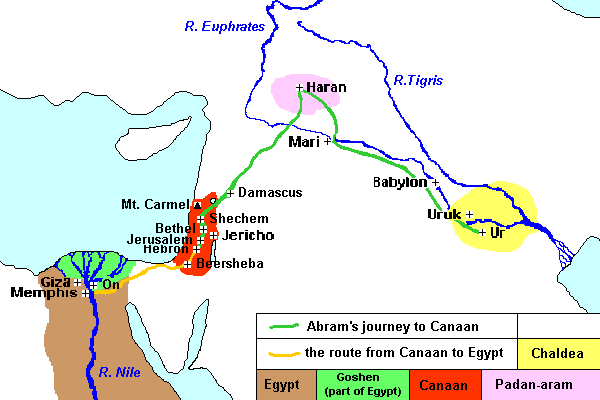
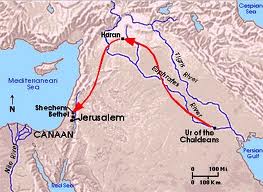
31 Terah took Abram his son and Lot the son of Haran, his grandson, and Sarai his daughter-in-law, his son Abram’s wife, and they went forth together from Ur of the Chaldeans to go into the land of Canaan, but when they came to Haran, they settled there.
I want to go back to something Jesus had said to the religious authorities questioning His authority in the introduction to this series: {Sons of Tradition)
37 I know that you are offspring of Abraham; yet you seek to kill me because my word finds no place in you. 38 I speak of what I have seen with my Father, and you do what you have heard from your father.”
Isn’t that how it is? We do certain things as traditions we have learned from our families. Some of the tradition of Abram’s fathers were that they raised livestock for a living, a trade which necessitated many family members to reside mostly outside the gates of the city. Certainly Ur had been their principle city of life, but the fields beyond the gates became frequency itinerate homes for these Sheiks.
One final question: Why would Abram move from Haran to a life in lands of others, a refugee Sheik with no palace of his own?
Once again, we find a portion of the answer in his own history in Genesis 11:
31 Terah took Abram his son and Lot the son of Haran, his grandson, and Sarai his daughter-in-law, his son Abram’s wife, and they went forth together from Ur of the Chaldeans to go into the land of Canaan, but when they came to Haran, they settled there.
Abram’s grandfather ‘went forth together from Ur of the Chaldeans to go into the land of Canaan…’
Terah did not continue to Canaan. By his obedience to God, Abraham continued a journey to the Promised Land to which the LORD had already sent his Tribe.
To be continued…
 Sheiks all – rulers of their respective tribes in areas far from the settling of the Ark on a mountain after a year of the flood. Shem, Ham and Japheth, all sons of Noah, all of their sons princes or sheiks of a tribe or state or nation (depending how you would define their area of influence) – Sheiks, honorable rulers of each family.