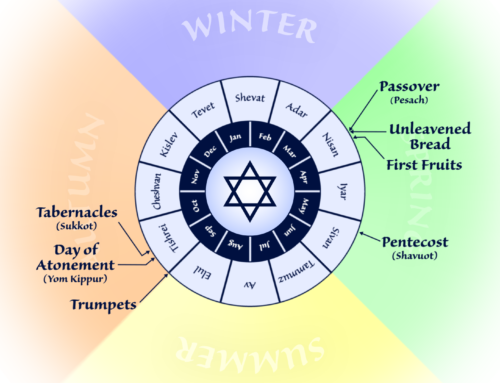
Category: Pentateuch Genesis-Deuteronomy

IN THE BEGINNING… Genesis, Exodus, Leviticus, Numbers, Deuteronomy – Pentateuch [5 books] It’s the LAW of GOD!
Forgive us our trespasses. Jesus teaches many lessons from these books of the Bible and we have forgotten MANY of the issues and applications to our 21st century life. How can you SHARE from the beginning of the Bible with your SOCIAL ‘Friends’ and talk of Jesus as Lord? Please TITLE your post by the topic, not the verse. Include links to scriptures and helpful references. — Please post or tell us in a COMMENT how you talk of Jesus through this topic and these Old Testament scriptures.

  • Between Sabbaths – Convocations and Holiness

    Between Sabbaths – Convocations and Holiness

    Speak unto the children of Israel, and say unto them, Concerning the feasts of the LORD, which ye shall proclaim to be holy convocations, even these are my feasts.

    Leviticus 23:2 KJV

    Holy Holidays

    We’ve lost something of the holiness of the holidays in the translation. Worldliness seeps steadily into our daily lives and we don’t necessarily relate to what some versions of the Bible call, ‘sacred assemblies,’ or ‘holy feasts.’

    Six days shall work be done: but the seventh day is the sabbath of rest, an holy convocation; ye shall do no work therein: it is the sabbath of the LORD in all your dwellings.

    Leviticus 23:3 KJV

    Do we hear of or even know what “holy convocations” might be?

    Even though raised in the church, I didn’t until I looked it up during my college years. A convocation מִקְרָא is a sacred gathering, a called public meeting for the reading of God’s word.

    Perhaps you’ve noted our digression from holy worship  to a more culturally palatable feast of entertainment at church.

    Priests and religious officials would have taken all sorts of rules (and definitions of work) from Leviticus, which we recognize as the Sabbath Commandment. Yet what many contemporary gatherings may miss or dismiss from Exodus and Deuteronomy is holiness.

    Seasons and celebrations between the sabbaths may be designated as holy convocations; days for feasting — neither a time for fasting, nor ordinary work day.

    The sabbath of the LORD, which Christ points out it is ‘made for man,‘ is, never-the-less, set aside by the LORD for Holiness.

    So what are these convocations? And more importantly, how do their principles apply to us today?

    Note that these seven prescribed seasons of holy rest do not include certain notable minor holiday observances.


    Hanukkah חֲנֻכָּה and Christmas??

    Christmas and Hanukkah both focus on light and God’s faithfulness in helping men (and women) of faith to be restored to holiness.

    The minor celebration of Hanukkah began during the second temple period, about 200 years before Christ and was also known as the feast of dedication.

    The minor convocation of Christmas points to the holiness of God, humbly descending to us as the Son of Man; a baby like all others, yet without sin, like no other man. 

    Jews have recently celebrated eight days of Hanukkah.

    Christians have begun a preparatory season of Advent leading up to the festival of Christmas. 

    Do you feel rested? 

    Has God been a part of your celebrations of this season?

    I mention these holidays blown out of proportion by our sustained worldly emphasis on minor celebrations, because we fail to rest in the Lord.

    Return to the Lord’s rest

    “I hate all your show and pretense—
    the hypocrisy of your religious festivals and solemn assemblies.

    Amos 5:21 NLT

    This, too, is nothing new, as you can see from the rebuke of the Lord through the prophet Amos. His complaint sounds much like that of contemporary unbelievers, when Christians most of all ought to be questioning our own Christmas traditions. 

    God deserves worship שָׁחָה, not occasions of excess and entertainment.

    “Where is he who has been born king of the Jews? For we saw his star at its rising and have come to worship him.”

    Matthew 2:2

    Religious Convocations

    Without drilling down to the detail of ancient worship to the Lord called for in the Law, let’s briefly examine these other Sabbath rests. I invite you to research these scriptures and celebrations further, since I will only comment on each briefly.

    Most scriptures and quotes in this section from BlueLetterBible.org
    Below are festivals linked to this article from Easton's Bible Dictionary.

    1. The weekly Sabbath
    2. The Passover feast:
    3. Pentecost, or the feast of weeks.
    4. The Ingathering, or feast of Tabernacles 
    5. The seventh new moon or the feast of Trumpets (Num 28:11-15; Num 29:1-6)
    6. The Sabbatical year (Exd 23:10-11; Lev 25:2-7)
    7. The year of jubilee (Lev 25:8-16; Lev 27:16-25)

    “The Passover was kept just before the harvest commenced, Pentecost at the conclusion of the corn harvest and before the vintage, the feast of Tabernacles after all the fruits of the ground had been gathered in.

    As previously mentioned, Jews celebrated additional feasts after destruction of the first Temple.

    • The feast of Purim
    • The feast of Dedication (Hanukkah)

    The Day of Atonement, the tenth day of the seventh month (Lev 16:1; Lev 16:34; Lev 23:26-32; Num 29:7-11). 

    Christians cannot overemphasize God’s requirement of holiness, achieved by atonement for our sins.

    God presented Christ Jesus as an atoning sacrifice in his blood, received through faith, to demonstrate his righteousness, because in his restraint God passed over the sins previously committed.

    Romans 3:25

    The Sacrifice and death of Christ, made possible by the incarnation of God in the flesh of Jesus, exceeds the importance of our holy celebrations.

    Traditions of Sabbath Rests

    Contemporary worshipers may not relate to cultures of the times of these designated rests from the Lord; however, hear the Lord’s purpose in these additional Sabbaths made for man.

    On each of these occasions every male Israelite was commanded “to appear before the Lord” (Deu 27:7; Neh 8:9-12).

    The attendance of women was voluntary. (Luk 2:41; 1Sa 1:7; 1Sa 2:19.)

    The promise that God would protect their homes (Exd 34:23-24) while all the males were absent in Jerusalem at these feasts was always fulfilled.

    “During the whole period between Moses and Christ we never read of an enemy invading the land at the time of the three festivals. The first instance on record is thirty-three years after they had withdrawn from themselves the divine protection by imbruing their hands in the Saviour’s blood, when Cestius, the Roman general, slew fifty of the people of Lydda (Joppa) while all the rest had gone up to the feast of Tabernacles, A.D. 66.

    A few details of worship

    Of the new moon festivals the Lord commands: “this is the burnt offering of every month throughout the months of the year ‘And in the seventh month, on the first day of the month, ye shall have an holy convocation; ye shall do no servile work.’

    All men worship the Lord and all men have rest for this worship.

    Of the Sabbatical year the Lord commands rest for the field, the vineyard and orchard. 

    Celebration of the year of Jubilee each fiftieth year: “In the Year of Jubilee each of you may return to the land that belonged to your ancestors…Be assured that I will send my blessing for you in the sixth year, so the land will produce a crop large enough for three years… 

    ‘The land shall not be sold permanently, for the land is Mine; for you are strangers and sojourners with Me.

    Leviticus 25:23

    “You are to allow the redemption of any land you occupy.

    We walk with the Lord: our land, a temporary possession of sojourners in this temporary world where we work. The Lord grants redemption to us, the ability to repurchase what He has rightfully given to us from all that is His. Our worship returns but a portion of His abundance to our Lord.

    The Lord’s laws are unlike our own unbalanced views of righteousness and justice. His ways are higher than our ways. Though the birth of our Redeemer is important, Jesus’ sacrificial death and resurrection challenge the sinners of this world with consequence for our worldly ways. 

    Are you caught up in the restless rush of the holidays?

    1 Peter 1:

    3 Blessed be the God and Father of our Lord Jesus Christ. Because of his great mercy he has given us new birth into a living hope through the resurrection of Jesus Christ from the dead…

    Christmas defines the beginning of the life of God Incarnate, His gift to us: “new birth into a living hope…”

    14 As obedient children, do not be conformed to the desires of your former ignorance.

    15 But as the one who called you is holy, you also are to be holy in all your conduct; 16 for it is written, Be holy, because I am holy.
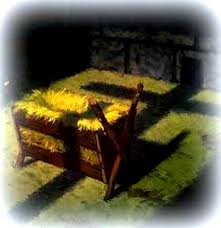
    “Be holy, because I am holy. – 1 Peter 1:15b, Leviticus 11:44-45; 19:2; 20:7

    Christ-mass: ‘because I am holy.’

    Be holy, because I am holy. – This is our promised rest, through a babe in a manger, a sinless Savior born for the Cross.
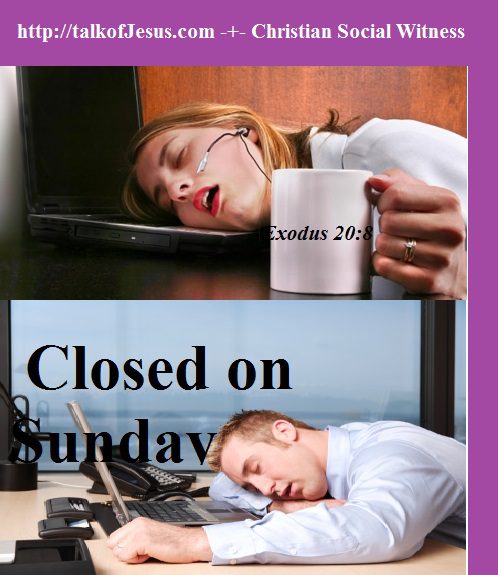

  • Another Sabbath: No Rest

    Remember the Sabbath day, to keep it holy:

    Exodus 20:8

    Sabbath? So what?

    We were making plans for Sunday shopping after church, but then we missed church. Some Sundays we hurry out of time-extended gatherings at our church to join the crowds in local restaurants. This week we had no Sabbath and no rest.

    As Christians we were raised to know that actually Saturday is the Sabbath – שַׁבָּת – shabbath, the seventh day of the week; however Christians call Sunday, our ‘day of rest.’ Yet when was the last time you felt like you had ‘a day of rest?’

    closed on sunday
    Closed on Sunday – Rest in the Lord (it’s a Commandment).

    So what’s this “rest day” all about?

    And what does the Sabbath have to do with God?

    After all, when we attended church last week for more than three hours, it seemed alright to slip out early (before the music and worship mercifully concluded).

    Lot’s of rules, but little holiness

    You are to labor six days and do all your work, but the seventh day is a Sabbath to the LORD your God.

    You must not do any work ​— ​

    Exodus 20:10


    you, your son or daughter, your male or female servant, your livestock, or the resident alien who is within your city gates.

    So who’s working?

    We are shopping… and we have to eat. It’s all those kitchen and superstore slaves who are working, not us.

    Isn’t a day off a sort of ‘Sabbath?’

    The Bible seems to have a lot of old rules that don’t apply to Sunday.

    Rest from Above

    “Observe the Sabbath, for it is holy to you. Whoever profanes it must be put to death. If anyone does work on it, that person must be cut off from his people. – Exodus 31:13

    Imagine anyone, even devout Christians and most Jews, calling for capital punishment for someone profaning the Sabbath. Yet the Lord established this holiness of routine for a set-aside culture to make us different.

    שָׁבַת shabath: Rest, when no one else rests; worship, when no one else acknowledges the LORD.

    Holiness and rest require separation.  These are more than a command, but a gift from the Lord to set us apart from the world.

    “Observe the Sabbath because it is holy to you… 

    LORD, who is like you among the gods?
    Who is like you, glorious in holiness,
    revered with praises, performing wonders?

    Exodus 15:11 CSB

    The One True God is unlike any other god!

    He is not like the angels nor is the LORD like a man. We were created in His Image from the dust of the earth and the Lord breathed spirit into our lowly being. GOD is above all, separated by the glory of His holiness, and He commands us to rest, making the Sabbath holy.

    An archaic common understanding was that the LORD is like a King, therefore man is a common subject of this heavenly King or Kings. Mankind is separated from the Eternal Highest by His own holiness.

    We are commoners, yet made in His Image.

    Chaos reigns in the life of man, while in the creation of God righteousness will reign, providing rest in our purpose and meaning.

    Rest requires our holy separation from the chaotic fallen daily drudgery of this selfish failing flesh.

    Jesus and Sabbath Controversies

    Mark 2:

    23 On the Sabbath he was going through the grainfields, and his disciples began to make their way, picking some heads of grain. 24 The Pharisees said to him, “Look, why are they doing what is not lawful on the Sabbath?”

    25 He said to them, “Have you never read what David and those who were with him did when he was in need and hungry — 26 how he entered the house of God in the time of Abiathar the high priest and ate the bread of the Presence —which is not lawful for anyone to eat except the priests —and also gave some to his companions?” 

    27 Then he told them,


    “The Sabbath was made for man and not man for the Sabbath. So then, the Son of Man is Lord even of the Sabbath.”

    Mark 2:27

    A Sabbath for mankind

    Dear sojourner through this difficult life,

    Are you not famished for the bread of heaven?

    Jesus journeyed from town to town with good news for all and as he does so, even on the Sabbath, the Lord and His disciples snack on the grain of the fields.

    (You eat on the Sabbath, right?) It is no sin, according to Jesus.

    In fact, the Lord refers to a time when David, anointed King of Israel, fled Saul and was fed by a priest, who replaced the Bread of the Presence set aside for worship with warm bread.

    John 6:51

    “The Sabbath was made for man,” Jesus assures us; but rest a little.

    It is the Lord’s will that we separate this day of rest from our week, dedicating our Sabbath-rest to Him.

    Lord of the Sabbath

    Jesus also assures us that “the Son of Man is Lord even of the Sabbath.”

    In another place in scripture Jesus refers to Himself as the manna – the bread of heaven. Jesus IS the bread and wine, the body and blood Present on the altar of Sacrifice. He IS the manna of life sent down from heaven, that we might have eternal life.

    The Son of God IS the Son of Man, He who commanded us to rest on the Sabbath. He IS Lord of the Sabbath and the rest of your week.

    Will you set aside a time of holiness to worship the Lord?

    Consider the Lord of שָׁבַת  [the Sabbath] this Sabbath. Set aside a time of rest.

    To be continued...
  • A River of Redemption Flowing from Eden – Justice

    A River of Redemption Flowing from Eden – Justice

    Contemplation of Justice by James Earle Fraser – US Supreme Court building

    Justice

    At the beginning of this series I outlined topics which included justice. Here we will explore their linked applications.

    • Commandment
    • Law
    • Justice
    • Judgment
    • Penalty and Sentence
    • Redemption

    Justice – n. 1) fairness. 2) moral rightness. 3) a scheme or system of law in which every person receives his/ her/its due from the system, including all rights, both natural and legal. – source: dictionary.law.com

    The multi-branched tree of the knowledge of good and evil.

    “but you must not eat from the tree of the knowledge of good and evil, for on the day you eat from it, you will certainly die.” – Genesis 2:17 CSB

    Paradise by Lucas Cranach the Elder – painter, draughtsman, printmaker and court painter – 1530

    We move now from relatively calm waters of Adam knowing the difference between good and evil to a more tumultuous current of original sin flowing through the generations.

    Justice, and only justice, you shall follow, that you may live and inherit the land that the LORD your God is giving you. – Deuteronomy 16:20

    Justice in the Egypt of Joseph and Moses

    Recent research from Yale Law, The Representation of Justice in Ancient Egypt, confirms concepts of justice learned by the Hebrews. I have quoted it extensively below.

    The concept of “law” and “justice” are intimately associated with the proper behavior of kings and were embedded in every royal ritual.

    https://www.egyptprivatetourguide.com/egyptian-facts/ancient-egyptian-justice-interesting-facts-law-ancient-egypt/
    Ma’at Ancient Egyptian goddess of justice

    Could common citizens expect an example of morality from their leaders? Even the Pharaoh and King?

    In a word, ‘yes.’ According to research of ancient civilizations predating Rome and Greece, a natural ‘connective justice’ was presumed in law.

    The imperfect branches of connective justice

    Again, the research of J.G. Manning in the Yale Journal of Law & the Humanities:

    Ma’at (“connective justice,”) governed personal moral behavior, as can be seen in religious texts, as well as the proper relationships between gods and men, between kings and society, and between individuals. Thus it literally connected everyone from the gods, through the king, down to the lowliest farmer. It was the mirror of the divine order of the world and also the foundation of private ethical behavior. Ma’at was the most persistent and pervasive idea in ancient Egyptian society.

    Importantly, the most visible and the longest lasting image of Ma’at in
    a private context, at least to the modem observer, is the famous “last
    judgment scene,” in which an individual faced his or her mortality by
    having his or her life deeds weighed in the balance against the symbol of justice, the ostrich feather, in front of all of the gods in Egypt.

    If found wanting, the person’s soul was devoured and his or her existence was extinguished. On the other hand, if found “true of voice,” one gained eternal bliss in the afterlife. This was not the public representation of state justice, but, rather a more intimate depiction of the expectations of private moral behavior.

    Do you recognize this universal connection to the truth in the Law given to Moses on Sinai by the Lord God?

    Delegated authority of the Law

    Application of law ultimately leads back to the same question Adam would have to judge after gaining ‘knowledge of good and evil.’ 

    What is right? Is this good or evil in the eyes of the Lord?

     Basic precedents of law include English Common Law and other fundamental documents.

    https://www.law.berkeley.edu/library/robbins/CommonLawCivilLawTraditions.html
    Sir William Blackstone
    • of the United States, in Order to form a more perfect Union, establish Justice, … and secure the Blessings of Liberty … ordain and establish this Constitution for the United States of America.
      • The Bill of Rights & evolving societal amendments
    • Religious Law 
    Hammurabi a Babylonian code of law

    The contemporary legal systems of the world are generally based on one of four basic systems: civil law, common law, statutory law, religious law or combinations of these. However, the legal system of each country is shaped by its unique history and so incorporates individual variations.[1]

    A Stream Towards Justice

    We have examined the role of authority in the law. It is here that the roles of God, government, family and community all come into play.

    The basis of all law is the authority by which it is given. Justice requires effective application and fair administration of remedies by a righteous and impartial judge. – Roger Harned


    A commandment comes directly from Almighty God. Call it ‘religious law,’ but an absolute over-riding Authority connects God’s word to man’s actions.

    Hebrew followers of Moses heard the Lord speak directly and were afraid. Even so, they disobeyed the direct command of God even before Moses later descended Sinai with the stone tablets – the Law, carved by the finger of God in stone.

    This inviolable Law would be carried in the Ark of the Covenant; not as reference, but as witness to their own promises to God. Yet many would violate (trespass) their solemn covenant promises to God many times and in many places throughout the long history of Israel.

    Penalty of the Law

    Even though prescribed specifically for certain violations in specific contexts of the Law, ‘penalty’ is not mentioned by name in the King James Version of the Bible. The overriding issue, simply, is innocence or guilt and not particularly the punishment.

    A divine sentence is in the lips of the king: his mouth transgresseth not in judgment. – Proverbs 16:10 KJV

    Have you ever considered that the ‘sentence’ of the court is the spoken judgement against the convicted violator of the law?

    Because sentence against an evil work is not executed speedily, therefore the heart of the sons of men is fully set in them to do evil. – Ecclesiastes 8:11 KJV

    Perhaps you have even noted the legal principle of a right to a speedy trial in the wise advise above.

    Now note the usage of the Hebrew root for the consequence of guilt:

    דָּם – dam

    • blood (342x),
    • bloody (15x),
    • person (with H5315) (1x),
    • bloodguiltiness  (1x)
    • bloodthirsty (with H582) (1x),
    • vr blood (1x)

    Again, this goes to the higher authority of Almighty God. Perhaps a good Biblical example of commanded penalty would be ‘capital punishment.’

    “Whoever sheds human blood,
    by humans his blood will be shed,
    for God made humans in his image.

    Genesis 9:6 CSB

    “But you, be fruitful and multiply; spread out over the earth and multiply on it,”[Gen. 9:7] God commanded Noah and his family who were spared by the judgement of the earth. 

    Looking upstream through the generational sins even in the time of Moses, redemption from bloodguilt against God hardly seems attainable. 

    Kings and Nations under God

    And what cause soever shall come to you of your brethren that dwell in their cities, between blood and blood, between law and commandment, statutes and judgments, ye shall even warn them that they trespass not against the LORD, and so wrath come upon you, and upon your brethren: this do, and ye shall not trespass. – 2 Chronicles 19:10 KJV

    reign of Jehoshaphat ~873–849 BC

    From later records of Israel (and Judah after David), we learn of the continued importance of the Law or Commandment of God to this ‘chosen’ nation. The above quote from 2 Chronicles is recorded in the time of Jehoshaphat, in the 9th century Before Christ.

    Note the distribution of authority given by King Jehoshaphat to others from 2 Chronicles 19:

    A King’s delegation of justice

    4 Jehoshaphat lived in Jerusalem, and once again he went out among the people from Beer-sheba to the hill country of Ephraim and brought them back to the Lord, the God of their ancestors. 5 He appointed judges in all the fortified cities of the land of Judah, city by city.

    6 Then he said to the judges, “Consider what you are doing, for you do not judge for a mere mortal, but for the Lord, who is with you in the matter of judgment. 7 And now, may the terror of the Lord be on you. Watch what you do, for there is no injustice or partiality or taking bribes with the Lord our God.”

    8 Jehoshaphat also appointed in Jerusalem…

    • some of the Levites and priests
    • and some of the Israelite family heads…

    Delegated authority from the Lord to the King, then to officials responsible for religion, for community and for family. Even warning of how to manage outsiders (foreigners and servants), all under delegated authority of the Lord through others. Not freedom, as we know it. Certainly not license to choose whether to obey or defy any law or regulation. 

    10 For every dispute that comes to you from your brothers who dwell in their cities—whether it regards differences of bloodguilt, law, commandment, statutes, or judgments—you are to warn them, so they will not incur guilt before the Lord and wrath will not come on you and your brothers. Do this, and you will not incur guilt.

    11 “Note that Amariah, the chief priest, is over you in all matters related to the Lord, and Zebadiah son of Ishmael, the ruler of the house of Judah, in all matters related to the king, and the Levites are officers in your presence. Be strong; may the Lord be with those who do what is good.”

    God will judge

    God is a righteous judge
    and a God who shows his wrath every day. – Psalm 7:11

    He will judge your people with righteousness
    and your afflicted ones with justice. – Psalm 72:2

    Psalm 111:9 Christian Standard Bible (CSB)
    He has sent redemption to his people.
    He has ordained his covenant forever.
    His name is holy and awe-inspiring.

    To be continued…