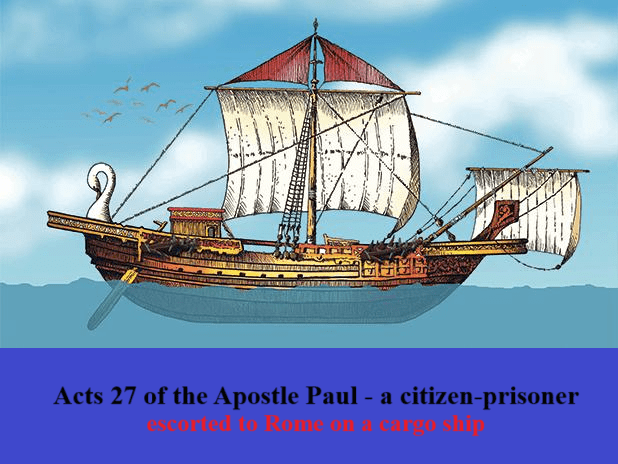
When we last left Paul beginning his long journey to Rome, the Apostle had boarded a small ship of Adramyttian sailing from Caesarea along the coast north of Cypress to Myra in Lycia.
There the centurion found an Alexandrian ship sailing for Italy, and he put us aboard it.
Acts of the Apostles 27:6 LSB
Now the Roman Centurion Julian boards a larger Alexandrian ship with Paul and other passengers in the Lycian port setting sail for Crete and the open Mediterranean beyond.
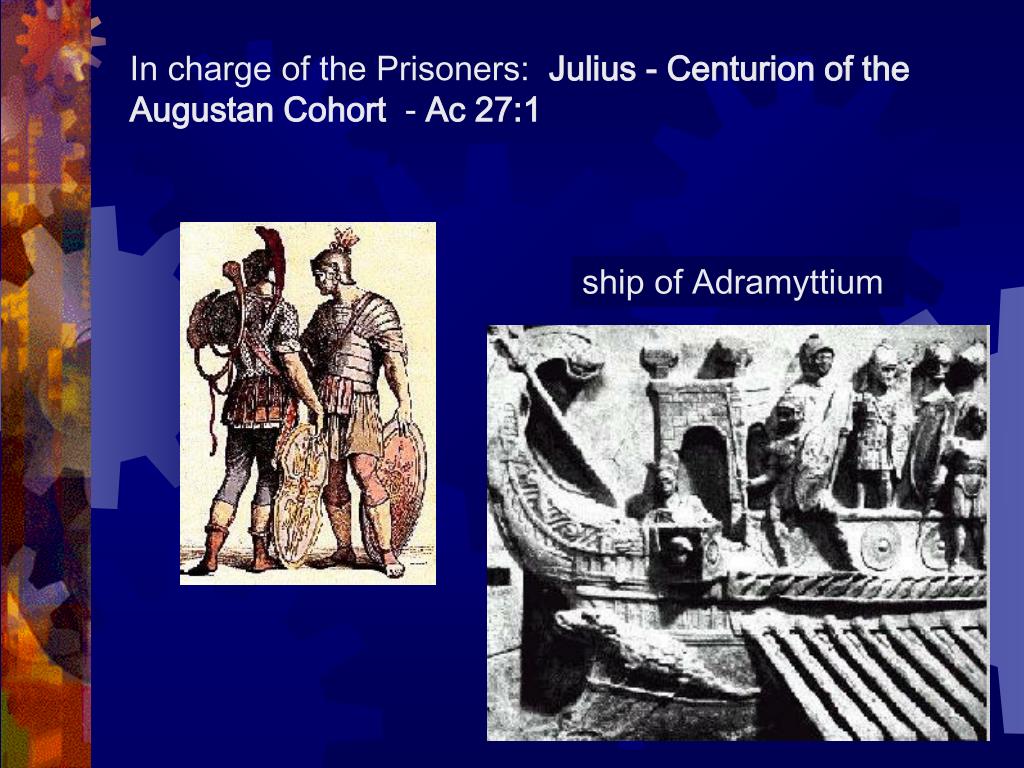
Roman Sailing Ships
Thus far, the Centurion Julian has sailed a little less than 500 nautical miles away from Judea with many more miles to sail across the Mediterranean. The next ship is a cargo ship designed to transport grain long distances to Rome.
Rome, with a population of about a million, required about 800 shiploads of grain each year.
The Romans built and operated a variety of cargo ships (naves onerariae, literally “ships of burden”). A typical Roman merchant vessel was a broad, sturdy sailing ship with one to three masts carrying large square sails. These ships relied almost entirely on wind power; unlike war galleys, they had no banks of oars (at most a few oars or sweeps for maneuvering in harbors).
If the wind died, crews might resort to warping – rowing a small boat out with an anchor and then hauling the ship forward by capstan – or else wait for a tow.
Ancient history sites .com Roman Cargo Ships
Acts of the Apostles 27:
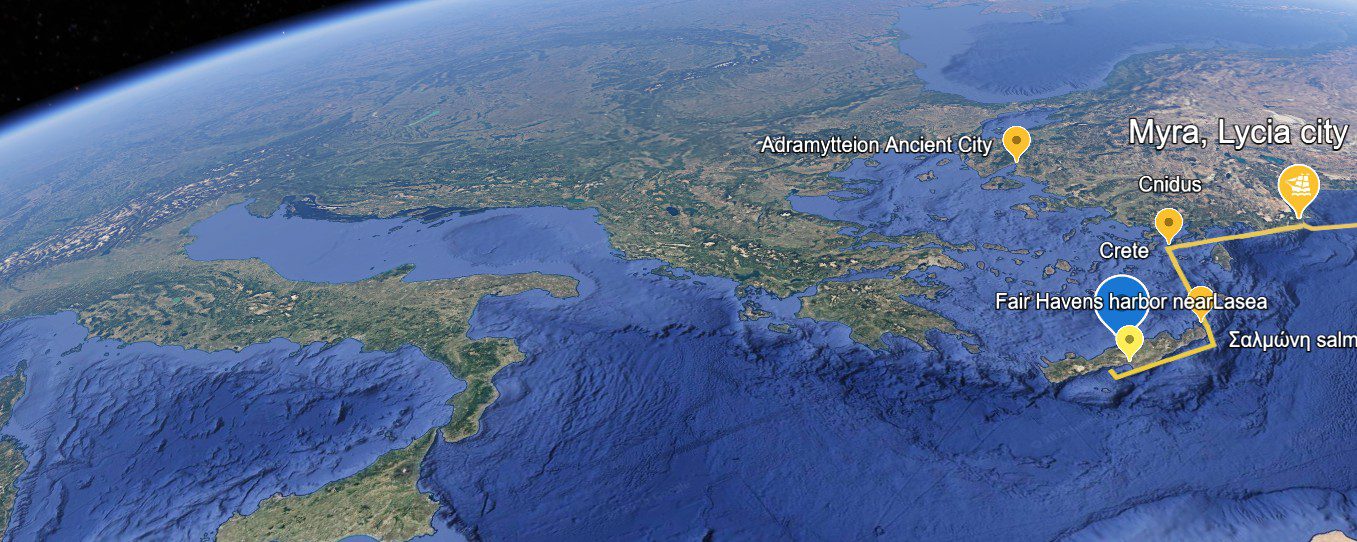
And when we had sailed slowly for a good many days, and with difficulty had arrived off Cnidus, since the wind did not permit us to go farther, we sailed under the shelter of Crete, off Salmone; and with difficulty, we sailed past it and came to a place called Fair Havens, near which was the city of Lasea.
Acts of the Apostles 27:7-8 LSB
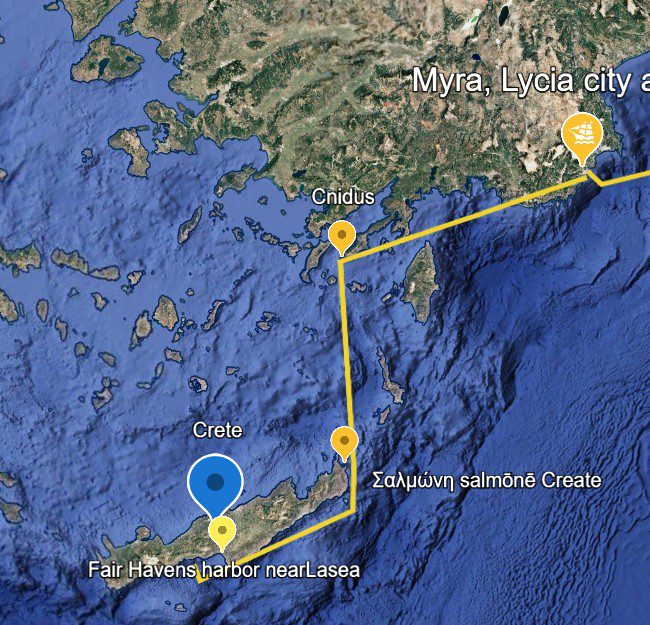
Paul notes the headings of this ship loaded with grain still quite distant from Rome. Thus far they had sailed a mere 350 nautical miles in windless waters .
More about Roman ships
In sum, the Roman Empire,, had no interest in vertical integration of the supply chain .. its principal interest was the incorporation of private shipping activities deemed useful to the public good into the mechanisms of control exercised by the state.
By contracting out the transport of grain, the Roman Empire also ensured quality service by experienced seafaring professionals, and an avoidance of the costly maintenance, staffing costs and continual provision of suitable vessels – ancient ships, owing to their ‘shell-first’ construction were presumably more expensive to build than later ‘frame-first’ vessels.
source: Ancient Ports Antiques .com THE ROMAN EMPIRE AND THE GRAIN FLEETS:
Waiting for fair winds
And when considerable time had passed and the voyage was now dangerous, since even the Day of Atonement Fast [late September or October] was already over, Paul began to advise them..
Acts of the Apostles 27:9 LSB
What’s going on here?
Julian, a Roman centurion in charge of Paul and any additional prisoners, is an ARMY man.
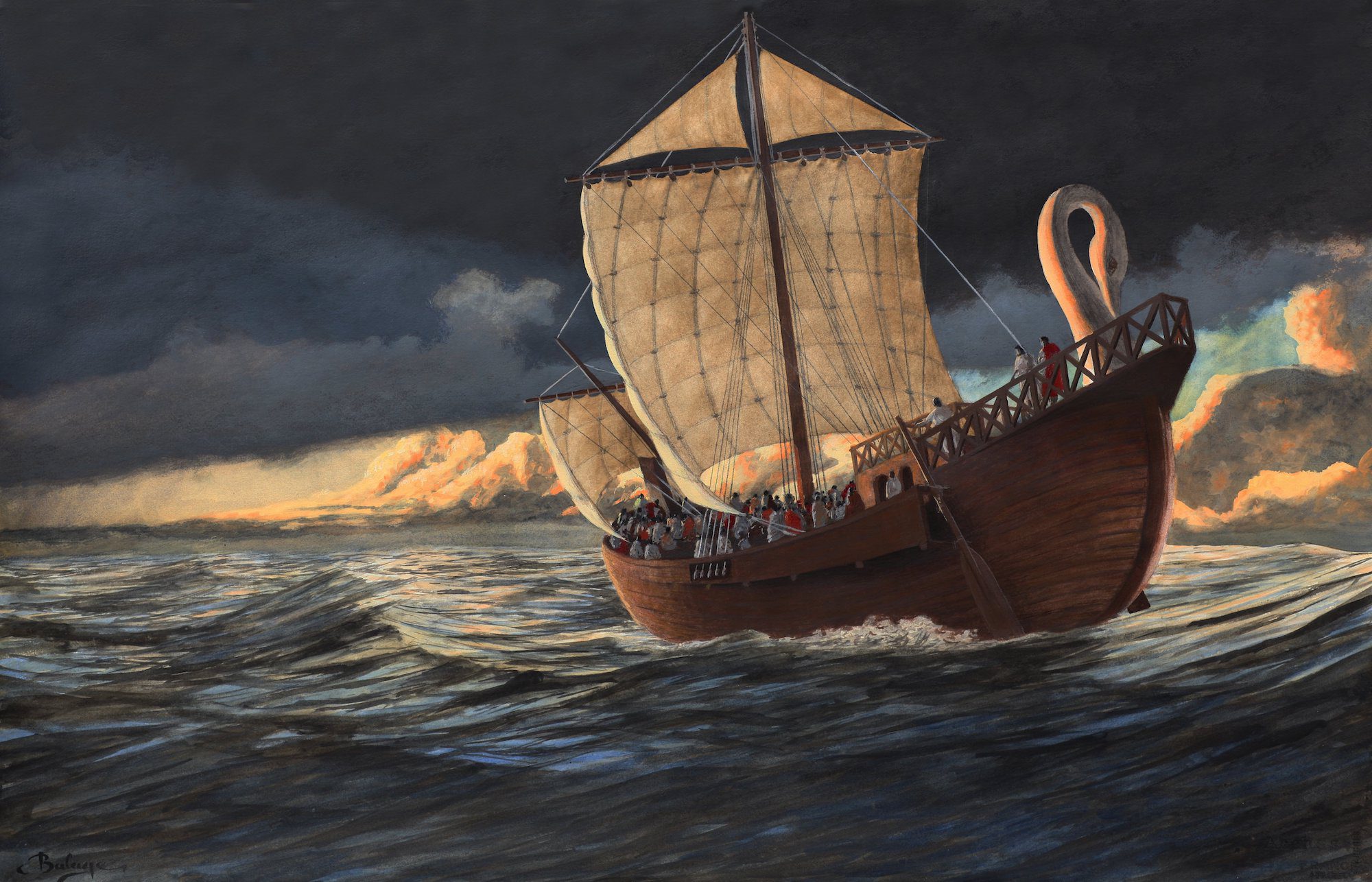
The Roman Army contracts professional sailors to man and navigate their ships (which could be commandeered, if required, for transport of Roman troops). These professional sailors are NOT in any sense like a unified Roman Navy.
The Centurian Julius has had plenty of time to get to know Paul – a Roman citizen.
Aristarchus (a Macedonian likely of the ruling class of Thessalonica) also accompanies this imfamous Apostle as he had recently on Paul’s third missionary jouney.
Julius had actually allowed them to briefly meet with other Christians at an earlier stop in Sidon.
In a sense, Julius is in charge, but cannot take full responsibility for this grain-hauling merchant ship.
His citizen prisoner Paul, like the grain, is manifested for Caesar in Rome. An entrepreneurial owner of this or any cargo ship would have much at stake, consequently commissioning himself (or a trusted family member) as captain of his ships.
Paul addresses the leaders of his voyage
“Men, I perceive that the voyage will certainly be with damage and great loss, not only of the cargo and the ship, but also of our lives.”
Acts of the Apostles 27:10b LSB
But the centurion {Julius} was being more persuaded by the pilot and the captain of the ship than by what was being said by Paul. And because the harbor [Fair Havens] was not suitable for wintering, the majority reached a decision to set sail from there, if somehow they could arrive at Phoenix, a harbor of Crete facing southwest and northwest, to spend the winter there.
Acts of the Apostles 27:11-12 LSB
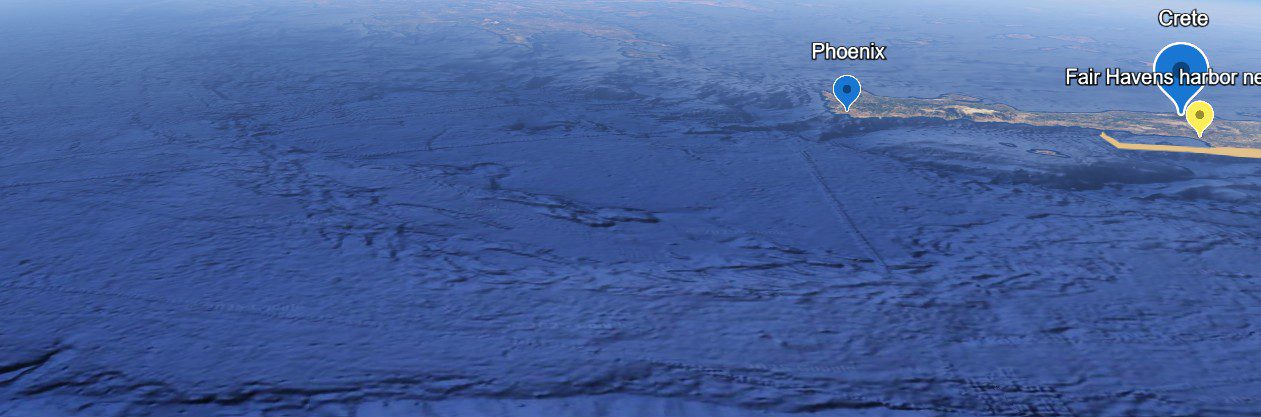
When a gentle south wind began to blow, they saw their opportunity; so they weighed anchor and sailed along the shore of Crete.
Acts of the Apostles 27:13 NIV
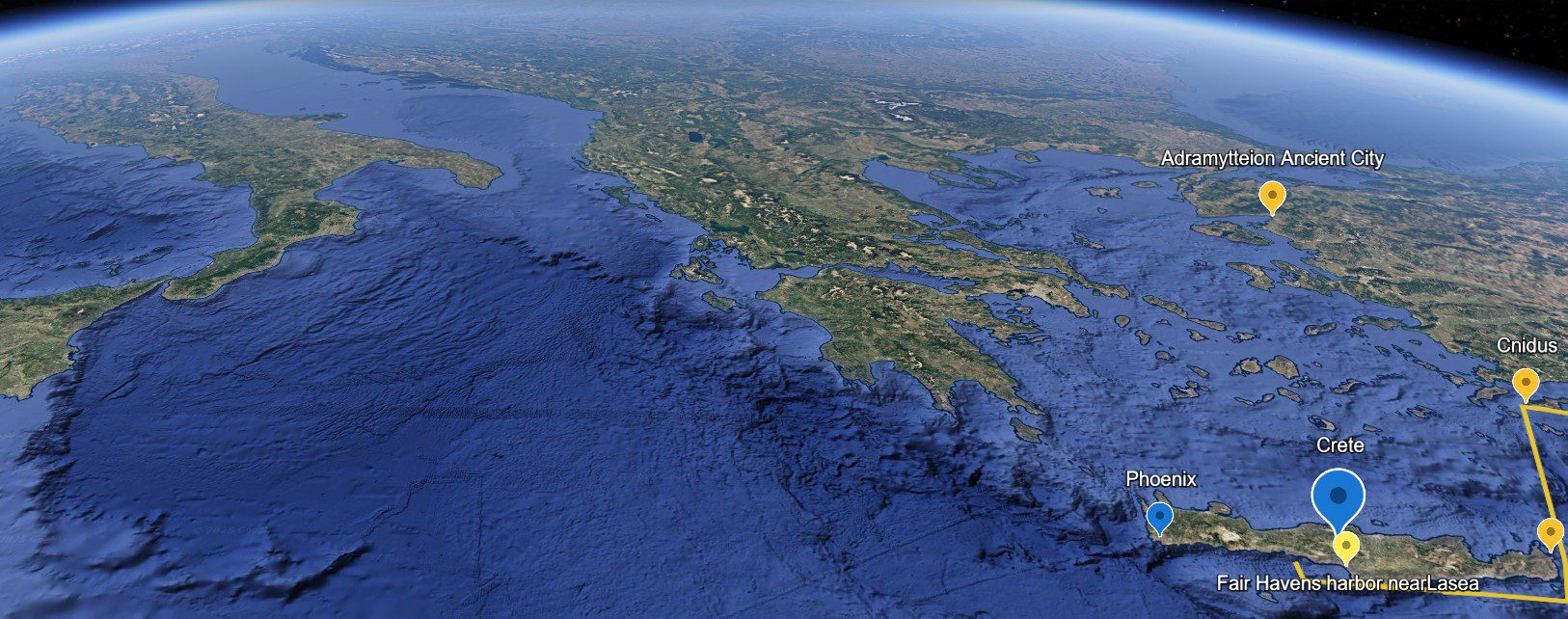
Voyage of the Apostle Paul to Rome — To be continued…
Talk of JESUS . com
Comment on Scripture – Share the Gospel

Leave a Reply