Tag: 1 Timothy

  • Confront and Correct with a Clear Conscience

    Confront and Correct with a Clear Conscience

    Are you afraid of CONFRONTATION?

    (the Apostle Paul seems to imply by asking Timothy to be strong…)

    Remind them of these things:

    2 Timothy 2:14a

    Paul builds up Timothy and other pastors true to following the Way of Jesus Christ. And further, the Apostle would confront false teachers by binding them with an oath.

    .. and solemnly charge them in the presence of God

    2 Timothy 2:14b NASB

    Warn them before God against quarreling about words;

    2 Timothy 2:14b NIV

    and charge them before the Lord [God or theos] to avoid disputing about words, which does no good, but only ruins the hearers.

    2 Timothy 2:14b RSV

    It’s serious business, this work of pastors leading their church!

    Various Bible translations head this section:

    • An Unashamed Workman
    • A Worker Approved by God
    • Dealing With False Teachers
    • Approved and Disapproved Workers

    Which type of worker are you?


    Accurately Handle the Word of Truth

    Legacy Standard Bible

    Confronting the World

    Believe it or not, MOST Common Era christians do NOT like confrontation concerning the truth of the Gospel of Jesus Christ.

    WE THE PEOPLE of our certain JESUS-worshiping church don’t even talk about the Way OR the Truth .. even to each other.

    OR do most churches challenge the community we include in our worship: to confess our own sins, accept forgiveness in Christ and walk in a new and narrow way.

    THE WORLD, on the other hand, speaks sharp words against christians, seeking our conciliation to include their sins and gods of self as acceptable to God and the Lord Jesus Christ.

    But to borrow a frequent response of the Apostle to such an argument, I answer:

    “BY NO MEANS.”

    AND, as Jesus said, it is not you, beloved believer, that the world hates: 

    “The world cannot hate you, but it hates Me because I bear witness about it, that its deeds are evil.

    Gospel of John 7:7 LSB


    Therefore the Apostle Paul instructs Timothy and pastors:

    Be strong in the grace that is in Christ Jesus.

    2 Timothy 2:1a LSB

    Be diligent to present yourself
    approved to God as a workman
    who does not need to be ashamed,
    accurately handling the word of truth.

    Second Letter of of the Apostle Paul to Timothy 2:15 LSB

    Now the Apostle Paul instructs Timothy HOW and WHO to confront, making certain that his (or our) motives are pure since cleansed in Christ.


    But avoid worldly and empty chatter

    Paul begins by warning who NOT to debate. For the Apostle has already instructed this in his previous epistle.

    O Timothy, guard what has been entrusted to you, turning aside from godless and empty G2757 chatter G2757 and the opposing arguments of what is falsely called knowledge—

    1 Timothy 6:20 LSB – Strong’s G2757 – kenophōnia

    YES, the FALSE teachers seeking to challenge the purity of TRUTH in your church always claim knowledge that goes against God.

    So Paul begins again in this letter:

    Avoid godless chatter, because those who indulge in it will become more and more ungodly.

    2 Timothy 2:16 NIV

    Empty disputing, worthless babble. From a presumed compound of kenos and phone; empty sounding, i.e. Fruitless discussion.

    source: G2757 BibleHub.org

    Have you ever encountered anyone in a Bible study or Church gathering who always seems to go on about something that has nothing to do with you, what you are discussion or what a selection of Scripture says? 

    “and their talk will spread like gangrene, Paul warns, citing two men, Hymenaeus and Philetus.

    What truth do they challenge?

    This is an important question of discernment for the pastor up against false teaching. And the Apostle points to a common false teaching of these two men with knowledge spreading into Ephesus and beyond like gangrene.

    They have strayed from the truth by saying that the resurrection has already occurred, and they are undermining some people’s faith.

    2 Timothy 2:18 NET

    How does the Apostle assure us?

    19 Nevertheless, God’s solid foundation stands firm, sealed with this inscription:

    “The Lord knows those who are his,” and

    “Everyone who confesses the name of the Lord must turn away from wickedness.”

    2 Tim 2:19 NIV

    quoting Scripture: Numbers 16:5, Joel 2:23

    Paul and pastors encountering FALSE knowledge quote Scripture, God’s written word — accurately.

    Now the Apostle to the gentiles speaks to our own accountability, specifically that of Timothy as the pastor who must confront such patently false teaching.

    Sanctifying the saints

    Now in a great house there are not only vessels of gold and silver but also of wood and clay, some for honorable use, some for dishonorable.

    2 Timothy 2:20 ESV

    Common or Sanctified Honorable Vessels
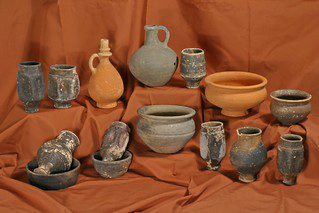
    In his epistle to the Romans, Paul points to God – owner of the great house – as maker of every vessel formed regardless of its common use or honorable gilded gloss of silver or gold.

    Paul’s letter to the Romans 9:21 KJV

    Hath not the potter power over the clay, of the same lump to make one vessel unto honour, and another unto dishonour?

    Although the saints and servants of the Lord Jesus Christ understood a vessel as an implement made for household use, the Apostle uses the familiar metaphor for σκεῦος [skeuos] for a man of quality, as a chosen instrument (honorable) or ‘in a bad sense, an assistant in accomplishing an evil deed’ [dishonorable, as a false teacher would choose].

    Jesus remarks, as Paul and Timothy would well know:

    No man can enter into a strong man’s house, and spoil his goods, [G4632 – vessels]

    except he will first bind the strong man;

    and then he will spoil his house.

    Gospel of Mark 3:27 KJV

    The STRONG pastor, as the Apostle encourages Timothy, will CONFRONT any intruder with false truth

    AND as an honorable vessel sanctified by the Lord of the House, CORRECT his (or her) false teaching.


    But first, purify yourself

    What’s a church to do when a false teacher steps into the spotlight of doctrine and truth?
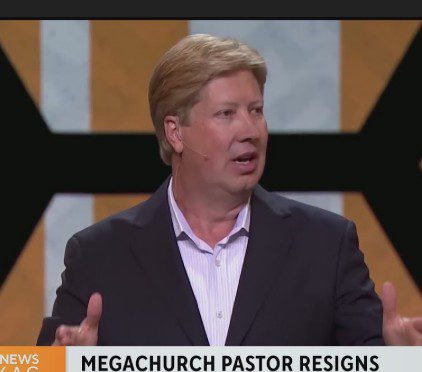
    Imagine Timothy making the NEWS..

    Or suppose that your church wants you to tolerate some leader’s unrepentant sin?

    The Apostle Paul points first to sanctification of yourself.

    DON’T be a common vessel, but an honorable one for Christ.


    Therefore, if anyone cleanses himself from these things, he will be a vessel for honor,

    sanctified, useful to the Master,

    having been prepared for every good work.

    Now flee from youthful lusts

    and pursue righteousness, faith, love, and peace, with those who call on the Lord from a pure heart.

    Paul’s Second Pastoral Epistle to Timothy 2:2:21-22 LSB


    9 Characteristics of a Faithful Believer

    In verses 21-26, Paul sets forth nine characteristics that mark a faithful, godly believer who is a vessel of honor.

    Source: MACARTHUR COMMENTARY ON 2 Timothy, p.88

    1. a cleansed life
    2. a sanctified soul
    3. be useful to God
    4. be prepared for service
    5. have a pure heart
    6. and have a discerning mind
    7. a gentle manner
    8. a humble spirit
    9. and a compassionate attitude.

    How’d you do?

    How many of these 9 honorable traits Paul suggests fit you as a ‘workman‘ in the large house with various vessels for use?

    Do YOU have a clear conscience?


    The clear conscience of a sanctified saint (believer).

    a good conscience and an unhypocritical faith

    The Apostle had already challenged Timothy and leaders of the Ephesian church in his first epistle:

    But the goal of our command is love from a pure heart and a good conscience and an unhypocritical faith.

    (later urging Timothy) 

    .. that by them you may fight the good fight, keeping faith and a good conscience, which some, having rejected, suffered shipwreck in regard to the faith.

    1 Timothy 1:5, 18c-19 LSB

    Now, after making certain that church leaders (some who have strayed from the faith), the Apostle commands them HOW to deal with those false teachers in their midst.

    When and How to Correct Them

    John MacArthur points to these leadership decisions as requiring A DISCERNING MIND.

    Paul instructs Timothy in this face-to-face conversational combat a strong Pastor faces.


    But reject foolish and ignorant disputes, knowing that they breed quarrels.

    2 Timothy 2:23 HCSB

    Foolish, an accusative plural adjective, Probably from the base of musterion; dull or stupid, i.e. Heedless, blockhead, absurd.

    Although we know what ignorant means, accusative adjective – Untrained, uneducated, showing a want of training or education, ignorant. Uninstructed, i.e. stupid.

    source:

    Why mention it?

    The Apostle warns, DON”T engage them.

    In fact, because of the conflicts such debates cause, leaders must refuse speculations that restart old battles.

    The Apostle reminds Timothy and church leaders that a slave (of the Lord’s household) not only must not quarrel, but also must be kind toward everyone.

    Have any trouble with that one?
    Does this sound familiar?

    Blessed are the meek:

    for they shall inherit the earth.

    Gospel of Matthew 5:5 KJV from the teaching of Jesus


    Teaching, rather than debating the ignorant

    but be kind to all, able to teach, patient when wronged, with gentleness correcting those who are in opposition..

    2 Timothy 2:24b-25a LSB

    The King James Version translates πραότης – praotēs, as meekness (rather than gentleness, or humility NKJV). And why not teach as the Master, the Teacher and Truth of those who may believe, as Paul suggests:

    .. if perhaps God may give them repentance leading to the full knowledge of the truth, and they may come to their senses and escape from the snare of the devil, having been held captive by him to do his will.

    2 Timothy 2:25b-26


    Was it not lasting Truth and forgiveness spoken by Stephen that began bringing a senseless Saul from the snare of the devil?
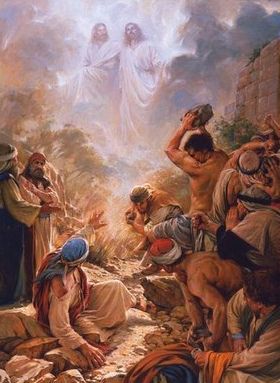
    the acts of Saul begin as witness of the stoning of Stephen in Jerusalem .. and a young man Saul of Tarsus held the cloaks of the men who stoned him
    And they stoned Stephen, calling upon God, and saying, Lord Jesus, receive my spirit.

    The Apostle Paul encourages Timothy to remain strong in the Truth and to teach with a gentleness of words from his humble sanctified spirit.


    NEXT: Danger Within during Difficult Times


    Comment on Scripture – Share the Gospel

  • 2 Timothy 1 – For this Gospel I was appointed

    2 Timothy 1 – For this Gospel I was appointed

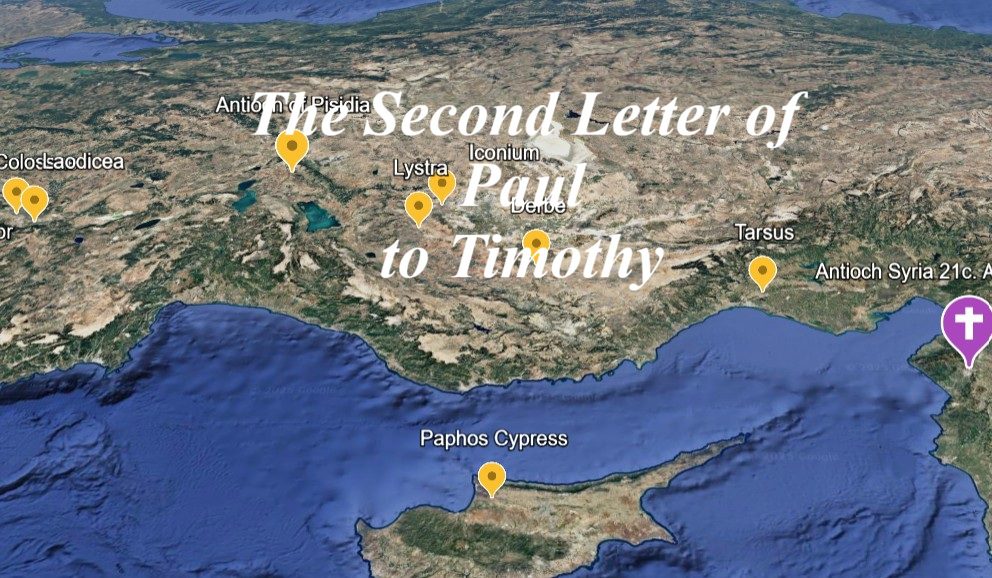
    Google map of the Roman world with stops of the Apostle Paul including Lystra where Timothy joined Christ's mission

    Paul’s Gospel of God and Christ

    The Apostle has begun his final pastoral epistle with encouragement of young Timothy as his beloved son appointed to continue in the Gospel of Jesus Christ.

    From Personal Sonship to Apostolic Responsibility for the Gospel

    Paul also identifies some of who fall away from Christ and others who remain faithful. (It remains a pattern for the ages.)

    What is Paul’s Gospel?

    And now - the Gospel The Logic of Paul's NEWS for the Corinthians 15:1-11 logic ethics emotion triangle

    εὐαγγέλιον

    euangelion

    Paul has written to the Romans, faithful saints in the city in which the Apostle is imprisoned and awaiting death:

    Paul, a servant of Jesus Christ, called to be an apostle, separated unto the gospel G2098 of God,

    Romans 1:1 KJV

    To the Corinthian saints Paul writes:

    .. for in Christ Jesus I have begotten you through the gospel. G2098

    1 Corinthians 4:15b KJV

    and

    But if our gospel G2098 be hid, it is hid to them that are lost:

    2 Corinthians 4:3 KJV

    We could point to additional epistles of Paul to the saints of various churches. 

    Paul refers to the GOSPEL 74 times in 68 verses in ‘The Pauline Epistles.’


    God’s Divine plan now revealed in Christ

    That’s the Apostles’ NEW Good News!

    In Paul’s earlier pastoral letter to Timothy the Apostle had written:

    As I urged you when I was going to Macedonia, remain at Ephesus that you may charge certain persons not to teach any different doctrine,

    1 Timothy 1:3 RSV

    Certain saints supposedly committed to Christ had already wavered away from the Gospel Paul taught. 

    Now we know that the law is good, if any one uses it lawfully, understanding this, that the law is not laid down for the just but for the lawless and disobedient, for the ungodly and sinners, for the unholy and profane..

    and whatever else is contrary to sound doctrine, in accordance with the glorious gospel of the blessed God

    with which I have been entrusted.

    1 Timothy 1:8-11 excerpt RSV

    I charge you to keep the commandment unstained and free from reproach until the appearing of our Lord Jesus Christ; and this will be made manifest at the proper time by the blessed and only Sovereign, the King of kings and Lord of lords,

    who alone has immortality and dwells in unapproachable light, whom no man has ever seen or can see.

    To him be honor and eternal dominion. Amen.

    1 Timothy 6:14-16 RSV – charge of the Apostle Paul to Timothy

    Paul worships God and Christ, pointing to the promise of the eternal mystery now revealed in the resurrection and ascension of Jesus.

    Paul’s Gospel of SALVATION in JESUS

    manifested by the appearing of our Savior

    join with me in suffering for the gospel according to the power of God, who has saved us

    and called us with a holy calling, not according to our works,

    but according to His own purpose and grace

    which was given to us in Christ Jesus from all eternity,

    but now has been manifested by the appearing of our Savior Christ Jesus,

    who abolished death and brought life and immortality to light through the gospel,

    2 Timothy 1:8b-10 LSB

    Jesus is now revealed as our Savior and it is death from which He has saved us.

    This is the gospel of Jesus as our saviour which Paul emphasizes throughout this last pastoral epistle to Timothy and saved saints of the Church.


    2 Timothy Commentary

    Retain the standard of sound words

    Hold to the standard of sound words that you heard from me and do so with the faith and love that are in Christ Jesus

    2 Timothy 1:13 New English Translation

    Hold fast the form of sound words…

    2 Tim 1:13a KJV

    Retiens dans la foi..

    LS

    Retén la forma

    SE


    1:13 ὑποτύπωσιν ἔχε ὑγιαινόντων λόγων

    Retain – echō is the word Paul uses.

    The Apostle has used [ὑποτύπωσις]hypotypōsis  in his first epistle as well:

    Howbeit for this cause I obtained mercy, that in me first Jesus Christ might shew forth all longsuffering, for a pattern G5296 to them which should hereafter believe on him to life everlasting.

    1 Tim 1:16 KJV

    And again Paul states here:

    Hold fast the form G5296 of sound words, which thou hast heard of me, in faith and love which is in Christ Jesus.

    2 Tim 1:13 KJV

    His outline [or pattern] here is for Timothy and any pastor who will follow in the authority of Christ Jesus — the Apostolic faith which Paul, Peter and others have echoed.

    RETAIN THIS, insists Paul.


    Preachers, Apostles and Teachers

    This self-discipline [v.7] to which the Apostle has already pointed requires preachers and teachers to retain this pattern of Paul.

    Therefore do not be ashamed of either the witness about our Lord or me His prisoner..

    2 Tim 1:8a LSB


    a brief reminder about apostles, preachers and teachers.. and then, saints:

    An Apostle is ‘sent out’ or set apart under the Authorithy through God and Christ.

    IF you address your preacher standing in a pulpit going nowhere but the stage of their church as Apostle So-and-so, you miss the Apostolic authority Paul calls for preachers and teachers to retain as our pattern in Christ Jesus.

    Paul points out that he was appointed [tithēmi ] to all these responsibilities. He is an apostle, a preacher and teacher.

    The Church often used a symbolic laying on of hands for such offices, but the true sign is of the indwelling of the Holy Spirit of Almighty God.

    Preachers

    kēryx is the same word Peter used of Noah calling him, ‘a preacher of righteousness.’ It’s a noun meaning: a herald or messenger vested with public authority.

    You’ll recognize Paul’s point from its verb meaning to preach or proclaim.

    From that time Jesus began to preach G2784 and say, “Repent, for the kingdom of heaven is at hand.”

    Gospel of Matthew 4:17 LSB

    and He said to them, “Thus it is written, that the Christ would suffer and rise again from the dead the third day, and that repentance for forgiveness of sins would be proclaimed G2784] in His name to all the nations, beginning from Jerusalem.

    “You are witnesses of these things.

    Gospel of Luke 24:46-48 LSB – Jesus to the Apostles just prior to His ascension

    Paul reminds Timothy:

    That is why I am suffering here in prison. But I am not ashamed of it, for I know the one in whom I trust, and I am sure that he is able to guard what I have entrusted to him until the day of his return.

    2 Timothy 1:12 NLT

    Teachers

    διδάσκαλος – in the NT one who teaches concerning the things of God, and the duties of man

    “A disciple is not above his teacher G1320, nor a slave above his master. It is enough for the disciple that he become like his teacher G1320, and the slave like his master.

    Gospel of Matthew 10:24-25a LSB  

    And a reminder that mathētēs is any student or disciple of a teacher. 

    Slave is doulos which we often gently translate, servant.

    And again the significance of the teacher (whether Paul or Jesus or a teaching Elder of your church) is that relationship —

    of Teacher-Student or Master-Servant — kyrios - the same word often used for the Lord JESUS points to the authority of God.

    “You call Me Teacher G1320 and Lord  G2962; and you are right, for so I am.

    Gospel of John 13:13 LSB – Jesus to His Disciples


    a duty of the saints and pastors

    Now if any one says that we need not direct men how or what they should teach, since the Holy Spirit makes them teachers, he may as well say that we need not pray, .. or that the Apostle Paul should not have given directions to Timothy and Titus as to how they should teach others.

    And these three apostolic epistles ought to be constantly before the eyes of everyone who has obtained the position of a teacher in the Church.

    ON CHRISTIAN DOCTRINE – AD 397 & 426 – translated JF Shaw, book IV, ch xxxiii excerpt – ST. AUGUSTINE of Hippo

    Augustine, an elevated father of the early Church, presents sound reasons why all saints of Christ ought to dutifully follow their teachers and why all pastors can only lead their sheep of Christ’s pasture in diligence of prayer, obeying the Holy Spirit and keeping in Scripture, including these pastoral epistles.


    Guard the Truth

    * SUMMARY OF THIS GOSPEL:
    Christ alone is the good shepherd...
    Christ’s sheep know only Christ’s voice
    and follow it.

    God knows well who are his as Paul says in 2 Timothy 2:19:
    “Howbeit the firm foundation of God standeth, having this seal, The Lord knoweth them that are his.”

    It is not a congregation of Christ that strives for the honor of this world and desires to be esteemed great in the eyes of the world…

    ~ AD 1520 – Sermons of MARTIN LUTHER – a theologian, Catholic priest, reformer and former Augustinian friar – Vol 3, Pg 340 [translated Lenker]

    NEXT: 2 Timothy 2 – STRONG Teachers and FALSE Preachers

  • 2 Timothy – Apostolic Faith and Pastoral Oversight by Paul

    2 Timothy – Apostolic Faith and Pastoral Oversight by Paul

    Introduction

    God and Christ became incarnate in order to restore Their personal relationship with sinful man.

    Roger@TallkofJesus.com


    God and Apostles, Disciples of men

    Our purpose in introducing Paul’s final epistle to a pastor is:

    1. to reintroduce you to the Apostle Paul and

    2. to reacquaint you with Timothy, a disciple of Paul who served him in varying roles,

    BOTH whom we’ve met in Acts of the Apostles and other epistles.


    Let us begin with God

    (says the teacher to his class). 

    God — YHWH the LORD — Is One.

    One in Being. One in Essence. One in Substance.

    There IS no other god.

    God IS the Creator of all things and of all mankind.

    He had a relationship in the beginning of time — before which He Exists and after which He Exists — the LORD’s relationships are perfectly personal.

    God IS: Father, Son — Jesus Christ, and the Holy Spirit.


    Christ, Apostles and Disciples

    The Apostle Paul writes to Timothy in his first epistle:

    This is a faithful saying and worthy of all acceptance, that Christ Jesus came into the world to save sinners, of whom I am chief.

    First letter of the Apostle Paul to Timothy

    Jesus, the incarnate Son of God the Father, taught the Gospel with all perfection to men for three years.

    The Twelve Disciples (which included neither Paul nor Timothy) followed the Lord, ate and slept with Jesus — they all knew the incarnate Son of God personally.


    Consider the interpersonal relationships connecting each of these roles as defined by Scripture and what the Lord Jesus, our Teacher, instructs:

    Disciple (follower), Master (teacher), Servant (slave) and Lord

    The Disciples Matthew, John and Peter were all present with the incarnate Christ Jesus personally when the Lord said this:

    The disciple is not above his master, nor the servant above his lord.

    Gospel of Matthew 24:14 – Jesus’ to The Twelve Disciples; Instructions for Service & meaning of discipleship – KJV

    μαθητής – mathētēs – disciple (268x) – a learner, pupil, one who follows one’s teaching:

    The Twelve followed JESUS for three years, discipleship at its most personal.

    Furthermore, many others would follow JESUS’s teachings as ‘Christians’ chosen by God for the Way of eternal life.


    Apostles to the Jews and Gentiles

    Of course from the beginning Jesus knew that Judas would betray Him and that a disciple Mathias would be chosen to replace the betrayer of Christ as a twelfth Apostle to the Jews.

    Christ had taught and trained the Twelve how they would become Apostles — primarily, but not exclusively, to their fellow Jews —after His death, resurrection and ascension.


    Simon Peter, a servant and an apostle of Jesus Christ, to them that have obtained like precious faith with us through the righteousness of God and our Saviour Jesus Christ:

    2 Peter 1:1 KJV


    Paul also refers to himself as an Apostle, greeting his disciples (followers) in his first epistle and this final letter.

    Paul, an apostle of Jesus Christ by the will of God, according to the promise of life which is in Christ Jesus,

    To Timothy, my dearly beloved son:

    2 Timothy 1:1-2a KJV

    So who are apostles?

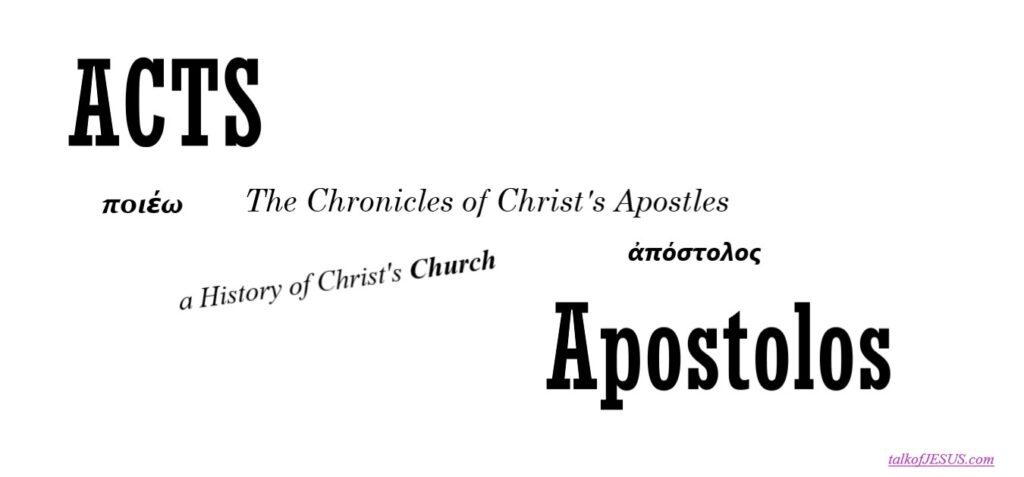
    Acts Apostolos - Acts 1 of the Apostles begins a 28 chapter account of the chronicles of Christ's Apostles - a history of Christ's Church

    Apostolos – a delegate, messenger, one sent forth with orders

    • specifically applied to the twelve apostles of Christ
    • in a broader sense applied to other eminent Christian teachers
    • – of Barnabas of Timothy and Silvanus

    Apostles are ‘sent out’ by Christ.

    As in the case of the Twelve and the Apostle Paul, the Lord himself instructed them Personally — that is, the Person of Jesus sent these Apostles out into the world personally.

    Other apostles continued to be ‘sent out into all the world’ by the Holy Spirit after Jesus’ ascension, as Luke records for us of the day of Pentecost in ACTS 1.


    As we learned from Acts of the Apostles that after the AD 49 Council in Jerusalem, Peter, Paul, John and all others were sent out ‘first to the Jews,’ but also into gentile areas of the Roman Empire (mostly Hellenist or Greek provinces) to include ALL as follows of Christ as part of each local church.

    Jesus is Lord

    Note that Jesus Christ refers to the Father as Lord (Kyrios in their common Greek language of the Roman Empire) with an authority and meaning no different than the original Hebrew scripture (Yahweh).

    “Teacher, which is the great commandment in the Law?”

    And He said to him,

    “‘YOU SHALL LOVE THE LORD YOUR GOD WITH ALL YOUR HEART, AND WITH ALL YOUR SOUL, AND WITH ALL YOUR MIND.’

    Matthew 22:36-37 LSB


    Saul, a Jew of Jews, sent out by a Master crucified and risen!

    About five years after the Jews of Jerusalem had crucified Jesus, a young disciple of Gamaliel witnessed the stoning of a follower of The Way.

    They went on stoning Stephen as he was calling out and saying, “Lord Jesus, receive my spirit!” Then falling on his knees, he cried out with a loud voice, “Lord, do not hold this sin against them!” And having said this, he fell asleep.

    Acts of the Apostles 7:59-60 LSB

    Stephen, even in his dying breath, called JESUS, “Lord” – twice.

    And this young disciple of the rabbi Gamaliel had witnessed it personally.

    Saul of Tarsus would become an apostle of the Sanhedrin specifically sent out to continue persecuting Christians.

    But then, as we know, Christ appeared to Saul and instructed this new and unwilling (at first) Apostle to go to the Gentiles.

    Paul frequently writes that He is a slave (doulos) of JESUS or God(or of the gospel). The Lord Jesus himself points to the service required of this most personal relationship.

    Many translations prefer servant to slave, but it is the same Greek word: doulos. 

    The disciple is not above his master, nor the servant above his lord.

    Gospel of Matthew 10:24 KJV

    The Apostle Paul describes himself in another pastoral epistle written about the same time as his two letters to Timothy:

    Paul, a servant G1401 of God, and an apostle of Jesus Christ, according to the faith of God’s elect, and the acknowledging of the truth which is after godliness;

    Epistle of Paul to Titus 1:1

    Timothy – Paul enlists a disciple of The Way

    Lystra, Derbe and Iconium in the Taurus mountains and general Roman region of Galatia to where Paul sends the first of his epistles.

    Now Paul also arrived at Derbe and at Lystra.

    And behold, a disciple was there, named Timothy,

    the son of a Jewish woman who was a believer,

    but his father was a Greek,

    Acts of the Apostles 16:1

    During Paul’s second missionary journey, which had begun inland through the mountains northwest of Tarsus in rural Galatia. While visiting churches established by Barnabas and him on a first missionary journey, the Apostle meets a young Timothy — a Greek, because of his father, but brought up as a Christ-follower by his mother(a Jew, as Paul had been) and Timothy’s grandmother.

    A brief introduction of Timothy (Τιμόθεος – Timotheos)

    Timothy's early journeys are found in Acts of the Apostles. 

    ~AD 49

    Timothy joined Paul and Silas on mission, staying behind at Berea for a time with Silas. Paul, later commands the two by the Spirit to join him in Athens from where the trio proceed to Macedonia.

    Paul then ‘sent into Macedonia two of them that ministered unto him, Timotheus and Erastus; but he himself stayed in Asia for a season.

    Acts 19:22 KJV

    We observe how personal all of the mentoring relations of the Apostle remain to Paul as Luke records those with the Apostle when once again the Jews laid wait to capture and kill him.

    Paul was accompanied by Sopater son of Pyrrhus from Berea,

    Aristarchus and Secundus from Thessalonica,

    Gaius from Derbe, Timothy, and Tychicus

    and Trophimus from the province of Asia.

    Acts of the Apostles 20:4 Berean Standard Bible

    We will mention more of Timothy's crucial later pastoral roles later in this epistle.  

    Timothy wrote other epistles with Paul :

    It is important for us to note that these Pastoral Epistles make known the Spirit-directed teaching of the Apostle Paul we must study, rather than focus on any pastors or saints to whom Paul writes, such as Timothy.

    • ~AD 50-51
    • ~AD 55-56 the Apostle Paul writes:
      • 1 Corinthians with Sosthenes and
      • 2 Corinthians with Timothy
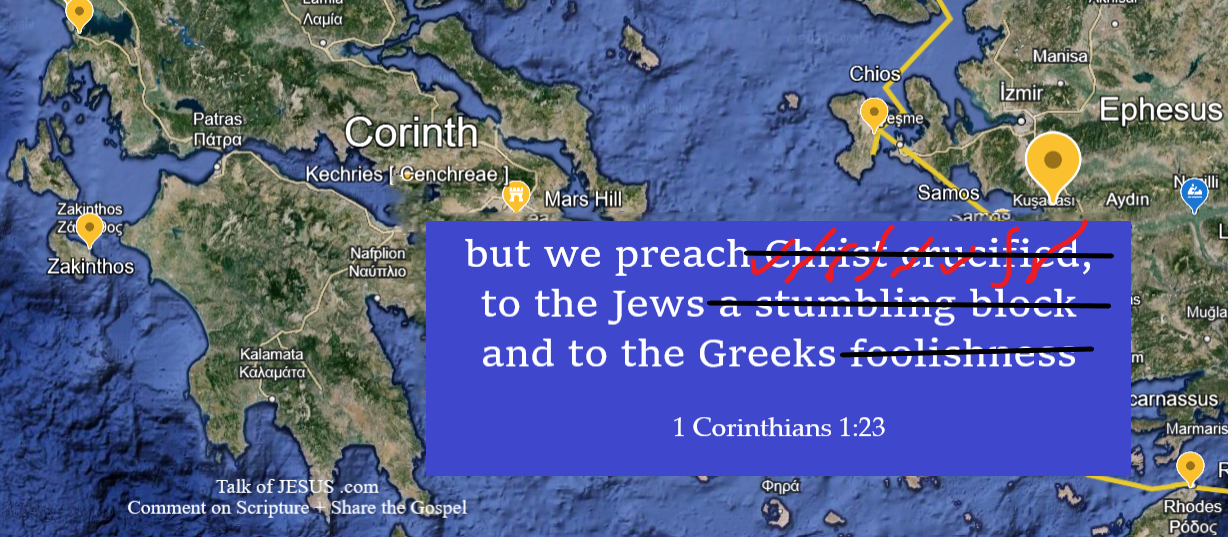
    preaching to them that perish - Paul writes to the Corinthians to consider his different way of preaching
    The Apostle Paul writes to the Corinthians with Sosthenes and a second time with Timothy
    *graphic from a 2024 TalkofJESUS SERIES Post: Rebuke of ministers that perish without the Cross
    • ~AD 60-62 The Apostle Paul writes to:
      • the Ephesians
      • the Philippians
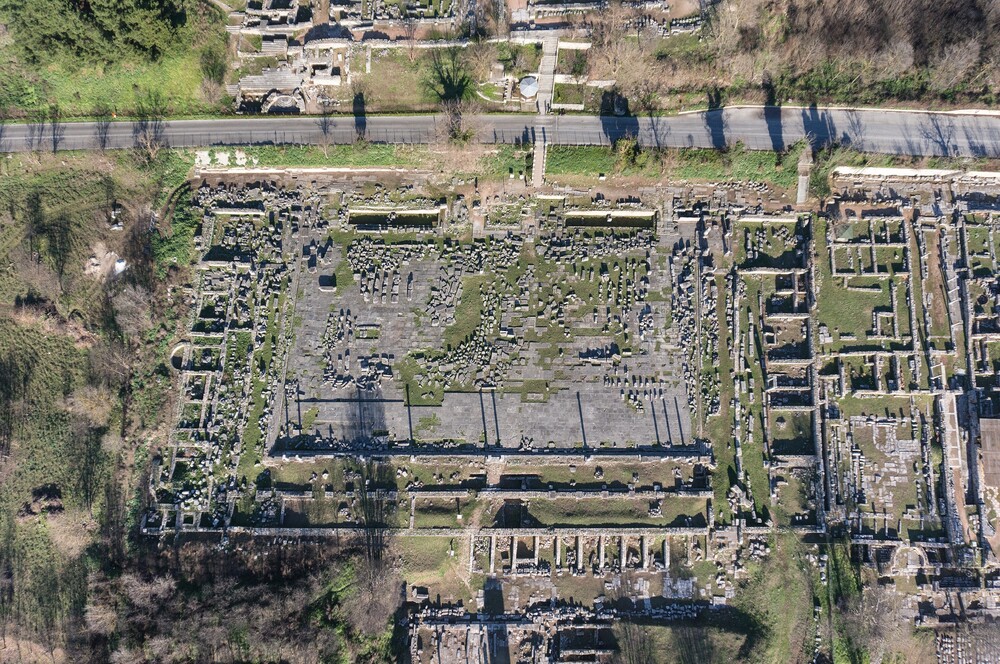
    Archaeological Site of Philippi: General view of the forum with adjacent agora marketplace

    Paul and Timothy, servants of Christ Jesus,

    To all God’s holy people in Christ Jesus at Philippi, together with the overseers and deacons:

    Philippians 1:1 NIV

    • the Colossians, with Timothy
    • and a personal plea along with Timothy to Philemon, concerning Onesimus.

    NEXT: 2 Timothy 1:

    timotheos agapētos teknon

    To Timothy, my beloved son


    Comment on Scripture – Share the Gospel