Tag: 2 timothy

  • II Timothy i beloved son of Paul

    II Timothy i beloved son of Paul

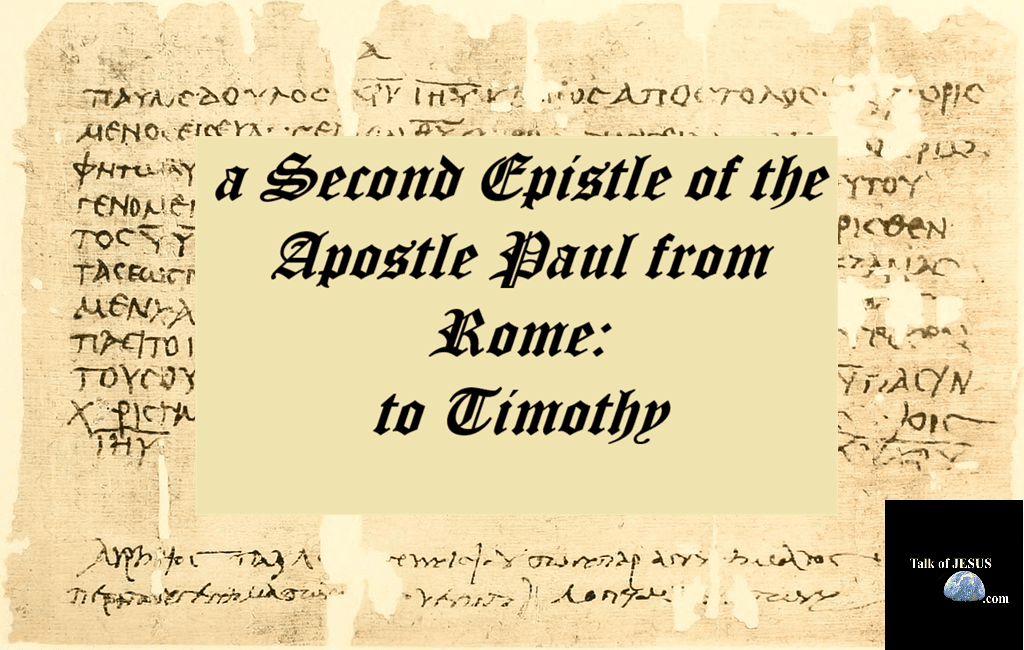
    a second epistle of the Apostle Paul from Rome: to Timothy

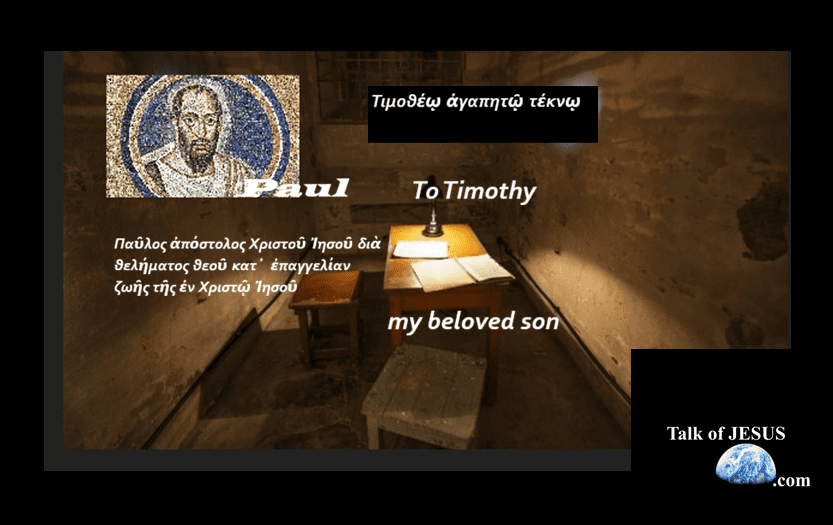
    Τιμοθέῳ ἀγαπητῷ τέκνῳ

    χάρις ἔλεος εἰρήνη ἀπὸ θεοῦ πατρὸς καὶ Χριστοῦ Ἰησοῦ τοῦ κυρίου ἡμῶν

    To Timothy, my dearly beloved son:

    Grace, mercy, and peace, from God the Father and Christ Jesus our Lord.

    2 Timothy 1:2 KJV


    Timothy, beloved son of an Apostle

    Paul is about to send Timothy out as his continued Apostolic voice to a next generation of faithful believers.

    Last Will and Testament of Simon Peter - Talk of Jesus

    “Dearly BELOVED..”

    Do any recognize the greeting of such intimately connected believers so joined in Christ Jesus? 

    This is how Paulos, a Jew of Cilicia, addresses his Galatian gentile protege Timotheus


    Greek by heritage of his father (apparently deceased or absent) and raised Jewish by the faith of his Grandmother Lois and convert mother, Eunice (as we detailed in our Introduction)


    as his SON, a beloved and chosen adoptive son — not just an exceptional student and faithful follower.

    τέκνον – teknon – child or son

    • Strong’s G5043 – teknon – “a child” (akin to tikto, “to beget, bear”), is used in both the natural and the figurative senses. In contrast to huios, “son” (see below), it gives prominence to the fact of birth, whereas huios stresses the dignity and character of the relationship. Figuratively, teknon is used of “children” of
    • (a) God, Jhn 1:12;
    • (b) light, Eph 5:8;
    • (c) obedience, 1Pe 1:14;
    • (d) a promise, Rom 9:8; Gal 4:28;
    • (e) the Devil, 1Jo 3:10;
    • (f) wrath, Eph 2:3;
    • (g) cursing, 2Pe 2:14;
    • (h) spiritual relationship, 2Ti 2:1; Phm 1:10.
      • (2X from the Pastoral Epistles of Paul)
    • See DAUGHTER, SON.

    Vine’s Expository Dictionary of New Testament Words

    As mentioned in our introduction to Timothy, the Apostle Paul has adopted this young man of Galatia and mentored him along with others as trusted servants, sons and companions in his apostolic mission to the Gentiles.


    Historical Context:

    2 Timothy was likely written around AD 67, during Paul’s second imprisonment in Rome, shortly before his martyrdom. This period was marked by intense persecution of Christians under Emperor Nero. Paul, aware of his impending death, writes with a sense of urgency and finality.

    Audience and Purpose:

    Paul’s second letter to Timothy, left in Ephesus to oversee the church, guides both him and the broader Christian community. It encourages church leaders and believers in the face of persecution. Paul urges Timothy to protect the gospel, endure hardships, and teach sound doctrine.

    source: BibleHub.org

    As to the role of Timothy to the Church, we might in a later era address this esteemed son of the Apostle to the Gentiles as Bishop Timothy of Ephesus,
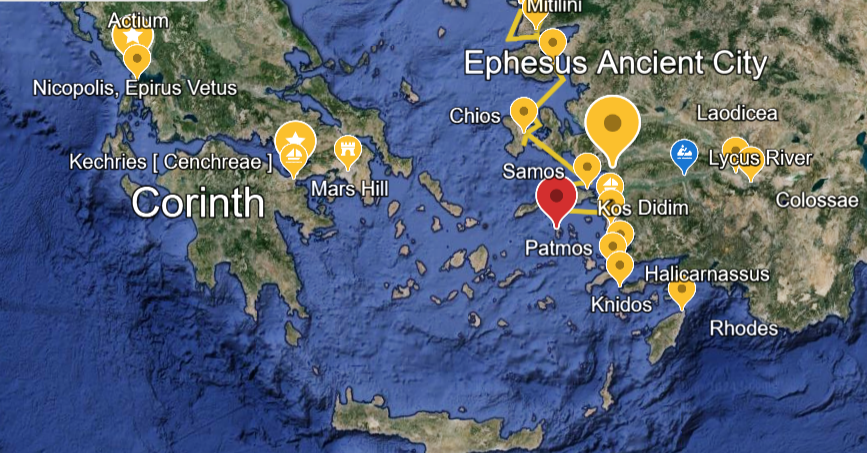
    The Apostle Paul most likely sent his first letter to the Corinthians from Ephesus

    or possibly Arch-Bishop Timotheus of Asia.
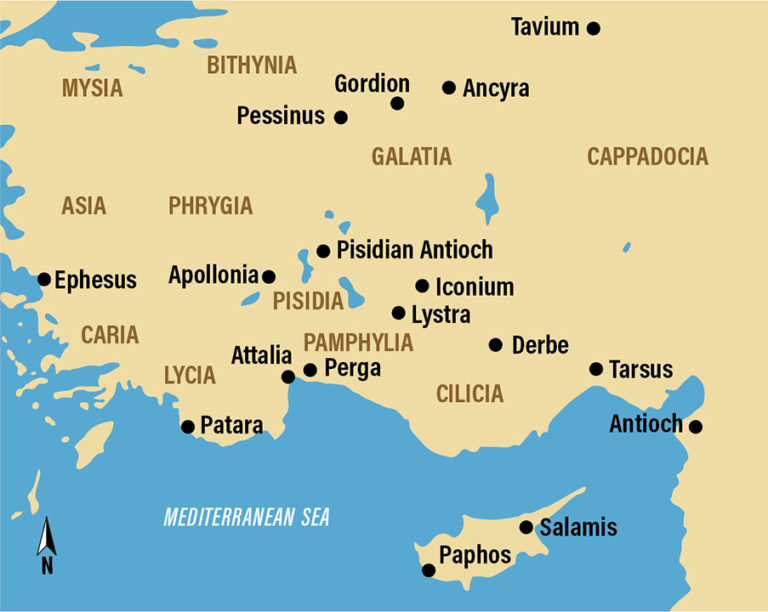
    the Apostle Paul begins his 3rd missionary journey by land traveling from Antioch Syria to Ephesus in Asia Minor

    But regardless of Timothy’s personal importance to Paul as a fellow servant of Christ and the Gospel, you can see from the definition of son above that his spiritual relationship to the Apostle and Christ’s Church stand foremost to any role of administrative authority (which he had, as did the Apostle Paul) or imaginative royal-like religious title.
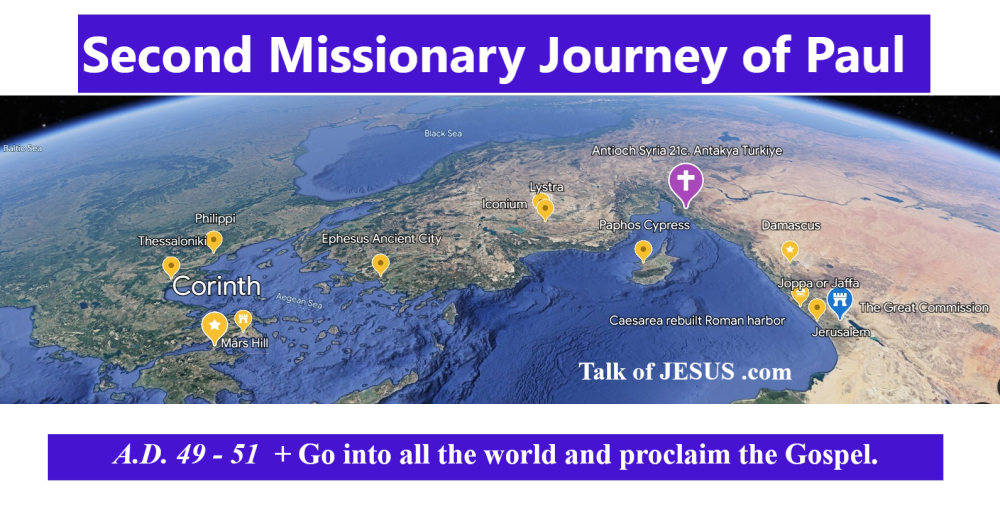
    But on taking leave of them he said, “I will return to you if God wills,” and he set sail from Ephesus. Conclusion of the second missionary journey of Paul from Acts 18
    and he set sail from Ephesus.

    From Personal Sonship to Apostolic Responsibility for the Gospel

    In the fifteen or so years since Timothy as a young man had first followed and served Paul, he has proven himself faithful, and a capable pastor (or shepherd trusted with local flocks of followers of The Way, loyal to Paul and true to the Gospel of Jesus Christ.

    Hence I remind you to rekindle the gift of God that is within you through the laying on of my hands;

    2 Timothy 1:6 RSV

    “.. rekindle the gift of God that is within you..” – the word Paul uses here in this introduction of his pastoral epistle is: anazōpyreō

    – stir up that by which the fire is kindled anew or lighted up, a pair of bellows);

    Don’t you love Paul’s imagery of a fire of holiness, perhaps neglected and cooling to Christ as its last embers of your faith — REKINDLING through the Holy Spirit (received by the Apostle’s laying on of hands)?

    Of course you know Paul’s word for ‘the gift of God’ – the charisma of Theos.

    Paul reminds by building up in the power of the faith already well-known in and to Timothy: 

    for God did not give us a spirit of timidity

    that is, fearfulness of cowardice 

    but a spirit of power and love and self-control.

    THREE gifts of the Spirit required of pastors and the faithful of the flock of every church.

    • dynamis – strength power and ability
    • agapē – (not just any love, but agapē love) – affection, benevolence, good will, charity, love for the brothers and sisters of the church
    • sōphronismos – The KJV translates as sound mind (1x).
      • (this you may not know and in this the saints so often find ourselves lacking)
      • an admonishing or calling to soundness of mind, to moderation and self-control

    Power in the Spirit, Agape Love and a yielding of the mind to God
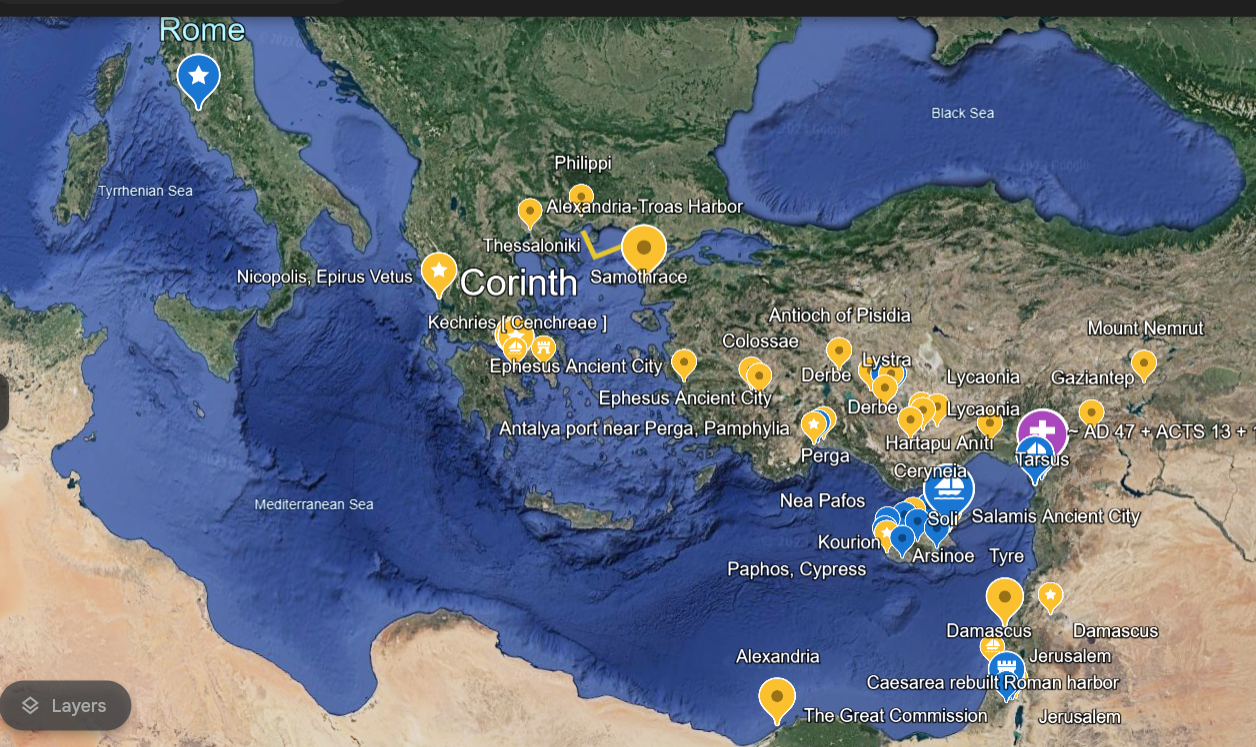
    Several missionary stops of the apostle Paul before going to Rome - Acts of the Apostles

    Paul could have easily been forgotten in his prison cell in Rome, even more distant in Europe across the Aegean — than Derbe and Antioch from Ephesus, all in Asia where Timothy remains pastoring the church.

    Therefore, be not ashamed

    So the Apostle writes:

    Do not be ashamed then of testifying to our Lord, nor of me his prisoner, but share in suffering for the gospel in the power of God, who saved us and called us with a holy calling,

    not in virtue of our works but in virtue of his own purpose and the grace which he gave us in Christ Jesus ages ago, and now has manifested through the appearing of our Savior Christ Jesus, who abolished death and brought life and immortality to light through the gospel.

    2 Timothy 1:8-10 RSV


    The faithful and unfaithful to Paul and Apostolic faith

    Paul is about to begin an important point and reason for this second epistle (which we will study more next time), but here he lists some remembered for their works. 
    Coasts of Asia Minor along the Aegean Sea

    This you know, that all those in Asia have turned away from me,

    among whom are Phygellus and Hermogenes.


    The Lord grant mercy to the household of Onesiphorus, for he often refreshed me, and was not ashamed of my chain;

    Circus Maximus - Rome and model of surrounding city of Rome

    but when he arrived in Rome, he sought me out very zealously and found me.

    The Lord grant to him that he may find mercy from the Lord in that Day—and you know very well how many ways he ministered to me at Ephesus.

    2 Timothy 1:15-18 NKJV


    NEXT: For this Gospel I was appointed


    Comment on Scripture – Share the Gospel

  • 2 Timothy – Apostolic Faith and Pastoral Oversight by Paul

    2 Timothy – Apostolic Faith and Pastoral Oversight by Paul

    Introduction

    God and Christ became incarnate in order to restore Their personal relationship with sinful man.

    Roger@TallkofJesus.com


    God and Apostles, Disciples of men

    Our purpose in introducing Paul’s final epistle to a pastor is:

    1. to reintroduce you to the Apostle Paul and

    2. to reacquaint you with Timothy, a disciple of Paul who served him in varying roles,

    BOTH whom we’ve met in Acts of the Apostles and other epistles.


    Let us begin with God

    (says the teacher to his class). 

    God — YHWH the LORD — Is One.

    One in Being. One in Essence. One in Substance.

    There IS no other god.

    God IS the Creator of all things and of all mankind.

    He had a relationship in the beginning of time — before which He Exists and after which He Exists — the LORD’s relationships are perfectly personal.

    God IS: Father, Son — Jesus Christ, and the Holy Spirit.


    Christ, Apostles and Disciples

    The Apostle Paul writes to Timothy in his first epistle:

    This is a faithful saying and worthy of all acceptance, that Christ Jesus came into the world to save sinners, of whom I am chief.

    First letter of the Apostle Paul to Timothy

    Jesus, the incarnate Son of God the Father, taught the Gospel with all perfection to men for three years.

    The Twelve Disciples (which included neither Paul nor Timothy) followed the Lord, ate and slept with Jesus — they all knew the incarnate Son of God personally.


    Consider the interpersonal relationships connecting each of these roles as defined by Scripture and what the Lord Jesus, our Teacher, instructs:

    Disciple (follower), Master (teacher), Servant (slave) and Lord

    The Disciples Matthew, John and Peter were all present with the incarnate Christ Jesus personally when the Lord said this:

    The disciple is not above his master, nor the servant above his lord.

    Gospel of Matthew 24:14 – Jesus’ to The Twelve Disciples; Instructions for Service & meaning of discipleship – KJV

    μαθητής – mathētēs – disciple (268x) – a learner, pupil, one who follows one’s teaching:

    The Twelve followed JESUS for three years, discipleship at its most personal.

    Furthermore, many others would follow JESUS’s teachings as ‘Christians’ chosen by God for the Way of eternal life.


    Apostles to the Jews and Gentiles

    Of course from the beginning Jesus knew that Judas would betray Him and that a disciple Mathias would be chosen to replace the betrayer of Christ as a twelfth Apostle to the Jews.

    Christ had taught and trained the Twelve how they would become Apostles — primarily, but not exclusively, to their fellow Jews —after His death, resurrection and ascension.


    Simon Peter, a servant and an apostle of Jesus Christ, to them that have obtained like precious faith with us through the righteousness of God and our Saviour Jesus Christ:

    2 Peter 1:1 KJV


    Paul also refers to himself as an Apostle, greeting his disciples (followers) in his first epistle and this final letter.

    Paul, an apostle of Jesus Christ by the will of God, according to the promise of life which is in Christ Jesus,

    To Timothy, my dearly beloved son:

    2 Timothy 1:1-2a KJV

    So who are apostles?

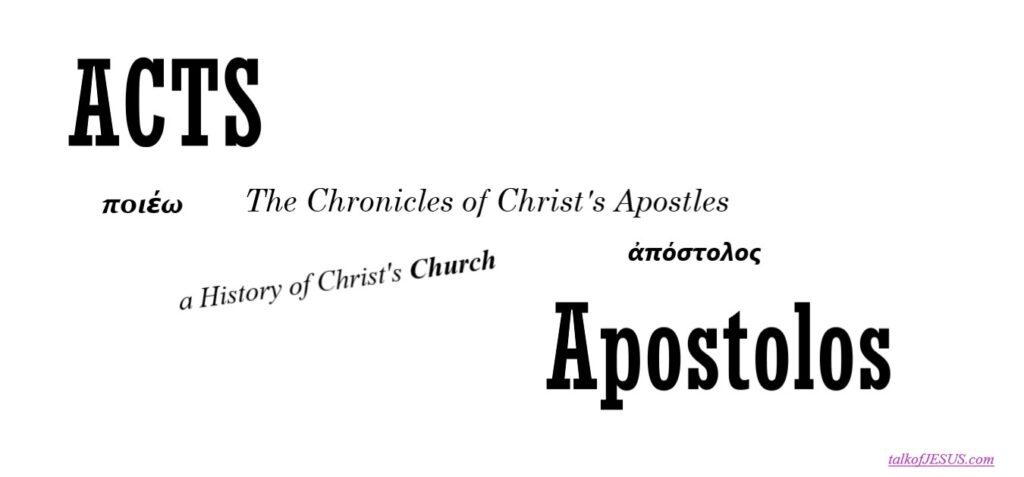
    Acts Apostolos - Acts 1 of the Apostles begins a 28 chapter account of the chronicles of Christ's Apostles - a history of Christ's Church

    Apostolos – a delegate, messenger, one sent forth with orders

    • specifically applied to the twelve apostles of Christ
    • in a broader sense applied to other eminent Christian teachers
    • – of Barnabas of Timothy and Silvanus

    Apostles are ‘sent out’ by Christ.

    As in the case of the Twelve and the Apostle Paul, the Lord himself instructed them Personally — that is, the Person of Jesus sent these Apostles out into the world personally.

    Other apostles continued to be ‘sent out into all the world’ by the Holy Spirit after Jesus’ ascension, as Luke records for us of the day of Pentecost in ACTS 1.


    As we learned from Acts of the Apostles that after the AD 49 Council in Jerusalem, Peter, Paul, John and all others were sent out ‘first to the Jews,’ but also into gentile areas of the Roman Empire (mostly Hellenist or Greek provinces) to include ALL as follows of Christ as part of each local church.

    Jesus is Lord

    Note that Jesus Christ refers to the Father as Lord (Kyrios in their common Greek language of the Roman Empire) with an authority and meaning no different than the original Hebrew scripture (Yahweh).

    “Teacher, which is the great commandment in the Law?”

    And He said to him,

    “‘YOU SHALL LOVE THE LORD YOUR GOD WITH ALL YOUR HEART, AND WITH ALL YOUR SOUL, AND WITH ALL YOUR MIND.’

    Matthew 22:36-37 LSB


    Saul, a Jew of Jews, sent out by a Master crucified and risen!

    About five years after the Jews of Jerusalem had crucified Jesus, a young disciple of Gamaliel witnessed the stoning of a follower of The Way.

    They went on stoning Stephen as he was calling out and saying, “Lord Jesus, receive my spirit!” Then falling on his knees, he cried out with a loud voice, “Lord, do not hold this sin against them!” And having said this, he fell asleep.

    Acts of the Apostles 7:59-60 LSB

    Stephen, even in his dying breath, called JESUS, “Lord” – twice.

    And this young disciple of the rabbi Gamaliel had witnessed it personally.

    Saul of Tarsus would become an apostle of the Sanhedrin specifically sent out to continue persecuting Christians.

    But then, as we know, Christ appeared to Saul and instructed this new and unwilling (at first) Apostle to go to the Gentiles.

    Paul frequently writes that He is a slave (doulos) of JESUS or God(or of the gospel). The Lord Jesus himself points to the service required of this most personal relationship.

    Many translations prefer servant to slave, but it is the same Greek word: doulos. 

    The disciple is not above his master, nor the servant above his lord.

    Gospel of Matthew 10:24 KJV

    The Apostle Paul describes himself in another pastoral epistle written about the same time as his two letters to Timothy:

    Paul, a servant G1401 of God, and an apostle of Jesus Christ, according to the faith of God’s elect, and the acknowledging of the truth which is after godliness;

    Epistle of Paul to Titus 1:1

    Timothy – Paul enlists a disciple of The Way

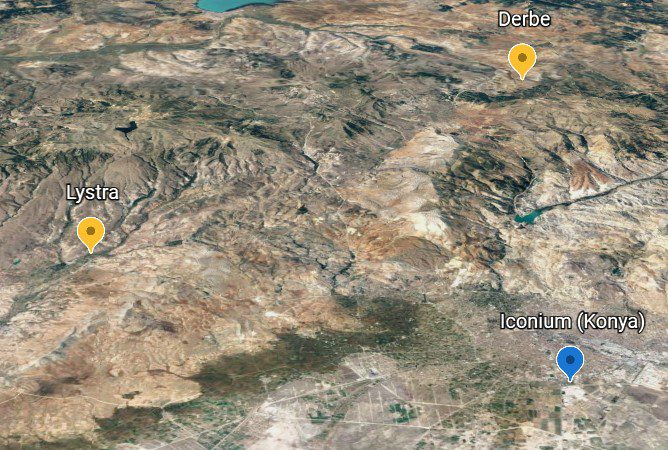
    Lystra, Derbe and Iconium in the Taurus mountains and general Roman region of Galatia to where Paul sends the first of his epistles.

    Now Paul also arrived at Derbe and at Lystra.

    And behold, a disciple was there, named Timothy,

    the son of a Jewish woman who was a believer,

    but his father was a Greek,

    Acts of the Apostles 16:1

    During Paul’s second missionary journey, which had begun inland through the mountains northwest of Tarsus in rural Galatia. While visiting churches established by Barnabas and him on a first missionary journey, the Apostle meets a young Timothy — a Greek, because of his father, but brought up as a Christ-follower by his mother(a Jew, as Paul had been) and Timothy’s grandmother.

    A brief introduction of Timothy (Τιμόθεος – Timotheos)

    Timothy's early journeys are found in Acts of the Apostles. 

    ~AD 49

    Timothy joined Paul and Silas on mission, staying behind at Berea for a time with Silas. Paul, later commands the two by the Spirit to join him in Athens from where the trio proceed to Macedonia.

    Paul then ‘sent into Macedonia two of them that ministered unto him, Timotheus and Erastus; but he himself stayed in Asia for a season.

    Acts 19:22 KJV

    We observe how personal all of the mentoring relations of the Apostle remain to Paul as Luke records those with the Apostle when once again the Jews laid wait to capture and kill him.

    Paul was accompanied by Sopater son of Pyrrhus from Berea,

    Aristarchus and Secundus from Thessalonica,

    Gaius from Derbe, Timothy, and Tychicus

    and Trophimus from the province of Asia.

    Acts of the Apostles 20:4 Berean Standard Bible

    We will mention more of Timothy's crucial later pastoral roles later in this epistle.  

    Timothy wrote other epistles with Paul :

    It is important for us to note that these Pastoral Epistles make known the Spirit-directed teaching of the Apostle Paul we must study, rather than focus on any pastors or saints to whom Paul writes, such as Timothy.

    • ~AD 50-51
    • ~AD 55-56 the Apostle Paul writes:
      • 1 Corinthians with Sosthenes and
      • 2 Corinthians with Timothy
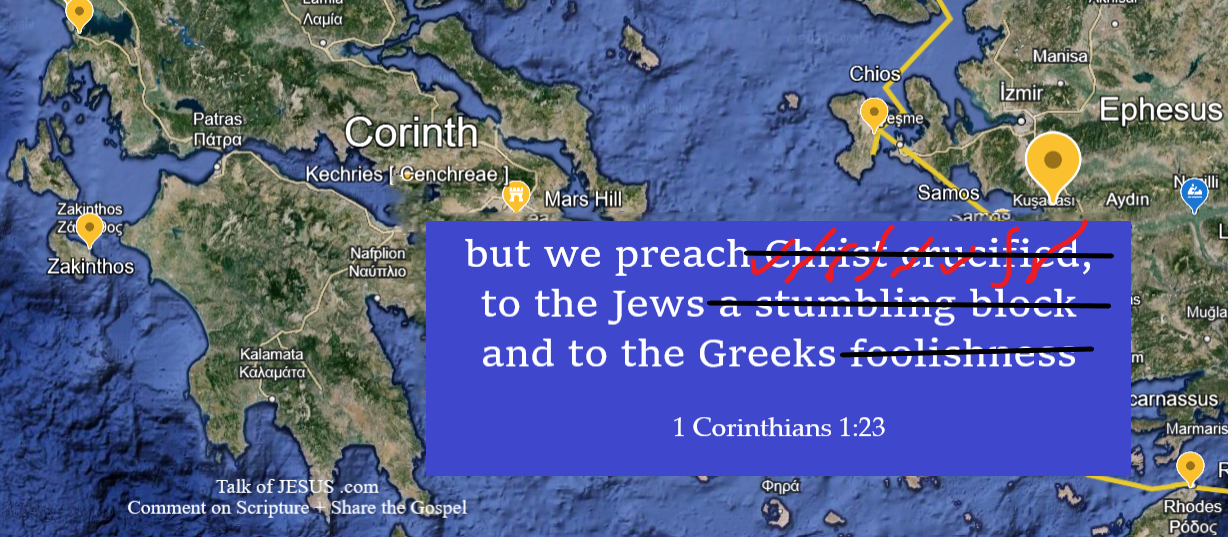
    preaching to them that perish - Paul writes to the Corinthians to consider his different way of preaching
    The Apostle Paul writes to the Corinthians with Sosthenes and a second time with Timothy
    *graphic from a 2024 TalkofJESUS SERIES Post: Rebuke of ministers that perish without the Cross
    • ~AD 60-62 The Apostle Paul writes to:
      • the Ephesians
      • the Philippians
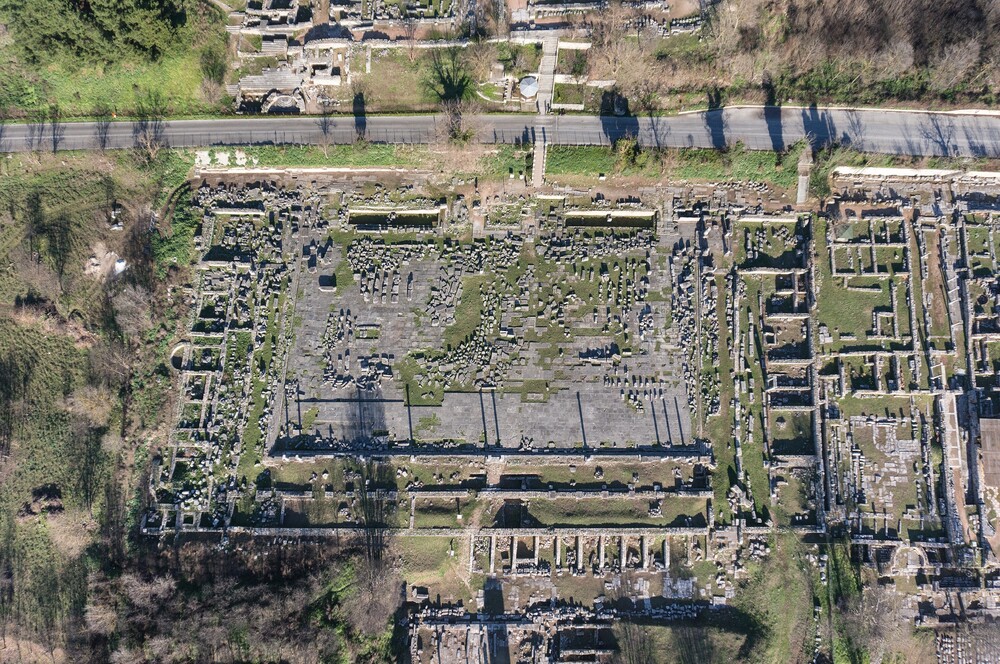
    Archaeological Site of Philippi: General view of the forum with adjacent agora marketplace

    Paul and Timothy, servants of Christ Jesus,

    To all God’s holy people in Christ Jesus at Philippi, together with the overseers and deacons:

    Philippians 1:1 NIV

    • the Colossians, with Timothy
    • and a personal plea along with Timothy to Philemon, concerning Onesimus.

    NEXT: 2 Timothy 1:

    timotheos agapētos teknon

    To Timothy, my beloved son


    Comment on Scripture – Share the Gospel

  • What do I do with this?

    What do I do with this?

    All Scripture is God-breathed and is useful for teaching, rebuking, correcting and training in righteousness, so that the servant of God may be thoroughly equipped for every good work.

    2 Timothy 3:16-17 NIV

    Daily we must remind ourselves that God IS. Daily we must recall that Jesus not only died on the cross for our sins (and oh so many of them), but that Christ rose from death in the body and spirit and Christ Jesus IS. Daily we must seek relationship between our living spirit breathed into us by God with the Holy Spirit sent to us as our counselor by Jesus. The Holy Spirit of the Living God near to our soul, IS.

    All of this seems well and good as we carry our Bibles into a worship service or open the Bible in the privacy of our homes. Yet once we return from worship or Bible study we encounter the woes and trials of everyday life, the challenges of everyday relationships.

    Don’t we ever-so-briefly ask of our Bible verses and stories: “What do I do with this?”

    Bible“All Scripture is God-breathed” or “All Scripture is breathed out by God.” or “All Scripture is given by inspiration of God.”
    We know it. God said it. But what do we do with it?

    Think of our everyday life as a brief journey to a place of which we have only dreamed.

    How do I get there? (I don’t even truly know where I am now?)

    I know God wants me in a different place today than where I failed so miserably in sin yesterday. I am lost and have no GPS. In fact, once I leave church or the security of home (though I know this place is a brief shelter for this breathing, decaying flesh of mine), I not only have not sense of God’s direction, I can not even find weak signal of God’s voice speaking direction into my daily life.

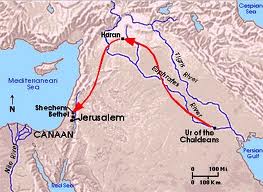
    Genesis 12:

    ur to haran to caanan mapNow the Lord said to Abram, “Go from your country and your kindred and your father’s house to the land that I will show you. And I will make of you a great nation, and I will bless you and make your name great, so that you will be a blessing. I will bless those who bless you, and him who dishonors you I will curse, and in you all the families of the earth shall be blessed.”

    So Abram went, as the Lord had told him, and Lot went with him. Abram was seventy-five years old when he departed from Haran.

    Just suppose you have retired comfortably in your hometown or near to your family and making an amazing promise, GOD asks you to just pick up and move. Will you go?

    I have little understanding of Abram and his lifestyle millennia ago. Yet what same application do I see to my own life when it seems everything must change from how I have always seen my life?

    Everything must go forward in some new direction. How do I get there? Who will help me along the way? What will I find in this new place? I am blind to any knowledge of the challenges ahead, the place where I will go and what I will do when I get there. (And what does Abram have to do with me in this fast-paced life even two millennia after the Cross of Christ?)

    Again scripture provides an answer and encourages us to apply scripture to our every day life.

    Galatians 3:4-6  Did you suffer so many things in vain—if indeed it was in vain? Does he who supplies the Spirit to you and works miracles among you do so by works of the law, or by hearing with faith— just as Abraham “believed God, and it was counted to him as righteousness”?

    7 Know then that it is those of faith who are the sons of Abraham.

    Sure, I can teach someone scripture or sit under some teaching to the church which I like; but can I apply to the lesson of my life the Voice of the Lord’s Spoken Word?

    If God asks me to leave everything behind for the unseen promise of hope, will I have the faith of Abraham to hear and obey the voice of the LORD?

    How many times has the LORD asked you to do something after you were in the comfortable place?

    Or again, how many times have your own misguided plans brought you to your knees before the LORD asking, ‘Where did I go wrong? What do I do now… Lord? Where do I go with this? Show me the way… please… Lord?’

    And ALL is silent… No answer. And again we cry out to the LORD.

    And the Lord is faithful in His answer. Yet we do not like it. It is not the ‘comfort’ we expected. In fact, it makes us even more uncomfortable and will require even more faith than we believe possible – faith to ‘believe God’ and have it counted as righteousness.

    What next? (Isn’t that always the question from the comfortable place or the house of desperation?) What next, Lord?

    To be continued…