All roads lead to Rome
Who has not heard the expression recalling a time of glory for the Roman Empire of the A.D. first century?
But this second account of the Hellenist physician Luke records that the Gospel is sent out from Jerusalem and then Antioch.
“But you will receive power when the Holy Spirit has come on you, and you will be my witnesses in Jerusalem, in all Judea and Samaria, and to the ends of the earth.”
Acts of the Apostles 1:8 CSB – words of the risen Jesus to His disciples
The apostles and the brothers and sisters who were throughout Judea heard that the Gentiles had also received the word of God.
Acts 11:1 CSB
For a whole year they [Barnabas and Paul] met with the church and taught large numbers. The disciples were first called Christians at Antioch.
Acts of the Apostles 11:26 CSB
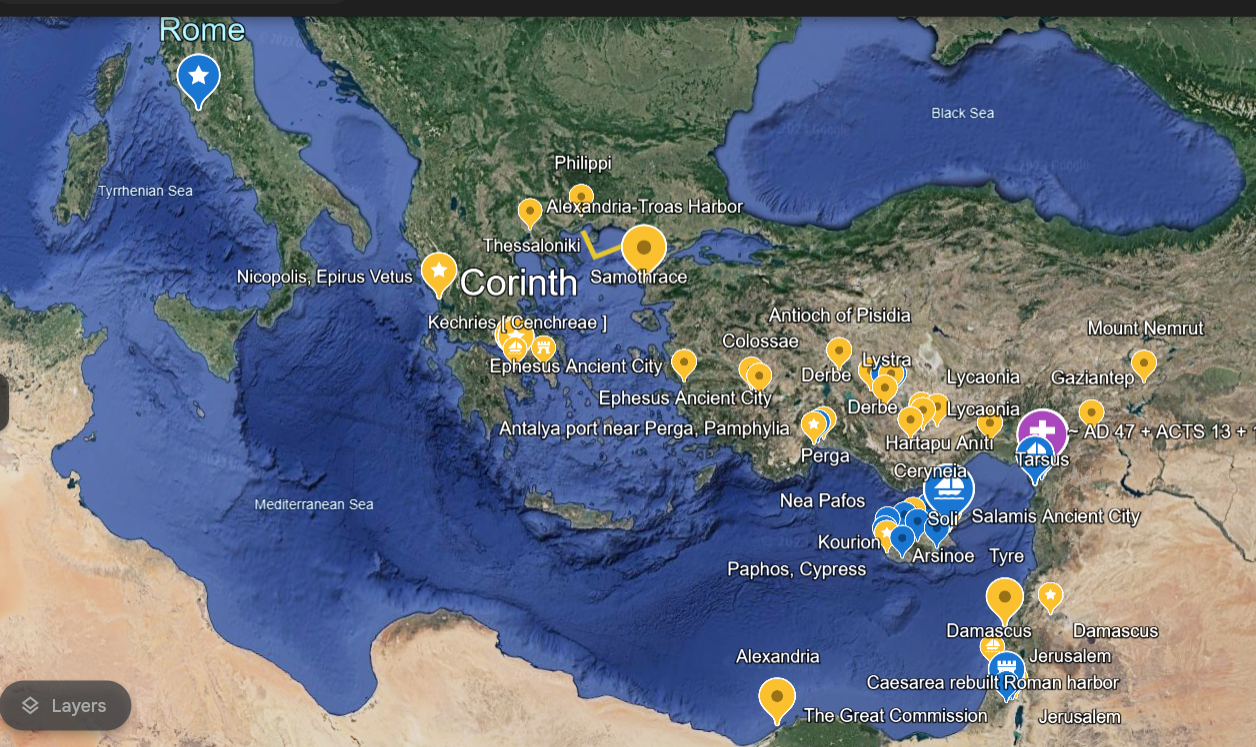
Paul’s Previous 3 Missionary Journeys
READ MORE about the timeline of Paul's missions with numerous maps of the Roman world of the A.D. 1st century.
An Apostle known by his Letters
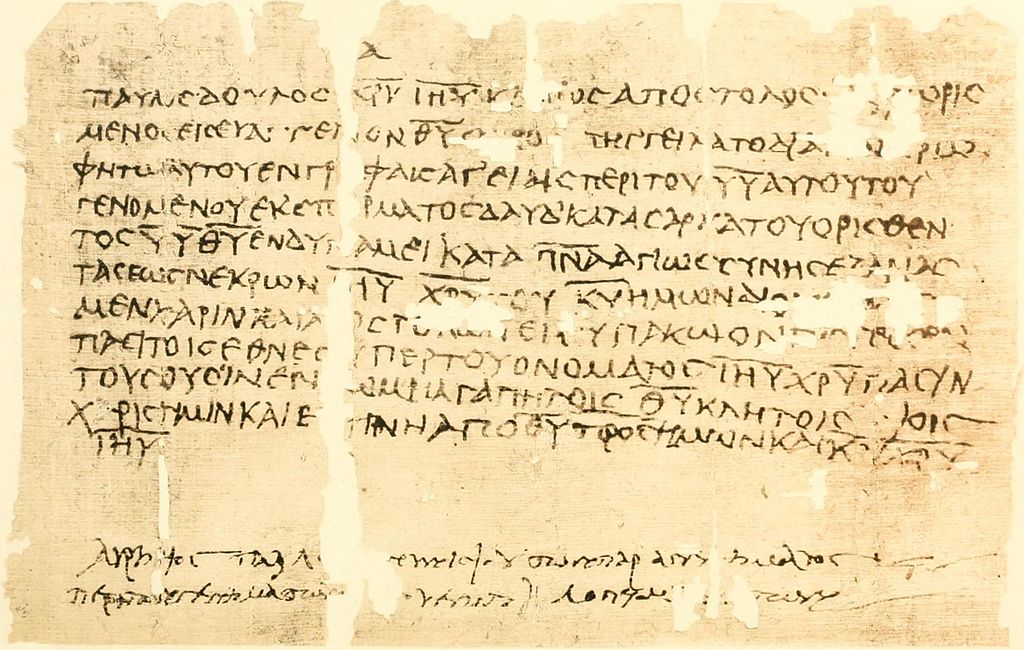
As did Peter, John, James and others, the Apostle Paul communicates with converts to Christ frequently by letter, in addition to their Apostolic missions to live and worship with these believers for a time.
- AD 49
- AD 50-51
- 2 Letters to the Thessalonians
- AD 55-56
- 2 Letters to the Corinthians
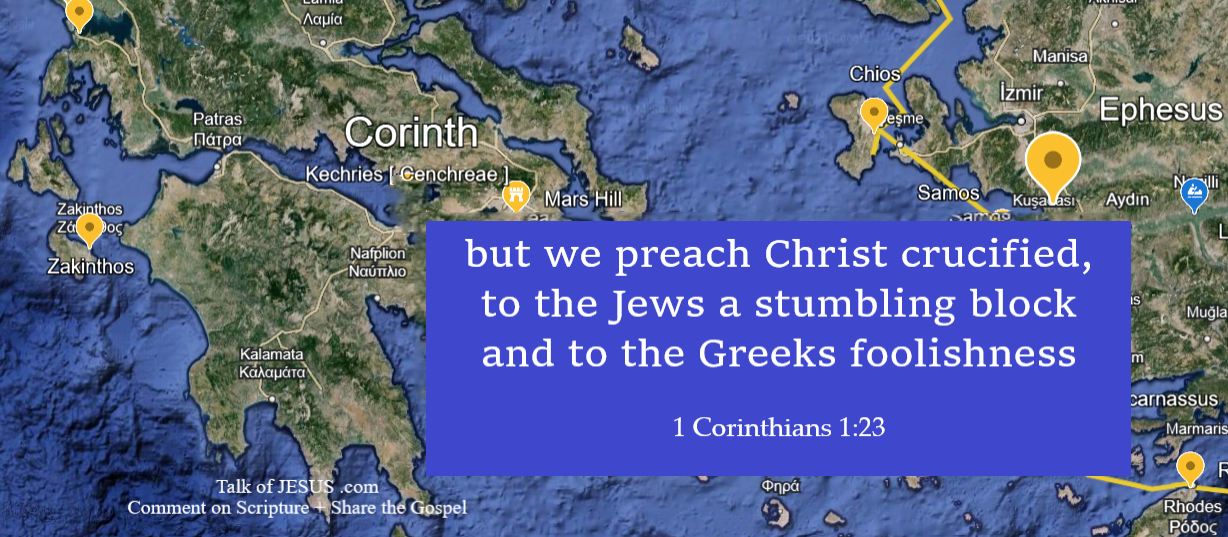
- AD 57
Two years BEFORE Paul is brought to Rome on spurious charges of the Jews and the Apostle’s appeal to Caesar Nero (as a Roman citizen), Paul writes his masterful theological Epistle to the Romans, instructing his fellow Roman citizens in the Gospel of Jesus Christ.
We will read more of the Apostle's personal joy in meeting these Romans shortly.
- AD 60-62
- From Rome (and possibly other cities away from Rome) the Apostle to the Gentiles writes to the church in:
- Ephesus, Philppi and Colossae
- a letter concerning Philemon
- From Rome (and possibly other cities away from Rome) the Apostle to the Gentiles writes to the church in:
- AD 62-66
- Paul writes a first pastoral letter to Timothy
- and also to Titus
- July 19, AD 64 – Caesar Nero burns Rome, blames and persecutes the Christians, Apostle’s under house arrest face execution at Nero’s command
- AD 66-67 – Facing imminent execution (as does the Apostle Paul, now in Rome), Peter writes a second and final pastoral epistle to Timothy to encourage and guide the Church.
Paul brought to Rome
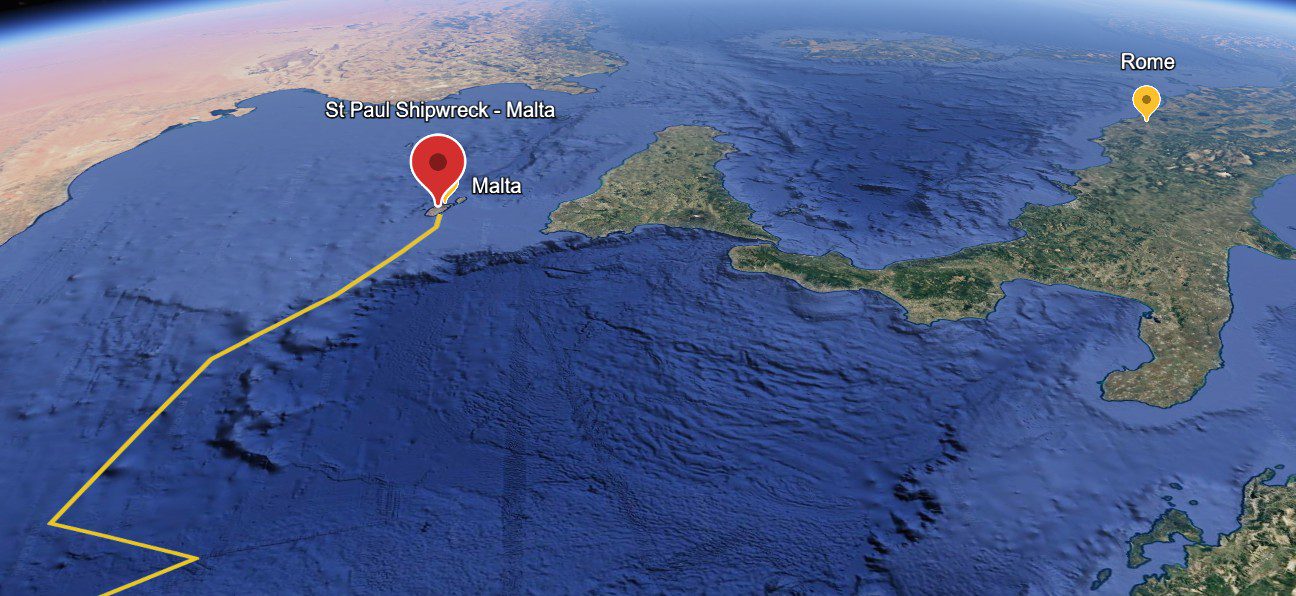
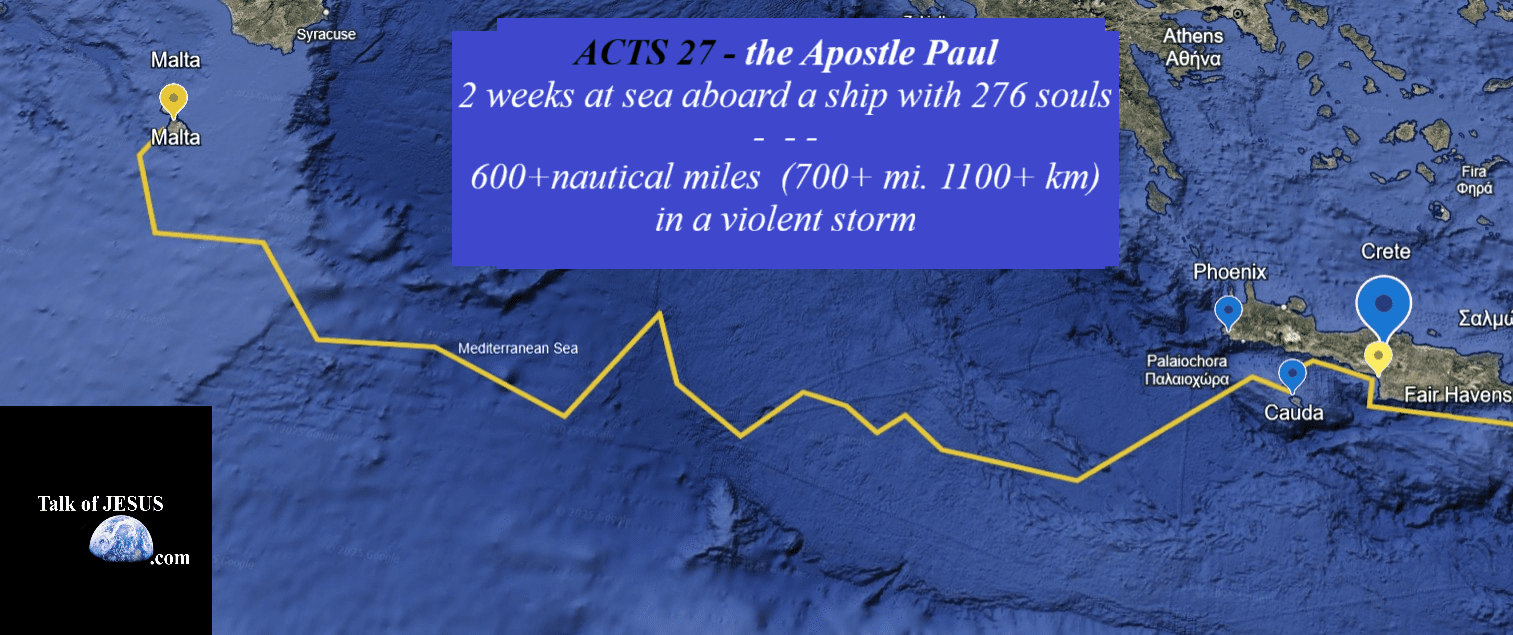
Previously, we left the Apostle having survived a shipwreck in Malta.
The Centurion Julius, the Apostle Paul and now more than 300 men witness the power of God in Christ’s Apostle to the gentiles delayed in a violent storm on his way to Rome.
In these few verses THREE MONTHS PASS.
ACTS of the Apostles 28 – Conclusion
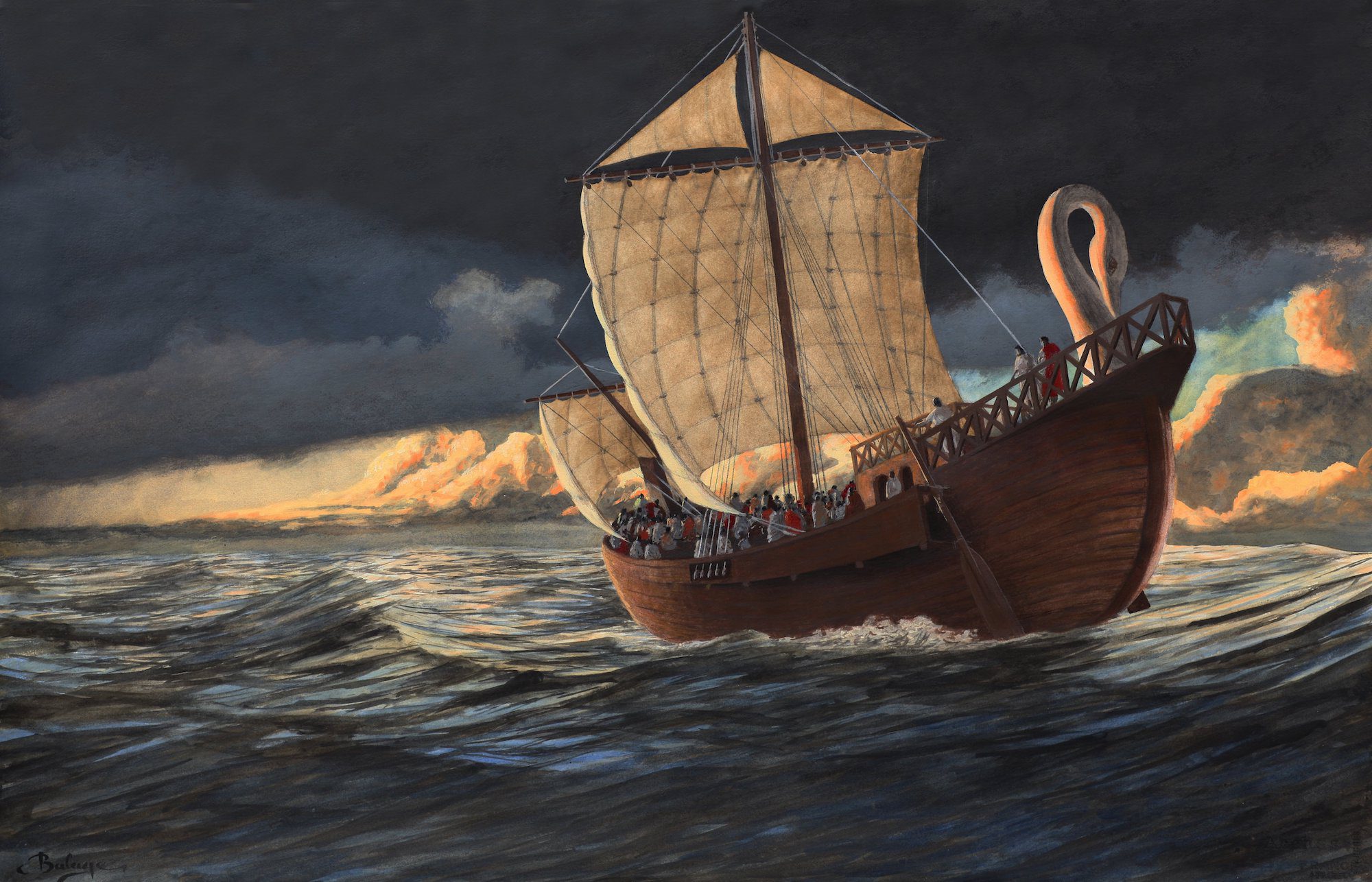
After three months we set sail in an Alexandrian ship that had wintered at the island, with the Twin Gods as its figurehead.
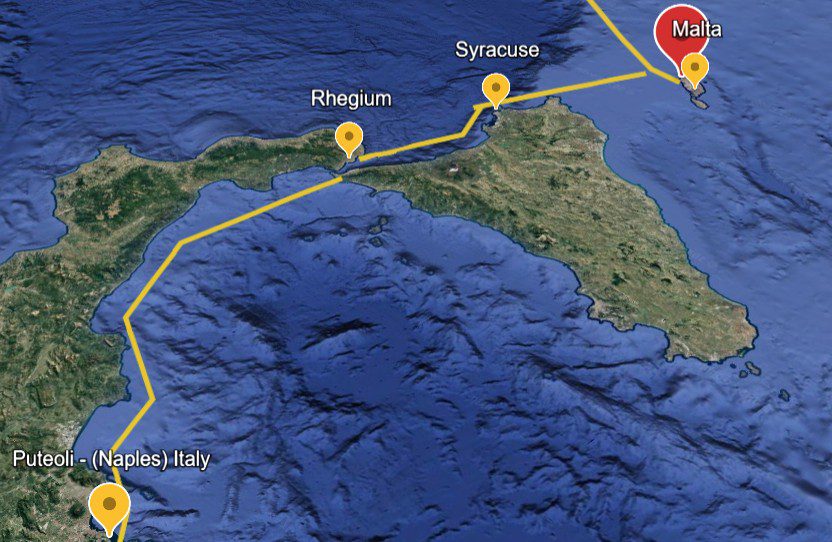
12 Putting in at Syracuse, we stayed three days.
13 From there, after making a circuit along the coast, we reached Rhegium. After one day a south wind sprang up, and the second day we came to Puteoli.
CSB
Where we found brethren, and were desired to tarry with them seven days: and so we went toward Rome.
Acts 28:14 KJV
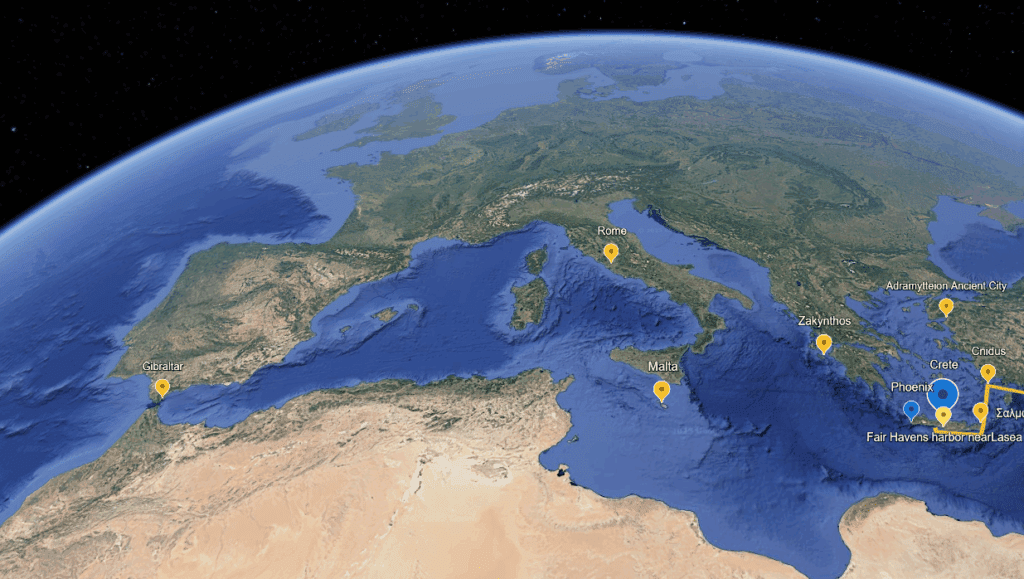
140 miles (225 kilometers) southeast of Rome. “Puteoli” literally means “little wells” in reference to the many hydrothermal wells that were in the city, which was well-known as a large port that could accommodate big ships.
In fact, adjacent to Puteoli was Misenum, the Roman naval base that housed the largest naval fleet in the ancient world. Earthquakes have since sunk most of Puteoli under water.
Source: Bibleversestudy.com
And the brothers, when they heard about us, came from there as far as the Market of Appius and Three Inns to meet us.
When Paul saw them, he thanked God and took courage.
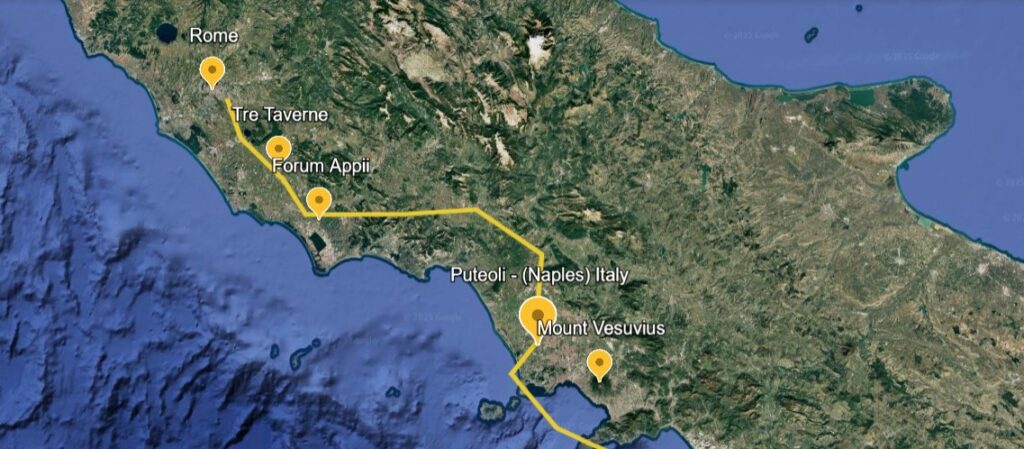
And when we entered Rome,
Paul was allowed to stay by himself,
with the soldier who was guarding him.
Acts 28:16 LSB
Paul Addresses Prominent Jews of Rome
And it happened that after three days Paul called together those who were the leading men of the Jews,
and when they came together, he began saying to them,
“Brothers, though I had done nothing against our people or the customs of our fathers, yet I was delivered as a prisoner from Jerusalem into the hands of the Romans.
And when they had examined me, they were willing to release me because there was no ground for putting me to death. But when the Jews [spoke against me], I was forced to appeal to Caesar, not that I had any accusation against my nation.
Acts 28:17-19
Note two points from Paul's self-introduction to the Roman Jews:
The Apostle refers to himself as a brother of these Jews, also referring to OUR people, customs and fathers [patrōos].
Paul had identified with the fathers of the faith in defense of the Gospel before:
“I am a Jew, born in Tarsus of Cilicia.. instructed .. according to the strictness of the law of our fathers, being zealous for God just as you all are today,
Acts 22:3 excerpt LSB
And hear Paul’s defense in his first Trial Before Felix:
“But this I confess to you, that according to the Way which they call a sect,
so I worship the God of my fathers, believing all things which are written in the Law and in the Prophets.
Acts 24:14 NKJV
Ethnos
The APOSTLE and ROMAN CITIZEN parenthetically adds:
.. not that I had anything of which to accuse my nation.
Acts 28:19b NKJV
Paul has NO extra-judicial accusation against his accusers with whom he identifies by calling them: ‘MY NATION” — ἔθνος – ethnos —
- a multitude [together]
- the human family
- tribe, nation, people group
- Gentiles [OT]
- Paul uses the term for Gentile Christians
Source: BlueLetterBible.org Strong’s G1484 – ethnos
HERE in his defense to the Jews, Paul uses ethnos to describe OTHER Jews including his Jewish accusers in Jerusalem AND those in Rome whom the Apostle has summoned.
Luke opens Acts of the Apostles telling readers:
Now there were Jews living in Jerusalem, devout men from every nation – G1484 – ethnos – under heaven.
Acts of the Apostles 2:5 LSB
For this cause therefore have I called for you, to see you, and to speak with you: because that for the hope of Israel I am bound with this chain.
Acts 28:20 KJV
O the hope of Israel, the saviour thereof in time of trouble, why shouldest thou be as a stranger in the land, and as a wayfaring man that turneth aside to tarry for a night?
מִקְוֵה יִשְׂרָאֵל מוֹשִׁיעוֹ
Jeremiah 14:8a -yirmᵊyâ יִרְמְיָהוּ
Understanding you (Paul) for ourselves
These leading Jews of Rome of course know Scripture and realize that Paul preaches about the Messiah.
And they said to him,
“We have neither received letters from Judea concerning you, nor have any of the brothers come here and reported or spoken anything bad about you. But we desire to hear from you what you think;
for concerning this sect, it is known to us that it is spoken against everywhere.”
Acts 28:21-22 LSB
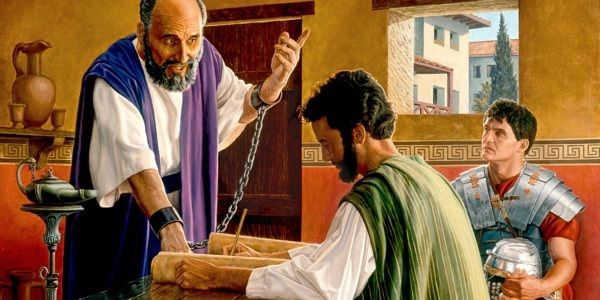
And when they had set a day for Paul, they came to him at his lodging in large numbers..
and he was explaining to them by solemnly bearing witness about the kingdom of God and trying to persuade them concerning Jesus, from both the Law of Moses and from the Prophets,
from morning until evening.
And some were being persuaded by the things spoken, but others were not believing.
And when they disagreed with one another, they began leaving after Paul had spoken one word,
Acts 28:23-25a LSB
“The Holy Spirit rightly spoke
through Isaiah the prophet to your fathers, saying,
And He said, “Go, and tell this people:
‘Keep on hearing, but do not understand;
Keep on seeing, but do not perceive.’

“Make the heart of this people dull,
And their ears heavy,
And shut their eyes;

Lest they see with their eyes,
And hear with their ears,
And understand with their heart,

And return and be healed.”
Isaiah 6:9-10 (quoted by Paul) NKJV
Paul’s final word for the Roman Jews
“Therefore let it be known to you
Acts of the Apostles 28:28 NKJV
that the salvation of God
has been sent to the Gentiles,
and they will hear it!”
And when he had said these words, the Jews departed and had a great dispute among themselves.
Then Paul dwelt two whole years in his own rented house, and received all who came to him,
preaching the kingdom of God
and teaching the things which concern the Lord Jesus Christ with all confidence, no one forbidding him.
Acts 28:30-31 NKJV
Thus ends ACTS of the Apostles –
second account of Luke, the physician .

Comment on Scripture – Share the Gospel