Tag: acts

  • The Apostles Creed 6 We Believe He Ascended into Heaven

    The Apostles Creed 6 We Believe He Ascended into Heaven

    The Apostles’ Creed — foundational to our Apostolic Christian faith

    Followers of Christ must always expect an attack against Scripture. Church doctrine is a line in the sand. - How will a leader or council of leaders choose what the Church will teach?
    I BELIEVE or WE BELIEVE IN:

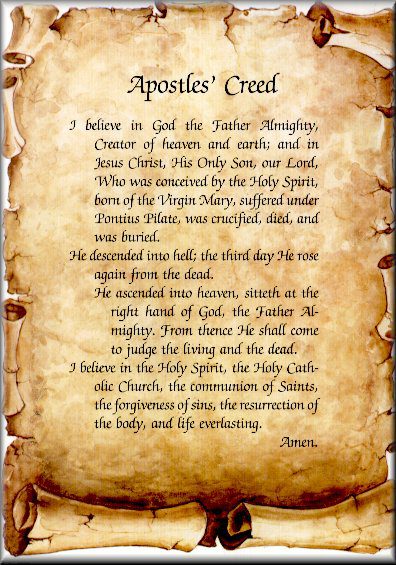
    The Apostles’ Creed

    We believe JESUS ascended into heaven..

    Structure of Christian CREEDS

    Here’s a brief outline of the fundamental objects of our faith found in The Creed:

    1. God
    2. Jesus Christ
    3. the Holy Spirit
      • and the Virgin Mary
    4. Jesus was crucified
      • and was buried
    5. He rose from the dead
    6. He ascended to heaven
    7. He sits in the favored place of God the Father
    8. more…

    source: apostles-creed.org


    The early church taught what is basically in the Apostles creed

    It was not till heresies and divisions in the church that any creeds were established.

    source:


    The Apostles Creed

    We believe Jesus ascended into heaven

    So then the Lord Jesus, after he had spoken to them, was taken up into heaven and sat down at the right hand of God.

    Gospel of Mark 16:19 ESV

    Why we believe

    Here we have further evidence that the crucified Son of Man, the risen Son of God IS was and will be God. The Apostles’ Creed reiterates the great mystery of the Trinity revealed by Christ.

    During His incarnation as the Son of Man and prior to His crucifixion Jesus had confessed:

    ἐγὼ καὶ ὁ πατὴρ ἕν ἐσμεν

    “I and the Father are [*] one.”

    * One in substance, one and the same.

    John 10:30 LSB


    During Jesus' many appearances to more than 500 men for 40 days after His resurrection; unlike Lazarus, He appeared to be a man with certain spirit-like charactistics more similar to an angel or even God.

    And it happened that when He had reclined at the table with them, He took the bread and blessed it, and after breaking it, He was giving it to them.

    Then their eyes were opened and they recognized Him. And He vanished from their sight.

    Gospel of Luke 24:30-31 LSB – Jesus on the road to Emmaus

    Jesus himself stood among them.

    But they were startled and frightened, and supposed that they saw a spirit.

    “See my hands and my feet, that it is I myself; handle me, and see; for a spirit has not flesh and bones as you see that I have.” And when he had said this, he showed them his hands and his feet.

    Luke 24:36-40 RSV excerpt

    And after the days leading up to the Pentecost (50 days after the Passover feast), Jesus ascended. 

    And from the Olde English of the King James Version of the Creed:

    ‘and sitteth at the right hand of God the Father Almighty’

    “Lord, will you at this time restore the kingdom to Israel?”

    “It is not for you to know times or seasons which the Father has fixed by his own authority.

    But you shall receive power when the Holy Spirit has come upon you; and you shall be my witnesses in Jerusalem and in all Judea and Sama’ria and to the end of the earth.”

    And when he had said this, as they were looking on, he was lifted up, and a cloud took him out of their sight. And while they were gazing into heaven as he went, behold, two men stood by them in white robes, and said,

    “Men of Galilee, why do you stand looking into heaven? This Jesus, who was taken up from you into heaven, will come in the same way as you saw him go into heaven.”

    Acts of the Apostles 1:6-11 RSV excerpt

    I believe that JESUS ascended to heaven and sits at the right hand of God the Father almighty

    from The Apostles’ Creed

    As Scripture states:

    GOD IS ONE IN ESSENCE,

    and as the Gospel reveals,

    THREE IN PERSON.

    More on Trinity from R.C. Sproul


    Next: “Thence He shall come to judge the quick and dead.”

    Comment on Scripture – Share the Gospel

  • a Roman Conclusion – Acts of the Apostles

    a Roman Conclusion – Acts of the Apostles

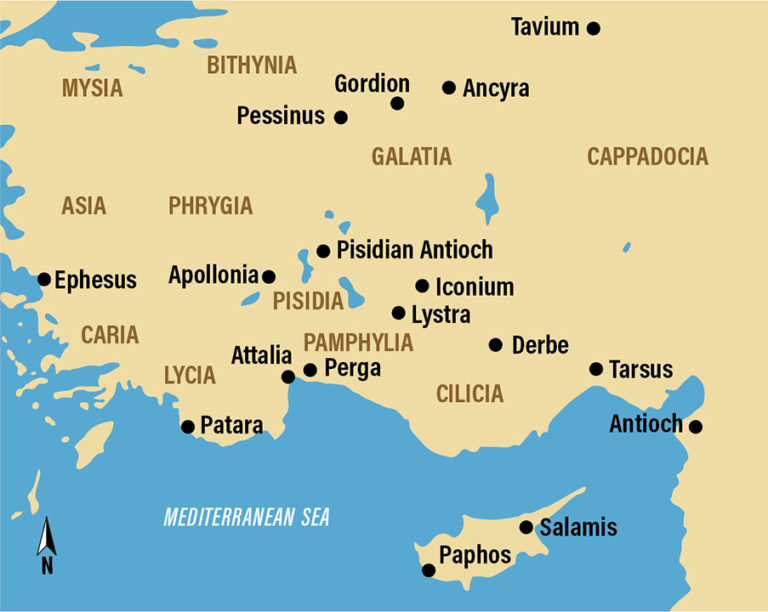
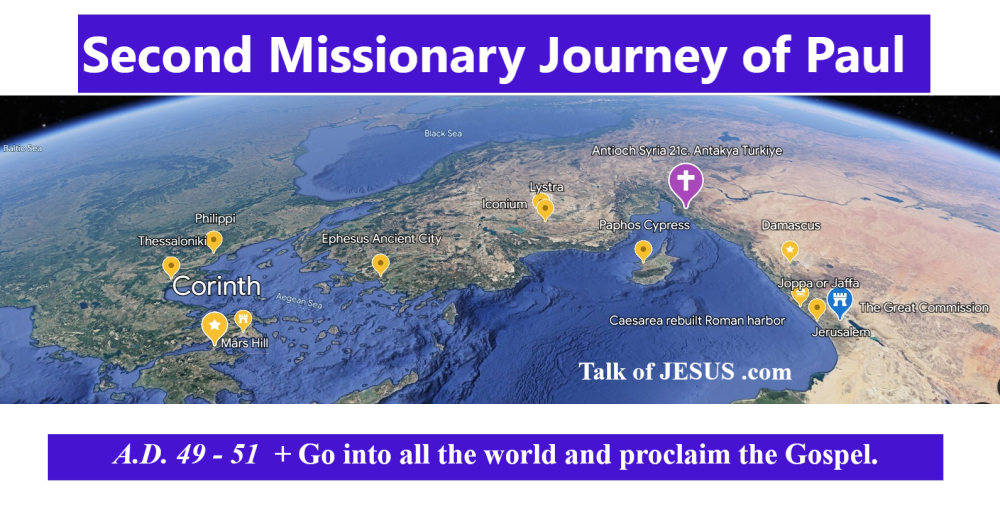
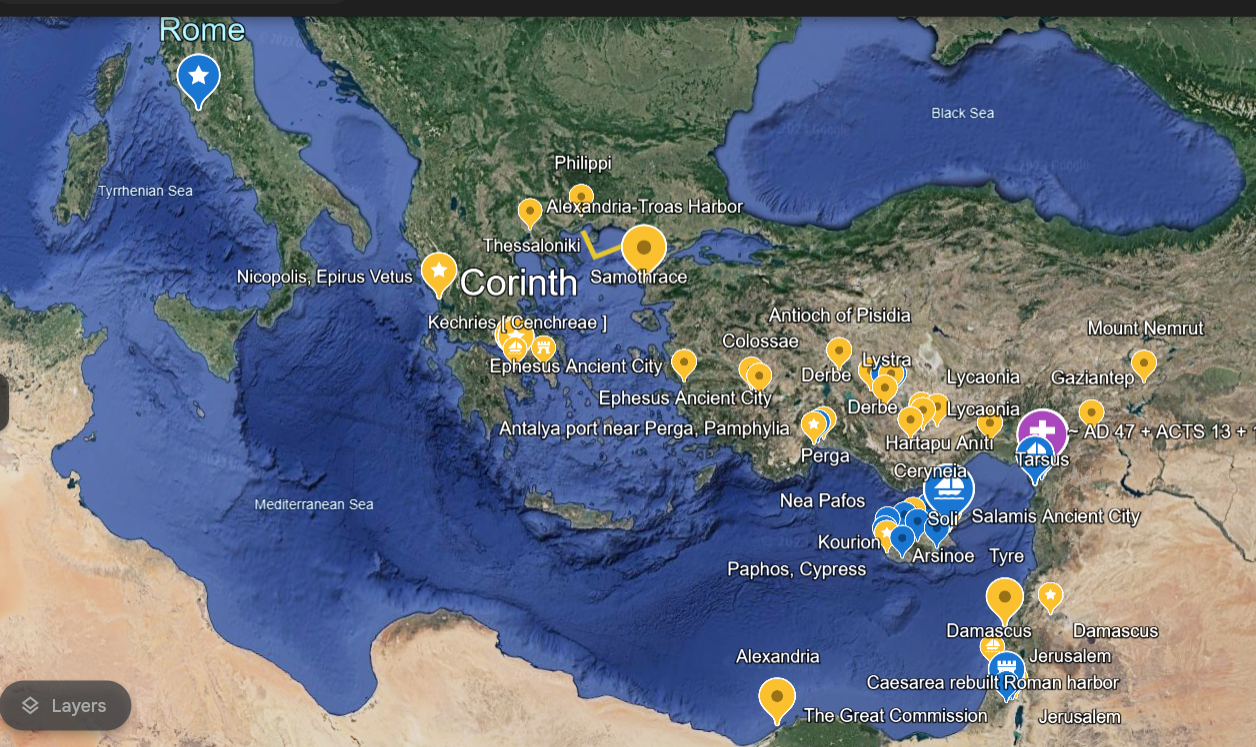
    Several missionary stops of the apostle Paul before going to Rome - Acts of the Apostles

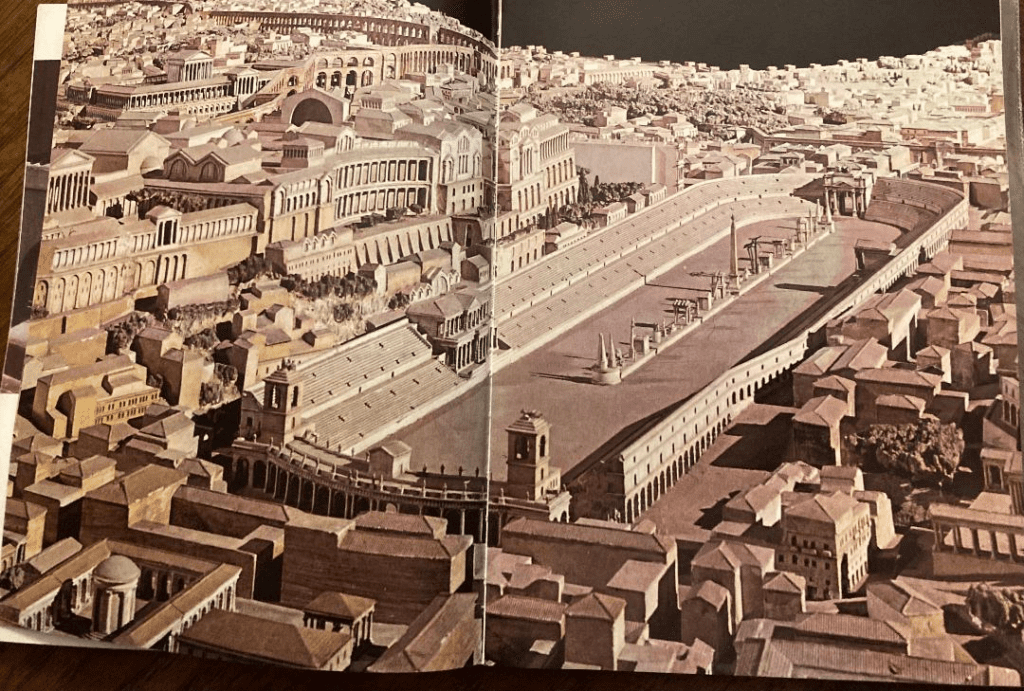
    All roads lead to Rome

    Who has not heard the expression recalling a time of glory for the Roman Empire of the A.D. first century.?

    But this second account of the Hellenist physician Luke records that the Gospel is sent out from Jerusalem and then Antioch.

    “But you will receive power when the Holy Spirit has come on you, and you will be my witnesses in Jerusalem, in all Judea and Samaria, and to the ends of the earth.”

    Acts of the Apostles 1:8 CSB – words of the risen Jesus to His disciples

    The apostles and the brothers and sisters who were throughout Judea heard that the Gentiles had also received the word of God.

    Acts 11:1 CSB

    For a whole year they [Barnabas and Paul] met with the church and taught large numbers. The disciples were first called Christians at Antioch.

    Acts of the Apostles 11:26 CSB

    Paul’s Previous 3 Missionary Journeys

    READ MORE about the timeline of Paul's missions with numerous maps of the Roman world of the A.D. 1st century. 

    An Apostle known by his Letters

    Epistle of Paul to the Romans 1 - the Apostles sends a church letter to Rome and the local saints of area churches
    Epistle of Paul to the Romans

    As did Peter, John, James and others, the Apostle Paul communicates with converts to Christ frequently by letter, in addition to their Apostolic missions to live and worship with these believers for a time.

    but we preach Christ crucified, to the Jews a stumbling block and to the Greeks foolishness - 1 Corinthians 1:23a

    • AD 57

    Two years BEFORE Paul is brought to Rome on spurious charges of the Jews and the Apostle’s appeal to Caesar Nero (as a Roman citizen), Paul writes his masterful theological Epistle to the Romans, instructing his fellow Roman citizens in the Gospel of Jesus Christ.

    We will read more of the Apostle's personal joy in meeting these Romans shortly. 
    • AD 60-62
      • From Rome (and possibly other cities away from Rome) the Apostle to the Gentiles writes to the church in:
        • Ephesus, Philppi and Colossae
        • a letter concerning Philemon
    • AD 62-66
      • Paul writes a first pastoral letter to Timothy
      • and also to Titus
    • July 19, AD 64 – Caesar Nero burns Rome, blames and persecutes the Christians, Apostle’s under house arrest face execution at Nero’s command
    • AD 66-67 – Facing imminent execution (as does the Apostle Paul, now in Rome), Peter writes a second and final pastoral epistle to Timothy to encourage and guide the Church.

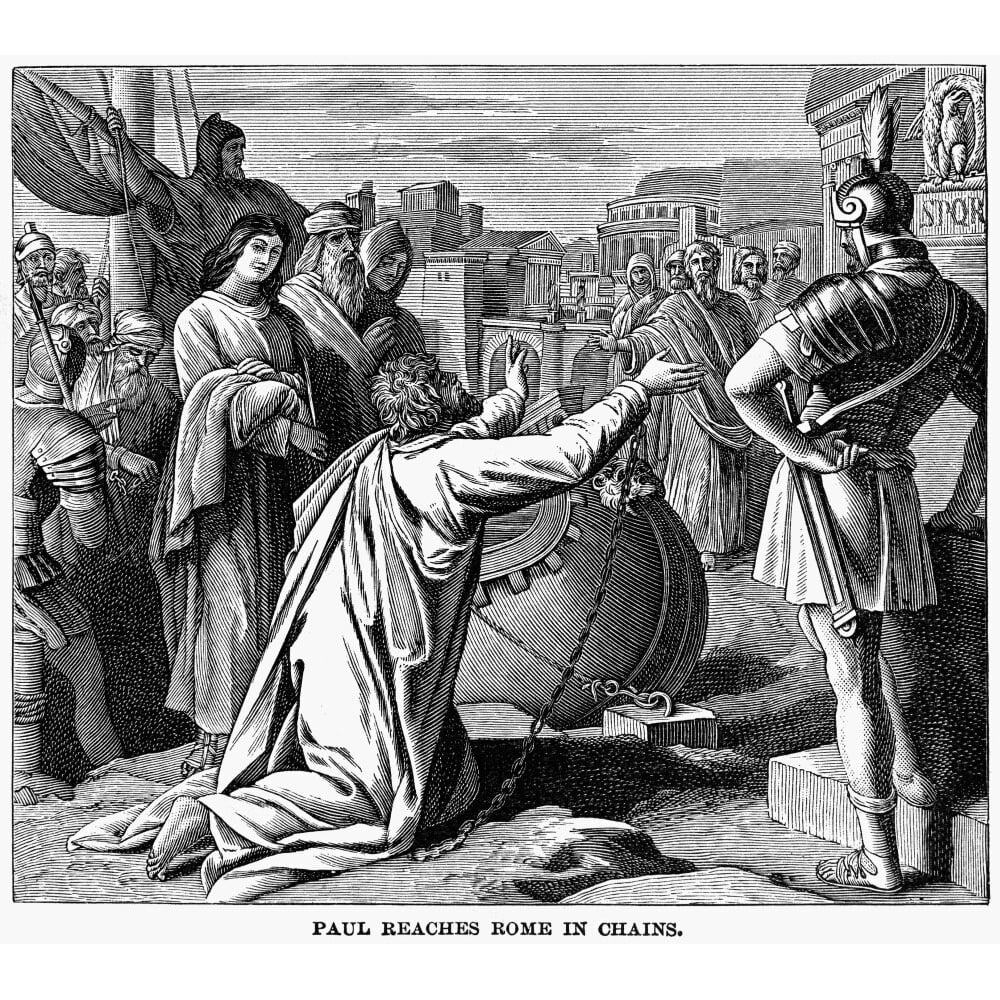
    Paul brought to Rome

    Malta - Earth view of Malta in the Mediterranean Sea

    Previously, we left the Apostle having survived a shipwreck in Malta.

    The Centurion Julius, the Apostle Paul and now more than 300 men witness the power of God in Christ’s Apostle to the gentiles delayed in a violent storm on his way to Rome.

    In these few verses THREE MONTHS PASS.


    ACTS of the Apostles 28 – Conclusion

    After three months we set sail in an Alexandrian ship that had wintered at the island, with the Twin Gods as its figurehead.

    12 Putting in at Syracuse, we stayed three days.

    13 From there, after making a circuit along the coast, we reached Rhegium. After one day a south wind sprang up, and the second day we came to Puteoli.

    CSB

    Where we found brethren, and were desired to tarry with them seven days: and so we went toward Rome.

    Acts 28:14 KJV

    140 miles (225 kilometers) southeast of Rome. “Puteoli” literally means “little wells” in reference to the many hydrothermal wells that were in the city, which was well-known as a large port that could accommodate big ships.

    In fact, adjacent to Puteoli was Misenum, the Roman naval base that housed the largest naval fleet in the ancient world. Earthquakes have since sunk most of Puteoli under water.

    Source: Bibleversestudy.com


    And the brothers, when they heard about us, came from there as far as the Market of Appius and Three Inns to meet us.

    When Paul saw them, he thanked God and took courage.

    Paul escorted to Rome along the Appian Way

    And when we entered Rome,

    Paul was allowed to stay by himself,

    with the soldier who was guarding him.

    Acts 28:16 LSB

    Paul Addresses Prominent Jews of Rome

    And it happened that after three days Paul called together those who were the leading men of the Jews,

    and when they came together, he began saying to them,

    Brothers, though I had done nothing against our people or the customs of our fathers, yet I was delivered as a prisoner from Jerusalem into the hands of the Romans.

    And when they had examined me, they were willing to release me because there was no ground for putting me to death. But when the Jews [spoke against me], I was forced to appeal to Caesar, not that I had any accusation against my nation.

    Acts 28:17-19


    Note two points from Paul's self-introduction to the Roman Jews: 

    The Apostle refers to himself as a brother of these Jews, also referring to OUR people, customs and fathers [patrōos].

    Paul had identified with the fathers of the faith in defense of the Gospel before:

    “I am a Jew, born in Tarsus of Cilicia.. instructed .. according to the strictness of the law of our fathers, being zealous for God just as you all are today,

    Acts 22:3 excerpt LSB

    And hear Paul’s defense in his first Trial Before Felix:

    “But this I confess to you, that according to the Way which they call a sect,

    so I worship the God of my fathers, believing all things which are written in the Law and in the Prophets.

    Acts 24:14 NKJV

    Ethnos

    The APOSTLE and ROMAN CITIZEN parenthetically adds:

    .. not that I had anything of which to accuse my nation.

    Acts 28:19b NKJV

    Paul has NO extra-judicial accusation against his accusers with whom he identifies by calling them: ‘MY NATION” — ἔθνος – ethnos

    • a multitude [together]
    • the human family
    • tribe, nation, people group
    • Gentiles [OT]
    • Paul uses the term for Gentile Christians

    Source: BlueLetterBible.org Strong’s G1484 – ethnos

    HERE in his defense to the Jews, Paul uses ethnos to describe OTHER Jews including his Jewish accusers in Jerusalem AND those in Rome whom the Apostle has summoned.

    Luke opens Acts of the Apostles telling readers: 

    Now there were Jews living in Jerusalem, devout men from every nation G1484ethnos – under heaven.

    Acts of the Apostles 2:5 LSB


    מִקְוֵה יִשְׂרָאֵל מוֹשִׁיעוֹ

    Jeremiah 14:8a -yirmᵊyâ יִרְמְיָהוּ

    Understanding you (Paul) for ourselves

    These leading Jews of Rome of course know Scripture and realize that Paul preaches about the Messiah.

    And they said to him,

    “We have neither received letters from Judea concerning you, nor have any of the brothers come here and reported or spoken anything bad about you. But we desire to hear from you what you think;

    for concerning this sect, it is known to us that it is spoken against everywhere.”

    Acts 28:21-22 LSB

    Paul under house arrest with Luke, his scribe and physician and a Roman Centurian responsible for his prisoner

    And when they had set a day for Paul, they came to him at his lodging in large numbers..

    and he was explaining to them by solemnly bearing witness about the kingdom of God and trying to persuade them concerning Jesus, from both the Law of Moses and from the Prophets,

    from morning until evening.

    And some were being persuaded by the things spoken, but others were not believing.

    And when they disagreed with one another, they began leaving after Paul had spoken one word,

    Acts 28:23-25a LSB

    “The Holy Spirit rightly spoke

    through Isaiah the prophet to your fathers, saying,

    And He said, “Go, and tell this people:
    ‘Keep on hearing, but do not understand;
    Keep on seeing, but do not perceive.’

    “Make the heart of this people dull,
    And their ears heavy,
    And shut their eyes;

    Lest they see with their eyes,
    And hear with their ears,
    And understand with their heart,

    And return and be healed.”

    Isaiah 6:9-10 (quoted by Paul) NKJV

    Paul’s final word for the Roman Jews

    And when he had said these words, the Jews departed and had a great dispute among themselves.

    Then Paul dwelt two whole years in his own rented house, and received all who came to him,

    preaching the kingdom of God

    and teaching the things which concern the Lord Jesus Christ with all confidence, no one forbidding him.

    Acts 28:30-31 NKJV


    Acts Apostolos - Acts of the Apostles - the chronicles of Christ's Apostles - a history of Christ's Church including early leaders like Stephen, Philip the Evangelist, Paul, Barnabas and many others

    second account of Luke, the physician .


    Comment on Scripture – Share the Gospel

  • Most Excellent Felix – Tertullus for the Prosecution

    Most Excellent Felix – Tertullus for the Prosecution

    Today we find ourselves with Paul in Caesarea facing Felix.

    (The plot thickens even after a secretive conspiracy to assassinate the Apostle.)

    History plays out over time through the interactions of its leading actors. Luke records the Acts of these men of the A.D. first century whose leading actors include:

    • the Apostle Paul,
    • Claudius Lysias (via his letter),
    • Felix,
    • Festus,
    • Agrippa and a host of minor actors in the plot of the Jews to execute Jesus’ Apostle
    • and of course, Roman generals – pawns of the Emperors and Caesars.
    Luke focuses on each of these in Acts, which we have cataloged into chapters 22-26. 

    He does not need to set the stage for his first century readers, but you may benefit from a few details.

    ~ A.D. 58

    This courtroom scene (so to speak) now takes place in the Roman stronghold of Caesarea before the Roman Governor Felix, rather than in a biased Jewish court from where the Apostle and Roman citizen Paulos had been whisked away.

    The Political Place of Antonius Felix

    Antonius Felix (b. ~ A.D. 5-10)

    Appointed Governor of Judea in ~AD 53, the Emperor Claudius had responded to a petition of his Secretary of the Treasury Marcus to elect his own younger brother Felix as Judea’s new Procurator.

    Although his name Felix means ‘happy,’ sources agree that in his rule of Judea:

    He ruled the province in a mean, cruel, and profligate manner. His period of office was full of troubles and seditions.

    Strong’s G5344 – phēlix – BlueLetterBible.org

    And for the politically unastute, a brief definition of sedition:

    "The raising of commotion in a state, not amounting to insurrection; conduct tending to treason, but without an overt act; excitement of discontent against the government, or of resistance to lawful authority."
    - source: Wordnik

    Just in case you missed the dramatic events leading up to this change of venue, READ all about it below for a better understanding of the Jewish prosecutors about to appear before Felix. 

    Paul’s Trial before Felix in Caesarea

    Acts of the Apostles 24:

    Scriptural quotes primarilary from the ASV 

    And after five days the high priest Ananias came down with certain elders, and with an orator, one Tertullus; and they informed the governor against Paul. And when he was called, Tertullus began to accuse him..


    Now the high priest of the Jews has no standing in a judicial court of the Roman government of Judea. However the lead prosecutor of Jerusalem’s religious council has hired a well-known orator to prosecute their case in Caesarea.

    Tertullus, which means “triple-hardened,” was a Roman orator in the tradition of Cicero and several of the Caesars known for public speeches designed to sway large crowds of fellow Romans to their way of thinking.


    Seeing that by thee we enjoy much peace,

    and that by thy providence evils are corrected for this nation,

    we accept it in all ways and in all places, most excellent Felix, with all thankfulness.

    But, that I be not further tedious unto thee, I entreat thee to hear us of thy clemency a few words. But, that I be not further tedious unto thee, I entreat thee to hear us of thy clemency a few words.


    Always beware.. when a politician claims to have 'a few words.' 

    For we have found this man a pestilent fellow, and a mover of insurrections among all the Jews throughout the world, and a ringleader of the sect of the Nazarenes:

    (that is, followers of Jesus of Nazareth) 

    who moreover assayed to profane the temple: on whom also we laid hold: and we would have judged him according to our law.


    Tertullus, the prosecuting Roman orator hired by the Jews, then turns to make charges against the Roman military athority who snatched Paul (the defendant) from their jurisdiction of Jerusalem’s local authorities and justice of the Sanhedrin.

    Lysius, commanding his

    (that is Paul's or the defendant's) 

    accusers to come before thee. from whom thou wilt be able, by examining him thyself, to take knowledge of all these things whereof we accuse him.


    (In other words, you will find him guilty of our charges.)

    And, as in so many venues where Paul had been called to defend his actions for the gospel of Jesus Christ — practically on cue, the men of the council accompanying the high priest Ananias, ‘joined in the charge, affirming that these things were so.’

    judge gavel

    The Court will hear from the Defendant

    Paul:

    Forasmuch as I know that thou hast been of many years a judge unto this nation, I cheerfully make my defence: seeing that thou canst take knowledge that it is not more than twelve days since I went up to worship at Jerusalem:

    and neither in the temple did they find me disputing with any man or stirring up a crowd, nor in the synagogues, nor in the city.

    Neither can they prove to thee the things whereof they now accuse me.

    The opening arguments have concluded.


    Paul’s Defense of the Gospel

    Rome, of course, has NO interest in the Gospel; although politicians and orators may claim the Good News when politically expediant.

    Everyone in the courtroom of Felix would have known that some twenty years ago the Emperor Caligula had declared himself a god. And his successor Claudius (to whom Felix was connected) had recently conquered Britain and seemed to have little interest in affairs to the east, here in remote Judea.

    But as Paul, Tertullus, Ananias and the elders all knew, Caesar was no friend of the Jews, since Claudius had deported them from Rome just nine years ago. And they gained no favor with the current Emperor Nero either.

    So Paul continues his defense:


    But this I confess unto thee, that after the Way which they call a sect, so serve I the God of our fathers,

    believing all things which are according to the law, and which are written in the prophets;

    having hope toward God, which these also themselves look for,

    that there shall be a resurrection both of the just and unjust.

    Acts of the Apostles 24:14-15 ASV

    Of course as always, the resurrection brings into play the great controversy of GOD exercising both reward and punishment to every soul after the death of our mortal flesh. 

    AND at the center of the controversy of this GOSPEL proclamation of the Apostle stands the MESSIAH JESUS - the risen Christ of the Jews crucified on a Roman Cross under Pontius Pilate in Jerusalem some two-dozen years before.

    Paul tells the court the reason for his return to Jerusalem.

    Now after some years I came to bring alms to my nation, and offerings: amidst which they found me purified in the temple, with no crowd, nor yet with tumult..

    Remember? There had been a famine. And Paul had been asking all the churches in his missionary jouneys for help for the poor (alms) in Jerusalem. 
    drawing of Herod's Temple

    Herod’s temple in Jerusalem effectually becomes a large, highly regulated public square during festivals. It is unlike a church building or large meeting house.

    Paul defends his public worship there and the lack of evidence that he caused any trouble:

    but there were who ought to have been here before thee [Felix, that is], and to make accusation, if they had aught against me.

    Acts 24:19 ASV

    Obviously, these so-called-witnesses were NOT called to the stand to accuse Paulos in person. 

    Furthermore, Paul continues answering such inadmissable hearsay by challenging those Elders present.
    Was it something I said?

    “Or else let those who are here [Ananias and the Elders of Jerusalem’s council] themselves say if they found any wrongdoing in me [or what wrongdoing] while I stood before the council, unless it is for this one statement which I cried out, standing among them, ‘Concerning the resurrection of the dead I am being judged by you this day.’ ”

    Acts 24:20-21 NKJV

    judge gavel

    The Court will be in recess

    Luke’s transcript of the court proceedings ends and he adds additional background of context for the reader.

    But Felix, having more exact knowledge concerning the Way, deferred them, saying,

    ‘When Lysias the chief captain shall come down, I will determine your matter.’

    The Governor, Felix, is a skillfull politician dealing with Jews, Christians (followers of the Way), financial supporters of Nero and Rome, Centurians of Rome’s powerful occupying military and even the handling of grandious prosecuting oraters selling their case such as Tertullus.

    And he gave order to the centurion that he [Paulos] should be kept in charge [custody], and should have indulgence [provisions]; and not to forbid any of his friends to minister unto him.

    Acts 24:23 ASV


    Political inaction — and the Judgment to come

    What happens next may look familiar to any who follow the cunning of political strategists.

    Since Felix’s obvious action that fairness and justice would demand will create additional trouble in governing, Felix the Governor waits for a more opportune time for public support — and for filling the coffers of his personal PAC which he might use later to gain higher office.

    (Felix is looking for a handout $$.)

    Luke continues by accounting for Felix’s delay in justice:

    But after certain days, Felix came with Drusilla, his wife, who was a Jewess, and sent for Paul, and heard him concerning the faith in Christ Jesus.

    Acts 24:24 ASV

    Drusilla was the youngest daughter of Herod Agrippa I and the sister of Herod Agrippa II, making her a member of the Herodian dynasty, which played a significant role in the political and religious landscape of Judea during the first century. 
    - source BibleHub.com

    And as he [her husband the Governor] reasoned of righteousness, and self-control, and the judgment to come, Felix was terrified..

    The Apostle had noted the appropriate fear of Felix for judgment of his own guilty soul.

    Luke adds Felix’s sudden dismissal of Paul saying:

    .. ‘Go thy way for this time; and when I have a convenient season, I will call thee unto me.’

    Days pass… and more time passes.

    Luke notes what everyone knew: it took a bribe to garner a favorable outcome from the Governor:

    He hoped withal that money would be given him of Paul: wherefore also he sent for him the oftener, and communed with him.

    But while Paul remained in ‘protective custody’ of the Governor of Judea in Caesarea, time not only passed but grows short for Felix.

    He was succeeded by Porcius Festus, and when recalled to Rome, he escaped being sentenced to death by Nero only through the intercession of his brother, Pallas. His oppressive rule caused deep resentment among the Jews and strengthened the anti-Roman party.

    source: Encyclopedia.com

    Again.. time passes, Luke records:

    But when two years were fulfilled, Felix was succeeded by Porcius Festus; and desiring to gain favor with the Jews, Felix left Paul in bonds.

    Acts of the Apostles 24:27 ASV

    To be continued — in the NEXT administration…

    Talk of JESUS . com

    Comment on Scripture – Share the Gospel