Christians of the early Church proclaimed Jesus Christ Lord confessing, “JESUS is Lord.”
- What is your relationship to the Son of God and Son of Man?
So far, we have been reminded that GOD is One – that is: Father, Son and Holy Spirit – Eternal (before all time and and after all time ceases to exist) – separated from His creation (including creatures), that is: Holy.
Previously I pointed out thoughtful teaching QUESTIONS about GOD from the Westminster Shorter Catechism.
Roles and Relationships of JESUS
In Part 2 we read about Jesus Christ from the Nicene Creed.
JESUS relates to mankind in roles summarized as King, Prophet and Priest; but none is more foundational than Christ of God.
the Trinity of the LORD
Church and Biblical teaching are both clear and mysterious in describing GOD’s ROLES of relationship within HIMSELF, that is:
- FATHER to the SON
- SON to the SPIRIT
- Holy Spirit
- to the Father
- and to the Son
Some Christians know and experience a personal relationship to THE ONE GOD. The HOLY SPIRIT speaks to the heart [spirit ] of a uniquely created man or woman, a mortal made of flesh and blood.
Church Doctrine (teaching)
Christian Teachings of the Church from Scripture
In Part 3 of this doctrinal post about the one LORD JESUS CHRIST we will look at scriptural teaching concerning CHRIST from historic catechisms of the Church AND most foundationally, from God’s word in the BIBLE.
Catechisms provide studied ANSWERS to student QUESTIONS
Every Christian has QUESTIONS about the Lord God and about JESUS (who IS God).
Like ANY learning, the Questions and Answers of a catechism we study and memorize as students seeking a deeper understanding of God.
Doctrine-based QUESTIONS of Christology
- 21. Who is the redeemer of God’s elect?
- The only redeemer of God’s elect is the Lord Jesus Christ, who, being the eternal Son of God, became man, and so was, and continueth to be, God and man in two distinct natures, and one person, forever.
- 23. What offices doth Christ execute as our redeemer?
- Christ, as our redeemer, executeth the offices of a prophet, of a priest, and of a king, both in His estate of humiliation and exaltation.
- *24. How doth Christ execute the office of a prophet?
- *
- *25. How doth Christ execute the office of a priest?
- *
- *26. How doth Christ execute the office of a king?
- *READ the Westminster Catechism [A.D. 1647] for ANSWERS to these and more Questions about God and the Lord Jesus Christ.
If you also wonder about the Holy Spirit, time does not allow further study today.
What does the Church teach? (Church Doctrine)
Today we’ll study the roles of JESUS’ personal relationship with YOU, with me and with all followers of the Lord.
Let's begin with a review from the NICENE CREED with its EARLY UNIVERSAL (Catholic) agreement as to the Person and Roles of Christ and God.
THE CREED OF NICAEA – AGREED AT THE COUNCIL IN 325
Until the early 20th century, it was universally assumed that the Niceno-Constantinopolitan Creed (the more accurate term) was an enlarged version of the Creed of Nicaea, which was promulgated at the Council of Nicaea (325). It was further assumed that this enlargement had been carried out at the Council of Constantinople (381) with the object of bringing the Creed of Nicaea up to date in regard to heresies about the Incarnation and the Holy Spirit that had arisen since the Council of Nicaea. - source: Britannica
JESUS
Who because of us men and because of our salvation came down,
and became incarnate
and became man,
and suffered,
and rose again on the third day,
and ascended to the heavens,
and will come to judge the living and dead,
And in the Holy Spirit.
Nicene Creed, a Christian statement of faith that is the only ecumenical creed because it is accepted as authoritative by the Roman Catholic, Eastern Orthodox, Anglican, and major Protestant churches. -Britannica
Offices, Titles, Roles and Relationships of JESUS
As is my practice, linked DEFINITIONS to clarify.
Christ our Redeemer
“As for me, I know that my Redeemer lives,
And [after] the last He will rise up over the dust of this world.
Redeemer is a specifically Scriptural reference to a person acting to save a person or people from the hold, control or responsibility of another.
The Prophet Isaiah points forward to the Holy One of Israel as the redeemer of Israel for the chosen ones of God.
Lord – κύριος
Jesus asked them, saying, “What do you think about the Christ? Whose Son is He?”
He said to them, “How then does David in the Spirit call Him ‘Lord,’ saying:
‘The LORD said to my Lord,
“Sit at My right hand,
Till I make Your enemies Your footstool” ’ ?
22:45  εἰ οὖν Δαβὶδ καλεῖ αὐτὸν κύριον πῶς υἱὸς αὐτοῦ ἐστιν

Since David called the Messiah ‘my Lord,’ how can the Messiah be his son?” - NLT
Offices of our Redeemer
- the office of a prophet
- the office of a priest
- the office of a king
Prophet –from נָבָא (H5012) – נָבִיא
Then the LORD came down in the pillar of cloud and stood in the door of the tabernacle, and called Aaron and Miriam. And they both went forward. Then He said,
“Hear now My words:
If there is a prophet among you,
I, the LORD, make Myself known to him in a vision;
I speak to him in a dream.
New Testament use of prophet from the Greek:
προφήτης – Strong’s G4396 – prophētēs
“But what did you go out to see? A prophet? Yes, I say to you, and more than a prophet.
Gospel of Matthew 11:9 NKJV [7-15 in contest] JESUS, speaking of John, even comparing John to Elijah and citing Scripture from O.T. Prophets.
- What does the BIBLE teach us about this office of JESUS?
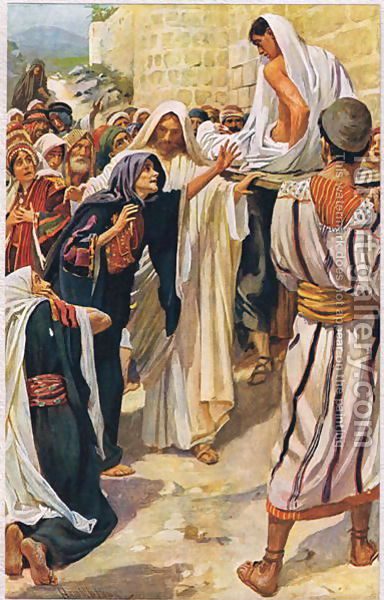
And there came a fear on all: and they glorified God, saying,
That a great prophet G4396 is risen up among us; and, That God hath visited his people.
Gospel of Luke 7:16 KJV [vs 11-17 in context] when JESUS raised a boy to life from his funeral casket
Priest – kōhēn – כֹּהֵן
And Melchizedek king of Salem brought forth bread and wine: and he was the priest H3548 of the most high God.
Genesis 14:18 KJV (first reference to the office of priest in the Bible)
priest,
Lexicon :: Strong’s H3548 – kōhēn
principal officer or chief ruler
priest-king (Melchizedek, Messiah)
[6 more]
Active participle of כָּהַן (H3547)
The LORD hath sworn, and will not repent, Thou art a priest H3548 for ever after the order of Melchizedek.
לְדָוִד מִזְמוֹר נְאֻם יְהוָה לַאדֹנִי שֵׁב לִימִינִי עַד־אָשִׁית אֹיְבֶיךָ הֲדֹם לְרַגְלֶיךָ׃
- priest-king (Melchizedek, Messiah)
- pagan priests
- priests of Jehovah
- Levitical priests
- Zadokite priests
- Aaronic priests
- the high priest
Priest – ἱερεύς
just as He says also in another passage,
“YOU ARE A PRIEST G2409 FOREVER
ACCORDING TO THE ORDER OF MELCHIZEDEK.”
High Priest or Chief Priest – ἀρχιερεύς – archiereus
Now the main point in what is being said is this: we have such a high priest, who sat down at the right hand of the throne of the Majesty in the heavens, a minister in the holy places and in the true tabernacle, which the Lord pitched, not man.
King
.. for I am a great King, saith the LORD of hosts, and my name is dreadful among the heathen.
king – meleḵ – מֶלֶךְ
occurs 2,526 times in the Hebrew Bible
Israel follows YAWWEH as its King of kings and Lord of lords.
What other people have GOD as its King by their covenant with the LORD?
king – βασιλεύς – basileus
Strong's Number G935 matches the Greek βασιλεύς (basileus),
which occurs 118 times in 107 verses in the TR Greek.
And a superscription also was written over him in letters of Greek, and Latin, and Hebrew, THIS IS THE KING G935 OF THE JEWS.
Gospels of Matthew, Mark, Luke & John
Outline of Biblical Usage
- leader of the people, prince, commander, lord of the land, king
probably from G939 (through the notion of a foundation of power); a sovereign (abstractly, relatively, or figuratively):—king.
JESUS showed POWER on earth, signs and miracles no created man could do except the expected Messiah of GOD !
The King, as Judeans had hoped, would be more powerful than Herod the Great (who rebuilt the Temple, a civil project still under construction under one of his sons (King Herod). Jerusalem and all the lands and their kings were subject to ROME and its Caesars.
“Hosanna,
Ὡσαννά εὐλογημένος ὁ βασιλεὺς Ἰσραήλ
hōsanna eulogeō ho basileus israēl
“.. Blessed [is] the King of Israel..

Rome’s Governor Pilate would decide a pre-ordained mortal fate of this earthly KING Jesus, a man seemingly powerless as Jerusalem’s King Herod and his appointed priests of the Judean Temple.
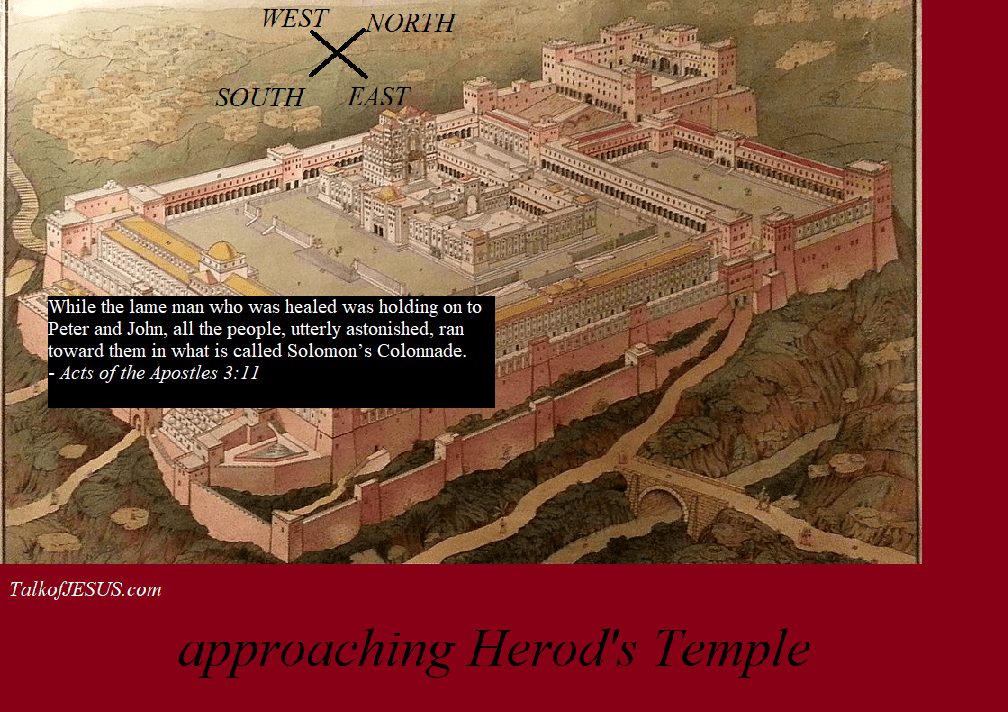
JESUS, according to God’s Word
HOW should we address JESUS?
Wouldn't HOLY SCRIPTURE; written, God-breathed words of the BIBLE (faithfully translated); provide the best, true guidance of how Christian should proclaim JESUS?
Consider how the New Testament speaks about Jesus - source
- “Jesus” occurs 980 times in 940 verses in the LSB.
- 942 times in the KING JAMES VERSION
- 1000+ times in translations substituting ‘Jesus‘ for prepositions such as ‘He.’
- “Jesus” AND “prophet” occurs in 5 verses in ‘The Gospels” in the LSB.
- and JESUS never uses it Himself as a title, only confirming this office.
- “Jesus” AND “priest” occurs 30 times in 14 verses in the LSB.
- He is never addressed as a ‘Priest,’ but the letter of HEBREWS and other Scripture makes clear that JESUS is both Priest and Sacrifice.
Therefore, since we have a great high priest who has passed through the heavens, Jesus the Son of God, let us take hold of our confession.
For we do not have a high priest who cannot sympathize with our weaknesses, but One who has been tempted in all things like we are, yet without sin.
- “Jesus” AND “king” occurs 18 times in 8 verses in the LSB
- Jesus never refers to Himself as King yet acknowledges the recognition of Him by others.
So Jesus, knowing that they were going to come and take Him by force to make Him king G935, withdrew again to the mountain by Himself alone.
Gospel of John 6:15 LSB – G035 – basileus
The Lord Christ Jesus
“Jesus” AND “Lord” occurs 379 times in 179 verses in the KJV
- The Twelve Apostles and others frequently address the man Jesus as, “Lord.”
- Have mercy on us, O Lord, thou Son of David. – Matthew 20:30b
- When Simon Peter saw it, he fell down at Jesus’ knees, saying, Depart from me; for I am a sinful man, O Lord. – Luke 5:8
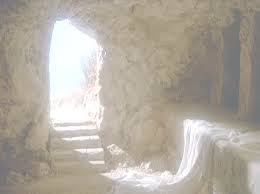
And they entered in, and found not the body of the Lord Jesus.
Gospel of Luke 24:23 KJV – the women at the tomb of Jesus on Resurrection Sunday
Jesus the Christ of GOD
“Christ” occurs 559 times in 522 verses in the KJV.
- The book of the generation of Jesus Christ, the son of David, the son of Abraham. – Matthew 1:1
- And Jacob begat Joseph the husband of Mary, of whom was born Jesus, who is called Christ. – Matthew 1:16
- And Simon Peter answered and said, Thou art the Christ, the Son of the living God. – Matthew 16:16
- For many shall come in my name, saying, I am Christ; and shall deceive many. – Matthew 24:5
- Pilate saith unto them, What shall I do then with Jesus which is called Christ? They all say unto him, Let him be crucified. – Matthew 27:22
- Paul, a servant of Jesus Christ, called to be an apostle, separated unto the gospel of God, – Romans 1:1
- Grace to you and peace from God our Father and the Lord Jesus Christ. – 1 Corinthians 1:3 ESV
He will also strengthen you to the end, so that you will be blameless in the day of our Lord Jesus Christ.
“Therefore let all the house of Israel know for certain that God has made Him both Lord and Christ—this Jesus whom you crucified.”
Acts of the Apostles 2:36 Legacy Standard Bible
‘.. what should we do?”
And Peter said to them, “Repent, and each of you be baptized
in the name of Jesus Christ
for the forgiveness of your sins; and you will receive the gift of the Holy Spirit.
Talk of JESUS . com
Comment on Scripture – Share the Gospel