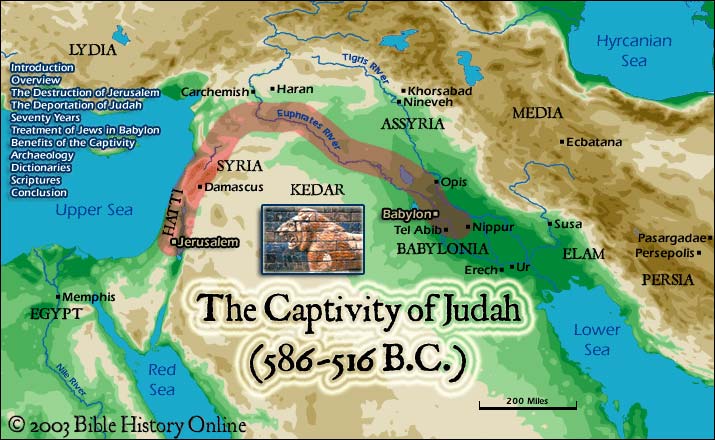
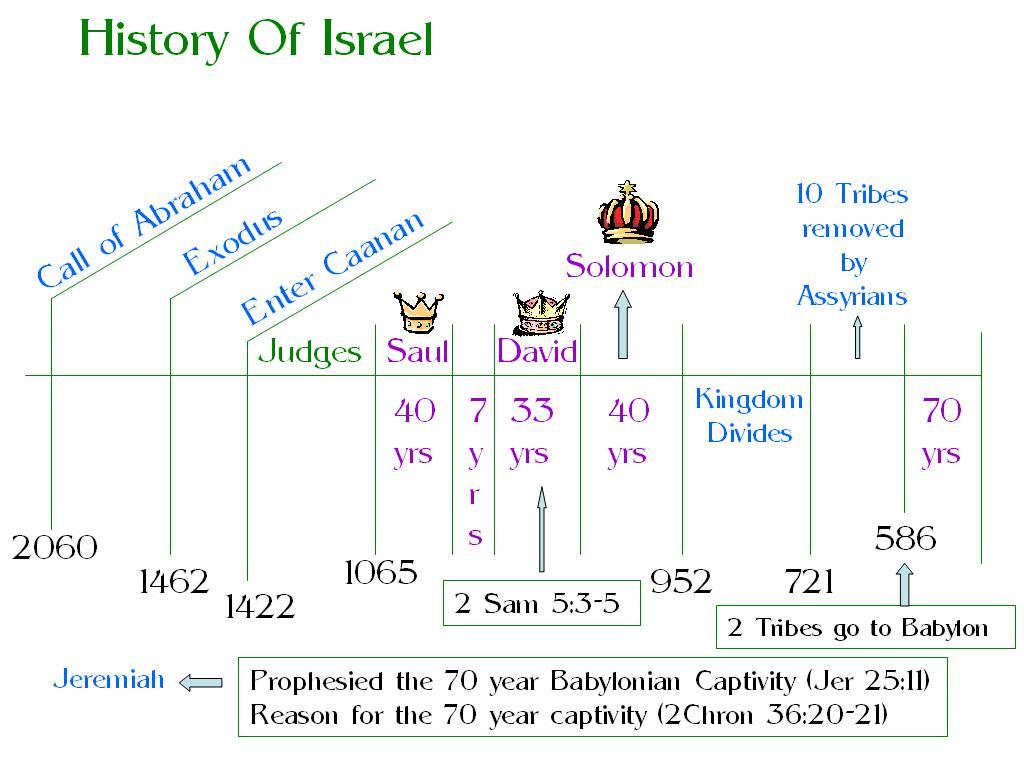
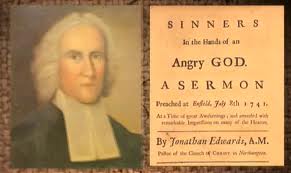
As Jeremiah had warned Judah before their destruction, a man whose importance is now hidden away from the truths before America’s former trust warned a new nation.
 JONATHAN EDWARDS was born into a Puritan evangelical household on October 5, 1703, in East Windsor, Connecticut.
1716-1722) at Yale College, Edwards engaged all manner of contemporary issues in theology and philosophy.
Edwards committed himself to vindicating his beliefs before the foreign luminaries of the Enlightenment by recasting Calvinism in a new and vital way that synthesized Protestant theology with Newton’s physics, Locke’s psychology, the third earl of Shaftesbury’s aesthetics, and Malebranche’s moral philosophy.
In 1726, Edwards succeeded his grandfather, Solomon Stoddard, as the pastor of the church in Northampton, Massachusetts, the largest and most influential church outside of Boston.
“The first and greatest homegrown American philosopher”
Perry Miller, the grand expositor of the New England mind and founder of the Yale edition of the Works of Jonathan Edwards, described Edwards as the first and greatest homegrown American philosopher.
Edwards cast theology into “a method entirely new” by showing God’s work as a history structured around God’s scriptural promises and periods of the outpouring of the Spirit. An Humble Attempt to Promote . . .Extraordinary Prayer(1747) was part of a larger movement towards Anglo-American “concerts of prayer” and was an important contribution to millennial thought. Scholars such as Alan Heimert have recognized the signal importance of these works in American history, particularly their contribution to revolutionary ideology.
A Careful and Strict Inquiry into the Modern Prevailing Notions of that Freedom of Will…”(1754), in which he attempted to prove that the will was determined by the inclination of either sin or grace in the soul. This book, one of the most important works in modern western thought, set the parameters for philosophical debate on freedom and determinism for the next century and a half.
In late 1757, he accepted the presidency of the College of New Jersey (later Princeton University). While at Princeton, Edwards hoped to complete at least two more major treatises, one that would show “The Harmony of the Old and New Testaments” and the other that would be an experiment in narrative theology, a much expanded treatise on “The History of the Work of Redemption.” However, he did not live to complete these works. After only a few months in Princeton, he died on March 22, 1758, following complications from a smallpox inoculation. He is buried in the Princeton Cemetery.
John Adams:“What do we mean by the American Revolution? Do we mean the American War? The Revolution was effected before the War commenced. The Revolution was in the hearts and minds of the people; a change in their religious sentiments . . . This radical change in the principles, opinions, sentiments, and affections of the people was the real American Revolution.”
excerpts from: Jonathan Edwards: A Life by George M. Marsden – review by Dr. Samuel T. Logan, Jr.
Edwards wrote and ministered during this “real” American revolution and his theological insights cut right to the quick of the values which define the nation we now call America. In his brilliant analysis of The Ideological Origins of the American Revolution (which volume won both the Pulitzer Prize and the Bancroft Prize for American History)
To the degree that America, to this day, understands itself as “the land of the free” and to the degree that the highest of all American values and virtues (including some spiritual values and virtues) are defined in terms of freedom and liberty, to that very degree is Edwards’s Freedom of the Will, the most fundamental analysis of American culture. And to the degree that America seeks to export its values to the nations of the earth, to that very degree is Edwards’s The Nature of True Virtue, the most significant biblical critique of current global political and social issues.
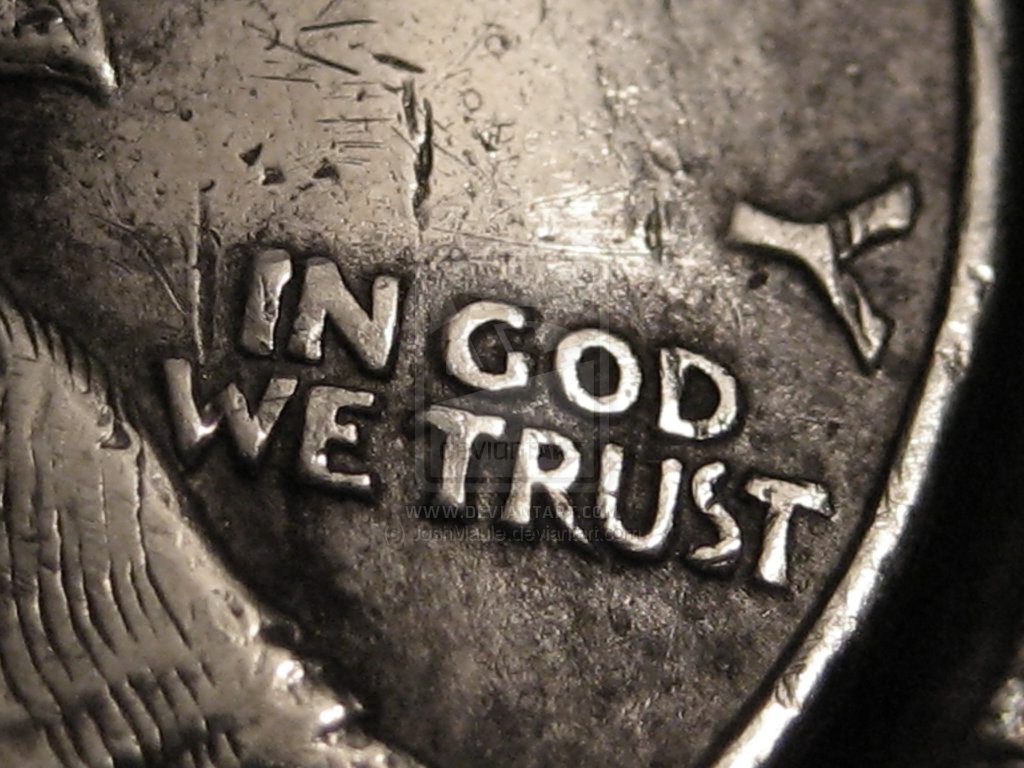
As for our founding fathers, in God they trusted.