Tag: christmas

  • Christmas: past, present, future

    Christmas: past, present, future

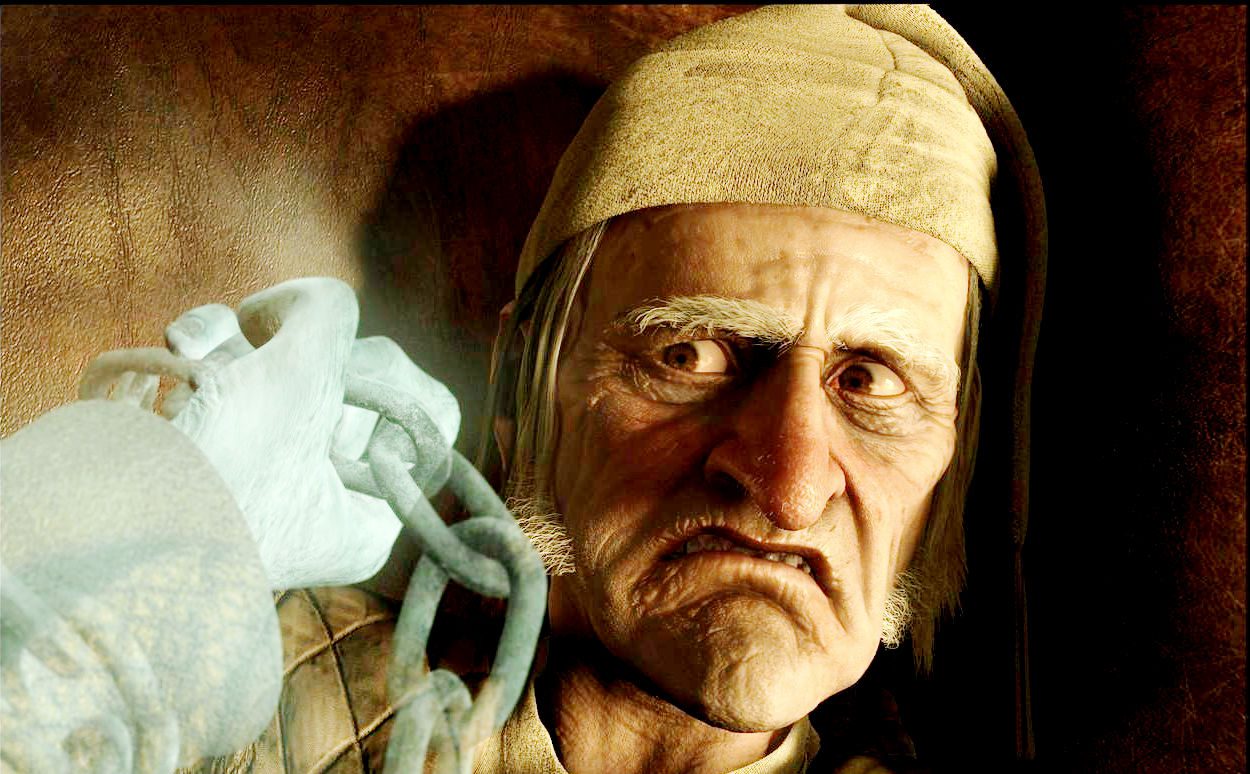
    BAH! humbug!

    You know the story; but the man is converted in the end by what has been, what is, and what will be.

    What about you? Do you have a Christmas story to warm our hearts?

    Please share it, by way of a COMMENT. Your witness is important to me and to others.

    Here are just a few from my past:

    • I was told frequently that my parents had to walk to the grocery store for food and milk after the big snow storm of 1950. I was just four months old at Christmas. (Sorry, no pictures – but my sister probably has them.)

    Do your Christmas pictures tell a story? *like the family pictures we used to see on Christmas cards? – Go ahead an send me one at roger.harned@yahoo.com if you would like us to post it.

    • From a long ago as I remember, we all had personal stockings with our own name on it. Roger, Jenny & Eddie *in that order. And then much later, Kenny. Yes, they were hung by the chimney of our real fireplace with care. And on Christmas morning we always had to open all the gifts in the stocking before the big presents. We always had an apple and and orange in it.
    • When Rachel was born, Christmas got much bigger in our home (although we always went to church Christmas eve, went caroling, went to Christmas parties and more). Her stocking was hung by the chimney with care. Yes, it was a real fireplace with real wood fires. Rachel’s stocking *even at Grandma’s was mysteriously bigger than everyone else’s.

    I have a picture of me and Rachel when she was about 5. I’ll see if I’m allowed to post it. (I will not get to spend Christmas with my children this year. Songs about home for the holidays and mistletoe and other warm and artificially nostalgic memories sometimes make me sad instead of able to show ‘joy to the world.’ Even in Christian households, Christ must be more a part of Christmas and the love of God to send His only Son to a manger for a perfect act of love ought to be our memory to break though the silent nights.

    Enough nostalgia. Please share your Christmas stories.

    *Look for my Christmas messages to continue from Advent messages posted this week on Beatitudes for the Multitudes beginning Monday, December 23, 2013.

    Don’t be a Scrooge and keep your Christian Social Witness to yourself.

    Please share it with us.

    Roger

  • The Beatitudes and the Multitudes – Part 3

    The Beatitudes and the Multitudes – Part 3

    MERRY CHRISTMAS.

    Merry Christmas.

    Such a joyful greeting from a Christian to another.

    Returning our thoughts to the multitudes hearing Jesus’ teaching:

    Matthew 5

    King James Version (KJV)

    Verse 13

    • You are the salt of the earth.

    Salt is plentiful and worthless, except that it makes our food to last and seasons its flavor to make our food more palatable.

    • But if the salt have lost his savor, wherewith shall it be salted?  It is thenceforth good for nothing, but to be cast out, and trodden under the foot of men.

    I am trodden under the foot of man. But of what worth am I to this man (who calls himself the Son of Man)? What does he mean that I am the salt of the earth?

    • Ye are the light of the world.
    • A city set on an hill cannot be hid.
    • Neither do men light a candle, and but it under a bushel, but on a candlestick; and it giveth light to all that are in the house.

    What can all this mean? What does it mean to meet God on a hill overlooking the city?

    Dearly beloved believer and seeker of the Lord God,

    I leave this to your own conviction of the Spirit. Yet I challenge the context of your hearing the blessings or beatitudes of Jesus once more in considering His calling. Jesus speaks to the multitudes. The believing church sits in the crowd as a light on a hill or a candle lifted on a candlestick to light the whole house.

    Many will hear the Word and wander off back into the darkness and destruction and death. Many will not see the Lord on the hill again until the call of the trumpet to Judgment, of which Jesus further warns the multitudes (immediately after these verses) of the fulfillment of the Law and Scripture in Him.

    To the multitudes, our Lord further speaks of repentance for the sin we have done. He calls us to righteousness exceeding the appearance of the most respected representatives of God’s Law.

    He tells us how to exceed the righteousness of rules by the intention of our heart and the thoughtfulness of our actions. Jesus forbids divorce. Jesus forbids anger without cause. He commands reconciliation between brothers (now he speaks to the church), before thinking that our offering to God is acceptable.

    Jesus tells the crowd and the church how by our actions Christians are to demonstrate God’s light to the house and to the world. He proceeds to tell us how we, as God’s house and God’s city, and God’s people must do more than the Law, to go the second mile.

    Further, He concludes:

    Matthew 5:44

    • Love your enemy.

    • Bless them that curse you.

    • Do good to them that hate you.

    • Pray for them that despitefully use you.

    • And (pray for them that) persecute you.

    Is this the church you signed up for?  Is this the light on the hill you are among men?

    It’s difficult, if not impossible, isn’t it?

    Jesus then says (in verse 45) that we have to do it to be children of the Father.

    Then he says essentially (in verse 46): If you love only those who love you, even the politicians do that. Ouch!

    Then our Lord calls on us to do something that we cannot do:

    Be ye therefore perfect, as your Father which is in heaven is perfect.

    How?

    Repent! Be obedient children of adoption by our Father in Heaven, who did send Christ Jesus to the Cross as perfect redemption for our sins.

    ‘Go; and sin no more,’ as our Lord has called upon us to do. (John 5:14; John 8:11)

    Jesus’ teachings of ‘Blessed are you…” or ‘Happy are you…’ give us, perhaps, a little different than usual perspective on the reason for God to send His only Son to a manger in Bethlehem.

    Have you ever thought of the Nativity of Bethlehem with the baby in a manger to be the beginning of His destination of His place for you on the Cross?

    Do you think of the Cross when you wish someone (perhaps an unbeliever), “Merry Christmas?”

    Do others see Christ’s Light in the salt of your joyful greeting?

    To be continued…

  • The Beatitudes and the Multitudes – Introduction

    The Beatitudes and the Multitudes – Introduction

    You may not have thought of the beatitudes as a teaching related to preparation for Christmas (Advent), but by intention of the Spirit that is exactly what is on my heart.

    The usual Christmas liturgy of church begins just after the following genealogy of Jesus Christ (which we tend to skip over, just like those in Numbers, Kings and other historical Old Testament Books of the Bible).

    After you skip through the generations of Joseph, Jesus’ step-father, we will look back just a little at the historical time preceding the coming of the Messiah to a lowly manger in Bethlehem of Judea, before proceeding to the early teachings of Jesus on true blessings (Beatitudes, as we call them).

    Matthew 1

    English Standard Version (ESV)

    The Genealogy of Jesus Christ

    1 The book of the genealogy of Jesus Christ, the son of David, the son of Abraham.

    2 Abraham was the father of Isaac, and Isaac the father of Jacob, and Jacob the father of Judah and his brothers, 3 and Judah the father of Perez and Zerah by Tamar, and Perez the father of Hezron, and Hezron the father of Ram, 4 and Ram the father of Amminadab, and Amminadab the father of Nahshon, and Nahshon the father of Salmon, 5 and Salmon the father of Boaz by Rahab, and Boaz the father of Obed by Ruth, and Obed the father of Jesse, 6 and Jesse the father of David the king.

    And David was the father of Solomon by the wife of Uriah, 7 and Solomon the father of Rehoboam, and Rehoboam the father of Abijah, and Abijah the father of Asaph, 8 and Asaph the father of Jehoshaphat, and Jehoshaphat the father of Joram, and Joram the father of Uzziah, 9 and Uzziah the father of Jotham, and Jotham the father of Ahaz, and Ahaz the father of Hezekiah, 10 and Hezekiah the father of Manasseh, and Manasseh the father of Amos, and Amos the father of Josiah, 11 and Josiah the father of Jechoniah and his brothers, at the time of the deportation to Babylon.

    12 And after the deportation to Babylon: Jechoniah was the father of Shealtiel, and Shealtiel the father of Zerubbabel, 13 and Zerubbabel the father of Abiud, and Abiud the father of Eliakim, and Eliakim the father of Azor, 14 and Azor the father of Zadok, and Zadok the father of Achim, and Achim the father of Eliud, 15 and Eliud the father of Eleazar, and Eleazar the father of Matthan, and Matthan the father of Jacob, 16 and Jacob the father of Joseph the husband of Mary, of whom Jesus was born, who is called Christ.

    17 So all the generations from Abraham to David were fourteen generations, and from David to the deportation to Babylon fourteen generations, and from the deportation to Babylon to the Christ fourteen generations.

    Now look back some to the generations between the destruction of Solomon’s Temple (9th c. B.C.) and the building of Herod’s Temple.

    David had united Israel and Judah. Solomon’s sons divided the Kingdom of God’s chosen people into Israel (under Jeroboam) and Judah (under Rehoboam, Matthew 1:7). Without going into the many historical details of these nations over the centuries, Israel eventually came under the influence of Samaria, which fell in 721 B.C., and Judah, which fell in 587 B.C. The walls were destroyed my Nebuchadnezzar and rebuilt by Nehemiah in the mid 5th century B.C. Several accounts of these times are recorded in Ezra-Nehemiah and Daniel.

    Alexander the Great conquered much of the known world in the 3rd c. B.C. from Greece west to India, spreading the eventual Greek language of the New Testament throughout the middle east. For some 400 years, Parthia was the largest organized state on the eastern frontier of the Roman Empire until it was later captured by Rome later in A.D. 113 (during the days of early Christianity; but the unifying language of Judea and most of the Roman Empire was Greek (not Latin or local languages).

    Two groups of Jews locked in civil war when Pompey captured Jerusalem (106-48 B.c.) Herod (who was a half-Jew) chose the right side in the Roman conflict and was appointed King of Judea in 40 B.c. Herod conquered ‘his Kingdom’ with the ‘help’ of the Roman army. {Much of the preceding source information from: Historical Atlas of the Bible, by Dr. Ian Barnes}

    Into this often contested arena of Nations and Kings and Emperors and gods of every imagination and evil inclination of man is born Christ Jesus, Son of the Living God, conceived by the Holy Spirit; born of a virgin in Bethlehem of Judea. For thirty years Jesus, Emmanuel (God With Us), lives among the poor and downtrodden men of Galilee.

    Into this scene, Jesus is anointed for His fulfillment of prophesy and sacrifice of the Cross, filled with the Holy Spirit and living a life of sinlessness, teaching man (adam”) how God has intended us to live. Into a difficult time and place, where a people of God thought they lived lives cursed by God, Jesus comes to a mountainside teaching with the Authority of God Almighty and the power of the Holy Spirit.

    To be continued…