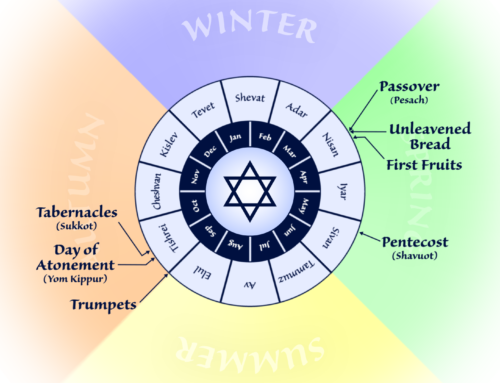
Tag: christmas

  • Between Sabbaths – Convocations and Holiness

    Between Sabbaths – Convocations and Holiness

    Speak unto the children of Israel, and say unto them, Concerning the feasts of the LORD, which ye shall proclaim to be holy convocations, even these are my feasts.

    Leviticus 23:2 KJV

    Holy Holidays

    We’ve lost something of the holiness of the holidays in the translation. Worldliness seeps steadily into our daily lives and we don’t necessarily relate to what some versions of the Bible call, ‘sacred assemblies,’ or ‘holy feasts.’

    Six days shall work be done: but the seventh day is the sabbath of rest, an holy convocation; ye shall do no work therein: it is the sabbath of the LORD in all your dwellings.

    Leviticus 23:3 KJV

    Do we hear of or even know what “holy convocations” might be?

    Even though raised in the church, I didn’t until I looked it up during my college years. A convocation מִקְרָא is a sacred gathering, a called public meeting for the reading of God’s word.

    Perhaps you’ve noted our digression from holy worship  to a more culturally palatable feast of entertainment at church.

    Priests and religious officials would have taken all sorts of rules (and definitions of work) from Leviticus, which we recognize as the Sabbath Commandment. Yet what many contemporary gatherings may miss or dismiss from Exodus and Deuteronomy is holiness.

    Seasons and celebrations between the sabbaths may be designated as holy convocations; days for feasting — neither a time for fasting, nor ordinary work day.

    The sabbath of the LORD, which Christ points out it is ‘made for man,‘ is, never-the-less, set aside by the LORD for Holiness.

    So what are these convocations? And more importantly, how do their principles apply to us today?

    Note that these seven prescribed seasons of holy rest do not include certain notable minor holiday observances.


    Hanukkah חֲנֻכָּה and Christmas??

    Christmas and Hanukkah both focus on light and God’s faithfulness in helping men (and women) of faith to be restored to holiness.

    The minor celebration of Hanukkah began during the second temple period, about 200 years before Christ and was also known as the feast of dedication.

    The minor convocation of Christmas points to the holiness of God, humbly descending to us as the Son of Man; a baby like all others, yet without sin, like no other man. 

    Jews have recently celebrated eight days of Hanukkah.

    Christians have begun a preparatory season of Advent leading up to the festival of Christmas. 

    Do you feel rested? 

    Has God been a part of your celebrations of this season?

    I mention these holidays blown out of proportion by our sustained worldly emphasis on minor celebrations, because we fail to rest in the Lord.

    Return to the Lord’s rest

    “I hate all your show and pretense—
    the hypocrisy of your religious festivals and solemn assemblies.

    Amos 5:21 NLT

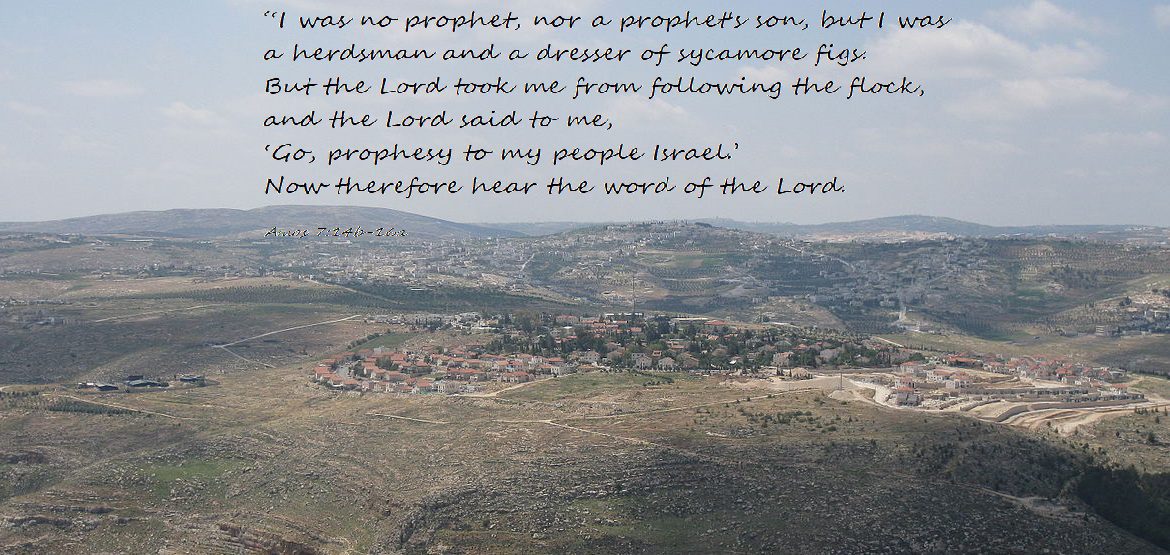
    This, too, is nothing new, as you can see from the rebuke of the Lord through the prophet Amos. His complaint sounds much like that of contemporary unbelievers, when Christians most of all ought to be questioning our own Christmas traditions. 

    God deserves worship שָׁחָה, not occasions of excess and entertainment.

    “Where is he who has been born king of the Jews? For we saw his star at its rising and have come to worship him.”

    Matthew 2:2

    Religious Convocations

    Without drilling down to the detail of ancient worship to the Lord called for in the Law, let’s briefly examine these other Sabbath rests. I invite you to research these scriptures and celebrations further, since I will only comment on each briefly.

    Most scriptures and quotes in this section from BlueLetterBible.org
    Below are festivals linked to this article from Easton's Bible Dictionary.

    1. The weekly Sabbath
    2. The Passover feast:
    3. Pentecost, or the feast of weeks.
    4. The Ingathering, or feast of Tabernacles 
    5. The seventh new moon or the feast of Trumpets (Num 28:11-15; Num 29:1-6)
    6. The Sabbatical year (Exd 23:10-11; Lev 25:2-7)
    7. The year of jubilee (Lev 25:8-16; Lev 27:16-25)

    “The Passover was kept just before the harvest commenced, Pentecost at the conclusion of the corn harvest and before the vintage, the feast of Tabernacles after all the fruits of the ground had been gathered in.

    As previously mentioned, Jews celebrated additional feasts after destruction of the first Temple.

    • The feast of Purim
    • The feast of Dedication (Hanukkah)

    The Day of Atonement, the tenth day of the seventh month (Lev 16:1; Lev 16:34; Lev 23:26-32; Num 29:7-11). 

    Christians cannot overemphasize God’s requirement of holiness, achieved by atonement for our sins.

    God presented Christ Jesus as an atoning sacrifice in his blood, received through faith, to demonstrate his righteousness, because in his restraint God passed over the sins previously committed.

    Romans 3:25

    The Sacrifice and death of Christ, made possible by the incarnation of God in the flesh of Jesus, exceeds the importance of our holy celebrations.

    Traditions of Sabbath Rests

    Contemporary worshipers may not relate to cultures of the times of these designated rests from the Lord; however, hear the Lord’s purpose in these additional Sabbaths made for man.

    On each of these occasions every male Israelite was commanded “to appear before the Lord” (Deu 27:7; Neh 8:9-12).

    The attendance of women was voluntary. (Luk 2:41; 1Sa 1:7; 1Sa 2:19.)

    The promise that God would protect their homes (Exd 34:23-24) while all the males were absent in Jerusalem at these feasts was always fulfilled.

    “During the whole period between Moses and Christ we never read of an enemy invading the land at the time of the three festivals. The first instance on record is thirty-three years after they had withdrawn from themselves the divine protection by imbruing their hands in the Saviour’s blood, when Cestius, the Roman general, slew fifty of the people of Lydda (Joppa) while all the rest had gone up to the feast of Tabernacles, A.D. 66.

    A few details of worship

    Of the new moon festivals the Lord commands: “this is the burnt offering of every month throughout the months of the year ‘And in the seventh month, on the first day of the month, ye shall have an holy convocation; ye shall do no servile work.’

    All men worship the Lord and all men have rest for this worship.

    Of the Sabbatical year the Lord commands rest for the field, the vineyard and orchard. 

    Celebration of the year of Jubilee each fiftieth year: “In the Year of Jubilee each of you may return to the land that belonged to your ancestors…Be assured that I will send my blessing for you in the sixth year, so the land will produce a crop large enough for three years… 

    ‘The land shall not be sold permanently, for the land is Mine; for you are strangers and sojourners with Me.

    Leviticus 25:23

    “You are to allow the redemption of any land you occupy.

    We walk with the Lord: our land, a temporary possession of sojourners in this temporary world where we work. The Lord grants redemption to us, the ability to repurchase what He has rightfully given to us from all that is His. Our worship returns but a portion of His abundance to our Lord.

    The Lord’s laws are unlike our own unbalanced views of righteousness and justice. His ways are higher than our ways. Though the birth of our Redeemer is important, Jesus’ sacrificial death and resurrection challenge the sinners of this world with consequence for our worldly ways. 

    Are you caught up in the restless rush of the holidays?

    1 Peter 1:

    3 Blessed be the God and Father of our Lord Jesus Christ. Because of his great mercy he has given us new birth into a living hope through the resurrection of Jesus Christ from the dead…

    Christmas defines the beginning of the life of God Incarnate, His gift to us: “new birth into a living hope…”

    14 As obedient children, do not be conformed to the desires of your former ignorance.

    15 But as the one who called you is holy, you also are to be holy in all your conduct; 16 for it is written, Be holy, because I am holy.
    “Be holy, because I am holy. – 1 Peter 1:15b, Leviticus 11:44-45; 19:2; 20:7

    Christ-mass: ‘because I am holy.’

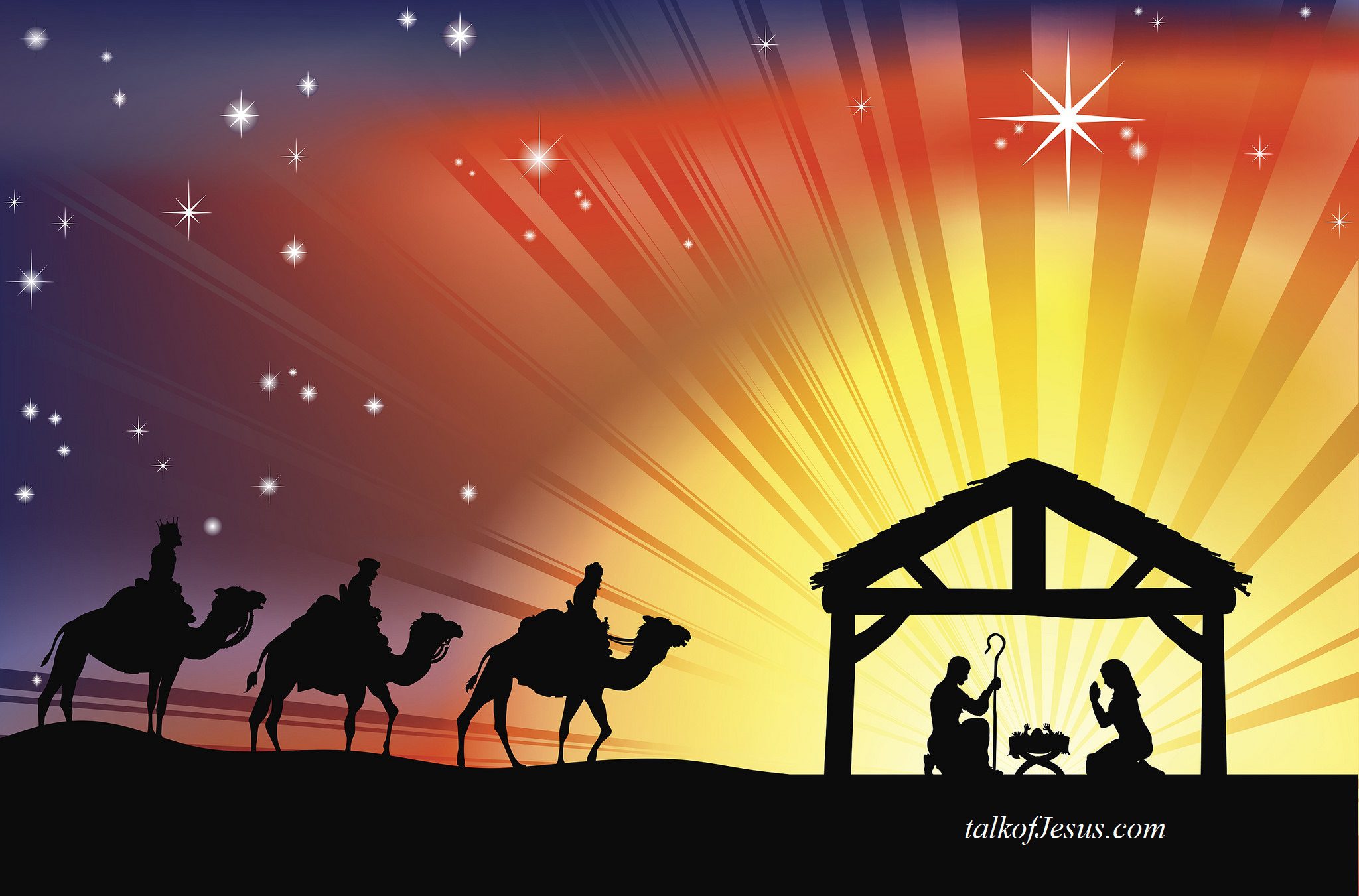
    Be holy, because I am holy. – This is our promised rest, through a babe in a manger, a sinless Savior born for the Cross.
  • A Merciful Manger

    A Merciful Manger

    A MERCIFUL MANGER

    Click on the link above to view the poem.

    by Roger Harned
    A Merciful Manger

  • The Beginning of the End – A Burden of the Prophets – 4

    The Beginning of the End – A Burden of the Prophets – 4

    Where is the promise of his coming? For ever since the fathers fell asleep, all things are continuing as they were from the beginning of creation.”

    Remember the predictions of the holy prophets

    Previously: Part 1; Part 2; Part 3
    

    The Lord is not slow to fulfill his promise as some count slowness, but is patient toward you, not wishing that any should perish, but that all should reach repentance. 2 Peter 3:9

    Think back beyond your years and perhaps you may recall an event  just two generations past in the days of your grandfather. But who can understand the times a hundred generations before us, even the lives of those living when Christ was born.

    Even before Christ the impatience of man questioned the patience of the Lord. Early Prophets like Amos had been long forgotten by the time some promises had been fulfilled by the birth of a Messiah.

    Just as now the unexplored landscape of our new world would have been completely unimaginable to Columbus, men in the days of the first century did not remember Moses or David or the Prophets with any contemporary context of understanding. Yet in each generation before Christ men and women of those days could hardly imagine the promise of the Messiah to come.

    Each century between the Prophets and Christ would have seemed unmeasurable with the century’s beginning unfamiliar to the generations of its completion. Think about each hundred years of history as if today you looked back upon the just ending World War I [November 11, 1918], then multiply our forgetfulness of the promise by 21 centuries since the manger of Bethlehem.

    Promise of a Messiah a long time away

    How far away could you imagine the promise of hope spoken by a Prophet of the LORD in each of these centuries, so many generations ‘Before Christ?’

    A thousand years, ten centuries, uncountable generations from the success of Solomon to the hope of a Savior.

    Challenge: Scroll slowly through the centuries between David and the Son of David, the promised Messiah.
             
           
    * Date estimates by Roger Harned http://talkofJesus.co
          Source: TOW
           
       Period / Century


    Northern Kings – Israel (Samaria)


    Northern Prophets Israel Sararia


    Southern Kings – Judah (Judea)


    Southern Prophets Judah 


    United kingdom under Saul, David, Solomon, c. 1030 – 931


    10th c. B.C.
    Divided kingdom Jeroboam (931-910) Rehoboam (931-913)
    Nadab (910-909) Abijah (913)
    Baasha (909-886) Asa (911-870)
    9th c. B.C.
    Elah (886)
    Zimri (885)
    Omri (885-874)
    Ahab (874-853) Elijah
    Jehoshaphat (873-848)
    Jehoram (852-841) Jehoram (853-841)
    Jehu (841-814) Elisha Queen Athaliah (841-835) Obadiah
    Jehoahaz (814-798) Joash (835-796)
    8th c. B.C.
    Jehoash (798-782) Amaziah (796-767)
    Jeroboam II (793-753) Amos
    Zechariah (753-752) Jonah Isaiah (760-700)
    Shallum (752)
    Menahem 752-742)
    Pekahiah (742-740) Hosea (c. 792-740 B.C.) Uzziah (790-740)  Joel
    Pekah (752-732) Jotham (750-731)
     Israel ruled by other nations Hoshea (732-722) Ahaz (735-715) Nahum
      Hezekiah (715-686) Micah
    7th c. B.C.
    Manasseh (695-642)
    Amon (642-640)
    Josiah (640-609) Jeremiah
    Zephaniah
    Jehoahaz (609) Huldah
    Jehoiakim (609-597) Nahum
    6th c. B.C.
    Habakkuk
    Judah ruled by other nations – Babylonian exile (597 – 538 BC) Jehoiachin (597)
    Zedekiah (597-586) Ezekiel
    Persian Period (539-322 BC) Zerubbabel, governor {538-520 BC) Daniel
    Post-exilic prophets Haggai
    5th c. B.C. Darius I (521-486), king of Persia Zechariah (520-???)
    Nehemiah, governor (445-425) Malachi
    4th c B.C. Artaxerxes II, king of Persia (404-358 BC)
    Hellenistic Period (332-141 BC)
    Alexander the Great Macedonian Greek empire 356 – 323 BC
    Ptolemaic (Egyptian) Seleucid rule in Jerusalem
    Seleucos I (Persian) 321-215
    3rd c. B.C.
    Antiochos III inherited in 223 BCE
    2nd c. B.C.
    1st c. B.C. Herod the Great, Roman appointed king of Judea 37–4 BC

    John the Baptist

    c. 5 BC – AD30

    * Period summary source


    Prophets Predicted Christ

    How long did you consider the generations between the time of David, 3000 years ago and the thousand years until the birth of the Messiah?

    The LORD saved and redeemed a people who in every generation believed that God had forgotten them.

    “Blessed be the Lord God of Israel, for he has visited and redeemed his people and has raised up a horn of salvation for us in the house of his servant David, as he spoke by the mouth of his holy prophets from of old..

    Luke 1:68-70 ESV

    A short list of Prophecies: Promises of many generations

    Joel 1:

    15 Alas for the day!
    For the day of the Lord is near,
    and as destruction from the Almighty it comes.

    19 To you, O Lord, I call.
    For fire has devoured
    the pastures of the wilderness,
    and flame has burned
    all the trees of the field.

    Joel 2:28  “And it shall come to pass afterward,
    that I will pour out my Spirit on all flesh;
    your sons and your daughters shall prophesy,
    your old men shall dream dreams,
    and your young men shall see visions.
    29 Even on the male and female servants
    in those days I will pour out my Spirit.

    Joel lived about eight centuries before fulfillment of his prophecies.


    Micah 1:

    2 Hear, you peoples, all of you;
    pay attention, O earth, and all that is in it,
    and let the Lord God be a witness against you,
    the Lord from his holy temple.

    Speaking of ‘Peace’

    Micah 3:
    5 Thus says the Lord concerning the prophets
    who lead my people astray,
    who cry “Peace”
    when they have something to eat,
    but declare war against him
    who puts nothing into their mouths.

    Micah 4:

    (Some may recognize this scripture forgotten from the charter of the United Nations at a time Israel was reborn as a nation in 1947.)

    “Come, let us go up to the mountain of the Lord,
    to the house of the God of Jacob,
    that he may teach us his ways
    and that we may walk in his paths.”
    For out of Zion shall go forth the law,
    and the word of the Lord from Jerusalem.

    3 He shall judge between many peoples,
    and shall decide disputes for strong nations far away;
    and they shall beat their swords into plowshares,
    and their spears into pruning hooks;
    nation shall not lift up sword against nation,
    neither shall they learn war anymore;

    4 but they shall sit every man under his vine and under his fig tree,
    and no one shall make them afraid,
    for the mouth of the Lord of hosts has spoken.

    The Place of Birth of the Messiah

    Micah 5:

    But you, O Bethlehem Ephrathah,
    who are too little to be among the clans of Judah,
    from you shall come forth for me
    one who is to be ruler in Israel,
    whose coming forth is from of old,
    from ancient days.
    3 Therefore he shall give them up until the time
    when she who is in labor has given birth;
    then the rest of his brothers shall return
    to the people of Israel.
    4 And he shall stand and shepherd his flock in the strength of the Lord,
    in the majesty of the name of the Lord his God.
    And they shall dwell secure, for now he shall be great
    to the ends of the earth.
    5 And he shall be their peace.

    Micah’s promise of the birth of Christ would not be fulfilled for about 700 years.


    Zephaniah 3:

    16 On that day it shall be said to Jerusalem:
    “Fear not, O Zion;
    let not your hands grow weak.
    17 The Lord your God is in your midst,
    a mighty one who will save;
    he will rejoice over you with gladness;
    he will quiet you by his love;
    he will exult over you with loud singing.

    Zephaniah is the great-great grandson of Judah’s King Hezekiah from the time Micah prophesied. He prophesied during the time of a successful and good King Josiah ( 640 to 609 BC). Zephaniah saw in the day of the Lord the destruction of his country, his neighbors, and eventually the whole earth. Source.


    Malachi 1:

    2 “I have loved you,” says the Lord…

    Should this not be sufficient for worship of the Lord our God?

    Over the centuries and generations Israel repeatedly has turned from the Lord, rejecting God’s love. Yet the Lord is merciful and promises a Messiah, the Savior of the faithful.

    The Messenger of the Lord

    Malachi 2:

    17 You have wearied the Lord with your words.

    But you say, “How have we wearied him?”

    By saying, “Everyone who does evil is good in the sight of the Lord, and he delights in them.” Or by asking, “Where is the God of justice?”


    Are we so different, even in these last days? Has Christ not promised an eternal redemption for our sin? Yet we remain impatient with mortal life.

    Malachi was a late messenger among the Prophets, one after whom a great silence from the Lord would follow until another messenger of the Messiah would appear to announce the onslaught of these last days.


    Malachi 3:

    “Behold, I send my messenger, and he will prepare the way before me. And the Lord whom you seek will suddenly come to his temple; and the messenger of the covenant in whom you delight, behold, he is coming, says the Lord of hosts.

    The Book of Remembrance

    16 Then those who feared the Lord spoke with one another. The Lord paid attention and heard them, and a book of remembrance was written before him of those who feared the Lord and esteemed his name.

    17 “They shall be mine, says the Lord of hosts, in the day when I make up my treasured possession, and I will spare them as a man spares his son who serves him. 18 Then once more you shall see the distinction between the righteous and the wicked, between one who serves God and one who does not serve him.

    Malachi likely delivered his message many years after the Israelites rebuilt the temple in 515 BC. The prophet’s concerns mirror those of Nehemiah’s, suggesting that Malachi prophesied to the people while Nehemiah left the city for several years, beginning in 432 BC. Source.


    Generations of silence without prophecy, then the LORD sends a messenger to the wilderness and a Messiah to a manger in Bethlehem.

    Judgment and mercy will be in His right hand. He will be a Savior of the Remnant and Hope to the Nations.

    A messenger will announce the Son of David, the Promised One…

    In the LORD’s time… the Messiah of Israel and Savior of the Nations; predicted by the Prophets, proclaimed by angels, born in a manger, worshiped by shepherds and kings: Jesus, Son of God, Son of man!


    +