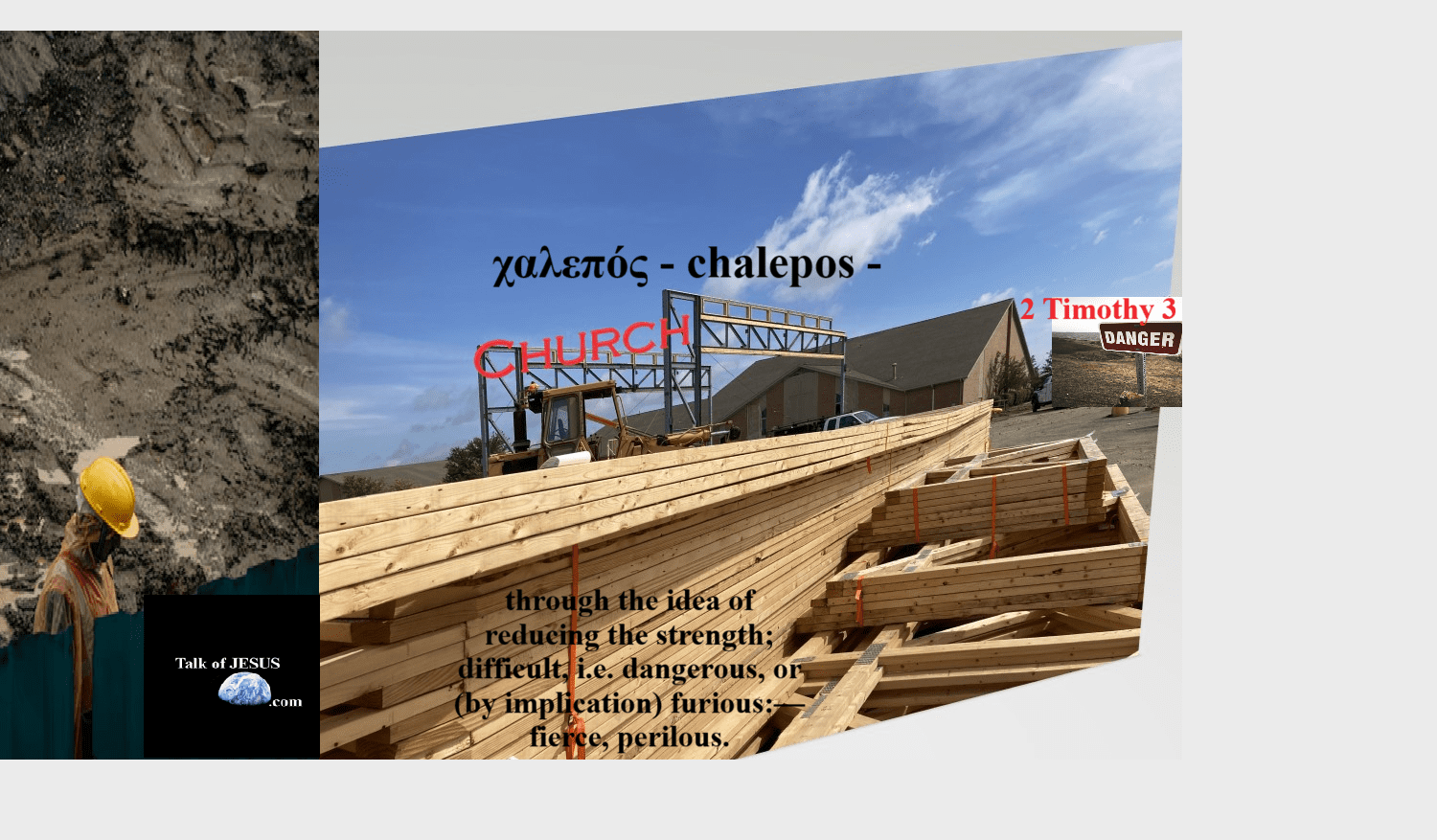
Tag: Church

  • Finding the Evangelical Freedom of Balaam in our Evangelical Church

    Finding the Evangelical Freedom of Balaam in our Evangelical Church

    .. promising them freedom while they themselves are slaves of corruption..

    2 Peter 2:19a LSB

    Why does the Apostle Peter point to Balaam?

    Do evangelical pastors of Christ's Church have the freedom to accept all prophesy and every doctrine? 

    Note the similarities of the growing popularity of Balaam of Pethor, whom Moses introduces in Numbers 22, to the AD first century missionary journeys of Peter, Paul and John.

    Moses led the Israelite people from slavery in Egypt by the hand of the Lord God to the land of Canaan.

    Balaam is NOT a prophet of God! He travels to new lands to profit from his reputation as a seer. (This is not unlike many false teachers we meet in Acts of the Apostles.)

    Balaam is an opportunist FORCED to obey the LORD. But in addition to Balaam’s error (as some call it), the prophet would easily mislead any away from truth and will of the God.

    Worshipers of Baal and other gods will follow false prophets to inclusively worship other gods— even in this Common Era.

    Balaam from Pethor sought by Balaak of Moab in Numbers 22 to prophesy against Israel, but the LORD prevented his freedom to say anything against the LORD and his chosen people

    Balaam’s journey begins in his homeland, which is described as “Pethor, which is by the Euphrates.”

    Balaam’s journey to Moab is marked by divine intervention .. highlighting the spiritual battle over Balaam’s intentions and the sovereignty of God over pagan practices.

    BibleHub.com

    2 Peter 2: False Teachers – Wandering Creatures

    These false teachers are like unthinking animals, creatures of instinct, born to be caught and destroyed.

    They scoff at things they do not understand, and like animals, they will be destroyed.

    Their destruction is their reward for the harm they have done.

    They love to indulge in evil pleasures in broad daylight.

    They are a disgrace and a stain among you.

    They delight in deception even as they eat with you in your fellowship meals.

    They commit adultery with their eyes, and their desire for sin is never satisfied. They lure unstable people into sin, and they are well trained in greed. They live under God’s curse.

    2 Peter 2:12-14 NLT

    They have gone astray by abandoning the straight path and have followed the path of Balaam, the son of Bosor, who loved the wages of wickedness,

    2 Peter 2:15 CSB

    but received a rebuke for his lawlessness:

    A speechless donkey spoke with a human voice and restrained the prophet’s madness.

    v.16

    The Divine Coercion of Balaam

    R.C. Sproel observes:

    Only by divine coercion did Balaam obey God, and then he gave four prophesies…

    ibid. p.236

    Further study of Numbers in the context of Peter’s witness will reveal how a fourth prophesy of Balaam may interest the church.


    Freedom Restrained by Truth

    The Apostle of Christ writes this second epistle to the church to instruct us:

    We do NOT have the freedom to say whatever we want.

    AND, in fact, prophets and teachers of false doctrine will walk among the saints of the Church seeking followers to leave the narrow Way of the Lord.

    Peter is not describing pagans here but apostates.

    R.C. Sproel – Be All the more Diligent to Make your Calling and Election Sure, p.234

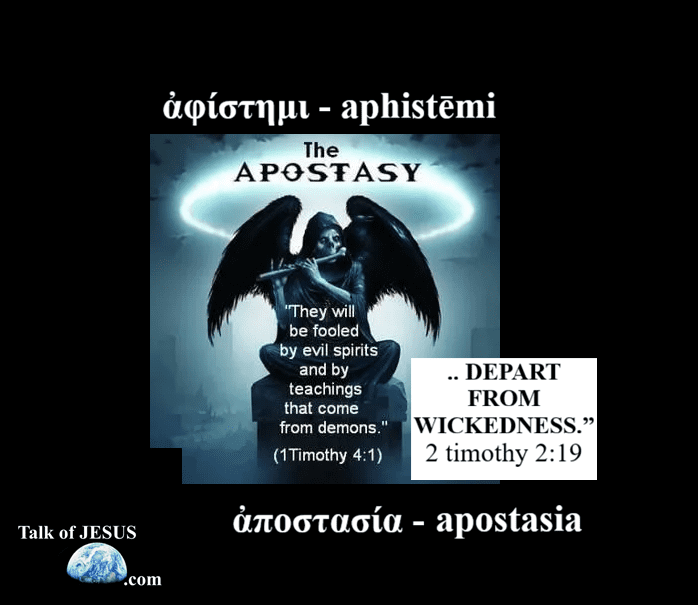
    Apostates

    In these loose, liberal times of Common Era preaching, I believe it necessary to provide a brief definition of that against Peter warns.

    An apostate is an individual who has abandoned or renounced their faith, particularly in the context of Christianity.

    The term is derived from the Greek word “apostasia,” which means a defection or revolt.

    Apostasy is considered a grave sin in Christian theology, as it involves a deliberate turning away from the truth of the Gospel and the rejection of the salvation offered through Jesus Christ.

    BibleHub.com Topical Encyclopedia

    Most Common Era christians have never heard of such a great sin of apostasy or do we recognize how false teachers have led us away from Christ to the gods of our imagination.


    Referring to 2 Peter 2:15-16 Sproul continues:

    They know the right way; they have been exposed to the teachings of the Gospel;they know what the truth is—they have heard it proclaimed repeatedly—but they have forsaken it and gone a different way.

    R.C. Sproul, ibid. pp 234-35

    eleutheria – Freedom and Liberties

    Fifteen years earlier [AD 49], at the time of the Council of Jerusalem, James writes in his Epistle:

    Speak and act as those who are to be judged by the law of freedom.

    James 2:12 CSB

    And in his first epistle to the Church Peter had already written:

    Submit as free people, not using your freedom as a cover-up for evil, but as God’s slaves.

    1 Peter 2:16 CSB

    AND NOW THE APOSTLE WARNS:

    Although these false teachers promise such people freedom, they themselves are enslaved to immorality. For whatever a person succumbs to, to that he is enslaved.

    2 Peter 2:19 New English Translation


    And what of Popes and false Prophets?

    Whether all creatures in the time of Noah — the entire city of Sodom in which we live — the evangelical landscape of all-inclusive gods — speaking to wavering believers,

    Does one walk sandalless in the error of Balaam?

    The Apostle Peter warns every saint of the Lord Jesus Christ:

    For if, after they have escaped the defilements of the world through the knowledge of our Lord and Savior Jesus Christ, they are again entangled in them and overcome,

    the last state has become worse for them than the first.

    For it would have been better for them never to have known the way of righteousness than after knowing it to turn back from the holy commandment delivered to them.

    2 Peter 2:20-21 ESV


    Peter is not finished with his warnings against these pernicious preachers yet to come and corrupt the Church. The Apostle of the Son of the One God — speaks through the Holy Spirit of disobedient angels and false prophets as irrational animals, creatures of instinct, born to be caught and killed.

    AND, of those in the church who listen to false doctrine and are led astray, the Apostle writes:

    For it would have been better for them never to have known the way of righteousness than after knowing it to turn back from the holy commandment delivered to them.

    2 Peter 2:21 RSV


    Have YOU escaped the corruption of the world by knowing our Lord and Savior Jesus Christ? 


    NEXT: a Steadfast Purpose and Day of the Lord


    Comment on Scripture – Share the Gospel

  • Letters to the saints of the First Century Church

    Letters to the saints of the First Century Church

    An Introduction to the Epistles

    TalkofJESUS.com would like to introduce you to an overview of some of the letters of the New Testament.

    • We have recently finished a SERIES from 1 Corinthians and will soon study three more epistles.

    What’s an Epistle?

    Here's a general sense of it from Scripture: 

    So when they were dismissed, they came to Antioch: and when they had gathered the multitude together, they delivered the epistle:

    Acts of the Apostles 15:20 KJV

    [Soldiers] Who, when they came to Caesarea, and delivered the epistle [from the chief captain of the centurions] to the governor, presented Paul also before him.

    Acts 23:26 KJV

    ἐπιστολή

    epistolḗ, ep-is-tol-ay’; from G1989; a written message:—”epistle,” letter.

    • to send one a message, command
    • to write a letter
    • to enjoin by letter, to write instructions

    BlueLetterBible.org


    Historical Context in the Early Church

    During the first century AD, written communication held a central role in connecting communities separated by great distances. It was common for Christian leaders to address the fledgling groups of believers through written correspondence, ensuring consistent teaching and doctrinal guidance. These epistles were often circulated among multiple churches (see Colossians 4:16) and copied for preservation and further dissemination.

    The Greco-Roman practice of public reading of letters provided an effective way to convey instructions and encourage unity. Such letters were seen as authoritative instructions from established leaders, which enabled early Christians to remain steadfast in their beliefs and practices.

    BibleHub.com

    The New Testament generally indexes Epistles by the place of its recipients, i.e. Philippians, but occasionally by the name of the letter writer, i.e. James.

    Older translations like the King James Version use Epistle or Letter from the same Greek word most translations simply title, ‘Letter.’

    How do WE respond after hearing a letter from an Apostle of Jesus Christ to our Church?

    photo of earth from the moon
    Comment on Scripture + Share the Gospel

    PAUL and Twelve Apostles had been sent into all the world by the risen Lord Jesus Christ to preach the Gospel.

    ~ A.D. 30Beginning with the Twelve Disciples responding to the command of the risen Lord Jesus:

    But you will receive power when the Holy Spirit has come upon you, and you will be my witnesses in Jerusalem and in all Judea and Samaria, and to the end of the earth.”

    Acts of the Apostles 1:8 ESV

    A diaspora of the Gospel (Good News) of the risen Christ began with more than five-hundred witnesses of Jesus after the crucifixion of Israel’s Messiah.

    See: 1 Corinthians 15:6 [context 1 Cor 15:3-8]

    It began, as Jesus commanded, in Jerusalem — Simon Peter and John as Christ’s first vocal witnesses in the Temple — the Gospel then spreading throughout Judea and Galilee, and with Philip in Samaria, Gaza and Caesarea.

    Followers of The Way of Jesus Christ establish many churches in person and later write to church leaders (elders) to build up the saints of these churches during difficult times of several decades of the first century.

    And God wrought special miracles by the hands of Paul: Acts 19:11 ASV graphic map of Third Missionary Journey of Paul

    Acts of the Apostles (including some letter writing)

    Acts is an account of FIRST-HAND WITNESS written for saints of every era — AS SCRIPTURE AND TRUTH of the GOSPEL of our LORD and Savior JESUS CHRIST.

    When did the Apostles write their LETTERS?

    ALL dates approximate
    • AD 49 – James (half-brother of Jesus) writes a letter sent to several churches
    • Paul writes a letter to the near-by churches in Galatia (during his first missionary journey)
    • AD 50 – During his second missionary journey, Paul writes a letter to the church in Thessalonica (which he had established), then later a second letter.
    • AD 55 – Paul writes a letter to the Corinthians (where the Apostle had established this church during his previous mission) and then will write a second letter to these saints a year later.

    A contemporary analogy

    Need a context to our Common Era? 

    Taking that the Lord Jesus Christ had been crucified, buried and rose from the grave before ascending into heaven some 25 years ago, WE would be witnessing this HISTORY as if it had occured in about 2000 CE.

    (And much has happened with the church since then..)

    First Corinthians Featured Series

    TALK OF JESUS .COM LINKS to each Chapter of Paul's First Epistle to the Corinthians

    What did Paul write in Second Corinthians?

    a year later...
    Although we will not include 2 Corinthians in our current series of Second (or 3rd) Epistles, TAKE A LOOK at the focus of Paul's Second Letter to the Corinthians written in ~ A.D. 56. 

    Key Themes [partial] Endurance through difficulty and Christlike behavior are made possible by the grace of God and are modeled by Paul himself.

    The Spirit transforms believers into the image of God, which is seen in Christ.

    Christ, as Savior, is also the universal Judge.

    ESV Global Study Bible
    INTRODUCTION TO
    2 CORINTHIANS

    We refuse to practice cunning or to tamper with God’s word - Paul's 2nd letter to the Corinthians 4:2 and photo of Bible

    Theme: Strength in Christ

    But He said to me,
    “My grace is sufficient for you, for My power is perfected in weakness.”
    Therefore I will boast all the more gladly in my weaknesses,
    so that the power of Christ may rest on me.

    2 Corinthians 12:9

    BibleHub .com 2 Corinthians

    MORE of the TIMELINE of the Apostolic Epistles

    First Century YEARS of continuous Letters (Epistles) to the Church

    • AD 57 Paul writes to the Romans
    • AD 60-62 While in Rome, writes three Epistles to the churches
      • in Ephesus in Asia,
      • Philippi in Macedonia and
      • Colossae near Laodecia east of Ephesus
      • and a personal plea to Philemon, leader of a house church in or near Colossae concerning his fellow escaped slave Onesimus.
    • AD 62-64 After his release from prison in Rome, Paul writes his First pastoral epistle to Timothy, the Apostle’s protege and successor as pastor to the church in Ephesus.
    • AD 62-64 The Apostle Paul writes a pastoral Epistle to Titus, between his first and second Roman imprisonments, from either Corinth or Nicopolis.
    • AD 64 The Apostle Peter writes his First Epistle to ‘the strangers [or pilgrims] scattered throughout Pontus, Galatia, Cappadocia, Asia, and Bithynia, from Rome at the time Nero burns it, referring to it as ‘Babylon.’
    • AD 66 – Christians flee Jerusalem rather than join a Jewish revolt against Rome.
      • Some historians estimate the dates of these Epistles and martyrdoms of Peter & Paul earlier around A.D. 64
    • AD 66-67 SECOND PASTORAL LETTER OF PAUL TO TIMOTHY
      • (SOON: part of our NEXT Featured SERIES)
    • AD 67-68 SECOND EPISTLE OF PETER
      • (SOON: part of our NEXT Featured SERIES)
    • AD 60’s Epistle to the Hebrews

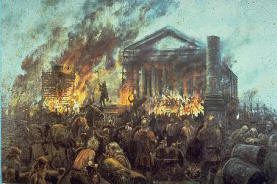
    AD 70 Rome destroys Jerusalem

    terrors of death of Jerusalem's defenders and destruction temple by Rome in A.D. 70
    Burning of Jerusalem AD70
    Do you need a contemporary compasspoint again? 

    It's now been 40 years since AD 30, our pivotal point in HISTORY.
    Think back now forty contempory years to AD 1985. How has YOUR church changed?
    • AD 70’s Epistle of Jude (the younger half-brother of Jesus.)
    • AD 85-95 The Apostle John writes his Gospel and THREE EPISTLES
      • (2 John & 3 John included in our NEXT Featured SERIES)

    map of the seven churches of revelation
    John to the seven churches that are in Asia: Grace to you and peace from Him who is, and who was, and who is to come, and from the seven spirits who are before His throne,

    Epistles for a Common Era church

    Once again – a paradigm shift ahead to 2025 of the Common Era.


    Our pivotal HISTORY of ACTS of the Apostles and the Gospel began back in the AD 30’s

    and the Apostle John writes to the churches in the AD 90’s.

    Sixty-some years ago — in the years of our Lord the 1960’s.

    Once again, I will ask YOU, my fellow saints of the Lord Jesus Christ:

    How do WE respond after hearing a letter from an Apostle of Jesus Christ to our Church?

    Even in these last days of the Common Era let us proclaim the Gospel of Jesus Christ to a world with a remnant of souls yet to be saved from the wrath to come.


    Comment on Scripture – Share the Gospel
  • First Corinthians Synopsis- Do everything in love

    First Corinthians Synopsis- Do everything in love

    Love — exceeds wisdom, but does not exclude it.

    Would you say that this pretty much sums up Paul’s first letter to the Corinthian church?

    You desire wisdom (and some of you have it), but seek the love of God available to us through our Lord Christ Jesus.


    1 Corinthians 16:

    I recommend that you read 1 Cor 16 here [in the link above], since I will not detail much of this closing chapter (into which of course Paul's letters were not divided) in this brief synopsis. 

    Paul closes his epistle to the Corinthian saints first by asking for their charity to help the struggling and persecuted church in Jerusalem. (Their regimen should be like what the Apostle set in place for the Galatian churches.

    Part of the collection of gifts and delivery of other epistles (letters) always depends upon who may be available at the time.

    Paul is not in person, which is why he writes, and neither is Apollos.

    The Apostle closes his letter with several detailed instructions, explanations of where and why they travel with the Gospel, and specific mention of several individuals (to whom we will get after looking back at Paul’s entire epistle to the Corinthians).

    Basically, this is his personal closing like any of us would end a personal letter to loved ones.


    Corrective Behavior – Guided by Love

    Now these three remain: faith, hope, and love ​[agapē] — ​but the greatest of these is love.

    1 Corinthians 13:13 Christian Standard Bible
    We addressed this central theme of agape love in 1 Corinthians 13. 

    John MacArthur introduces Paul’s first letter to the Corinthians:

    Although the major thrust of this epistle is corrective of behavior rather than of doctrine, Paul gives seminal teaching on many doctrines that directly relate to the matters of sin and righteousness.

    In one way or another, wrong living always stems from wrong belief.

    John MacArthur :: Bible Introductions – 1 Corinthians

    Another introduction to Paul’s first epistle put’s it this way:

    Summary: 1 Corinthians addresses issues within the Corinthian church, emphasizing unity, moral integrity, and spiritual gifts.

    Paul advises on matters like divisions, immorality, and worship practices, highlighting love as the greatest virtue.

    He confirms the resurrection of Christ and its implications for believers.

    1 Corinthians Overview – Theme: Christian Living

    We might note Paul's caution in the verses preceding our opening verse here. 

    Many of you know this and understand that it has little to do with age and more to application of Christ's love in your mortal life.

    When I was a child,

    I spoke like a child,

    I thought like a child,

    I reasoned like a child.

    When I became a man, I put aside childish things.

    1 Corinthians 13:11 CSB

    The Apostle’s entire letter to worshipping saints of the church in Corinth sought to correct childish morals with the firm and gentle love of God.


    megas agapē – the Greatest Love

    In addition to Paul, advice on LOVE also proceeds from the words of Jesus.

    “Because lawlessness will multiply, the love of many will grow cold.

    Gospel of Matthew 24:12 CSB

    Christ is prophesying signs of the end of the age.

    Let the Common Era reader understand.

    Like the Apostles Paul, John and others, Jesus also addresses His followers (any disciples) as “little children.”

    “Little children, I am with you a little while longer…

    .. you are also to love one another.

    By this everyone will know that you are my disciples, if you love one another.”

    Gospel of John 13:33a,34c-35 CSB

    Paul’s great dilemma in ‘fathering’ the Corinthians was to correct some of these disobedient children in the faith with the love Christ commands for each of us who claim Jesus as Lord.

    The Wisdom of Mature Love in Christ

    What do you want? Should I come to you with a rod, or in love and a spirit of gentleness?

    1 Corinthians 4:21 CSB

    Now about food sacrificed to idols: We know that “we all have knowledge.” Knowledge puffs up, but love builds up...

    But if anyone loves God, he is known by him.

    1 Corinthians 8:1,3 CSB

    Speaking of human wisdom, Paul compares it by saying that ‘knowledge makes arrogant’ [KJV] gnōsis physioō;

    while agapē Love edifies [KJV].

    Grow-up from the wisdom of an arrogant child, beloved believer, into the love and faith in Christ Jesus who loved us so much as to have died for us. 

    And we all know and many can quote some translation of Paul’s famous ‘love chapter’ 13 highlighted above.

    If I speak human or angelic tongues but do not have love, I am a noisy gong or a clanging cymbal…

    13-1 CSB

    How many clanging christians in our Common Evangelicalism claim Jesus without love? 

    Love – ἀγάπη -agapē

    suffers long and is kind; love does not envy; love does not parade itself, is not puffed up…

    13:4 NKJV

    Synopsis of 1 Corinthians

    The opening and closing of Paul’s epistle both appeal to the individual love [agapē] of the Corinthians the Apostle knew and loved so well.

    He contrasted the morals and behaviors of those who challenged their faith in Christ Jesus to the childish ways of the wisdom of the world worshipping SELF — even with the crowds in Corinth’s temples of worship of myths and wisdom of the logic of mythological man-created gods and goddesses.


    Wisdom of the Cross *a few points

    * from ROAD MAPS for the PAULINE EPISTLES - Kress Biblical Resources
    • The church must deal with unrepentant sin. (5)
    • The church must deal with disputes among its members. (6)
    • Stay focuses on serving Christ whether married or single. (7)
    • The right practice and purpose of the Lord’s Supper (11)
    • Spiritual gifts should unify and build up the church (12)
    • Spiritual gifts should prioritize the proclamation of the truth to others in an orderly manner — not pacification of self. (14)
    • The RESURRECTION is certain
    • The RESURRECTION is supernatural
    • The RESURRECTION is our sure hope and motivation

    HOW IS YOUR CHURCH DOING WITH THESE?

    Paul loved the Corinthian saints as Christ has loved us.

    The Apostle closes his epistle with these important points:

    • Plans and communication are important for and effective gospel ministry.
    • Personal relationships and communication are important for and effective gospel ministry.
    In closing, let's look at what the Apostle writes to the leaders and saints of Corinth — and to the pastors and Sunday sheep of our Common Era christian flocks. 

    After all, when you write to someone you love, don't you want to leave them with a final thought about you and what you write to them?

    Final Exhortation

    16:13

    γρηγορέω – Be alert

    “Therefore be alert, because you don’t know either the day or the hour.[in which the Son of Man is coming.]

    Gospel of Matthew 25:13

    Be on the alert, stand firm in the faith, [NASB]

    στήκω – stand firm in πίστις – the faith

    Then he said to them, “Why are you afraid? Do you still have no faith? ”

    And they were terrified[filled with awe] and asked one another, “Who then is this? Even the wind and the sea obey him! ”

    Gospel of Mark 4:40-41 CSB

    ἀνδρίζομαι – act like a man [be courageous]

    andrizomai – Middle voice from ἀνήρ (G435) – man, husband, sir, fellow (not a boy or woman)

    κραταιόω – be strong.

    The boy grew up and became strong, filled with wisdom, and God’s grace was on him.

    Gospel of Luke 2:40 CSB

    6:14

    Let all that you do be done in love.

    1 CORINTHIANS 16:14 ESV – Paul’s closing appeal to the CHURCH

    Paul’s talking AGAPE here.

    Other translations read:

    • Let all your things be done with charity. – KJV
    • And do everything with love. – NLT
    • All that you do must be done in love. – NASB20

    One FINAL WARNING

    Whoever does not love our Lord Yeshua The Messiah,

    let him be damned. our Lord has come.

    1 Corinthians 16:22 – Aramaic Bible in Plain English

    Quite a CONVICTING affirmation!

    Other translations use simply Lord, or ‘the Lord Jesus Christ’ but the Person of their intent is the same Lord and God NONE dare oppose!

    1 Corinthians 16:22 Translations

    • let him be Anathema
      • accursed
    • that person is cursed
    • let that person be cursed!
      • tis & eimi (here) are not specific to males
    • a curse be on him.
    • Let anyone who has no love for the Lord be accursed.
    Don't get to hung up on the specific words — or English parts of speech. 

    The seriousness of the Apostle’s line-in-the-sand for Christians cannot be missed.

    The term “curse” translates from the Greek “anathema,” meaning something devoted to destruction.

    In the Jewish context, it referred to things set apart for God, often through destruction, as seen in Joshua 6:17 with the fall of Jericho.

    Paul uses strong language to stress the seriousness of rejecting Christ,

    aligning with Galatians 1:8-9, where he condemns any gospel contrary to the one he preached. This reflects the early church’s struggle against false teachings and the necessity of maintaining doctrinal purity.

    Biblehub.com Study Bible – 1 Corinthians 16:22

    a FINAL word

    Unfamiliar to MOST Common Era christians, Paul uses the words: μαράνα θάmarana tha – [English: “Maranatha“]

    Most English translations substitute its meaning — an invitation worthy of our most serious consideration.

    Of Aramaic origin (meaning our Lord has come).

    The Apostle concludes his epistle to the Corinthian church:

    The grace of the Lord Jesus be with you.

    My love be with you all in Christ Jesus. Amen.

    And thus do I conclude our study of Paul's First Epistle to the Corinthians, joining the Apostle in His love for all of you. 

    Talk of JESUS . com

    Comment on Scripture – Share the Gospel