Tag: corinthians

  • A Witness through John – Samira سمير

    “My food is to do the will of him who sent me and to finish his work,” Jesus told them.

    John 4:34 CSB

    Shopping for Groceries

    If you’re reading the Gospel (Good News) wondering why Jesus did something or other you will often find mentions of food. John answers our cravings into the personalness of Jesus with stories using symbolism for food, signs like  turning water into wine or feeding of the five thousand.

    In our series on the Gospel and writings of John you may find satisfaction for your hunger to know why Jesus did what He did. We left off with John’s most famous story of Nicodemus coming to Jesus in Jerusalem at night.

    John 3:

    22 After this, Jesus and his disciples went to the Judean countryside, where he spent time with them and baptized.

    23 John also was baptizing in Aenon near Salim, because there was plenty of water there.

    John then continues his stories of witness with Jesus having a conversation with someone unexpected as they travel north through Samaria, a woman at a well. Even though John was not present, he tells us what they said and provides context into why their conversation is important.

    This story connects the first journey of Jesus and the Disciples in their travel and mission from Judea and Jerusalem, then back to the Galilean towns where they live. 

    Food for Thought

    I have fed you with milk, and not with meat: for hitherto ye were not able to bear it, neither yet now are ye able.

    1 Corinthians 3:2 KJV http://blb.sc/008Bfe

    To begin, just a brief mention here from a letter of the Apostle Paul to the church at Corinth.

    Paul uses a Greek word τροφή trophē which the King James Version translates literally as ‘meat.’ Trophe figuratively means nourishment, which most Bibles translate symbolically as food.

    We have more here than just milk or a little ‘evangelism moment.’ This is meat for the mature believer with ears to hear, nourishment for our famished souls.

    Jesus’ teaching to the Disciples after this encounter with the Samaritan woman and Paul’s encouragement to the church are the same; that is, both provide food to the mature listener.

    John 4:

    When Jesus learned that the Pharisees had heard he was making and baptizing more disciples than John (though Jesus himself was not baptizing, but his disciples were), he left Judea and went again to Galilee.

    “He, Jesus, left for Galilee. John records that his disciples were baptizing (presumably in the Jordan near where the Baptist drew crowds). As at other times Jesus may have gone ahead and set a meeting place with the Disciples for a later time.

    Samaria from Jerusalem via mountains or Jordan River valley wilderness

    4 He had to travel through Samaria; 5 so he came to a town of Samaria called Sychar near the property that Jacob had given his son Joseph.

    Retelling the Gospel

    John would have learned this Gospel witness in the time that followed; for only Jesus and the woman at the well were present at first.

    In order to put this conversation into an observable context I have chosen the name of Samira for the woman at the well.

    Samira  means ‘someone you chat with in the evening’ (in this instance, a Samaritan woman).
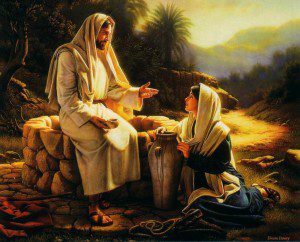
    يرة‎ – a conversation in Samaria with the Messiah

    Samira سميرة‎ – a woman at a well in Samaria

    7 A woman of Samaria came to draw water.

    Jesus: Give me a drink

    Samira: How is it that you, a Jew, ask for a drink from me, a Samaritan woman?

    Jesus: If you knew the gift of God, and who is saying to you, ‘Give me a drink,’ you would ask him, and he would give you living water.

    Samira: Sir (سيدى) (sayedy), you don’t even have a bucket, and the well is deep. So where do you get this ‘living water’?

    You aren’t greater than our father Jacob, are you? He gave us the well and drank from it himself, as did his sons and livestock.

    Jesus: Everyone who drinks from this water will get thirsty again. But whoever drinks from the water that I will give him will never get thirsty again.

    In fact, the water I will give him will become a well of water springing up in him for eternal life.

    Samira: Sir, give me this water so that I won’t get thirsty and come here to draw water.

    John’s later commentary

    [John (to the reader): The men of Sychar told me how their wives resented the sinful life of this woman, but Samira later witnessed to me that Jesus lovingly smiles at her, then initiating their quick dialogue.]

    Jesus: Go call your husband and come back here.

    Samira: I don’t have a husband.

    Jesus: You have correctly said, ‘I don’t have a husband,’ For you’ve had five husbands, and the man you now have is not your husband. What you have said is true.

    [John: She told me she wondered if this man could have spoken with the men in town; then thought, ‘No, it is not possible; for he has just arrived from the Jerusalem road.’ It was then that she knew this was no ordinary traveler and drew some water from the well for this son of man, as prophets are called.]

    Jesus, a man like no other

    Samira: Sir, I see that you are a prophet.

    Our fathers worshiped on this mountain, but you Jews say that the place to worship is in Jerusalem.

    Jesus: Believe me, woman, an hour is coming when you will worship the Father neither on this mountain nor in Jerusalem.

    You Samaritans worship what you do not know. We worship what we do know, because salvation is from the Jews.

    But an hour is coming, and is now here, when the true worshipers will worship the Father in Spirit and in truth.

    Yes, the Father wants such people to worship him.

    God is spirit, and those who worship him must worship in Spirit and in truth.

    [John: That was the same thing Jesus had just said to the Pharisee Nicodemus in Jerusalem.]

    Samira: I know that the Messiah is coming (who is called Christ). When he comes, he will explain everything to us.

    Jesus: I, the one speaking to you, am he. [ἐγώ εἰμι ὁ λαλῶν σοι]

    The Messiah, the Christ

    What a remarkable encounter John records. The Apostle will retell this story of Good News for years to come.

    Jesus, the Messiah of Israel, has come not only for those in Judea and Jerusalem, but to those of all of Israel, even the despised Samaritans.

    John’s Gospel records: 

    27 Just then his disciples arrived, and they were amazed that he was talking with a woman. Yet no one said, “What do you want?” or “Why are you talking with her?”

    Of course these were questions John also wanted to ask Jesus, but did not.

    The Samaritan woman returns to Sychar and later men and women from town come out to the well by the highway to meet the Messiah in person.

    John now records a conversation with Jesus and the Disciples with a focus no longer on water, but on food.

    31 In the meantime the disciples kept urging him, “Rabbi, eat something.”

    “I have food to eat that you don’t know about.

    33 The disciples said to one another, “Could someone have brought him something to eat?”

    34 “My food is to do the will of him who sent me and to finish his work.

    The Disciples most likely failed to understand this connection between their literal food and Jesus’ symbolic meat of spiritual nourishment.

    Why would Jesus even stop to talk to this Samaritan woman?

    35 “Don’t you say, ‘There are still four more months, and then comes the harvest’? Listen to what I’m telling you:

    A Harvest of Faith

    What is the harvest? What does the Messiah mean?

    Jesus speaks now to John and the Disciples.

    Jesus: Listen to what I’m telling you:

    • Open your eyes
    • and look at the fields, because they are ready for harvest.
    • 36 The reaper is already receiving pay
    • and gathering fruit for eternal life,
    • so that the sower and reaper can rejoice together.

    37 For in this case the saying is true: ‘One sows and another reaps.’

    38 I sent you to reap what you didn’t labor for; others have labored, and you have benefited from their labor.”

    The Harvest they Witnessed

    What did the Disciples likely see? Crowds of Samaritans, men and women coming from town to see their Messiah. These must have looked like a flowing sea of ripened wheat moving in waves toward them.

    Yet what harvest did Jesus see in Samaria?

    Labour not for the meat which perisheth, but for that meat which endureth unto everlasting life, which the Son of man shall give unto you: for him hath God the Father sealed.

    John 6:27 KJV

    Jesus tells John and the Disciples that they must work in the fields. They must stop and tell the people they meet about the meat or the food of the Gospel, the Good News of everlasting life.

    Other translations of John 6:27 read: ‘Don’t work for the food that perishes..’ or ‘Do not work for food that spoils..’

    Jesus and the Disciples were traveling though Samaria. The Disciples nearly missed the harvest, Jesus tells them before dwelling there for two nights. We almost miss the harvest as well.

    Work for the ‘food that lasts for eternal life,’ ‘food that endures to eternal life..’ This is the joining of the Reaper and the Sower in Samaria in John 4. It is the joining with Jesus after the feeding of the five thousand in John 6.

    We have food – food the Son of Man has given us, “.. because God the Father has set his seal of approval on him.”

    Samira, first fruits of an abundant harvest – food for the faithful

    Along a road less traveled in a place unexpected on the way to where we thought we were headed, a harvest of faith appears. In a simple encounter Jesus simply asks a sinner:

    “Give me a drink”

    What is your answer, fellow Samaritan, rejected gentile, priest or Levite?

    What say you, when a stranger approaches and asks you,

    “Give me a drink?”

    Will you ‘love your neighbor’ with the food of eternal life, as Jesus did for Samira, a mere woman by a well on His journey to the Cross?

    To be continued...
  • Thanksgiving: We’re a little late and Christmas a little early

    But thanks be to God, who gives us the victory through our Lord Jesus Christ!

    – 1 Corinthians 15:57

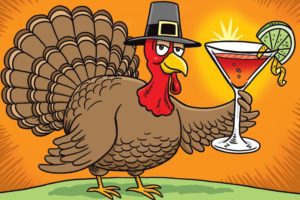
    What’s wrong with this picture?

    Or this one?


    We may chuckle at these common images of two typically American holidays, but much more is at stake here than changing traditions.

    Looking for thanks.

    Watch for the coming ‘blitzchris’ of ads and marketing this week leading with holiday headlines of Thanksgiving and Christmas. From television to social media, mega-marketing messages will be unavoidable and ruthlessly relentless.

    Therefore note how seemingly positive good news of these holidays ahead will bombard buyers with joyful messages of celebratory consumerism complete with obligatory ‘thanks’ or ‘giving.’ 

    Yet the questions we could ask about Thanksgiving & Christmas should be:

    1. Is anyone thanking God or
    2. Is Christ mentioned in anything about Christmas?

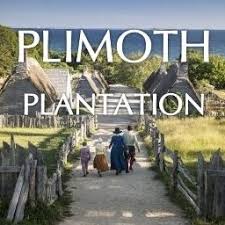
    Pyimoth Plantation – First Thanksgiving History

    People across the world have been celebrating and giving thanks for thousands of years. In this country, long before English colonists arrived, Native People celebrated many different days of thanksgiving.

    The English also had a long tradition of thanksgiving. They declared days of prayer to thank God when something good happened. For example, the English declared a day of thanksgiving in the summer of 1623 when a gentle rain ended a long drought.

    Likewise, in the fall of 1621, when their labors were rewarded with a bountiful harvest after a year of sickness and scarcity, the Pilgrims gave thanks to God. They also celebrated their bounty with a tradition called the Harvest Home. In a letter to a friend in England,


    “E.W.” (Pilgrim Edward Winslow) wrote the only record of the celebration that survives:

    We set the last spring some twenty acres of Indian corn, and sowed some six acres of barley and peas, and according to the manner of the Indians, we manured our ground with herrings or rather shads, which we have in great abundance, and take with great ease at our doors. Our corn did prove well, and God be praised, we had a good increase of Indian corn, and our barley indifferent good, but our peas not worth the gathering, for we feared they were too late sown, they came up very well, and blossomed, but the sun parched them in the blossom; our harvest being gotten in, our governor sent four men on fowling, that so we might after a more special manner rejoice together, after we had gathered the fruit of our labors…

    Source

    Thanksgiving to God

    “God be praised,” thanksgiving expressed in a letter to a friend back in England by the Governor of this new world.

    And although it be not always so plentiful, as it was at this time with us, yet by the goodness of God, we are so far from want, that we often wish you partakers of our plenty. We have found the Indians very faithful in their covenant of peace with us; very loving and ready to pleasure us: we often go to them, and they come to us; some of us have been fifty miles by land in the country with them; the occasions and relations whereof you shall understand by our general and more full declaration of such things as are worth the noting, yea, it hath pleased God so to possess the Indians with a fear of us, and love unto us…

    … They are a people without any religion, or knowledge of any God, yet very trusty, quick of apprehension, ripe-witted, just, the men and women go naked, only a skin about their middles…

    … there are grapes, white and red, and very sweet and strong also. Strawberries, gooseberries, raspas, etc. Plums of three sorts, with black and red, being almost as good as a damson: abundance of roses, white, red, and damask: single, but very sweet indeed; the country wanteth only industrious men to employ, for it would grieve your hearts (if as I) you had seen so many miles together by goodly rivers uninhabited, and withal to consider those parts of the world wherein you live, to be even greatly burdened with abundance of people. These things I thought good to let you understand, being the truth of things as near as I could experimentally take knowledge of, and that you might on our behalf give God thanks who hath dealt so favorably with us.

    Our supply of men from you came the ninth of November 1621, putting in at Cape Cod, some eight or ten leagues from us, the Indians that dwell thereabout were they who were owners of the corn which we found in caves, for which we have given them full content, and are in great league with them, they sent us word there was a ship near unto them, but thought it to be a Frenchman, and indeed for ourselves, we expected not a friend so soon. But when we perceived that she made for our bay, the governor commanded a great piece to be shot off, to call home such as were abroad at work; whereupon every man, yea, boy that could handle a gun were ready, with full resolution, that if she were an enemy, we would stand in our just defense, not fearing them, but God provided better for us than we supposed; these came all in health unto us, not any being sick by the way (otherwise than seasickness) and so continue at this time, by the blessing of God, the goodwife Ford was delivered of a son the first night she landed, and both of them are very well. When it pleaseth God, we are settled and fitted for the fishing business, and other trading, I doubt not but by the blessing of God, the gain will give content to all; in the mean time, that we have gotten we have sent by this ship, and though it be not much, yet it will witness for us, that we have not been idle, considering the smallness of our number all this summer.


    What date?

    This solitary letter recording the first Thanksgiving in America, written by the Governor of this Massachusetts colony truly reflects thanksgiving to God. They might have died at sea or could have been killed by their befriended American native neighbors. No, reports Winslow, we thank God.

    And when did this now legendary first Thanksgiving take place?

    We don’t know for sure why the Wampanoag joined the gathering or exactly what activities went on during those three days. We do know, however, that the celebration occurred sometime between September 21 and November 9, 1621.

    Source

    So it seems that now in the year of our Lord, 2017, Thanksgiving may be a little late, much overlooked and once more crowded by ‘christmas’ feasting and frenzy.

    Next, we will continue with a look a Biblical feasts and fasts with an original intent to praise and thank God.

    November 22, 2017 Thanks-giving feasts
  • (Go into all the world and) SHARE the Gospel – 2

    (Go into all the world and) SHARE the Gospel – 2

    The Great Commission

    Preach the gospel (KJV & others); proclaim the gospel (ESV & others); share the good news: kēryssō  euaggelion – publish good tidings to every creature.

    “You share everything else on social media, why not share the good news of Jesus Christ”

    Jesus, the Messiah of God died for our sins and is risen: therefore you may have eternal life in Him! Good News, a gospel we should long to share.

    Mark 16:14 Afterward he appeared to the eleven themselves as they were reclining at table, and he rebuked them for their unbelief and hardness of heart, because they had not believed those who saw him after he had risen. 15 And he said to them, “Go into all the world and proclaim the gospel to the whole creation. 16 Whoever believes and is baptized will be saved, but whoever does not believe will be condemned.

    What an amazing end to a Son of Man crucified on the cross! Jesus appears many times to many followers; He IS alive in body and spirit. Jesus tells not only the eleven to share the gospel, our Lord commands more followers who witnessed his resurrection and by His command those who will follow.

    20 And they went out and preached everywhere, while the Lord worked with them and confirmed the message by accompanying signs.

    More to Come

    You could say the the Gospel began in Genesis. It the the privilege and duty of Israel to share the truth of the One Lord with everyone. John’s gospel reveals to us that in spite of the fall of adam, the Word was present not only from before Abraham, as Jesus claims, but from before the beginning.

    John 1:1-5

    In the beginning was the Word, and the Word was with God, and the Word was God. He was in the beginning with God. All things were made through him, and without him was not any thing made that was made. In him was life, and the life was the light of men. The light shines in the darkness, and the darkness has not overcome it.

    Jesus IS the Word and the Light. Even after a fallen Kingdom of David, Jesus claims the eternal Throne to which He anointed Kings and Prophets by the Authority of the LORD. And the Good News gets even better.

    The Resurrection of Christ

    1 Corinthians 15:1-6A

    Now I would remind you, brothers, of the gospel I preached to you, which you received, in which you stand, and by which you are being saved, if you hold fast to the word I preached to you—unless you believed in vain.

    For I delivered to you as of first importance what I also received: that Christ died for our sins in accordance with the Scriptures, that he was buried, that he was raised on the third day in accordance with the Scriptures, and that he appeared to Cephas, then to the twelve. Then he appeared to more than five hundred brothers at one time…

    20 But in fact Christ has been raised from the dead, the firstfruits of those who have fallen asleep. 21 For as by a man came death, by a man has come also the resurrection of the dead. 22 For as in Adam all die, so also in Christ shall all be made alive.

    Mystery and Victory

    Paul encourages believers with words oft’ repeated when mourning the death of a loved one.

    50 I tell you this, brothers: flesh and blood cannot inherit the kingdom of God, nor does the perishable inherit the imperishable. 51 Behold! I tell you a mystery. We shall not all sleep, but we shall all be changed, 52 in a moment, in the twinkling of an eye, at the last trumpet. For the trumpet will sound, and the dead will be raised imperishable, and we shall be changed. 53 For this perishable body must put on the imperishable, and this mortal body must put on immortality. 54 When the perishable puts on the imperishable, and the mortal puts on immortality, then shall come to pass the saying that is written:

    “Death is swallowed up in victory.”
    55 “O death, where is your victory?
    O death, where is your sting?”
    56 The sting of death is sin, and the power of sin is the law. 57 But thanks be to God, who gives us the victory through our Lord Jesus Christ.

    58 Therefore, my beloved brothers, be steadfast, immovable, always abounding in the work of the Lord, knowing that in the Lord your labor is not in vain.

    How do we share the Gospel now?

    Since Moses, after Abraham, in the Kingdom of David and for centuries witness of the Lord seemed local. It still is, for our neighbors see Christ in our daily lives better than anyone. (Or at least, they should.)

    Israel and the nations were built on the foundations of family, grown in the love of communities. Yet empires fall by the dividing hand of evil and conquered in disobedience to the Lord. I will repay, says the Lord, the God of Israel.

    Sharing good news was easy and local, just tell your family and friends who are so much like you. Now that the world is connected, yet disjointed, our families are broken. Our values are lost in a world of competing idolatries and waring followers of false prophets. These listen and look for light and hope, which is distant yet connected through social media.