and Jesus personally embraces the crowds in His sermon on the mount. Doxology, however, is when we bless God.
Praise God fromwhom all blessing flow.
In Christ Jesusdoxology becomes the sweet water of God’s love flowing towards us from our Father in heaven and the tree of eternal life.
Throughout the Bible faithful men praise the LORD, ‘Blessed are you, O Lord’ and the LORD also blessed them of His chosen ones.
Scriptures
I will not quote all Books from both the Old and New Testaments. So here I will mention just a few favorite quotes. Perhaps my favorite is the warm personal greeting of Paul and Timothy to Corinth and their praise of God.
2 Samuel 6:18
Psalm 34:8
Oh, taste and see that the LORD is good! Blessed is the man who takes refuge in him!
Paul, an apostle of Christ Jesus by the will of God, and our brother Timothy, To the church of God which is at Corinth with all the saints who are throughout Achaia:
2 Grace to you and peace from God our Father and the Lord Jesus Christ.
Blessed be the God and Father of our Lord Jesus Christ, the Father of mercies and God of all comfort, who comforts us in all our affliction so that we will be able to comfort those who are in any affliction with the comfort with which we ourselves are comforted by God.
We began from a dream of beloved relationship in a sinless paradise. But then our security met with unexpected interruption when our eyes opened to a scene east of Eden.
There we discovered dependence on prayer and seeking the Lord’s direction.
What if there is no escape from this misdirected chaotic place, even from a prison of isolation not of our making?
Our own prayer as one after God’s own heart longingly pleas:
Turn to me and be gracious to me, For I am lonely and afflicted.
Psalm 25:16
Prayer, and then.. ?
Jesus illustrates how prayer’s persistent knocking will guarantee relationship with our loving Heavenly Father.
I illustrated what it must have been like for our beloved friend David who awake to the knock of a friend.
Luke does not tell us anything from Jesus’ parable about the man who journeyed many miles to meet his friend late in the day. But you know him.
Most know Luke’s second scroll from which today I will take our illustration of a pilgrim with frequent traveler credentials.
Acts of Good News
He had an encounter with with the Risen Christ Jesus, then journeyed the rest of his mortal life from place to place teaching the Gospel to beloved friends in distant lands.
Saul of Tarsus – Breaking through Social Boundaries
How can we be in relationship with our beloved brothers and sisters in the Lord when we will not break the virtual bonds of artificial relations?
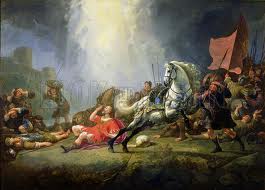
Saul of Tarsus was a socially connected leader of traditional religion and traditional values imprisoned by his zeal for righteousness of others; that is, until the Lord Jesus called him along a road to Damascus as an Apostle.
Paul preached the Gospel from prisons to public squares.
Saul (Hebrew name) or Paul (Greek name) encountered more social distancing by way of imprisonment and avoidance of former friends determined to kill him than any of us ever will. The instances are too numerous to mention here.
[They] instigated a persecution against Paul and Barnabas, and drove them out of their district. – 13:50
.. the crowds .. stoned Paul and dragged him out of the city, supposing him to be dead. –14:19
[leading businessmen of the town] .. seized Paul and Silas and dragged them into the market place before the authorities… But about midnight Paul and Silas were praying and singing hymns of praise to God, and the prisoners were listening to them.. – 16:19b,25
||| — A.D. 2021 — | | | – Now what?
Prayer to the Father.
the Lord Jesus taught us that
Read God’s Word and open your heart to the Holy Spirit.
Reach out to fellow believers in faith, as so often the Apostle did by letter from prison.
and finally,
when you are released from your prison,
like Paul:
GO to those brothers and sisters,
who with you are members of Christ’s body the Church, beloved friends on a journey who love you and embrace the Good News.
Paul calls himself ‘a bond-servant of Christ Jesus, called as an apostle, set apart for the gospel of God.’ + Romans 1:1
He confesses that he is ‘called as an apostle of Jesus Christ by the will of God.’ 1 Corinthians 1:1
Are you willing to be a slave of Christ rather than a leader of the worldly?
Like Saul of Tarsus can you admit that your own zealous works are nothing without confirmation of the will of God?
The Apostle writes a second time to the Church at Corinth:
Now I, Paul, myself urge you by the meekness and gentleness of Christ—I who am meek when face to face with you, but bold toward you when absent!
Sojourners become clarions of news to uninformed ears in new places from the places where they have witnessed life.
The ‘rumour‘ to which the Gospel-writer Luke refers (above) is Jesus’ raising a young man from his coffin along his own funeral procession in Nain in remote Galilee. Other English translations of the same Greek word [λόγος] use “report.”
When we return to John’s Gospel (Good News) we will encounter such reports again, some stories which veer from the truth.
Good News/Bad News: True or False?
The Disciples who traveled with Jesus from town to town reported the Good News of Jesus the Messiah of Israel to many who had not heard in places distant from the events they had witnessed. Reliable reports from other witnesses also reached the ears of thousands who had not yet seen Jesus in Person.
The four written NEWS accounts of JESUS CHRIST are not the only news of the Savior. Many reports are oral, even many first-hand stories from witnesses to Jesus’ many miraculous events recorded by the Apostles.
Picture the Apostles after Jesus’ death and resurrection as reporters and add to their number every saint of the Church who consequently believed their report of the Lord Jesus Christ, then you may realize why John and others had to address false reports of their time.
While reading the Gospels we discover many who reject the “Good News” of Jesus which challenges one or more of their earthly embraces of sin. Many reject God and refuse to acknowledge or let go of their sins.
Some will believe in anything in order to deny the Truth.
Roger Harned – talk of Jesus .com
All the REPORTERS of Jesus had to be taken at face value for their rumors (stories) of the Messiah. Those who did not witness an event had to ask themselves the same questions we would ask today.
Is this even possible?
Is their report TRUE or FALSE in some way?
If it is true, is this GOOD NEWS or BAD NEWS for me?
How should I react? (What must I do?)
What is my response to this NEWS to others who have not heard?
Brief Vitae of the Good News Reporters
As mentioned previously in Witnesses to Jesus Risen! John and the Apostles continue to report their GOSPEL to others until the end of their lives and John writes to some who have witnessed even more miracles than he reports in his Gospel.
Briefly from our Gospel archives take a look at these dates of the reports.
Jesus was crucified around the year AD 30
John Mark’s Gospel – before AD 49; martyred AD 68
Matthew’s Gospel – as early as AD 50, before martyrdom ~AD 60
the physicianLuke’s Gospel/Acts – AD 60-61, prior to the great persecution that began under Nero in A.D. 64; Luke likely martyred in AD 84
John writes his Gospel to the churches after AD 85 [~AD 90-100]
2nd c. AD – many Church fathers, disciples of John, Peter & others, testify to the truth of their Gospels and oppose false reports by false teachers.
Countering False Reports
So this rumor spread to the brothers and sisters that this disciple would not die. Yet Jesus did not tell him that he would not die, but, “If I want him to remain until I come, what is that to you? ”
5 So Jesus said to them, “Children, you do not have any fish to eat, do you?” .. 7 Therefore that disciple whom Jesus loved said to Peter, “It is the Lord!”
Peter enthusiastically dove into the water and swam to meet Jesus on shore before the other Disciples came onshore in a boat filled with fish.
Simon Peter and Jesus have a conversation about feeding His sheep and Simon hesitates in his answers to the Lord (our Shepherd).
Jesus asks:
“Simon, son of John, do you agapaō Me more than these?” then, “Simon, son of John, do you agapaō Me? and finally,
“Simon, son of John, do you phileō Me?”
Peter’s hesitates in answering Jesus call to agapaō and each time confirming that he loves Him (phileōdiffering slightly in meaning).
The Lord commands him with some subtlety after each response:
Tend My lambs.
Shepherd My sheep.
Tend My sheep.
And to the reader knowing that Peter has already died for his Lord, (Peter’s dearly departed friend) John offers an explanation.
17 .. Peter was hurt because He said to him the third time, “Do you love Me?” And he said to Him, “Lord, You know all things; You know that I love You..
Good News, Bad News
John gives the reader some ‘bad news,’ which is no longer NEWS to most and the ‘good news,’ which the other Apostles also witnessed. (Most of them had also died for their witness of the risen Christ Jesus!)
Rumor vs. TRUTH
Who said it?
What is the RUMOR?
Where were they when it happened?
When might this have taken place?
Why would your NEWS source tell you?
How does this impact you?
WHO DO YOU BELIEVE?
As the last surviving Apostle, John witnesses the Good News of Jesus Christ and His resurrection for decades!
What happens when a rumor creates a myth short of truth?
This would happen later when the Church tells stories not supported by Scripture.
When the saying (or story or myth) multiplies, then eventually encounters truth what most certainly will happen? The rumor is crushed and faith along with it (when the aging Apostle dies).
And remember, regardless of when or how the saying had started, it has already been around for a time since the original witness is some fifty years before John writes his Gospeltruth.
Many disciples of The Way and saints of the church might easily elevate John (or for that matter, Simon Peter, other Apostles or even family of Jesus) to glory and worship due only the LORD.
John’s simple approach to false witness
The always esteemed and ever truthful Disciple does two things:
John states the false witness (translated: saying, rumor, story)
He refutes it by his own authoritative true witness.
WHO DO YOU BELIEVE? It’s as simple as that.
The incident in question involves what JESUS said to Simon Peter. Only six other Disciples including John witness it first hand. So John states:
21:23 Then went this saying abroad among the brethren, that that disciple should not die:
yet Jesus said not unto him, He shall not die;
(FALSE rumor – John categorically states: – Jesus said NOT)
but,
(here is the truth I witnessed, says John)
[Jesus said ..],
If I will that he tarry till I come, what is that to thee? [KJV] or
“If I want him to remain until I come, what is that to you?” – NASB
The Disciple by quoting Jesus refutes the rumor of John’s alleged immortality told in this story circulating among early Christians.
John squashes this rumor before it can multiply into false teaching which will cause us to doubt the ‘Gospel Truth.’
His own witness, true to facts unknown through rumor, states what happened (decades ago):
20 Peter turned around and saw the disciple whom Jesus loved following them—the one who also had leaned back on His chest at the supper and said, “Lord, who is the one who is betraying You?”
So Peter, upon seeing him, said to Jesus, “Lord, and what about this man?”
Jesus said to him, “If I want him to remain until I come, what is that to you? You follow Me!”
Peter turned around, John was following him and Jesus.
Peter asked the Lord about John, because Jesus had just told Peter:
18b “.. when you grow old, you will stretch out your hands and someone else will put your belt on you, and bring you where you do not want to go.”
John tells the reader, who likely knows of Peter’s crucifixion, why Jesus said this.
After having refuted the rumor with the truth, John puts his seal on the whole truth of restating the ‘story.’
This is the disciple who is testifying about these things and wrote these things, and we know that his testimony is true.
John 21:24 NASB
John’s closing is comparable to Paul writing, “I sign this in my own hand.” At stake is the Authority & Truth of the Lord Jesus
Rather than adding questions on this section of John,
I leave you to question Truth vs. fiction.
Please click PG 2
Used to monitor number of Google Analytics server requests
10 minutes
__utmb
Used to distinguish new sessions and visits. This cookie is set when the GA.js javascript library is loaded and there is no existing __utmb cookie. The cookie is updated every time data is sent to the Google Analytics server.
30 minutes after last activity
__utmc
Used only with old Urchin versions of Google Analytics and not with GA.js. Was used to distinguish between new sessions and visits at the end of a session.
End of session (browser)
__utmz
Contains information about the traffic source or campaign that directed user to the website. The cookie is set when the GA.js javascript is loaded and updated when data is sent to the Google Anaytics server
6 months after last activity
__utmv
Contains custom information set by the web developer via the _setCustomVar method in Google Analytics. This cookie is updated every time new data is sent to the Google Analytics server.
2 years after last activity
__utmx
Used to determine whether a user is included in an A / B or Multivariate test.
18 months
_ga
ID used to identify users
2 years
_gali
Used by Google Analytics to determine which links on a page are being clicked
30 seconds
_ga_
ID used to identify users
2 years
_gid
ID used to identify users for 24 hours after last activity
24 hours
_gat
Used to monitor number of Google Analytics server requests when using Google Tag Manager
1 minute
_gac_
Contains information related to marketing campaigns of the user. These are shared with Google AdWords / Google Ads when the Google Ads and Google Analytics accounts are linked together.