Tag: court

  • Justice deferred in a Political Theatre of Law

    Justice deferred in a Political Theatre of Law

    We suppose Law to be a tool of Justice

    Citizens of Greek City-States claimed freedom and justice..

    (although like everywhere else, Greek democracy did not apply to its slaves.)

    Socrates drank the hemlock of justice weighed by his opponents of classic philosophy.

    And, of course, Alexander the Great Macedonian claiming all Greece and the world had different ideas of law to make the world Greek again.

    (“There’s nothing new under the sun,” stated Solomon, King over much of the same empire nearly a thousand years before Alexander.)
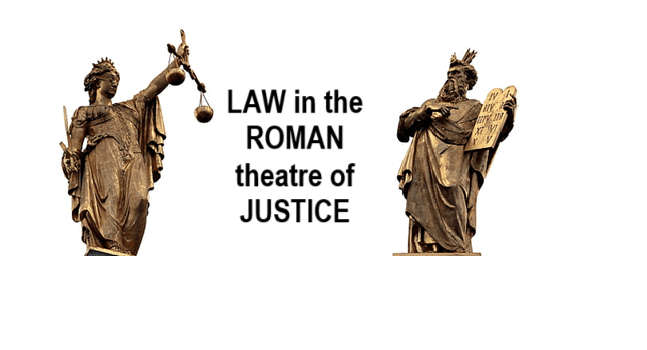
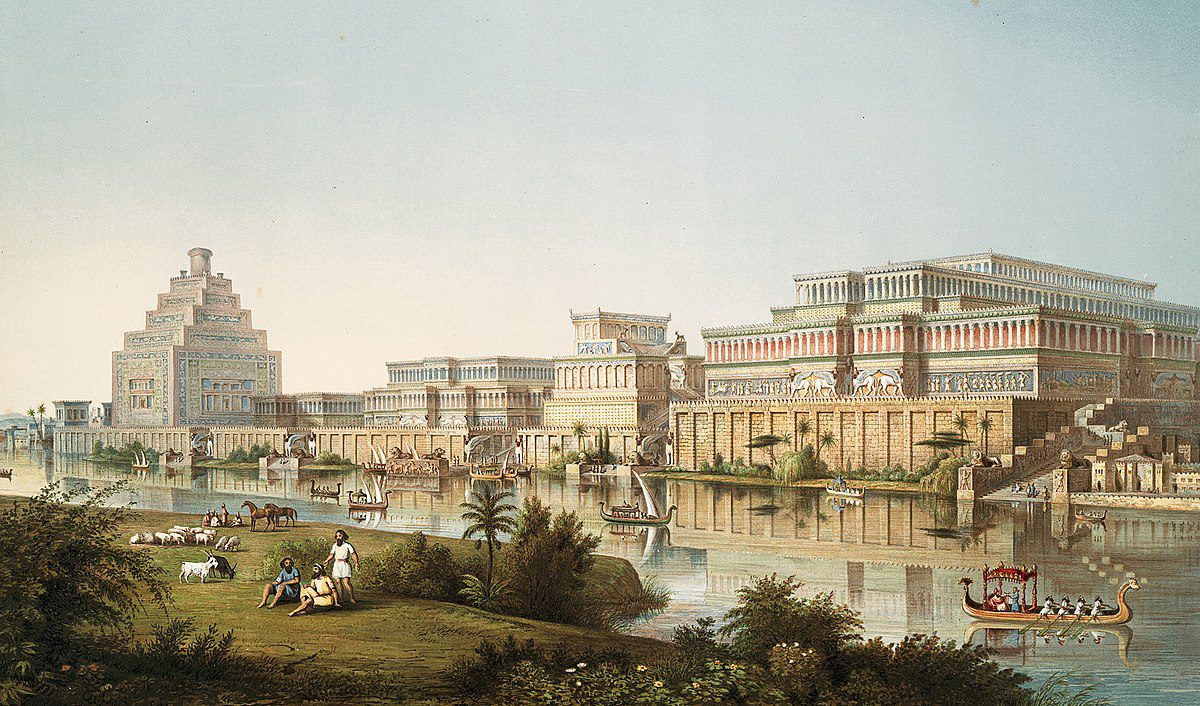
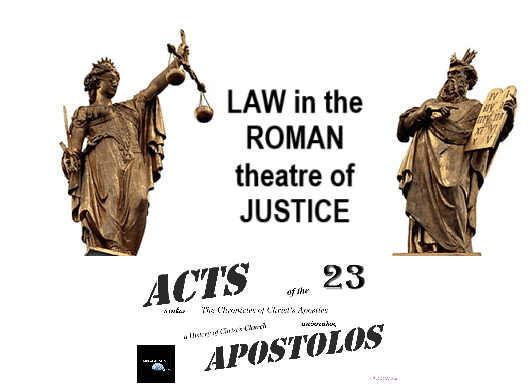
    Justina Roman goddess pictured "LAW in the Roman theatre of JUSTICE

    Roman Law

    In today’s setting of Acts of the Apostles it’s important for us to remember that in Jerusalem – Judean LAW (it isn’t even fully JEWISH LAW applicable in other Roman Provicences (or States by contemporary comparison) – as administered by the Sanhedron separate of the Roman Governor, a minor appointed Proconsul accountable to the Emporor.

    This jurisdictional oversight – similar to that when Pontius Pilate tried to pass the political hot potato of the King of the Jews back and forth to Herod or the Jewish leaders of Jerusalem – is little different when just a few years later Paul retuns to Jerusalem to face JUSTICE redefined in various venues.

    Jews demanding JUSTICE

    The Apostle of Jesus sent to the Gentiles (Greeks) has just returned home.

    After his witness to the Jews (in Hebrew) of being sent by Jesus (who had been crucified) on the road to Damascus) AND being sent to the Gentiles — (this had been 20 years ago, back in A.D. 37) — once again, Paul proclaims Christ risen!

    The adjitated jewish crowd was about to stone him, just as when he himself had witnessed the execution of Stephen.

    “Is it lawful for you to flog a man who is a Roman citizen and uncondemned?”

    When the centurion heard this, he went to the tribune..

    Acts of the Apostles 22:25b-26a ESV

    There he's done it! 

    Paul initiates a whole chain-of-events triggering the chain-of-command in Roman oversight and justice.

    But on the next day, desiring to know the real reason why he was being accused by the Jews, he [the Tribune in charge of the Centurians] unbound him and commanded the chief priests and all the council to meet, and he brought Paul down and set him before them.

    Acts 22:30 ESV

    This JEWISH council — about seventy leading men, SUMMONED to apprear before the ROMAN Tribune and his COURT of Roman justice in Jerusalem — are NOT in charge of the proceedings. 

    Acts 23:

    And looking intently at the council, Paul said, “Brothers, I have lived my life before God in all good conscience up to this day.”

    Remember: Although the courtroom is that of the Jews, Paul — the DEFENDENT — faces them as his PROSECUTOR (not his judge).

    And the high priest Ananias commanded those who stood by him to strike him on the mouth.

    “God is going to strike you, you whitewashed wall!

    Are you sitting to judge me according to the law, and yet contrary to the law you order me to be struck?”

    Some savvy oral arguments take place (as is common in court). Paul seeks to divide the jury of his accusers:

    “.. It is with respect to the hope and the resurrection of the dead that I am on trial.”

    It worked. One of his fellow Pharisees stands in his defense,

    “We find nothing wrong in this man.

    What if a spirit or an angel spoke to him?”

    The dissension (between the two parties of the Pharisees and Sadducees)became violent.

    Now the Jews of this local lower court — to which the rules of the Pax Romana defer — sound more like a lynch mob than a place of justice AND (let’s not forget) Paulos is a ROMAN CITIZEN.


    And as a great dissension was developing, because the commander was afraid Paul would be torn to pieces by them, he ordered the troops to go down and take him away from them by force, and bring him into the barracks.

    Acts 23:10 LSB

    Conspiracy against Christ and His Apostle

    The world will often witness an unexplainable boldness in a certain saint of God is seemingly insurmountable circumstances. (This had happened with the Apostle time and time again during his ten-plus years of travel among the gentiles and Greeks.)

    The night before his highly anticipated public trial in Jerusalem the Apostle of Christ Jesus again received supernatural instruction.

    But on that very night, the Lord stood at his side and said,

    “Take courage; for as you have solemnly borne witness to My cause at Jerusalem, so you must bear witness at Rome also.”

    Acts 23:11 LSB

    Imagine — the Lord Jesus Christ, who had been crucified twenty-seven years ago —  the same risen Lord who had appeared in a vision of great glory twenty years ago —  stands beside the Apostle and now sends him to Rome!

    So of course, Paul is emboldened when he is brought to trial before the Roman court the next day.

    Meanwhile, more than forty of the jews made a plot to murder Paul (outside of the jurisdiction of the Roman authorities).

    They went to the chief priests and elders and said,

    “We have strictly bound ourselves by an oath to taste no food till we have killed Paul. Now therefore you, along with the council, give notice to the tribune to bring him down to you, as though you were going to determine his case more exactly. And we are ready to kill him before he comes near.”


    The Plot Thickens
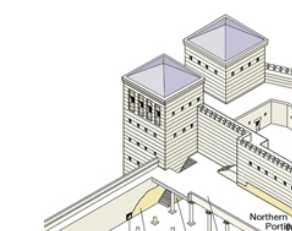
    steps from Antonia Fortress to roofs of Temple porticos

    Paul’s jewish nephew hears of the plot of these forty men, so the young man heads to the Roman fortress to try to warn Paul.

    Paulos —  the Roman citizen held in protective custody after the big hubbub of the jewish crowds —  instructs his guards to go to the man in charge.

    Paul called one of the centurions and said,

    “Take this young man to the tribune, for he has something to tell him.”

    Acts 23:17 ESV

    The tribune [Claudius Lysias] took him by the hand, and going aside asked him privately, “What is it that you have to tell me?”

    Note the gentleness of this tribune, Claudius Lysias - a man in charge of the centurions of Antonia Fortress as he seeks to get to the truth of the matter. 

    The young son of Paul’s sister responds:

    “The Jews have agreed to ask you to bring Paul down to the council tomorrow, as though they were going to inquire somewhat more closely about him.

    But do not be persuaded by them, for more than forty of their men are lying in ambush for him, who have bound themselves by an oath neither to eat nor drink till they have killed him. And now they are ready, waiting for your consent.”

    Acs 23:21b-22 ESV

    “Tell no one that you have informed me of these things.”


    An Imposed Authority of Roman Justice

    “Get ready two hundred soldiers, with seventy horsemen and two hundred spearmen to go as far as Caesarea at the third hour of the night.[9 pm]

    Caesarea! a model of Roman incursion into all the world of the Mediterranean - a key port for Romans, a city where Cornelius, Philip, Peter, Paul and others brought the gospel
    Caesarea – (Caesar’s Palace in Judea

    Also provide mounts for Paul to ride and bring him safely to Felix the governor.”

    This military escort of a Roman citizen Paulos is most unlike the handling of Jesus the king of the Jews sent to the Pontius Pilate, governor of that time, (who happened to be in Jeruslem rather than Caesarea). 

    Official Orders sent with Paul

    “Claudius Lysias,

    to his Excellency the governor Felix,

    greetings.

    This man was seized by the Jews and was about to be killed by them when I came upon them with the soldiers and rescued him, having learned that he was a Roman citizen. And desiring to know the charge for which they were accusing him, I brought him down to their council. And desiring to know the charge for which they were accusing him, I brought him down to their council. And when it was disclosed to me that there would be a plot against the man, I sent him to you at once, ordering his accusers also to state before you what they have against him.”

    Acts 23:26-30 ESV

    You might call this 'the official COURT record.' 

    Of course —  ALL follow orders and the next scene with, with Roman effeciency, take place in Caesarea.

    Marcus Antonius Felix

    Antonius Felix, served as the Roman procurator of Judea from ~AD 52-58. He was appointed by the Emperor Claudius and was known for his harsh and often corrupt administration. Felix was a freedman of Claudius' mother, Antonia. - source: BibleHub 

    When they had come to Caesarea and delivered the letter to the governor, they presented Paul also before him.

    The Governor inquires about jurisdiction – that is, in effect – Am I the appropriate judge of this case?

    And when he learned that he [Paulos] was from Cilicia, he said, “I will give you a hearing when your accusers arrive.” And he [Antonius Felix] commanded him [the Centurian in charge of Paul’s escort] to be guarded in Herod’s praetorium [there in Caesarea].

    Acts of the Apostles 23:35 ESV [with names of prepositions]

    Justice – a Case to be continued


    Talk of JESUS . com

    Comment on Scripture – Share the Gospel
  • How Dare You Defer Discipline 1 Corinthians 6

    How Dare You Defer Discipline 1 Corinthians 6

    Church discipline continues to be the focus of the Apostle’s letter.

    Previously Paul spoke of Judgment between Christ and Satan, but by discipline the Apostle does not mean judgement of Corinthians who do not identify with Christ Jesus. So now Paul INSISTS that the Corinthians judge a fellow church member in this case of moral sin.

    Church Discipline in Moral matters

    Dare G5111 any of you, having a matter against another, go to law before the unjust and not before the saints?

    1 Corinthians 6:1 King James Version – Paul’s challenge to judge our fellow believers rather than defer any matter of church discipline to a civil court.

    common era justice mediated as a discipline of civil law discipline deferred to comprise - arbitration hearing

    Strong language from the writ of Judgment by Christ’s Apostle to the gentiles!

    But note Paul’s comparison of the civil court – (Roman law for Corinthians, even as civil common pleas law is practiced in the US and by other Common Era courts).

    The Apostle directs the Corinthians to remain within the jurisdiction of God’s Law indicting common justice as law before the unjust .

    τολμάω - From tolma (boldness, probably itself from the base of τέλος (G5056) through the idea of extreme conduct)

    Paul applies his authoritative instruction of church discipline to what he has just stated.

    It isn’t my responsibility to judge outsiders, but it certainly is your responsibility to judge those inside the church who are sinning.

    Paul’s First Letter to the Corinthians 5:12 New Living Translation

    Clear instruction to the church! Yet how many Common Era christian churches will obey God's word in this?

    God will judge those outside. “Expel the wicked person from among you.” 1 Corinthians 5:13 NIV


    κρίνωkrinō  – go to Law

    The Apostle presents a case to the Corinthian Church supporting his judgement that THEY should judge their own members and therefore become accountable to the Lord God rather than the civil courts.

    * krinō is a case study in itself in the context of the Gospel and how Jesus Christ instructed disciples and saints to use judgement and discernment differently than the world. Study its linked definitions and see what I mean. God-willing, I may return to it.

    1 Corinthians 6:

    ‘HOW DARE YOU!’ or ‘Dare any of you,’ say some more authoritative English translations.

    Now the Apostle will introduce his gentle case to the saints of the Corinthian Church.

    Don’t you realize that someday we believers will judge the world? – Paul’s first letter to the Corinthians 6:2a NLT

    'But wait!' Paul might quickly follow. 'Not yet and here's why:'

    And since you are going to judge the world, can’t you decide even these little things among yourselves? – 1 Corinthians 6:2b NLT


    Let's glance at a perhaps more palatable explanation from the International Children’s Bible *additional link to the NIRV

    You should be ashamed! Why do you not let God’s people decide who is right? 2 Surely you know that God’s people will judge the world. So if you are to judge the world, then surely you are able to judge small things as well. 3 You know that in the future we will judge angels. So surely we can judge things in this life.

    4 So if you have disagreements that must be judged, why do you take them to those who are not part of the church? They mean nothing to the church. 5 I say this to shame you.

    a Plea for Church Discipline

    Surely there is someone among you wise enough to judge a complaint between two brothers in Christ.

    6 But now one brother goes to court against another brother. And you let men who are not believers judge their case!


    But instead, one brother takes another to court—and this in front of unbelievers!

    1 Corinthians 6:6 NIV

    It is actually reported that there is sexual immorality among you, and of a kind that even pagans do not tolerate: A man is sleeping with his father’s wife.

    1 Corinthians 5:1 NIV

    Spoiled Fruit of deferred Church Discipline

    Will a pagan court, a jury of those condoning and practicing such fornication (porneia) not equate Christ’s saints to common practices of those who worship their self-gratifying gods of the flesh?


    7 When you take another believer to court, you have lost the battle already. Why not be treated wrongly? Why not be cheated?


    The Apostle asks: Are you NOT willing to suffer injustice by the hand of a fellow saint as witness of Jesus' love?

    8 Instead, you yourselves cheat and do wrong.

    'Christians,' they say, 'they're not so saintly, but openly sinful, just like us.'

    And you do it to your brothers and sisters.

    Who has died to the flesh?

    9 Don’t you know that people who do wrong will not receive God’s kingdom? Don’t be fooled…

    • 11.. You were made holy.
    • You were made right with God.
    • All of this was done in the name of the Lord Jesus Christ.
    • It was also done by the Spirit of our God.
    Paul lists additional sins to this single case of one man of the Corinthian Church.
    • (9) Those who commit sexual sins will not receive the kingdom.
    • Neither will those who worship statues of gods
    • or commit adultery.
    • Neither will men who sleep with other men.
    • 10 Neither will thieves
    • or those who always want more and more.
    • Neither will those who are often drunk
    • or tell lies
    • or cheat.

    • People who live like that will not receive God’s kingdom.

    11 Some of you used to do those things. But your sins were washed away.


    Discipline and discernment – Growing up in Christ

    Later in his letter Paul will instruct the Corinthian saints:

    When I was a child, I talked like a child,

    I thought like a child,

    I reasoned like a child.

    When I became a man, I put the ways of childhood behind me.

    1 Corinthians 13:11 NIV


    Continuing once more, beloved saints young or mature, from the International Children's Bible
    • 6:12 “I am allowed to do all things.”
      • But not all things are good for me to do.
    • “I am allowed to do all things.” [“I have the right to do anything.”]
      • But I must not do those things that will make me their slave.
        • [But I will not be controlled by anything.]
    • 13 “Food is for the stomach, and the stomach for food.”
      • Yes. But God [theos] will destroy them both.
    • The body is not for sexual immorality [fornication, G4202].
      • The body is for the Lord [kyrios] , and the Lord is for the body.

    Flee fornication. G4202 Every sin that a man doeth is without the body; but he that committeth fornication sinneth against his own body.

    1 Corinthians 7:2 King James Version *G4202 – porneia

    Paul will add to this application for the saints of the Corinthian Church:

    Nevertheless, to avoid fornication, G4202 let every man have his own wife, and let every woman have her own husband.

    Paul’s first letter to the Corinthians 7:2 KJV

    God raised the Lord Jesus

    By God’s power God raised the Lord Jesus from death.

    And God will also raise us from death.

    1 Corinthians 6:14 International Children’s Bible

    15 Surely you know that your bodies are parts of Christ himself.

    So I must never take parts of Christ and join them to a prostitute! 16 It is written in the Scriptures,

    “The two people will become one body.”[Genesis 2:24]

    Spoiled Fruit goes to Law

    Paul will next include more delicate matters concerning sexual behavior between men and women, but first the Apostle appeals to the church as members of a holy body, the Temple of God – ONE SPIRIT WITH THE LORD JESUS CHRIST.

    But he that is joined unto the Lord is one spirit.

    1 Corinthians 6:17 KJV

    Once more, from the International Children's Bible

    So run away from sexual immorality. Every other sin that a person does is outside the body.

    But those who are sexually immoral sin against their own bodies.

    19 You should know that your body is a temple for the Holy Spirit. The Holy Spirit is in you. You have received the Holy Spirit from God. You do not own yourselves.

    20 You were bought by God for a price. So honor God with your bodies.


    NEXT: Married Life of the saints in Christ

    Comment on Scripture – Share the Gospel

  • RIOTING TODAY! – Testimony from many stakeholders

    RIOTING TODAY! – Testimony from many stakeholders

    RIOT TODAY IN EPHESUS!

    READ all about it.

    The NEWS headline could have been from TODAY! But first we return to this riot mentioned in our last edition and Luke’s account of Acts 19.

    Now when they heard this, they were full of wrath and cried out, saying,
    “Great is Diana of the Ephesians!”

    The city was filled with the uproar, and the crowd rushed to the theater together, dragging with them Gaius and Aristarchus, the Macedonians who were Paul’s traveling companions.

    Acts of the Apostles 19:29 New English Translation

    Some accounts begin: So the whole city was filled with confusion, while other accounts of the incident refer to this riot simply as an uproar.

    And for the testimony of our trial later note its participants: the CROWD (who all rushed to the theater together) and two outsiders from Macedonia (Gaius and Aristarchus).

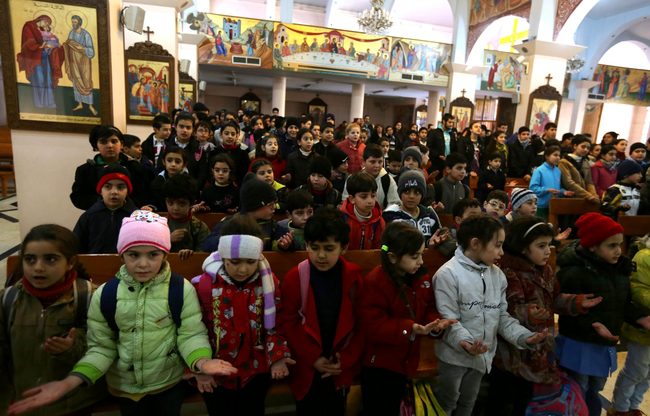
    A picture shows the scene after an explosive device exploded in a taxi in Syria's town of Azaz in the rebel-controlled northern countryside of Syria's Aleppo province near the border with Turkey, on January 13. -/AFP VIA GETTY IMAGES
    Syria War Refugees

    This ‘trial‘ of these outside agitators in the public stadium (think of it as the social media outlets of the day) should solve the town’s local political problem.

    These free-speaking men (shouting down the acts of these disciples of Jesus) stormed the Roman court with two Macedonians they had already convicted by majority mob rule.

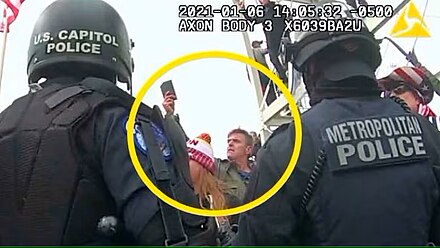
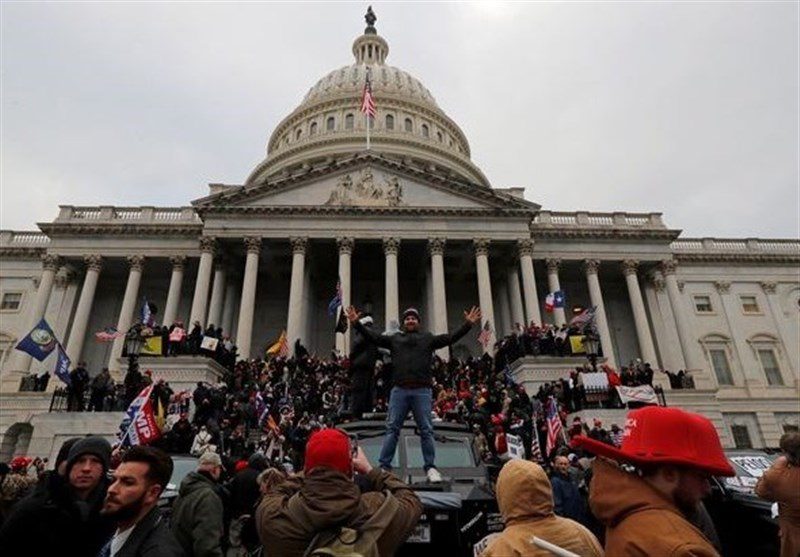
    u s capitol under siege Jan 6 2021
    U.S. Capitol under siege JANUARY 6, 2021
    READ some earlier accounts of recent events leading up to the riot (the A.D. 1st c. riot in Ephesus, that is). AND note the outsiders who come and go with Paul.
    • 23 .. Paul left and went through the region of Galatia and Phrygia, strengthening all the disciples.
    • 24 Now a Jew named Apollos, a native of Alexandria, arrived in Ephesus..
    • 26 ..Priscilla and Aquila (having arrived ahead of Paul) heard him..
    • 27  [Apollos leaves Ephesus to] cross over to Achaia..

    ACTS 19:

    and when Paul placed his hands on them, the Holy Spirit came upon them, and they began to speak in tongues and to prophesy. (Now there were about twelve men in all.)

    So Paul entered the synagogue and spoke out fearlessly for three months, addressing and convincing them about the kingdom of God.

    Acts of the Apostles 19:6-8 NET
    • 9 .. he left them and took the disciples with him, addressing them every day in the lecture hall of Tyrannus. This went on for two years..
      • * NOTE that the events leading up to this riot went back more than two years.
    • .. so that all who lived in the province of Asia [of which Ephesus is its Roman political capital], both Jews and Greeks, heard the word of the Lord.
    • 14 (Now seven sons of a man named Sceva, a Jewish high priest, were doing this.)
    • 17 This became known to all who lived in Ephesus, both Jews and Greeks; fear came over them all, and the name of the Lord Jesus was praised.
    • 18 Many of those who had believed came forward, confessing and making their deeds known.
      • 19 Large numbers of those who had practiced magic collected their books and burned them Inup in the presence of everyone. When the value of the books was added up, it was found to total fifty thousand silver coins.
    • [Paul] .. after sending two of his assistants, Timothy and Erastus, to Macedonia, he himself stayed on for a while in the province of Asia [and presumably in its capital Ephesus for the most part].

    Inciting the riot of the day

    THIS all leads up to what Luke describes as ‘NO SMALL DISTURBANCE’ concerning ‘the WAY’ or disciples (all followers) of the Lord Jesus Christ.

    We have heard of these incidents before.

    Thessalonica & Berea in Macedonia 

    But the Jews, becoming jealous, taking along some wicked men from the marketplace, and forming a mob, set the city in an uproar.. they began dragging Jason and some brothers before the city authorities, shouting,

    “These men who have upset the world have come here also.. And they disturbed the crowd and the city authorities who heard these things.

    Acts of the Apostles 17:5a,6b,8

    But when the Jews of Thessalonica found out that the word of God had been proclaimed by Paul in Berea also, they came there as well, shaking up and disturbing G5015 the crowds.

    Acts 17:13 LSB

    Trial of the ACTS 19 Riots in Ephesus

    And the city was filled with the confusion, and they rushed with one accord into the theater, dragging along Gaius and Aristarchus, Paul’s traveling companions from Macedonia.

    And when Paul wanted to go into the [people of the] assembly, the disciples would not let him. Also some of the [*] Asiarchs who were friends of his sent to him and repeatedly urged him not to venture into the theater.

    * These are Political or religious officials of the province of Asia, likely some Roman and others Jewish converts of The Way.

    32 So then, some were shouting one thing and some another, for the [*] meeting was in confusion..

    * Some Bibles translate this gathering of citizens as 'assembly,' from a word familiar to many Christians:  ekklēsia
    

    .. and the majority did not know for what reason they had come together.


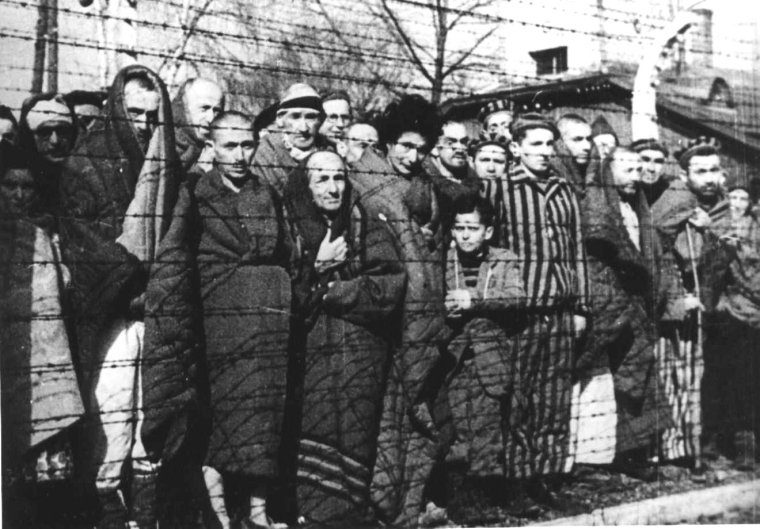
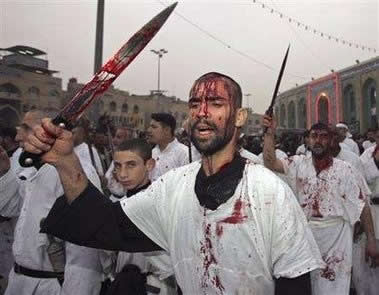
    Centuries of riots and wars, refugees and massacres


    But when they recognized that he was a Jew, a single cry arose from them all as they shouted for about two hours..

    Acts of the Apostles 19:34a – at the riot in Ephesus

    Undeniable Facts

    35 Now after calming the crowd, the city clerk said..

    ‘So, since these are undeniable facts, you ought to keep calm and to do nothing rash. For you have brought these men here who are neither robbers of temples nor blasphemers of our goddess.’

    “So then, if [your leader and you] have a complaint against anyone, the courts are in session and proconsuls are available; let them bring charges against one another. But if you want anything beyond this, it shall be settled in the [scheduled] lawful meeting.

    Sometimes riots END as quickly as they begin IF sensible leadership prevails over the CROWDS incited by hatred into a frenzy of lawlessness and sin. (Of course at other times sin simmers beneath the surface until it erupts into something worse -- even war.

    “For indeed we are in danger of being accused of a riot [stasis] in connection with today’s events, since there is no cause for which we can give as an account for this disorderly gathering.”

    Acts of the Apostles 19:40 LSB

    And when he had said these things, he dismissed the assembly.

    After the uproar ceased, Paul sent for the disciples, and after encouraging them, he said farewell and departed for Macedonia.

    Acts of the Apostles 19:41-20:1 ESV

    στάσις – stasis – From the base of ἵστημι (G2476)

    The KJV translates Strong’s G4714 in the following manner: sedition (3x), dissension (3x), insurrection (1x), uproar (1x), standing (1x).

    Eleven (11) other versions of the Bible translate this simply as a riot.

    Contemporary applications to this lesson from first century Ephesus — in a Greek culture accommodating Jews and other religions under a heavy hand of a pagan Roman Empire and its governors with the power to judge and execute whom they will — consider one further application from the Greek root of this word:

    A word of warning from Scripture received by the Apostle John a few years later near the end of the first century.

    Then I saw the dead, the great and the small, standing G2476 before the throne, and books were opened; and another book was opened, which is the book of life. And the dead were judged from the things which were written in the books, according to their deeds.

    Revelation of Jesus Christ to John 20:12 LSB


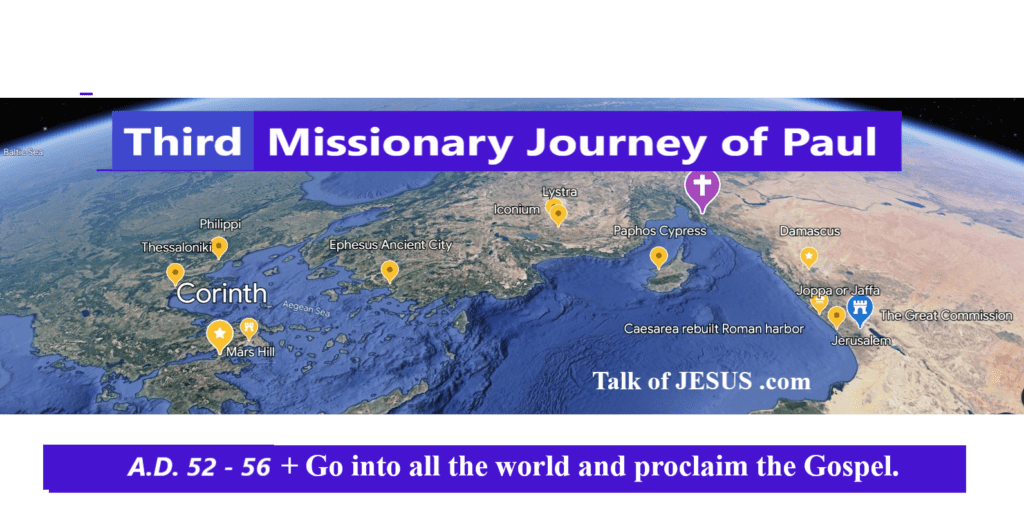
    ACTS of the Apostles – The Third Missionary Journey of Paul —

    To Be Continued… in Macedonia, God-willing…