Tag: death
-

Death, Judgment and Resurrection in light of your own
For he has set a day when he will judge the world with justice by the man he has appointed. He has given proof of this to everyone by raising him from the dead.”
Acts of the Apostles 17:31 NIV – the Apostle Paul to the men of Athens at Mars HillThe Good News of Death!
The Apostle Paul has just proclaimed Jesus Christ to a LARGE PUBLIC gathering of Greeks in Athens as an unknown god.
.. but now he commands all people everywhere to repent – Acts 17:30 ESV Had this been the 20th century you might have expected an altar call at Mars Hill as public witness of the Apostle’s anointed mission. But that’s not what he did.
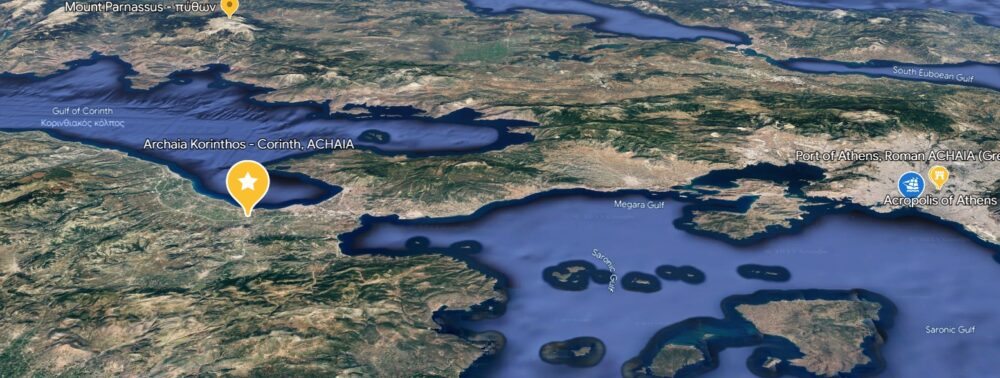
In fact, Paul left town and headed for a new province of Achia and the larger city of Corinth (for Athens was now but a rebuilt remnant of its former ancient glory).
Acts 17:
- 16b his spirit was provoked within him as he saw that the city was full of idols.
- 17 So he reasoned in the synagogue with the Jews and the devout persons,
- and in the marketplace every day with those who happened to be there.
Just like in most cities and towns the Apostle has already engaged various groups of listeners in the good news of Jesus’ resurrection.
“He seems to be a preacher of foreign divinities”—because he was preaching Jesus and the resurrection.
And they took him and brought him to the Areopagus [Mars Hill], saying,
“May we know what this new teaching is that you are presenting?
Acts of the Apostles 17:18b-19 ESVAND as often happens, once Paul proclaims Christ at the risen Son of the Living God the Apostle’s preaching this Good News to the intelligentsia of Athens yields mixed results. The truth of the Gospel sows more seeds of controversy into the hearts of sinners who must confront our own mortality, death and judgment.
Now when they heard of the resurrection of the dead, some mocked.
But others said, “We will hear you again about this.”
Acts 17:32 ESVResurrection
What else could Paul have said?
The philosophers among the learned men of Athens had already chosen sides in their entrenched idolatries of self. These men suggesting a willingness to hear more from Paul only sought to use this preacher of foreign gods to support their own unending philosophical debates.
The Apostle must have also wondered if the Jews of Athens might soon provoke discord in the crowds as had happened recently as the Paul and Silas had fled Thessalonica then Berea?
(Many of the Jews did not believe in resurrection or apply the prophesies of their own Scriptures to the leaven of culture in their daily 'better-than-thou' lives.)
To the Jew who does NOT believe in resurrection death is the end of life — the end of a brief mortal time God gives to Jews and Gentiles alike. DEATH may come as a penalty of righteous men to put an END to the unrighteous. But even the righteous will expire once the LORD has blessed their mortal days.
The pagan Greeks and pagan Romans, however, worshipped idols of their own making and mythology, molded by the manifold desires of their creatively sinful flesh and guiltless justification of their wicked minds.
The GREEK and ROMAN gods were DEAD monuments of STONE with no authority over the living worshipers of the temples who willfully indulgenced in wickedness.
So Paul went out from their midst.
But some men joined him and believed, among whom also were Dionysius the Areopagite and a woman named Damaris and others with them.
Acts 17:33-34 ESV
18:1 Μετὰ δὲ ταῦτα χωρισθεὶς ὁ Παῦλος ἐκ τῶν Ἀθηνῶν ἦλθεν εἰς Κόρινθον
After these things he departed Athens and went to Corinth.
Acts 18:1 LSB
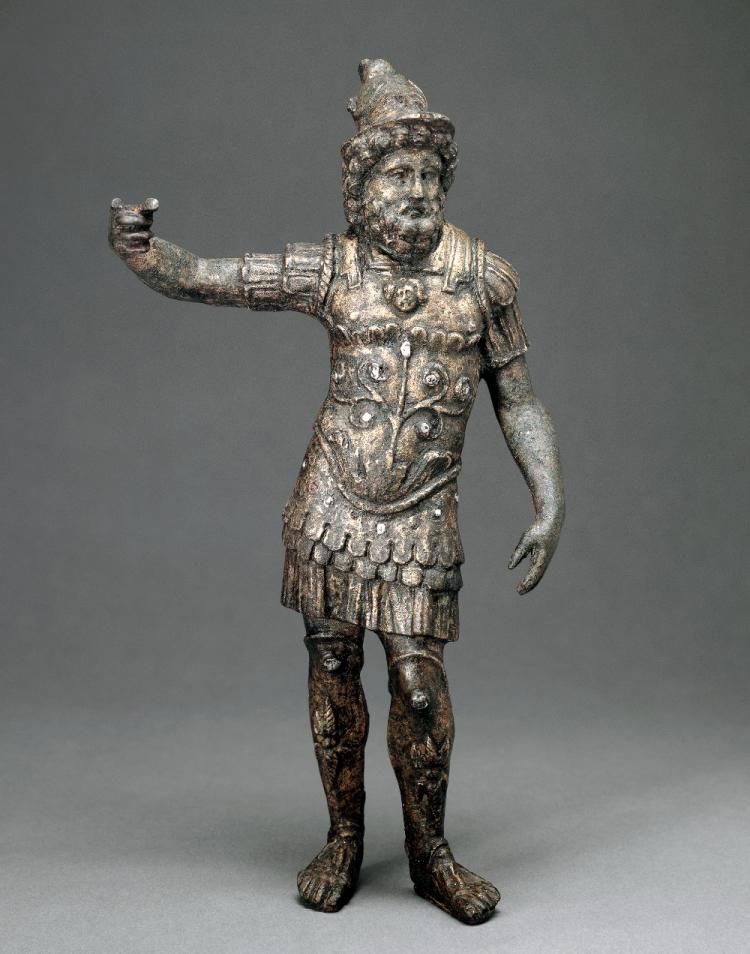
It seems rather ridiculous to look upon a copper Mars (Ares) or stone statue of Athena as gods mortal men should worship. [v. 29]
Paul points out that the Living God does not live in temples. [vs. 24-25]
The Living God made man — men and women of every place and nation; therefore we ought to see ourselves as sons and daughters of God. [vs. 26-28]
(God knows that you didn’t know better — that is, before now) v.30a
but NOW God COMMANDS you to REPENT!
Paul did not side with the Stoics.
At Tarsus, Paul certainly had opportunities for hearing Stoic lectures on philosophy. .. Although not a Stoic technical term, syneidēsis, which Paul used as “conscience,” was generally employed by Stoic philosophers. In 1 Corinthians 13 and in the report of Paul’s speech at Athens (Acts 17), there is much that is Hellenistic, more than a little tinged by Stoic elements—e.g., the arguments concerning the natural belief in God and the belief that human existence is in God.
Britannica – excerpt on Roman StoicismNeither did the Apostle side with the Epicureans.
As part of his Physics, Epicurus’s psychology held that the soul must be a body…
“The gods are not to be feared. Death is not a thing that one must fear. Good is easy to obtain. Evil is easy to tolerate.”
BritannicaAnd as we know well from his persecution by the Jews, Paul’s Gospel was not seen as good news to many Jews to whom the Apostle to the gentiles generally sought to convince first in a new town that Jesus is the Messiah or Christ predicted by Scripture.
The JEWS know God’s LAW and read the Prophets who warned them in the past to REPENT.
NOW, the Apostle provides the same proof of the LORD’s COMMAND to Jew and Gentile alike.
Proof of Judgment (and the One to Judge)
The Apostle Paul has no reason to return to the centuries-extended debates of Greek philosophers or Jewish parties to traditions formed when God kept silent after speaking through His Prophets.
πίστις
Pistis – a word Paul uses here translated in the English Standard Version of the Bible as PROOF – provides an insight into his closing of a logical argument stated before his listeners in the areopagus.
The same Greek word is translated in the New Testament (King James Version) can also be translated as assurance or belief, even as fidelity; but beyond our limited English understanding most times [239x in KJV] pistis is translated as faith.
Our 21st century faith seems to lack assurance and proof, let along fidelity to the One God our Lord. Never-the-less, study from Strong's definition Lexicon :: Strong's G4102 - pistis the better understanding of Paul's audience of first century philosophers.
- conviction of the truth of anything, belief; in the NT of a conviction or belief respecting man’s relationship to God and divine things, generally with the included idea of trust and holy fervour born of faith and joined with it
- fidelity, faithfulness – A. the character of one who can be relied on
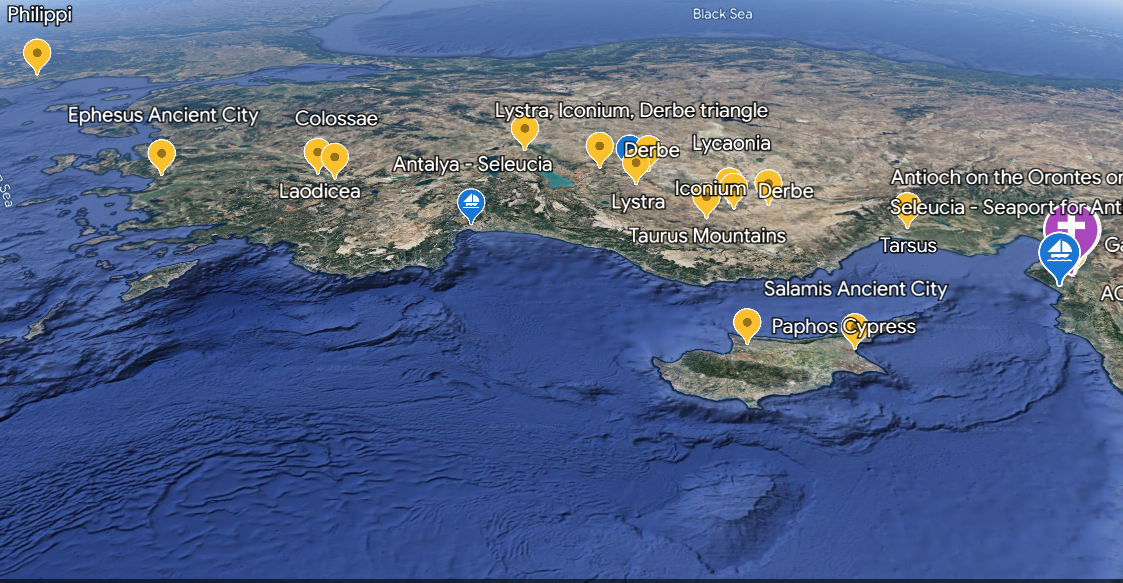
What had happened back in Lystra?
Acts 14:
And Paul, looking intently at him [a man lame from birth] and seeing that he had faith to be made well, 10 said in a loud voice, “Stand upright on your feet.” And he sprang up and began walking. 11 And when the crowds saw what Paul had done, they lifted up their voices, saying in Lycaonian, “The gods have come down to us in the likeness of men!”
19 But Jews came from Antioch and Iconium, and having persuaded the crowds, they stoned Paul and dragged him out of the city, supposing that he was dead.
This incident of PROOF had occurred on the Apostles' first missionary journey and Paul had returned to them on this current mission. Same word -- and just after this listen to how Paul uses it in witnessing the PROOF of the Gentiles receiving the Holy Spirit to the church.
27 And when they arrived [returned to the church in Antioch Syria] and gathered the church together, they declared all that God had done with them, and how he had opened a door of faith to the Gentiles.
Acts of the Apostles 14:27 ESV
πίστις – Lexicon :: Strong’s G4102 – pistis
- in the NT of a conviction or belief respecting man’s relationship to God and divine things
- relating to God
- the conviction that God exists and is the creator and ruler of all things, the provider and bestower of eternal salvation through Christ
- relating to Christ
- a strong and welcome conviction or belief that Jesus is the Messiah, through whom we obtain eternal salvation in the kingdom of God
NOW, Paul uses this same word [pistis] referring to Jesus Christ as PROOF even to the Greeks. And how is CHRIST PROOF?
In act and deed GOD has provided the PROOF by the resurrection of Jesus — an act of FAITH proven which NO MAN could do (who is not God). AND by this PROOF men must believe the command of GOD TO REPENT.
because He has fixed a day in which He will judge the world in righteousness through a Man whom He determined, having furnished proof to all by raising Him from the dead.”
Acts of the Apostles 17:31 LSB – from Paul’s speech at the areopagus in AthensNow when they heard of the resurrection of the dead..
God IS.
God excused your ignorance (as your philosophers sought to argue for or against the Him who created the heavens and the earth and all mankind.
God now commands all men to repent, for He as set a day to judge the world in righteousness. (Of course NO man is righteous, no not one.)
God appointed a righteous JUDGE to judge YOU and the world.
(NOT by condemning you to death which is inevitable for moral beings, but after YOU die! (No human EVER escapes DEATH! — that is, except the One Man anointed by God to JUDGE our faith in Him.)
PROOF TO ALL:
the RESURRECTION of Christ Jesus!
ἀνάστασις (anastasis) νεκρός (nekros)
Resurrection of the dead
Paul could have returned to Mars Hill to debate with philosophers who continuously look for a new argument about life, death, resurrection, God or gods and how we should live in some semblance of righteousness. Even twenty-one centuries later the debates of the philosophers still seek their own new truths.
Some will respond to the GOOD NEWS of God. MANY will continue the debate in unbelief.
The Apostle, therefore, journeys on to ACHAIA and Corinth where they will nurture and build yet another church for more than a year before Paul’s return to SYRIA.
ACTS of the Apostles [18] – To Be Continued… in Corinth
Comment on Scripture – Share the Gospel
-

He Leadeth me beside still waters – Psalm 23
He leadeth me beside the still waters.
He restoreth my soul:
Psalm 23 – a song of calm confidence
Many of us know it well. Perhaps we even recite the six verses of Psalm 23 even as I learned in the melodic flow of the King James Version of the Bible.
The LORD is my shepherd; I shall not want.
David’s focus introduces his encounters with death. Believers and unbelievers alike frequently hear his psalm in the context of a life already lain down in the stillness of death.
No more want then…
So why would today’s want worry me today?
Yea, though I walk through the valley of the shadow of death,
I will fear no evil:
Questions from fear
These are the words of Psalm 23 we know so well, yet in our DOUBT we do fear the death casting a deep shadow upon our days ahead.
We walk quickly along in our quickened last days of a mortal life spent yet not finished, an ending of struggle along a ledge between Light and complete darkness.
- Have I missed the table which the LORD hath prepared for me?
- Hath the LORD anointed me with prosperity?
- Doth the LORD overfill my cup with abundance?
Goodness and Mercy?
Surely goodness and mercy seem NOT to have followed me in these last days of my mortal life!
Certainly the LORD did bless King David all the days of his life, BUT what is missing in mine?
I walk in the shadow looking to my end in the valley, yet David seemed rested even before those somber last words:
May he rest in peace.
- WHAT have I missed that David seems to sing in this 23rd Psalm?
- REST and PEACE along this treacherous path toward the VALLEY of the SHADOW of DEATH.
He Leadeth Me
The reaffirming metaphor of the still waters assumes the still waters assumes the same role as that of the green pastures. Just as the grass of the green pastures is deep enoughto lie in, so also we must understand that still waters rund deem. Any deep experience with the Shephers can only be accomplished by time spent with the Shepherd, as the words lie down indicate.
King James Bible Commentary Psalm 23, p534In addition to my memory of Psalm 23 in the King James, a 19th century hymn sung frequently by our local church encourages believers both corporately and individually.
Many may sing He Leadeth Me from the shadowed hillsides of our own valleys.
“He leadeth me, he leadeth me, for by his hand he leadeth me..
He Leadeth Me from Psalm 23 YET in our DOUBT and FEAR, let us remember the place of peace by which we may have quickly passed in Psalm 23.
for Thou art with me
I cannot cross into the Light with you.
The lonely lament of this shepherd so accustomed to the place of darkness in many fields of so many sheep among wolves does not lift me.
David was a king 3000 years distant from my own walk in the fields of death’s fear. He does not comfort me and my most beloved ones cannot go to the place where I must go in a time unknown to any of us.
Yet David’s Psalm was not addressed to ME, but to the LORD as well as his own beating mortal heart.
The LORD is my shepherd; I shall not want.
יְהוָה רֹעִי לֹא אֶחְסָֽר׃
Yᵊhōvâ LORD rāʿâ my shepherd
תְהִלִּים (Psalm) 23:1
It is THE LORD who David asks to lead him.
And how?
By the LORD’s own actions this mortal shepherd will follow and obey the Shepherd of shepherds and the LORD of Lords.
We all like sheep have gone astray.
So ask Him: Where will He lead you?
Like me, you may have missed this:
He maketh, he leadeth, He restoreth, he leadeth
Do you see a tread of connection here in David’s Psalm?
He, THE LORD, leads — that is, IF we will humbly allow Him. BUT like sheep WE don’t particularly like to follow any lead other than our own.
AND we may have missed yet another comfort to David due to our own rebellion again the leadership of God (or anyone else, for that matter).
thy rod and thy staff they comfort me.
OUCH!
Authority? Bowing down humbly to the LORD because HE IS more powerful than YOU?
Yet in death as in life, we remain powerless.
THY ROD speaks more to our relationship as people of the Shepherd than to the power and authority capable of beating us into obedience (which is not like the Lord who called us).
His staff which pulled you into mortality will lead you into eternity.
Therefore David concludes his Psalm from the valley of the shadow of death with a first person assurance with the LORD.
Where is the house of the Lord?
Thou preparest a table before me in the presence of mine enemies:
Thank you Lord.
thou anointest my head with oil;
Thank you Lord.
my cup runneth over.
Thank you Lord.
Surely goodness and mercy shall follow me all the days of my life
David concludes with confidence of good in God’s mercy — why he trusts in the LORD and does not fear the evil of death — death before the Lord’s own appointed time. His confidence speaks forward to where he shall dwell once the LORD does raise him up from the valley of the shadow of death into the Light of the LORD’s own presence.
Where are YOUR still waters when you consider the valley of DEATH?
How do you envision this place beyond the deep waters and above the highest heavens of this temporal mortal place?
Who do you trust to lead you into the house of the LORD, forever?
Please SHARE your COMMENT or Questions about Psalm 23 AND Look for my Part 2 New Testament take on Christians humbly helping each other to navigate this shadowy path where sheep of the Lord should fear no evil.
Comment on Scripture – Share the Gospel