Tag: disciples

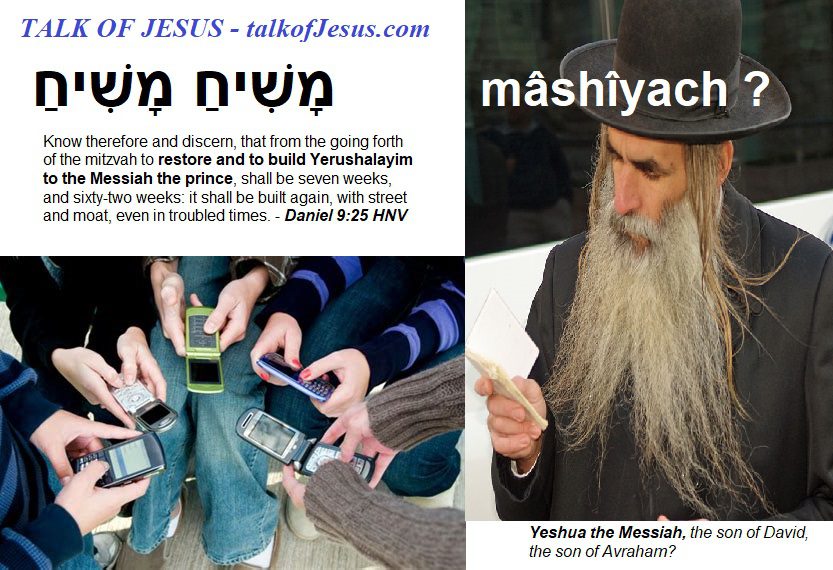
  • 12 Men Texting as their Messiah approaches – Part 1

    12 Men Texting as their Messiah approaches – Part 1

    If you could TEXT 12 men or women about Jesus Christ, would you? Do you SHARE the Good News of JESUS with a ‘christian’ friend or 12 men you know or dozens of men and women who have questions about the Gospel?

    Worship of the Son of God!

    You likely know the narratives of 21st century holidays such as Palm Sunday, Easter or even Passover [Pesach – פסח (in Hebrew)] all too well – perhaps too well to worship the Lord God in the context of a first century Jerusalem.

    A dear Jewish friend of ours, one of many since my wife is a Messianic Jew, commented just last week on the troubling events of these last days. He said something to the effect that it looks like it could be getting close to the time of the return of the Messiah.

    Perhaps our Jewish friend is right. Indeed, if you examine the context of the first coming of the Messiah Jesus you will see promise after His bodily resurrection of a return once more.

    Yet I ask you to consider in my agreement with our Jewish friend (a social jew just like many “christians” have become social christians) a deeper look into Scripture – Jewish Scripture. What you read here I offer based on what Christians call, the “Old Testament” or the ‘former Covenant.’

    The Former Covenant – בְּרִית

    How many Christians OR Jews truly value the solemn witness of Covenant with the LORD our God?

    Sadly, too few — and the LORD in these last days seems all-but forgotten in the hearts and lives of those ‘religious’ who claim covenant with the Lord our God. I trust that by your own study of my exposition of prophecy of the Messiah and especially all other Scripture (yes, christian, including the Old Covenant) you seek cleansing and redemption for your sins.
    Although ancient writings of the Talmud & Mishna, (in various translations), the Apocrypha (with 14 books Jewish in origin) and other extra-Biblical teaching may be enlightening, these do not stand up to Scripture alone, the inspired word of the Lord God.

    We might easily veer off course, sidetracked from the Lord’s application of Scripture in our own lives by even unintentional misdirection and misinterpretation by teachers of the past.

    In this brief look of connection between the Old Covenant and New we will look back to two brief passages from three chapters of Daniel.

    The New Covenant

    Our purpose here is focused only on the Sacrifice of the Son of Man – the Messiah of Israel – and not specifically the broken covenant compared to a new and better covenant. If the Spirit of the Lord draws you to further study the following translations of the book of Hebrews may help.

    Hebrews 9:

    Please note that you may LISTEN to three of these translations as well as READ it in Hebrew.

    Daniel 9:

    … I, Daniel, observed in the books the number of the years which was revealed as the word of the LORD to Jeremiah the prophet for the completion of the desolations of Jerusalem, namely, seventy years.

    24 …

    • to finish the transgression,
    • to make an end of sin,
    • to make atonement for iniquity,
    • to bring in everlasting righteousness,
    • to seal up vision and prophecy
    • and to anoint the most holy place.

    What mere mortal, what man even a priest of the Lord can do this with permanence?

    Only the Son of Man, the Holy One of Israel – the One Messiah Jesus!


    25 Know therefore and understand, that from the going forth of the commandment to restore and to build Jerusalem unto the Messiah the Prince…

    You with ears to hear, understand: Jerusalem does not surpass the Messiah the Prince of God our Father in importance. For by His Sacrifice worship of the LORD is sanctified and perfected in Jesus the Son of Man and Only Son of God.

    … It will be rebuilt with a plaza and a moat,
    but in difficult times.
    26 After those sixty-two weeks
    the Anointed One will be cut off
    and will have nothing.
    The people of the coming ruler
    will destroy the city and the sanctuary…

    Daniel 10: Vision of a Glorious One

    Better-learned men than me have studied Daniel’s vision of the Messiah and understood more, but even the Prophet Daniel confessed that he did not understand its full meaning.

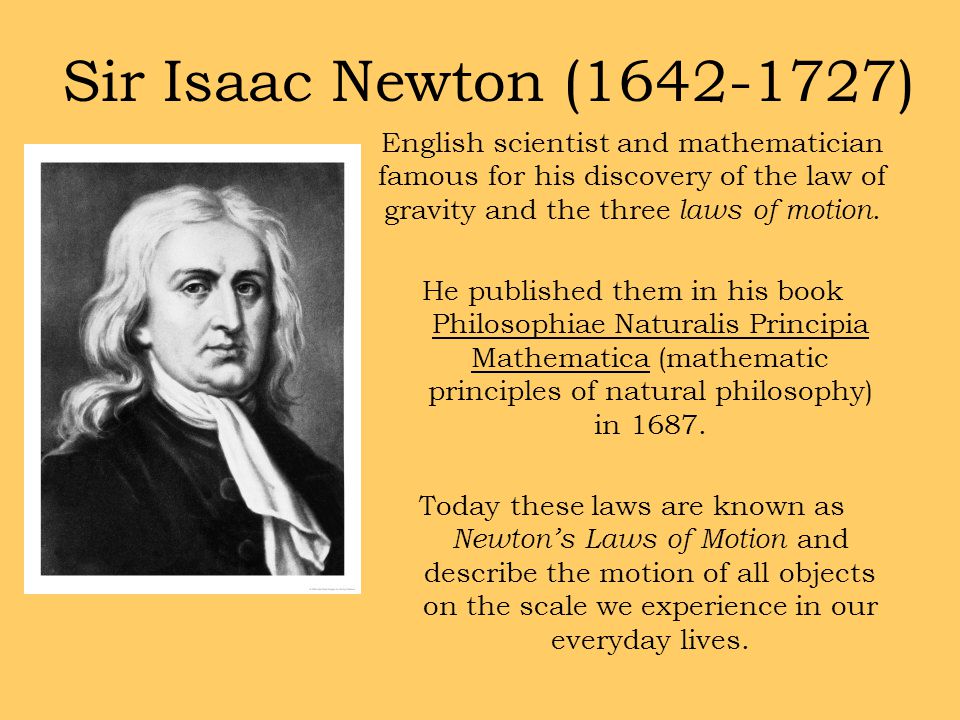
    I will add one additional look at Daniel after deferring to Sir Isaac Newton.

    On the Bible:


    “I have a fundamental belief in the Bible as the Word of God, written by men who were inspired. I study the Bible daily.”

    On atheism:
    “Atheism is so senseless.

    When I look at the solar system. I see the earth at the right distance from the sun to receive the proper amounts of heat and light. This did not happen by chance.”

    TEXT COMMENTARIES :: SIR ISAAC NEWTON – BluedLetterBible.org

    If you count in Judaic years commencing in autumn, and date the reckoning from the first autumn after Ezra’s coming to Jerusalem, when he put the King’s decree in execution; the death of Christ will fall on the year of the Julian Period 4747, Anno Domini 34; and the weeks will be Judaic weeks, ending with sabbatical years; and this I take to be the truth…
    Daniel 12:

    Many of those who sleep in the dust of the ground will awake, these to everlasting life, but the others to disgrace and everlasting contempt.

    Daniel 12:2 NASB

    7 Then I heard the man dressed in linen, who was above the water of the river. He raised both his hands toward heaven and swore by him who lives eternally that it would be for a time, times, and half a time.

    When the power of the holy people is shattered, all these things will be completed.

    8 I heard but did not understand…


    Whether texting 12 men and women OR simply sharing the Gospel in person you can bet that THEY do not understand either. Why not start your Christian Social Witness here?

    Comment on Scripture – Share the Gospel

    To be continued...
  • God’s Love Through John: Disciples

    “If anyone serves me, he must follow me. Where I am, there my servant also will be. If anyone serves me, the Father will honor him.

    John 12:26

    Preachers, Teachers & Disciples

    We’ve all seen them, the up and coming preachers who gain a public following. Of course appointed religious officials would like to be the superstars of their mega-temples in Jerusalem or cathedrals of later times, but this was not the style of Jesus or of his populist predecessor, John the Baptist.

    Some men have the gift of preaching a message to which others will respond and follow. As we pointed out in our previous post, John the Baptist was one such gifted preacher and like Jesus after him, he also had gained a following of disciples.

    How is a Disciple different from other hearers of preaching?

    To be clear, Jesus was not the only teacher or Rabbi with disciples, so let’s begin with a definition.

    μαθητής – mathētēs – a learner, pupil, disciple – from μανθάνω manthanō – to learn (in any way):—learn, understand.

    Certain followers of rabbis of the same school of teaching, as in the party of the Pharisees, were also called disciples. These disciples often were loyal to a particular teaching in a certain place, often Jerusalem. Popular Pharisees and popular Sadducees competed for prominent disciples with influence.

    Iterate teachers like Jesus or teachers in the wilderness like John also developed a following. Their crowds of disciples wanted to learn more about what they were preaching, but had to travel to a distant place to hear more teaching from this rabbi or prophet.

    The question of truth always goes to what are they preaching and why does their message connect to their followers?

    John’s Disciples

    John’s message is ‘repent and be baptized,’ but it is more than that. Note these references to the disciples of John, men who followed John the Baptist as he cried out to sinners to repent and be baptized. 

    John 1:

    “I baptize with water,” 

    “Someone stands among you, but you don’t know him. He is the one coming after me, whose sandal strap I’m not worthy to untie.”

    35 The next day, John was standing with two of his disciples. 36 When he saw Jesus passing by, he said, “Look, the Lamb of God!”

    37 The two disciples heard him say this and followed Jesus.

    What a pivotal moment it must have been in their lives! These two men were disciples of the brash baptist, John, the Prophet of the wilderness.

    And what had John witnessed to his disciples about Jesus?

    “Here is the Lamb of God, who takes away the sin of the world!

    30 This is the one I told you about:

    ‘After me comes a man who ranks ahead of me, because he existed before me.’

    31 I didn’t know him, but I came baptizing with water so he might be revealed to Israel.”

    He confessed, and did not deny, but confessed, “I am not the Christ.” – John 1:20 ESV

    Therefore, these two disciples of John the Baptist now turn to follow Jesus.

    Disciples of John follow the Messiah

    Where are you staying?
    38 When Jesus turned and noticed them following him, he asked them, “What are you looking for?”


    They said to him, “Rabbi” (which means “Teacher”), “where are you staying?”

    39 “Come and you’ll see,” he replied. So they went and saw where he was staying, and they stayed with him that day. It was about four in the afternoon.

    40 Andrew, Simon Peter’s brother, was one of the two who heard John and followed him. 

    Who was this unnamed disciple with Andrew who heard John and followed Jesus? No doubt, the young evangelist, John, who will also introduce his older brother to the Messiah of Israel.

    James and John, along with Andrew’s brother, Simon Peter, will become Jesus’ inner circle of Disciples.

    Disciples and Apostles

    A preacher or teacher may have many listeners who do not hear, but men like John the Baptist had followers or disciples. John’s message was more weighty than the politically correct preaching of any particular religious party (like the Pharisees), with the authority of the LORD in Scripture.

    Disciples are followers of a certain teacher, Rabbi or other preacher. Some now use the terms disciple and apostle interchangeably, but is there a difference?

    Preachers need an audience of listeners. Disciples may follow some teachers of Scripture or other philosophy, yet an apostle is different. The apostle is a man with a different function than merely following a teacher.

    Apostle

    ἀπόστολος – apostolos – a delegate, messenger, one sent forth with orders; specifically applied to the twelve apostles of Christ, in a broader sense applied to other eminent Christian teachers, i.e. of Barnabas, of Timothy and Silvanus. – from ἀποστέλλω – apostellō – to order (one) to go to a place appointed or to send away, dismiss.

    The Apostle John does not refer to himself as an Apostle in his Gospel or three letters, even though clearly he is sent by Jesus after His resurrection. John makes only a single reference in the words of Jesus at the time of their preparation for the Sacrifice of the Lamb of God for the atonement of Israel.

    Nearly three years after having been disciples of John the Baptist Jesus will send them out as Apostles. John witnesses a story of their mission pointing to his own love and humility learned from Jesus.

    The Meaning of Foot Washing

    John 13:

    12 When Jesus had washed their feet and put on his outer clothing, he reclined again and said to them, “Do you know what I have done for you? 13 You call me Teacher and Lord—and you are speaking rightly, since that is what I am. 14 So if I, your Lord and Teacher, have washed your feet, you also ought to wash one another’s feet. 15 For I have given you an example, that you also should do just as I have done for you.

    16 “Truly I tell you, a servant is not greater than his master, and a messenger is not greater than the one who sent him. 17 If you know these things, you are blessed if you do them.

    You may find the terminology of the King James Version helpful to understanding the root relationship between a master teacher and a follower sent out.

    Verily, verily, I say unto you, The servant is not greater than his lord; neither he that is sent greater than he that sent him.

    John 13:16 KJV

    Amen, amen,’ begins the Greek. The servant is δοῦλος doulos, the same word used for slave. (I know we have difficulty relating to this relationship.)

    The slave, therefore, says Jesus to His Disciples, is not greater than the lord (a term used for the master responsible for slaves). And ‘he that is sent,’ ἀπόστολος apostolos or apostle, is not greater than the one who sends (his lord who commands him with the message).

    John the Baptist did not send his own disciples to Jesus, but witnessed the Lord of all Authority.

    I have seen and testified that this is the Son of God.”

    John 1:34

    Early Disciples of The Twelve

    35 The next day, John was standing with two of his disciples. 36 When he saw Jesus passing by, he said, “Look, the Lamb of God!”

    John and Andrew, disciples of John the Baptist follow Jesus. They may not have been the only ones and other disciples no doubt followed Jesus later.

    Their brothers, Peter and James then follow.

    41 He [Andrew] first found his own brother Simon and told him, “We have found the Messiah” (which is translated “the Christ”), 42 and he brought Simon to Jesus.

    When Jesus saw him, he said, “You are Simon, son of John. You will be called Cephas” (which is translated “Peter”).

    43 The next day Jesus decided to leave for Galilee. He found Philip and told him, “Follow me.”
    Galilee to the north of Judea is of course not only the place where Jesus stayed, but also the place of business for Simon and Andrew, sons of Zebedee, and others.

    Beginning in Galilee

    44 Now Philip was from Bethsaida, the hometown of Andrew and Peter. 45 Philip found Nathanael and told him, “We have found the one Moses wrote about in the law (and so did the prophets): Jesus the son of Joseph, from Nazareth.”

    46 “Can anything good come out of Nazareth?” Nathanael asked him.

    “Come and see,” Philip answered.

    John, Andrew, Peter and then Philip, (John’s older brother James is not yet mentioned); the an addition of Nathanael. 

    47 Then Jesus saw Nathanael coming toward him and said about him, “Here truly is an Israelite in whom there is no deceit.”

    48 “How do you know me?” Nathanael asked.

    “Before Philip called you, when you were under the fig tree, I saw you,” Jesus answered.

    49 “Rabbi,” Nathanael replied, “You are the Son of God; you are the King of Israel!”

    “Teacher, you are the Messiah and King of Israel,” says Nathaniel (נְתַנְאֵל which means, “God/El has given”), who other Gospel writers refer to as, ‘Bartholomew.’ He is likely also a fisherman from Cana, near Nazareth, where Jesus grew up as a child after returning from Egypt.

    John does not introduce the other Disciples of Jesus here, but continues with witness of Jesus’ first miracle at a wedding in Cana, where John and other local Disciples were no doubt present.

    50 Jesus responded to him [Nathanael], “Do you believe because I told you I saw you under the fig tree? You will see greater things than this.”

    51 Then he said, “Truly I tell you, you will see heaven opened and the angels of God ascending and descending on the Son of Man.”

    To be continued...
  • Teach these new disciples…

    Teach these new disciples…

    The Great Commission

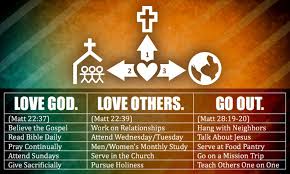
    Have we missed the point of the Great Commission?

    “Go into all the world and preach the Gospel;” that is what we all know (and have heard preached often). We’ll send a missionary and we’ll fund some missions. There: done, because our church has funded others to carry out the ‘great commission. ‘Lord be praised!

    But is this what Jesus instructed us to do in this final commission and grand conclusion to the Gospel of Matthew?

    [ctt title=”‘Go therefore and make disciples of all nations, baptizing them in the name of the Father and of the Son and of the Holy Spirit, teaching them to observe all that I have commanded you” tweet=”Matthew 28:19″ coverup=”8nBX8″]

    Go and make followers of all peoples (not just the Jews, or Samaritans or Europeans or Asians or Africans, all nations); therefore we send missionaries.

    The King James Version states: “Go ye therefore, and teach all nations.”  We have been pretty faithful in this in centuries past.

    “Baptizing them in the Name of the Father, the Son and the Holy Ghost (Holy Spirit, as we say now).”

    We are quick to baptize new Christians, sometimes even as infants. Let’s check them off on our list of souls won to heaven. Yet keep in mind that “baptize” must include repentance and a permanent change of heart to bow down humbly to the will of God the Father. Through the ongoing guidance by the Holy Spirit, this commission of our Lord Jesus Christ implies a great personal responsibility for the believer – new believer and those accepted into the Kingdom long ago.

    A Command to the Church

    Jesus follows with the command most neglected by the church – your church, my church and nearly every church where the Great Commission has been preached:

    Matthew 28:20 NLT Teach these new disciples to obey all the commands I have given you.

    Do we do that?

    Jesus tells his disciples – those who believe – to go and make disciples. How? Preach the Gospel, Good News that Christ Jesus has come to all who believe, no matter what you may have done in your terrible, sinful past.

    Okay. I repented. I’m changed by my relationship with Christ and I’ve received the baptism – the permanent change that I want to do what God wants me to do (though by my sinful nature I continue to sin).

    I am a disciple of Jesus Christ – a Christian.

    Now what is that ‘great commission’ thing again? Send out a missionary?

    No. In fact, I am the missionary wherever any see the change Christ has made in me by his grace and love. I am changed. I must obey Christ as my LORD, not just read what He said as just more good advice. Jesus IS my Lord!

    He has commissioned me to do what?

    Since I obey Him, I must teach ALL that Jesus has commanded.

    Do we teach new believers ALL that Jesus has commanded, even in our own local congregations? Yet it is this overlooked part of the Great Commission to which we are all called. We are called to obey Jesus as our Lord within the body of the church, before we dare claim to know His mission to others.

    Set aside postcards from overseas missionaries momentarily and look to the souls of those who surround you within the walls of worship of your own church building.

    Proverbs 22:6 Train up a child in the way he should go: and when he is old, he will not depart from it.

    Are our own children doing this? Are they in church with us? Do they hear God’s word with us. Do they continue to worship the Lord after we have raised them up as teens in a distracted culture and young adults in an increasingly carnal group of worldly friends opposed to Christ?

    Are you, dear fellow disciple, teaching them to observe all that Jesus Christ has commanded you? (It’s no so easy as just sending a couple of bucks to a missionary somewhere, is it?)

    How do the  Sunday School classes and Bible studies look at your church?

    Are you making great progress on the great commission in your own community and in our own households?

    Teach them to observe all I have commanded you, Jesus tells us. The struggles of the church now and the struggles of the early church challenge us to obey Jesus and teach the Gospel. Continue to teach the Gospel to new believers and to some of us. Do we get it? (and teach the gospel…) We barely listen and learn within the walls of our own churches; yet listen to the writer of Hebrews dealing with the same issue:

    Hebrews 5: 11 There is much more we would like to say about this, but it is difficult to explain, especially since you are spiritually dull and don’t seem to listen.

    12 You have been believers so long now that you ought to be teaching others.

    Instead, you need someone to teach you again the basic things about God’s word. You are like babies who need milk and cannot eat solid food. 13 For someone who lives on milk is still an infant and doesn’t know how to do what is right. 14 Solid food is for those who are mature, who through training have the skill to recognize the difference between right and wrong.

    Returning to the great commission of our Lord:

    How can we go out and make disciples of others, when our pulpits nurse Gospel milk to grown infant christians, never grown into a Bible study?

    Teach others to observe all that Jesus has commanded? How, when WE do not take time or effort to grow in the permanence of the promise of our baptism?

    In consideration of our growth in scripture and prayerful consideration, we must set aside quiet time with the Lord.

    God willing, I pray to continue in living these commands of Christ Jesus, who by our baptism and profession of faith we call, Lord. Beloved believer, I invite you to also obey the great commission of Christ Jesus. Go!


    Due to continued devotion to my book on Christian growth, posts to this site will be limited. [2014 note]

    Your posts and comments on any posts are encouraged. May the Lord bless you this day and this week. 

    – Roger Harned, Author & Site Administrator