I solemnly charge you before God and Christ Jesus, who is going to judge the living and the dead, and because of his appearing and his kingdom: preach the word..
Second Epistle of Paul to Timothy 4:1-2a CSB
Paul’s tone in the closing of his final letter to pastors — especially Timothy — strikes a most serious Apostolic climaxic chord. Paul’s edict recalls his own commanded authority as an Apostle under God and the Lord Jesus Christ.
An Edict to Preach
“I solemnly charge you,” captures this formal seriousness of Apostolic authority, although this English translation does not literally capture Paul’s charge word-for-word.
What is an edict?
Since 21st century Common Era English ears consider such authority archaic, trace its definition from earlier eras:
edict is a borrowing from Latin. edictum.
In the Roman law. An edict; a mandate, or ordinance. An ordinance, or law, enacted by the emperor without the senate.
source: thelawdictionary.org
The earliest known use of the noun edict is in the Middle English period (1150—1500).
Oxford English Dictionary
- a decree issued by a sovereign or other authority.
- Synonyms: pronouncement, dictum
- any authoritative proclamation or command.
source: Dictionary.com
Some translations read,
“I charge you therefore,”
correctly connecting the Apostle’s edict to everything Paul as preached and written in this final letter.
By what Authority?
Common Era christians such as us might well ask, ‘who made you judge, jury and executioner?’
But it NOT the same question of Paul which the Apostle answered in writing two thousand years ago. The Apostle’s answer confirmed by other scriptures: it is not he who judges, but God by whose Authority he preaches and writes.
I charge thee therefore before God, and the Lord Jesus Christ, who shall judge the quick and the dead at his appearing and his kingdom; preach the word;
Second Epistle of Paul to Timothy 4:1-2a – Authorized (King James Version)
“I charge thee therefore before God, and the Lord Jesus Christ,” the Apostle writes to the faithful.
Allow me to say it again: Paul writes to the Church.
These are the Holy witnesses of Truth conveyed by Scripture.
Perhaps this charge rings familiar to any witnessing a ceremony of vows of Christian marriage.
“I charge you in the presence of God and of Christ Jesus,” reads the New American Bible.
God and..
ἐνώπιον θεοῦ καί
“before [enōpion ]GOD [theos] and [kai]
Paul clearly charges Timothy and the church to obey his teaching “with God as [my/his/our] witness.”
The Apostle adds a second and equal witness.
ἐνώπιον τοῦ θεοῦ καὶ τοῦ κυρίου Ἰησοῦ Χριστοῦ
You may recognize His Name (in Greek) from other Scripture.
‘the lord’ [ho kyrios] iēsous christos
the Lord Jesus Christ
THEREFORE, with the witness of God and the witness of the Lord Jesus Christ — the Apostle to the gentiles (including most Christians) commands our faithfulness to God and Christ.
Would an unbeliever ask, ‘AND who are God and the Lord JESUS Christ, that I should do what Scripture says?”
The Apostle is NOT speaking to the unbeliever, but to the saint who claims Jesus as our Lord and Savior, propitiation for our sin and judge of all men [humankind, for you who choose], AND the pastor [like Timothy] discerning false followers among his fold.
I’m giving you this commission in the presence of God and of Christ Jesus, who is coming to judge the living and the dead, and by his appearance and his kingdom.
2 Timothy 4:1 – Common English Bible
coming again to judge the quick and the dead.
It is the Lord Jesus Christ who shall judge the quick [KJV from gk. zaō] and the dead [nekros]!
A 21st century christian little schooled in Scripture will find further study in these terms related to judgment which the Apostle Paul employs here in his last testament to pastors and the Church.
Much false teaching has evolved in these last days (centuries and millennia) in the Church — Scripture twisted by men and women commissioned with the highest responsibility of Truth who the Apostle would condemn before God and Christ.
The Preaching of a Man of God[a]
- Christ Jesus, who is to judge the living and the dead,[b]
Two theological notes from the New Catholic Bible
Footnotes
a. 2 Timothy 4:1 Apostles, missionaries, and pastors are first of all men of the Gospel and evangelization. The project that animates their existence is to awaken human beings to the true worship of the living God. This is a much more pressing task when a swarm of vain ideas sows confusion. Such a time has come, says Paul.
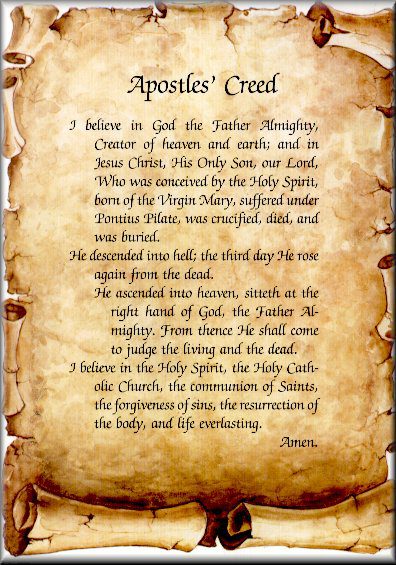
b. 2 Timothy 4:1 Living and the dead: Christ will return to judge both the living and the dead (see Mt 25:31; Jn 5:26-29; 1 Thes 4:15-17). This was doubtless an early teaching (see Acts 10:42; 1 Pet 4:5), and it became part of the Creed.
all links to Biblegateway.com New Catholic Bible © 2019
Although English punctuation in what Paul writes next varies, don’t disconnect the following edict from what the Apostle has just introduced as our solemn duty.
κήρυξον τὸν λόγον
(Preach the word!)
You’re a preacher, aren’t you?
kēryssō – verb, Of uncertain affinity
Think, John the Baptist.
Now in those days John the Baptist came, preaching G2784 in the wilderness of Judea, saying, “Repent, for the kingdom of heaven is at hand.”
Gospel of Matthew 3:1-2 LSB
He preached to those who sought him.
Or think of the Lord Jesus as He went out with the Gospel.
And Jesus was going throughout all Galilee, teaching in their synagogues and preaching G2784 the gospel of the kingdom, and healing every kind of disease and every kind of sickness among the people.
Matthew 4:23 LSB
The Apostle Peter wrote of Christ preaching to both the quick and the dead:
For Christ also hath once suffered for sins, the just for the unjust, that he might bring us to God, being put to death in the flesh, but quickened by the Spirit:
By which also he went and preached G2784 unto the spirits in prison;
Which sometime were disobedient, when once the longsuffering of God waited in the days of Noah, while the ark was a preparing, wherein few, that is, eight souls were saved by water.
First Epistle of Peter 3:18-20 KJV
Preach the Gospel by Paul’s example
you, therefore, who teach [didaskō] another, do you not teach yourself? You who preach G2784 that one shall not steal, do you steal?
Romans 2:21 LSB
For you remember, brothers, our labor and hardship, how working night and day so as not to be a burden to any of you, we proclaimed G2784 to you the gospel of God.
1 Thessalonians 2:9 LSB
but we preach G2784 Christ crucified,
to Jews a stumbling block and to Gentiles foolishness,
but to those who are the called, both Jews and Greeks, Christ the power of God and the wisdom of God.
1 Corinthians 1:23-24 LSB
Be Prepared
Preach the word. Be ready to do it whether it is convenient or inconvenient. Correct, confront, and encourage with patience and instruction.
2 Timothy 4:22 NIV
Preach the word; be instant in season, out of season; reprove, rebuke, exhort with all longsuffering and doctrine.
2 Timothy 4:22 AKJV
STAND BY…
Paul’s verb, ephistēmi, instructs us to always be present, used esp. of persons coming upon one suddenly
- And, lo, the angel of the Lord came upon G2186 them, – Luke 2:9 KJV
- And the night following the Lord stood by G2186 him, and said, Be of good cheer, Paul: for as thou hast testified of me in Jerusalem, so must thou bear witness also at Rome. – Acts of the Apostles 23:11 KJV
Reprove, Rebuke Exhort
Harsh words to 21st c. Common Era ears.
And IF we hear these from the pulpit these tend towards those not of our same flock, rather than directed to the refining of the faithful.
Never-the-less, the Apostle’s edict commands Timothy and other pastors to do these.
THREE THINGS:
in all long-suffering and teaching
Let’s begin with DOCTRINE.
Doctrine is quite simply, TEACHING (whether the preacher or false teacher tells you the truth about his, or not).
It’s very much an authoritative King James type word, but some English translations just call it what it is: INSTRUCTION.
διδαχή – didachē – Doctrine
Now I urge you, brothers, to keep your eye on those who cause dissensions and stumblings contrary to the teaching G1322 which you learned, and turn away from them.
Paul’s letter to the Romans 16:17 LSB
[The Bishop {overseer} must be].. holding fast the faithful word which is in accordance with the teaching G1322, so that he will be able both to exhort in sound doctrine and to reprove those who contradict.
Paul’s pastoral epistle to Titus 1:7-9 excerpt LSB
Be Patient
Who remembers the Boy Scout motto: BE PREPARED?
A Leader or Teacher's motto might well be:
BE PATIENT.
What Christ-follower has not experienced, ALL-LONGSUFFERING?
The Apostles suffered, indeed longsuffered for their faith. Timothy and others had lived long in the persecution of the saints in several cities.
Descriptions in other translations:
- Patience, or all patience
- complete patience,
- great patience
- unfailing in patience
If you have proclaimed Christ crucified and risen — JESUS as your ONLY Savior from damnation and just punishment in death by Almighty God — you, beloved believer, must be patient, long-suffering with others.
Paul’s Apostolic Edict to Pastors:
- Preach the teachings of Jesus Christ and the Scriptures.
- Be ready and persevere in ministry.
- Reprove, Rebuke and Encourage – with all patience.
Understand this Apostolic importance of correcting false teachings and sinful behavior within the church, always with love and truth.
“Reprove” involves correcting false beliefs or behaviors, aligning with the corrective nature of Scripture as described in 2 Timothy 3:16.
“Rebuke” is a stronger form of correction, often necessary to address persistent sin, as seen in Jesus’ rebuke of the Pharisees in Matthew 23.
“Encourage” involves building up and supporting believers, similar to the exhortations found in Hebrews 10:24-25. Together, these actions reflect the balance of truth and love in ministry.
source: BibleHub.com
Endure in Sound Doctrine
ὑγιαίνω διδασκαλία
figuratively, to be uncorrupt (true in doctrine)
metaph. of Christians whose opinions are free from any mixture of error
of one who keeps the graces and is strong
source: blueletterbible.org
The Apostle to Jesus Christ warns once more against false teaching constantly invading in the church.
Previously from Paul:
..the law is made .. for lawbreakers and rebels, the ungodly and sinful, the unholy and irreligious, for those who kill their fathers or mothers, for murderers, or the sexually immoral, for those practicing homosexuality, for slave traders and liars and perjurers
—and for whatever else is contrary to the sound doctrine that conforms to the gospel concerning the glory of the blessed God, which he entrusted to me.
1 Timothy 1:9-12 excerpt NIV
Now the Spirit speaketh expressly, that in the latter times some shall depart from the faith, giving heed to seducing spirits, and doctrines of devils; Speaking lies in hypocrisy; having their conscience seared with a hot iron;
If thou put the brethren in remembrance of these things, thou shalt be a good minister of Jesus Christ, nourished up in the words of faith and of good doctrine, whereunto thou hast attained.
1 Timothy 4:1-2,6 KJV
If any man teach otherwise, and consent not to wholesome words, even the words of our Lord Jesus Christ, and to the doctrine which is according to godliness;
He is proud, knowing nothing, but doting about questions and strifes of words, whereof cometh envy, strife, railings, evil surmisings, Perverse disputings of men of corrupt minds, and destitute of the truth, supposing that gain is godliness:
from such withdraw thyself.
First Epistle of Paul to Timothy 6:5 KJV
2 Timothy 4:3 – a second reminder
For the time will come
2 Timothy 4:3 CSB
when people will not tolerate sound doctrine,
but according to their own desires, will multiply teachers for themselves
because they have an itch to hear what they want to hear.
When the church will not tolerate sound doctrine
We read in the Common English Bible: ‘There will come a time when people will not tolerate sound teaching.’
Paul and the other Apostles all warned of it. Some heresies already seeping into the Church became rampant even before the fall of Rome. Another turning from doctrine by the Church itself resulted in a millenial dark age defying the Scriptural light of Apostolic faith in the early Church.
The Protestant Reformation returned this Light of Christ and the Gospel for a time. Then a great awakening reignighted a remnant faith once more.
Even into the 20th century an enlightened mankind would at least acknowlege God and Jesus Christ. But now in the Common Era, most will not.
An Insatiatiable Common Era church
WHY?
We find Paul’s reasoning here in this text 21st c. pulpits dare not say to our own Sunday gathering of sinners (forgiven ONLY in Christ)?
.. but after their own lusts G1939 …
2 Timothy 4:3b KJV
These are a longing (especially for what is forbidden); to lust after something we really want replacing what God desires.
Other translations suggest, ‘to suit their own desires,’ or ‘they will follow their own desires,’ or even accuse that it is, ‘because they are self-centered.’
What does the Apostle warn will happen?
Recognize here the life of our Common Era communities and churches:
.. Instead, to suit their own desires, they will gather around them a great number of teachers to say what their itching ears want to hear.
2 Timothy 4:3b NIV
Preaching to itching ears
“..to suit their own desires” (lusts) the church will ordain teachers to preach to multitudes of “itching ears”
They will turn away from hearing the truth and will turn aside to myths.
2 Timothy 4:4 NKJV
When did the desires of the multitudes become the gospel of false teaching?
The Apostle WARNS that this could happen and urges Timothy to beware of these false teachers.
but you watch
5 But you must keep control of yourself in all circumstances.
Common English Bible
5 But you, keep your head in all situations,
NIV
But as for you, exercise self-control in everything
2 Tim 4:5a CSB
in all things:
- endure afflictions
The Apostle Paul emphasized this, by contrast to false teachers, in the early part of this epistle.
The Apostolic call of Paul to endure all things will ring familiar in ears to hear his gospel preached to many churches.
.. it does not rejoice in unrighteousness, but rejoices with the truth; it bears all things, believes all things, hopes all things, endures all things.
Love [agapē] never fails..

do the work of an evangelist
εὐαγγελιστής – euangelistēs –
- What is an evangelist?
the name given to the NT heralds of salvation through Christ who are not apostles
- AND what is the work of an evangelist?
From εὐαγγελίζω (G2097)
The KJV translates Strong’s G2097 in the following manner: preach (23x), preach the Gospel (22x), more
And every day, in the temple and from house to house, they did not cease teaching and proclaiming G2097 the good G2097 news G2097 that Jesus is the Christ.
Acts of the Apostles 5:42 LSB
Jesus instructs us in the works of the evangelist.
“Let your light so shine before men, that they may see your good works and glorify your Father in heaven.
Matthew 5:16 NKJV
Then they said to Him, “What shall we do, that we may work the works of God?” Jesus answered and said to them,
“This is the work of God, that you believe in Him whom He sent.”
Gospel of John 6:28-29 NKJV
Carry on
“Fulfill your ministry,” translate several versions of 2 Timothy 4:5.
Paul has fulfilled his Apostolic mission and in closing his final epistle the Apostle now encourages Timothy to carry on — ‘make full proof of thy ministry’ [KJV], discharge all the duties of your ministry [NIV].
NEXT: Paul will pass the torch to Timothy in closing his final epistle.

Comment on Scripture – Share the Gospel