Tag: exodus

  • An Invitation to Exhortation

    An Invitation to Exhortation

    NOTE: Reading time of this post is longer than average due to extended passages of Scripture usually excerpted and linked being included in full. - RH

    Exhortation paraklēsis – is probably not what you think it is. After Barnabas and Saul reach Pisidian Antioch we will look closer at its role in preaching AND I will provide a complete definition at the bottom of this post. – RH

    preach the word; be ready in season and out of season; reprove, rebuke, exhort, with great patience and teaching.

    Second Letter of Paul to Timothy 4:2

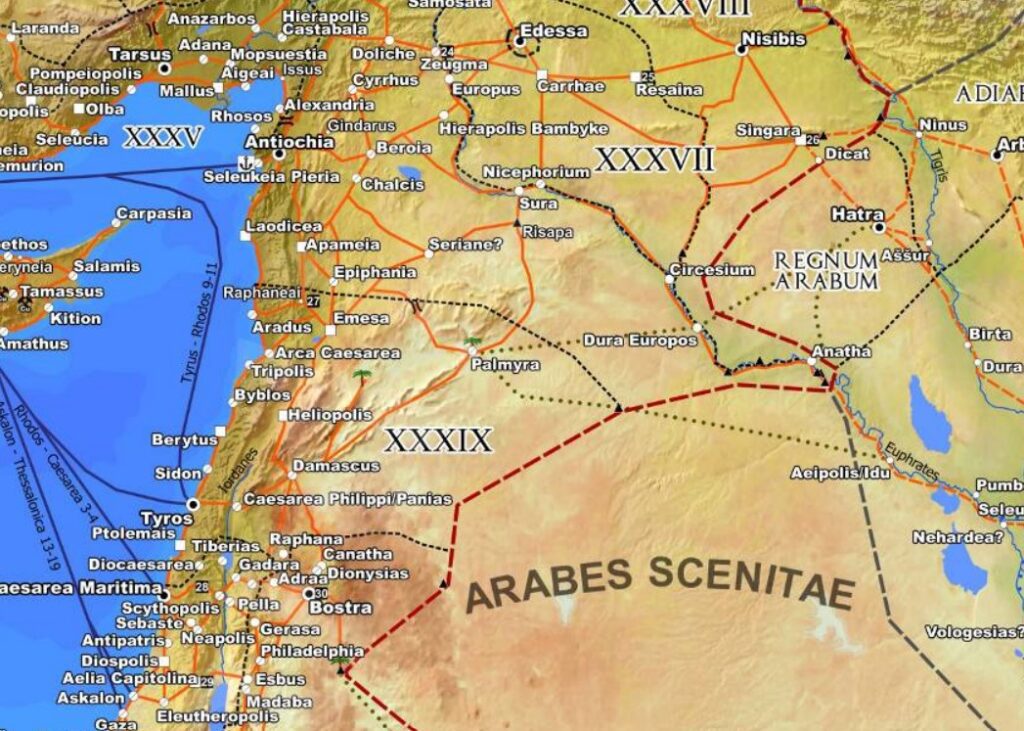
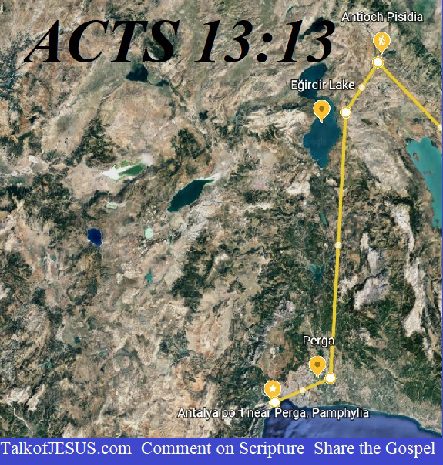
    Barnabas had sent his cousin John Mark back to Jerusalem then he and Saul began their 110 mile hike to Pisidian Antioch.

    Most hikers plan for a journey like that into the mountains to take anywhere from five days to two weeks, hoping for an average daily distance of about ten to fifteen miles.

    Some commentators speculate that Paul may have contracted malaria common to travelers journeying along the low marshlands near Perga. Barnabas and Saul would have been exhausted on whatever day of the week they arrived in Antioch and certainly would be encouraged by a sabbath rest.

    But going on from Perga, they arrived at Pisidian Antioch. And on the Sabbath day, they went into the synagogue and sat down.

    Acts of the Apostles 13:14 LSB

    The Sabbath in Pisidian Antioch

    31:16  וְשָׁמְרוּ בְנֵֽי־יִשְׂרָאֵל אֶת־הַשַּׁבָּת לַעֲשׂוֹת אֶת־הַשַּׁבָּת לְדֹרֹתָם בְּרִית עוֹלָֽם׃

    ‘So the sons of Israel shall keep the sabbath, to celebrate the sabbath throughout their generations as an everlasting covenant.’

    Exodus 31:16 Legacy Standard Bible (Mosaic text noted above)
    in the synagogue

    15 לאחר קריאת פרשת השבוע מן התורה, וההפטרה מהנביאים, שלחו אליהם ראשי בית-הכנסת הודעה: “אחים, אם יש לכם דבר עידוד והדרכה בשבילנו, אתם מוזמנים לדבר!”

    15 And after the reading of the law and the prophets the rulers of the synagogue sent unto them, saying, Ye men and brethren, if ye have any word of exhortation for the people, say on.

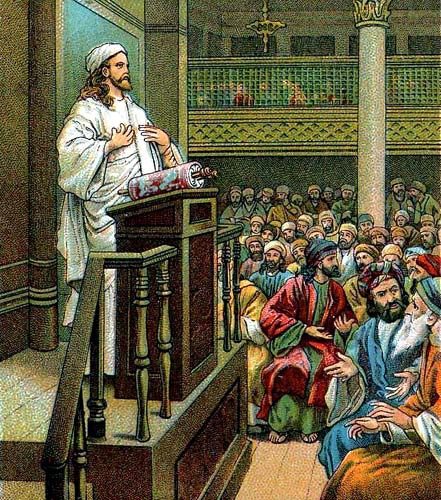
    16 Then Paul stood up..

    ACTS 13:16-23 – in Greek, Hebrew, English & Latin

    - Does a Hebrew glance at ACTS 13:15 [above] prompt you to think about how Jews in the Synagogue viewed Scripture?

    Preaching for an audience you know

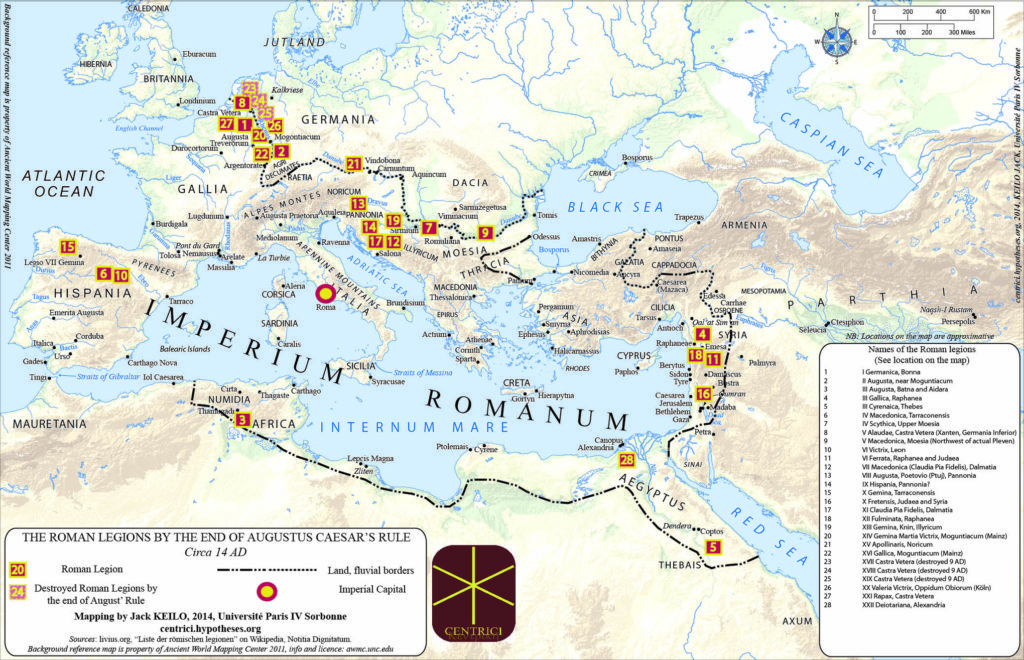
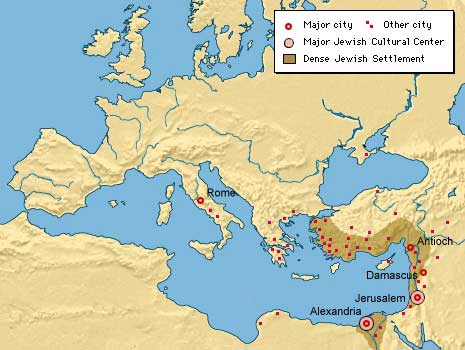
    Before we move on to Paul’s proclamation of the Gospel in the synagogue of Antioch (near Pisidia), let’s take a look at the context of worship for these first century Jews in a Greco-Roman culture of Asia (as it was called) in the Roman capitol of Galatia (as Pisidian Antioch functioned politically).

    Without digressing too far, let’s just say that Rome conquered towns, cultures and strategic places (like Antioch). Then once subdued by their Legions, Rome allowed these Greeks or Hellenists to include their social, cultural and religious practices as part of a tolerant peace with their Roman government. (There’s no puppet-king or elected Greek governor.) The rule of law is now and will remain ROMAN.

    Jews who proclaimed that THEIR GOD IS ONE would eventually relent and add their Yahweh to acceptable social worship of a pantheon of Greco-Roman gods.

    BUT some Jews insisted that they would not participate in any of the important holidays of the gods of their cities.

    Greek is the language of the Empire. 
    Hebrew a Jewish language in worship even here in the capitol of the Roman province of Galatia.
    Latin is the Roman language of the Legions and the language of government carved into the columns and walls of the distinctly ornate public buildings of Rome which have replaced the Greek places of the past.

    I am neither historian, archeologist or sociologist, but my guess is that in the Synagogue of Antioch that the Torah and Prophets were read in Hebrew, while the teaching and discourse of the day with both Jews and proselytes from throughout the Empire present was conducted in their common Greek.

    I’ll also speculate that prominent men of the Roman government (like the Proconsul Sergius Paulus whom they had just met) converse with those governed in Greek, even though some of their official duties required the Latin of Rome.

    Saulos is a well-know Jew of Tarsus well-studied under Gamaliel of Jerusalem. And iōsēph the kyprios (Cyprian) Levite may offer additional priestly insight little known to these Hellenist Jews.

    Tradition of Worship

    Luke’s account from the year of our Lord 47 or 48 of Saul and Barnabas in the synagogue of Pisidian Antioch provides readers (whether his first Christian audience of the AD 60’s and 70’s or 21st c. Christians) with some details of worship in the synagogue less familiar than the well-documented worship, festivals and gatherings of the Temple in Jerusalem.

    Acts 13 – an order of worship

    • And on the Sabbath day, they went into the synagogue and sat down. – v.14b
      • Saturday worship: Jews go to the synagogue and sit to hear Scripture.
    • And after the reading of the Law – v.15a
      • The Law [nomos] a systematic, pre-determined reading of Genesis – Deuteronomy (the Pentateuch) is prominently read first by a synagogue official in the pulpit (or on the platform).
    • And [after the reading of] the Prophets – v.15a
      • Again, a systematic, pre-determined reading from a book of a major Prophet (like Isaiah) or reading of a minor Prophet (perhaps even their entire scroll).
    • (Luke’s account here makes no attempt to cover other parts of the weekly worship at the synagogue, such as the singing of Psalms or the offering or prayers.)
      • i.e. Psalm 2, referenced here by context of Saul’s sermon, may have been sung as part of the appointed hymns from the prior weeks or later after his sermon.
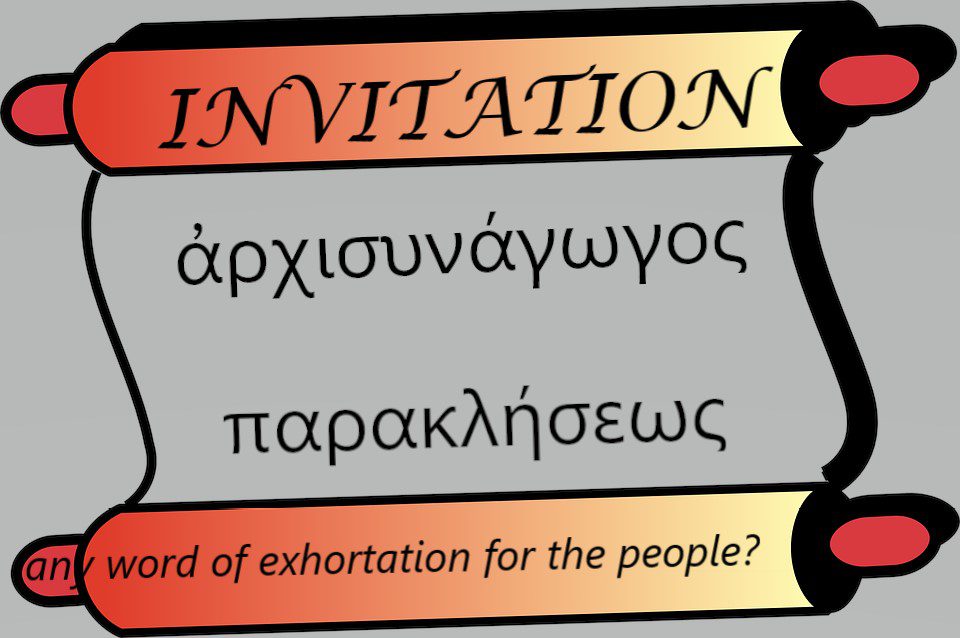
    • the synagogue officials [of the archisynagōgos] sent to them [apostellō prosa autos] v.15b
      • ruler of the synagogue. It was his duty to select the readers or teachers in the synagogue, to examine the discourses of the public speakers, and to see that all things were done with decency and in accordance with ancestral usage.
    • the synagogue officials sent to them, saying, “Brothers,
      • (Although Saul and Joseph of Cypress visit from other congregations of Jews, the Arch-Synagogos leading worship WELCOMES them ‘as brothers’ and invites them to PREACH.)
    • “Brothers, if you have any word [logos]v.15b
      • Did a messenger of the archisynagōgos greet them on arrival with this specific invitation from the head pastor of the synagogue requesting them to say a word if they would like?
      • Or perhaps the leader of the synagogue greeted these distinguished brothers personally?
      • Or maybe, seeing them in the congregation he gestured to the renowned Saul of Tarsus to at least say something?
    • have any word of exhortation for the people,
      • [WE will address the expectation of a word of exhortation after the reading of the Law and the Prophets.)
    • say it. – Acts 13:15b

    The following readings are intended to give us a sense of the regular Saturday worship in the synagogue to set the stage for the important exhortation of Paul which will follow from Acts of the Apostles in our next post. 
    
    Paul MAY HAVE drawn from these Scriptures which COULD HAVE been part of the first century Jewish lectionary schedule. Even if these specific Scriptures were not those read, the congregation would have been familiar with them.- RH
    
    Perhaps one of you theologians could share a comment to inform if our ears to hear would have been tuned to the Hebrew original or the local Greek. 
    
    Today for our international audience of this 21st century I will use English from the Legacy Standard Bible.

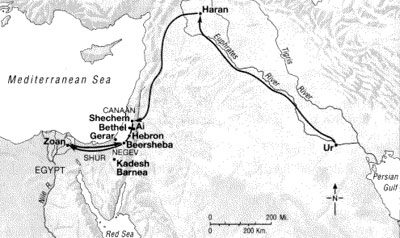
    A reading from Bereshis [Genesis] 46,

    when Israel came down from Beersheba to Egypt, beginning in verse 28.

    Now he sent Judah before him to Joseph, to point out the way before him to Goshen; and they came into the land of Goshen. And Joseph harnessed his chariot and went up to Goshen to meet his father Israel; as soon as he appeared before him, he fell on his neck and wept on his neck a long time. Then Israel said to Joseph, “Now I can die, since I have seen your face, that you are still alive.”

    And Joseph said to his brothers and to his father’s household, “I will go up and tell Pharaoh and say to him, ‘My brothers and my father’s household, who were in the land of Canaan, have come to me; and the men are shepherds, for they have been keepers of livestock; and they have brought their flocks and their herds and all that they have.’ “And it will be when Pharaoh calls you and says, ‘What is your occupation?’ then you shall say, ‘Your servants have been keepers of livestock from our youth and until now, both we and our fathers,’ that you may live in the land of Goshen; for every shepherd is an abomination to the Egyptians.”

    Then Joseph went in and told Pharaoh and said, “My father and my brothers and their flocks and their herds and all that they have, have come out of the land of Canaan; and behold, they are in the land of Goshen.” And he took five men from among his brothers and set them before Pharaoh. Then Pharaoh said to his brothers, “What is your occupation?” So they said to Pharaoh, “Your servants are shepherds, both we and our fathers.” And they said to Pharaoh, “We have come to sojourn in the land, for there is no pasture for your servants’ flocks, for the famine is heavy in the land of Canaan. So now, please let your servants live in the land of Goshen.”

    Genesis 47:

    Then Pharaoh said to Joseph, “Your father and your brothers have come to you. “The land of Egypt is at your disposal; have your father and your brothers settle in the best of the land, let them settle in the land of Goshen; and if you know any excellent men among them, then put them in charge of my livestock.”

    Then Joseph brought his father Jacob and stood him before Pharaoh; and Jacob blessed Pharaoh. And Pharaoh said to Jacob, “How many are the days of the years of your life?” So Jacob said to Pharaoh, “The days of the years of my sojourning are 130; few and evil have been the days of the years of my life, and they have not attained to the days of the years that my fathers lived during the days of their sojourning.”

    And Jacob blessed Pharaoh and went out from the presence of Pharaoh. So Joseph settled his father and his brothers and gave them a possession in the land of Egypt, in the best of the land, in the land of Rameses, as Pharaoh had commanded. And Joseph provided his father and his brothers and all his father’s household with food, according to their little ones.

    Now there was no food in all the land because the famine was very heavy, so that the land of Egypt and the land of Canaan languished because of the famine. And Joseph gathered all the money that was found in the land of Egypt and in the land of Canaan for the grain which they bought, and Joseph brought the money into Pharaoh’s house. Then the money came to an end in the land of Egypt and in the land of Canaan. So all the Egyptians came to Joseph and said, “Give us food, for why should we die in your presence? For our money is gone.”

    Then Joseph said, “Give up your livestock, and I will give you food for your livestock, since your money is gone.” So they brought their livestock to Joseph, and Joseph gave them food in exchange for the horses and the flocks and the herds and the donkeys; and he fed them with food in exchange for all their livestock that year. Then that year came to an end.

    And they came to him the next year and said to him, “We will not hide from my lord that our money has come to an end, and the livestock are my lord’s. There is nothing left for my lord except our bodies and our land. “Why should we die before your eyes, both we and our land? Buy us and our land for food, and we and our land will be slaves to Pharaoh. So give us seed, that we may live and not die, and that the land may not be desolate.”

    So Joseph bought all the land of Egypt for Pharaoh, for every Egyptian sold his field because the famine was severe upon them. Thus the land became Pharaoh’s. As for the people, he moved them to the cities from one end of Egypt’s border to the other end. Only the land of the priests he did not buy, for the priests had an allotment from Pharaoh, and they ate off the allotment which Pharaoh gave them. Therefore, they did not sell their land.

    Then Joseph said to the people, “Behold, I have today bought you and your land for Pharaoh; now, here is seed for you, and you may sow the land. “And it will be, at the harvest you shall give a fifth to Pharaoh, and four-fifths shall be your own for seed of the field and for your food and for those of your households and as food for your little ones.”

    So they said, “You have kept us alive! Let us find favor in the sight of my lord, and we will be Pharaoh’s slaves.” And Joseph made it a statute concerning the land of Egypt valid to this day, that Pharaoh should have the fifth; only the land of the priests did not become Pharaoh’s.

    Now Israel lived in the land of Egypt, in Goshen, and they took possession of property in it and were fruitful and became very numerous.

    And Jacob lived in the land of Egypt seventeen years; so the days of Jacob, the years of his life, were 147 years.

    A reading from Bereshis.
    Do you recall this compelling story from Genesis which tells how the Hebrew descendants of Jacob became slaves which Moses would redeem later?
    
    Without exposition, the readings would continue from the Books of the Prophets.
    

    The oracle which Habakkuk the prophet beheld.

    How long, O Yahweh, will I call for help,
    And You will not hear?
    
    I cry out to You, “Violence!”
    Yet You do not save.
    
    Why do You make me see wickedness
    And cause me to look on trouble?
    
    Indeed, devastation and violence are before me;
    And there is strife, and contention is lifted up.
    
    Therefore the law is ignored,
    
    And justice never comes forth.
    
    For the wicked surround the righteous;
    
    Therefore justice comes forth perverted.
    

    1:5 רְאוּ בַגּוֹיִם וְֽהַבִּיטוּ וְהִֽתַּמְּהוּ תְּמָהוּ כִּי־ פֹעַל פֹּעֵל בִּֽימֵיכֶם לֹא תַאֲמִינוּ כִּי יְסֻפָּֽר׃

    “See among the nations! And look!

    Be also astonished! Be astounded!

    Because I am doing something in your days—

    You would not believe if it was recounted to you.

    “For behold, I am raising up the Chaldeans,
    
    That bitter and hasty nation
    Who walks on the breadth of the land
    To possess dwelling places which are not theirs.
    
    “They are dreaded and feared;
    
    Their justice and exaltation come forth from themselves.
    
    “Their horses are swifter than leopards
    And sharper than wolves in the evening.
    
    Their horsemen come galloping;
    
    Their horsemen come from afar;
    
    They fly like an eagle swooping down to devour.
    
    “All of them come for violence.
    
    Their horde of faces moves forward.
    
    And they gather captives like sand.
    “And they mock at kings,
    
    And rulers are a laughing matter to them.
    
    They laugh at every fortress
    And heap up dirt and capture it.
    
    
    “Then they will sweep through like the wind and pass on.
    
    But they will be held guilty,
    
    They whose power is their god.”
    

    1:12 הֲלוֹא אַתָּה מִקֶּדֶם יְהוָה אֱלֹהַי קְדֹשִׁי לֹא נָמוּת יְהוָה לְמִשְׁפָּט שַׂמְתּוֹ וְצוּר לְהוֹכִיחַ יְסַדְתּֽוֹ׃

    Are You not from everlasting,

    O Yahweh, my God, my Holy One?

    We will not die.

    You, O Yahweh, have placed them to judge;

    And You, O Rock, have established them to reprove.

    Habakkuk 1:12
    Your eyes are too pure to see evil,
    
    And You cannot look on trouble.
    
    Why do You look
    On those who deal treacherously?
    
    Why are You silent when the wicked swallow up
    
    Those more righteous than they?
    
    And You have made men like the fish of the sea,
    
    Like creeping things without a ruler over them.
    
    The Chaldeans bring all of them up with a hook,
    
    Drag them away with their net,
    
    And gather them together in their fishing net.
    
    Therefore they are glad and rejoice.
    
    Therefore they offer a sacrifice to their net
    And burn incense to their fishing net
    Because through these things their portion is rich
    And their food is fat.
    
    Will they therefore empty their net
    And continually kill nations without sparing?
    
    Habakkuk 2: RSV [incl. 3]

    I will take my stand to watch,
    and station myself on the tower,
    and look forth to see what he will say to me,
        and what I will answer concerning my complaint.

    And the Lord answered me:

    “Write the vision;
        make it plain upon tablets,
        so he may run who reads it.
    
     For still the vision awaits its time;
        it hastens to the end—it will not lie.
    
    If it seem slow, wait for it;
        it will surely come, it will not delay.
     Behold, he whose soul is not upright in him shall fail,
        but the righteous shall live by his faith.
    
     Moreover, wine is treacherous;
        the arrogant man shall not abide.
    His greed is as wide as Sheol;
        like death he has never enough.
    He gathers for himself all nations,
        and collects as his own all peoples.”

    Shall not all these take up their taunt against him, in scoffing derision of him, and say,

    “Woe to him who heaps up what is not his own—
        for how long?—
        and loads himself with pledges!”
    Will not your debtors suddenly arise,
        and those awake who will make you tremble?
        Then you will be booty for them.
    Because you have plundered many nations,
        all the remnant of the peoples shall plunder you,
    for the blood of men and violence to the earth,
        to cities and all who dwell therein.
    
    Woe to him who gets evil gain for his house,
        to set his nest on high,
        to be safe from the reach of harm!
    You have devised shame to your house
        by cutting off many peoples;
        you have forfeited your life.
    For the stone will cry out from the wall,
        and the beam from the woodwork respond.
    
    Woe to him who builds a town with blood,
        and founds a city on iniquity!
    Behold, is it not from the Lord of hosts
        that peoples labor only for fire,
        and nations weary themselves for nought?
    For the earth will be filled
        with the knowledge of the glory of the Lord,
        as the waters cover the sea.
    
    Woe to him who makes his neighbors drink
        of the cup of his wrath, and makes them drunk,
        to gaze on their shame!
    You will be sated with contempt instead of glory.
        Drink, yourself, and stagger!
    The cup in the Lord’s right hand
        will come around to you,
        and shame will come upon your glory!
    The violence done to Lebanon will overwhelm you;
        the destruction of the beasts will terrify you,
    for the blood of men and violence to the earth,
        to cities and all who dwell therein.
    
    What profit is an idol
        when its maker has shaped it,
        a metal image, a teacher of lies?
    For the workman trusts in his own creation
        when he makes dumb idols!
    Woe to him who says to a wooden thing, Awake;
        to a dumb stone, Arise!
        Can this give revelation?
    Behold, it is overlaid with gold and silver,
        and there is no breath at all in it.
    

    But the Lord is in his holy temple;

        let all the earth keep silence before him.

    Habakkuk 2:20 Revised Standard Version

    Exhortation

    2:20 וַֽיהוָה בְּהֵיכַל קָדְשׁוֹ הַס מִפָּנָיו כָּל־הָאָֽרֶץ׃ פ

    The End of the Oracle of Habakkuk, before his prayer.

    After the reading of the law and the prophets, the rulers of the synagogue sent to them, saying,

    “Brethren, if you have any word of exhortation for the people, say it.”

    Acts of the Apostles Paul and Barnabas in Pisidian Antioch 13:15 RSV

    They were invited to give a word of exhortation. Paul didn’t just show up at church expecting to preach the Gospel.

    So what is this “word of exhortation?”

    [ logos paraklēsis ]

    • a calling near, summons, (especially for help)
      • The leader of the synagogue summons them asking help for the people of his flock.
    παράκλησις paráklēsis, par-ak'-lay-sis; from G3870; imploration, hortation, solace:—comfort, consolation, exhortation, intreaty.
    
    • thus of the Messianic salvation (so the Rabbis call the Messiah the consoler, the comforter)

    And Saul of Tarsus, who is known to the Jews to have had a personal encounter with the risen Messiah Jesus, is about to give those people of the LORD God gathered together as brothers on the Sabbath the Word and exhortation.

    • persuasive discourse, stirring address
      • instructive, admonitory, conciliatory, powerful hortatory discourse

    ACTS of the Apostles 13: To be continued with the EXHORTATION of the Apostle Paul…

  • Opposed to the Gospel at the Gate: Bar-Jesus

    Opposed to the Gospel at the Gate: Bar-Jesus

    Bar-Jesus is another name for a Jewish influencer on Cypress: Elymas the magician.

    Acts 13:

    • Luke chronicles THIS history of the first mission of the Church at Antioch published sometime around A.D. 60-62.
    • Many Christians may already have read John Mark’s Gospel written during the A.D. 50’s just a few years after this first missionary journey of Paul and Barnabas.
    • Luke’s account records events of A.D. 47.

    When they arrived at Cypress

    Cypress is Greek, NOT Roman

    (And certainly not Jewish)

    What the tourist visiting Cypress should know:

    Cyprus was allowed a large amount of autonomy remaining mainly Greek in culture while adopting and adapting Roman customs. No Roman colonies were settled on the island. 

    • The island is prone to earthquakes, several in the centuries prior to this missionary journey
      • including one as recently as A.D. 16.
    • Cypress had been an Egyptian (King Ptolemy) part of Roman Cilicia
      • a gift of Julius Caesar to Cleopatra
    • After Caesar Augustus defeated Marc Antony and Cleopatra, Rome made it a senatorial province
      • separate from Cilicia with Nea Paphos as its capitol

    5. And when they reached Salamis, they began to proclaim the word of God in the synagogues of the Jews, and they also had John as their helper.

    NOTE TWO POINTS HERE:

    1. .. they began to proclaim the word of God in the synagogues of the Jews
    2. Luke introduces John Mark as a helper to Barnabas and Saul.

    As you can see from the map of cities on Cypress at the time, this mission team would have traveled on land several times to preach the Gospel in synagogues of these Greco-Roman cities on Cypress. Not only was distance a factor in their travel but also mountains which rose to steep heights above the island. This took some time and not just a few days.

    In addition to noting last time that Cypress was mostly Greek and Phoenician with a few Jews, previously I pointed out that their ‘additional passenger,’ John, is the same John with earlier connections to Peter’s preaching and miracles.

    Luke notes that his fellow Gospel writer [John Mark] also begins this mission trip in A.D. 47.

    Paphos consisted of the Roman cites of Nea Pafos and Palaipafos on the southwestern coast of the island of Cypress

    6 And when they had gone through the whole island as far as Paphos, they found a magician, a Jewish false prophet whose name was Bar-Jesus…

    We'll introduce ourselves to this new character Bar-Jesus who they encounter on this mission shortly, but first let's take a quick look at Paphos.
    Aerial view of Paphos Cypress

    Paphos

    • Traveling roads across the whole island would have been a journey of 110 miles along the coast OR perhaps further if they traveled additional routes familiar to Joseph [Barnabas] and others through the mountains to other cities.
    • New Paphos (Nea Paphos), NW of old Paphos by 7.5 miles has a natural harbor and was built by Augustus of Rome for commerce and governing its Provence of Cypress.
    • Old Paphos was a centre for Aphrodite’s cult. Aphrodite’s mythical birthplace was on the island.
    • .. the grove and altar of Aphrodite at Paphos are mentioned in the Odyssey (700 BC).
    • Archaeology established that Cypriots venerated a fertility goddess in a cult that combined Aegean and eastern mainland aspects before the arrival of the mainland Greeks.

    Aphrodite of Cyprus

    • Every spring a festival was held here in honor of the goddess Aphrodite source
    • Phoenician merchants from Kition [Cyprus] who gained permission to found at Athens [Greece] a shrine of Aphrodite, whom they presumably looked upon as their ancestral deity Astarte – Aphrodite. READ MORE BELOW:
    (more…)
  • Did God really say, Church?

    Did God really say, Church?

    Yes! God said, “CHURCH.”

    Let’s be clear up front. I can assure you through Scripture (the written word of God we call THE BIBLE) that our Creator said, “Church.”

    So that we are on the same page (so to speak) I will get to a written definition of Church shortly. But first — and perhaps more importantly — I have a question to ask YOU.

    WHO is Asking?

    • Why is THIS important?

    • Does the person asking you about “Church really want to know what God said?

    • OR

    • Is this question of theirs a veiled dismissal of God
      • AND built on a premise opposed to the Authority of God’s Word?

    Who believes that God created the CHURCH?

    FIRST: Most likely NO ONE has asked you about your “church.”

    If you made a list including one hundred [100] from your neighborhood, work and extended family,

    • HOW MANY would even ASK YOU ANYTHING about CHURCH or GOD or Jesus Christ?

    Perhaps, one?

    (Not even Christians of our church typically engage each other in conversation about 'church'  beyond the walls of the church building or in our mortal time beyond a single worship service duplicated twice on Sunday.)

    SECONDLY: IF you ever hear a person ask you about your ‘church‘ and Scripture ,

    ASK YOURSELF, “WHO IS ASKING?”

    You probably know several variations of the original QUESTION directly from your Bible.

    וְהַנָּחָשׁ הָיָה עָרוּם מִכֹּל חַיַּת הַשָּׂדֶה אֲשֶׁר עָשָׂה יְהוָה אֱלֹהִים וַיֹּאמֶר אֶל־הָאִשָּׁה אַף כִּֽי־אָמַר אֱלֹהִים לֹא תֹֽאכְלוּ מִכֹּל עֵץ הַגָּֽן׃

    Bereishit (Genesis) 3:1 :: Westminster Leningrad Codex (WLC)
    Of course most of us cannot read the original so we must rely on a translation of Scripture (me included)-- but (keep in mind) -- 
    
    NO man or woman can claim truth while they reconstruct Scripture into words they want the Bible to say. 
    
    WORDS have both meaning and intent. Therefore a preacher or teacher of the BIBLE MUST stick to preaching or teaching from a reliable English translation AND NOT SUBSTITUTE your own 'better,' less-offensive words.
    
    The BIG QUESTION of THE DECEIVER goes something like the reconstruction by Satan sketched out (and linked) below.

    Does the preacher of the Word who shepherds your church have the integrity to ALWAYS use the written word of God from the Bible as written?

    Roger@TalkofJESUS.com [Your response or question by email is welcome.]

    Questioning and Reconstructing God’s Word

    An example from Genesis 3:

    Now the serpent was more crafty than any beast of the field which the LORD God had made.

    And he said to the woman, “Indeed, has God said,

    Genesis 3:1b NASB95

    ‘You shall not eat from any tree of the garden’?”

    Again, WATCH OUT! Whenever you hear anyone ask, 'has God said...'

    Church

    Call it what you like, but different people mean different things when they say, ‘church.’

    This is so even for members or attenders of the very same church. So let’s settle on some standard definitions of our references to ‘the church.’

    ἐκκλησία – ek-klay-see’-ah [feminine noun]

    Strong’s G1577 – ekklēsia [click for complete definition of ‘church’]

    • a gathering of citizens called out from their homes into some public place

    No mention of the ‘church building’ here, although this ‘public place’ could be a building, tent, other home or anywhere two or three ‘citizens’ are gathered together.

    And I say also unto thee, That thou art Peter, and upon this rock I will build my church; G1577 and the gates of hell shall not prevail against it.

    Gospel of Matthew 16:18 KJV – first use of the word ‘church‘ G1537 ekklēsia in the New Testament

    Christians and unbelievers alike think of CHURCH as an exclusive reference to a building or place where JESUS worshipers gather together as a ‘religious’ routine typically on Sunday only.

    However, a deeper look into how ‘church’ is used in the Bible — Old Testament AND New — will reveal a more significant connection of this ‘gathering of citizens’ to the LORD God.

    Gather me the people together – קָהַל

    The summons or call to worship is from the LORD Himself!

    The first reference to the ‘church’ or gathering in the Greek Septuagint comes from the LORD through Moses. Each assembly of the hebrew people, the citizens called out of Egypt and frequently out of their tents in the wilderness, was called by the LORD GOD.

    The LORD calls out the CHURCH, a chosen company of worshipers of the LORD our God.

    View a link to these references from the Septuagint in the common Greek of the first century Roman Empire when Israel no longer existed and JESUS taught in Galilee, Samaria and Judea.

    “Remember the day you stood before the LORD your God at Horeb, when the LORD said to me, ‘Assemble the people to Me, that I may have them hear My words so that they may learn to fear Me all the days that they live on the earth, and that they may teach their children.’

    Deuteronomy 4:10

    “The LORD gave me the two tablets of stone written by the finger of God; and on them were all the words which the LORD had spoken with you at the mountain from the midst of the fire on the day of the assembly..

    “This is in accordance with everything that you asked of the LORD your God at Horeb on the day of the assembly, saying, ‘Do not let me hear the voice of the LORD my God again, and do not let me see this great fire anymore, or I will die!’

    Deuteronomy 9:10; 18:16

    It’s pretty serious business:

    However, the LORD said to Moses, “Whoever has sinned against Me, I will wipe him out of My book. But go now, lead the people where I told you. Behold, My angel shall go before you; nevertheless on the day when I punish, I will punish them for their sin.”

    Exodus 32:33-34 NASB20

    — a chosen citizenry created in the image of the LORD against whom they turn (again and again)

    שְׁמַע יִשְׂרָאֵל יְהוָה אֱלֹהֵינוּ יְהוָה אֶחָֽד׃

    “And you shall love the LORD your God with all your heart and with all your soul and with all your strength.

    Devarim (Deuteronomy) 6:4 :: WLC; 6:5 NASB20

    Then God said, “Behold, I am going to make a covenant. Before all your people I will perform miracles which have not been produced in all the earth nor among any of the nations; and all the people among whom you live will see the working of the LORD, for it is a fearful thing that I am going to perform with you.

    Exodus 34:10 NASB20

    — the LAW of the LORD our God (broken again and again)

    “Be careful that you do not make a covenant with the inhabitants of the land into which you are going, or it will become a snare in your midst.

    Exodus 34:12 NASB20

    covenant, solemn promise after solemn promise (broken again and again)

    “For when I bring them into the land flowing with milk and honey, which I swore to their fathers, and they eat and are satisfied and become prosperous, then they will turn to other gods and serve them, and spurn Me and break My covenant.

    Deuteronomy 31:20 NASB20

    AND even in the New Testament

    an often apostate church continually asking, “DID GOD REALLY SAY?

    I am amazed that you are so quickly deserting Him who called you by the grace of Christ, for a different gospel, which is not just another account; but there are some who are disturbing you and want to distort the gospel of Christ.

    Paul’s letter to the Church at Galatia 1:6-7 NASB20

    Did Scripture really say..?

    Second Letter of Paul to Timothy

    3:12 Indeed, all who desire to live a godly life in Christ Jesus will be persecuted, while evil people and impostors will go on from bad to worse, deceiving and being deceived.

    YES, God — JESUS — really did say, CHURCH.

    Scripture — spoken by the LORD, written in the Law and the Prophets, preached by the Lord Jesus Christ, taught by the Apostles — Scripture affirms Christ’s Church already built by HIM and in no need of tearing down out of a lack of faith.

    All Scripture is breathed out by God and profitable for teaching, for reproof, for correction, and for training in righteousness, that the man [messenger] of God may be complete, equipped for every good work.

    2 Timothy 3:16-17 ESV

    Why do you ask?


    "Did God really say, Church?" is our first post for a NEW TalkofJESUS.com SERIES, addressing philosophies and questions underlying intentional deconstruction of the 21st Century Church.

    Talk of JESUS . com

    Comment on Scripture – Share the Gospel