Tag: ezekiel

  • Banquet of the King in the House of Wisdom – 6

    Banquet of the King in the House of Wisdom – 6

    The Parable of the Wedding Feast

    Matthew 22:

    And again Jesus spoke to them in parables, saying,

    “The kingdom of heaven may be compared to a king who gave a wedding feast for his son, and sent his servants to call those who were invited to the wedding feast, but they would not come.


    If you have been following our series on wisdom you will already recognize that the banquet prepared for us by the king anticipates words of wisdom from our host. Recall also that many proverbs of wisdom from scripture were given to us by Solomon, King of Israel, son of David.

    Before we continue let’s reflect on the King and Son mentioned.

    Matthew 1:

    The book of the genealogy of Jesus Christ, the son of David, the son of Abraham.

    It is highly significant that the crowds of Jerusalem recognized this worker of miracles and teacher of parables as ‘the son of David. Jesus further frequently as the ‘son of man,’ meaning ‘a son of adam’ or human born in the flesh like you and me.

    For the Son of Man is going to come with his angels in the glory of his Father, and then he will repay each person according to what he has done. – Matthew 16:27

    Let’s be clear: Jesus’ claim to His place in this parable is Son of the King, Almighty God. He has both prepared the table and invited the guests.

    You have read the Law of Moses, witnessed the faith of Abraham and sung the Psalms of David. Though you read the wisdom and Proverbs of Solomon, you deny that the Lord tore away his kingdom, then restored Israel for a time.

    Servants of the Son of Man proclaim His message and the King now invites you to His banquet.

    Will you accept the invitation of the LORD?


    The King ‘sent his servants to call those who were invited to the wedding feast’, honored guests who claimed Abraham, followed Moses and were among the chosen; ‘but they would not come.’

    A Second Chance

    MATTHEW 22:

    4 Again he sent other servants, saying, ‘Tell those who are invited, “See, I have prepared my dinner, my oxen and my fat calves have been slaughtered, and everything is ready. Come to the wedding feast.”’ 5 But they paid no attention and went off…

    God has prepared the feast of feasts for the Son of glory. Therefore Prophets like Ezekiel, God’s messenger frequently called ‘son of man,’ invited family to repent and come to the feast.

    2:3  וַיֹּאמֶר אֵלַי בֶּן־אָדָם שֹׁולֵחַ אֲנִי אֹֽותְךָ אֶל־בְּנֵי יִשְׂרָאֵל אֶל־גֹּויִם הַמֹּורְדִים אֲשֶׁר מָרְדוּ־בִי הֵמָּה וַאֲבֹותָם פָּשְׁעוּ בִי עַד־עֶצֶם הַיֹּום הַזֶּֽה׃

    Ezekiel and other repentant men begged God’s chosen to also repent of their sins and humbly return to the King of creation. Most refused, yet he LORD shows mercy and compassion for those whom He loves.

    To the Lord our God belong mercy and forgiveness, for we have rebelled against him and have not obeyed the voice of the LORD our God by walking in his laws, which he set before us by his servants the prophets.  – Daniel 9:9-10

    Will your repent and return to your Lord?


    Matthew 22:

    … the rest seized his servants, treated them shamefully, and killed them. 7 The king was angry, and he sent his troops and destroyed those murderers and burned their city.

    Certainly that had been the experience and lament of Daniel when a remnant of Israel survived in Babylon.

    A New Invitation

    8 Then he said to his servants, ‘The wedding feast is ready, but those invited were not worthy.

    Would you be a ‘worthy guest’ of the King?

    Would the King ask you, a sinful Samaritan of sorts; a gentile, even a non-Christian?

    Hear how the Lord has reached out to many to celebrate the wedding of the Son.

    9 Go therefore to the main roads and invite to the wedding feast as many as you find.’

    10 And those servants went out into the roads and gathered all whom they found, both bad and good. So the wedding hall was filled with guests.

    ‘Both bad and good’ certainly includes you and me? Look at the definition of the greek word meaning bad, πονηρός ponēros.

    • pressed and harassed by labours
    • bringing toils, annoyances, perils
    • of a time full of peril to Christian faith and steadfastness
    • in a physical sense: diseased or blind
    • in an ethical sense: evil wicked, bad

    Do any of these describe your present life?

    We are invited.

    Will you accept the invitation of the King to the Banquet for the Son?


    To be continued…


  • Beyond Nineveh

    Beyond Nineveh

    Taking the long view – Beyond Nineveh and Nazareth

    “Do you think that I like to see wicked people die? says the Sovereign LORD. Of course not! I want them to turn from their wicked ways and live. Ezekiel 18:23 NLT

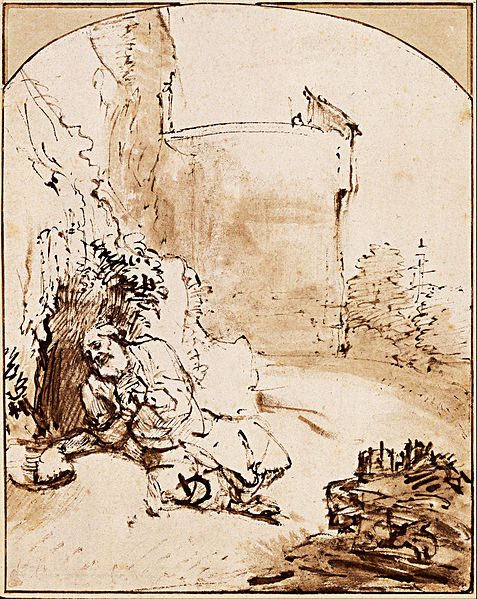
    You may remember the story of the Prophet Jonah, a ‘follower’ of God who turned a different direction when the LORD sent him to save foreigners. A later Prophet from Nazareth would refer to Jonah, by comparison:

    “The men of Nineveh will rise up at the judgment with this generation and condemn it, for they repented at the preaching of Jonah, and behold, something greater than Jonah is here. – Matthew 12:41 & Luke 11:32

    What do we know beyond this reference of Jesus of Nazareth about Jonah?

    Jonah of Gath-hepher, a town of Lower Galilee, about 5 miles from Nazareth

    We do know this: religious leaders remain unrepentant because of their own sins, just like Jonah booking a ship away from the city where the LORD wanted him to preach.

    Wickedness and unrepentance remain as issues today. Jonah spoke it of the Ninevites and Jesus spoke to it in all of us. We, too are not sent to the righteous, but to sinners. Like Jonah and like Jesus we do not preach or prophesy only to the chosen, but to the nations.

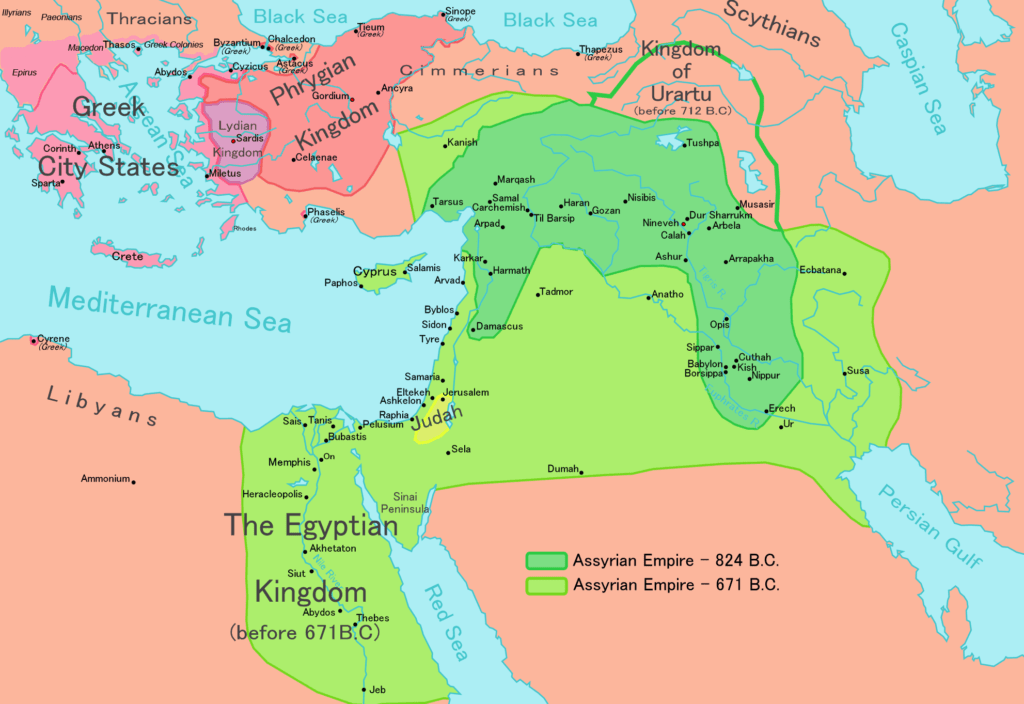
    Assyria at the time of Jonah

    Nineveh

    Jonah 3:

    Now Nineveh was an exceedingly great city, three days’ journey in breadth. 4 Jonah began to go into the city, going a day’s journey. And he called out, “Yet forty days, and Nineveh shall be overthrown!” 5 And the people of Nineveh believed God.


    760-750 B.C. Hosea & Jonah Prophets in Israel

    These were tumultuous times in the 8th c. B.C. A mere 200 years after Israel had separated from Judah, by the end of Jonah’s century Israel would disappear from the map. Assyria was expanding from east of the Tigris and Euphrates beyond the borders of Judah, even further than the Nile. Prior to it’s own fall in about 625 B.C., Nineveh, Assyria’s capital was known as ‘the mistress of the East; but for her great luxury and wickedness, the prophet Jonah was sent, more than eight hundred years before Christ, to warn the Ninevites of her speedy destruction.’ source

    It was the largest city in the world for some fifty years [thus, the 3-day journey to travel through Nineveh] until the year 612 BC when, after a bitter period of civil war in Assyria, it was sacked by a coalition of its former subject peoples, the Babylonians, Medes, Chaldeans, Persians, Scythians and Cimmerians. Its ruins are across the river from the modern-day major city of Mosul, in the Ninawa Governorate of Iraq. source

    Jonah and Israel certainly believed that the Lord had no desire to save sinners in a far away city in a land of unbelievers.

    The compassion of the Lord reaches well beyond borders, His power beyond the horizon and beneath the depths of the sea.

    Yet time would tell a story of Israel destroyed, Jerusalem destroyed. The centuries from the falls of nations reveals the unseen power of the Lord to turn sinners to repentance and save the helpless from the powers of evils and the perils of sin and death.

    To be continued…


  • Israel’s First King – 2

    Israel’s First King – 2

    1 Samuel 8:

    When Samuel became old, he made his sons judges over Israel… 4 Then all the elders of Israel gathered together and came to Samuel at Ramah 5 and said to him, “Behold, you are old and your sons do not walk in your ways. Now appoint for us a king to judge us like all the nations.”

    7 And the Lord said to Samuel, “Obey the voice of the people in all that they say to you, for they have not rejected you, but they have rejected me from being king over them.

    Heed the words of the Lord God: “… for they have not rejected you, but they have rejected me from being king over them.”

    Is it possible that we are a rebellious people who refuse to be governed, ruled even by the Lord God?

    Many centuries later after the fall of the Kingdom of Israel, the Lord instructs through the Prophet Ezekiel:

    Ezekiel 2 “Son of man, I am sending you to the children of Israel, to a rebellious nation that has rebelled against Me; they and their fathers have transgressed against Me to this very day. For they are impudent and stubborn children. I am sending you to them, and you shall say to them, ‘Thus says the Lord GOD.’

    “As for them, whether they hear or whether they refuse—for they are a rebellious house—yet they will know that a prophet has been among them.”

    Saul will be anointed by the Prophet Samuel as Israel’s first king; however the Lord God makes clear that Israel has rejected the LORD as their King, even before this first appointment of a man over a rebellious people.

    1 Samuel 9:

    There was a man of Benjamin whose name was Kish, the son of Abiel, son of Zeror, son of Becorath, son of Aphiah, a Benjaminite, a man of wealth. 2 And he had a son whose name was Saul, a handsome young man. There was not a man among the people of Israel more handsome than he. From his shoulders upward he was taller than any of the people.

    (How the people love to elect a handsome and wealthy man to lead them.)

    15 Now the day before Saul came, the Lord had revealed to Samuel: 16 “Tomorrow about this time I will send to you a man from the land of Benjamin, and you shall anoint him to be prince over my people Israel. He shall save my people from the hand of the Philistines. For I have seen my people, because their cry has come to me.”

    17 When Samuel saw Saul, the Lord told him, “Here is the man of whom I spoke to you! He it is who shall restrain my people.”

    Samuel proceeds to anoint Saul as a ‘nagiyd’ [a leader, ruler, captain or prince] of the people. Note the attitude of the LORD. GOD remains King of Israel; yet the anointed King of Israel is called a prince.

    If the people will not be accountable to God Almighty, why would they bow down to an earthly king?

    Saul, King of Israel, is now responsible to God’s chosen people, Israel. Saul is first and foremost accountable to the Lord God, who speaks through His Prophet Samuel.

    Israel of the Judges1 Samuel 12

    11 And the Lord sent Jerubbaal and Barak and Jephthah and Samuel and delivered you out of the hand of your enemies on every side, and you lived in safety. 12 And when you saw that Nahash the king of the Ammonites came against you, you said to me, ‘No, but a king shall reign over us,’ when the Lord your God was your king.

    13 And now behold the king whom you have chosen, for whom you have asked; behold, the Lord has set a king over you. 14 If you will fear the Lord and serve him and obey his voice and not rebel against the commandment of the Lord, and if both you and the king who reigns over you will follow the Lord your God, it will be well.

    15 But if you will not obey the voice of the Lord, but rebel against the commandment of the Lord, then the hand of the Lord will be against you and your king.

    You are probably familiar with the appearance of King Saul as a crazy man needing to be soothed by the harp of David. Most everyone knows Saul’s jealousy, after David kills Goliath and the people praise David. You probably realize that Saul later pursues David hoping to kill him. You likely know that Saul’s own son Jonathan, biological heir to the throne, befriends and protects David (God’s anointed heir).

    A New Testament context and contemporary caution:

    Revelation 2:5 Remember therefore from whence thou art fallen, and repent, and do the first works… 3:2 Be watchful, and strengthen the things which remain, that are ready to die: for I have not found thy works perfect before God… 3:11 Behold, I come quickly: hold that fast which thou hast, that no man take thy crown… 3:16 So then because thou art lukewarm, and neither cold nor hot, I will spue thee out of my mouth…

    Revelation 3:19 KJV As many as I love, I rebuke and chasten: be zealous therefore, and repent.

    20 Behold, I stand at the door, and knock: if any man hear my voice, and open the door, I will come in to him, and will sup with him, and he with me.

    21 To him that overcometh will I grant to sit with me in my throne, even as I also overcame, and am set down with my Father in his throne.

    22 He that hath an ear, let him hear what the Spirit saith unto the churches.

    Saul will NOT listen to the LORD and the Hebrew people who had desired a King are a rebellious people like you and me.

    Let the church hear what the Lord shows us of our own rebellion in Saul, the first King of Israel.

    First Samuel Thirteen may be one of the best illustrations of poor leadership and a powerless people who failed to listen to God.

    The Hebrew people had been led to victories in the promised land by GOD. Joshua and the Judges had followed the Lord’s leading in defeating Canaan and the other nations who dwelt in the promised land.

    Saul abandoned the Lord and sought to defeat their enemies without hearing GOD.

    Don’t we tend to do the same in times of desperation that demand a decision? Neither do you or I wait to hear from the Lord in certain situations when our enemies seem to be upon us.

    Yet is the Lord not for us, rather than against us? And is the Lord not merciful and just? Have we not known the Almighty King of Kings?

    In our prayerless times when we have not heard from the Lord, we are no better than Saul.

    To be continued…