Tag: faith

  • What Must I Do?

    What Must I Do?

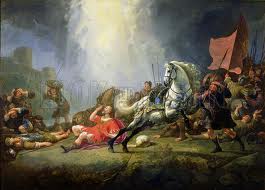
    So he, trembling and astonished, said, “Lord, what do You want me to do?”

    Then the Lord said to him, “Arise and go into the city, and you will be told what you must do.” – Acts 9:6 NKJV

    Have you had a personal encounter with the Living God?

    Saul, an enemy of Christ, religious zealot and persecutor of true followers of the Way (the Apostles and others) encountered the risen Christ. Saul was a stumbling block to those who would claim Jesus as our Lord and our God.

    Saul of Tarsus’ encounter with the risen Christ is no less significant than an earlier encounter of Moses with God in the burning bush. This man, a leading disciple of the Temple is zealous for God; yet before this personal encounter Saul was galvanized against the risen Jesus, God Incarnate.

    Saul comes to the unknown: as Moses approached the unknown and as we each approach God in faith; for God has drawn us into His Presence. We have come from our place of complete understanding onto the Holy ground of marvelous mystery.

    God IS. Jesus IS.

    Now what must I do?

    Saul had asked the risen Jesus at this moment the obvious question: NOT just, ‘what are you?’, but, ‘Who are you, Lord?’

    Saul had finally bowed down in humility to Jesus Christ, Son of God. Saul in worship finally bowed down in humility as we we all must at the moment we encounter Jesus as ‘our Lord.’

    Acts: 9:4 ESV And falling to the ground he heard a voice saying to him, “Saul, Saul, why are you persecuting me?”

    5 And he said, “Who are you, Lord?”

    And he said, “I am Jesus, whom you are persecuting.”

    “Who are you, Lord?”

    Is that what you ask of Jesus now that you have met Him?

    Lord, ‘kyrios’: This ‘relationship‘ between Jesus and a ‘Christian’ believer and follower is used over 100 times in the Acts of the Apostles. This relationship of Jesus as Lord is to show you, dear brother or dear sister in the Lord, and to show me Who Jesus IS and who we are to become in our relationship to Him as our Lord.

    Outline of Biblical Usage
    he to whom a person or thing belongs, about which he has power of deciding; master, lord
    the possessor and disposer of a thing
    the owner; one who has control of the person, the master
    in the state: the sovereign, prince, chief, the Roman emperor
    is a title of honour expressive of respect and reverence, with which servants greet their master
    this title is given to: God, the Messiah

    Before we bowed down to Christ as our Lord we were stumbling blocks to those who would believe, yet witnessed in us how Christ was NOT our Lord.

    Do you, who believe in the resurrection of Christ Jesus now ask: “What must I do?”
    • Jesus was: before He was born of Mary.
    • Jesus was: before He was crucified on the Cross
    • Jesus was: as He appeared in His broken flesh to the Apostles
    • Jesus was: when you were born
    • Jesus IS: in this very moment and place
    • Jesus IS: when your flesh must die
    • Jesus will BE: in the resurrection of souls for ALL time and eternity!

    What must we do, Lord?

    The answer of Christ is as individual and personal as our new relationship with Jesus as our Lord.

    For Saul who would become known as Paul, the Apostle to the Gentiles, the answer was clear and specific:

    Acts 9:But rise and enter the city, and you will be told what you are to do.”

    7 The men who were traveling with him stood speechless, hearing the voice but seeing no one. 8 Saul rose from the ground, and although his eyes were opened, he saw nothing. So they led him by the hand and brought him into Damascus.

    9 And for three days he was without sight, and neither ate nor drank.

    When we first encounter our risen “Lord,” we may also be blind. We will be told what to do.

    IF Jesus is your Lord, take HIS hand and allow your new Lord to lead you into the city of faith.


  • Three Widows & a Widower

    Three Widows & a Widower

    Fifteen years ago I became a widower. (We had been married more than two decades.) I know personally the loss of the widow (& widower).

    Jesus spoke of three widows:

    1. one, in a parable on the persistence of prayer to God
    2. one, of an unnamed widow who sacrificed only two mites to God at the Temple (leptons or half-farthing, worth less than half of one cent)
    3. and one, a familiar widow from scripture.

    Jesus’ illustrations were not so much about what Christ followers must do for widows.

    Jesus uses these widows to demonstrate faith to us.

    Jesus’ rebuke here is how God used a faithful widow who was NOT part of the family of God (Israel). He spoke to the people of his own hometown, Nazareth, were Jesus was rejected.

    Let the church remember our widows and widowers, that Christ might not need to site the faith of an unbeliever to christians.

    Luke 4:25 But in truth, I tell you, there were many widows in Israel in the days of Elijah, when the heavens were shut up three years and six months, and a great famine came over all the land, 26 and Elijah was sent to none of them but only to Zarephath, in the land of Sidon, to a woman who was a widow.

    1 Kings 17

    English Standard Version (ESV)

    The Widow of Zarephath

    8 Then the word of the Lord came to him, 9 “Arise, go to Zarephath, which belongs to Sidon, and dwell there. Behold, I have commanded a widow there to feed you.” 10 So he arose and went to Zarephath.

    And when he came to the gate of the city, behold, a widow was there gathering sticks.

    Suppose you could only gather sticks to cook some food (what little they had) during a drought. Enter the Prophet of God, Elijah.

    And he called to her and said, “Bring me a little water in a vessel, that I may drink.”

    The widow humbly obeys, as she would her deceased husband or any man of authority.

    11 And as she was going to bring it, he called to her and said, “Bring me a morsel of bread in your hand.”

    Now this destitute woman challenges the bold request of this strange man.

    12 And she said, “As the Lord your God lives, I have nothing baked, only a handful of flour in a jar and a little oil in a jug. And now I am gathering a couple of sticks that I may go in and prepare it for myself and my son, that we may eat it and die.”

    13 And Elijah said to her, “Do not fear; go and do as you have said…

    (‘Good. I’ll be done with this bothersome stranger,’ she must have thought, ‘and return to my misery.’)

    The widow’s son is obviously unable to gather firewood, perhaps because he is only a boy in need of everything (as children must depend on father and mother for everything).

    Yet the man of God continues:

    … But first make me a little cake of it and bring it to me, and afterward make something for yourself and your son.

    14 For thus says the Lord, the God of Israel, ‘The jar of flour shall not be spent, and the jug of oil shall not be empty, until the day that the Lord sends rain upon the earth.’”

    For thus says the Lord…

    A command to be obeyed (only IF the man is a true Prophet of the Lord God of Israel).

    15 And she went and did as Elijah said.

    Time passes, but the provision of God does not.

    And she and he and her household ate for many days. 16 The jar of flour was not spent, neither did the jug of oil become empty, according to the word of the Lord that he spoke by Elijah.

    More time passes.

    17 After this the son of the woman, the mistress of the house, became ill. And his illness was so severe that there was no breath left in him. 18 And she said to Elijah, “What have you against me, O man of God?

    Once more the woman is bold because God has taken the life of her son.

    She continues:

    You have come to me to bring my sin to remembrance and to cause the death of my son!”

    How inexplicable had been the death of his father to the widow’s young son.

    • How great the loss of a mother or father to a young child.

    Yet with the help of the Prophet, she has raised her son through her grief; and before her grief is ended her son also dies.

    • How tragic to lose your husband.
    • How sorrowful to lose your wife.
    • How unexpected and hopeless is the untimely death of your own child: the flesh and blood of you own womb; the joy of your own seed!

    19 And he said to her, “Give me your son.”

    And he took him from her arms and carried him up into the upper chamber where he lodged, and laid him on his own bed. 20 And he cried to the Lord, “O Lord my God, have you brought calamity even upon the widow with whom I sojourn, by killing her son?”

    Elijah is crying out to the Lord in prayer. The Man of God is pleading for the life of this son even as his mother has plead to the Man of God in her bold faith.

    21 Then he stretched himself upon the child three times and cried to the Lord, “O Lord my God, let this child’s life come into him again.”

    22 And the Lord listened to the voice of Elijah. And the life of the child came into him again, and he revived. 23 And Elijah took the child and brought him down from the upper chamber into the house and delivered him to his mother.

    And Elijah said, “See, your son lives.”

    24 And the woman said to Elijah, “Now I know that you are a man of God, and that the word of the Lord in your mouth is truth.”

    RESURRECTION! Bodily resurrection and the resurrection of the soul: both are possible! Both have been witnessed. Both require great faith, as the widow has shown.

    The widow of Zarephath had said of Elijah: “Now I know that you are a man of God;” however before she knew it, she had great faith.

    Along comes Jesus to His neighbors in Nazareth and it seems that (like many of us) that they have very little faith.

    IF a man came to you and asked for your last morsel of bread, would you give it even to Jesus?

    Matthew 25:

    35 For I was hungry and you gave me food, I was thirsty and you gave me drink, I was a stranger and you welcomed me…


    42 For I was hungry and you gave me no food,

    I was thirsty and you gave me no drink,

    43 I was a stranger and you did not welcome me,

    naked and you did not clothe me,

    sick and in prison and you did not visit me.’


    44 Then they also will answer, saying, ‘Lord, when did we see you hungry or thirsty or a stranger or naked or sick or in prison, and did not minister to you?’

    45 Then he will answer them, saying, ‘Truly, I say to you, as you did not do it to one of the least of these, you did not do it to me.’

    46 And these will go away into eternal punishment, but the righteous into eternal.

    Have you remembered the widows?

    The widowers?

    Those dejected by the trials of this earthly life?

    Perhaps you are gathering your last sticks for the hopeless situation of your family and along comes one asking you for your last morsel of bread.

    How will you answer?

    Will you have faith?


  • How much do you owe God?

    How much do you owe God?

    You think of every dollar, euro or yen you make as being yours – it is what you earned.

    money symbols

    This is not a reminder of what you may owe the government on ‘tax day’ nor a reminder that our benevolent government may “refund” some money to you (as if you had not earned it instead of them).

    This is not even a Biblical reminder that we are obligated to give one tenth of our income back to God (a tithe) and also give to Caesar what is Caesar’s (another tithe, or so…).

    Jesus poses a question to us about what we owe to God; in this context, not so much as may be measured in dollars and cents, euros or any measure of gold, but what we fail to measure of God giving what they deserve to those who we think deserve something different.

    Consider this:

    What do you deserve from God? 

    (Should you expect a large refund?)

    Luke 7

    English Standard Version (ESV)

    36 One of the Pharisees asked him to eat with him, and he went into the Pharisee’s house and reclined at the table. 37 And behold, a woman of the city, who was a sinner, when she learned that he was reclining at table in the Pharisee’s house, brought an alabaster flask of ointment, 38 and standing behind him at his feet, weeping, she began to wet his feet with her tears and wiped them with the hair of her head and kissed his feet and anointed them with the ointment.

    Let’s pause here for a moment from a story of which you may be too familiar.

    Suppose Jesus comes over to your house? What would you have for dinner? Where would He sit? How would you welcome Jesus to eat at your table?

    We are Pharisees. We know a lot about God and we know a lot about the Bible. Jesus, (of questionable parentage, from Nazareth) a sojourner in His own land, accepts your invitation to dinner. The crowds have been talking about Him and even fellow worshipers of God have witnessed miracles.

    “Come in. Sit over here. Let’s talk about God. 🙂 ”

    Now, a common prostitute slips in while you are eating! (You know her, because she came to church once, but is still plying her trade. {Of course, none of the men of the church hang out with here at the pub down the street.}) Before you can ask her to leave, she makes a scene directly with your guest. (What would God think?)

    The woman has thrown herself on Jesus at His feet. (No doubt this woman has thrown herself at many men.) She is crying out to Jesus and caressing His feet. (Who knows what she may do next?) Then she splashes a large amount of expensive perfume over Jesus’ sandals and feet – the odor so great as to ruin the aroma of our well-prepared meal. What will this teacher of God do? Will He allow me, even ask me to throw her out of my house?

    39 Now when the Pharisee who had invited him saw this, he said to himself, “If this man were a prophet, he would have known who and what sort of woman this is who is touching him, for she is a sinner.”

    40 And Jesus answering said to him, “Simon, I have something to say to you.” And he answered, “Say it, Teacher.”

    (Here it comes… Jesus’ permission for me to get rid of her.)

    41 “A certain moneylender had two debtors. One owed five hundred denarii, and the other fifty. 42 When they could not pay, he cancelled the debt of both. Now which of them will love him more?”

    (What? This Jesus has gone back to talk about God and things of God as we were doing before. Maybe this so-called prophet couldn’t care less what’s going on here.

    Let’s see… what answer?)

    43 Simon answered, “The one, I suppose, for whom he cancelled the larger debt.” And he said to him, “You have judged rightly.”

    (Of course. That was an easy one. But what is His point? I know this Rabbi is going somewhere with this. What does this comparison have to do with God? God is no moneylender. I guess the moneylender is like God. I think I would want both men to pay me back.)

    Then Jesus looks down to His feet and the woman making the scene.

    (Now, at last, He has had enough and will ask me to have her leave. I guess she has caused us no harm… only embarrassment.)

    44 Then turning toward the woman he said to Simon, “Do you see this woman? I entered your house; you gave me no water for my feet, but she has wet my feet with her tears and wiped them with her hair. 45 You gave me no kiss, but from the time I came in she has not ceased to kiss my feet. 46 You did not anoint my head with oil, but she has anointed my feet with ointment.

    (I should have welcomed Jesus. He is right: I was unsure of Him and did not treat Him as my guest of honor. But this woman! This is not her house. She should not even be here.)

    47 Therefore I tell you, her sins, which are many, are forgiven—for she loved much. But he who is forgiven little, loves little.” 48 And he said to her, “Your sins are forgiven.”

    (Remarkable! He did know. Now He’ll send her on her way. … “But he who is forgiven little, loves little.” The debtors! She is the debtor. Of course. She owes God much because of all of her sins.)

    49 Then those who were at table with him began to say among themselves, “Who is this, who even forgives sins?”

    50 And he said to the woman, “Your faith has saved you; go in peace.”

    (My guest has just told a prostitute, “Your sins are forgiven.” What can this mean? He said, “Your faith has saved you.” How can this be?)

    Romans 1

    English Standard Version (ESV)

    16 For I am not ashamed of the gospel, for it is the power of God for salvation to everyone who believes, to the Jew first and also to the Greek. 17 For in it the righteousness of God is revealed from faith for faith, as it is written, “The righteous shall live by faith.”

    God’s Wrath on Unrighteousness

    18 For the wrath of God is revealed from heaven against all ungodliness and unrighteousness of men, who by their unrighteousness suppress the truth.

    Romans 2

    God’s Righteous Judgment

    2 Therefore you have no excuse, O man, every one of you who judges. For in passing judgment on another you condemn yourself, because you, the judge, practice the very same things. 2 We know that the judgment of God rightly falls on those who practice such things. 3 Do you suppose, O man—you who judge those who practice such things and yet do them yourself—that you will escape the judgment of God? 4 Or do you presume on the riches of his kindness and forbearance and patience, not knowing that God’s kindness is meant to lead you to repentance? 5 But because of your hard and impenitent heart you are storing up wrath for yourself on the day of wrath when God’s righteous judgment will be revealed.

    Cross by waterTwo debtors: one, a repentant prostitute; the other, an unrepentant believer (expecting a refund).

    Which are you?

    Romans 3

    No One Is Righteous

    9 What then? Are we Jews any better off? No, not at all.

    For we have already charged that all, both Jews and Greeks, areunder sin, 10 as it is written:

    “None is righteous, no, not one;
    11     no one understands;
    no one seeks for God.
    12 All have turned aside; together they have become worthless;
    no one does good,
    not even one.”

    How much do you owe God?

    For our Heavenly Father has sent His only Son to the cross for our sins – a great debt none can repay.

    Yet, fellow sinner, we do owe Jesus our Lord much worship and love; love as unabashedly shown by the humility and repentance of the woman who bowed and wept at Jesus’ feet.

    Though we are sinners and great debtors, Christ Jesus IS a great and gracious Lord.

    Worship Him will all your love; for He sacrificed all of His love for you.