Tag: faith

  • Witnesses to Jesus Risen! – Thomas

    Witnesses to Jesus Risen! – Thomas

    Jesus is risen!

    .. You can’t prove it, can you?

    Christ Born & Witnessed, Crucified, Risen, Ascended..

    by Roger Harned

    It’s really easy to hear someone’s story of a baby born in a manger during the census of Augustus Caesar.

    The Babe in a manger (and His mother) have become our iconic emojis of virtue.

    Roger Harned talkofJesus.com – on Christmas traditions replacing the significance of Christ’s Resurrection

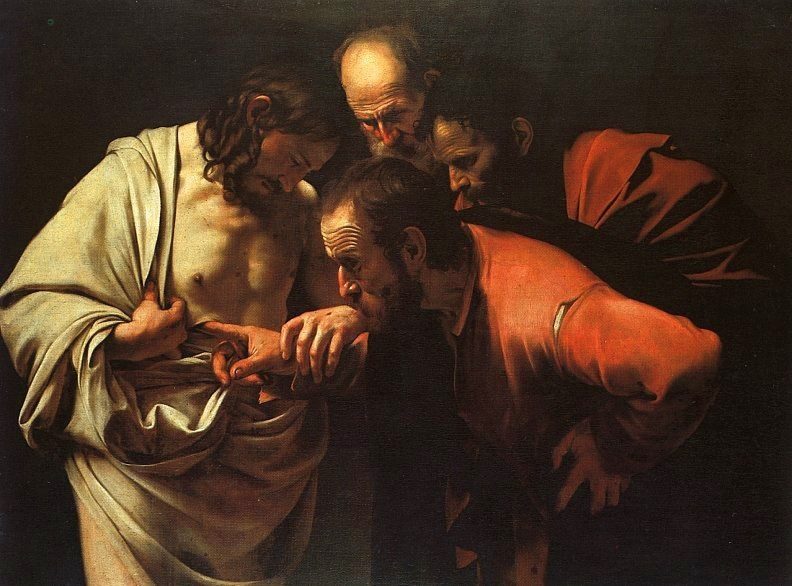
    The Witness of Thomas

    Imagine what Thomas must have pondered before he saw Jesus once more..

    His miracles were authentic. He was a man like us, yet so unlike us.

    We discovered many times that the Lord Jesus was more than any man we had ever met, even John the Baptist..

    Like when He calmed the raging Sea of Tiberius, fed thousands and especially when Jesus healed the sick and even raising some like Lazarus just recently from the grave.

    But we witnessed also the defeat of Israel’s Messiah, our only hope — His rejection by our own Jewish leaders and Rome’s cruel sentence of His death on a cross, mocking our Rabbi as “Jesus, the King of the Jews.”

    I wasn’t close for His execution, for I was afraid like all the others; but Jesus is certainly dead as any other nailed to a Roman Cross.

    John 20 (continued)

    John continues his witness of Jesus’ resurrection appearances which first were to a group of women, Witnesses to Jesus Risen! – Mary Magdalene then to ten of the Eleven Witnesses to Jesus Risen! – the Eleven remaining behind locked doors.

    This is the witness of Jews who had hoped that Jesus would restore the Kingdom of Israel.
    (Translations incl. Complete Jewish Bible) 
    All of the Twelve were born as Jews, as was the Lord Jesus (Yeshua).

    24 Now T’oma [Didymus in common Greek] (the name means “twin”), one of the Twelve, was not with them when Yeshua came.

    When the other talmidim [disciples] told him,

    “We have seen the Lord,”

    he replied, “Unless I see the nail marks in his hands, put my finger into the place where the nails were and put my hand into his side,

    I refuse to believe it.”

    Believe it .. or not

    Well there it is: Like what happens so frequently, someone else tells us about the biggest event ever in their lives.. AND we missed it. Just like Thomas, we weren’t there.

    I either don’t believe them, pause with the uncertainty of doubt .. OR maybe I find it beyond belief that the Lord did not also choose ME to be part of such a life-changing moment.

    Perhaps you and I are not so unlike ‘doubting Thomas’ as we would like to believe.

    A timely note about time:
    
    Even though we've slowed the actual timeline of events between Jesus raising Lazarus and His own Resurrection, I will not delay John's Gospel an additional week to reflect real time. RH

    26 Eight days later His disciples were again inside, and Thomas was with them. Jesus came, the doors having been shut, and stood in their midst..

    Although the doors were locked, Yeshua came, stood among them and said, “Shalom aleikhem!”

    27 Then he said to T’oma, “Put your finger here, look at my hands, take your hand and put it into my side. Don’t be lacking in trust, but have trust!”

    Witnessed Crucified; Witnessed Risen

    Thomas finally experiences the risen Christ Jesus the slain Messiah of Israel the same as the other Apostles and the women who saw Him first.

    Then He said to Thomas, “Reach your finger here, and look at My hands; and reach your hand here, and put it into My side. Do not be unbelieving, but believing.”

    John 20:27 NKJV

    28 Thomas answered and said to Him, “My Lord and my God!”

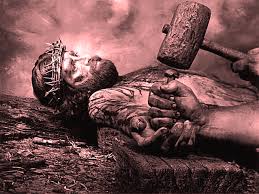
    Depicting Christ Crucified and Jesus Risen to Life!

    The scene of Thomas witnessing the wounds of the Risen Messiah, Jesus, their friend and their Teacher is beyond illustration.

    John must have recalled Jesus’ similar approach to Martha just before the Lord raised her brother Lazarus to life.

    “I am the resurrection and the life,” Jesus had asked the bereaved sister of Lazarus. “Do you believe this?”

    John 11:25-26 excerpt with context

    Martha and Mary had mourned the death of their brother.

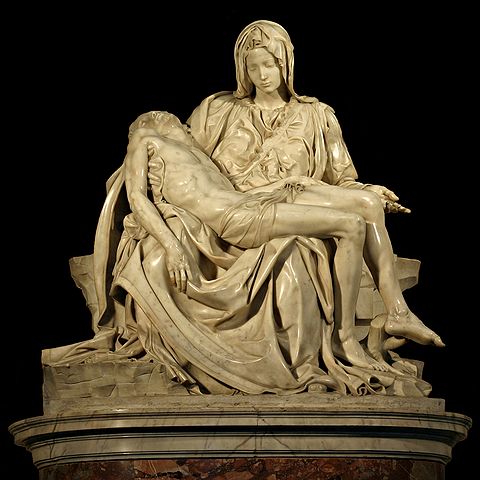
    Mary the mother of Jesus also mourned helplessly. She could not save Him from suffering as she sorrowfully watched His death on a Cross nearby.

    Faithful painters of the Renaissance could neither paint nor sculpt the horror of the Lord Jesus’s wounds.

    Our focus draws to the hearts of the living rather than to the Redeemer of our lives.

    Believe by faith

    29 Jesus said [to Thomas, with all the Disciples present], “Because you have seen me, you have believed.

    Blessed are those who have not seen and yet believe.”

    By their witness and that of many others who had seen the risen Christ Jesus, many came to believe by the time John writes his Gospel, even many who would take up their cross to follow Him. These too the Apostle John would witness.

    30 So then, many other signs Jesus also performed in the presence of the disciples, which are not written in this book; but these have been written so that you may believe that Jesus is the Christ, the Son of God; and that by believing you may have life in His name.

    To be continued...
    Next: We will return briefly to further witness of the Eleven near the conclusion of John's Gospel.
    
  • James – a Word on Works – 3

    James – a Word on Works – 3

    In a visual word about works. James entreats us, “let everyone see your works,” in this proverb of James, ‘be doers of the word.’

    What does it have to do with his initial advice, Consider it a great joy, my brothers and sisters, whenever you experience various trials?”

    James details the connection as he continues his pastoral letter to the church (actually, several churches). He makes a case that our works refine our faith and prove our faith to other potential followers of the Lord.

    But be doers of the word and not hearers only, deceiving yourselves.

    James 1:22 CSB

    Hearing and Doing the Word

    Did you ever hear the rebuke as a child, “You have two ears and one mouth?” It’s advice from this section of the letter of James to the church. Perhaps you haven’t read it in a while, but allow your heart to listen well to the Spirit.

    James 1:19-2:26

    19 My dear brothers and sisters, understand this:

    Everyone should be quick to listen, slow to speak, and slow to anger, for human anger does not accomplish God’s righteousness.

    James 1:19b-20 CSB

    Think about what we see and hear everyday. The world has this upside down. Doubtless the world of the first century encountered the same.

    People are angry about this, angry about that. They speak first and frequently. We can see it on television or online, and social media thrives on the polarized opinions of those who speak without understanding.

    We are quick to anger, impulsive to speak, and slow fo listen.

    How we reflect the world, dear claimants of Christ!

    Sadly, our works in this area of speaking boldly to others out of our zeal for the Lord likely needs the most work.

    Listen

    It takes humility to listen to another before speaking your heart.

    Do you converse with a brother or a sister in Christ? Our conversation with and unbeliever should be different, but the same principles apply. Before we answer do we understand the heart of the one speaking or if they oppose Christ possibly, but have interest because of something they ask about?

    “Swift to hear,” say some translations. Certainly not swift to react, as is our tendency. But to whom must we listen? What does the Apostle want the church to hear?

    Perhaps the most telling use of the Greek word here is found in a familiar teaching from Jesus.

    “You have heard that it was said, An eye for an eye and a tooth for a tooth. – Matthew 5:38

    It’s the traditional measured response of justice, seek no more from someone who has sinned against you than what he has taken by his trespass. Of course what follows is the Lord’s command for us to love our enemies.

    Though we all want “justice” for our enemy, we also seek “mercy” for our transgressions of the law. So let’s skip to the issue of anger, source of our own reactive speech, for the wisdom of James’ suggestion.

    Anger

    Everyone should be quick to listen … and slow to anger, 20 for human anger does not accomplish God’s righteousness.

    This is the only place James uses this word, which points to our reaction to the anger of others. The root verb suggests a stretching out in order to understand another. James continues:

    21 Therefore, ridding yourselves of all moral filth and the evil that is so prevalent, humbly receive the implanted word, which is able to save your souls.

    Don’t react, but receive the implanted word. (We’ll get to that in a moment.)

    Favoritism

    2:1 My brothers and sisters, do not show favoritism as you hold on to the faith in our glorious Lord Jesus Christ.

    … and yet you say to the poor person, “Stand over there,” or “Sit here on the floor by my footstool,” 4 haven’t you made distinctions among yourselves and become judges with evil thoughts?

    James cautions the church against certain worshipers who expect special treatment. The ‘hearers’ to whom he writes must guard against men and women actively provoking the saints of the church to react with anger.

    Yet he reminds us that those souls provoking us to anger ought to see the love of Christ Jesus in our response.

    Fellow ‘church member,’ allow me to restate in an excerpt from a different version. James addresses us:

    A Warning against Prejudice

    James 2: My dear brothers and sisters, how can you claim to have faith in our glorious Lord Jesus Christ if you favor some people over others?

    2 For example, suppose someone comes into your meeting dressed in fancy clothes and expensive jewelry… 3 If you give special attention… to the rich person, but you say to the poor one, “You can stand over there…”—well, 4 doesn’t this discrimination show that your judgments are guided by evil motives?

    5 Listen to me, dear brothers and sisters. Hasn’t God chosen the poor in this world to be rich in faith? Aren’t they the ones who will inherit the Kingdom he promised to those who love him? 6 But you dishonor the poor!

    Isn’t it the rich who oppress you and drag you into court? 7 Aren’t they the ones who slander Jesus Christ, whose noble name you bear?

    8 Yes indeed, it is good when you obey the royal law as found in the Scriptures: “Love your neighbor as yourself.”

    9 But if you favor some people over others, you are committing a sin. You are guilty of breaking the law.

    James 2 excerpt from NLT (preaching emphasis my own)

    This very favoritism provokes my anger this very moment!

    Yet James asks us to keep silent, listen, do not speak first and remember that “Human anger does not produce the righteousness God desires. 1:20

    Convicted!

    The Lord holds all authority to punish or pardon. Leave it to His will.

    Slow to speak

    Whenever we face ‘various trials,’ inevitably they will come from the actions and words of others. How difficult for us to show the same humble temperament as our Lord Jesus.

    James reminds us (in verse 8), ‘If you love your neighbor as yourself,’ as Jesus taught, ‘you are doing well.’ Then (in verse 9) he applies the challenge of favoritism. Now apply this to your own reactions.

    Were you slow to speak before you judged your neighbor?

    Did you listen first, before you answered?

    James addresses real issues of the church, like anger and favoritism.

    Therefore put away all filthiness and rank growth of wickedness and receive with meekness the implanted word, which is able to save your souls.

    James 1:21 RSV

    Quick to hear, slow to speak, slow to anger; for our own moral filthiness and wickedness must not arrogantly replace the word of God.

    Mirror of our Hypocrisy

    James illustrates our brief partial glances at self in this way:

    If you are a hearer of the word and not a doer of the word (in other words, if you have not works), then you are like one observing your own face in the mirror. You then go away, forgetting what you are like.

    Isn’t this our false image of our own righteousness?

    James urges you and me to stand in front of the mirror for a while. (I hate to do that.) Worse, for those of us who quickly walk away, he asks us to look into the reflection of what God wants to see.

    But the one who looks intently into the perfect law of freedom and perseveres in it, and is not a forgetful hearer but a doer who works—this person will be blessed in what he does.

    James 1:25 CSB

    Royal Law vs Law of Freedom

    See the freedom Christ gives us. Persevere in the perfect law and don’t forget to work out your salvation with fear and trembling. Be blessed in your trials for the Lord.

    All of the Apostles, including James in this letter, encourage the new church.

    Christ redeemed slaves of the Law, awaiting our sentence of death, to the grace of the law of freedom.

    The Royal Law

    A good reason for true followers of Jesus to be slow to speak lies in our varying opinions of how to apply the Commandments. Most of us have a great need to consider how to act as one under authority. Here many disagreements begin as anger simmers below the surface.

    Your opponent asks, “By whose authority do you tell me what I must do?

    Paul tells us in one instance illustrating such authority.

    “I was traveling to Damascus under these circumstances with authority and a commission from the chief priests.Acts 26:12

    Saul (Paul) testifies that his mission and authority came directly from the chief priests (bound by the Authority of Almighty God).

    His court case before King Herod Agrippa, the last reigning King of Judea with the royal title [AD 41-44], takes place about the same time as the letter of James. Agrippa’s royal authority (as opposed to a priestly commission) was his appointment of succession as king, confirmed by the authority of Rome.

    Authority

    ἐξουσία – power, authority, right, liberty, jurisdiction, strength – power of choice, liberty of doing as one pleases

     Strong’s G1849 – exousia

    Royal authority, religious leadership authority, government authority, military authority – any and all authority remain contentious issues to this day, as they were for the first century church.

    Be slow to speak, therefore; that you might hear not only the words, but the authority from where they speak,

    Jesus cautions followers to obey all of these authorities, where their law applies to us. Further, the Lord presents a practical example of faith through a Roman centurion.

    Luke 7

    6 Jesus …was not far from the house, the centurion sent friends to tell him, “Lord, don’t trouble yourself, since I am not worthy to have you come under my roof…

    Beloved, here is true humility, true acceptance of Jesus’ Divine Authority. The centurion continues:

    But say the word, and my servant will be healed. For I too am a man placed under authority, having soldiers under my command.

    I say to this one, ‘Go,’ and he goes; and to another, ‘Come,’ and he comes; and to my servant, ‘Do this,’ and he does it.”

    9 Jesus heard this and was amazed at him, and turning to the crowd following him, he said, “I tell you, I have not found so great a faith even in Israel.”

    Do you — do the shepherds of your church have such authority?

    The Law of Freedom

    What should we say if we speak from the Law of Freedom?

    The Greek word here is also translated as liberty in some translations. Perhaps it will help to know that in Christ we have the liberty to speak judiciously. James had pointed to this liberty when he warned of looking in the mirror. Later he provides this law for us as judges of our own speech.

    [I reverse the order of James description to provoke your thought.]

    13 For judgment is without mercy to the one who has not shown mercy.

    In Christ we are free to judge, yet will we show mercy?

    [Therefore,] 12 Speak and act as those who are to be judged by the law of freedom. 13b Mercy triumphs over judgment.

    Jesus’ authority gives us that same grace to show mercy to another, who like us, does not deserve mercy for breaking the Royal Law of Almighty God.

    Faith and Works

    What good is it, my brothers and sisters, if someone claims to have faith but does not have works? Can such faith save him?

    James 2:14 CSB

    James immediately goes to examples so familiar of faithlessness and hypocrisy by those of the church. He points to the same partiality and inaction to help the poor where our words only have no impact for Christ.

    “Go in peace, stay warm, and be well fed…” Words, empty, fruitless dismissal of a soul in need.

    18 But someone will say, “You have faith, and I have works.”

    James never argues that we are saved by works (as some misleadingly emphasize). Nor does he dispute that we are saved by faith alone (which some use as excuse for a no-works easy one-time claim to Christ).

    20 Senseless person! Are you willing to learn that faith without works is useless?

    He continues with the scriptural examples of Abraham and Rahab, then categorically states:

    You see that a person is justified by works and not by faith alone… For just as the body without the spirit is dead, so also faith without works is dead.

    James 2:24,26 CSB

    James tells us, “judge the true faith of one who claims Christ by their works.

    Do they show evidence of their faith by how Jesus has become their Lord? Do you?

    δικαιόω – Justified

    δικαιόω – dikaioō from the root  δίκαιος (G1342)

    • to render righteous or such he ought to be
    • show, exhibit, evince, one to be righteous, such as he is and wishes himself to be considered
    • declare, pronounce, one to be just, righteous, or such as he ought to be

    The root word of ‘just‘ is more often translated as ‘righteousness.’

    • righteous, observing divine laws
    • in a wide sense, upright, righteous, virtuous, keeping the commands of God
    • in a narrower sense, rendering to each his due and that in a judicial sense, passing just judgment on others, whether expressed in words or shown by the manner of dealing with them

    James has much more practical advice for the church.

    To be continued...
  • Hebrews 11- a Genealogy of Faith

    Now faith is the substance of things hoped for, the evidence of things not seen.

    Hebrews 11:1 NKJV

    Faith is the Substance

    What is your greatest hope? Your eternal longing?

    ἐλπίζω elpizō – to hope

    How can you be sure of the things we hope for, to be certain of the things we cannot see?

    Matthew used this same word for hope pointing back to the prophesy of Isaiah.

    “And in His name the [nations] Gentiles will hope.”

    Matthew 12:21 NASB

    Previously the author of Hebrews has called on us to ‘draw near with a true heart in full assurance of faith.’How do we know that the new covenant in Christ now replaces the old?

    In the same way that our forefathers had hope – by faith.

    πίστις pistis – faith

    Faith is the substance, faith is the reality, faith is the assurance – many descriptions, all showing it as evidence of our hope.

    We may discuss and dissect the reasons for our hope in God, our confidence in Christ. And we may wander from the path of true faith from time to time. Yet its evidence remains as the light of our hope eternal.

    faith – conviction of the truth of anything

    • a conviction or belief respecting man’s relationship to God and divine things
    • the conviction that God exists and is the creator and ruler of all things
    • relating to Christ a strong and welcome conviction that Jesus is the Messiah, through whom we obtain eternal salvation in the kingdom of God
    • belief with the predominate idea of trust (or confidence) whether in God or in Christ, springing from faith in the same

    Our faith is the evidence of things hoped for. Yet some have faith in that which is not reality or truth, therefore the writer of Hebrews follows with evidence from history.

    2 For by it our ancestors won God’s approval.

    a genealogy of Jewish faith

    אֱמֶת = Faith is real and true; faith is truthfulness

    Hebrews 11:

    Without elaboration on the author’s entire genealogy of faith, take a brief look at: the verse person exemplifying faith – Old Testament verse equivalent.

    6 Now without faith it is impossible to please God, since the one who draws near to him must believe that he exists and that he rewards those who seek him.

    Hebrews 11:6 CSB

    13 These all died in faith, although they had not received the things that were promised. But they saw them from a distance, greeted them, and confessed that they were foreigners and temporary residents on the earth.

    The author of Hebrews takes this genealogy of faith and applies it as evidence that these jewish ancestors had not yet received the Lord’s certain promise. He continues with Moses, who of course recorded these genealogies along with the Law in five books.

    Moses – Mosheh – מֹשֶׁה

    23 By faith Moses, after he was born, was hidden by his parents for three months… reference to Exodus 2:2.

    He proceeds with a more extended biography of Moses relating it to institutions of faith established for a later time, that is, fulfillment by the Messiah. Yes, Moses was a savior of the Hebrews, even when they resisted the Lord. But the Law and Covenants of Moses were imperfect forerunners of the Perfection to come.

    By faith he instituted the Passover and the sprinkling of the blood, so that the destroyer of the firstborn might not touch the Israelites.

    Hebrews 11:28 CSB; מֹשֶׁה

    From Moses to Christ

    30 By faith the walls of Jericho fell down … 31 By faith Rahab the prostitute welcomed the spies in peace and didn’t perish with those who disobeyed.

    32 And what more can I say? Time is too short for me to tell about Gideon, Barak, Samson, Jephthah, David, Samuel, and the prophets, 33 who by faith…

    Familiar stories of faith follow (also worth your time in brief here). He races through the generations from the Judges, past King David and to the prophets. Then addition of a prophetic reminder of what these persecuted Hebrews, both Jews and Christians were beginning to experience.

    Persecution by the world

    … Other people were tortured, not accepting release, so that they might gain a better resurrection.

    36 Others experienced mockings and scourgings, as well as bonds and imprisonment. 37 They were stoned, they were sawed in two, they died by the sword, they wandered about in sheepskins, in goatskins, destitute, afflicted, and mistreated.

    Are you familiar with the persecution of Jews and Christians by Roman rulers like Claudius, Nero, Domitian and later many others?

    Those who received these letters to the church either needed or would need encouragement due to these cruelties for followers of Jesus. Even in this day Christians suffer and die for our faith.

    According to Open Doors, every month:

    • 255 Christians are killed
    • 104 are abducted
    • 180 Christian women are raped, sexually harassed or forced into marriage
    • 66 churches are attacked
    • 160 Christians are detained without trial and imprisoned

    More Christians died for their faith in the 20th century than in the 1st, yet Christians living in a world of hatred have always suffered for the sake of Christ.

    Christians martyred since the time of Jesus at 70 million

    David B Barrett, researcher, Christian Today

    Returning to the author of Hebrews’ argument for those suffering for Christ:

    39 All these were approved through their faith, but they did not receive what was promised…

    And he assures us that God provided something better for us, in Christ.

    To be continued...