We begin our SERIES from the Epistles of three Apostles with Simon Peter.
Peter – a Foundation of Apostolic Faith
Our best impressions of Simon Peter from the Gospels and the early ACTS of the Apostles cannot fully convey the heart of this ROCK whom JESUS had claimed for building His Church..
We tend to recall moments from back in the AD 30’s with Peter in Jerusalem.. Yet even then the Apostle was sent to surrounding towns with the Gospel.
33 Years – Journeys from Capernaum to Rome
C
Capernaum
Jesus had appeared to Peter and others as they fished near the shore of the Sea of Galilee. The Lord instructed Simon Peter and the Apostles to go into all the world with the Gospel — Good News that they had all seen and touched, and had heard and obeyed the Lord – the risen Christ JESUS.
Now it is Simon Peter who will build not one church in Jerusalem, Capernaum or even Rome, but a living Church throughout the world (of Rome) — connected by the love of Christ and the Holy Spirit into a fellowship of saints sanctified and separated to the faith of eternal life in the Lord Jesus Christ.
Peter’s gospel is an apostolic gospel; Simon Peter’s faith is a Christian faith
So now after Jesus’ ascension, the Apostle will sojourn between Capernaum, Jerusalem and other Jewish communities of Galilee, eventually meeting Jewish believers from every corner of the world who will come to faith in Jesus Christ.
Simon Peter, sought out as a criminal by leading Jews opposing their own Messiah, would eventually be brought to Rome. Christ’s leading Apostle would also eventually be crucified there, but not until an appointed time after many years proclaiming the Gospel.
Like Paul and other Apostles, Peter wrote epistles and instructions for many years to those he had encouraged in the churches throughout Asia.
2 Peter
The World into which the Apostles Preached
~ AD 30’s – AD 60’s
We cannot fully appreciate the magnitude of Jesus’ great commission with only the Gospel accounts or even all Scripture of the Old Testament.
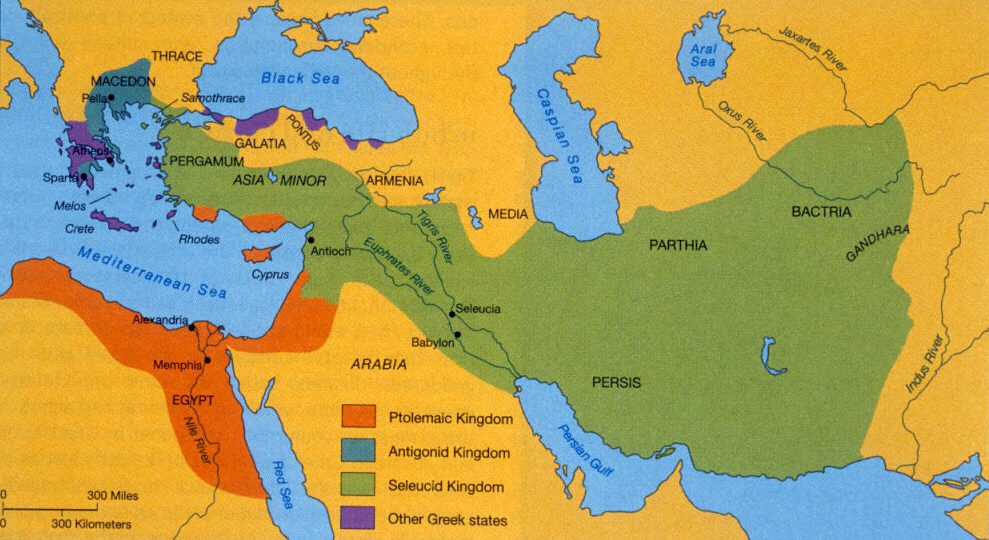
This is due a historic extended silence of God during a post-exilic gap which includes the powerful reign of Alexander the Great (of Macedonia) prior to the dominance of Rome.
a ROMAN world
The Messiah of Israel was given into a Roman world, not a Judaic land.
This Jewish fisherman, Simon Peter of Capernaum on the Sea of Tiberius (so renamed by Rome), though not a Roman, lived a daily existence dependent on Rome, This same dependence had also Romanized the half-Jewish Herod’s, adopted into an all-inclusive culture of the Caesar’s.
Without stepping into the Jewish controversies into which Jesus sometimes ventured about the state of Abrahamic or Mosaic of Semitic faith, let’s just say that Simon Peter’s faith, both before meeting the Messiah and after Jesus’ resurrection until now, is not specifically tied to either the Jewish sects returned from Medo-Persia or those Jews left in a devastated Israel and Judah.
Simon Peter sought to preach the Gospel to his fellow Jews, many who were local proselytes. Rome frequently rejected Jews, often sent on their way at any sign of controversy in distant provinces.
The Apostle writes to churches in lands once dominated by Alexander. And thousands of Jews had remigrated into a European world from an ancient Asia, once dominated by the Babylonians, Medes and Persians. [See your Old Testament.]
Greek culture prevails long after the return of the Jews into a Herodian re-built Roman Jerusalem.
The Twelve Apostles (and I include Matthias) led by Simon Peter were all Jews. And the scattered Jews throughout a world now dominated by Rome wanted to hear from these Apostolic witnesses of the risen Son of David, the Messiah Jesus.
a Second Epistle of Simon Peter
In case you missed the definition of Epistle, you may read it HERE from our introduction.
Simon Peter, a servant and apostle of Jesus Christ,
To those who through the righteousness of our God and Savior Jesus Christ have received a faith as precious as ours:
2 Peter 1:1 NIV
Who is Peter writing to?
We’ll get back to that in the context of this second letter, but let’s take a quick glance at his first epistle for an introductory clue.
παρεπίδημος Aliens of the Diaspora
Peter, an apostle of Jesus Christ,
To those who are elect exiles of the Dispersion in Pontus, Galatia, Cappadocia, Asia, and Bithynia, according to the foreknowledge of God the Father, in the sanctification of the Spirit, for obedience to Jesus Christ and for sprinkling with his blood:
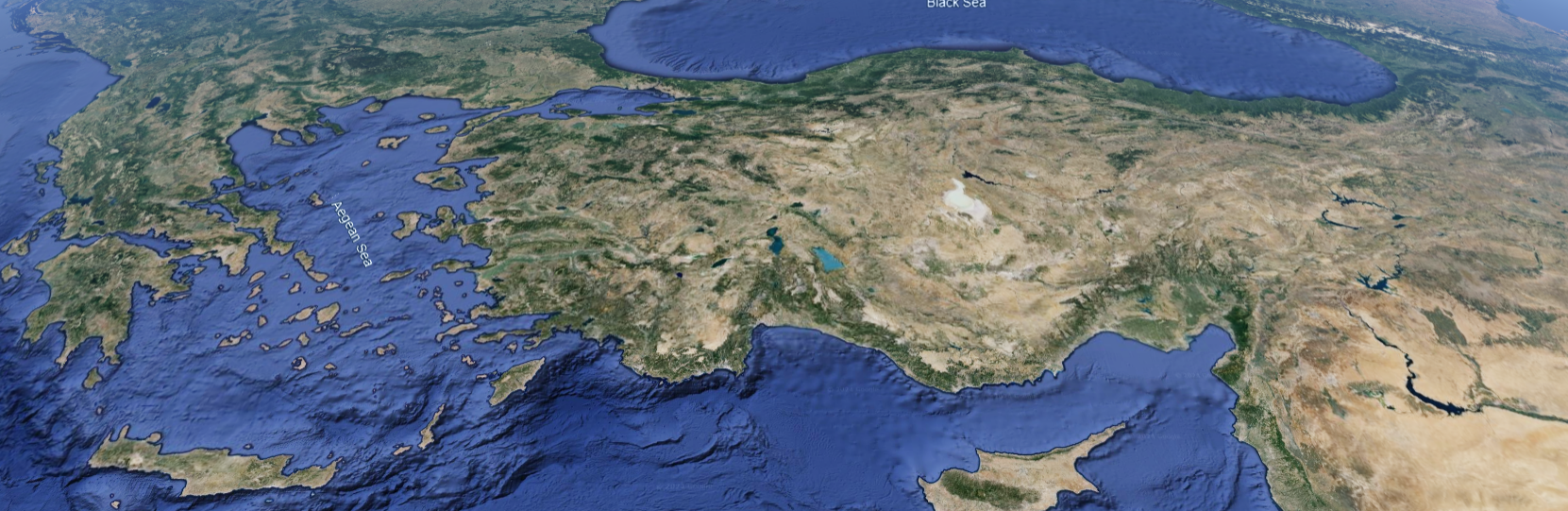
Anatolian peninsula
1 Peter 1:1-2a ESV
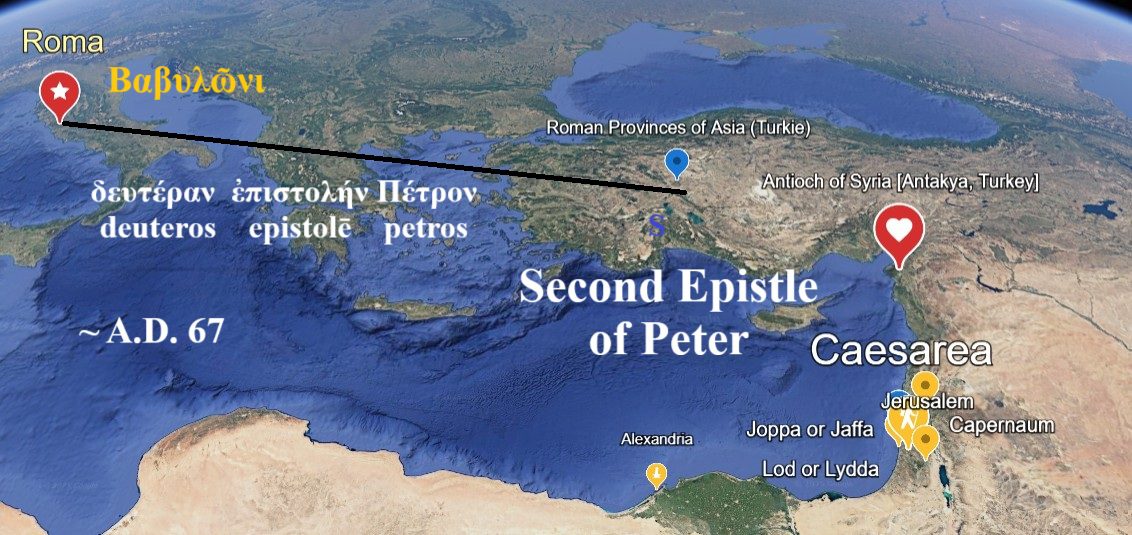
We can suppose that both epistles of Peter were sent to all of these churches on the Anatolian peninsula — all Roman provinces throughout modern-day Turkie.
some scholars date the Second Epistle of Peter in AD 64
These Jewish Christians, members of the Diaspora, are addressed here as pilgrims or sojourners… Jews expelled.. and living in a pagan environment.
1&2 Peter An Expositional Commentary, R.C. Sproul
Simon Peter: To the pilgrims
Peter, an apostle of Jesus Christ, To the pilgrims of the Dispersion..
1 Peter 1:1a New King James Version
"But WAIT.."as the old late-night TV ad suggested..
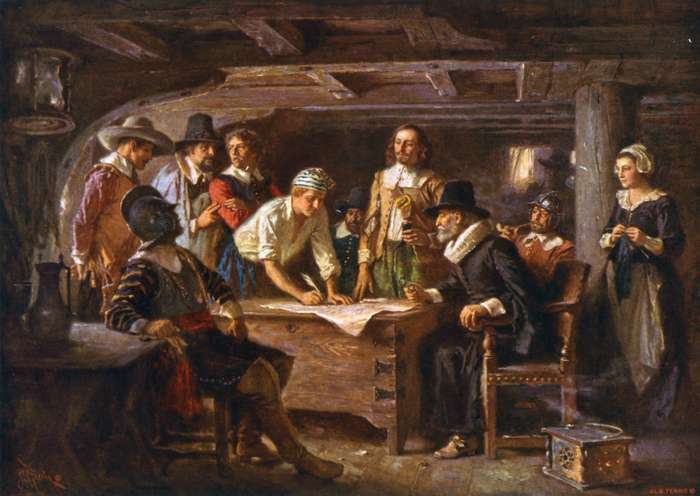
You probably have the WRONG PICTURE of PILGRIMS with an implanted prejudice of clashing cultures.
properly, “one who comes from a foreign country into a city or land to reside there by the side of the natives; hence, stranger; sojourning in a strange place, a foreigner“
Sojourn in this land, and I will be with thee,
Genesis 26:3a KJV – Oath of the LORD to Isaac, son of Abraham in Garar, a location south of Gaza – Source BLB
Alien, migrant, immigrant, foreigner — all have subtle prejudicial meaning.
These Christians to whom the Apostle’s write are rejected by former friends, neighbors and in workplaces. This sect of Jews following the way of the Messiah [or Christos] were also deported along with their families from their homes and Hellenist hometowns.
Therefore Christ-followers must sojourn to distant towns throughout the world of Roman citizens and pagans, those who rejected Jews anyway for the intolerance of their ONE GOD.
Why do they want to hear from Simon Peter?
Place yourself into any of the varied cities or towns in the Roman provinces addressed by the Apostle in ~ AD 64.
RC. Sproul in his PREFACE to 1-2 Peter offers one of the best descriptions of the heart of the saints receiving Simon Peter’s letter in the context of their situation:
Imagine what it would be like to receive a letter from someone who was a personal friend of Jesus during his earthly ministry?
Referring specifically to Peter, James and John, eyewitnesses to the glory of the transfigured Christ, Dr. Sproul continues:
A letter from a man such as this is a treasure for the church. His letter, beyond the value of his own eyewitness testimony and his intimate friendship with Jesus carries with it the weight of the divine inspiration of God the Holy Spirit.
ibid. R.C, Sproul
Why does Peter write a SECOND Epistle to them?
Remembering our AD 1st century cultural setting of the Church, as we discovered in Paul’s missionary journeys, the people living here are Hellenists.
Hellenists worshiped the tree of knowledge — towering temples of their gods — where philosophers plucked the forbidden fruit of wisdom.
Therefore, brethren, be even more diligent to make your call and election sure, for if you do these things you will never stumble
2 Peter 1:10 NKJV
Again, quoting R.C. SPROUL from: BE ALL THE MORE DILIGENT TO MAKE YOUR CALLING AND ELECTION SURE, concerning the recipiants of 1 Peter (likely the same churches):
The gnostics took a variety of religions and philosophies and thought to blend them to produce a new religion or philosophy… They targeted the early Christian community.. The only way the Gnostics could seduce Christians to believe their heresy was to undermine the authority of the Apostles.
ibid. p.6
Therefore,
Simon Peter, doulos and Apostle of Jesus Christ
2 Peter 1:1
writes an epistle —
(Remember the one definition emphasizing its impact as a letter of written command?) —
to encourage Elders ‘ (and those saints willingly obedient to their teaching [doctrine] and authority)
in the (precise and correct) KNOWLEDGE of God [epignōsis theos] and of Jesus our Lord..
Where do YOU find your hope in all that is happening?
The Psalmist points you (and me) to the LORD and away from mortals and empty promises for hope that can never satisfy.
Psalm 146:
הַלְלוּ־יָהּ הַלְלִי נַפְשִׁי אֶת־יְהוָה׃
As is the case with so many Psalms — songs of worship (from the original Hebrew) —Psalm 146 begins and ends with praise.
Praise the LORD! Praise the LORD, O my soul!
Psalm 146:1 RSV
The LORD will reign for ever, thy God, O Zion, to all generations.
Praise the LORD!
Psalm 146:13
Who IS the LORD?
Before we get to the text of the Psalm and happiness promised, let’s clarify the focus of Who we worship in the LORD.
יְהֹוָה
יְהֹוָה Yᵉhôvâh, yeh-ho-vaw’; from H1961; (the) self-Existent or Eternal; Jeho-vah, Jewish national name of God:—Jehovah, the Lord. Compare H3050, H3069.
Source: BlueLetterBible.org
Yehovah is used for the LORD from the very beginning of Scripture:
These are the generations of the heavens and the earth when they were created. In the day that the LORD God made the earth and the heavens..
then the LORD God formed man of dust from the ground, and breathed into his nostrils the breath of life; and man became a living being.
Genesis [בְּרֵאשִׁית] 2:4,7 RSV
LORD: Yehovah Eloheim
AND Yehovah is frequently used in conjunction with ‘אֱלֹהִים
ʼĕlôhîym, el-o-heem’; plural of H433; gods in the ordinary sense; but specifically used (in the plural thus, especially with the article) of the supreme God
AND (in Psalm 146 and other poetic praise) Ya [יָהּ] – a contraction of LORD, God or Jehovah and meaning the same.
In the beginning God [ĕlōhîm] created the heavens and the earth.
Genesis 1:1
Like other Psalms, even when not expressing human reactions other than happiness and hope, Psalm 146 is written and sung for the express purpose of worshiping the LORD God.
I will sing praises to my God while I have being.
Worship of the LORD as long as you live is a given for EVERY believer — and Psalm 146 opens with our response to the LORD our God:
While I live will I praise the LORD:
I will sing praises unto my God while I have any being.
Psalm 146:2 KJV
Then the Psalmist contrasts the futility of those who do NOT praise the LORD our God:
Do not put your trust in princes, in human beings, who cannot save.
When their spirit departs, they return to the ground; on that very day their plans come to nothing.
Psalm 146:3-4 NIV
Can you think of some princes, presidents, premiers, prime ministers, popes, persistent politicians WE have trusted?
AND is it not so?
.. his thoughts and plans perish.
v. 4d- AMP
How blessed..
Blessed are…
Strong’s Definitions אֶשֶׁר ʼesher, – happiness; only in masculine plural construction as interjection, how happy!:—blessed, happy.
Happy are you..
Happy are you, O Israel! Who is like you, a people saved by the LORD, The shield of your help And the sword of your majesty! Your enemies shall submit to you, And you shall tread down their high places.”
Deuteronomy 33:29 NKJV – from Moses; blessings to the tribes who were captive in Egypt and before the Hebrews would follow the LORD conquering the promised land.
Now the Psalmist leads us in worship:
Happy is he who has the God [ēl] of Jacob for his help, Whose hope is in the LORD [Yᵊhōvâ] his God [ĕlōhîm],
Psalm 146:5 NKJV
Why Our Happy Hope?
The Psalmist outlines good reasons for worshipers of the LORD God to be happy. And it all points to CREATION, both in the beginning and in our everyday experience.
He made heaven and earth,
(He made) The sea,
and (God made) all that is in them (the heavens, the earth and the seas);
[it is He} Who keeps truth forever,
The LORD opens the eyes of the blind; The LORD raises those who are bowed down; The LORD loves the righteous.
The LORD watches over the strangers; He relieves the fatherless and widow;
Psalm 146:8-9b NKJV
Consequence for those NOT blessed
WE don’t like to think about curse — only blessing (as if ALL receive blessing and are happy in the Lord our God).
The Psalmist, however, adds a brief contrast to happiness here — we all see it in many others.. or at times even in our own non-response to the blessings of God.
.. but the way of the wicked he brings to ruin.
Psalm 146:9c ESV
Do YOU choose to be HAPPY , that is: BLESSED in the LORD God?
A heading for PSALM 146 in the AUTHORIZED KING JAMES VERSION reads:
The blessedness of trusting God
Do YOU trust God?
.. but the way of the wicked he turneth upside down.
Surely, you who trust God are not wicked.
Why then, would you not be happy?
The Psalmist closes singing with great joy and praise!
The LORD shall reign for ever, even thy God, O Zion, unto all generations. Praise ye the LORD.
The Glory of God – written in the Creation on the Heavens and on the earth.
What is the chief end of man?
A. Man’s chief end is to glorify God, and to enjoy him for ever.
1 Cor. 10:31; Rom. 11:36; Ps. 73:25-28.
In our previous PSALM we focused on how a man or woman might best start our day.
And our focus turned from SELF toward the LORD — to rejoice — to experience God’s gladness in His creation and in us.
You might say, by extension, a daily disposition toward JOY becomes our worship in serving the LORD.
Perhaps you know Beethoven's ODE TO JOY from the finale of the composer's Nineth Symphony.
Did you know that text of Ode to Joy is taken from Psalms 104 and 145:10?
Today’s theme: the GLORY of God
Perhaps you know our PSALM from a scripturally-focused hymnal (of old).
The CREATION
Psalm 19
The heavens, O God, Thy glory tell Composer: Ludwig van Beethoven Published in 14 hymnals
The Heavens are telling – Beethoven
Many of you will know another glorious large composition of praise from an oratorio of Haydn near the end of the 18th century
The Heavens are Telling the Glory of God, (from “The Creation”)
— The Heavens Are Telling.
Hayden: Chorus:
The heavens are telling the glory of God, The wonders of his work displays the firmament;
Today that is coming speaks it the day, The night that is gone to following night.
In every land [In all the land] resounds the word, never unperceived, ever understood.
Music by Josef Haydn Lyrics translated by Robert Shaw, based on Psalm 19.
What is the GLORY of God?
“You said, ‘Behold, the LORD our God has shown us His glory and His greatness,
and we have heard His voice from the midst of the fire;
we have seen today that God speaks with man, yet he lives.
Deuteronomy 5:25 NASB
By contrast we might ask, ‘What is the glory of man?’
By the weight of your wrath against man’s sin, the glory of his form is wasted away; truly every man is but a breath. (Selah.)
Psalm 39:11 BBE
The glory of the heavens?
The LORD is high above all nations,
and his glory above the heavens.
Psalm 113:4
OR of the firmament?
And God said, Let there be a firmament in the midst of the waters, and let it divide the waters from the waters... And God called the firmament Heaven.
Genesis 1:6,8a KJV
OR
What is the glory of the earth, you might ask?
But in fact, you cannot find any glory in 'the earth' separate from the glory of the LORD its Creator.
Psalms sing of GLORY in one form or another over 400 times!
– kāḇôḏ כָּבוֹד
Who is this King of glory?
The LORD of hosts, he is the King of glory.
Selah.
Psalm 24:10
(You likely know some contemporary Christian songs expressing these words.)
Just what does it mean to GLORIFY God?
You who fear Yahweh, praise Him;
All you seed of Jacob, glorify Him,
And stand in awe of Him, all you seed of Israel.
Psalm 22:23 LSB
“The beasts of the field will glorify Me,
The jackals and the ostriches,
Because I have given waters in the wilderness
And rivers in the wasteland,
To give drink to My chosen people.
Isaiah 43:20
Psalm 19:
Let’s take a closer look at this Psalm of David.
The heavens are sounding the glory of God;
the arch of the sky makes clear the work of his hands.
Day after day it sends out its word,
and night after night it gives knowledge.
Psalm 19:1-2 BBE (Bible in Basic English)
Do you see God’s glory?
Look up! o man of dust! you creature beneath the night sky — with eyes to see above,
but not so near to the Lord’s glory.
You cannot deny His glory— ALMIGHTY Hands that formed — HIS fire which will refine your flesh into burned away dross scorched in the daytime sun.
There are no words or language;
their voice makes no sound.
Their line has gone out through all the earth,
and their words to the end of the world.
In them has he put a tent for the sun,
Who is like a newly married man coming from his bride-tent,
and is glad like a strong runner starting on his way.
His going out is from the end of the heaven,
and his circle to the ends of it;
there is nothing which is not open to his heat.
Psalm 19:3-6 BBE
David — the king and Psalmist — proclaims a GLORY of the LORD words cannot convey with pictures that only hint of God’s evident greatness.
Now David proceeds to
the benefits of GOD’s law:
The law of the LORD is perfect,
We do NOT like the LAW — we resist it— we rebel against it — for the laws and precepts of every mortal man are imperfect.
AND, by contrast,
the Law of the Lord— like Almighty GOD — is perfect and good and breathes life into fallen flesh and our impure soul.
The law of the LORD is perfect,
reviving the soul;
the testimony of the LORD is sure,
making wise the simple;
the precepts of the LORD are right,
rejoicing the heart;
the commandment of the LORD is pure,
enlightening the eyes;
the fear of the LORD is clean,
enduring for ever;
the ordinances of the LORD are true,
and righteous altogether.
Psalm 19:7-9 RSV
FEAR in the Face of HIS GLORY
the fear of the LORD is clean,
enduring for ever;
the ordinances of the LORD are true,
and righteous altogether.
Psalm 19:9 RSV
fear (of Yᵊhōvâ) -yir’â -יִרְאָה
fear, terror
awesome or terrifying thing (object causing fear)
fear (of God), respect, reverence, piety
revered
Psalm 2 connects this fear of the LORD not only with trembling, but with rejoicing or reiterating our joy.
Serve the LORD with reverential awe
and rejoice with trembling.
Psalm 2:11 CSB
David's Psalm becomes practically proverbial in teaching why WE must not only FEAR the LORD, but also OBEY his LAW and instructions (or ordinances).
They [God’s ordinances] are more desirable than gold —
than an abundance of pure gold;
and sweeter than honey dripping from a honeycomb.
In addition, your servant is warned by them,
and in keeping them there is an abundant reward.
Psalm 19:10-11 CSB
Note that the king (David) humbly proclaims himself — though sovereign over men — as a SERVANT of the LORD.
MORE fatherly advice:
But who can discern their own errors?
Forgive [lit. ‘acquit me – a legal determination] my hidden faults.
Keep your servant also from willful sins;
may they not rule over me.
Then I will be blameless,
innocent [lit. acquitted] of great transgression.
Psalm 19:12-13 NIV
Redeemed for our transgressions
How can a mere man stand before the glory of the Lord our God?
David intercedes in his Psalm on behalf of his loyal subjects. (For his mercy endures forever. – Psalm 136)
AND you have heard it before — from the later prophesy of Isaiah long after the fall of King David’s chosen nation.
But He was pierced through for our transgressions, He was crushed for our iniquities; The chastening for our peace fell upon Him, And by His wounds we are healed.
Isaiah 53:5 LSB – of the suffering servant
Even Christ JESUS — Son of David; Son of Man — the very Son of the Father — born in the flesh and crucified for the redemption of those chosen to eternal life — will return in his GLORY!!!
David’s familiar benediction:
a plea of my own heart frequently heard from the pulpit by the flock of Christ as an invitation to receive Scripture into your own heart:
Let the words of my mouth and the meditation of my heart be acceptable in your sight, O LORD, my rock and my redeemer.
Used to monitor number of Google Analytics server requests
10 minutes
__utmb
Used to distinguish new sessions and visits. This cookie is set when the GA.js javascript library is loaded and there is no existing __utmb cookie. The cookie is updated every time data is sent to the Google Analytics server.
30 minutes after last activity
__utmc
Used only with old Urchin versions of Google Analytics and not with GA.js. Was used to distinguish between new sessions and visits at the end of a session.
End of session (browser)
__utmz
Contains information about the traffic source or campaign that directed user to the website. The cookie is set when the GA.js javascript is loaded and updated when data is sent to the Google Anaytics server
6 months after last activity
__utmv
Contains custom information set by the web developer via the _setCustomVar method in Google Analytics. This cookie is updated every time new data is sent to the Google Analytics server.
2 years after last activity
__utmx
Used to determine whether a user is included in an A / B or Multivariate test.
18 months
_ga
ID used to identify users
2 years
_gali
Used by Google Analytics to determine which links on a page are being clicked
30 seconds
_ga_
ID used to identify users
2 years
_gid
ID used to identify users for 24 hours after last activity
24 hours
_gat
Used to monitor number of Google Analytics server requests when using Google Tag Manager
1 minute
_gac_
Contains information related to marketing campaigns of the user. These are shared with Google AdWords / Google Ads when the Google Ads and Google Analytics accounts are linked together.
90 days
__utma
ID used to identify users and sessions
2 years after last activity
Marketing cookies are used to follow visitors to websites. The intention is to show ads that are relevant and engaging to the individual user.