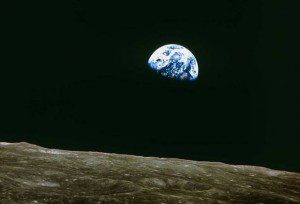
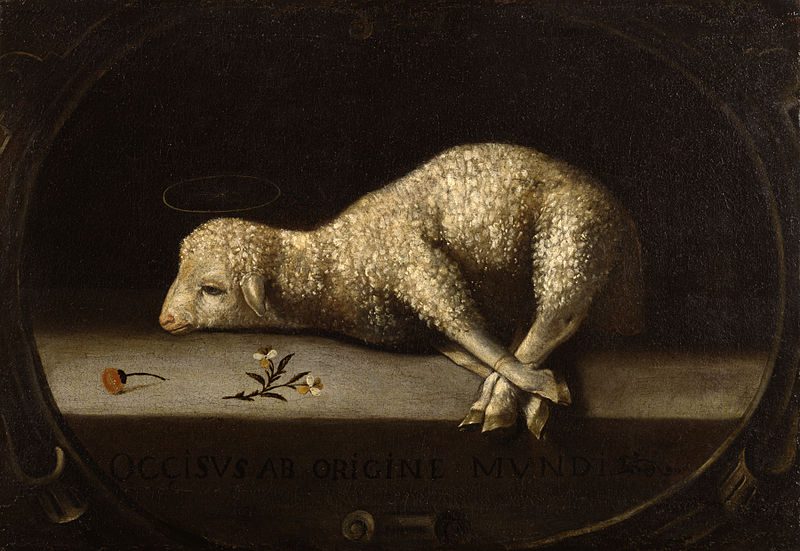
Why should a series whose subject is apocalypse and disaster begin with the paradise of Eden?
The obvious answer may escape the eyes of a perishable mortal facing a life-ending disaster. In an instant we may wonder what’s next, yet in accelerated times we may not have considered what was before.
What was before me, even before man? How did I get here? Even more importantly, why am I here? Why, and what does my life have to do with my death?
Certainly disaster will ensnare many: accidents, seemingly random events which bring an unexpected end to an already brief life. That death should overtake a man or woman should not ambush any.
Yet have you considered your death, the death of man, the death of the earth upon which we walk?
If so, you may also have considered the beginnings of the same. Our hesitant conclusions about our beginnings may logically lead toward answers to our existence and inevitable conclusions. So from before Eden and paradise we begin.
Before we move forward with creation let’s just take a minute to consider what we believe. Do you believe in God?
Can you define God? In fact, you may ask, ‘Why God?’
In these last days man has observed both creation and destruction of distant universe of which we have but minuscule evidence.
DNA strand & computer-sequenced 5.5 petabits of data [Harvard research]
We have mapped mysteries of our flesh, split the stuff of our existence with fearful explosion of devastation. Yet our awestruck wonder of creation fails to comprehend —the impassable great divide
We shall consider man next and even the angels and spirits, but first consider the primordial soup of stuff from which great power formed the beginnings of all.
If you must ask what inertia from nothingness moved hydrogen twice into oxygen, then consider the power to bring both into existence. No logic states, ‘in the beginning was water’ or rock or atoms.
Who created atoms and universe? In the beginning was… something: yes, One more powerful and more intelligent; yes, even One more wise and more good than all of which we wonder in awestruck human observation.
If you must deny that things cannot create themselves, then you deny the very purpose for which God, Who IS and Was and Will BE forever, created you for this brief flash of life in our human flesh.
You are not here for nothing any more than you were created by nothing from nothing. In the beginning, God created …
In the beginning God created the heavens and the earth.
2 Now the earth was formless and empty, darkness covered the surface of the watery depths, and the Spirit of God was hovering over the surface of the waters. 3 Then God said, “Let there be light,” and there was light.
4 God saw that the light was good, and God separated the light from the darkness.
Let us confess that NO man or alien from planet yet uncreated from nothingness and NO mathematically improbable coincidental collision of primordial matter could possibly have done this!
Do you see the the light is good and must be separated from the darkness to define the glory of the light? Will you consider separating darkness which brings disaster from that light with which your life is blessed?
We with eyes to see know the glory of our creation and the defining darkness which beckons our countenance back toward the deep dark chaos opposing the light of of this life.
The LORD speaks the beginning into existence
5 God called the light “day,” and He called the darkness “night.” Evening came and then morning: the first day.
6 Then God said, “Let there be an expanse between the waters, separating water from water.” 7 So God made the expanse and separated the water under the expanse from the water above the expanse. And it was so. 8 God called the expanse “sky.” Evening came and then morning: the second day.
9 Then God said, “Let the water under the sky be gathered into one place, and let the dry land appear.” And it was so. 10 God called the dry land “earth,” and He called the gathering of the water “seas.”
And God saw that it was good.
11 Then God said, “Let the earth produce vegetation: seed-bearing plants and fruit trees on the earth bearing fruit with seed in it according to their kinds.” And it was so. 12 The earth produced vegetation: seed-bearing plants according to their kinds and trees bearing fruit with seed in it according to their kinds.
And God saw that it was good.
13 Evening came and then morning: the third day.
Light separated from darkness to celebrate God
14 Then God said, “Let there be lights in the expanse of the sky to separate the day from the night. They will serve as signs for festivals and for days and years. 15 They will be lights in the expanse of the sky to provide light on the earth.” And it was so. 16 God made the two great lights—the greater light to have dominion over the day and the lesser light to have dominion over the night—as well as the stars. 17 God placed them in the expanse of the sky to provide light on the earth, 18 to dominate the day and the night, and to separate light from darkness. And God saw that it was good. 19 Evening came and then morning: the fourth day.
The Beginning of Life on earth
20 Then God said, “Let the water swarm with living creatures, and let birds fly above the earth across the expanse of the sky.” 21 So God created the large sea-creatures and every living creature that moves and swarms in the water, according to their kinds. He also created every winged bird according to its kind. And God saw that it was good. 22 So God blessed them, “Be fruitful, multiply, and fill the waters of the seas, and let the birds multiply on the earth.” 23 Evening came and then morning: the fifth day.
24 Then God said, “Let the earth produce living creatures according to their kinds: livestock, creatures that crawl, and the wildlife of the earth according to their kinds.” And it was so. 25 So God made the wildlife of the earth according to their kinds, the livestock according to their kinds, and creatures that crawl on the ground according to their kinds.
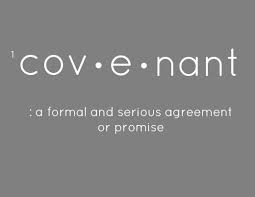
And I, behold, I establish my covenant with you. Genesis 9:9a
And Moses took the blood, and sprinkled it on the people, and said, Behold the blood of the covenant, which the LORD hath made with you concerning all these words. Exodus 24:8
The LORD works miracles for those He loves and God works miracles impossible for man or hidden from those without eyes to see.
Scripture records many miracles as the light of new hope for the faithful. Even when all hope seems lost, the Lord responds to prayers of the faithful. Even before the greatest miracle ever, the Lord confirms new covenants with the return of sinners to righteousness.
Israel and Judah Defeated, Yet a King in the line of David Appears
Christians may think that the miracle mentioned here is the incarnation of Jesus Christ, the Messiah. Yet even the greatest miracle of Jesus’ resurrection is not the only instance of an unexpected son of David.
Perhaps a Jew diligent in scripture will recall a new covenant following a prior appearance of a son of David.
(Go ahead, take a shot. Do you recall such a miracle?)
From the place where the oath was made and the context of the oath, we learn that the worship of the true God was not dead in Judah. These captains could respond to their responsibility before the LORD.
Behold, the king’s son shall reign:
This was a dramatic moment. For six years everyone believed there were no more surviving heirs of David’s royal line and there was no legitimate ruler to displace the wicked Athaliah. The secret had to be secure, because the king’s son would be immediately killed if his existence were revealed. The captains must have been shocked by the sight of this six-year old heir to the throne.
And all the congregation made a covenant with the king in the house of God. And he said unto them, Behold, the king’s son shall reign, as the LORD hath said of the sons of David.
Although I generally quote the English Standard Version, the King James suggests a forgotten formality appropriate to covenant with the LORD.
The King James Version English translation of the Bible was completed in 1611. It was brought to the original colonies of a rebellious new world, fleeing kingship served by religious authorities.
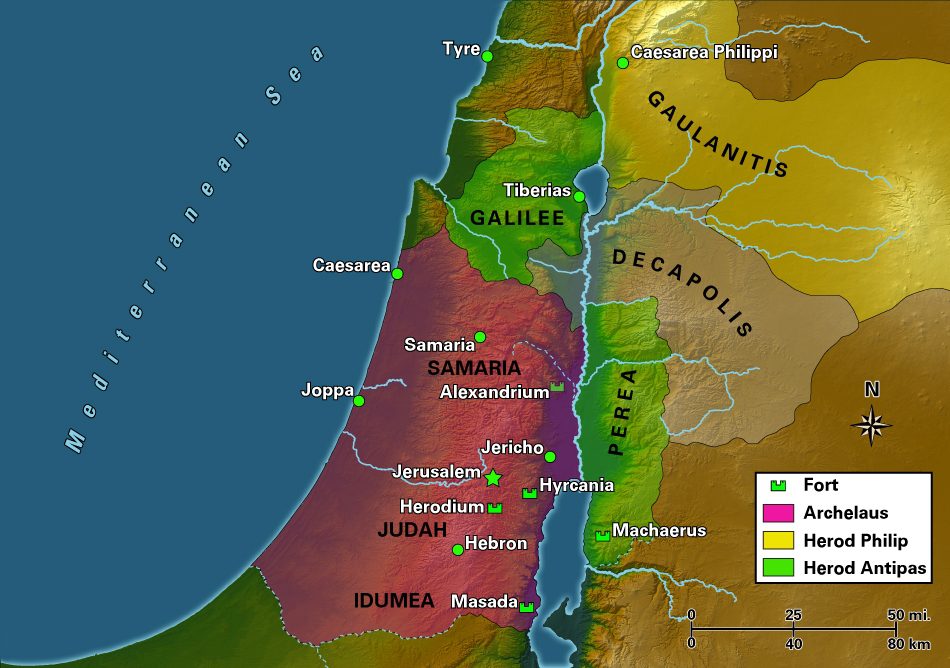
Jesus entered a Jerusalem ruled by a king and religious authorities politically beholden to a godless foreign Emperor. The aging fallen empire of Israel and Judah was ruled by a growing Roman empire. But before Rome ruled Judea, Samaria, Galilee and more, several different empires had ruled a captive remnant of the Lord’s ‘chosen people.
Israel and Judah defeated, yet another promise of a New King
For further study of the original Hebrew, see the Jeremiah 31 link below, which includes the Orthodox Jewish Bible, ESV & KJV,
Six centuries before Christ, Jeremiah partially reveals the character of the coming sinless Messiah
31 Behold, the days come, saith the LORD, that I will make a new covenant with the house of Israel, and with the house of Judah:
32-34 Not according to the covenant that I made with their fathers in the day that I took them by the hand to bring them out of the land of Egypt; which my covenant they brake, although I was an husband unto them, saith the LORD:
But this shall be the covenant that I will make with the house of Israel; After those days, saith the LORD, I will put my law in their inward parts, and write it in their hearts; and will be their God, and they shall be my people.
And they shall teach no more every man his neighbour, and every man his brother, saying, Know the LORD: for they shall all know me, from the least of them unto the greatest of them, saith the LORD: for I will forgive their iniquity, and I will remember their sin no more.
Do you also recognize his mention of the Holy Spirit, the gift of a risen Christ?
From the Second Temple to the Herod’s Temple
Now we move on from survival of the line of David and renewal of covenant with the Lord to about four centuries before Christ.
Malachi, the messenger and Prophet just before a great silence foretells the arrival of another great prophet.
Behold, I will send my messenger, and he shall prepare the way before me: and the Lord, whom ye seek, shall suddenly come to his temple, even the messenger of the covenant, whom ye delight in: behold, he shall come, saith the LORD of hosts.
Again, Malachi speaks of not only a messenger, but also that he will be the messenger of the covenant.
Before this most controversial teacher, prophet and King of the Jews will come another great prophet.
Behold the Light
“As long as I am in the world, I am the light of the world.”
In the beginning God created the heavens and the earth. 2 The earth was without form, and void; and darkness was[a] on the face of the deep. And the Spirit of God was hovering over the face of the waters.
3 Then God said, “Let there be light”; and there was light. 4 And God saw the light, that it was good; and God divided the light from the darkness.
15 And as the people were in expectation, and all men mused in their hearts of John, whether he were the Christ, or not…
And those in Judah remembered that Herod had beheaded John.
Yet some recalled hearing thunder as Jesus had been baptized by John. Others recalled how Jesus had healed many, saying their sins were forgiven. Some even told of a boy in Nain who Jesus raised to life from a coffin! Even more witnesses knew the truth of Lazareth from nearby Bethany.
But the authorities had arrested Jesus secretly at night during the Passover. How could they capture the seemingly all-powerful Son of Man and sentence Jesus to a death more horrendous than John? Why would God allow this to happen?
The LORD began to reveal a few answers just at the time of the Sacrifice of Righteous Blood on a Cross. For only the Twelve had first witnessed the reason for Jesus’ Sacrifice as they shared a last Passover Seder in a private upper room.
‘The Teacher says, “My time is at hand; I will keep the Passover at your house with My disciples.”’”
19 So the disciples did as Jesus had directed them; and they prepared the Passover.
20 When evening had come, He sat down with the twelve…
A New Covenant
26 And as they were eating, Jesus took bread, blessed and broke it, and gave it to the disciples and said, “Take, eat; this is My body.”
27 Then He took the cup, and gave thanks, and gave it to them, saying, “Drink from it, all of you.
28 For this is My blood of the new covenant, which is shed for many for the remission of sins.
Between the Cross and the empty tomb
We could have begun with the road to Emmaus or other liturgically familiar retelling of the Resurrection of Christ Jesus. I have chosen instead to share less familiar scriptures, also testimony to the Truth of the resurrection of Christ.
Imagine the immanent fear of those who had cried out, “crucify him! crucify him!” when this happened?
Matthew 27:52-53 KJV
And the graves were opened; and many bodies of the saints which slept arose, And came out of the graves after his resurrection, and went into the holy city, and appeared unto many.
Who would not fear it, after realizing that our own words and actions had convicted the Messiah – God With Us in the flesh?
Yet His Disciples, who witnessed His New Covenant, would teach the reason for His Sacrifice.
“For this is my blood of the new testament, which is shed for many for the remission of sins.” – Matthew 26:23
Those who had just celebrated Passover knew well the need for the shedding of blood for the remission of sins. But because of our contemporary worldly forgetfulness, allow me ask your consideration of the meaning of remission.
ἄφεσις ἁμαρτία – in the common Greek of the day: aphesis hamartia
II. forgiveness or pardon, of sins (letting them go as if they had never been committed), remission of the penalty
[Sin] I. to be without a share in, pr to miss the mark, to err, be mistaken; to miss or wander from the path of uprightness and honour, to do or go wrong; to wander from the law of God, violate God’s law, sin
II. that which is done wrong, sin, an offence, a violation of the divine law in thought or in act
III. collectively, the complex or aggregate of sins committed either by a single person or by many
The blood of Christ, given for you and for many for the remission of sins.
His purpose is clear.
Jesus becomes our Perfect Passover Sacrifice for the remission of sins. The Messiah suffered death, that final enemy captive to sin.
Christ returned from the darkness of death; He IS the Light of eternal life!
Now after the Sabbath, toward the dawn of the first day of the week Mary Magdalene and the other Mary saw Jesus. Jesus met the Apostles and they came up to Him, held the Lord by His feet and worshiped Him. [Matthew 28]
The Lord walked with two disciples leaving Jerusalem, explaining the Messiah of Scripture, breaking bread with them and after being recognized, He vanished! Jesus appeared to the Disciples, allowing them to touch His resurrected body, and He ate fish with them. He taught them, as before; but now their eyes were opened. [Luke 24]
Jesus appears to the Disciples again by the Sea of Tiberius (Sea of Galilee). John reveals an intimate conversation of Jesus with Peter, restoring him from denial and telling Peter of the kind of death he would suffer. The Acts of the Apostles reveal that the risen Christ prepared the Apostles for their mission to go into all the world for forty days until His ascension into the clouds. (Imagine witnessing that!) And Paul later reveals that ‘Then he appeared to more than five hundred brothers at one time, most of whom [were alive at the time he wrote his letter to the church at Corinth].
Clearly, Jesus IS! He is the Light of life and the hope of mankind.
No covenant or promise between the LORD and His created is more important to the redeemed in Christ than this New covenant, a New Testament to the love of Almighty God for those made in his Image.
May the joy of the resurrection of Christ Jesus fill your heart, satisfy your soul and embrace your failing flesh in the Light of His love.
Can you come up with a proverb from scripture anymore applicable to leaders of this 21st century?
They self-appoint a leader with strong-arm authority as Caesar for life. Or perhaps the rich and powerful will poison your opposition, if not literally, at least in the press. The evil ones manipulate the election, anointing and celebrating key world leaders. They imprison, assassinate or remove vocal opponents from the spotlight of the multitudes. All new, right?
Certainly not. For such political intrigue preceded the entry of Jesus into Jerusalem, not only among its religious authorities, but also across the world in Rome.
Even though the popularity of Jesus, King of the Jews, threatened local leaders, the criminalization and public execution of Jesus could deter others from opposing the authority of the politically appointed.
Leaders in the first century
Israel is not a country; therefore Roman states and authority do not parallel Jewish identification of a former Judah and Israel.
As mentioned in previous posts in this lenten series, Rome’s conquest of the Mediterranean led to installment of Jewish leaders with limited power.
As Rome itself grew from republic to empire a strong military sought alliances with influential kings and leaders, including Herod the Great. Greek influence (Hellenism) gave way to Roman order.
The scepter shall not depart from Judah, Nor a lawgiver from between his feet, Until Shiloh comes; And to Him shall be the obedience of the people.
After Herod’s death, three sons (two named Herod and Philip) administered separate Roman-ruled provinces. Religious divisions and insurrections also sought to weaken Roman rule by selective terrorism.
The religious/political leaders of Jerusalem divided into three parties, really as much political beliefs as traditional religion. The Lord was not foremost in the philosophies of most of the Jewish elite, which included the Sadducees and Scribes or the more middle class Pharisees. The Essenes were sort of the monks of the day, with limited influence from the wilderness on the religious rule of the cities. (John the Baptist is thought to be one of the Essenes.)
All of this turmoil preceded the birth of the Messiah Jesus during the reign of Herod the Great and continued even beyond Jesus’ triumphant entry into Jerusalem, ruled by Herod Archelaus.
The natural question to Jesus by leaders on all sides of political and religious belief would of course be, “.. who gave you this authority?” – Matthew 21:23
Leaders of every political persuasion and religious belief had already challenged Jesus frequently in His three years of teaching. Everyone knew of His power, righteousness and positions in matters of Law, the Scriptures and God.
And they were all amazed, so that they questioned among themselves, saying, “What is this? A new teaching with authority! He commands even the unclean spirits, and they obey him.” Mark 1: For the law was given through Moses; grace and truth came through Jesus Christ. – John 1:17
Sadducees believed the Law was literal and authority came though the Priests. Jesus challenged their authority, but not that of the Law.
“Do not think that I have come to abolish the Law or the Prophets; I have not come to abolish them but to fulfill them. For truly, I say to you, until heaven and earth pass away, not an iota, not a dot, will pass from the Law until all is accomplished… – Matthew 5:17-20
Jesus had explained to his Disciples:
The Son of Man will send his angels, and they will gather out of his kingdom all causes of sin and all law-breakers, and throw them into the fiery furnace.
Religious officials hearing him would likely have understood that Jesus identified them as the weeds in the parable of the weeds.
Pharisees too were far from immune to identification with sin and hypocrisy by Jesus. They had a tendency to impose priestly law and complex interpretation of the Law on the common people. Jesus challenged them.
“Woe to you, scribes and Pharisees, hypocrites! For you tithe mint and dill and cumin, and have neglected the weightier matters of the law: justice and mercy and faithfulness. These you ought to have done, without neglecting the others. – Matthew 23:23
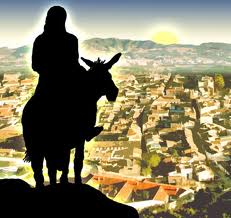
This Jesus, arriving at the gate of Jerusalem, worshiped by huge crowds is no stranger to these religious leaders. In fact, the Son of Man, the Messiah of Scripture is a direct challenge to their own future.
Scriptures
You study the Scriptures diligently because you think that in them you have eternal life. These are the very Scriptures that testify about me, yet you refuse to come to me to have life. – John 5:39-40 NIV
Again, even now, no book is so controversial as the Bible.
Sadducees interpreted the written word of God so literally as to not leave room for the many modes of literary expression. Pharisees loved to spin their own interpretations of God’s word with such complexity as the Lord never intended. They added an oral law of their own making.
The Essenes actually had it right, using inspired exegesis of the Bible.
Jesus told Parables, but also quoted scripture to explain why the religious authorities failed in their teaching of scripture. The religious officials of Jerusalem knew what Jesus had previously spoken during the festival of the booths.
… 2 Now the Jews’ Feast of Booths was at hand. … then he also went up, not publicly but in private. 11 The Jews were looking for him at the feast, and saying, “Where is he?” 12 And there was much muttering about him among the people…
13 Yet for fear of the Jews no one spoke openly of him.
Jesus went up into the temple and began teaching…
19 Has not Moses given you the law? Yet none of you keeps the law. Why do you seek to kill me?”
… 25 Some of the people of Jerusalem therefore said, “Is not this the man whom they seek to kill? 26 And here he is, speaking openly, and they say nothing to him! Can it be that the authorities really know that this is the Christ? …
37 On the last day of the feast, the great day, Jesus stood up and cried out, “If anyone thirsts, let him come to me and drink. 38 Whoever believes in me, as the Scripture has said, ‘Out of his heart will flow rivers of living water.’”
… 42 Has not the Scripture said that the Christ comes from the offspring of David, and comes from Bethlehem, the village where David was?”
This Jesus of Nazareth was well known in Jerusalem and controversial as well, even prior to His entry into Jerusalem, even after the resurrection of Lazarus.
In the beginning was the Word, and the Word was with God, and the Word was God. 2 He was in the beginning with God. 3 All things were made through him, and without him was not any thing made that was made.
“Behold, the Lamb of God, who takes away the sin of the world! 30 This is he of whom I said, ‘After me comes a man who ranks before me, because he was before me.’
Jesus Is Equal with God
5:18 This was why the Jews were seeking all the more to kill him, because not only was he breaking the Sabbath, but he was even calling God his own Father, making himself equal with God.
The Authority of the Son
19 So Jesus said to them, “Truly, truly, I say to you, the Son can do nothing of his own accord, but only what he sees the Father doing. For whatever the Father does, that the Son does likewise.
Used to monitor number of Google Analytics server requests
10 minutes
__utmb
Used to distinguish new sessions and visits. This cookie is set when the GA.js javascript library is loaded and there is no existing __utmb cookie. The cookie is updated every time data is sent to the Google Analytics server.
30 minutes after last activity
__utmc
Used only with old Urchin versions of Google Analytics and not with GA.js. Was used to distinguish between new sessions and visits at the end of a session.
End of session (browser)
__utmz
Contains information about the traffic source or campaign that directed user to the website. The cookie is set when the GA.js javascript is loaded and updated when data is sent to the Google Anaytics server
6 months after last activity
__utmv
Contains custom information set by the web developer via the _setCustomVar method in Google Analytics. This cookie is updated every time new data is sent to the Google Analytics server.
2 years after last activity
__utmx
Used to determine whether a user is included in an A / B or Multivariate test.
18 months
_ga
ID used to identify users
2 years
_gali
Used by Google Analytics to determine which links on a page are being clicked
30 seconds
_ga_
ID used to identify users
2 years
_gid
ID used to identify users for 24 hours after last activity
24 hours
_gat
Used to monitor number of Google Analytics server requests when using Google Tag Manager
1 minute
_gac_
Contains information related to marketing campaigns of the user. These are shared with Google AdWords / Google Ads when the Google Ads and Google Analytics accounts are linked together.