Tag: God

  • A River of Redemption Flowing from Eden – Justice

    A River of Redemption Flowing from Eden – Justice

    Contemplation of Justice by James Earle Fraser – US Supreme Court building

    Justice

    At the beginning of this series I outlined topics which included justice. Here we will explore their linked applications.

    • Commandment
    • Law
    • Justice
    • Judgment
    • Penalty and Sentence
    • Redemption

    Justice – n. 1) fairness. 2) moral rightness. 3) a scheme or system of law in which every person receives his/ her/its due from the system, including all rights, both natural and legal. – source: dictionary.law.com

    The multi-branched tree of the knowledge of good and evil.

    “but you must not eat from the tree of the knowledge of good and evil, for on the day you eat from it, you will certainly die.” – Genesis 2:17 CSB

    Paradise by Lucas Cranach the Elder – painter, draughtsman, printmaker and court painter – 1530

    We move now from relatively calm waters of Adam knowing the difference between good and evil to a more tumultuous current of original sin flowing through the generations.

    Justice, and only justice, you shall follow, that you may live and inherit the land that the LORD your God is giving you. – Deuteronomy 16:20

    Justice in the Egypt of Joseph and Moses

    Recent research from Yale Law, The Representation of Justice in Ancient Egypt, confirms concepts of justice learned by the Hebrews. I have quoted it extensively below.

    The concept of “law” and “justice” are intimately associated with the proper behavior of kings and were embedded in every royal ritual.

    https://www.egyptprivatetourguide.com/egyptian-facts/ancient-egyptian-justice-interesting-facts-law-ancient-egypt/
    Ma’at Ancient Egyptian goddess of justice

    Could common citizens expect an example of morality from their leaders? Even the Pharaoh and King?

    In a word, ‘yes.’ According to research of ancient civilizations predating Rome and Greece, a natural ‘connective justice’ was presumed in law.

    The imperfect branches of connective justice

    Again, the research of J.G. Manning in the Yale Journal of Law & the Humanities:

    Ma’at (“connective justice,”) governed personal moral behavior, as can be seen in religious texts, as well as the proper relationships between gods and men, between kings and society, and between individuals. Thus it literally connected everyone from the gods, through the king, down to the lowliest farmer. It was the mirror of the divine order of the world and also the foundation of private ethical behavior. Ma’at was the most persistent and pervasive idea in ancient Egyptian society.

    Importantly, the most visible and the longest lasting image of Ma’at in
    a private context, at least to the modem observer, is the famous “last
    judgment scene,” in which an individual faced his or her mortality by
    having his or her life deeds weighed in the balance against the symbol of justice, the ostrich feather, in front of all of the gods in Egypt.

    If found wanting, the person’s soul was devoured and his or her existence was extinguished. On the other hand, if found “true of voice,” one gained eternal bliss in the afterlife. This was not the public representation of state justice, but, rather a more intimate depiction of the expectations of private moral behavior.

    Do you recognize this universal connection to the truth in the Law given to Moses on Sinai by the Lord God?

    Delegated authority of the Law

    Application of law ultimately leads back to the same question Adam would have to judge after gaining ‘knowledge of good and evil.’ 

    What is right? Is this good or evil in the eyes of the Lord?

     Basic precedents of law include English Common Law and other fundamental documents.

    https://www.law.berkeley.edu/library/robbins/CommonLawCivilLawTraditions.html
    Sir William Blackstone
    • of the United States, in Order to form a more perfect Union, establish Justice, … and secure the Blessings of Liberty … ordain and establish this Constitution for the United States of America.
      • The Bill of Rights & evolving societal amendments
    • Religious Law 
    Hammurabi a Babylonian code of law

    The contemporary legal systems of the world are generally based on one of four basic systems: civil law, common law, statutory law, religious law or combinations of these. However, the legal system of each country is shaped by its unique history and so incorporates individual variations.[1]

    A Stream Towards Justice

    We have examined the role of authority in the law. It is here that the roles of God, government, family and community all come into play.

    The basis of all law is the authority by which it is given. Justice requires effective application and fair administration of remedies by a righteous and impartial judge. – Roger Harned


    A commandment comes directly from Almighty God. Call it ‘religious law,’ but an absolute over-riding Authority connects God’s word to man’s actions.

    Hebrew followers of Moses heard the Lord speak directly and were afraid. Even so, they disobeyed the direct command of God even before Moses later descended Sinai with the stone tablets – the Law, carved by the finger of God in stone.

    This inviolable Law would be carried in the Ark of the Covenant; not as reference, but as witness to their own promises to God. Yet many would violate (trespass) their solemn covenant promises to God many times and in many places throughout the long history of Israel.

    Penalty of the Law

    Even though prescribed specifically for certain violations in specific contexts of the Law, ‘penalty’ is not mentioned by name in the King James Version of the Bible. The overriding issue, simply, is innocence or guilt and not particularly the punishment.

    A divine sentence is in the lips of the king: his mouth transgresseth not in judgment. – Proverbs 16:10 KJV

    Have you ever considered that the ‘sentence’ of the court is the spoken judgement against the convicted violator of the law?

    Because sentence against an evil work is not executed speedily, therefore the heart of the sons of men is fully set in them to do evil. – Ecclesiastes 8:11 KJV

    Perhaps you have even noted the legal principle of a right to a speedy trial in the wise advise above.

    Now note the usage of the Hebrew root for the consequence of guilt:

    דָּם – dam

    • blood (342x),
    • bloody (15x),
    • person (with H5315) (1x),
    • bloodguiltiness  (1x)
    • bloodthirsty (with H582) (1x),
    • vr blood (1x)

    Again, this goes to the higher authority of Almighty God. Perhaps a good Biblical example of commanded penalty would be ‘capital punishment.’

    “Whoever sheds human blood,
    by humans his blood will be shed,
    for God made humans in his image.

    Genesis 9:6 CSB

    “But you, be fruitful and multiply; spread out over the earth and multiply on it,”[Gen. 9:7] God commanded Noah and his family who were spared by the judgement of the earth. 

    Looking upstream through the generational sins even in the time of Moses, redemption from bloodguilt against God hardly seems attainable. 

    Kings and Nations under God

    And what cause soever shall come to you of your brethren that dwell in their cities, between blood and blood, between law and commandment, statutes and judgments, ye shall even warn them that they trespass not against the LORD, and so wrath come upon you, and upon your brethren: this do, and ye shall not trespass. – 2 Chronicles 19:10 KJV

    reign of Jehoshaphat ~873–849 BC

    From later records of Israel (and Judah after David), we learn of the continued importance of the Law or Commandment of God to this ‘chosen’ nation. The above quote from 2 Chronicles is recorded in the time of Jehoshaphat, in the 9th century Before Christ.

    Note the distribution of authority given by King Jehoshaphat to others from 2 Chronicles 19:

    A King’s delegation of justice

    4 Jehoshaphat lived in Jerusalem, and once again he went out among the people from Beer-sheba to the hill country of Ephraim and brought them back to the Lord, the God of their ancestors. 5 He appointed judges in all the fortified cities of the land of Judah, city by city.

    6 Then he said to the judges, “Consider what you are doing, for you do not judge for a mere mortal, but for the Lord, who is with you in the matter of judgment. 7 And now, may the terror of the Lord be on you. Watch what you do, for there is no injustice or partiality or taking bribes with the Lord our God.”

    8 Jehoshaphat also appointed in Jerusalem…

    • some of the Levites and priests
    • and some of the Israelite family heads…

    Delegated authority from the Lord to the King, then to officials responsible for religion, for community and for family. Even warning of how to manage outsiders (foreigners and servants), all under delegated authority of the Lord through others. Not freedom, as we know it. Certainly not license to choose whether to obey or defy any law or regulation. 

    10 For every dispute that comes to you from your brothers who dwell in their cities—whether it regards differences of bloodguilt, law, commandment, statutes, or judgments—you are to warn them, so they will not incur guilt before the Lord and wrath will not come on you and your brothers. Do this, and you will not incur guilt.

    11 “Note that Amariah, the chief priest, is over you in all matters related to the Lord, and Zebadiah son of Ishmael, the ruler of the house of Judah, in all matters related to the king, and the Levites are officers in your presence. Be strong; may the Lord be with those who do what is good.”

    God will judge

    God is a righteous judge
    and a God who shows his wrath every day. – Psalm 7:11

    He will judge your people with righteousness
    and your afflicted ones with justice. – Psalm 72:2

    Psalm 111:9 Christian Standard Bible (CSB)
    He has sent redemption to his people.
    He has ordained his covenant forever.
    His name is holy and awe-inspiring.

    To be continued…

  • A River of Redemption Flowing from Eden – Commandments and more

    Moses Descends With Commandments of the Lord

    Moses has before saved Israel from destruction, but this time  an angry Lord God could have justly killed these covenant-breaking Hebrews, who heard the Commandments of the LORD God! 

    Do you recall how when Israel had first heard the voice of the Lord speaking the Commandments to them how they feared the Lord?

    Previously, in Exodus 19:

    9 The Lord said to Moses, “I am going to come to you in a dense cloud, so that the people will hear when I speak with you and will always believe you.”

    14 Then Moses came down from the mountain to the people and consecrated them… 

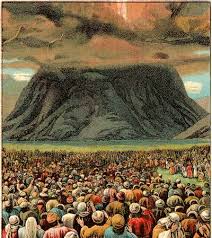
    16 On the third day, when morning came, there was thunder and lightning, a thick cloud on the mountain, and a very loud trumpet sound, so that all the people in the camp shuddered. 17 Then Moses brought the people out of the camp to meet God, and they stood at the foot of the mountain.

    18 Mount Sinai was completely enveloped in smoke because the Lord came down on it in fire. Its smoke went up like the smoke of a furnace, and the whole mountain shook violently. 19 As the sound of the trumpet grew louder and louder, Moses spoke and God answered him in the thunder.

    Just imagine what it must have been like for those consecrated and gathered at the foot of Mount Sinai before the LORD. 

    Exodus 20:

    Then God spoke all these words:

    This is superscript preceding the Ten Commandments. THE LORD SPEAKS!

    Yet It ought to be enough that the Commands, whatever they may be, come directly from the Voice of the Lord, Who begins:

    2 I am the Lord your God, who brought you out of the land of Egypt, out of the place of slavery.

    The Ten Commands are specific, spoken directly to this Hebrew audience with the LORD GOD. And these Commandments of which many of us know only a few also become foundation for Law.

    Would you claim any law as inviolable? And does a foundational principle given by our Creator not perfectly define justice for all mankind, even to this day?

    Consider the Commandments here as translated from their Hebrew root words (linked to Strong’s Concordance in the Blue Letter Bible).

    TEN WORDS עִבְרִית

    20:3 לֹֽא יִהְיֶֽה־לְךָ אֱלֹהִים אֲחֵרִים עַל־פָּנָֽיַ

    20:4 לֹֽא תַֽעֲשֶׂה־לְךָ פֶסֶל וְכָל־תְּמוּנָה אֲשֶׁר בַּשָּׁמַיִם מִמַּעַל וַֽאֲשֶׁר בָּאָרֶץ מִתַָּחַת וַאֲשֶׁר בַּמַּיִם מִתַּחַת לָאָֽרֶץ

    20:5 לֹֽא־תִשְׁתַּחְוֶה לָהֶם וְלֹא תָעָבְדֵם כִּי אָֽנֹכִי יְהוָה אֱלֹהֶיךָ אֵל קַנָּא פֹּקֵד עֲוֹן אָבֹת עַל־בָּנִים עַל־שִׁלֵּשִׁים וְעַל־רִבֵּעִים לְשֹׂנְאָֽי׃

    20:6 וְעֹשֶׂה חֶסֶד לַאֲלָפִים לְאֹהֲבַי וּלְשֹׁמְרֵי מִצְוֹתָֽי׃ ס

    20:7 לֹא תִשָּׂא אֶת־שֵֽׁם־יְהוָה אֱלֹהֶיךָ לַשָּׁוְא כִּי לֹא יְנַקֶּה יְהוָה אֵת אֲשֶׁר־יִשָּׂא אֶת־שְׁמֹו לַשָּֽׁוְא׃ פ

    20:8  זָכֹור אֶת־יֹום הַשַּׁבָּת לְקַדְּשֹֽׁו

    20:9 שֵׁשֶׁת יָמִים תַּֽעֲבֹד וְעָשִׂיתָ כָּל־מְלַאכְתֶּֽךָ

    20:10 וְיֹום הַשְּׁבִיעִי שַׁבָּת לַיהוָה אֱלֹהֶיךָ לֹֽא־תַעֲשֶׂה כָל־מְלָאכָה אַתָּה וּבִנְךָֽ־וּבִתֶּךָ עַבְדְּךָ וַאֲמָֽתְךָ וּבְהֶמְתֶּךָ וְגֵרְךָ אֲשֶׁר בִּשְׁעָרֶֽיךָ

    20:11 כִּי שֵֽׁשֶׁת־יָמִים עָשָׂה יְהוָה אֶת־הַשָּׁמַיִם וְאֶת־הָאָרֶץ אֶת־הַיָּם וְאֶת־כָּל־אֲשֶׁר־בָּם וַיָּנַח בַּיֹּום הַשְּׁבִיעִי עַל־כֵּן בֵּרַךְ יְהוָה אֶת־יֹום הַשַּׁבָּת וַֽיְקַדְּשֵֽׁהוּ׃ ס

    20:12 כַּבֵּד אֶת־אָבִיךָ וְאֶת־אִמֶּךָ לְמַעַן יַאֲרִכוּן יָמֶיךָ עַל הָאֲדָמָה אֲשֶׁר־יְהוָה אֱלֹהֶיךָ נֹתֵן לָֽךְ׃ ס

    20:13 לֹא תִּרְצָֽח׃ ס

    20:14 לֹא תִּנְאָֽף׃ ס

    20:15 לֹא תִּגְנֹֽב׃ ס

    20:16 לֹֽא־תַעֲנֶה בְרֵעֲךָ עֵד שָֽׁקֶר׃ ס

    20:17 לֹא תַחְמֹד בֵּית רֵעֶךָ לֹֽא־תַחְמֹד אֵשֶׁת רֵעֶךָ וְעַבְדֹּו וַאֲמָתֹו וְשֹׁורֹו וַחֲמֹרֹו וְכֹל אֲשֶׁר לְרֵעֶֽךָ׃ פ

    I invite you to study the translation below and where you question a 21st c. English wording of the Commandments to study the linked Hebrew.

    TEN WORDS – ENGLISH EQUIVALENT 

    1. You shall have no other gods before GOD
    2. You shall not create man-made dead art (idols) of the LIVING GOD. Do not bow in worship to idols, and do not serve them; for I, the LORD your God, am a jealous God, punishing the children for the fathers’ guilt of immorality, to the third and fourth generations of those who hate the LORD GOD, and showing mercy to thousands of them who love me and who keep my Commandments.
    3. Do not say, ‘Lord God,’ lightly without meaning or with deceptive intention; for THE EXISTING ONE will not hold guiltless any who take his name in vain.
    4. Recall the sabbath to keep it holy. Labor and do all your work in six days, but the seventh day is the sabbath of the Lord your God. You shall not do any work; you, your family, servants, working animals or guests within your gates.
    5. Give weight to consideration of the significance of your father and your mother, that your days may grow long on the earth your Lord God gives you.
    6. Do not murder.
    7. Do not be unfaithful to your husband, your wife or the Lord God.
    8. Do not steal.
    9. You shall not answer testifying with lies, deception or inaccuracy against friend, companion, fellow citizen or other.
    10. Do not desire the house, wife, servant, work animals or anything belonging to your friend, companion, fellow-citizen or another.

    Reaction and Response to Receiving God’s Commandments

    Israel, therefore, responded differently to the LORD each time the Commandments were given.

    First, the Lord spoke the Commandments within hearing of all the Hebrew people. And what was their response?

    Exodus 20:

    18 All the people witnessed the thunder and lightning, the sound of the trumpet, and the mountain surrounded by smoke. When the people saw it they trembled and stood at a distance. 19 “You speak to us, and we will listen,” they said to Moses,

    “but don’t let God speak to us, or we will die.”

    20 Moses responded to the people, “Don’t be afraid, for God has come to test you, so that you will fear him and will not[c] sin.”

    21 And the people remained standing at a distance as Moses approached the total darkness where God was.


    What next?

    Moses came and told the people all the commands of the Lord and all the ordinances. Then all the people responded with a single voice, “We will do everything that the Lord has commanded.”

    And Moses wrote down all the words of the Lord. – Exodus 24:3-4

    12 The Lord said to Moses, “Come up to me on the mountain and stay there so that I may give you the stone tablets with the law and commandments I have written for their instruction.”

    16 The glory of the Lord settled on Mount Sinai, and the cloud covered it for six days. On the seventh day he called to Moses from the cloud. 17 The appearance of the Lord’s glory to the Israelites was like a consuming fire on the mountaintop.

    18 Moses entered the cloud as he went up the mountain, and he remained on the mountain forty days and forty nights.

    After the Stone Tablets

    We now return to where we left off previously in The Ten Commandments to Moses’ second return in Exodus 34.

    Moses’s Radiant Face

    29 As Moses descended from Mount Sinai—with the two tablets of the testimony in his hands as he descended the mountain—he did not realize that the skin of his face shone as a result of his speaking with the Lord

    30 When Aaron and all the Israelites saw Moses, the skin of his face shone! 

    They were afraid to come near him. 

    31 But Moses called out to them, so Aaron and all the leaders of the community returned to him, and Moses spoke to them. 32 Afterward all the Israelites came near, and he commanded them to do everything the Lord had told him on Mount Sinai. 

    33 When Moses had finished speaking with them, he put a veil over his face. 34 But whenever Moses went before the Lord to speak with him, he would remove the veil until he came out.

    After he came out, he would tell the Israelites what he had been commanded, 35 and the Israelites see Moses’s face, that the skin of his face was radiant. Then Moses would put the veil over his face again until he went to speak with the Lord.

    Response to Moses’ giving of the Law

    Everyone whose heart was moved and whose spirit prompted him came and brought an offering to the Lord… Exodus 35:21a

    After their earlier rebellion by worship of the golden calf, Israel finally yields to the Lord. (Yet their obedience will remain situationally spurious.) Their exodus continues from Sinai to the Jordan. Yet first the Lord commands the making of a traveling place of worship, a Tabernacle and place of meeting.

    Leviticus further outlines worship and duties of priests exclusively assigned to the descendants of Levi. Moses’ five books move on to Numbers, the Hebrew title is Bemidbar or “In the Wilderness” (rbdmb) (of Sinai?). Because we cannot dwell on additional important moral direction given by the Lord in these books, I only mention them here. However any look at the Commandments would be incomplete without consideration of Moses’ final book of Deuteronomy.

    Deuteronomy

    We would do well to remember that Moses’ life may be simply summarized in three parts of dual generations. Moses was born as a Hebrew slave, but raised in the palace of Pharaoh with great favor until age forty.

    He then was forced to flee to Midian, where he raised a family until age eighty. Finally, and most amazingly, most everything we read in the Books of Moses takes place between the ages of eighty and one hundred and twenty.

    Some of the record of Deuteronomy was no doubt recorded in writing by Moses’ assistant and successor, Joshua.

    Deuteronomy also reconfirms the Commandments and makes reference to them more than forty times.

    Call to Obedience

    “Now, Israel, listen to the statutes and ordinances I am teaching you to follow, so that you may live, enter, and take possession of the land the Lord, the God of your fathers, is giving you. 

    We will defer a look at statutes and ordinances to a later post in this series. Before we once again point to the Ten Commandments, just one brief glance:

    8 And what great nation has righteous statutes and ordinances like this entire law I set before you today?

    The Lord chose Israel as example of His righteous leading to the nations whose redemption will come later in Christ Jesus.

    Deuteronomy 5:

    Moses summoned all Israel and said to them… 2 The Lord our God made a covenant with us at Horeb…

    6 I am the Lord your God, who brought you out of the land of Egypt, out of the place of slavery…

    7 Do not have other gods besides me…

    (and nine more)

    Have you considered God’s Commandments and how you must apply them to your life and relationships? For the Lord our God is a personal and loving Creator of all things and Judge of all men.

    32 “Be careful to do as the Lord your God has commanded you; you are not to turn aside to the right or the left.


    To be continued…


  • A River of Redemption Flowing from Eden – Commandment

    Master, which is the great commandment in the law? – Matthew 22:36 KJV

    Commandment

    צָוָה tsä·vä’ 

    • – to command, charge, give orders, lay charge, give charge to, order

    The King James Version of the Bible uses ‘Master,’ rather than teacher in this most important question. Our contemporary culture dilutes both the teaching component of leadership and the degree of its authoritarian necessity.

    A teacher, father, president or king may give a command, but obedience depends on a relationship between the master and one receiving the command.

    Commandment implies both authority and relationship.

    From before creation and man, God was and IS in charge. The Lord commanded Adam not to desire to know of good and evil; but now obedience to God requires discernment between good and evil. 

    Now command comes to man less directly through other men and women. Though implicit authority of command requires obedience, mortal men command those with whom we have relationship and assume responsibility. Ultimately, our authority relates to God, even when spoken through the command of others.

    Law and Scripture also imply the Authority of the Lord God. Obedience, however, will follow only out of our love of  God. Respect, honor and obedience to a ‘commander’ of mortals ultimately reflects their relationship with Almighty God.

    Although we will not examine it here, the Authority of God the Holy Spirit also commands those who accept the Lord as our loving Master.

    “Which is the greatest commandment…?”

    Christ Jesus answers quoting the law of Moses, who was given authority by God Almighty

    Love the Lord your God with all your heart, with all your soul, and with all your strength. – Deuteronomy 6:5

    Command: Love the Lord your God. What an appropriate answer for all of us. So simple.

    Jesus answers our question about obedience at the most personal level. Not a specific detail of law, but a relationship with God as our Lord

    Moses states God’s commandment reminding faithful servants to love THE EXISTING ONE, THE LORD.

    Returning to the LORD יְהֹוָה

    DEUTERONOMY 30:

    “When all these things happen to you—the blessings and curses I have set before you—and you come to your senses…

    Look back before the Law and you will discover that command was simple, specific, relational and purposeful. The LORD is our Maker and our Master.

    Yet Moses reminds the Lord’s followers:

    11 “This command that I give you today is certainly not too difficult or beyond your reach.

    12 It is not in heaven so that you have to ask, ‘Who will go up to heaven, get it for us, and proclaim it to us so that we may follow it?’ 13 And it is not across the sea so that you have to ask, ‘Who will cross the sea, get it for us, and proclaim it to us so that we may follow it?’

    14 But the message is very near you, in your mouth and in your heart, so that you may follow it.

    The Relationship of Command to Obedience

    The Father-Son relationship provides a good illustration of the loving advocacy for the commanded son. The Hebrew followers of Moses viewed him as a father like Abraham, with the authority of God the Father.

    ‘Obey me: to be blessed, or safe, or that you (my children) might prosper.’

    Moses continues: 15 See, today I have set before you life and prosperity, death and adversity.

    16 For I am commanding you today to love the Lord your God, to walk in His ways, and to keep His commands, statutes, and ordinances, so that you may live and multiply, and the Lord your God may bless you in the land you are entering to possess.

    17 But if your heart turns away and you do not listen and you are led astray to bow down to other gods and worship them, 18 I tell you today that you will certainly perish and will not live long in the land you are entering to possess across the Jordan.

    19 I call heaven and earth as witnesses against you today that I have set before you life and death, blessing and curse.

    Choose life so that you and your descendants may live, 20 love the Lord your God, obey Him, and remain faithful to Him.

    For He is your life, and He will prolong your life in the land the Lord swore to give to your fathers Abraham, Isaac, and Jacob.”

    The Command of the LORD includes Commandments of the Law

    Moses had led the Hebrew people out of slavery in Egypt. Many credit him for saving Israel, but the Nations witnessed that their Savior IS the LORD.

    God gave this new nation a Commandment and Law through Moses. The LORD gave rules and regulations to be judged and administered by leaders; initially Moses, Aaron and God’s anointed elders. 

    Next, we will briefly examine the Commandments and the Law of Moses. 


    To be continued…