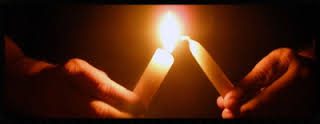
My wick was dry and lifeless
Until I beheld Thy Light.
Witness the touch of Christmas, the distant focused look at the burning bush of Christ Jesus through eyes drawn from darkness to the love of the Lord, which He has planted in our distant cold hearts.
Come unto me and I will give you rest… God so loved the world that he gave his only begotten Son…
The world knows of the love of Jesus Christ. The world knows of the love of God our Heavenly Father. Even marginal christians know the price of the blood of sacrifice this ‘baby Jesus’ would make on the Cross. Yet many who have been called and many who would claim in vain the Name of Christ Jesus do witness against the blood of the Cross by their adultery against the Bridegroom of the church, Christ Jesus.
Our unfortunate corporate witness as christians shines no more than the darkness and apostasy of God’s chosen families in the days of Isaiah. We gaze upon the love of the babe in the manger and witness in our lives: no, I will love as I please, because I will not take up His Cross.
How easily we fail in the Gospel message that GRACE comes only after REPENTANCE! A christian who continues to abide in the darkness is NO witness for Jesus Christ or inheritor of eternal life.
Have we preached the Gospel from John that love of God and love of one another only comes after we turn from the darkness of our continual sin and touch the Light of Life in Christ Jesus?
John 3:19
And this is the judgment: the light has come into the world, and people loved the darkness rather than the light because their works were evil.
Are your works evil, dear sister (brother) in the Lord?
I met someone, you say. I have someone better, you say. Is this your witness for Jesus Christ?
Adulterer! Adulteress & whore! The Church is Betrothed of Christ, even from the days before the manger.
Which of the Prophets has not warned of the whoredom of Jezebel? Which of the Prophets has not seen godless men promising the love, lies and riches of the world?
Say nothing of virgins and babes in a manger. Speak nothing of Christ Jesus. Say nothing of Christmas. You cannot love God and money. Repent!
Rather love the Lord your God with all your heart. Return humbly to the house of the Lord and heart of Christ Jesus.
Confess your sins before Almighty God and return to the husband of your vows; the One who loves you. Though you are unfaithful, remember the Blood of the full-measure of His suffering for you.
Let the desire of your heart be for faithfulness. Remember your vows to the Lord and to your husband. Recall their unfailing love and persistent prayers for you.
Are lying, licentiousness, adultery, premarital sex, divorce, drunkenness, desires for riches, living together in sin, abortions, cursing the Name of Jesus Christ and all these worldly things you claimed to repent of – are these wild vines of sin your witness for Jesus Christ this Christmas?
God forbid!
Many christians cling to those of the world and the sins they proclaim. Many christians claim the sins of darkness alongside their ‘witness’ for Jesus Christ. These neither love God with ALL their hearts or other Christians with the love of Christ!
John 3:20
For everyone who does wicked things hates the light and does not come to the light, lest his works should be exposed.
This, of course, includes those who call themselves ‘christian,’ celebrate Christmas and boldly witness by their sin against Christ Jesus and the Blood of His Sacrifice.
If you know the truth, yet refuse to turn back to the Light of Truth, you love the darkness of your sins.
Let your Christmas gift be repentance.
John 3:21
But whoever does what is true comes to the light, so that it may be clearly seen that his works have been carried out in God.”
Yes, even ‘christians’ have a choice. You will know them by their love. You will know them by their light. You will know them by their generosity.
(Have YOU donated anything to any of the charities I have mentioned or other noble works for Christ this Christmas? {It’s not too late for that..}
You will know them by their faithfulness, their truthfulness. You will know if a Christian is light at Christmas (and 365 days/year).
John 8:12 Again Jesus spoke to them, saying, “I am the light of the world. Whoever follows me will not walk in darkness, but will have the light of life.”
May I say again Jesus’ words before we move with the scriptures of the Prophet Isaiah, who so accurately foresaw the coming of the Christ:
Jesus said: ” Whoever follows me will not walk in darkness, but will have the light of life.” John 8:12b
Jesus was and IS that Light in a time of great darkness of the world. Christians joined to the Bridegroom of Life must abide in the Light of Christ Jesus… or surely the darkness will remain. Will the One you have called ‘Lord’ from whom you turn toward the darkness of your sins not say, “I never knew you?”
If the Light of Christ Jesus once shown on you, why do you now turn your face from the fire of His holiness?
Will you, unrepentant christian, now turn your dry wick into the arid darkness?
Will your feet of flesh not crumble under the weight of your stone-cold heart, which was once touched by the love of the Lord Jesus Christ?
Why does Isaiah speak of Light?
When you see the lights of Christmas, remembering the birth pangs of a virgin pregnant by the Holy Spirit of God, remember a Son born of the flesh would die for our sins. Remember the 700 years of darkness from the days of Isaiah to this birth in a Manger. Consider the prophetic warnings for days of great darkness, even before the coming of the end of the age.
Do you, dear virgins, have oil for your lamps? Does your witness prepare a light for the way of our returning Lord?
Now will I sing to my wellbeloved a song of my beloved touching his vineyard. My wellbeloved hath a vineyard in a very fruitful hill:
2 And he fenced it, and gathered out the stones thereof, and planted it with the choicest vine, and built a tower in the midst of it, and also made a winepress therein: and he looked that it should bring forth grapes, and it brought forth wild grapes.
20 Woe unto them that call evil good, and good evil; that put darkness for light, and light for darkness; that put bitter for sweet, and sweet for bitter!
21 Woe unto them that are wise in their own eyes, and prudent in their own sight!
22 Woe unto them that are mighty to drink wine, and men of strength to mingle strong drink:
23 Which justify the wicked for reward, and take away the righteousness of the righteous from him!
30 And in that day they shall roar against them like the roaring of the sea: and if one look unto the land, behold darkness and sorrow, and the light is darkened in the heavens thereof.
10 Moreover the Lord spake again unto Ahaz, saying,
11 Ask thee a sign of the Lord thy God; ask it either in the depth, or in the height above.
12 But Ahaz said, I will not ask, neither will I tempt the Lord.
13 And he said, Hear ye now, O house of David; Is it a small thing for you to weary men, but will ye weary my God also?
14 Therefore the Lord himself shall give you a sign; Behold, a virgin shall conceive, and bear a son, and shall call his name Immanuel.
15 Butter and honey shall he eat, that he may know to refuse the evil, and choose the good.
16 For before the child shall know to refuse the evil, and choose the good, the land that thou abhorrest shall be forsaken of both her kings.
Nevertheless the dimness shall not be such as was in her vexation… and afterward did more grievously afflict her by the way of the sea, beyond Jordan, in Galilee of the nations.
2 The people that walked in darkness have seen a great light: they that dwell in the land of the shadow of death, upon them hath the light shined.
3 Thou hast multiplied the nation, and not increased the joy:
they joy before thee according to the joy in harvest, and as men rejoice when they divide the spoil.
Do you; beloved brother in Christ, dear sister in Christ; have the JOY in the harvest of the love of CHRIST Jesus, this Christmas?
JOY to the world. The LORD IS come. Emmanuel, God With Us. Christ, born son of man, son of Mary, son of God.
6 For unto us a child is born, unto us a son is given: and the government shall be upon his shoulder: and his name shall be called Wonderful, Counsellor, The mighty God, The everlasting Father, The Prince of Peace.
7 Of the increase of his government and peace there shall be no end, upon the throne of David, and upon his kingdom, to order it, and to establish it with judgment and with justice from henceforth even for ever. The zeal of the Lord of hosts will perform this.
Christmas – witness for Christ Jesus – is a choice of love… OR a choice of refusal of love (because of your love for the darkness of the world).
Isaiah 9:13 For the people turneth not unto him that smiteth them, neither do they seek the Lord of hosts.
14 Therefore the Lord will cut off from Israel head and tail, branch and rush, in one day…
17 Therefore the Lord shall have no joy in their young men, neither shall have mercy on their fatherless and widows: for every one is an hypocrite and an evildoer, and every mouth speaketh folly. For all this his anger is not turned away, but his hand is stretched out still.
18 For wickedness burneth as the fire: it shall devour the briers and thorns, and shall kindle in the thickets of the forest, and they shall mount up like the lifting up of smoke.
19 Through the wrath of the Lord of hosts is the land darkened, and the people shall be as the fuel of the fire: no man shall spare his brother.
Jesus speaks as Prophet of what is to come for true followers who know and abide in Jesus as their personal Lord and Savior:
Matthew 10:22 And a man’s foes shall be they of his own household.
26 Fear them not therefore: for there is nothing covered, that shall not be revealed; and hid, that shall not be known.
Isaiah 53
Who has believed what he has heard from us?
And to whom has the arm of the Lord been revealed?
2 For he grew up before him like a young plant,
and like a root out of dry ground;
he had no form or majesty that we should look at him,
and no beauty that we should desire him.
3 He was despised and rejected by men;
a man of sorrows, and acquainted with grief;
and as one from whom men hide their faces
he was despised, and we esteemed him not.
4 Surely he has borne our griefs
and carried our sorrows;
yet we esteemed him stricken,
smitten by God, and afflicted.
5 But he was pierced for our transgressions;
he was crushed for our iniquities;
upon him was the chastisement that brought us peace,
and with his wounds we are healed.
6 All we like sheep have gone astray;
we have turned—every one—to his own way;
and the Lord has laid on him
the iniquity of us all.
12c yet he bore the sin of many,
and makes intercession for the transgressors.
6 “Seek the Lord while he may be found;
call upon him while he is near;
7 let the wicked forsake his way,
and the unrighteous man his thoughts;
let him return to the Lord, that he may have compassion on him,
and to our God, for he will abundantly pardon.
8 For my thoughts are not your thoughts,
neither are your ways my ways, declares the Lord.
9 For as the heavens are higher than the earth,
so are my ways higher than your ways
and my thoughts than your thoughts.
Isaiah 56:1 Thus says the Lord:
“Keep justice, and do righteousness,
for soon my salvation will come,
and my righteousness be revealed.
Isaiah 57:
11 Whom did you dread and fear,
so that you lied,
and did not remember me,
did not lay it to heart?
Have I not held my peace, even for a long time,
and you do not fear me?
12 I will declare your righteousness and your deeds,
but they will not profit you.
Isaiah 59
Behold, the Lord’s hand is not shortened, that it cannot save,
or his ear dull, that it cannot hear;
2 but your iniquities have made a separation
between you and your God,
and your sins have hidden his face from you
so that he does not hear.
3 For your hands are defiled with blood
and your fingers with iniquity;
your lips have spoken lies;
your tongue mutters wickedness.
20 “And a Redeemer will come to Zion,
to those in Jacob who turn from transgression,” declares the Lord.
21 “And as for me, this is my covenant with them,” says the Lord:
“My Spirit that is upon you, and my words that I have put in your mouth, shall not depart out of your mouth, or out of the mouth of your offspring, or out of the mouth of your children’s offspring,” says the Lord, “from this time forth and forevermore.”
These are just some of the prophesies of Isaiah some 700 years before Christ.
Christians dully listen to a few verses from Isaiah in a typical Christmas Eve service. (So few ‘christians’ read the Bible. So few ‘christians’ have even seen or heard these additional prophetic words of Isaiah or numerous references by other Prophets and in the Psalms.)
Seven centuries (like looking back now to the 1300’s A.D.) from Isaiah’s prophesies until the Redeemer IS born in a manger in Bethlehem. Hear Isaiah’s description of the light of our manger scene:
Arise, shine, for your light has come,
and the glory of the Lord has risen upon you.
2 For behold, darkness shall cover the earth,
and thick darkness the peoples;
but the Lord will arise upon you,
and his glory will be seen upon you.
3 And nations shall come to your light,
and kings to the brightness of your rising.
4 Lift up your eyes all around, and see;
they all gather together, they come to you;
your sons shall come from afar,
and your daughters shall be carried on the hip.
5 Then you shall see and be radiant;
your heart shall thrill and exult,
because the abundance of the sea shall be turned to you,
the wealth of the nations shall come to you.
They shall bring gold and frankincense,
and shall bring good news, the praises of the Lord.
14 The sons of those who afflicted you
shall come bending low to you,
and all who despised you
shall bow down at your feet;
they shall call you the City of the Lord,
the Zion of the Holy One of Israel.
19 The sun shall be no more
your light by day,
nor for brightness shall the moon
give you light;
but the Lord will be your everlasting light,
and your God will be your glory.
20 Your sun shall no more go down,
nor your moon withdraw itself;
for the Lord will be your everlasting light,
and your days of mourning shall be ended.
21 Your people shall all be righteous;
they shall possess the land forever,
the branch of my planting, the work of my hands,
that I might be glorified.
22 The least one shall become a clan,
and the smallest one a mighty nation;
I am the Lord;
in its time I will hasten it.
This is the Gospel of Christmas:
A manger, God With Us;
The Cross, Christ sacrificed for us and our obedience to the crucifixion of our sinful flesh to follow Jesus;
Christ risen, the Light and Life of grace for all who repent and worship Jesus Christ as Lord.
Christ Jesus IS Life and Light eternal for fallen sinners to abide in the Holy Spirit and dwell in the House of the Lord, forever.
Please pray for my wife in the Lord, Lissette Harned, and our grown children.
Pray also for me. For I covet your prayers and love, beloved brothers and sisters in the Lord – our Christ of Christmas.
May the joy of Christmas be your witness to the love of the Father and Power of the Holy Spirit to draw repentant sinners home to the Light of the King of all Creation and life. Jesus IS Lord.
Amen.

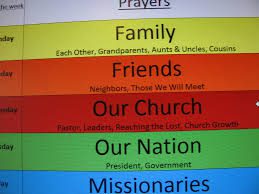 Prayer is many things. Most of our mind and flesh would relegate prayer to a single context (a selfish context, I might add) called petition. We have a prayer request or petition to bring before God.
 God is NOT finite. God is NOT in everything.


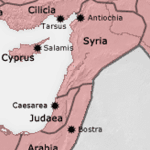 Judea was a mess, again. Judea was no longer Judah. Jerusalem was not a political capital, because it was ruled by Rome. Israel was centuries before defeated (even before the fall of Judah and the rise of Rome). Israel became part of Syria on the current Roman map. Galilee was less than a state, under the rule of different Romans than Judea. Nazareth was nothing more than a little fishing village, a nice place for Joseph to have a little carpenter shop and raise his family.