Tag: goddess

  • Propriety in Worship of the Church – 1 Corinthians 14

    Propriety in Worship of the Church – 1 Corinthians 14

    Paul wanted his churches to exhibit a modesty and propriety recognized by the surrounding culture, especially in worship.

    (1 Corinthians 14)

    THE BAKER ILLUSTRATED BIBLE COMMENTARY P.1303

    An Overview of Paul’s Epistle

    Most outlines of Paul’s first letter to the Corinthians include what we are about to read next under a smaller heading of ‘spiritual gifts’ or ‘the gifts of tongues and prophesy’ as part of a larger section of the epistle — as a conclusion of the previous chapters.

    Remember that like our letters to anyone it had no chapters.

    Without returning to my original introduction to 1 Corinthians, I would like to point to these larger points of Paul’s letter here:

    1 Corinthians
    • Response to their questions [chaps. 7-16]
    • Recommendation of others & closing

    One of the central cultural issues of propriety and order the Apostle has addressed in response to several Corinthian questions is that of the role of women.

    Within the Apostle’s response to the Corinthian elders some of these issues include:

    * Immorality in the Church (5:1–6:20)

    These issues applied to men certainly affect all women. 
    • But actually, I wrote you not to associate with anyone who claims to be a brother or sister and is sexually immoral or greedy, an idolater or verbally abusive, a drunkard or a swindler. Do not even eat with such a person.
      • 1 Cor 5:2
    • Flee sexual immorality! Every other sin a person commits is outside the body, but the person who is sexually immoral sins against his own body.
      • 1 Cor 6:18

    Marriage in the Church (7:1–40)

    • 3 A husband should fulfill his marital duty to his wife, and likewise a wife to her husband.
    • 10 To the married I give this command — not I, but the Lord — a wife is not to leave her husband.

    Liberty in the Church (8:1–11:1)

    This section ends with Paul's personal example: 

    Imitate me, as I also imitate Christ.

    AND — (as introduction to our current larger section of his epistle) — the Apostle continues by encouraging those who have done so.

    Worship in the Church (11:2–14:40)

    Now I praise you because you remember me in everything and hold fast to the traditions just as I delivered them to you.

    3 But I want you to know that Christ is the head of every man, and the man is the head of the woman, and God is the head of Christ.

    – 1 Corinthians 11:2-3 CSB

    Intro to Apostolic instructions about Head Coverings

    • Roles of Men and Women in the Church (11:2–16)
    • The Lord’s Supper (11:17–34)
    • Spiritual Gifts (12:1–14:40)


    The Context of Worship – A.D. 55 or 2025 CE

    As you can see, the Apostle has introduced this smaller section of his letter about spiritual gifts in the context of worship

    AND that he has already addressed some of the roles of men and of women who worship the Lord Jesus Christ as the Apostle has ‘delivered‘the traditions’ to them.


    What is propriety?

    • for a first century Corinthian
    • or (for example) a 21st c. Cincinnatian
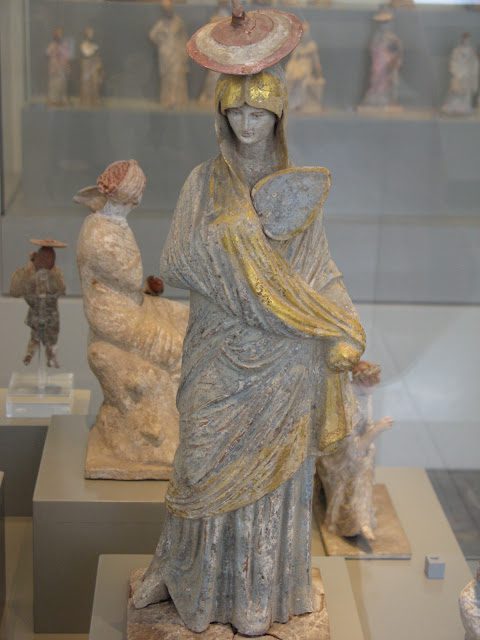
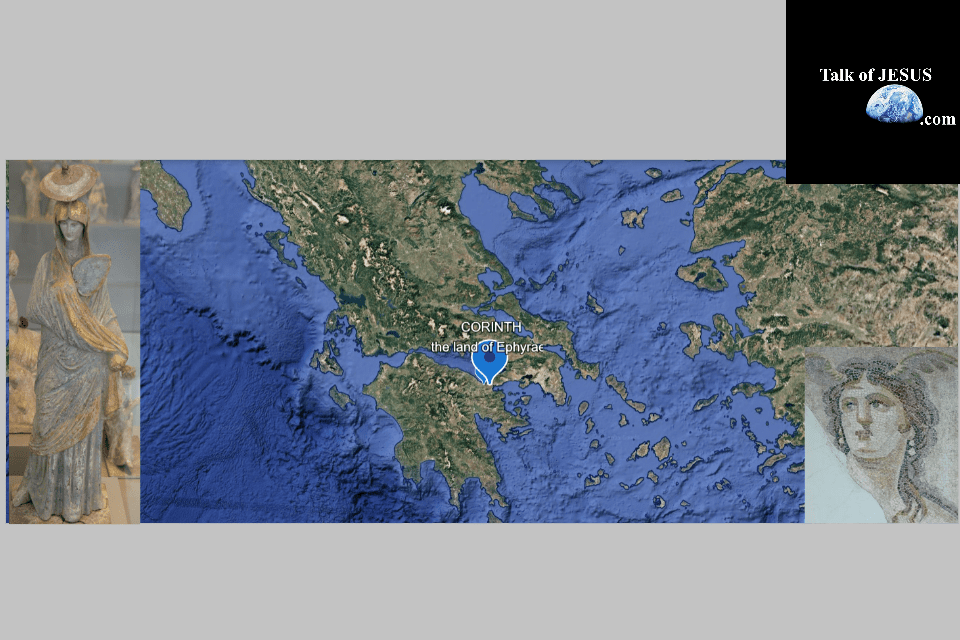
    Lady with blue and gilt garment, fan and sun hat, from Tanagra - 4c. BC

    This photo next to the BAKER commentary for 1 Corinthians 14 got my attention to focus back on

    the propriety and modesty of a classic Corinthian woman. 

    Propriety – conformity in socially acceptable conduct and speech, appropriateness, fear of offending against conventional rules of behavior especially between the sexes.

    source

    In light of this, consider propriety from the earlier BAKER quote.

    At Corinth he [Paul] was particularly concerned about women’s reputation. For women modest draped clothing with a head covering was common. (see 1 Corinthians 11:2-16),

    as seen here in a sculpture from 300 BC (Tanagra, Greece)

    ibid.


    Here is more background on the culture of Corinth named for a goddess descended from the Greek Titans [also pictured on our cover to this post].
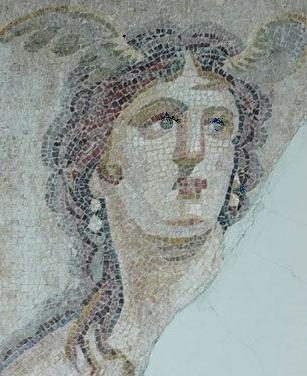
    In Greek mythology, Tethys was Consort of Oceanus, father of the river gods and goddesses including a Greek goddess who founded Corinth named Ephyra.

    The Greeks and Romans honored many gods and goddesses of culture and worshipped these with some order and propriety, while worship of others included temple prostitutes, so much debauchery and excess witnessed in festive celebrations.

    (Sound familiar, 21st c. christian?)

    Yet the modesty of a proper woman is important to the Corinthians, both men and women, thus the Apostle’s insistence on the propriety of head-coverings in worship of the church.


    What’s allowed in proprietary worship of God?

    1 Corinthians 14:

    Concerning Prophesy and Tongues

    Pursue love and desire spiritual gifts, and especially that you may prophesy.

    .. The person who prophesies is greater than the person who speaks in tongues, unless he interprets so that the church may be built up.

    .. — since you are zealous for spiritual gifts, seek to excel in building up the church.

    13Therefore the person who speaks in a tongue should pray that he can interpret.


    Who’s in charge?

    Using several references from Paul's letters to the Corinthians in "DIVINE PROVIDENCE," STEPHEN CHARNOCK [pub. AD 1680, updated 2022] provides us with a helpful overview of the Apostle's thinking: 

    The edification of the church is the great end that we are commanded to work toward:

    Stephen Charnock – DIVINE PROVIDENCE, p.146

    Since you are eager for manifestations of the Spirit, strive to excel in building up the church.”

    1 Cor, 14:13 – ibid.


    Then, under the heading 'The Gifts and Common Grace of Bad Men and Women' Charnock addresses Paul's order of propriety mentioned in this and other epistles. 

    God is the giver of gifts, Christ is the governor of those gifts, and all is for your sake.

    ibid.

    I find this particularly helpful.

    Think of it:

    God the Father (or because of their Oneness in substance, God the Father, Son and Holy Spirit) — who created ALL things —

    charges CHRIST (Jesus, the Person of the Son of Man and Son of God) — THE CORNERSTONE of the Church — as its governor

    with perfect distribution of the gifts to the church — gifts that GOD has given to the church for the LORD’s divine purpose for the sake of those chosen before creation to worship him .


    Now think of Jesus' parable of the wheat and the tares for this next one: 

    There are some husks that come up among men and women, and God uses them to shelter the church in common works, and he [GOD] restrains these men and women through the knowledge of Christ.

    God gives gifts to them out of love for his church, not out of love for them.

    DIVINE PROVIDENCE, P.147

    Get a grip on this: it’s not about YOU — God’s love is about HIS CHURCH.

    REMEMBER, what the Apostle has just written?

    • IF I [do any of so many things]
    • BUT have NOT [agape {love}]
    • I am nothing
    • and I gain nothing.

    Dearly beloved,

    Do you take this bond of your church to have and to hold..?


    OR is our desire to try out relationships of LOVE 

    to try out church es

    — NOT having or holding  any commitment to Christ Jesus  and His body the Church?


    What then, brothers?

    We realize that this is not a politically correct question in this common era (and some English translations soften it), but Paul uses the Greek word ἀδελφός - adelphos - a masculine noun for brethren. 

    What then, brothers? When you come together, each one has a hymn, a lesson, a revelation, a tongue, or an interpretation.

    Let all things be done for building up.

    1 Corinthians 14:26 ESV

    The Apostle, under Christ, under God addresses the men of the church — not the women saints of Corinth — as was proper in Corinthian culture.

    The Apostle has addressed:

    • quarreling among you, my brothers. (1:11)
    • But I, brothers, could not address you as spiritual people, but as people of the flesh, as infants in Christ. (3:1)
    • But now I am writing to you not to associate with anyone who bears the name of brother if he is guilty of.. [a long list of sins] (5:11)

    Brothers, do not be children in your thinking. Be infants in evil, but in your thinking be mature.

    1 Corinthians 14:20 ESV

    Order and Propriety

    Each of you (brothers).. (not the sisters.. and not ONLY the pastor in charge under Christ).

    What then is it, brothers? When you may come together, each has a psalm, has a teaching, has a revelation, has a tongue, has an interpretation.

    Let all things be done for edification.

    1 Corinthians 14:26 Berean Literal Bible – [more study]

    • Tongues?
      • two or three at most
      • in turn &
      • must have interpretation
    • Prophets?
      • two or three
      • others weigh in on what is said
      • IF a personal revelation is made to one present, the man receiving it must remain silent.
      • all may profit by learn and be encouraged by (this kind of) prophesy
      • prophets are subordinate [hypotassōto] to each other

    Now do not be offended by Paul's next orderly instruction for worship — for it uses the same Greek word [hypotassō] — for the Corinthian women of propriety and modesty expected in worship. 

    For God is not a God of confusion but of peace.

    As in all the churches of the saints, the women should keep silent in the churches.

    For they are not permitted to speak, but should be in submission , as the Law also says.

    1 Corinthians 14:33-34 ESV

    Note that the Apostle — who has been addressing order and propriety in worship throughout his epistle to the saints of Corinth — also speaks to ALL the CHURCHES [ekklēsia] of the SAINTS [hagios].


    ARE YOU, beloved 21st century worshipers of the Lord Jesus Christ, not also His saints?

    and we have believed,
    and have come to know, that you are the Holy One [hagios] of God.”

    Gospel of John 6:69 ESV – Simon Peter to the Lord Jesus

    Yes, the women of Corinth and of your 21st century church could be of the Holy Ones - saints - of God; so don't be offended by what the Apostle Paul next instructs the saints by the Spirit - even if God formed you as a woman. 

    If there is anything they desire to learn, let them ask their husbands at home. For it is shameful for a woman to speak in church.

    1 Corinthians 14:35 ESV

    Paul then proceeds to instruct ‘the brothers’ in those issues the apostle has already addressed, prophesies and spiritual gifts (essentially reiterating ‘listen to me about these things).

    And the Apostle Paul’s conclusion to this large section of his letter to the Corinthian saints

    who are of course free from the Law (as servants of God, Christ and each other) —

    But let all things be done properly and with order.

    1 Corinthians 14:40 BLB


    And since Paul's epistle (like any letter) lacks chapters, what does the Apostle NEXT remind the Corinthians -- the saints of Christ's Church? 

    About THE RESURRECTION.

    Comment on Scripture – Share the Gospel
  • Approaching Athens 2 – Addressing gods and goddesses

    Approaching Athens 2 – Addressing gods and goddesses

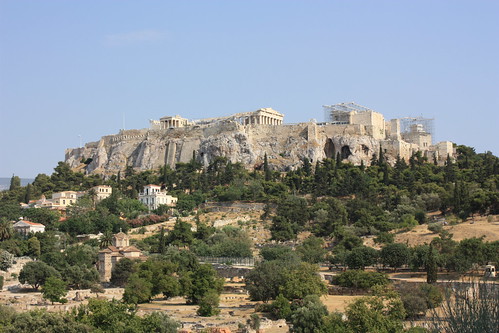
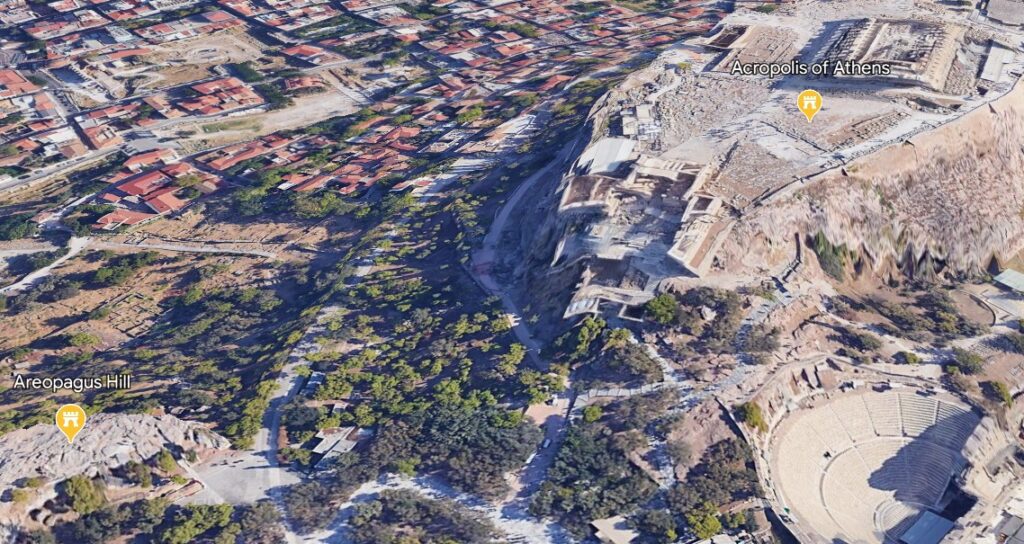
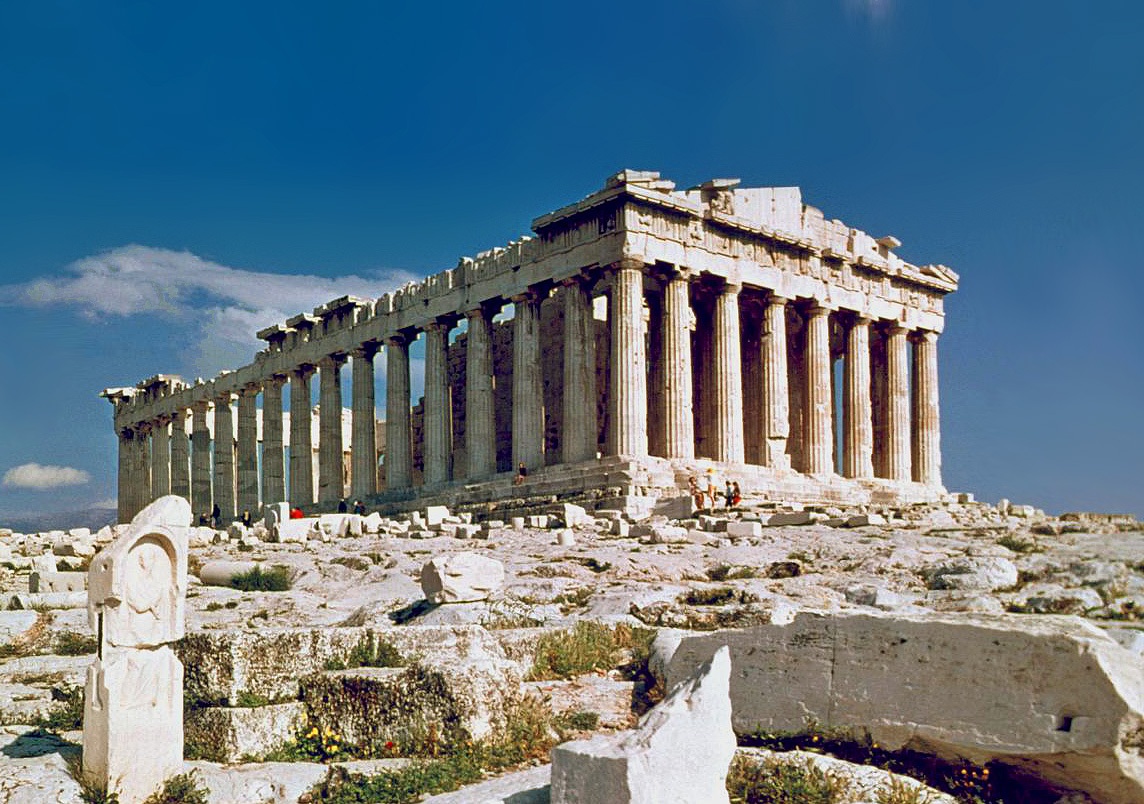
    Acropolis - in Athens ruins from ancient Greece
    acropolis comes from the Greek words ἄκρον (akron, “highest point, extremity”) and πόλις (polis, “city”).
    So Paul stood in the midst of the Areopagus and said, “Men of Athens, I observe that you are very religious in all respects. – Acts 17:22

    The Apostle’s introduction and approach are most gracious in addressing a crowd of men whose religious celebrations of their gods and goddesses would seem most sinful to every Jew in Athens.


    Addressing Athena & the men who idolize her

    The Apostle Paul, a Roman citizen who has also been speaking with the Jews of Athens has been brought to the Areopagus in town to address a ruling council of Hellenist leaders and crowds of interested listeners. His already spirit provoked about the overt and godless idolatry he observed [v.16]

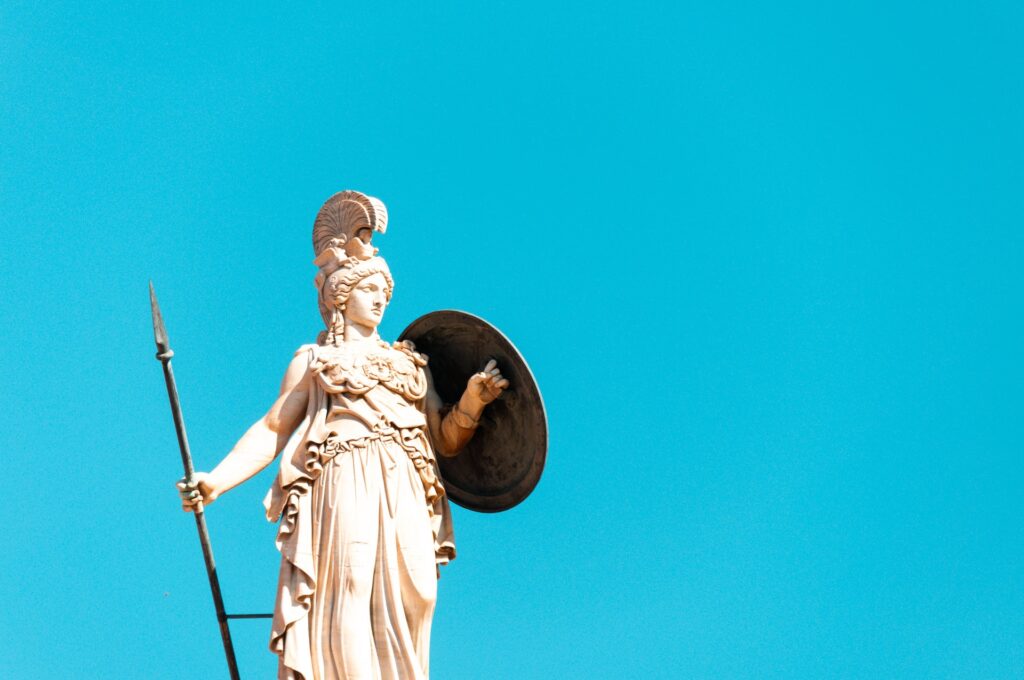
    Statue of the goddess Athena - powerful namesake of Athens

    Athena, goddess of the city is prominent to all but she is just one of many revered gods and goddesses of the myths of ancient Greece.

    Once the Apostle Paul begins proclaiming the gospel to the men of Athens in the agora the apostle to the Gentiles is brought to the areopagus.

    The Areopagus a rocky height in the city of Athens, opposite the western end of the Acropolis toward the west to which these men of the city agora have brought Paul is not only an ancient military outpost but has an idolic connection to Greek mythology as well.

    Ἄρειος πάγος – From Ares

    (the name of the Greek deity of war)

    Recall, however, that Rome has long-established its rule of law and officials in the FREE ROMAN CITY of Athens ACHAIA.
    

    The Hill of Mars, Roman god of War

    Allow me to set the mythological stage of the GREEK & ROMAN gods behind the history of Athenian & Roman worship and festivals with music suited to the continuing 'religion' celebrating the passions of men as idols of worship.
    Mars Bringer of War – Listen

    This hill belonged to (Ares) Mars and was called Mar’s Hill; so called, because, as the story went, Mars, having slain Halirrhothius, son of Neptune, for the attempted violation of his daughter Alicippe, was tried for the murder here before twelve gods as judges.

    Lexicon :: Strong’s G697 – areios pagos – BlueLetterBible.org commentary on Mars Hill

    We cannot fully appreciate the dilemma and provocation of the spirit of the Apostle to the gentiles without recognizing as Paul did the seriousness of the sinful culture of idolatry of these men of Athens to whom he now will address himself concerning this ‘strange teaching’ of One God and the resurrection.

    So before we proceed with Paul’s speech let’s take a quick look at the mythology behind these compelling legends of gods such as Mars, Neptune, Zeus, Apollo and goddesses such as their patron mother of Athens – Athena.


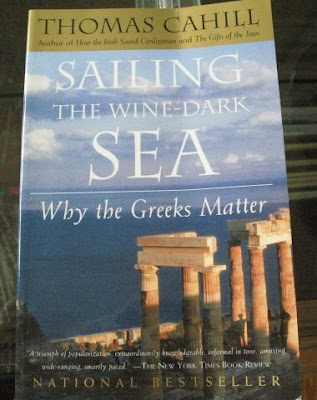
    Thomas Cahill - SAILIING THE WINE DARK SEA - Why the Greeks Matter

    ancient Greek gods & goddesses

    (Try to keep score on the who’s doing what with whom as best you can.)

    As earlier in Approaching Athena the ruling goddess of Athens I will mostly consult the extensive research of historian Thomas Cahill. – RH

    Lord Zeus & other gods

    Zeus, who controlled rain and clouds.. ..was Lord of the Sky and greatest of gods, but not the oldest.” [p.17]

    Mount Olympus, highest peak in Greece

    12 Olympians (including Zeus) ruled from ‘heaven’ atop Mount Olympus.

    These Olympians had overthrown prior gods called the Titans.

    Before that, according to Greek mythology, the TITANS had been formed by FATHER HEAVEN and MOTHER EARTH.

    Father Heaven and Mother Earth had emerged from:

    (Pay close attention now)

    primordial CHAOS whose

    2 children: DARKNESS and DEATH

    gave birth to LIGHT and LOVE

    NIGHT is the mother of DAY

    earth rotating

    which made possible the appearance of FATHER HEAVEN and MOTHER EARTH.

    δεισιδαίμων Scandalous religious worship of gods

    The Olympian Zeus was son of the Titan god Chronos. ZEUS, who has taken the lordship of the throne of heaven, is known for ‘perpetually falling in love, wooing and usually raping beautiful women, both mortal and immortal, who would then give birth to gods and demigods… [Sailing the Wine-Dark Sea, p.17]

    The goddess Hera is Zeus’ wife! And HERA naturally gets jealous. Plus in an additional soap-opera-esque twist, the goddess Hera is also Zeus’ sister!

    Statue of the goddess Athena - powerful namesake of Athens

    IF (unlike Paul) you are unaware of where ATHENA fits in here, this hometown goddess is one of the 12 Olympians which include:

    Zeus, Poseidon, Hades, Hera, Demeter, Aphrodite, Athena, Artemis, Apollo, Ares, Hephaestus, Hermes.

    Without pursuing these Greek gods and goddesses further (many long forgotten, as Paul & Roman inscriptions will note) their idolic family-tree and extra-worldly adventures come from ancient Greek literature, including Theogony, a poem by Hesiod from ~700 B.C. 

    The Hellene Pax Romana from the bringer of War

    The Parthenon in Athens a place to honor and worship all the gods

    Who are the ROMAN gods of the Roman free city of Athens?

    Derived from the Greek words ‘πᾶν’ pan – all, and ‘θεός’ theos – god, pantheon literally means ‘of all gods’.

    The British Museum [source for the following list of gods]

    King of the gods is Zeus – or his Roman equivalent, Jupiter – who rules over Mount Olympus and is the god of thunder and lightning, as well as law and order.

    Hera or Juno.. is the goddess of marriage, childbirth and fertility.

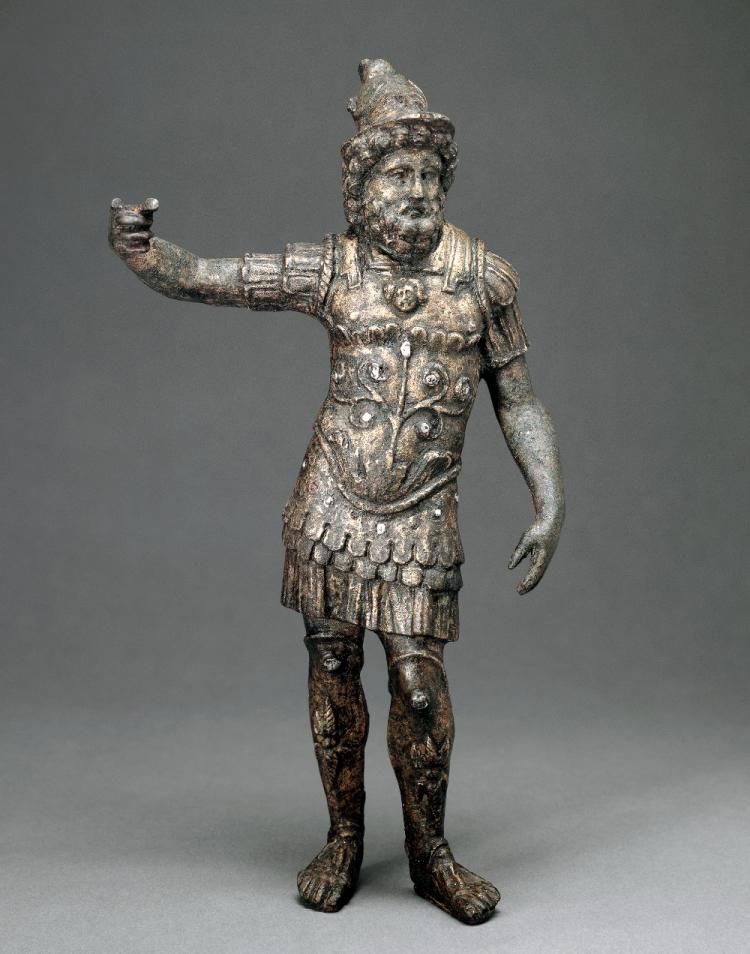
    Ares or Mars
    This Romano-British statuette shows Mars, the god of war, fully decked out in his characteristic armour, missing the original spear and shield he would once have held.

    Athena or Minerva – Ares’ [Mars’] half-sister is the Greek goddess Athena. Goddess of reason, handicraft, wisdom, and war, she is the daughter of Zeus

    Aphrodite or Venus [very popular idol of men and women alike in every century]
    Goddess of love, sex, and beauty, Aphrodite – or Venus – is said to have emerged from the white foam generated when the Titan Cronos [father of ZEUS] threw the severed testicles of his father, Ouranos, into the sea.

    Aphrodite is an ancient Greek goddess associated with love, lust, beauty, pleasure, passion, procreation, and as her syncretized Roman goddess counterpart Venus, desire, sex, fertility, prosperity, and victory.

    Hermes or Mercury
    The messenger of the gods was Hermes, known as Mercury in ancient Roman religion, and he was also a pastoral god, protecting livestock and travellers.

    Do you recall how on their first missionary journey they thought that Paul was Hermes who spoke for Zeus i.e. Barnabas?
    And the priest of Zeus, whose temple was just outside the city [Lystra in Pamphylia], brought oxen and garlands to the gates, and was wanting to offer sacrifice with the crowds. – Acts of the Apostles 14:13
    YOU could learn much more about these Greek and Roman gods, many long forgotten -- and never gain any more wisdom of the One God who sent men like Paul into all the world with the Gospel of the Savior of sinners and hope of the resurrection, Christ JESUS!
    

    Springtime in Athens

    Disclaimer: Although this single illustration of typical events in Roman-ruled Athens is extra-Biblical and may not have taken place specifically during Paul's visit, I provide general descriptions mostly from SAILING THE WINE-DARK SEA to set the cultural stage for Paul's speech with some level of the Apostle's 1st century understanding of his audience. 
    
    Paul's stop in Athens may have been in A.D. 51, perhaps even in the spring.
    Claudius, Emperor of Rome, had changed the calendar back in A.D. 46 and by A.D. 43 had conquered much of Europe including Great Britain. - RH

    A classical culture that wasn’t what you thought.

    The ANCIENT 5th century B.C. cultural of Athens had been that of a ‘democracy’ dependent on slaves. Democracy for ‘all’ was for ‘free’ MEN only, and that only of two basic Greek higher classes, one a ‘high office’ and the others ‘lower’ offices – a sort of competing middle class of free men who directly ruled over the affairs of Athens.

    Athenians probably numbered no more than a quarter million, of which as many as 100,000 may have been slaves.. This would leave a citizen population of little more than twenty percent.

    ‘Why the Greeks Matter’ p.115

    The political experiment of Athenian democracy (of its 20% citizenry) would end, of course, with their conquering by Alexander the Great. Later a similar political experiment of a Roman Republic would also fail as conquering heroes of the people made themselves to be Caesars and gods of the people.

    Europeans.. are full of spirit but are somewhat lacking in intelligence and skill.. Asians.. though intelligent and skilled.. lack spirit.. The race of the Greeks, however, which occupies the center of the earth.. being both spirited and intelligent.. Thus does this race.. continue to be capable of ruling all humanity.

    (Of course no sensible proponent of democracy could today speak of race rather than culture or imply any inequality of those incapable of governing themselves. Let the humanist religion of philosophy bring reason to all religions of humankind with equal participation of all flesh in the rituals of all gods celebrated together in the pax of humanity.
    
    But this of course is a 21st c. religious take on ancient wise ways of 'classical' philosophers such as the excerpt quoted here from Cahill.) - RH
    excerpt [The Politician and the Playwright p. 129 – How to Rule] from ARISTOTLE
    Picture the Classical Greek citizens of Athens (and their slaves)or Hellenist Athenians in built back better ruins of their past with a Roman citizen Paul brought to their curious attention in A.D. 51:

    “The continual buzz of conversation, the orotund sound of the orators, the shrill shouts from the symposia–this steady drumbeat of opinion, controversary, and conflict could everywhere be heard. The agora [marketplace].. was an everyday marketplace of ideas..

    The word the Athenians used for their Assembly was Ekklēsia, the same word used in the New Testament for Church..”

    Thomas Cahill – Sailing the Wine-Dark Sea p.118
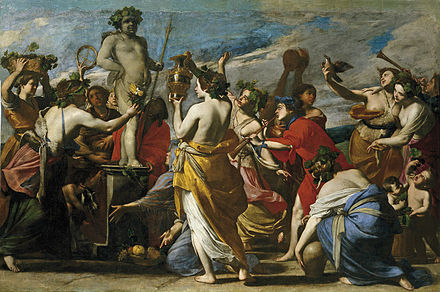
    Dionysus(Bacchus)God of wine, vegetation, fertility, festivity, ritual madness, religious ecstasy, and theatre

    Hellenist worship

    At the springtime Dionysia, the Athenian festival in honor of Dionysus, three days.. began with a solemn religious procession of leading citizens, distinguished visitors, and all the choruses.. led by officials carrying.. sculpture of erect penises, symbols of the god, to his temple…

    Why the Greeks Matter, Thomas Cahill pp. 129-130

    Into the this idolatry walks a Roman citizen, Paul, who is invited to address the assembly of leading men of Athens, to whom the Apostle begins his logical argument with exceeding grace.

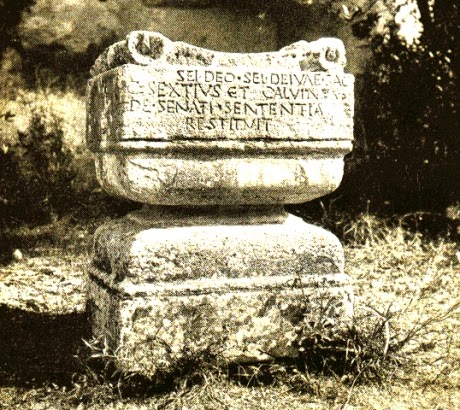
    the UNKNOWN GOD

    The inscription begins "whether god or goddess" (si deus si dea), a phrase indicating that the deity is unknown. Often there would be a request that followed ("Whether you are a god or goddess that rules over Rome, grant us...").
    Whether god or goddess..

    Acts 17 – Paul Addresses the Areopagus

    23 For as I passed along and observed the objects of your worship, I found also an altar with this inscription: ‘To the unknown god.’

    What therefore you worship as unknown, this I proclaim to you. The God who made the world and everything in it, being Lord of heaven and earth, does not live in temples made by man, nor is he served by human hands, as though he needed anything, since he himself gives to all mankind life and breath and everything…


    NEXT: the Logic of Paul’s Theology

    To be continued…