Tag: gods

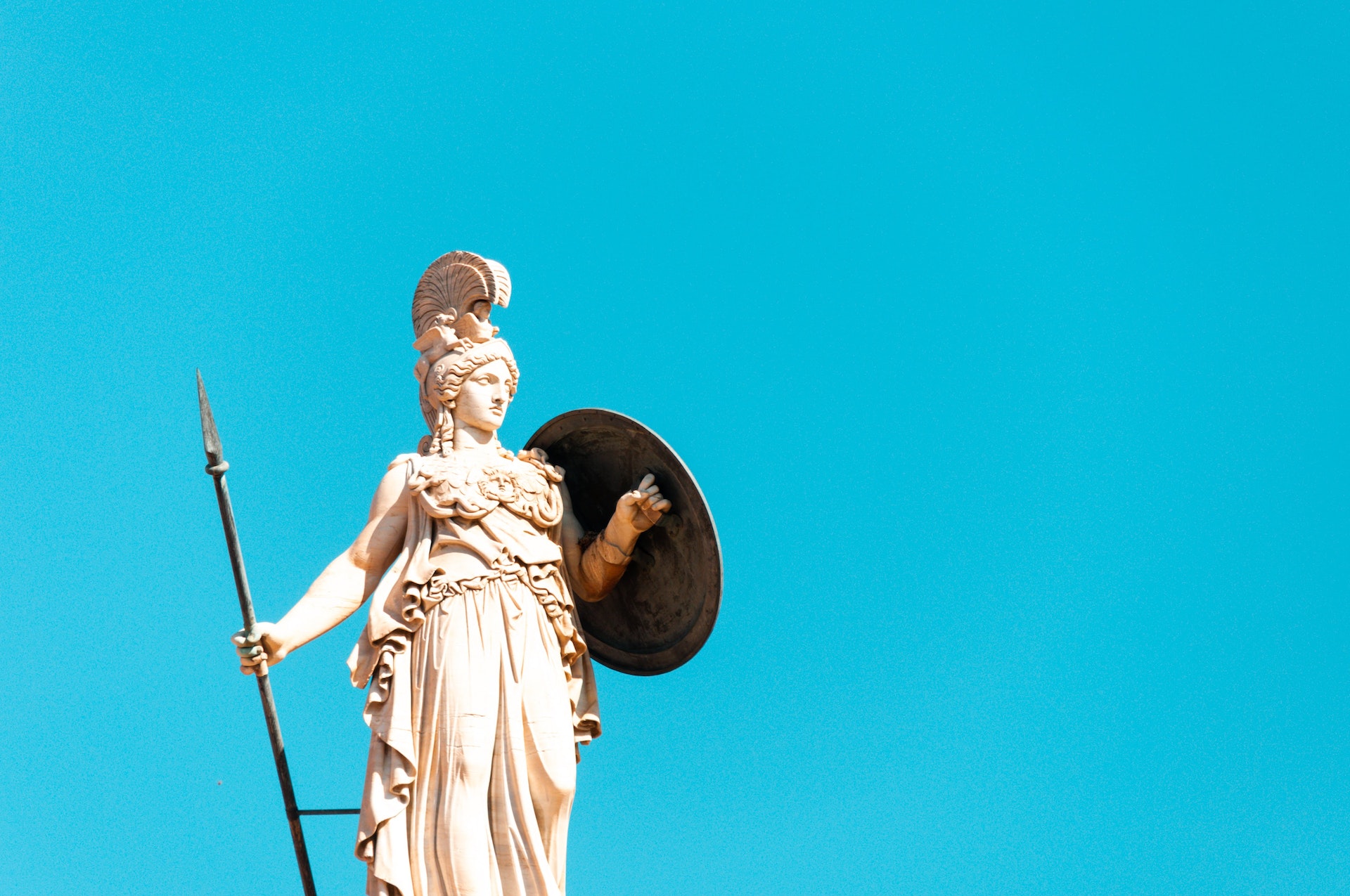
  • Approaching Athena the ruling goddess of Athens

    Approaching Athena the ruling goddess of Athens

    The Lord’s apostle to the gentiles — Paul, or Saul of Tarsus, a Roman citizen of CILICIA — has hurriedly fled Thessaloniki and Berea MACEDONIA sailing south along the Aegean coast of ACHIA to Athens.
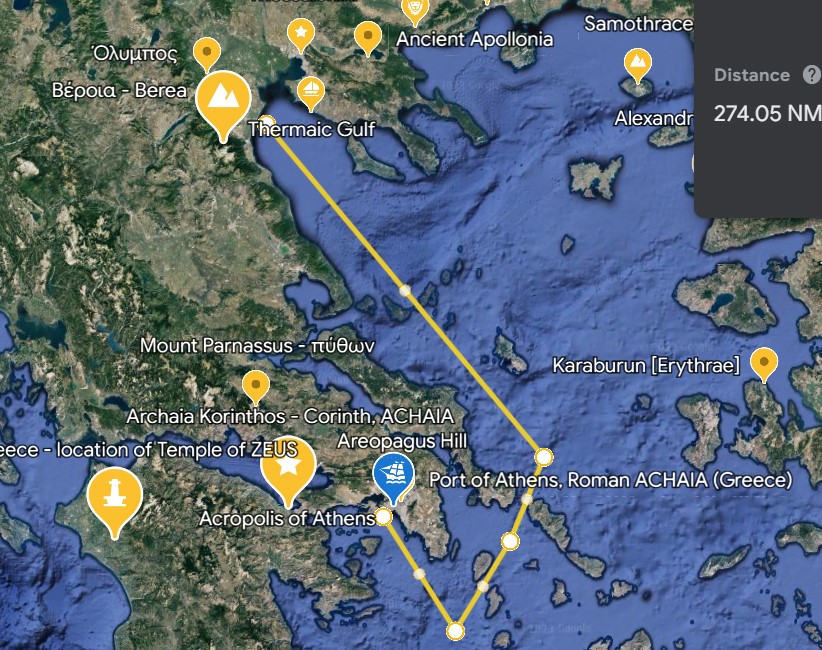
    sailing from Macedonia through the Aegean Sea to Achia, home of ancient Athens and a larger city of Corinth

    Sailing from Macedonia to Athens

    Although fleeing the Jews we must think of Paulos as a ROMAN citizen on some sort of commercial Roman ship traveling from Macedonia to Achia. Yes, the destination of his ticket in Athens – a city of a 300 year old fading glory – but the more important city of Roman Achia is now Corinth.

    What is more important here along Paul’s nearly 300 mile journey here is the context of culture so evident as he sails to Athens and then walks through the entrance of a city steeped in its former Hellenist glory.
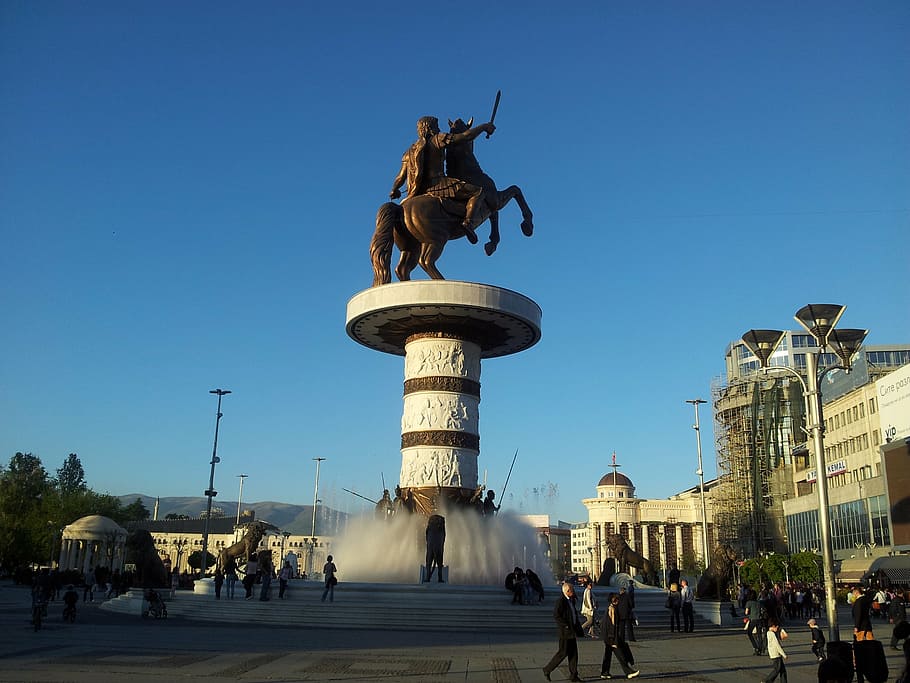
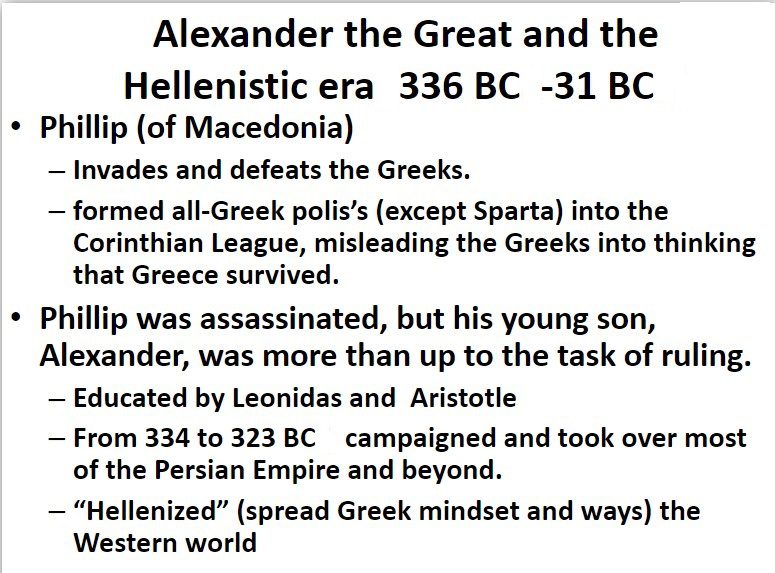
    Previously we addressed the ‘Greek‘ influence of Alexander the Great and Macedonian culture.
    Statue of Alexander the Great atop a fountain in Thessaloniki, Greece. In Acts 17 Paul fled from there to Berea on his second missionary journey;

    This modern-day statue of Alexander the Great in Thessaloniki, Greece partially demonstrates this Macedonian’s lasting influence even since his death in 323 B.C.

    Paul would have no sooner left port in Macedonia than all would have viewed the great mountains of Greek mythology on their starboard side.
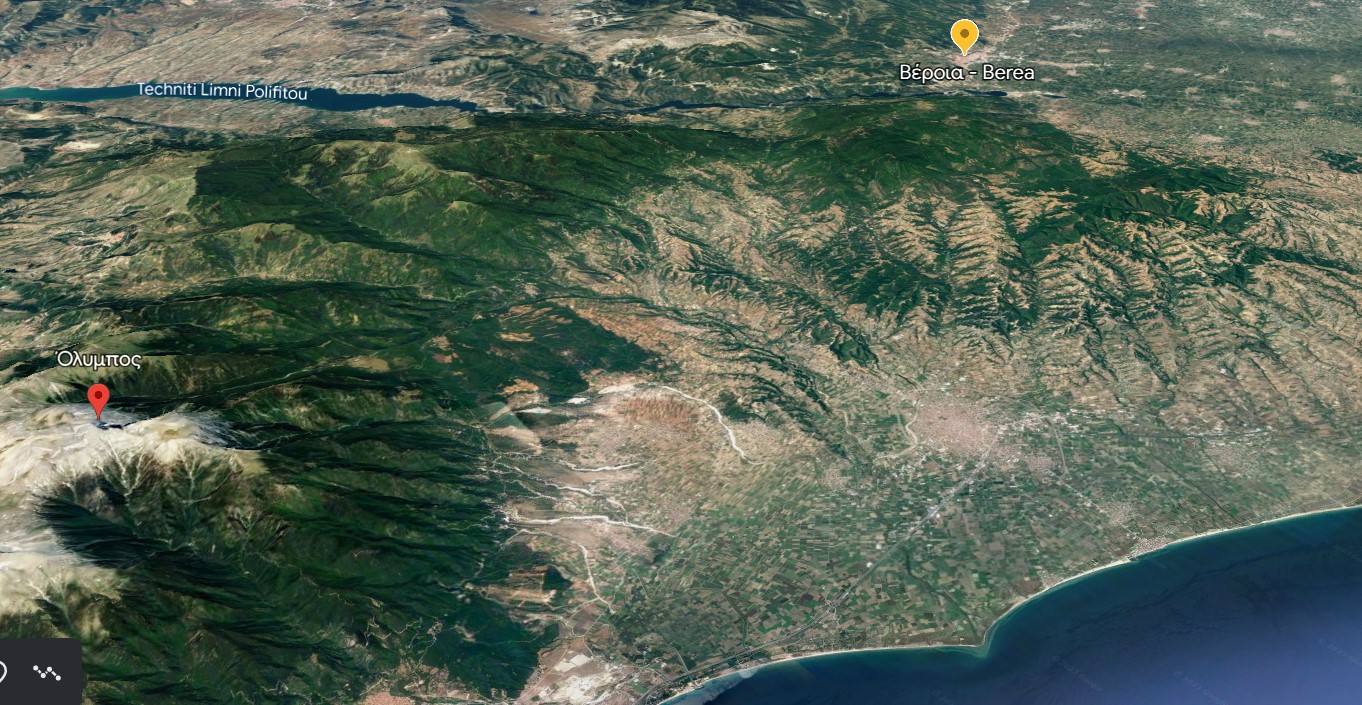
    Google Earth View of Mount Olympus, Olympus mountains toward Berea
    (We will approach these gods Zeus and others upon arrival in Athens.)
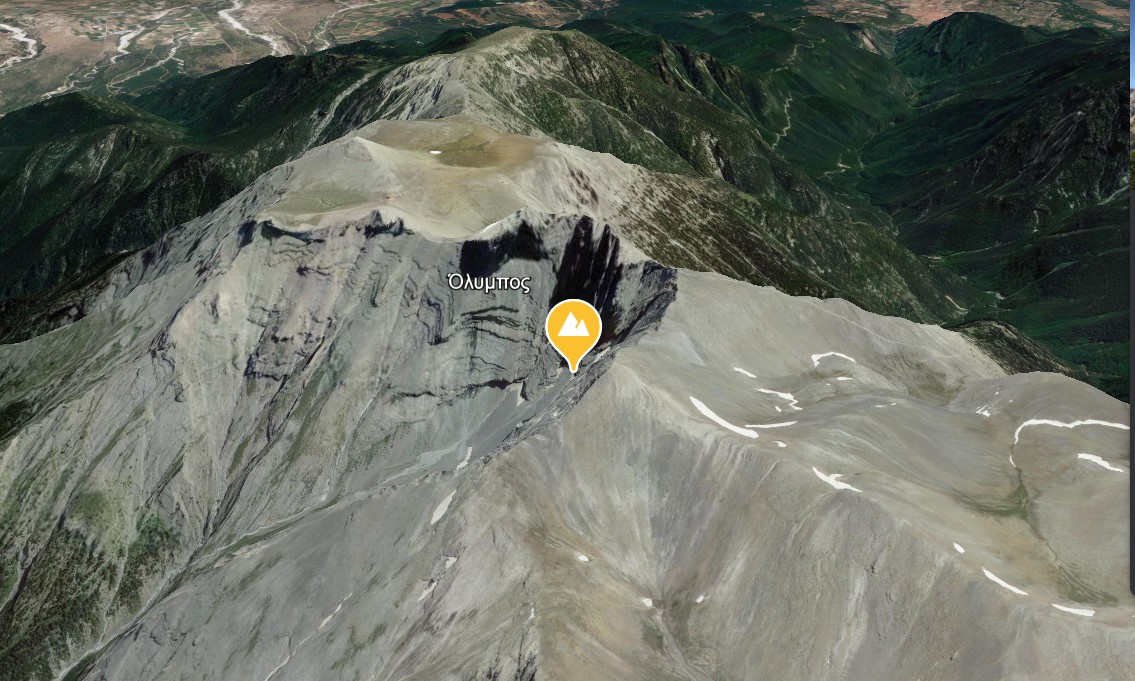
    Mount Olympus, highest peak in Greece
    Mount Olympus – Highest peak in Greece, home of Zeus and the mythology of the Greek gods and goddesses

    As we noted earlier the apostles’ journey along this mountainous coast of about 300 miles takes them from Macedonia (with its Alexandrian history) to Achia, the Roman region of strategic importance which includes Corinth on an inland isthmus and the port of Athens, formerly devastated by war but brought back to prominence by Rome as a ‘free city.’

    Approaching Athens
    Preview in new tab

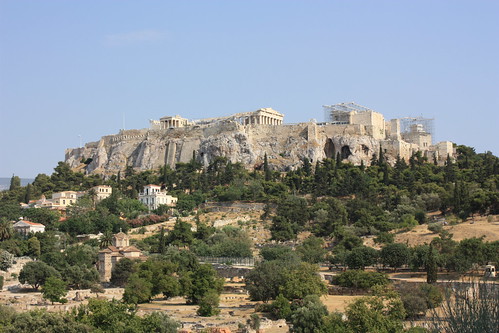
    As their commercial Roman sailing ship rounded mountains descending into the Aegean on their approach Athens, Paul would have seen ruins of the destroyed Acropolis appear on the hill to their starboard side prior to their ship docking in port.

    acropolis comes from the Greek words ἄκρον (akron, “highest point, extremity”) and πόλις (polis, “city”). – source – Flickr (same as photo)

    Upon arrival, as we noted last time, Paul sent his Berean brothers back to let the church know that he had arrived safely — again a 300 mile return trip while the Apostle Paul takes in the sights of this ancient ruined Greek city of Hellenist influence and lessor free city of Rome gaining the attention of its Emporer (a Caesar and god of the people).

    Visitors to the Athens of A.D. 50 would have walked along streets lined with monuments and statues as they ascended the hill into the city and its agora (marketplace).


    Unknown gods and goddesses

    Now while Paul was waiting for them at Athens, his spirit was being provoked within him as he was observing the city full of idols.

    Acts of the Apostles 17:16
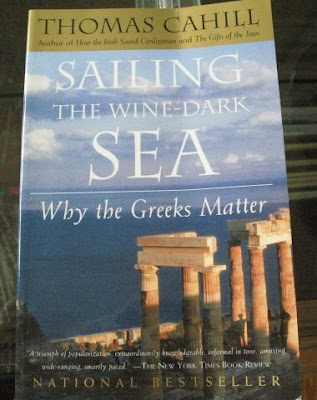
    Thomas Cahill - SAILIING THE WINE DARK SEA - Why the Greeks Matter

    NOTE: Although I have researched several sources as a background for Paul’s Acts 17 speech in Athens, you will find this one most useful and detailed. – Roger@TalkofJesus.com

    https://thomascahill.com/books


    YOU and I cannot fully understand Paul’s more contemporary knowledge of his first century A.D. context of clashes between Hellenist, Roman and Hebrew cultures; however after a brief overview of the text we will take a glance at Athens through the A.D. 50 eyes of all.


    Acts of the Apostles 17:

    Acropolis -

    17 So he was reasoning in the synagogue with the Jews and the God-fearing Gentiles,

    and in the marketplace every day with those who happened to be present.

    18 And also some of the Epicurean and Stoic philosophers were conversing with him. Some were saying, “What would this idle babbler wish to say?” Others, “He seems to be a proclaimer of strange deities,”—because he was proclaiming the good news of Jesus and the resurrection. 19 And they took him and brought him to the Areopagus, saying, “May we know what this new teaching is which you are speaking? 20 “For you are bringing some strange things to our ears. So we want to know what these things mean.”

    Luke now inserts a parenthetical glance at our 1st century A.D. philosophers of Athens.

    21 (Now all the Athenians and the strangers visiting there used to spend their time in nothing other than telling or hearing something newer.)

    Luke's account continues from ACTS 17:22 'So Paul stood in the midst of the Areopagus..
    
    We will listen to the apostle to the gentiles addressing the men of Athens next time, but first some CULTURAL CONTEXT.

    The Jews (in the eyes of Athens)
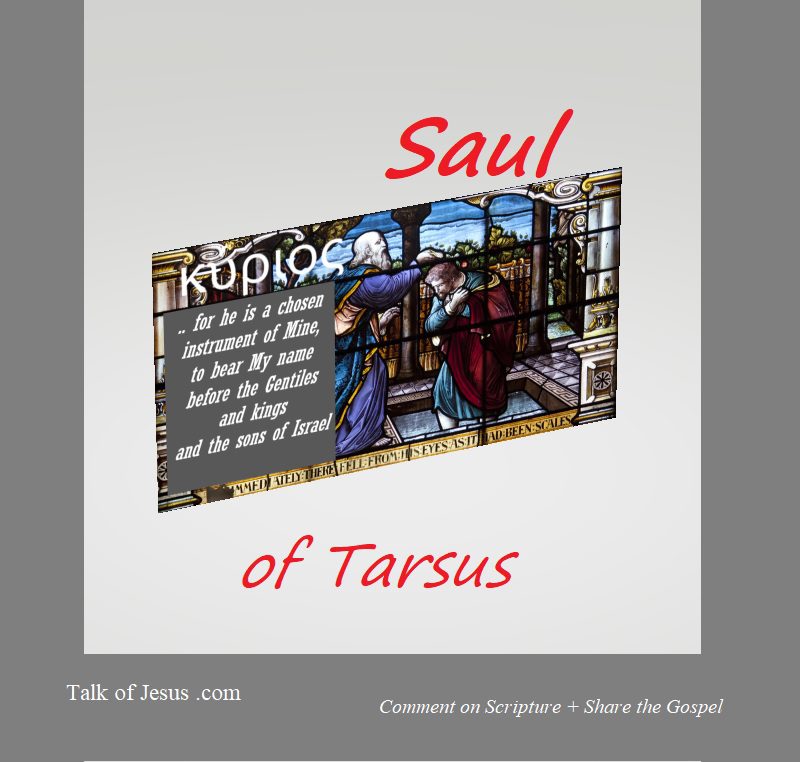
    The acts of Saul of Tarsus persecuted Christians until on a road to Damascus the Lord anoints the Apostle to the gentiles

    Saulos of Tarsus frequented the synagogues of his Hebrew brothers first in many other cities. He is a Pharisee who had believed in the Resurrection even prior to meeting the risen Messiah Jesus (same as Joshua in Hebrew) live and in Person.


    This belief in the resurrection of JESUS, Ἰησοῦς in the common Greek language, yᵊhôšûaʿ or Joshua in Hebrew, held by some Pharisees and some Essenes but not the Jewish sect of the Sadducees attracted Pharisaic Jews and proselytes to Christ’s fulfillment of Hebrew Scripture.

    Jews were merchants who mostly seemed to fit into the Pax Romana like any other religious culture except for one strange belief: Jews only had One God.

    An even more strange belief of some Jews about what happened to the body after death seemed somewhat ghoulish. (Just imagine some neighbor walking around Athens after he died — laughable!) What a strange belief of some of these Jews.

    For the Jews, who had little or no belief in the immortality of the soul, only salvation in one’s body could have any meaning.

    Thomas Cahill, Why the Greeks Matter, p.260

    The ‘peace’ of Rome accomplished in Athens by conquest was tenuous. Athenians and Romans were somewhat suspicious of Jews who the Emperor Claudius had just expelled from Rome.

    Therefore, just as Saul of Tarsus had fled Macedonia secretly and swiftly, Jews in Achia and other cities of the Roman Empire most likely worshiped somewhat ‘under the radar’ in A.D. 50 so as to peaceably blend in with other Greeks.

    As to Jewish cultural traditions of the past, Hellenist and Roman alike would have admired the great Jewish Empire of Solomon which was even more ancient than the centuries-old fallen glory of Alexander of Macedon who also conquered all of the world including the ancient cities of Greece.

    To the Hellenist eyes of Athenian philosophers Jewish wisdom differed from their own ancient Greek wisdom. Paul understood both.

    .. a Hebrew mode of argument .. proceeds by assertion and contrast rather than step-by-step reasoning [of ‘Socratic method’]

    Thomas Cahill, excerpt ibid. p.165

    17 So he was reasoning in the synagogue with the Jews and the God-fearing Gentiles


    Dialogue with men in the Agora

    .. and in the marketplace G58 every day with those who happened to be present.

    You might think that based on previous witness in other cities the apostle would have steered clear of the agora where everybody who’s anybody gathers in town.
    But when her masters saw that their hope of profit had left, they seized Paul and Silas and dragged them into the marketplace before the authorities, – Acts 16:19 LSB

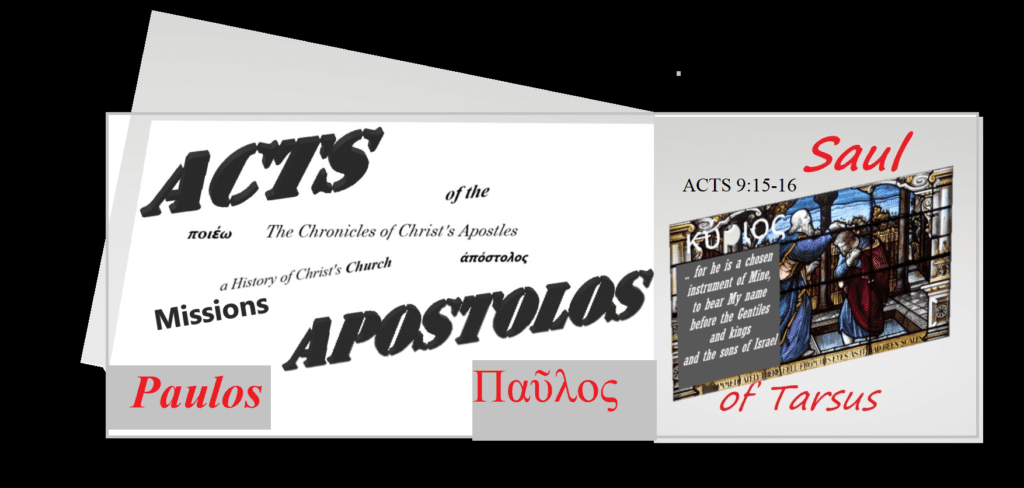
    Acts of the Apostles Missions trips of Paul, Barnabas, Silas and several others

    Paulos, sent out by Christ to the world of the Greeks, is a Roman citizen with a public duty, a Greek-speaking orator with a heart for the One God revealed in Hebrew Scripture and by the Messiah and the Spirit of the Living God.


    This visitor to Athens brings a unique perspective to Roman authorities and citizens of this free Roman city in addition to an appeal to traditional and classic Greek values represented in-part by their many gods.

    The agora in Athens is crowded with Gentiles EVERY DAY.

    ἀγορά

    1. any assembly, especially of the people
    2. the place of assembly
    3. market place, street

    The Greek or Hellenist or Roman agora is a multi-purpose public place.

    For: public debating, in-person democratic elections, trials, for buying and selling and all kinds of business


    Aristotle & the pantheon of Athenian gods of philosophy

    Classic Greece is long gone. Aristotle died in 322 B.C., his student Plato in 347 B.C. and Socrates had accepted his death sentence of hemlock for disbelief in the gods of Athens way back in 399 B.C.

    ~A.D. 50

    Acts 17:18

    And also some of the Epicurean and Stoic philosophers were conversing with him.

    Who are these endless debaters of the Agora?

    Some were saying, “What would this idle babbler wish to say?”

    Others, “He seems to be a proclaimer of strange deities,”—because he was proclaiming the good news of Jesus and the resurrection.

    Classic Schools of Philo-sophy [love of wisdom]

    Roman and Hellene aristocratic families would send their young men to Athens. It’s schools included: Cynicism, Stoicism, Skepticism, Epicureanism and others. Among these that Paul would have encountered:

    Stoics taught virtuous detachment from the physical things of the world (a sort of monastic approach). Epicureans taught to love of life and pleasure much to the liking of most powerful Roman and well-healed Greek men celebrating so many festivals of various gods with little thought of wisdom at all.

    In fact, over the centuries since the esteemed Greek philosophers Athens and other Hellenist cities had had so many varied festivals and pantheons of gods that no man could truly remember them all.

    THE LOVERS OF WISDOM continually TALKED about gods and religion as a contest between PHILOSOPHERS seeking advantage over their opponent without seeking the TRUTH of the LOGOS which the Apostle Paul was about to present.

    And they took him and brought him to the Areopagus

    Acts of the Apostle Paul in ATHENS — To be continued…
  • Jews in Berea receive and believe the Gospel

    Jews in Berea receive and believe the Gospel

    What do Christians mean when they call themselves Bereans?

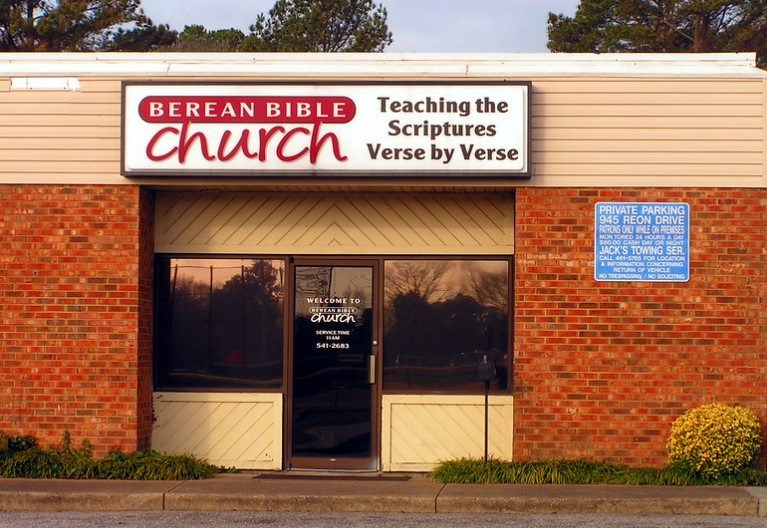
    Berea Bible Church photo Bill Smith creative commons license via Flickr.com

    Berean Bible Believer

    Are YOU one?

    No doubt you have your own imagery.

    (Let’s set our pictures of the past aside for a moment and go straight to the source – THE BIBLE – for some context of Paul’s visit to Berea.)


    Acts of the Apostles 17:

    So IF you are a Berean sort of believer you will first want to examine the Scriptures of our Source. Here they are!

    10 The brothers immediately sent Paul and Silas away by night to Berea, and when they arrived they went into the Jewish synagogue.

    This, of course, was where we left Thessalonica with Paul, Silas and Timothy last time in v. 10a

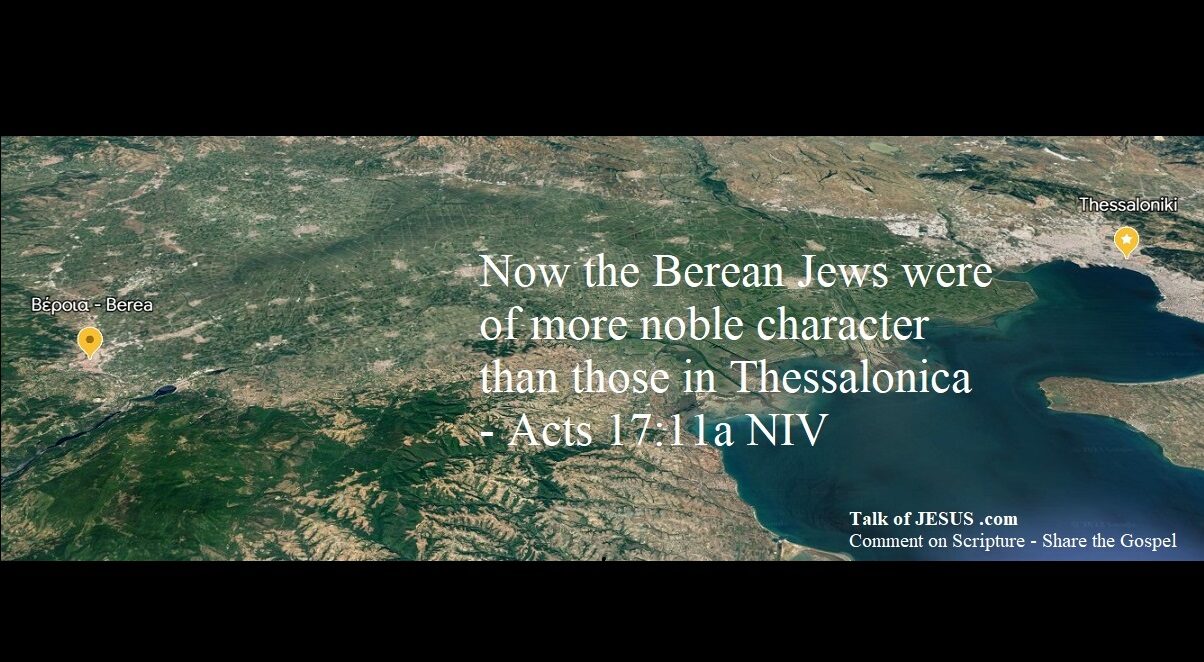
    Now these Jews were more noble than those in Thessalonica; they received the word with all eagerness, examining the Scriptures daily to see if these things were so.

    Acts of the Apostles 17:11 – English Standard Version

    12 Many of them therefore believed, with not a few Greek women of high standing as well as men.

    13 But when the Jews from Thessalonica learned that the word of God was proclaimed by Paul at Berea also, they came there too, agitating and stirring up the crowds.

    14 Then the brothers immediately sent Paul off on his way to the sea, but Silas and Timothy remained there.


    A Brief Stay in Berea

    Luke, as you can see, covers this apostolic visit to Berea in just four and a half verses. And from their arrival [v. 10b] until Paul’s hurried departure [14a] even less time and scripture.

    Yet hardly a Protestant Church lacks a “Berean” Bible Study or group of some sort (even those churches lacking a Berean store front to bring in believers of the Bible).

    Βέροια – Berea or beroia

    Pronunciation
    ber‘-oy-ah

    Modern Veria in Central Macedonian Greece

    Google Earth View of Mount Olympus, Olympus mountains toward Berea
    Mount Olympus and Berea near base of Olympus Mountains

    Although the drama of Paul in this place was most brief, the mythical influence of the ancient Greek gods of Mount Olympus impacted nearby Berea. Olympus is a familiar stage of the Hellenist culture of all Greece.

    The Clash of Titans and Cultures

    Statue of Alexander the Great atop a fountain in Thessaloniki, Greece. In Acts 17 Paul fled from there to Berea on his second missionary journey;

    ALEXANDER – the Great Macedonian

    The former classical glory of Alexander’s empire had faded into a Hellenist culture for nearly four centuries and was then absorbed into a modern Roman culture of the A.D. 1st century.

    Alexander the Great was a titan among kings

    As Rome’s Caesars sought to conquer the vast lands ruled by Alexander they discovered that the same ancient Babylonians, Medes and Persians to the East had all been influenced by the Hellenist culture of Alexander.

    A Pax Romana created a culture of peace with Rome’s captive peoples and incorporated their gods and traditions into local practice.


    The cultural clashes between Jews, Greeks and other Hellenist-influenced peoples of the Roman Empire are inevitable, undeniable and central to Paul’s proclamation of the Gospel to Greeks.

    No better place than Berea near Mount Olympus to set the stage for the world into which these apostles have been sent to proclaim the Gospel of Jesus Christ.


    What is Luke’s point in Acts 17:11?

    FIRST, what it is NOT:

    The Scriptures here are NOT the New Testament (which will later include two letters of Paul to to the Thessalonians).

    And although like in OTHER Jewish synagogues Paul undoubtedly had proclaimed the Gospel to these Jews AND probably shared the letter from the Council of Jerusalem with believers, the SCRIPTURES referenced here were EXCLUSIVELY ‘Old Testament’ similar to earlier preaching of Peter, Paul, Stephen and others connecting it all to Jesus the risen Messiah of Israel.


    Nobility

    Why does Luke refer to these Jews as ‘more noble than those in Thessalonica?’

    (After all, Paul will later write two encouraging letters to those in Thessalonica and the Epistles do NOT include a single correspondence to Berea.)
    
    Let's take a 'Berean' examination of the Scriptures illustrating Luke's meaning.

    “noble” occurs 18 times in 16 verses in the ESV, yet only 7 times in 7 verses in the KJV.

    Hear, for I will speak noble things,
    and from my lips will come what is right,
    for my mouth will utter truth;
    wickedness is an abomination to my lips.
    
    Proverbs 8:6-7 ESV
    
    Yet I had planted thee a noble vine, wholly a right seed: how then art thou turned into the degenerate plant of a strange vine unto me?
    
    
    Jeremiah 2:21 KJV (after the LORD asking Judah in v.11: 
    Hath a nation changed their gods, which are yet no gods? 
    

    Luke, using Greek also common to Macedonia’s Roman rulers uses the word εὐγενής, meaning, ‘more noble-minded.’

    Nobility refers associatively to a higher class; kings, princes, the well-born of certain families.

    (Remember that Roman, Hellenist or Greek and Eastern cultures included many slaves as well; although Christ taught that more slaves than rich would follow the righteousness attached to nobility and ‘leading Jews.’)

    Paul later addresses two Roman Governors as ‘most noble’ when addressing them.

    It is this same meaning attached to the Greek women of high standing [v.12] as well.

    Why are they more noble-minded?

    Rather than being dissuaded by cultural arguments of leading Jews who rejected Jesus the Messiah of Scripture these Berean Jews examined what Paul had taught from the Scriptures.

    δέχομαι – they received the word [logos]


    Luke also records an attitude perhaps equally important to new Christians receiving the Word, who was and IS and will be, the LORD God of the heavens and earth.

    “they received the word with all eagerness.”

    Your Savior from sin and death, the Messiah of Israel will be the judge of ALL men. JESUS saved you!

    SO DO YOU RECEIVE OUR LORD WITH ALL EAGERNESS?

    μετά [meta] πᾶς [pas] προθυμία [prothymia]

    ‘with great (or all) eagerness

    zeal, spirit, inclination, readiness of mind


    The Macedonians of these towns and cities who examined the true witness of the Hebrew Scriptures and obeyed the guidance of the Council of Jerusalem formed a strong, vibrant, and spirited church who witnessed the Good News of Jesus Christ to all the Hellenists, Romans and anyone else who believed.

    Paul’s briefer stay in Berea

    14 Then the brothers immediately sent Paul off on his way to the sea,

    Christians generally note the moving on of the apostle Paul to Athens and what will become one of his most important speeches. However here we will continue our focus on the work of two remaining apostles sent out to Macedonia, Silas and Timothy.

    Timothy and Silas in Berea

    .. but Silas and Timothy remained there. 15 Those who conducted Paul brought him as far as Athens,

    and after receiving a command for Silas and Timothy to come to him as soon as possible, they departed.

    While the Berean brothers helped Paul to flee the Thessalonian Jewish posse, Silas and Timothy stayed on (as Paul and other apostles had done in the past) to organize this church who studied the Scriptures daily.

    Once arriving in distant Athens, Paul then commands them to return home and send Silas and Timothy to continue their journey later when they too will finally arrive from Macedonia NOT in Athens, but in the larger nearby city of Corinth.

    When Silas and Timothy arrived from Macedonia, Paul was occupied with the word, testifying to the Jews that the Christ was Jesus.

    Acts of the Apostles 18:5 ESV

    NEXT: Paul in Athens, ACHIA

    To be continued…

    ACTS of the Apostles 17:16-

  • The gods have become like men

    The gods have become like men

    Idolatry – Men create their gods

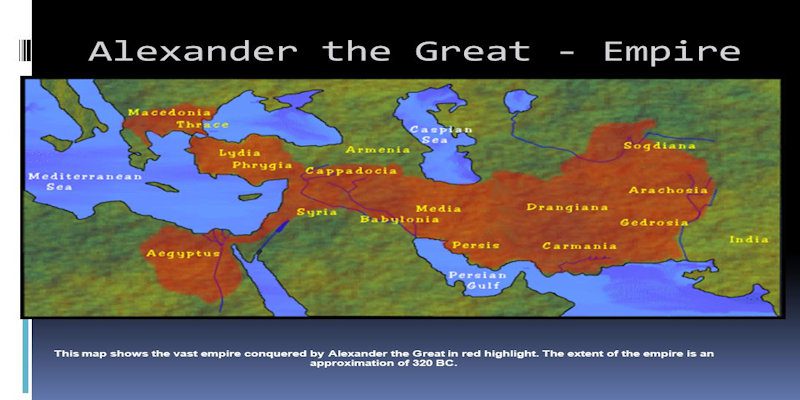
    Imagine an EMPIRE – like the powerful GREECE of Alexander the Great.

    Empire of Alexander the Great 336-323 BC
    This map shows the vast empire conquered by Alexander the Great in red highlight. The extent of the empire is an approximation of 320 BC.
    • The number of Greek gods may be more than 3000, with 1-4 dozen main gods including Zeus and other ‘family.’
    For a humorous look at the idol gods:
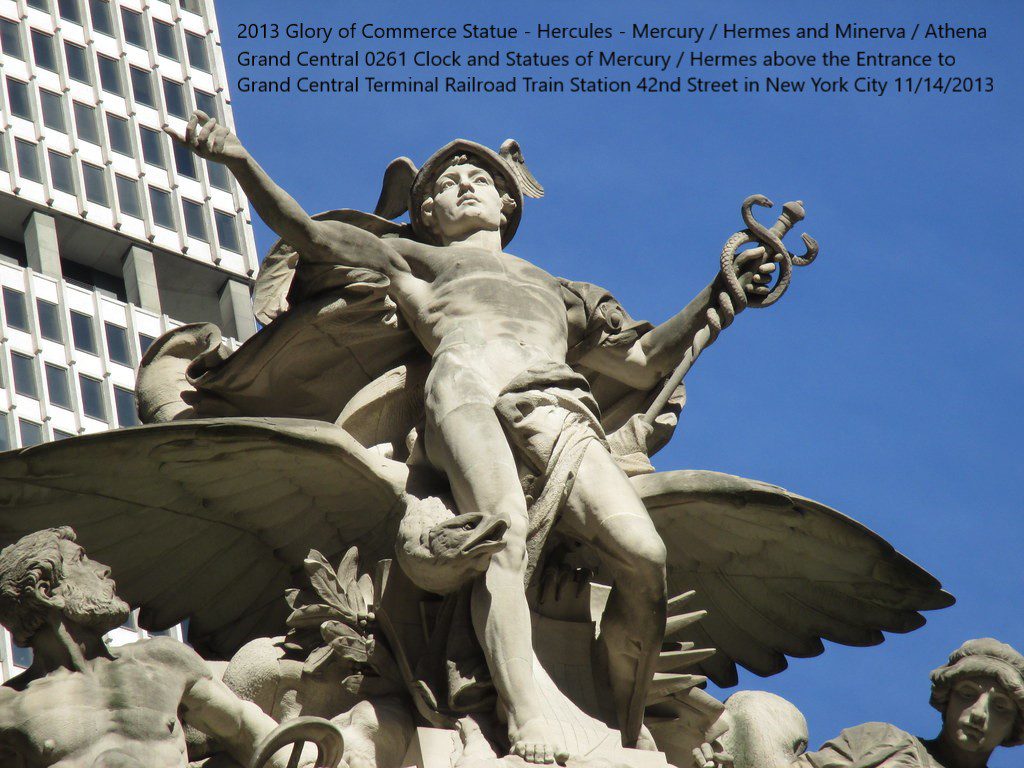
    - visit this source about the god Hermes [pictured in NYC for this post] from godchecker.com 
    
    Greek Mythology is a veritable blockbusting soap opera. What can Zeus possibly get up to next — and with whom? How will Hera take her next revenge? Where will Aphrodite discard her nightie? Who has been barred from Olympus lately — and why? When is the next big punch-up? And will Hermes be sued for selling counterfeit sheep? 

    Imagine an EMPIRE – like the powerful ROME of the Caesars.

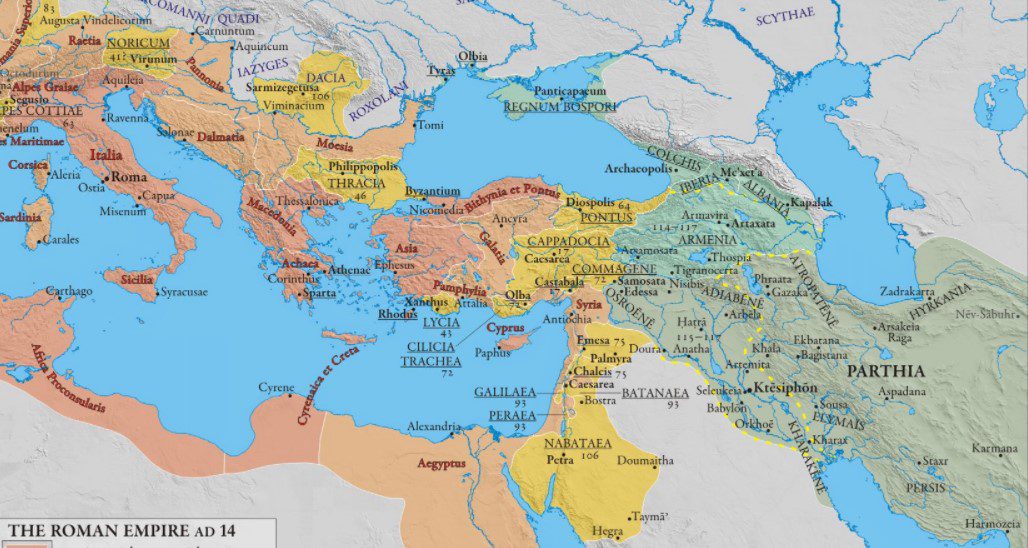
    Roman Empire AD14 with Parthia to the east beyond Roman Syria
    Rome continually changed names of regions and borders they administered so some would have changed by AD 48 when Paul and Barnabas journeyed through the cities of the Taurus Mountains and yet again by the time Luke published Acts of the Apostles ~AD 62.
    • The multitudes of Roman gods include Jupiter as head of a dozen deities similar to several gods and goddesses of Greek mythology plus ancient gods and goddesses of captive cultures inclusively embraced in exchange for a Pax Roma.

    Julius Caesar was the first Roman leader to be called “god” and “savior,” which became dominant phrases in Roman Imperial theology.

    The idea behind these lofty titles was that while the Roman Republic collapsed in the first century BC, Julius Caesar but mostly his son Caesar Augustus resurrected Rome from the dead.

    Καισαρ Source for more interesting background – ABARIM Publications

    Imagine a 21st century EMPIRE – like THE UNITED STATES or others.

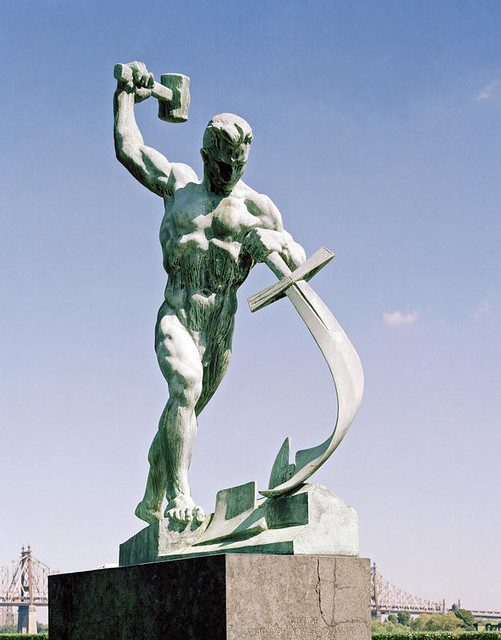
    Let Us Beat Swords Into Ploughshares is a bronze sculpture by artist Evgeniy Vuchetich (1908 ¬– 1974). Vuchetich was an esteemed Soviet sculptor and artist well-known for his heroic monuments.

    It stands outside the U.N. Building in New York City, United States of America as another empire wield their swords once more to destroy the plowshares of their enemies. – RH

    Beat your plowshares into swords, and your pruninghooks into spears: let the weak say, I am strong. Assemble yourselves, and come, all ye heathen, and gather yourselves together round about: thither cause thy mighty ones to come down, O LORD.

    Joel 3:10-11 KJV

    Micah 4:2 וְֽהָלְכוּ גּוֹיִם רַבִּים וְאָֽמְרוּ לְכוּ וְנַעֲלֶה אֶל־הַר־יְהוָה וְאֶל־בֵּית אֱלֹהֵי יַעֲקֹב וְיוֹרֵנוּ מִדְּרָכָיו וְנֵלְכָה בְּאֹֽרְחֹתָיו כִּי מִצִּיּוֹן תֵּצֵא תוֹרָה וּדְבַר־יְהוָה מִירוּשָׁלִָֽם׃

    And he [the LORD] shall judge among many people, and rebuke strong nations afar off; and they shall beat their swords into plowshares, and their spears into pruninghooks: nation shall not lift up a sword against nation, neither shall they learn war any more. – Micah 4:3 KJV

    Idolatry – Quick U-turns by Men claiming gods

    So you say that idolatry such as that Paul and Barnabas encountered in Lystra over two millennia ago no longer exists.

    Look a bit closer, you who have thus far survived 21st century multitudes of celebrity leader gods and goddesses who wield the swords of godless tongues and imagery of gods against the crowds they would overcome.

    ~48 AD

    Previously in Acts 14:8-10, a miracle of God in Lystra through Paul and Barnabas.
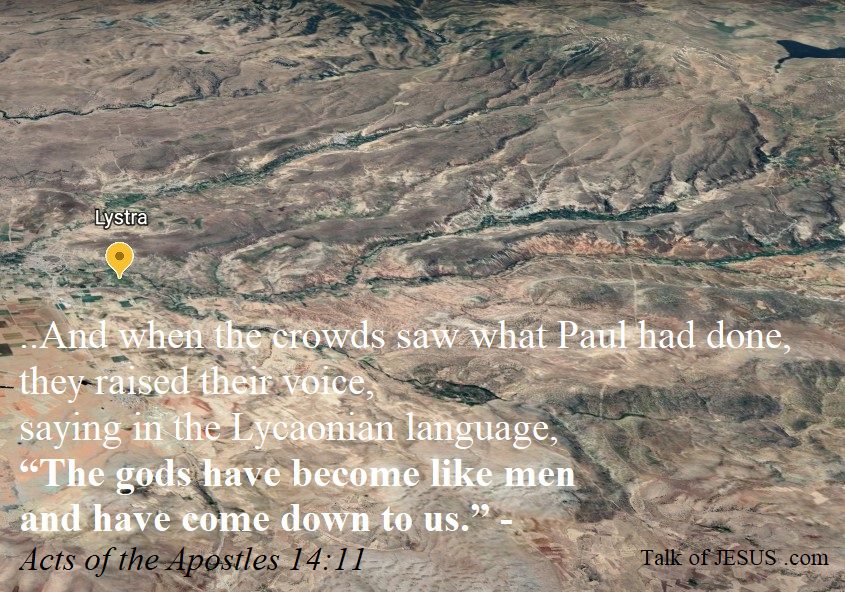
    And when the crowds saw what Paul had done, they raised their voice, saying in the Lycaonian language, “The gods have become like men and have come down to us.” Acts 14

    Acts of the Apostles Paul and Barnabas continued

    “The gods have become like men and have come down to us.” And they began calling Barnabas, Zeus, and Paul, Hermes, because he was the chief speaker.

    And the priest of Zeus, whose temple was just outside the city, brought oxen and garlands to the gates, and was wanting to offer sacrifice with the crowds.

    The Statue of Zeus 41 feet tall made by the Greek sculptor Phidias around 435 BC at the sanctuary of Olympia, Greece, Temple of Zeus, the sky and thunder god in ancient Greek religion.
    The Statue of Zeus at Olympia was a giant seated figure, about 12.4 m (41 ft) tall,[1] made by the Greek sculptor Phidias around 435 BC at the sanctuary of Olympia, Greece, and erected in the Temple of Zeus there. Zeus is the sky and thunder god in ancient Greek religion

    But when the apostles Barnabas and Paul heard of it, they tore their garments and rushed out into the crowd, crying out and saying,

    “Men, why are you doing these things?

    We are also men of the same nature as you, proclaiming the gospel to you that you should turn from these vain things to a living God, WHO MADE THE HEAVEN AND THE EARTH AND THE SEA AND ALL THAT IS IN THEM who in the generations gone by He permitted all the nations to go their own ways;

    and yet He did not leave Himself without witness, in that He did good and gave you rains from heaven and fruitful seasons, filling your hearts with food and gladness.”


    WHAT has just happened?

    Two Jewish travelers walk into a Lycaonian town in the mountains of Greece where most men are probably not educated philosophers, priests or Roman officials who know something of the Hebrews and their religion which holds to only ONE GOD, an inconceivable concept to pagans led to worship stone idols in grand temples built long ago in their town.

    BUT, these two men perform a miracle which most certainly must be a sign from a MOST Powerful God of Heaven — to them, ZEUS.

    Is this ZEUS IN PERSON?

    IS THIS MAN in our midst a savior to be worshiped? (For he has done the impossible and we witnessed it.) We’ll go get this god’s priest from his temple at the gate of our city Lystra AND prepare a great sacrifice in honor of these two gods with us, Zeus and Hermes.

    THEN these two strangers tore their clothes and ran in among the multitude and gods don’t stoop down to such things even IF they have come among us to have a mortal man stand.

    SO these men who tricked us into thinking they were the gods Zeus and Hermes have told us to turn from OUR gods to their GOD.


    And saying these things, with difficulty they restrained the crowds from offering sacrifice to them.

    Acts of the Apostles Paul and Barnabas in Lystra 14:18
    To be continued...