Revelation 1:8 KJV
I am Alpha and Omega, the beginning and the ending, saith the Lord, which is, and which was, and which is to come, the Almighty.

Briefly, we considered creation (day 1 before measurable time).
Look at the timeline of man’s history as if the mark on the left is creation. Suppose man (adam) is a second mark and Noah a third. Then Abraham and Moses followed by David, with generations and centuries unmarked.
In the middle of the line a notable mark of the division of time follows which we note as B.C. (or BCE) and A.D. (from the Latin: Anno Domini – ‘In the year of our Lord’).
Before this dividing mark of time between BC and AD, David has reigned and the Prophets have spoken.
THEN..
Jesus Christ is born, teaches, crucified and resurrected (a challenge to mortal time).
His life as God With Us (Immanuel) delineates a beginning to these last days.
Our timeline of these last days endures through persecution of the faithful while the Lord wins repentant sinners.
But do not overlook this one fact, beloved, that with the Lord one day is as a thousand years, and a thousand years as one day. – 2 Peter 3:9
Following the fall of Rome and rise of false prophets the church witnesses the way of Christ Jesus.
History records the printing of the Bible, reformation of the faith and enlightenment of mindful godlessness.
The nations learn of Christ, empires rise and fall toward an inevitable end, the omega of time. Christ IS near in the omega of these last days, the end of time measured by the created of the Lord God Almighty.
Ω Ō, o’-meg-ah; the last letter of the Greek alphabet, i.e. (figuratively) the finality:—Omega.
Observe any line, even a timeline of history.
It has a beginning (Α, ἄλφα) and it has an end (Ω, Omega).
Yet look beyond the visible beginning and visible end of the line and in your mind’s eye observe the infinite extension of that which is visible.
Look above (heavenward) and below: consider the expanse of so much which the line does not touch.
Our created living souls can barely grasp it!
The refracted light of our postmodern enlightenment clouds the clarity of the One true Light.
Time and creation have cause. The Lord will surely accomplish His purpose and the saving of His own at the end.
Before the Α, After the Ω
And God saw everything that he had made, and behold, it was very good. And there was evening and there was morning, the sixth day.
Genesis 1:31
One commandment from God to man, a simple life in paradise:
“.. of the knowledge of good and evil you shall not eat, for in the day that you eat of it you shall surely die.” – Genesis 2:17b
Yet man chooses trespass to just one simple command from God. A just and righteous LORD must punish sin.
The Lord God said.. to Adam he said: “.. for you are dust,
and to dust you shall return.” – Genesis 3 excerpt
Living toward life’s end
LATER in Scripture - from a conversation of a righteous man.
Although Job appears later in the Bible his place in the timeline of history is closer to Abraham than to David.
Job 7:
“Has not man a hard service on earth…?
… so I am allotted months of emptiness,
and nights of misery are apportioned to me.
When I lie down I say, ‘When shall I arise?’
But the night is long,
and I am full of tossing till the dawn.
5 My flesh is clothed with worms and dirt;
my skin hardens, then breaks out afresh.
6 My days are swifter.. and come to their end without hope.
7 “Remember that my life is a breath;
my eye will never again see good.
8 The eye of him who sees me will behold me no more;
while your eyes are on me, I shall be gone.
17 What is man, that you make so much of him,
and that you set your heart on him,
18 visit him every morning
and test him every moment?
Why do you not pardon my transgression
and take away my iniquity?
For now I shall lie in the earth;
you will seek me, but I shall not be.” – Job 7:21
The time and place of punishment
Luke 16:
… and in Hades, being in torment… And he called out, ‘… have mercy on me.., for I am in anguish in this flame.’
ᾅδης – hadēs
- What do you expect of inevitable death and deserved hell?
- (Or do you yet claim blemished goodness with eyes that will not see death?)
Hell [Hades] holds captive many living souls by the certainty of our own sins.
Roman, Hellenist and Hebrew understanding of Jesus’ mention of Hades fits the definition:
- name Hades or Pluto, the god of the lower regions
- Orcus, the nether world, the realm of the dead
- later use of this word: the grave, death, hell
Yet note a subtlety of the root word of Hades:
From the negative participle of Alpha and εἴδω – eidō, a word meaning ‘to see’ or ‘to know.’
And I saw an angel come down from heaven, having the key of the bottomless pit and a great chain in his hand. – Revelation 20:1
Do you yet see our vulnerability to the punishment for sin after our end without Christ?
“Son of man, you dwell in the midst of a rebellious house, who have eyes to see, but see not, who have ears to hear, but hear not, for they are a rebellious house. – Ezekiel 12:2
After the Omega, saved in Christ
The saying is trustworthy and deserving of full acceptance, that Christ Jesus came into the world to save sinners.. – 1 Timothy 1:15
The gospel εὐαγγέλιον of John:
In the beginning was the Word, and the Word was with God, and the Word was God…
But to all who did receive him, who believed in his name, he gave the right to become children of God…
“Behold, the Lamb of God, who takes away the sin of the world!
.. and he looked at Jesus as he walked by and said, “Behold, the Lamb of God!”
“We have found the Messiah” (which means Christ)...
Jesus answered them, “Destroy this temple, and in three days I will raise it up.”
If I have told you earthly things and you do not believe, how can you believe if I tell you heavenly things?
For God did not send his Son into the world to condemn the world, but in order that the world might be saved through him.
Whoever believes in him is not condemned, but whoever does not believe is condemned already, because he has not believed in the name of the only Son of God.
And this is the judgment:
the light has come into the world, and people loved the darkness rather than the light because their works were evil.
Omega – for those with eyes to see
Revelation 22:
Then the angel showed me the river of the water of life, bright as crystal, flowing from the throne of God and of the Lamb…
“And behold, I am coming soon.
12 “Behold, I am coming soon, bringing my recompense with me, to repay each one for what he has done. 13 I am the Alpha and the Omega, the first and the last, the beginning and the end.”
“Come.”
And let the one who hears say, “Come.”
And let the one who is thirsty come;
let the one who desires take the water of life without price.
20 He who testifies to these things says, “Surely I am coming soon.”
Amen. Come, Lord Jesus!
21 The grace of the Lord Jesus be with all.
Amen.

 In two scenes related by Matthew we see Jesus and the Apostles and learn of what Matthew would know later about the leaders of the Temple.
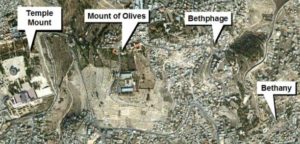
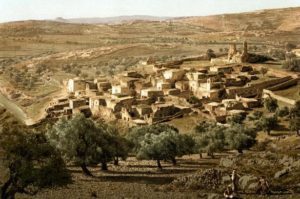 In Bethany, near Jerusalem, notice first the anointing honoring Jesus takes place. Then discontent and criticism from those present, opposition no different than in Jerusalem from those who seek to crucify the Lord. As always, Jesus cuts to the quick with the truth.