Tag: hebrews

  • Hebrews 7- Melchizedek king & priest

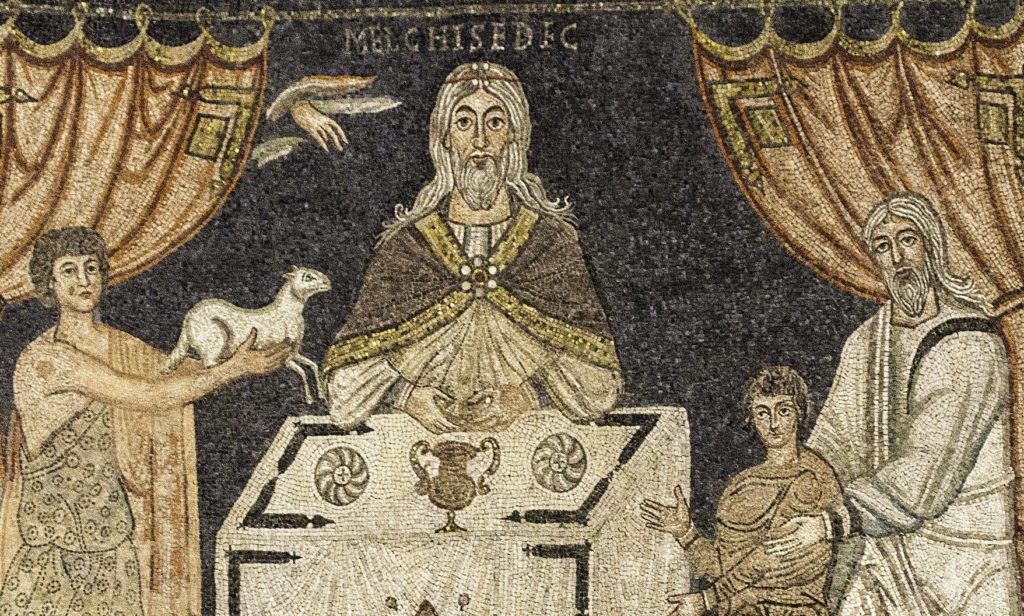
    This Melchizedek was king of the city of Salem and also a priest of God Most High. When Abraham was returning home after winning a great battle against the kings, Melchizedek met him and blessed him.

    Hebrews 7:1 NLT

    We’ve heard this before

    Who was this Melchizedek?

    The writer of Hebrews is about to give us our more mature teaching of scripture.

    He has rebuked the readers of his letter (most likely Messianic Jews) for their elementary teachings. For after all, they know the Books of Moses and should connect Christ to the promises of their faith.

    In Hebrews 5 he refers to Christ as a high priest like Melchizedek, quoting Psalm 110:4. And he returns to this imagery in Hebrews 6 and now chapter 7 where he makes his case.

    The Mosaic Law points back to Abraham in Genesis. To hear God’s call to the Hebrews, even before they fled Egypt with Moses, hear just a little of this story.

    It started with Abram

    Genesis 12:

    The Lord said to Abram:
    Go out from your land,
    your relatives,
    and your father’s house
    to the land that I will show you.
    2 I will make you into a great nation,
    I will bless you,
    I will make your name great,
    and you will be a blessing.
    3 I will bless those who bless you,
    I will curse anyone who treats you with contempt,
    and all the peoples on earth
    will be blessed through you.

    12:3 וַאֲבָֽרֲכָה מְבָרְכֶיךָ וּמְקַלֶּלְךָ אָאֹר וְנִבְרְכוּ בְךָ כֹּל מִשְׁפְּחֹת הָאֲדָמָֽה׃

    … And in you all the families of the earth will be blessed.”

    genesis 12:3 NASB masoretic text

    Abram went up from Egypt to the Negev… He then moved his tent and went to live near the oaks of Mamre at Hebron, where he built an altar to the Lord. Several local kings (or tribal princes, if you prefer) waged war against each other. Then one clan captured his relative Lot, whom Abram rescued. The alliance of victorious kings celebrate their victory with the help of Abram.

    Melchizedek, King of Salem

    18 Melchizedek, king of Salem, brought out bread and wine; he was a priest to God Most High. 19 He blessed him and said:

    Abram is blessed by God Most High,
    Creator of heaven and earth,

    Genesis 14:18 CSB

    14:19 וַֽיְבָרְכֵהוּ וַיֹּאמַר בָּרוּךְ אַבְרָם לְאֵל עֶלְיֹון קֹנֵה שָׁמַיִם וָאָֽרֶץ׃

    El Elyon – GOD MOST HIGH has blessed Abram, says Melchizedek, ‘a priest of God Most High.’

    This is the foundation of scripture familiar to the hearers of the letter of Hebrews. Now the author explains.

    The Greatness of Melchizedek

    First, his name means king of righteousness, then also, king of Salem, meaning king of peace.

    Good credentials. Yet the author of Hebrews then points out that Moses did not give us any genealogies to tell who this king of righteousness might be.

    Hebrews 7:

    NOTE: Versions in link above: CSB; NKJV; Complete Jewish Bible; NLT; NIV

    3 Without father, mother, or genealogy, having neither beginning of days nor end of life, but resembling the Son of God, he remains a priest forever.

    Now consider how great this man was: even Abraham the patriarch gave a tenth of the plunder to him.

    Hebrews 7:4

    We worship God, perhaps giving a tithe (tenth), but Abram gave a tenth to ‘the king of righteousness, king of peace.‘ The author then proceeds to quote Mosaic Law which instructs Levite priests to collect a tithe to the Lord. He presents the case for the Law and application, then asks for our mature look at the Messiah as Priest.

    11 Therefore, if perfection were through the Levitical priesthood (for under it the people received the law), what further need was there that another priest should rise according to the order of Melchizedek, and not be called according to the order of Aaron?

    Melchizedek belonged to a different tribe than Abraham (and therefore, Levi). Moses said nothing about that tribe concerning priests.

    Jesus, Son of Man, descended in the flesh from David and Judah, son of Israel [Jacob], son of Isaac, son of Abraham – Jesus the Messiah is not a Levite priest. Therefore the Messiah is something more.

    And it is yet far more evident if, in the likeness of Melchizedek, there arises another priest who has come, not according to the law of a fleshly commandment, but according to the power of an endless life. For He testifies:
    “You are a priest forever
    According to the order of Melchizedek.

    Hebrews 7:15-17 NKJV [quote of Psalm 110:4]

    Melchizedek, Priest to GOD MOST HIGH

    וּמַלְכִּי־צֶ֨דֶק֙ מֶ֣לֶךְ שָׁלֵ֔ם הֹוצִ֖יא לֶ֣חֶם וָיָ֑יִן וְה֥וּא כֹהֵ֖ן לְאֵ֥ל עֶלְיֹֽון׃

    And Melchizedek king of Salem brought out bread and wine; now he was a priest of God Most High.

    gENESIS 14:18 wlc; nasb

    Set aside the former commandment, because it is useless here, states the author of Hebrews. (The Law completed nothing.) 7:19 [NET] On the other hand a better hope is introduced, through which we draw near to God.

    Once again, the author points to God’s oath to Abraham from Psalm 110:4.

    110:4 נִשְׁבַּע יְהוָה וְלֹא יִנָּחֵם אַתָּֽה־כֹהֵן לְעֹולָם עַל־דִּבְרָתִי מַלְכִּי־צֶֽדֶק׃

    The LORD has sworn, and will not change his mind: “You are a Kohen forever in the order of Malki-Tzedek.”

    Psalm 110:4 Masoretic text & Hebrew Names Version

    The writer of Hebrews points to the priesthood, where Levites are appointed by birth rather than by an oath with the Lord. Jesus was not a Levite and neither was Melchizedek. The oath is a better promise, therefore he makes this case for both.

    21 but he [Melchizedek] became a priest with an oath made by the one who said to him:

    The Lord has sworn
    and will not change his mind,
    “You are a priest forever.”

    22 Because of this oath, Jesus has also become the guarantee of a better covenant.

    Though the scripture comes from a Psalm of David, the text is not about King David, who also died. The author of Hebrews also notes that Levitical priests die.

    But because Jesus lives forever, his priesthood lasts forever. Therefore he is able, once and forever, to save[e] those who come to God through him.

    Hebrews 7:24-25A NLT

    He lives forever to intercede with God on their behalf.

    26 He is the kind of high priest we need because he is holy and blameless, unstained by sin.

    Melchizedek like Jesus

    Some will make a case for the King and Priest of Salem as a “preincarnate” appearance of the Messiah Jesus. Certainly Christ IS our intercessor at the Altar.

    He [Jesus] has been set apart from sinners and has been given the highest place of honor in heaven. 27 Unlike those other high priests, he does not need to offer sacrifices every day.

    Certainly both Melchizedek and Jesus may be described as a: “King of peace” שָׁלֵם and “King of righteousnessצָדַק. Malki-Tzedek מַלְכִּי־צֶדֶק, transliterated into English from the Hebrew, from מֶלֶךְ (H4428) and צֶדֶק (H6664), meh’·lek – tseh’·dek. He is a King of Justice, of what is right in the place of peace.

    Abram gives him an offering of peace, the spoils of victory over the princes of evil. He stands at the altar of sacrifice on our behalf before the Lord God.

    The author of Hebrews, like David in Psalm 110, makes a case for the Messiah as a better intercessor for our sins.

    a text written later than the Torah, appoints a Son who has been brought to the goal forever.

    Hebrews 7:28c Complete Jewish Bible

    He will continue the case for Jesus as our Priest and intercessor in the next chapter of his letter to the Hebrews.

    To be continued...
  • Hebrews 6-Our Inheritance through Faith & Perseverance

    I will indeed bless you, and I will greatly multiply you.

    Hebrews 6:14; Genesis 22:17

    What an inheritance we expect from God! A blessing passed on from generation to generation, then unto us and eventually to our heirs. No chosen people can claim any inheritance like the Jews.

    From a detailed Commandment and covenants of scripture the LORD makes wondrous promises of inheritance to the generations. Trouble is, none of us are faithful – no not one. For we all sin against God and must often repent. This is reason enough for our sacrifice as part of our worship. It goes back to Genesis, the faith of Abraham in the beginning.

    Faith beyond traditions

    “THEREFORE,” begins the writer of Hebrews in this important transition of his letter, leave elementary school. And learn the important things of our faith beyond the obvious traditions and practices.

    Two dangers confront believers.

    • We stand where we are. We are chosen by God, we are ‘in,’ we were born into the right religion and family line. Heaven is assured for us (but not others) and God blesses me because of who I am.
    • Or we turn back from where we ought to be. Call it ‘intentional sin,’ for we want nothing to do with God. No repentance, ever. And who cares about God’s inheritance?

    The writer of Hebrews begins by asking us not to stand still in our elementary look at religion. We must repent of our ‘dead works,’ which we think ought to earn us a fair judgment.

    Hebrews 6:

    Therefore, let us leave the elementary teaching about Christ and go on to maturity, not laying again a foundation of repentance from dead works, faith in God…

    Hebrews 6:1 CSB

    Why do we need perseverance in our faith? Because just following the rules does not assure us eternal life.

    2 teaching about ritual washings, laying on of hands, the resurrection of the dead, and eternal judgment.

    Basics. These are the foundation of our elementary school. We know these practices, but these ritual works are not the steps of faith which lead to our inheritance.

    4 For it is impossible to renew to repentance those who were once enlightened, who tasted the heavenly gift, who shared in the Holy Spirit… and who have fallen away.

    Listen, here; for you know these who claim to be ‘christians.’

    … they are recrucifying the Son of God and holding him up to contempt.

    Hebrews 6:6B CSB

    Beloved believers, he speaks of Jews who have come to know the Messiah and received the Holy Spirit. Yet they turn away from an inheritance of their eternal promise to stand on their own right works.

    And dear Christian brothers and sisters, who does not know one recrucifying Christ with easy teachings denying Christ’s commandment?

    Many despaired that Jesus did not come to the Jews taking the Throne of the Temple victoriously. Even now many Christians lament the same.

    Christ came not to conquer a throne of Jerusalem, but to conquer sin and death upon the altar of sacrifice. For זָבַח the sacrifice is that which is given, slaughtered in divine judgment.

    God’s love for the world

    Who receives the blessings of God? John’s gospel also points toward this.

    He came to his own, and his own people did not receive him. But to all who did receive him, he gave them the right to be[e] children of God, to those who believe in his name, who were born, not of natural descent…

    John 1:11-13a CSB

    God blessed the Jews, but also blesses the gentiles. The writer of Hebrews uses the blessing of God’s rain as illustration. God’s blessing falls upon the good and the evil. (What will you do with this same blessing?)

    7 For the earth which drinks in the rain that often comes upon it, and bears herbs useful for those by whom it is cultivated, receives blessing from God; 8 but if it bears thorns and briers, it is rejected and near to being cursed, whose end is to be burned.

    He says, “We are confident of better things in you. God is not unjust and will not forget your work. He remembers your labors of love toward Him and toward the saints. (NOT Saints, revered examples of the faiths with a capital “S,” but saints, our beloved fellow followers of Christ.)

    Ministering to the saints

    For God is not unjust to forget your work and labor of love which you have shown toward His name, in that you have ministered to the saints, and do minister.

    Hebrews 6:10 NKJV

    We show our love of God through ministering to others who grow in His love. These saints in our midst receive the same rain by which the Lord blesses us.

    Let us not become the thorns to be sifted into the fire of judgment.

    He asks us to demonstrate the same diligence for the full assurance of your hope until the end. Do others receiving rain turn against us? Or do they rail against the Lord, even persecuting some proclaiming Christ even to death? Yes, but death only of this flesh of dust, which has received the water and the Spirit.

    We minister to our fellow saints,serving the Lord’s Holy messengers of the Spirit, fellow failing flesh given eternal life. And the writer gives us the reason.

    12 … so that you won’t become lazy but will be imitators of those who inherit the promises through faith and perseverance.

    These saints some churches capitalize, “Saints,” as examples for us. Yet the call of Christ and scripture is to minister to the many ‘saints’ among us. For we are the church, saints in the flesh, are brothers and sisters of the Lord by the Spirit.

    God’s Promise through Abraham

    The writer of Hebrews makes clear that not even all followers of Moses received the promise. He now mentions how God guarantees His promise, referring back to Genesis 22.

    God swore it; Abraham waited; his heir waited. And for what reason did the LORD swear this oath to Abraham of the promise?

    That we who have fled for refuge might have strong encouragement to seize the hope set before us. [v.18]

    We still expect God to act for us NOW. (Nothing has changed since Abraham and Moses.) Yet the LORD has purpose in blessing different generations with His more perfect will of eternal promise.

    How does the writer of Hebrews link Abraham and the Messiah Jesus? Once again, he returns to the most symbolic Holy of Holies, which Moses later built.

    This Hope as an anchor of the soul

    19 We have this hope as an anchor for the soul, firm and secure.

    It enters the inner sanctuary behind the curtain. 20 Jesus has entered there on our behalf…

    As our hopes and fears leave us tossed about in the depth and vastness of eternity; yet like a ship held secure, Christ holds us in place. He makes the most certain intercession for our soul in the Holiest place before God the Father.

    20 Jesus has entered there on our behalf as a forerunner, because he has become a high priest forever according to the order of Melchizedek.

    Once again, the writer of Hebrews compares Jesus Christ to Melchizedek. He will follow this mature teaching through scripture in his next chapter.

    To be continued...

  • Hebrews 5- Christ a High Priest

    וְהַכֹּהֵן֩ הַגָּדֹ֨ול מֵאֶחָ֜יו אֲֽשֶׁר־יוּצַ֥ק עַל־רֹאשֹׁ֣ו שֶׁ֤מֶן הַמִּשְׁחָה֙ וּמִלֵּ֣א אֶת־יָדֹ֔ו לִלְבֹּ֖שׁ אֶת־הַבְּגָדִ֑ים אֶת־רֹאשֹׁו֙ לֹ֣א יִפְרָ֔ע וּבְגָדָ֖יו לֹ֥א יִפְרֹֽם׃

    “‘The high priest – who is greater than his brothers, on whose head the anointing oil is poured, who has been ordained to wear the priestly garments – must neither dishevel the hair of his head nor tear his garments.

    Leviticus 21:10 WLC NET

    The High Priest – a greater man

    If you have been following this series on the book of Hebrews you may already be thinking, ‘he just talked about the high priest in Hebrews 3.’ It’s obviously an office of great importance, but what more can be said by the author of Hebrews?

    https://mymorningmeditations.com/2014/07/30/sermon-review-of-the-holy-epistle-to-the-hebrews-the-bypass/
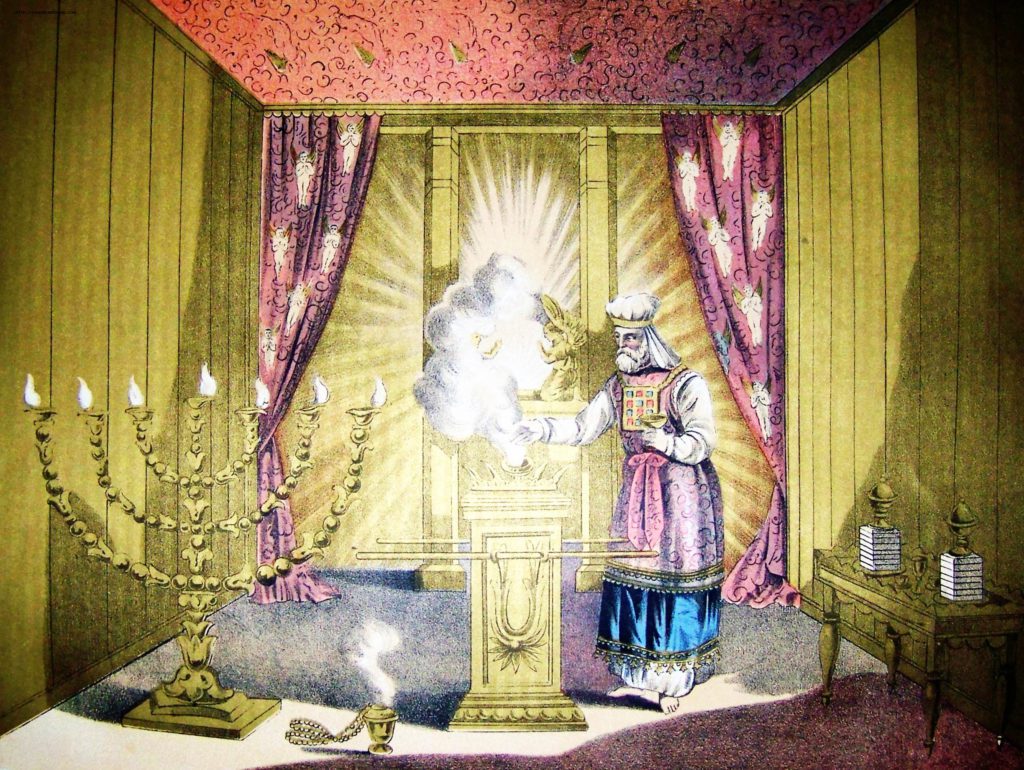
    High Priest in Holy of Holies

    In fact, even though we don’t necessarily revere an anointed priest above priests (or a bishop above bishops) as any more relevant to religion than any man, the LORD established an authority to come closer to Him on behalf of the congregation.

    Therefore the writer continues to make a connection between the high priest and Christ not only here, but also later in Hebrews 7 and 8. The priest and high priest are more than just anointed offices of the Temple and church.

    Hebrews 5 :

    For every high priest taken from among men is appointed in matters pertaining to God for the people, to offer both gifts and sacrifices for sins.

    Hebrews 5:1 CSB

    We don’t really think of a priest in this way anymore, do we?

    Yet if we are not able to stand before the Living God, who can?

    And, in fact, if the Lord anoints a man to ‘offer both gifts and sacrifices’ for our sins, who should he be?

    So why do we need a priest? The writer of Hebrews reminds us:

    2 He is able to deal gently with those who are ignorant and are going astray, since he is also clothed with weakness.

    Think of one of your many sins. Would you want someone who will deal with your punishment and correction gently? And do you hope this intercessor between you and Almighty God in his own weakness will have compassion for you?

    Of course. And he continues:

    3 Because of this, he must make an offering for his own sins as well as for the people.

    Therefore any intercessor for our sins must also offer a personal sacrifice for his own sins. We cannot hide our sins from God. Perhaps the priest and high priest will be even more fearful coming before the judgement seat than you or me.

    4 No one takes this honor on himself; instead, a person is called by God, just as Aaron was.

    Scripture points to Christ as our High Priest

    5 In the same way, Christ did not exalt himself to become a high priest, but God who said to him,

    You are my Son;
    today I have become your Father,

    Hebrews 5:5, Psalm 2

    The writer of Hebrews adds:

    You are a priest forever
    according to the order of Melchizedek.

    He speaks not only of the high priest anointed for an appointed time, but of an order of priests before Levi, referring to Melchizedek to whom Abraham gave sacrifices to present to the LORD. (He will elaborate in later chapters.) The priests descended from Israel’s son, Levi, are only human.

    “Bring the tribe of Levi near and present them to the priest Aaron to assist him.

    Numbers 3:6

    The Son Intercessor

    Scriptural reference to Biblical quotes from Genesis and Psalms point to the Messiah, the Son of the Living God, as a first born Priest, even Most High above every High Priest.

    Who is this Son?

    His praises are sung by King David in Psalm 110, where His heart is revealed to those who know scripture.

    Psalm 110:

    110 לְדָוִ֗ד מִ֫זְמ֥וֹר נְאֻ֤ם יְהוָ֨ה׀ לַֽאדֹנִ֗י שֵׁ֥ב לִֽימִינִ֑י עַד־אָשִׁ֥ית אֹ֝יְבֶ֗יךָ הֲדֹ֣ם לְרַגְלֶֽיךָ׃

    This is the declaration of the Lord
    to my Lord:
    “Sit at my right hand
    until I make your enemies your footstool.”

    Examine part of verse 3: רֶחֶם rechem מִשְׁחָר mishchar; from the womb of the dawn. 

    The root word of womb, רָחַם, means to love, to have compassion or be compassionate.

    Can you find any better description of the Son of the Living God?

    And to say from the womb of the dawn may be metaphorical for the dawn of time, the beginning of light, but also derives from another Hebrew root, שָׁחַר, ‘to seek, seek early or earnestly, look early or diligently for.’ Is this not what the Messiah has done for sinful, yet faithful followers?

    He was with God in the beginning. In him was life, and that life was the light of men. He came to his own, and his own people did not receive him. The Word became flesh and dwelt among us. We observed his glory, the glory as the one and only Son from the Father, full of grace and truth.

    John 1:2,4,11, 14 CSB

    The writer refers to Jesus in Hebrews 5:7-10 speaking of His earthly life, yet comparing Him to Melchizedek.

    Our immaturity in Scripture

    Then a challenge. Do you know your Bible?

    Essentially, this is our consideration of the remainder of Hebrews 5.

    “…you have become too lazy to understand. 12 Although by this time you ought to be teachers, you need someone to teach you the basic principles of God’s revelation again. You need milk, not solid food. “

    Of course, this may not apply to all, yet he chastens most of the congregation. And doesn’t it sound so much like our 21st century ‘too long, but not too deep’ sermons?

    Now everyone who lives on milk is inexperienced with the message about righteousness, because he is an infant.

    But solid food is for the mature—for those whose senses have been trained to distinguish between good and evil.

    Hebrews 5:13-14

    Now which are you, beloved brother or sister in Christ, dear friend and heir of our Hebrew heritage?

    Are you lazy for milk or hungry for the mature nourishment of Scripture and the holiness of the LORD?

    To be continued...