Tag: history

  • Justice deferred in a Political Theatre of Law

    Justice deferred in a Political Theatre of Law

    We suppose Law to be a tool of Justice

    Citizens of Greek City-States claimed freedom and justice..

    (although like everywhere else, Greek democracy did not apply to its slaves.)

    Socrates drank the hemlock of justice weighed by his opponents of classic philosophy.

    And, of course, Alexander the Great Macedonian claiming all Greece and the world had different ideas of law to make the world Greek again.

    (“There’s nothing new under the sun,” stated Solomon, King over much of the same empire nearly a thousand years before Alexander.)
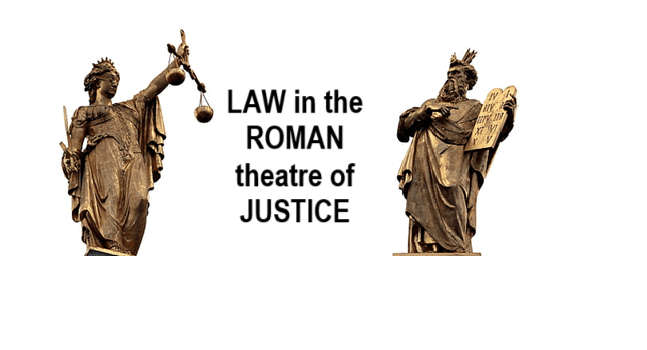
    Justina Roman goddess pictured "LAW in the Roman theatre of JUSTICE

    Roman Law

    In today’s setting of Acts of the Apostles it’s important for us to remember that in Jerusalem – Judean LAW (it isn’t even fully JEWISH LAW applicable in other Roman Provicences (or States by contemporary comparison) – as administered by the Sanhedron separate of the Roman Governor, a minor appointed Proconsul accountable to the Emporor.

    This jurisdictional oversight – similar to that when Pontius Pilate tried to pass the political hot potato of the King of the Jews back and forth to Herod or the Jewish leaders of Jerusalem – is little different when just a few years later Paul retuns to Jerusalem to face JUSTICE redefined in various venues.

    Jews demanding JUSTICE

    The Apostle of Jesus sent to the Gentiles (Greeks) has just returned home.

    After his witness to the Jews (in Hebrew) of being sent by Jesus (who had been crucified) on the road to Damascus) AND being sent to the Gentiles — (this had been 20 years ago, back in A.D. 37) — once again, Paul proclaims Christ risen!

    The adjitated jewish crowd was about to stone him, just as when he himself had witnessed the execution of Stephen.

    “Is it lawful for you to flog a man who is a Roman citizen and uncondemned?”

    When the centurion heard this, he went to the tribune..

    Acts of the Apostles 22:25b-26a ESV

    There he's done it! 

    Paul initiates a whole chain-of-events triggering the chain-of-command in Roman oversight and justice.

    But on the next day, desiring to know the real reason why he was being accused by the Jews, he [the Tribune in charge of the Centurians] unbound him and commanded the chief priests and all the council to meet, and he brought Paul down and set him before them.

    Acts 22:30 ESV

    This JEWISH council — about seventy leading men, SUMMONED to apprear before the ROMAN Tribune and his COURT of Roman justice in Jerusalem — are NOT in charge of the proceedings. 

    Acts 23:

    And looking intently at the council, Paul said, “Brothers, I have lived my life before God in all good conscience up to this day.”

    Remember: Although the courtroom is that of the Jews, Paul — the DEFENDENT — faces them as his PROSECUTOR (not his judge).

    And the high priest Ananias commanded those who stood by him to strike him on the mouth.

    “God is going to strike you, you whitewashed wall!

    Are you sitting to judge me according to the law, and yet contrary to the law you order me to be struck?”

    Some savvy oral arguments take place (as is common in court). Paul seeks to divide the jury of his accusers:

    “.. It is with respect to the hope and the resurrection of the dead that I am on trial.”

    It worked. One of his fellow Pharisees stands in his defense,

    “We find nothing wrong in this man.

    What if a spirit or an angel spoke to him?”

    The dissension (between the two parties of the Pharisees and Sadducees)became violent.

    Now the Jews of this local lower court — to which the rules of the Pax Romana defer — sound more like a lynch mob than a place of justice AND (let’s not forget) Paulos is a ROMAN CITIZEN.


    And as a great dissension was developing, because the commander was afraid Paul would be torn to pieces by them, he ordered the troops to go down and take him away from them by force, and bring him into the barracks.

    Acts 23:10 LSB

    Conspiracy against Christ and His Apostle

    The world will often witness an unexplainable boldness in a certain saint of God is seemingly insurmountable circumstances. (This had happened with the Apostle time and time again during his ten-plus years of travel among the gentiles and Greeks.)

    The night before his highly anticipated public trial in Jerusalem the Apostle of Christ Jesus again received supernatural instruction.

    But on that very night, the Lord stood at his side and said,

    “Take courage; for as you have solemnly borne witness to My cause at Jerusalem, so you must bear witness at Rome also.”

    Acts 23:11 LSB

    Imagine — the Lord Jesus Christ, who had been crucified twenty-seven years ago —  the same risen Lord who had appeared in a vision of great glory twenty years ago —  stands beside the Apostle and now sends him to Rome!

    So of course, Paul is emboldened when he is brought to trial before the Roman court the next day.

    Meanwhile, more than forty of the jews made a plot to murder Paul (outside of the jurisdiction of the Roman authorities).

    They went to the chief priests and elders and said,

    “We have strictly bound ourselves by an oath to taste no food till we have killed Paul. Now therefore you, along with the council, give notice to the tribune to bring him down to you, as though you were going to determine his case more exactly. And we are ready to kill him before he comes near.”


    The Plot Thickens

    steps from Antonia Fortress to roofs of Temple porticos

    Paul’s jewish nephew hears of the plot of these forty men, so the young man heads to the Roman fortress to try to warn Paul.

    Paulos —  the Roman citizen held in protective custody after the big hubbub of the jewish crowds —  instructs his guards to go to the man in charge.

    Paul called one of the centurions and said,

    “Take this young man to the tribune, for he has something to tell him.”

    Acts 23:17 ESV

    The tribune [Claudius Lysias] took him by the hand, and going aside asked him privately, “What is it that you have to tell me?”

    Note the gentleness of this tribune, Claudius Lysias - a man in charge of the centurions of Antonia Fortress as he seeks to get to the truth of the matter. 

    The young son of Paul’s sister responds:

    “The Jews have agreed to ask you to bring Paul down to the council tomorrow, as though they were going to inquire somewhat more closely about him.

    But do not be persuaded by them, for more than forty of their men are lying in ambush for him, who have bound themselves by an oath neither to eat nor drink till they have killed him. And now they are ready, waiting for your consent.”

    Acs 23:21b-22 ESV

    “Tell no one that you have informed me of these things.”


    An Imposed Authority of Roman Justice

    “Get ready two hundred soldiers, with seventy horsemen and two hundred spearmen to go as far as Caesarea at the third hour of the night.[9 pm]

    Caesarea! a model of Roman incursion into all the world of the Mediterranean - a key port for Romans, a city where Cornelius, Philip, Peter, Paul and others brought the gospel
    Caesarea – (Caesar’s Palace in Judea

    Also provide mounts for Paul to ride and bring him safely to Felix the governor.”

    This military escort of a Roman citizen Paulos is most unlike the handling of Jesus the king of the Jews sent to the Pontius Pilate, governor of that time, (who happened to be in Jeruslem rather than Caesarea). 

    Official Orders sent with Paul

    “Claudius Lysias,

    to his Excellency the governor Felix,

    greetings.

    This man was seized by the Jews and was about to be killed by them when I came upon them with the soldiers and rescued him, having learned that he was a Roman citizen. And desiring to know the charge for which they were accusing him, I brought him down to their council. And desiring to know the charge for which they were accusing him, I brought him down to their council. And when it was disclosed to me that there would be a plot against the man, I sent him to you at once, ordering his accusers also to state before you what they have against him.”

    Acts 23:26-30 ESV

    You might call this 'the official COURT record.' 

    Of course —  ALL follow orders and the next scene with, with Roman effeciency, take place in Caesarea.

    Marcus Antonius Felix

    Antonius Felix, served as the Roman procurator of Judea from ~AD 52-58. He was appointed by the Emperor Claudius and was known for his harsh and often corrupt administration. Felix was a freedman of Claudius' mother, Antonia. - source: BibleHub 

    When they had come to Caesarea and delivered the letter to the governor, they presented Paul also before him.

    The Governor inquires about jurisdiction – that is, in effect – Am I the appropriate judge of this case?

    And when he learned that he [Paulos] was from Cilicia, he said, “I will give you a hearing when your accusers arrive.” And he [Antonius Felix] commanded him [the Centurian in charge of Paul’s escort] to be guarded in Herod’s praetorium [there in Caesarea].

    Acts of the Apostles 23:35 ESV [with names of prepositions]

    Justice – a Case to be continued


    Talk of JESUS . com

    Comment on Scripture – Share the Gospel

  • Members in Christ’s body the Church

    Members in Christ’s body the Church

    And when he had given thanks, he brake it, and said, Take, eat: this is my body, which is broken for you: this do in remembrance of me.

    1 Corinthians 12:11 KJV – Paul quoting the Lord Jesus

    Paul now draws a picture of the human body in order that members of the body of believers might see our own part in the larger Church in Corinth and all places where the saints gather in Christ’s Name.

    Previously, when we departed from here in the Apostle’s instructions to the Corinthians, Paul instructs:


    And there are differences of administrations, but the same Lord.

    1 Corinthians 12:5 KJV

    One Body, many Members, different spiritual Gifts

    Now to each is given the manifestation of the Spirit, for the common profiting.

    1 Corinthians 12:7 BLB

    The first implication of this: EACH member of the body of your church and mine will show (manifest) some fruit of the Spirit.

    But one and the same Spirit works all these things, distributing to each one individually just as He wills.

    1 Corinthians 12:11 LSB

    Who belongs as members?

    IF someone in your church does not yet manifest any fruit of the Spirit, is it possible that the Lord has not given them the Spirit OR made these a part of His Body - a member of His Church? 

    Are even the best spiritualities of faithful jews and religious adherents of Islam connected to the body of our Lord Christ Jesus?

    Do the best of Hindus Buddhists and other pagan worshipers not oppose Christ?

    Yet some are drawn by the Spirit.

    The Body of Christ

    For just as the body is one, and has many members, and all the members of the body being many are one body, so also is Christ.

    1 Corinthians 12:12 Berean Standard Bible

    Jews and Gentiles

    map of the Aegean ~200 BC Corinth in the Achean League between Alexander the Great and Julius Caesar
    What is the overriding context of this epistle Paul writes to a church on the Achaian peninsula of Greece ? 

    The Apostle to the Gentiles (Hellenists or Greek or Roman) -- seeks to heal long-standing differences in this large Roman city of Corinth situated in the philosophic and cultural center of ancient Europe.
    • To one there is given through the Spirit a message of wisdom – v.8 (quite Hellenist)
    • to another faith.. to another gifts of healing v.9 (the One God of the Jews and ignored signs of the Messiah)

    For by one Spirit we were all baptized into one body—whether Jews or Greeks, whether slaves or free—and have all been made to drink into one Spirit.

    1 Corinthians 12:13 NKJV

    Invisible fruit pictured in the body

    brain and connection to the body

    For the body does not consist of one part, but of many. 1 Corinthians 12:14 BSB

    If the foot should say, “Because I am not a hand, I do not belong to the body,” that would not make it any less a part of the body?

    And if the ear should say, “Because I am not an eye, I do not belong to the body,” that would not make it any less a part of the body.

    • If the whole body were an eye, where would the sense of hearing be?
      • (Now think of the body of Christ, the church.)
    • If the whole body were an ear, where would the sense of smell be?
    Laughable! Hyperbole, yet logical.

    But now hath God set the members

    (And the Spirit of God has distributed your spiritual gifts.)

    But now hath God set the members every one of them in the body, as it hath pleased him.

    How strange a body would be if it had only one part!

    1 Corinthians 12:18 KJV and 12:19 NLT

    Do you get both the seriousness and Paul's practical ridicule of members di-vi-ded by spiritualities God granted to others? 
    The Apostle to the gentiles continues his illustration: 
    • The eye cannot say to the hand, “I do not need you.”
    • Nor can the head say to the feet, “I do not need you.”

    Here is Paul’s appeal to draw near to your members divided by opinions concerning spiritual gifts and an order of regulating the body (so to speak).


    On the contrary, the parts of the body that seem to be weaker are indispensable, and the parts we consider less honorable, we treat with greater honor. And our unpresentable parts are treated with special modesty, whereas our presentable parts have no such need.

    But God has composed the body and has given greater honor to the parts that lacked it, so that there should be no division in the body, but that its members should have mutual concern for one another.

    If one part suffers, every part suffers with it; if one part is honored, every part rejoices with it.

    1 Corinthians 12:22-26 BSB


    Appointment of the Greater Gifts

    The Apostle sent out to the Corinthians, Achaeans, Greeks, Romans and displaced Jews suggests an order of importance in the A.D. first century church. Yet Paul has just instructed the saints that it is the Spirit which places us in our place in the Church -- and that spiritual GIFTS are not ours to choose. 

    27 Now you are the body of Christ, and each of you is a member of it. And in the church God has appointed

    1. first of all apostles,
    2. second prophets,
    3. third teachers,
    4. then workers of miracles,
    5. and those with gifts of healing, helping, administration, and various tongues.

    A local (Corinthian) understanding of roles and spiritual gifts

    Acts Apostolos - Acts 1 of the Apostles begins a 28 chapter account of the chronicles of Christ's Apostles - a history of Christ's Church
    Acts of the Apostles 1-28

    1. ἀπόστολος – apostolos
    2. προφήτης – prophētēs
    3. διδάσκαλος – didaskalos
    4. δύναμις – dynamis
    5. χάρισμαcharisma 

    Apostles, Prophets and Teachers

    ἀπόστολοι (apostoloi)
    Noun – Nominative Masculine Plural
    Strong’s 652: From apostello; a delegate; specially, an ambassador of the Gospel; officially a commissioner of Christ.

    Am I not an apostle? G652 am I not free? have I not seen Jesus Christ our Lord? are not ye my work in the Lord? If I be not an apostle G652 unto others, yet doubtless I am to you: for the seal of mine apostleship are ye in the Lord.


    1 Corinthians 12:1-2


    1 Corinthians 12:28 – And God has set…

    You’ve just studied the list.

    So what does the Apostle Paul (#1 on the authoritative list) ask as he further questions the Corinthian saints of differing opinions about their own roles in the local church?


    1 Corinthians 12:29-30

    • Are all apostles? (#1)
    • Are all prophets? (#2)
    • Are all teachers? (#3)
    • Do all work miracles? (#4)
    • Do all have gifts of healing?
    • Do all speak in tongues?
    • Do all interpret?
      • (these 3 grouped in #5)

    SO WHERE DO I FIT IN?

    and Who is in charge of who, here in our local gathering of saints in Corinth?

    Perhaps in the hearing of Paul’s first letter being read to the Corinthian Church these saints might have wondered what the APOSTLE would prescribe next as a solution to OUR divisions.

    12:31 ζηλοῦτε δὲ τὰ χαρίσματα τὰ κρείττονα Καὶ ἔτι καθ᾽ ὑπερβολὴν ὁδὸν ὑμῖν δείκνυμι

    But covet earnestly the best gifts: – 31a KJV

    Now eagerly desire the greater gifts. – 31a NIV

    But earnestly desire the higher gifts.- 31a RSV


    But now let me show you a way of life that is best of all.

    1 Corinthians 12:31 b – NLT


    NEXT – Paul’s connection of GIFTS

    Beloved fellow saint, you may know where the Apostle proceeds in his much-quoted list from 1 Corinthians 14.

    Perhaps with love in mind you may have a COMMENT here on what the Apostle Paul has instructed us so far.

    Comment on Scripture – Share the Gospel

  • Now is the Time Christmas Advent 3

    Now is the Time Christmas Advent 3

    Does anybody really know what time it is?

    Chorus overlap: “I don’t care…”

    Does anybody really care?

    from ‘Chicago Transit Authority’ (1969)

    Time in Perpetuity

    I asked you in the first ADVENT post of this calendar year: ‘Have you considered that in the time of Noah and Before Christ GOD cleansed the earth of all but eight?’

    Then we looked at the concept of ADVENT as a time of preparation for celebrating the coming of GOD as a man, even as a child born before the witnesses of the A.D. first century.

    Before Christ, Prophesy

    We considered prophesy as a type of advent with certain prediction of that which was to come.

    When at certain times God speaks to men such as Noah, Abraham, Moses, Elijah and others, the LORD warns of times ahead, as well as the consequences of rejection of His Law, commandments and His grace.

    A visible advent of our disobedience to God is documented in Scripture and warns of God’s wrath against sin in more times ahead.


    What must we do?

    Take for instance the LORD’s negotiation with Abraham about Sodom. AND considering the destroyed city ponder this 21st century dilemma:

    • HOW are we so different than those who perished in Sodom for their sin?
    • Should the Lord spare US for only breaking our marriage covenants with impugnity?
    • Are we less sinless than those who created gods of stone from hearts of stone, proclaiming our own self as the god we worship?
    christianity lite - the marketing of jesus by the church in the Common Era

    Does this Common Era world not appropriate signs of the LORD’s covenant with mankind for sins offensive to God and creation?

    And YES, do some so-called churches culturally encourage an all-inclusive sin of Sodom?

    Have some churches missed an advent of the judgement to come by fire?

    • Are our sins of selfishness any less offensive to the LORD than those of ALL HE destroyed from the earth by the flood?

    A righteous man such as Noah or Job would appeal to the LORD for mercy.

    Do YOU and do I?

    ‘Remember now, that You have made me as clay; And would You turn me into dust again?

    Job 10:9 LSB

    The righteous example of Job

    Even Before Christ, Job foresaw the advent of the savior of mankind, the Very Person of God Who IS before all and after all time.

    A Savior in a manger,

    Jesus a child –

    a son of man: son of Mary and Son of God – a redeemer for the sins of mankind.

    manger of a timeless Christ "I will be with you always even to the end of the earth

    perpetuity, n.
    The quality or state of being perpetual; an instance of this, an endless or indefinite duration or existence; permanence, endlessness.

    Oxford English Dictionary


    A line, even a timeline representing lifetimes of days and centuries of history extends beyond our sight before its beginning and from its END into measureless eternity.


    For wrath brings the punishment of the sword,


    Calculating Calendars within the bounds of the observable

    But HOW does mortal man MEASURE the expanse of the Eternal?

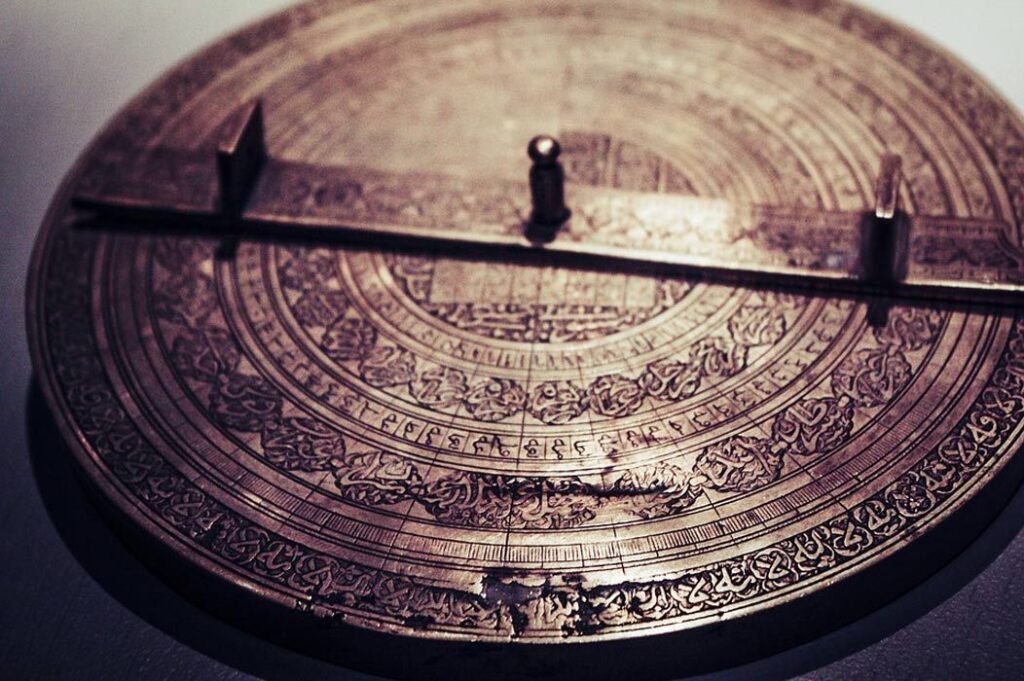
    by Calendars (and with timepieces we call ‘clocks’)

    a brief look at ancient & current calendars

    All calendars began with people recording time by using natural cycles: days, lunar cycles (months), and solar cycles (years).

    Source linked above.

    Let’s try to take this chronologically from the beginning:

    Have you ever considered that Adam had no need for a calendar or timeclock?

    Calendars Before Christ

    • Noah – 360 day calendar
    • Moses * 365 day Egyptian calendar
    • The astronomical day had begun at noon ever since Ptolemy chose to begin the days in his astronomical periods at noon.
    • The Julian calendar began in 45 BC (709 AUC) as a reform of the 10 month Roman calendar by Julius Caesar.
      • Source: linked above

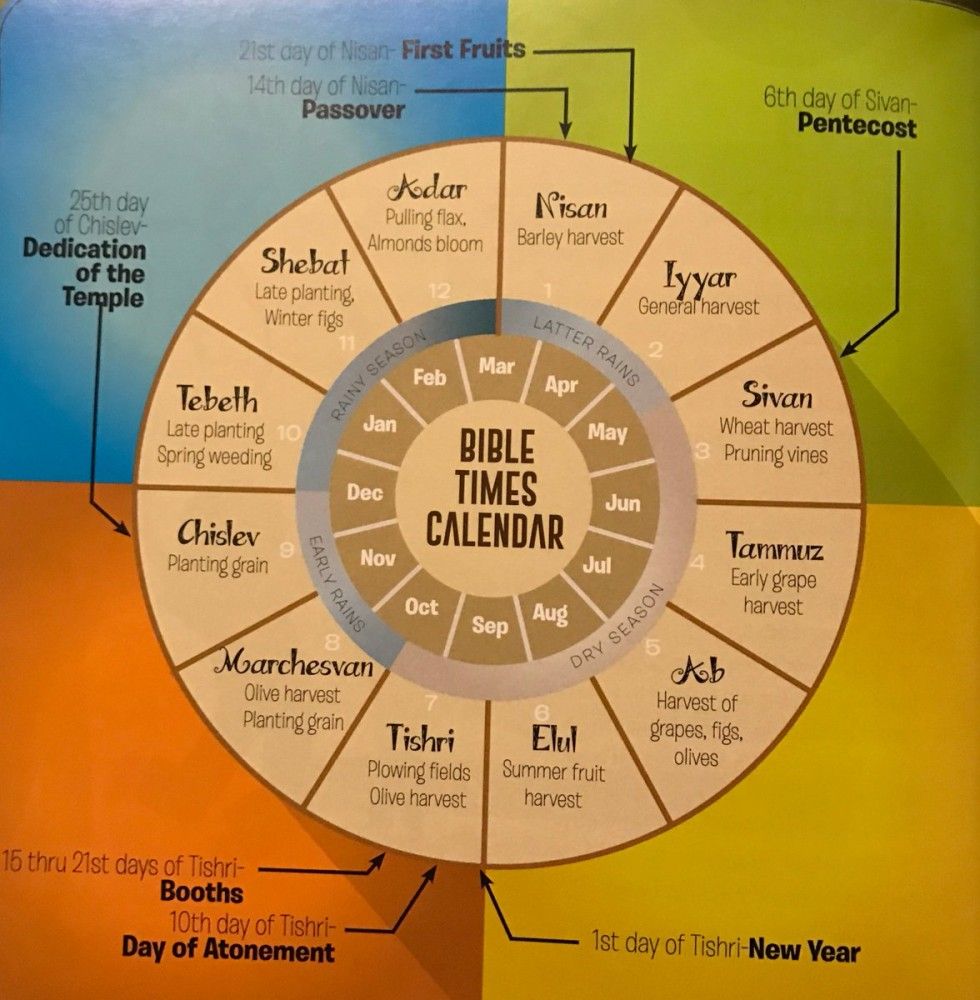
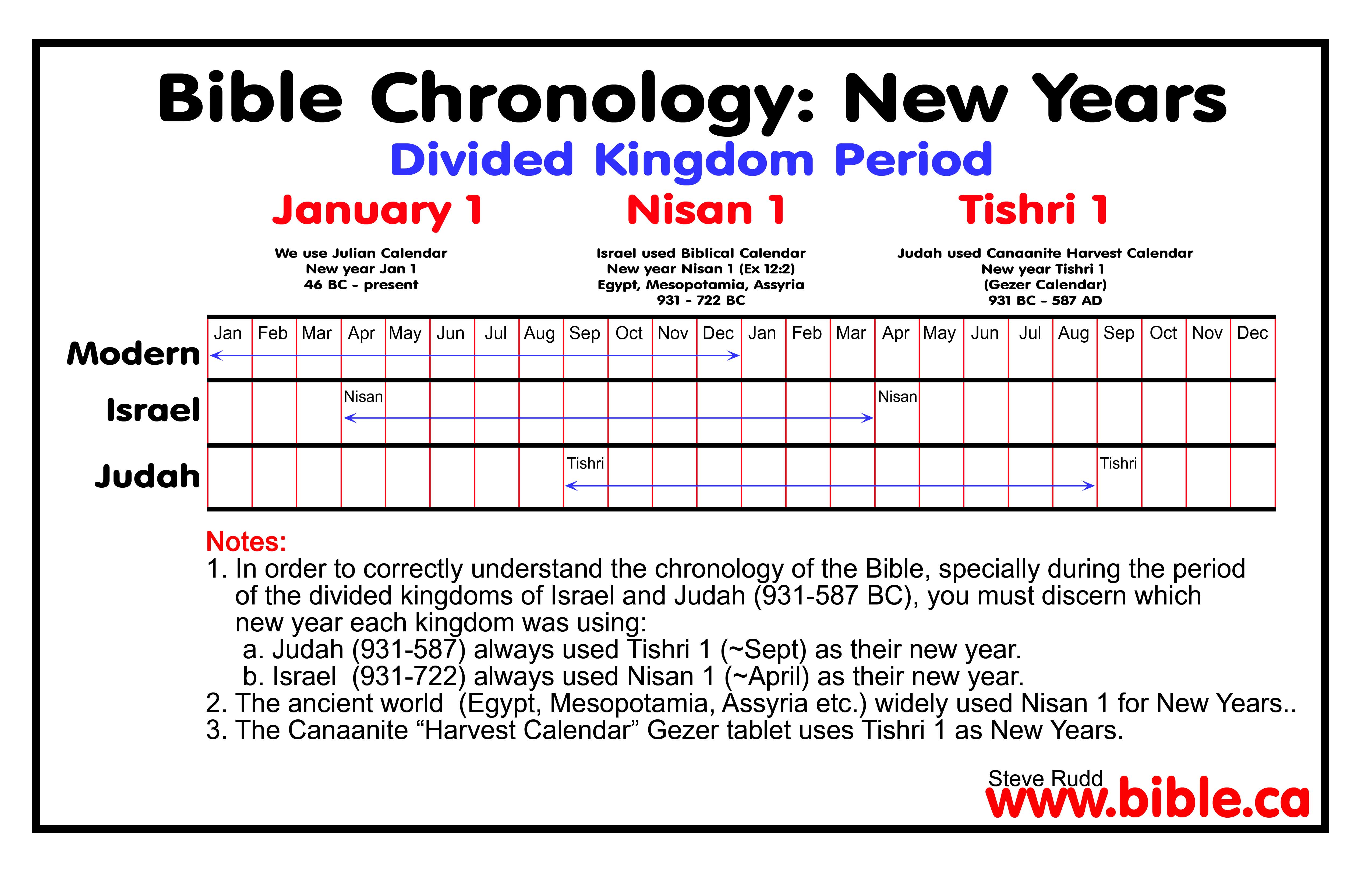
    Hebrew Calendar

    The history of the Jewish calendar may be divided into three periods—the Biblical, the Talmudic, and the post-Talmudic. Jewish Encyclopedia.com

    https://www.bible.ca/archeology/bible-archeology-maps-timeline-chronology-kings-prophets-assyrians-babylonians-egyptians-synchronisms-tisri-nisan-inclusive-accession-divided-kingdom-dates-931-587bc-new-year-calendar-julian.jpg

    Take a look at the link above for a more complete understanding of changes in the Jewish Calendar during the centuries Before the Messiah of Israel.


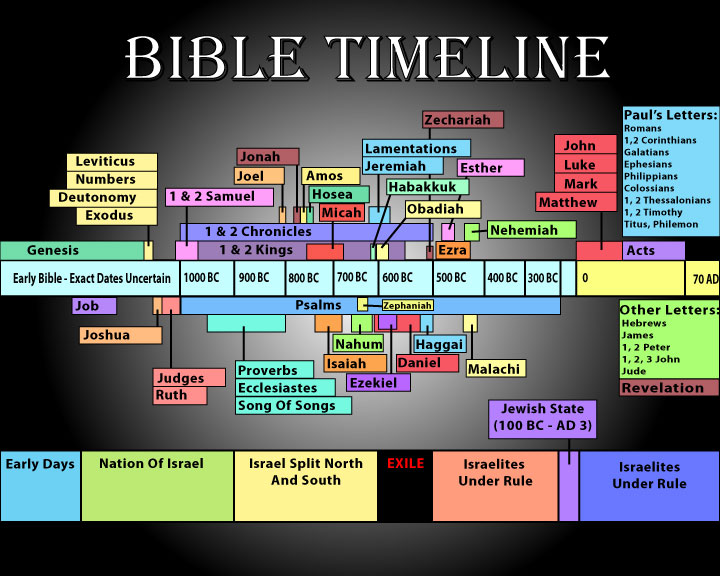
    Bible TimeLine

    Timelines, like calendars and cultural customs must have a point of reference. The intersection of measured history and timeless truth becomes central to conflicting narratives of a fallen created peoples of the world.

    At the ever-present center of time history records the birth of Jesus Christ.

    Calendars of the Common Era

    Lines in the shifting sands of time:

    Let's start from the present and find our center of history and timelines by looking back. 

    Anno Domini

    noun a Latin phrase meaning

    “in the year of the Lord”, the full form of the abbreviation AD, which is used when referring to a year after Jesus Christ was born

    Cambridge Dictionary

    • B.C. is short for “Before Christ”
    • BCE and CE.
    • CE stands for “Common Era” BCE is “Before Common Era”
    • CE and BCE dates are identical with A.D. and B.C. dates
    • (for example, 2000 CE is the same as 2000 A.D.). This is a thinly veiled attempt by atheists and religious people other than Christians to remove Christian religious references from our culture.

    MORE READING about the years of our Lord and our Common Era


    NEXT: ADVENT 4

    We will look at that moment in history and the Messiah in a manger in Bethlehem of Judea..