Tag: history

  • Exhortation from the Jew of Jews Saulos Tarseus :שָׁאוּל

    Exhortation from the Jew of Jews Saulos Tarseus :שָׁאוּל

    Saul’s sermon in the synagogue of Antioch

    We must leave behind us any notion that Paul’s exhortation to the Jews in Antioch Pisidia would have much effect by proclaiming the Gospel as Paul had to the Roman ruler Sergius Paulos in Paphos Cypress or to the faithful ‘Christians’ of the church at Antioch in Syria. And Saul’s sermon most certainly would not have been identical to those preached to the well-heeled Jews of Jerusalem of Judea governed by Roman Syria where Saul was educated.
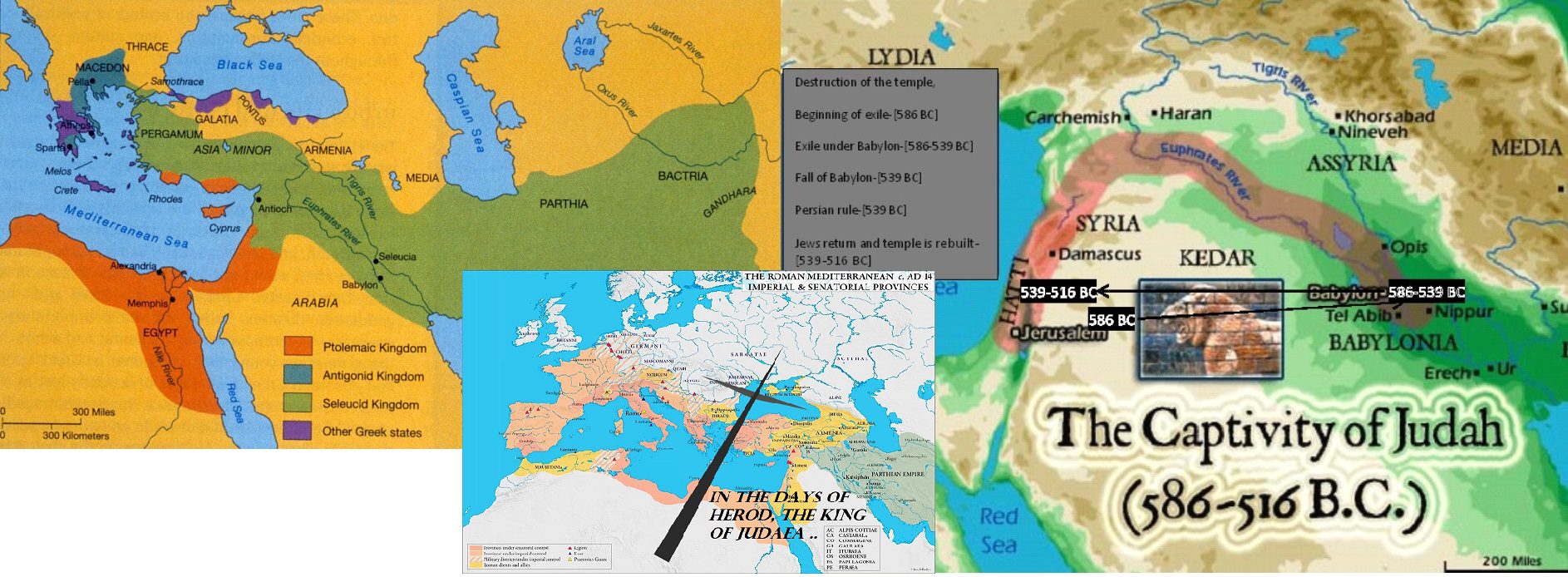
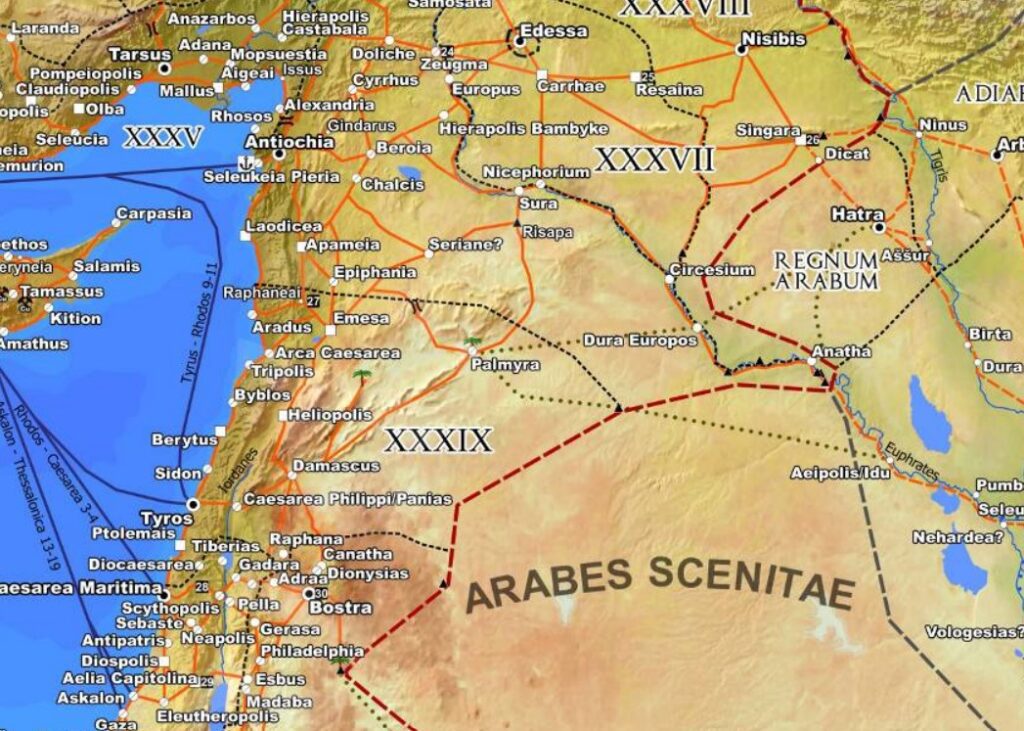
    Hellenist territory of Alexander the Great
    Hellenist Influence of Alexander the Great 336 BC & even after annexation of Greece by Rome in 146 BC
    map of Syria, ruled froj Tarsus

    The Jews here in Antioch Pisidia for the most part are Hellenist (Greek) Jews distinctly different from the more orthodox Jews returned to Judea from captivity centuries ago from the eastern empires along the Euphrates.

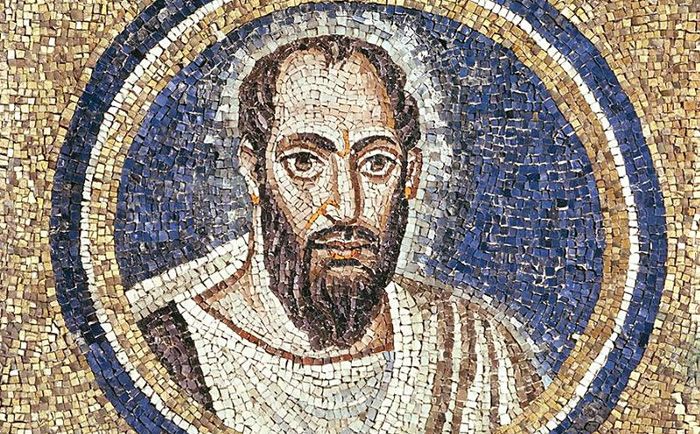
    Saulos Tarseus is a Roman citizen, born not to far across the Tarsus mountains in the Roman capitol of Cilicia along the Mediterranean coast. But this ‘Jew of Jews, Sha’ul [שָׁאוּל] of Ταρσεύς [Gk. Tarseus or Latin Tarsus] knows his listeners.

    Saul’s Sermon:

    ‘Men, brethren, if there be a word in you of exhortation unto the people — say on.’ – Acts 13:15 YLT

    Exhortation for their Jewish Brothers

    Sha’ul stood up, and beckoning with his hand said,

    “Men of Yisra’el, and you who fear God, listen.

    It is a Jewish history from Jewish Scripture, an encouragement for a congregation of Hellenist Jews which Luke's account in Acts of the Apostles outlines in Saul's sermon which follows their traditional Scriptural readings.
    
    In order to give us first century Jewish 'ears to hear' I will share Scripture from the Hebrew Names Version of the Bible translated from Paul's original native Greek. 

    Acts of the Apostles 13: Saul’s Sermon in the synagogue

    17 The God of this people chose our fathers, and exalted the people when they stayed as aliens in the land of Mitzrayim [Egypt], and with an uplifted arm, he led them out of it. For period of about forty years he put up with them in the wilderness.

    When he had destroyed seven nations in the land of Kana`an (Canaan), he gave them their land for an inheritance, for about four hundred fifty years. After these things he gave them judges until Shemu’el [Samuel] the prophet.

    Afterward they asked for a king, and God gave to them Sha’ul [Saul] the son of Kish, a man of the tribe of Binyamin [Benjamin], for forty years. When he had removed him, he raised up David to be their king, to whom he also testified,

    ‘I have found David the son of Yishai [Jesse] , a man after my heart, who will do all my will.’

    Acts of the Apostles 13:22b Hebrew Names Version

    • Where does Saul’s sermon begin?
      • AFTER the reading of the Law and the Prophets, Paul begins from Jewish Scripture.
      • It is a shared Biblical history beginning with:
        • The God [theos] of this people..
        • pointing to their captivity in Egypt (relating to the Pentateuch just read).
    • Saul then points back to previous disobedience of God’s chosen people the LORD led out of Egypt, perhaps even specifically using a passage from the reading of the Law.

    The children of Yisra’el ate the manna forty years, until they came to an inhabited land. They ate the manna until they came to the borders of the land of Kana`an.

    Exodus 16:35 HNV

    Is it good encouragement [exhortation] to point us to Scripture critical of behaviors and acts of previous generations against God?

    AND could these things that happened historically hundreds of years ago speak to our need to ACT now as followers or seekers of God’s will?

    Of course. Rome now ruled Antioch Pisidia and Galatia, Cilicia and even Egypt. AND as you are aware Rome ruled Judea which technically was no longer a kingdom of even a puppet King like the Herod's.
    
    So is the preaching of Saul's sermon to Jews in the Hellenist world of Paul's journeys of interest to Luke's gentile readers? More importantly is it personally relevant?
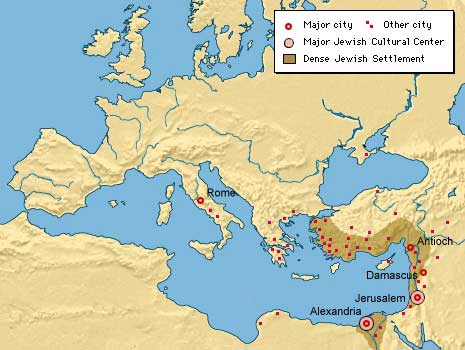
    map major Jewish cities of Roman Empire - Rome Antioch Damascas Jerusalem Alexandria

    This is NOT how Paul would preach later to those who had NO idea of what God has said through the Holy Scriptures just read in the synagogue.

    And he [Jesus] said to them, “Go into all the world and proclaim the gospel to the whole creation.

    Gospel of Mark 16:15 English Standard Version

    ACTS of the Apostles will be published by Luke (as I have pointed out previously) around A.D. 62 about fifteen years after these sermons when persecutions of Jews and Christians has increased considerably.

    Most gentiles know little of this history of Jewish Kings like David or Judges or Prophets and especially not anything about the many sins of God’s ‘chosen people.’ BUT they will come to suffer persecution for their new-found faith in the time since Paul’s sermon to the Jews.

    “But you, be on your guard! They will hand you over to local courts, and you will be flogged in the synagogues. You will stand before governors and kings because of me, as a witness to them.

    “And it is necessary that the gospel be preached to all nations.

    the Good News of (John) Mark (cousin of Barnabas) 13:9-10 CSB + a prophesy of the Lord Jesus Christ

    • Paul’s sermon then proceeds to the Prophet Samuel.

    “Look, the days are coming when I will cut off your strength and the strength of your forefather’s house, so that none in your family will reach old age. You will see distress in the place of worship, in spite of all that is good in Israel, and no one in your family will ever again reach old age.

    1 Samuel 2:31-32 CSB

    וַיֹּאמֶר יְהוָה אֶל־שְׁמוּאֵל עַד־מָתַי אַתָּה מִתְאַבֵּל אֶל־שָׁאוּל וַאֲנִי מְאַסְתִּיו מִמְּלֹךְ עַל־יִשְׂרָאֵל מַלֵּא קַרְנְךָ שֶׁמֶן וְלֵךְ אֶשְׁלָחֲךָ אֶל־יִשַׁי בֵּית־הַלַּחְמִי כִּי־רָאִיתִי בְּבָנָיו לִי מֶלֶךְ׃

    Then Yahweh said to Samuel, “How long will you be grieving over Saul? I have rejected him from being king over Israel. Fill your horn with oil and go; I will send you to Jesse the Bethlehemite, for I see among his sons a king for Me.”

    1 Samuel 16:1 LSB [WLC above]
    Saul’s Sermon connects the Kings of Israel to their Messiah
    Worshipers in the synagogue honored King David, though the kingdom had been destroyed.
    Israel and the Judeans had returned from centuries of captivity warned by the Prophets. 
    And first century Judeans sang the Davidic Psalms as part of their worship.

    .. ‘I have found David the son of Yishai, a man after my heart, who will do all my will.’

    23 From this man’s seed, God has brought salvation to Yisra’el according to his promise, before his coming, when Yochanan [John] had first preached the immersion [βάπτισμα baptisma of repentance to Yisra’el.

    As Yochanan was fulfilling his course, he said,
    depiction of John baptizing a man at the Jordan river

    ‘What do you suppose that I am? I am not he.

    But behold, one comes after me the sandals of whose feet I am not worthy to untie.’

    • John the Baptist, who preached a baptism (cleansing) of repentance, a permanent change of a heart (soul) returning to God, was thought to be a Prophet by first century Jews. AND many had heard of John.

    Saul’s sermon then turns to explanation of the Jewish Messiah to his brothers, fellow Jews who had invited him to provide an exhortation. Paul will proceed to proclaim how the Gospel of Jesus Christ applies directly to these Jewish worshipers in a synagogue in their Roman capitol of Galatia, Antioch Pisidia.


    To be continued…

    Comment on Scripture – Share the Gospel
  • Opposed to the Gospel at the Gate: Bar-Jesus

    Opposed to the Gospel at the Gate: Bar-Jesus

    Bar-Jesus is another name for a Jewish influencer on Cypress: Elymas the magician.

    Acts 13:

    • Luke chronicles THIS history of the first mission of the Church at Antioch published sometime around A.D. 60-62.
    • Many Christians may already have read John Mark’s Gospel written during the A.D. 50’s just a few years after this first missionary journey of Paul and Barnabas.
    • Luke’s account records events of A.D. 47.

    When they arrived at Cypress

    Cypress is Greek, NOT Roman

    (And certainly not Jewish)

    What the tourist visiting Cypress should know:

    Cyprus was allowed a large amount of autonomy remaining mainly Greek in culture while adopting and adapting Roman customs. No Roman colonies were settled on the island. 

    • The island is prone to earthquakes, several in the centuries prior to this missionary journey
      • including one as recently as A.D. 16.
    • Cypress had been an Egyptian (King Ptolemy) part of Roman Cilicia
      • a gift of Julius Caesar to Cleopatra
    • After Caesar Augustus defeated Marc Antony and Cleopatra, Rome made it a senatorial province
      • separate from Cilicia with Nea Paphos as its capitol

    5. And when they reached Salamis, they began to proclaim the word of God in the synagogues of the Jews, and they also had John as their helper.

    NOTE TWO POINTS HERE:

    1. .. they began to proclaim the word of God in the synagogues of the Jews
    2. Luke introduces John Mark as a helper to Barnabas and Saul.

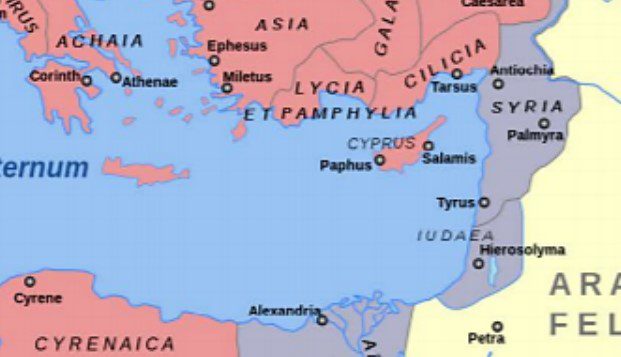
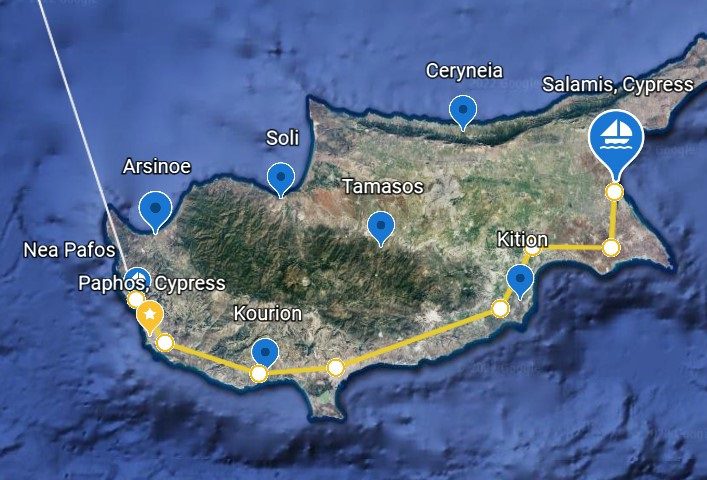
    As you can see from the map of cities on Cypress at the time, this mission team would have traveled on land several times to preach the Gospel in synagogues of these Greco-Roman cities on Cypress. Not only was distance a factor in their travel but also mountains which rose to steep heights above the island. This took some time and not just a few days.

    In addition to noting last time that Cypress was mostly Greek and Phoenician with a few Jews, previously I pointed out that their ‘additional passenger,’ John, is the same John with earlier connections to Peter’s preaching and miracles.

    Luke notes that his fellow Gospel writer [John Mark] also begins this mission trip in A.D. 47.

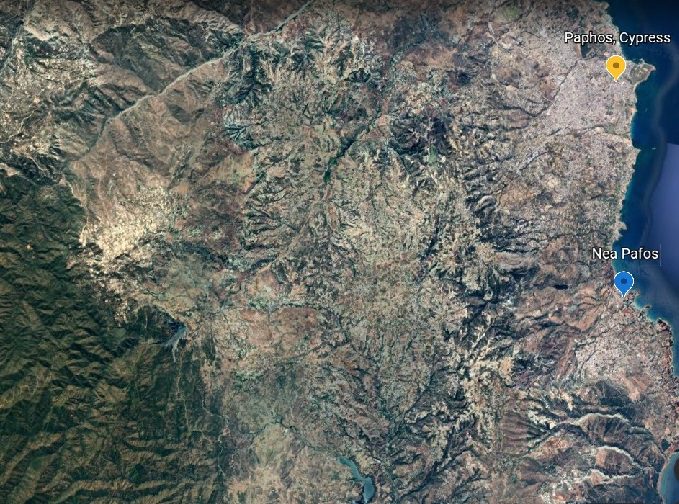
    Paphos consisted of the Roman cites of Nea Pafos and Palaipafos on the southwestern coast of the island of Cypress

    6 And when they had gone through the whole island as far as Paphos, they found a magician, a Jewish false prophet whose name was Bar-Jesus…

    We'll introduce ourselves to this new character Bar-Jesus who they encounter on this mission shortly, but first let's take a quick look at Paphos.
    Aerial view of Paphos Cypress

    Paphos

    • Traveling roads across the whole island would have been a journey of 110 miles along the coast OR perhaps further if they traveled additional routes familiar to Joseph [Barnabas] and others through the mountains to other cities.
    • New Paphos (Nea Paphos), NW of old Paphos by 7.5 miles has a natural harbor and was built by Augustus of Rome for commerce and governing its Provence of Cypress.
    • Old Paphos was a centre for Aphrodite’s cult. Aphrodite’s mythical birthplace was on the island.
    • .. the grove and altar of Aphrodite at Paphos are mentioned in the Odyssey (700 BC).
    • Archaeology established that Cypriots venerated a fertility goddess in a cult that combined Aegean and eastern mainland aspects before the arrival of the mainland Greeks.

    Aphrodite of Cyprus

    • Every spring a festival was held here in honor of the goddess Aphrodite source
    • Phoenician merchants from Kition [Cyprus] who gained permission to found at Athens [Greece] a shrine of Aphrodite, whom they presumably looked upon as their ancestral deity Astarte – Aphrodite. READ MORE BELOW:
    (more…)
  • What happened to Peter?

    What happened to Peter?

    Jerusalem must have been all abuzz with the questions of yet another unfolding mystery involving the Apostles. What happened to this Apostle of Jesus?

    What happened to Simon Peter?

    How did this leading Disciple of Jesus escape? Peter could not possibly have come to our gate since Herod has him under the guard of sixteen men?

    As we witnessed previously in a scene from Acts of the Apostles 12:13-14 in His Angel at the Gate:

    A servant-girl named Rhoda.. ran in and reported that Peter was standing in front of the gate.

    Impossible, would be their first thought.

    “You are out of your mind!”

    But Peter continued knocking, and when they opened the door, they saw him and were astounded.

    Acts of the Apostles 12:16 LSB

    What happened to Jesus’ mission?

    photo of earth from the moon

    It is the year of our Lord [A.D.] 44.

    It has been fourteen years since the Holy Spirit first anointed the saints in Jerusalem to Go into all the world and proclaim the Gospel.

    Peter is not going to remain in Jerusalem.

    Peter commands a continued mission

    .. they saw him and were astounded.

    ἐξίστημι amazed – out of their wits (in the wonder of seeing Peter)

    Luke once again on this day uses this same description as Pentecost when the Church sees Peter alive and in person, even though they had fully expected Herod to execute the Apostle as he had James.

    Peter preaching from a balcony in Jerusalem on pentecost

    So they were astounded and marveling, saying, “Behold, are not all these who are speaking Galileans? .. And they all continued in astonishment and great perplexity, saying to one another, “What does this mean?”

    Acts of the Apostles 2:7,12 – Pentecost [~A.D.30] when Peter proclaimed Christ crucified and risen from death.

    Astonishing that a girl is raised from the dead by Peter in Joppa! Amazing that the Holy Spirit had also filled Samaritans and Roman soldiers in Caesarea as Peter and other disciples of Jesus had reported to the Church in Jerusalem.

    And all the circumcised believers who came with Peter were astounded that the gift of the Holy Spirit had been poured out on the Gentiles also.

    Acts of the Apostles 10:45 LSB

    Today amazingly, Peter has a command for the Church as the Apostle will address them once more in Jerusalem:

    But motioning to them with his hand to be silent, he recounted to them how the Lord had led him out of the prison.

    Meanwhile, back at Herod’s palace..

    Herod Agrippa I had seized Peter during the time of the Passover when great crowds always gathered in Jerusalem as they had years before when the Jews crucified Jesus on a Roman cross.

    The king’s recent execution of James had so pleased the Jews that now Herod would kill Peter. (It would be great political theatre for this friend of Rome now gaining some cooperation from the religious parties of Jerusalem.) Herod had a high-security guard of sixteen men watch over Peter during every watch of the night. BUT..

    Acts 12:18

    Now when day came, there was no small disturbance among the soldiers as to what had become of Peter.

    A report of amazement from these sixteen elite guards, two who were chained to Peter while two others were on guard at the Herod’s prison door.

    And when Herod had searched for him and had not found him, he examined the guards..

    Remember back fourteen years ago, before Herod manipulated his way back into power?

    Luke 23:

    8 Now when Herod saw Jesus, he rejoiced greatly; for he had wanted to see Him for a long time, because he had been hearing about Him and was hoping to see some sign performed by Him. And he questioned Jesus in many words, but He answered him nothing..

    11 And Herod with his soldiers, after treating Him with contempt and mocking Him, dressed Him in a bright robe and sent Him back to Pilate. Now Herod and Pilate became friends with one another that very day; for before they had been enemies with each other.

    Leaving Jerusalem

    King Herod Agrippa I

    Acts 12:19

    .. he examined the guards and ordered that they be led away to execution. Then he went down from Judea to Caesarea and was spending time there.

    Judaea of Agrippa II before Rome destroys Jerusalem

    Caesarea Palaestinae has been the capitol of Roman Judaea since AD 6 & is the residence of Herod Agrippa (and soon Agrippa II),

    not Hierosolyma (as the Roman’s call Jerusalem).

    And on an appointed day Herod, having put on his royal apparel and sitting on the judgment seat, began delivering an address to them [an audience of representatives from Tyre and Sidon]. And the assembly kept crying out, “The voice of a god and not of a man!”

    And immediately an angel of the Lord struck him because he did not give God the glory, and he was eaten by worms and breathed his last.

     Marcus Julius Agrippa I - b. 10 B.C. d. A.D. 44

    P.S. Soon, Manaen, who had grown up with Marcus Agrippa in the court of Tiberius Caesar Augustus, will join the Apostle Paul and many disciples of the Way in Antioch, from where they will lead the Church on missions into the all the world, proclaiming the Gospel of Jesus Christ.

    The Apostle Simon Peter

    .. he recounted to them how the Lord had led him out of the prison. And he said,

    “Report these things to James and the brothers.”

    Then he left and went to another place.

    Of course the James to whom Peter refers is NOT the first martyred Apostle James, but the biological half-brother of Jesus who is now a disciple of the Way after Jesus’ resurrection and ascension.

    Even though Saul no longer persecutes the Church, King Herod and the Jews of Jerusalem still pursue the Apostles.

    We will not see Peter for some time until after A.D. 44

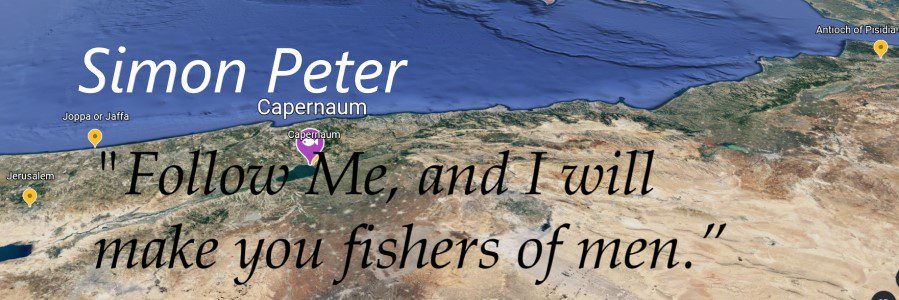
    Simon Peter Capernaum Joppa Jerusalem Antioch more acts of Peter

    Peter certainly could have returned to Capernaum to be with his wife and family. But the Apostle will return to Jerusalem at times as we will see later in Acts of the Apostles.

    And when Herod had searched for him and had not found him, he examined the guards and ordered that they be led away to execution.

    But the word of the Lord continued to grow and to be multiplied.

    Acts of the Apostles 12:24, after Peter escaped from Jerusalem
    in ~AD 44 after proclaiming the Gospel of the risen Christ Jesus for fourteen years.

    25 And Barnabas and Saul [Paul] returned to Jerusalem, fulfilling their ministry, taking along with them John, who was also called Mark.

    Then what happened to Peter?

    For Your Information (Peter’s witness and leadership continues after this astounding event in Jerusalem):

    All dates approximate. Source for most is Rose Guide to the Book of Acts.
    • AD 44-48 – The predicted famine [Acts 11] during the reign of Claudius takes place; Barnabas and Saul of Tarsus will bring a collection from the churches to Jerusalem for distribution.
    • AD 49 – A council of Church leaders, including Peter, meet in Jerusalem [Acts 15].
      • This, of course, is five years after Peter has left Jerusalem after being freed by an angel.
    • AD 49 – Luke, who has recorded Peter’s Gospel and the acts of the Apostles (so far) departs Jerusalem with Paul on his second missionary journey.
    • AD 50 – John Mark, who had accompanied Paul for part of his first missionary journey, writes his Gospel.
    • AD 64-65 [twenty years after Peter escapes Herod]- Peter writes two letters to the Church
    • Sometime after a Jewish revolt in AD 66, Nero will execute Peter and many others in Rome.

    what happened to Peter
    Jesus said to them, ” “Go into all the world and preach the gospel to all creation. – Gospel of Mark 16:15
    ACTS of the Apostles will continue on mission, God-willing, for your comments and witness of the 21st c. Church. - RH