Witness from Jerusalem to Damascus
Of all places the Apostles would not have ever thought the risen Christ would anoint yet another Apostle, a road to Damascus likely would have been the last place to come to mind.
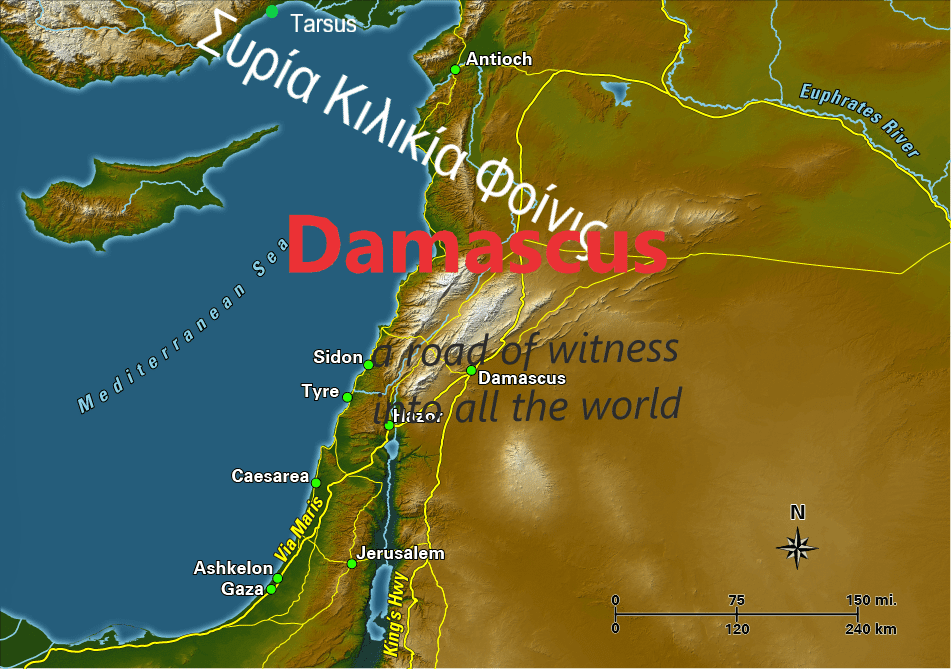
Jesus had led them to places beyond Galilee (now formally a part of Syria under the administration of Rome for the readers of ACTS) like Tyre and Sidon.
Jews had built synagogues in many cities of the Roman Empire. By the time Saul studies in Jerusalem and now pursues disciples of Jesus in his zeal for the LORD, the politics of Rome, Jerusalem and the major cities of Syria, Galilee, Samaria and Judea are not-so-delicately intertwined.
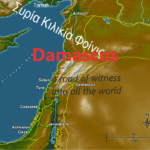
Syria Cilicia Phoenice
Damascus, of course, was of strategic importance to Rome in governing all of Syria including Jerusalem and the cities of the eastern Mediterranean.
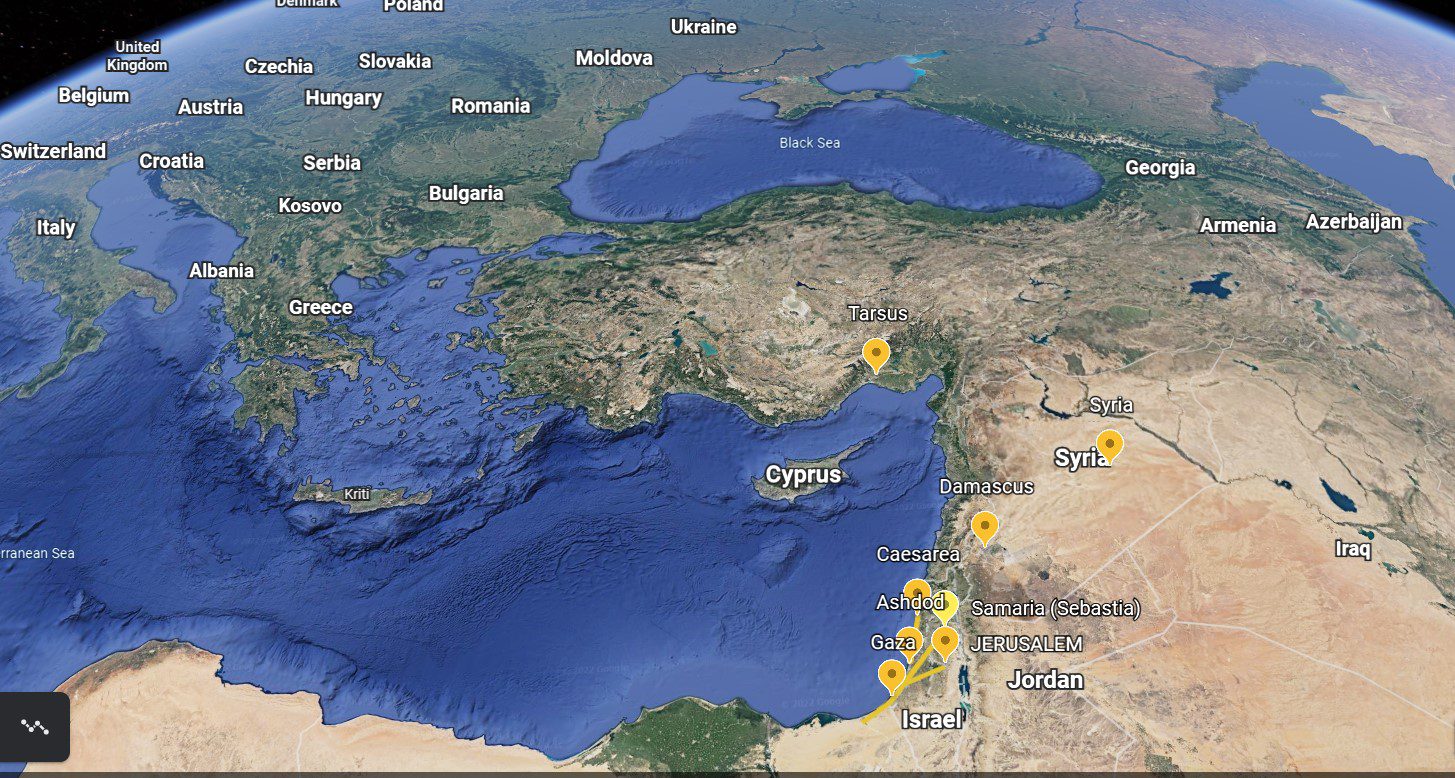
The Roman prefects / procurators of Judea were directly subordinate to the Syrian governor.
In particular, the Legate of Syria was the next authority in complaints against the governor of Judea, as can be seen from the lawsuit brought by the Jews against Pontius Pilate to Lucius Vitellius in AD 36 and the Samaritans brought before the legate Gaius in AD 51
source: List of Roman governors in Syria
Returning now to Luke's account in Jerusalem on the day the Sanhedrin executed Stephen..
ACTS of the Apostles 8:
Click above for translations in English, Ukrainian and Russian.
On that day a severe persecution broke out against the church in Jerusalem, and all except the apostles were scattered throughout the land of Judea and Samaria.
Devout men buried Stephen and mourned deeply over him.
Saul, however, was ravaging the church. He would enter house after house, drag off men and women, and put them in prison.
Дії 8 ACTS 8:3 CSB
ACTS 9:
שָׁאַל
..went to the high priest and asked for letters from him to the synagogues in Damascus..
Meanwhile, in Damascus..
10 There was a disciple in Damascus named Ananias..
Many Jews (including these Christian followers of the Way) lived in Damascus, a city with multiple synagogues. [v.2] These included a disciple named Ἰούδας [Judas, a common name of that time] [v.11].
From terrorizing Jews in Judea & Samaria to the road to Damascus
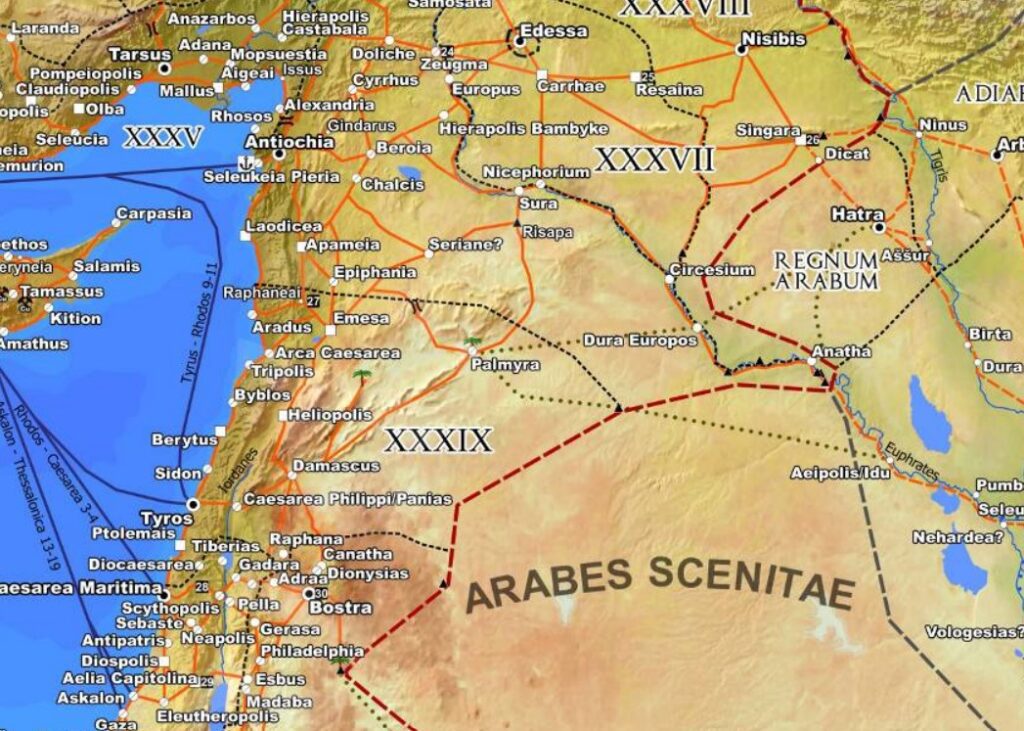
To the Roman Citizen born in Tarsus, Damascus will be a familiar stop along the roads from Jerusalem.
Now as he was traveling, it happened that he was approaching Damascus, and suddenly a light from heaven flashed around him; and he fell to the ground and heard a voice saying to him,
“Saul, Saul, why are you persecuting Me?”
Acts 9:4b NASB – JESUS to Saul of Tarsus along the road to Damascus
5 And he said, “Who are You, Lord?”
“I am Jesus whom you are persecuting, but get up and enter the city, and it will be told to you what you must do.”
Acts of the Apostles 9:5b-6 NASB,
Response of the Lord to Saul of Tarsus with command for his leading into Damascus
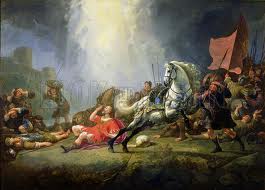
7 The men who traveled with him stood speechless, hearing the voice but seeing no one.
Saul got up from the ground, and though his eyes were open, he could see nothing; and leading him by the hand, they brought him into Damascus.
Prayer and Fasting
9 And for three days he was without sight, and neither ate nor drank.
ACTS of an Apostle to the gentiles + to be continued...